
Posted originally on CTH on March 19, 2026 | Sundance
During congressional testimony today, Texas Representative Dan Crenshaw, a man who is leaving congress at the end of this term having lost his primary race, took the opportunity to question FBI Director Kash Patel about FISA-702.
As most are aware the reauthorization of FISA-702 has a deadline if mid-April this year, and there is a great deal of background debate surrounding it. Apparently, Dan Crenshaw wants to ensure the renewal is successful.
Crenshaw begins his defense by asking a very specific question to FBI Director Kash Patel about President Trump’s Crossfire Hurricane targeted and whether FISA-702 was related to that investigation. Here it is important to remember that the NSA database was exploited in 2016 (Spygate) that ended with the Title-1 FISA warrant (Russiagate).
Both are correct in that FISA-702 was not the legal underpinning for the Carter Page FISA warrant, ultimately targeting Donald Trump. However, conveniently omitted in the questioning is the original surveillance of the 2016 GOP candidates from November 2015 through April 2016 that did involve exploitation of the database under the justification that FISA-702 creates. WATCH:
These are not “myths” Mr Crenshaw. You are both correct that there is no “authority granted under 702” to conduct surveillance. However, in 2016 conducting surveillance using 702 as a justification is what took place.
The collection of American citizen metadata does factually take place. At this point no-one denies it.
That data is then stored in a searchable database, a library of U.S. citizen data colloquially known as the “NSA database”.
Within the NSA database that metadata collection creates, there is a process to search it based on “identifiers.”
The collection of data, the database itself, as well as the search functioning therein, is part of the toolbox for FISA-702 surveillance.
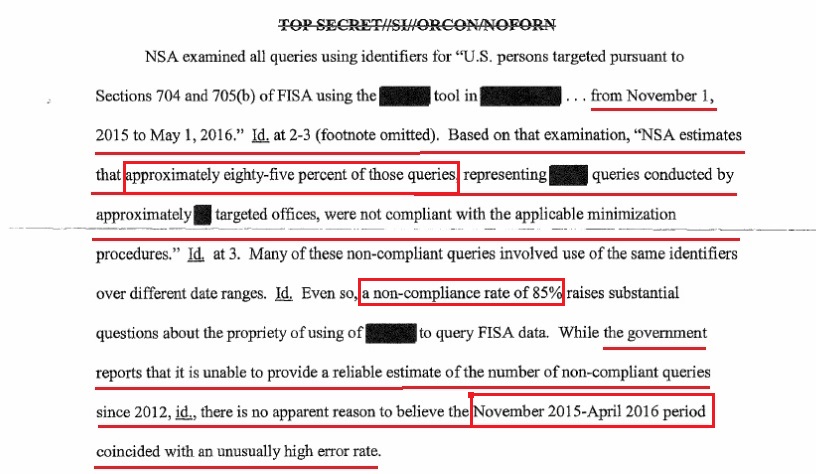
The historic problem is not that “authorities granted under FISA-702” were/are used to conduct surveillance; but rather the search of the NSA collection database was done, illegally and frequently, for non-authorized reasons. The capability to conduct those search queries is maintained by justifying the need for FISA-702.
The historic searches and domestic surveillance were done by exploiting the NSA database, for a reason and purpose that is not authorized and has nothing to do with FISA-702. THAT’S THE PROBLEM.
The existence of the U.S. citizen data itself creates the opportunity to search it. The legal justification to search that database is done under the auspices of FISA-702; however, that’s not the issue. The issue is that searches of the NSA database are done by government officials and government contractors for reasons that have absolutely nothing to do with FISA-702.
As a consequence, it’s the collection that creates the problem. Not the legal process for searching it. As long as the database exists there will be unlawful intrusions into it for domestic and/or political surveillance.
If FISA-702 did not exist, the quasi-constitutional justification for the wholesale collection of U.S. citizen metadata no longer exists. It really is that simple.
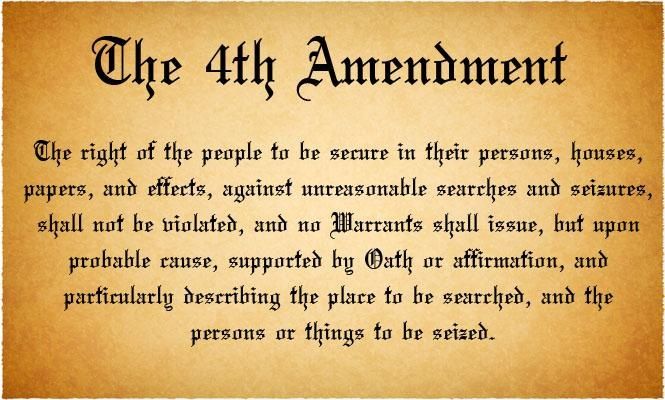
There is ZERO justification for the capture of U.S. citizen data by the government. The capture itself violates the Fourth Amendment. The only way the government can justify the capture of U.S. Citizen data is if there is some quasi-constitutional or national security reason for it.
Take away “702”, and the data collection collapses; ANY “incidental” search of the database then loses any plausible legal justification. 702 is the camel’s nose under the tent.
Only one case has ever pushed into the sphere of challenging this unconstitutional exploitation. A 2025 decision in the U.S. v. Hasbajrami case in Brooklyn, New York, where Eastern District Judge LaShann DeArcy Hall identified the misuse of FISA-702 “backdoor searches” regarding defendant, Agron Hasbajrami.
Hasbajrami plead guilty to charges of attempting to provide material support to a terrorist organization, alleging that he intended to travel to the Federally Administered Tribal Area of Pakistan, where he expected to join a terrorist organization, receive training, and ultimately fight against U.S. forces and others in Afghanistan and Pakistan. However, after his guilty plea, while he is serving time in prison, prosecutors admitted some of the evidence against him came as a result of privacy violations, unlawful FISA-702 searches.
Hasbajrami sought to have the evidence against him thrown out on 4th amendment grounds (fruit of the poisoned tree) and withdraw his guilty plea. The Second Circuit Court of Appeals denied Hasbarjami’s blanket evidence suppression motion for the exclusion of all FISA Section 702 collection in his case but did not weigh in on whether the warrantless Section 702 database queries were constitutional, instead remanding the case back to Judge Hall for a review of that question.
Judge DeArchy Hall received the case again and reviewed all of the government motions against the request to suppress the evidence. What results is a very well-constructed explanation and opinion of how FISA-702 was misused in the case [SEE 60-pg Opinion HERE].
The judge determined that U.S. government officials did factually violate the technical rules and procedures for the use of FISA-702 searches, and the DOJ should have gone to court to obtain a warrant to look at Hasbajrami’s private communication.
In essence, yes, the 4th amendment protections of Hasbajrami were violated. However, the issue of overturning the resulting evidence becomes a matter of legal distinction.
The defendant, who admitted guilt (twice) did not claim the evidence was a result of misuse or a wrongful approach in searching the NSA’s library, from which FISA-702 search results are determined (a structural flaw in the defense motion). Instead, the defendant filed a suppression motion on the issue of his 4th amendment rights being violated.
The judge opinion holds that the FBI’s Section 702 queries violated the Fourth Amendment; however, the court ultimately denied the defendant’s motion to suppress the resulting evidence on separate grounds.
The value in the ruling by Judge Hall, is a few fold:
First, it is an excellent review of the FISA-702 origin and all of the constitutional arguments that surround the controversial law.
Second, the ruling clearly shows that FISA-702 searches are currently being used unlawfully and continually by government officials.
Third, the ruling clearly shows how “backdoor” 702 searches are violations of the Fourth Amendment. [Albeit in this case, of no value to the argument put forth by Hasbajrami.]


[SEE CASE RULING HERE]
The ruling essentially underpins the reality that government officials are using their access to the complete library within the NSA collection and storage database to conduct searches of U.S. communication that removes the constitutional protections of the 4th amendment.
Mr Agron Hasbajrami was ensnared by this surveillance process and admitted his guilt thereafter.
However, the issue is not Hasbajrami’s intent, or even his guilt. The issue that surrounds us is this constant surveillance state and the tens-of-millions of searches that are done on the private papers of American citizens.
In essence we have a domestic surveillance state looking for suspect people who are operating against the interests of government.
Mr. Hasbajrami was caught wanting to join a terrorist organization. However, as we have witnessed in the cold and brutal reality of the J6 roundup, a “terrorist organization” may well be defined as your local “patriot group” or “parent’s advisory committee.”
Back to Patel’s testimony. By obfuscating the use of FISA-702 in Crossfire Hurricane, Patel is focusing on the Title-1 surveillance warrant that created “Russiagate” and entirely ignoring the targeting of Donald Trump that took place in 2015 and 2016 through the contractor exploitation of the NSA database; that’s “Spygate.”
Patel and Crenshaw, much like the entire DC apparatus, need to ignore the Obama-era surveillance system, the political exploitation of the NSA database, in order to ensure they can hang onto the FISA-702 tool.
If the general public realized all of their data was stored on searchable government databases, they would likely reject it. However, the rejection of the data storage would eliminate the ability to search it under the sketchy justification of 702.
 Centinel2012