Posted originally on the CTH on October 28, 2026 | Sundance |
Promethean Action PAC’s Susan Kokinda gives her update and perspective on the Canada-U.K effort to interfere in the U.S. midterm election.
Susan Kokinda opens with European Commission President Ursula von der Leyen and Canada’s Prime Minister Mark Carney celebrating Brazil’s election, von der Leyen’s partnership “thriving” and Carney’s “flourishing”, set against Volkswagen’s plan to cut 100,000 jobs, Canada’s lost manufacturing jobs, and Audi’s first U.S. plant, announced with President Trump in Perry, Georgia, with Rep. Rich McCormick on what it means for Georgia and a look at GDP growth in the United States, the euro area and Canada.
The episode then turns to the U.S. Embassy in Canada’s October 21 fact sheet on Canadian activities in U.S. politics: Carney’s and Minister Mélanie Joly’s denials, Joly on meeting “so many governors and potential presidential candidates”, tariffs aimed at “political pressure”, and the anti-tariff billboards. It sets that beside Chatham House’s August 27 paper for Prime Minister Andy Burnham’s government, which urges London to court members of Congress, state legislatures, potential presidential candidates and industry leaders, and looks at the British pedigree of Canada’s trade team and Chatham House director Bronwen Maddox on the members of Congress who came through Chatham House. It closes with the voters: the Parti Québécois win in Quebec and the Conservative majority in British Columbia that President Trump congratulated, the AfD’s wins in two German states, and the President’s “France: Now and Then”.
Posted originally on the CTH onOctober 9, 2026 | Sundance |
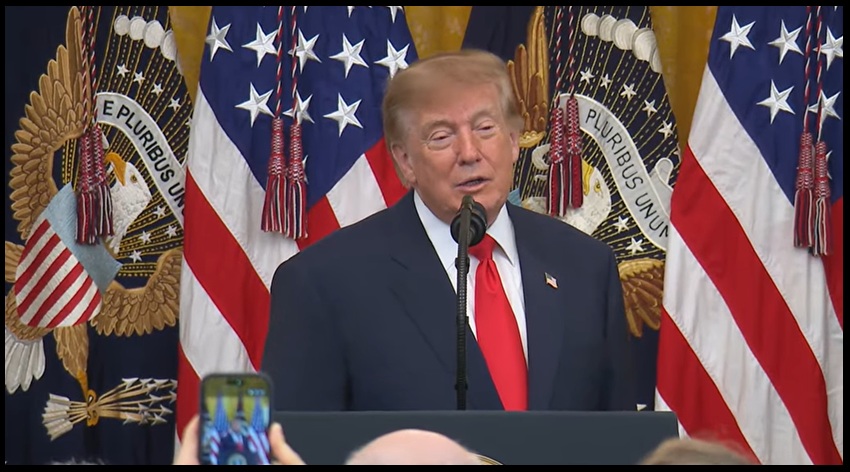
President Trump honored the holiday along with Italian American heritage, architecture, and culture during a Columbus Day celebration at the White House.
President Trump highlighted the restoration of a previously toppled Christopher Columbus statue, which now stands outside the Eisenhower Executive Office Building, and discussed the contributions of Christopher Columbus and Italian Americans to the development of the United States. He also reiterated his commitment to celebrating Columbus Day as a federal holiday.
Posted originally on the CTH on October 9, 2026 | Sundance |
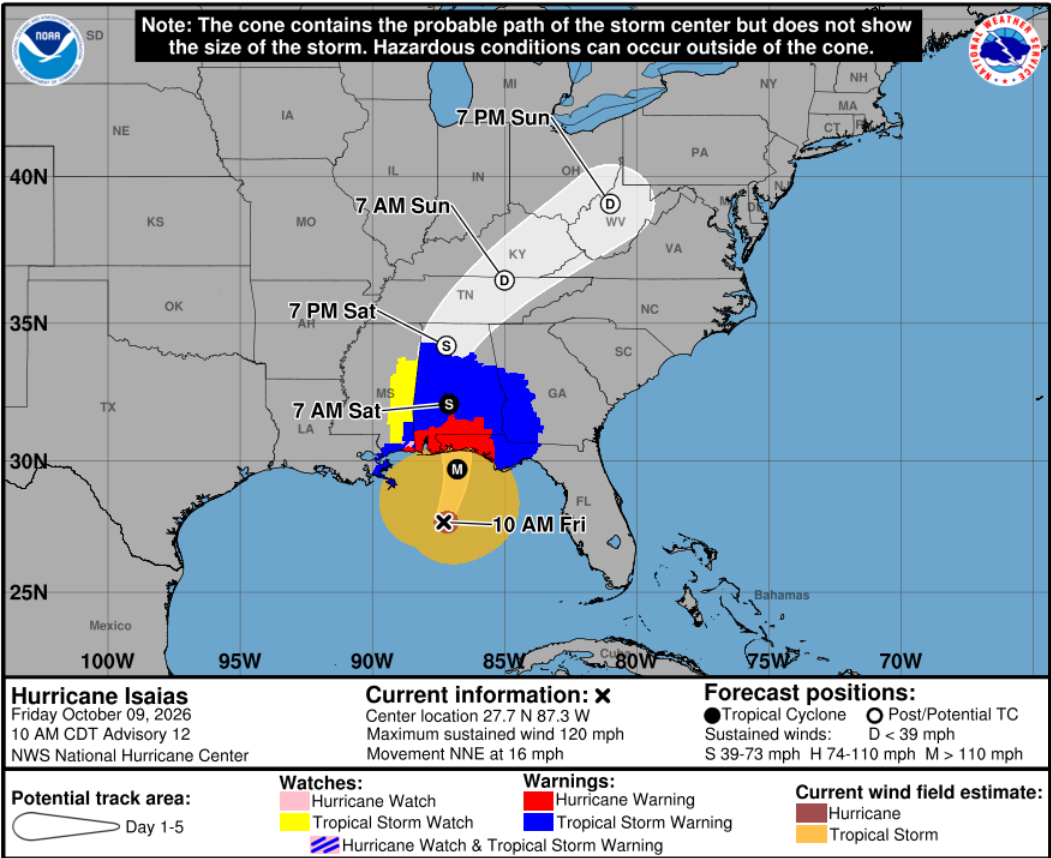
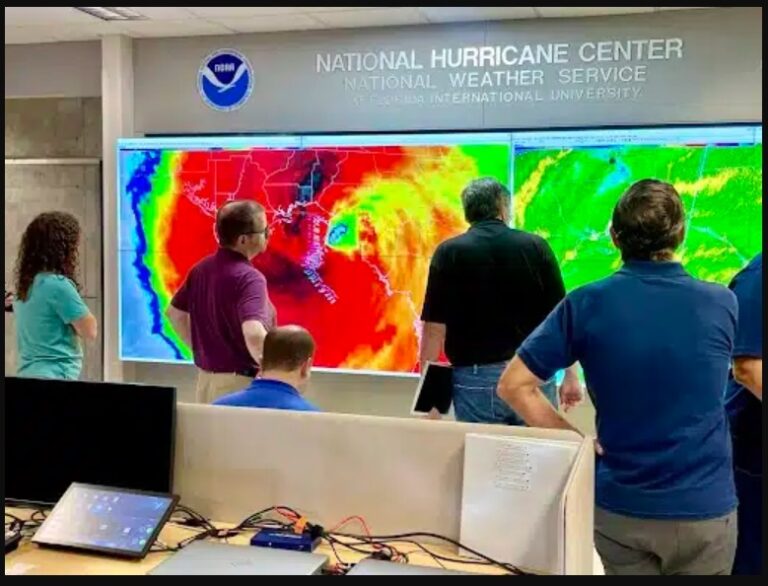
The National Hurricane Center is narrowing the forecast path of Hurricane Isaias, while strongly emphasizing the importance of preparation for a dangerous storm impact in the western Florida panhandle region and Mississippi delta. Everyone in the area should pay close attention, inland flooding will be a concern.
Isaias is anticipated to intensify just prior to landfall over warm water overnight tonight and start moving forward very quickly. This can push the wind driven water very severely into the northern Florida panhandle region and coastal area. The storm surge can be very dangerous. Coastal evacuations are beginning and all preparation should be rushed to completion.
[National Hurricane Center]– At 1000 AM CDT (1500 UTC), the center of Hurricane Isaias was located near latitude 27.7 North, longitude 87.3 West. Isaias is moving toward the north-northeast near 16 mph (26 km/h). This motion is expected to continue through this evening, followed by a northward motion on Saturday. On the forecast track, Isaias is expected to approach the U.S. northern Gulf Coast this afternoon and make landfall within the warning area this evening.
Maximum sustained winds are near 120 mph (195 km/h) with higher gusts. Isaias is a category 3 hurricane on the Saffir-Simpson Hurricane Wind Scale. Fluctuations in intensity are possible through this afternoon, but Isaias is expected to be at or near major hurricane strength when it makes landfall this evening. Weakening is expected beginning tonight after Isaias makes landfall, and the storm is likely to become post-tropical by late Saturday.
Hurricane-force winds extend outward up to 35 miles (55 km) from the center and tropical-storm-force winds extend outward up to 205 miles (335 km). (more)
Communication is important. Update your friends and family contact list. Stay in touch with family and friends, let them know your plans. Select a single point of contact for communication from you that all others can then contact for updates if needed.
The buzzsaw for Isaias is approximately 70 miles at current conditions (35 miles from center). This is the area of greatest wind damage. Hurricanes spin counterclockwise. The coastal flooding will be most extreme on the right side of Isaias as the wind pushes the water toward the coastline.
With the storm core at 70 miles, if the hurricane maintains traditional forward speed (16 to 20mph) the impact zone will feel the buzzsaw effect for approximately 4 hours. If you are in that 70-mile-wide area, those four hours can feel very long, nervewracking and very destabilizing.
If you are at/near the coast, in the zone of eyewall uncertainty, the time to get out is today. Don’t wait.
Take all mandatory evacuations seriously. If you are inland from the eyewall, prepare yourself for a long duration of extensive wind damage (4+ hrs) followed by an extended power outage and constant rain.
As many long-time readers will know, we do have a little bit more than average experience dealing with the aftermath of hurricanes. I am not an expert in the before part; you need to heed the local, very local, professionals who will guide you through any preparation and neighborhood specific guidelines for your immediate area.
But when it comes to the ‘after part’, well, as a long-time CERT recovery member perhaps I can guide you through the expectation and you might find some value. Consider this little word salad a buffet, absorb what might be of value pass over anything else.
When the winds reach around 45 to 60 mph generally the area will lose power. Don’t expect the power to be turned back on until it is safe.
Hurricanes can be frightening; downright scary. There’s nothing quite like going through a few to reset your outlook on just how Mother Nature can deliver a cleansing cycle to an entire geographic region.
Telephone and power poles, yes, even the concrete ones, can, and likely will, snap like toothpicks. There’s a sound when you are inside a hurricane that you can never forget. It ain’t a howl, it’s a roar. A damn scary roar that just won’t quit…. it will… eventually, but at the time you are hearing it, it doesn’t seem like it will ever end.
A constant, and pure rage of scary wind that doesn’t ebb and flow like normal wind and storms… hurricane wind just starts and stays, sometimes for hours. Relentless and damn scary…. it just won’t let up. And then, depending on her irrelevant opinion toward your insignificant presence, she stops.
Then silence. No birds. No frogs. No crickets. No sound.
Nature goes mute. It’s weird.
We have no idea how much ambient noise is around us, until it stops.
Oh, if she wants, she’ll keep dumping buckets on you as she wanders away. Buckets. Not pails, garbage can sized buckets.
After the scour, yup, nature too has a rinse cycle.
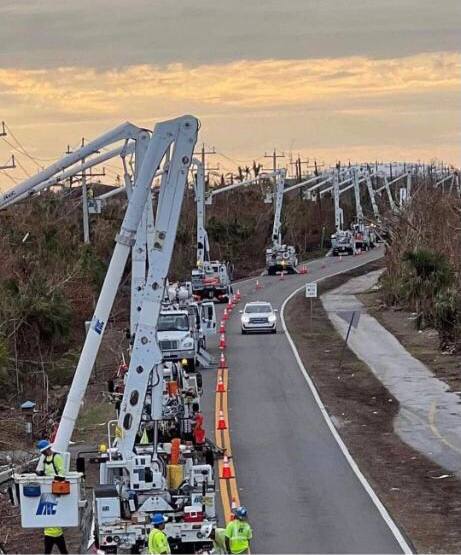
If your town, city or hamlet is not underwater, there will be convoys coming to construct a pre-planned electricity grid recovery process. Convoys from every city, town and state from the east-coast to the mid-west.
A glorious melding of dirty fingernails all arriving for the meet-up. Depending on your proximity to the bigger picture objectives at hand, you will cherish their arrival.
But first, there will be an assessment.
The convoys will stage at pre-determined locations using radios for communication. Street-by-street everything needs to be evaluated prior to thinking about beginning to rebuild a grid. Your patience within this process is needed; heck, it ain’t like you’ve got a choice in the matter…. so just stay positive.
Meanwhile, you might walk outside and find yourself a stranger in your neighborhood.
It will all be cattywampus.
Trees gone, crap everywhere, if you don’t need to travel, DON’T.
I mean CRAP e.v.e.r.y.w.h.e.r.e.
Stay away from power-lines.
Try to stay within your immediate neighborhood for the first 36-48 hours. Keep the roadways and main arteries clear for recovery workers, power companies and fuel trucks.
Be entirely prepared to be lost in your own neighborhood and town for days, weeks, and even months. Unknown to you – your subconscious mind is like a human GPS mapping system. When that raging Isaias takes away the subconscious landmarks, I guarantee you – you are gonna get lost, make wrong turns, miss the exit etc.
It’s kinda funny and weird at the same time.
Your brain is wired to turn left at the big oak next to the Church, and the road to your house is likely two streets past the 7-11 or Circle-k. You don’t even notice that’s how you travel around town; that’s just your brain working – it is what it is.
Well, now the big oak is gone; so too is the Circle-K and 7-11 signs. Like I said, everything is cattywampus. Your brain-memory will need to reboot and rewire. In the interim, you’re going to get lost… don’t get frustrated.
No street signs. Likely no stop signs. No traffic lights.
Remember, when it is safe to drive, every single intersection must be treated like a four-way stop…. and YOU ARE GOING TO HAVE TO PAY ATTENTION. Even the major intersections.
You’ll need to override your brain tendency to use memory in transit. You’ll need to pay close attention and watch for those who are not paying close attention. Travel sparingly, it’s just safer.
Check on your-self first, then your neighbors. It doesn’t matter if you’ve never said a word to the guy in the blue house before. It isn’t normalville now.
Break out of your box and check on the blue house down the street too. In the aftermath, there’s no class structure. Without power, the big fancy house on the corner with a pool is just a bigger mess. Everyone is equally a mess.
The first responders in your neighborhood are YOU.
You, the wife, your family, Mrs. Wilson next door; Joe down the street; Bob’s twin boys and the gal with the red car are all in this together. If you don’t ordinarily cotton to toxic masculinity, you will worship it in the aftermath of a hurricane. Git-r-done lives there.
Don’t stand around griping with a 40′ tree blocking the main road to your neighborhood. Figure out who’s got chainsaws, who knows how to correctly use them, and set about safely clearing the road. If every neighborhood starts clearing their own roadways, the recovery crews can then move in for the details.
Stage one recovery focuses on major arteries… then secondary… then neighborhood etc. It’s a process. Oh, and don’t get mad if your fancy mailbox is ploughed over by a focused front-end loader who is on a priority mission to clear a path. Just deal with it. Those same front-end loaders will also be removing feet of sand from coastal roads. Don’t go sightseeing… stay in your neighborhood.
For the first 36-48 hours, please try to stay close to home, in your neighborhood. Another reason to stay close to home is the sketchy people who can sometimes surface, looters etc. Staying close to home and having contact with your neighbors is just reasonable and safer.
Phase-1 recovery is necessarily, well, scruffy…. we’re just moving and managing the mess; not trying to clean it up yet. It’ll be ok. There are going to be roofing nails everywhere, and you will likely get multiple flat tires in the weeks after the hurricane.
After this storm half of the people living near the landfall location are going to fit into two categories, two types of people: (1) those with a new roof; or (2) those with a blue roof (tarp).
Keep a joyous heart filled with thankfulness; and if you can’t muster it, then just pretend. Don’t be a jerk. You will be surrounded by jerks…. elevate yourself. If you need to do a few minutes of cussing, take a walk. Keep your wits about you and stay calm.
Now, when the recovery teams arrive…. If you are on the road and there’s a convoy of utility trucks on the road, pull over. Treat power trucks and tanker trucks like ambulances and emergency vehicles. Pull over, give them a clear road and let them pass.
When everyone gets to work, if you see a lineman, pole-digger or crew say thanks. Just simple “thanks”. Wave at them and give them a thumb-up. No need to get unnecessarily familiar, a simple: “thank you for your help” will suffice. You know, ordinary people skills.
Many of these smaller crews will be sleeping in cots, or in their trucks while they are working never-ending shifts. Some will be staging at evacuation shelters, likely schools and such. The need to shelter people and recovery crews might also delay the re-opening of schools.
Once you eventually start getting power back, if you see a crew in a restaurant, same thing applies… “thanks guys”.
Same goes for the tanker truckers. The convenience stores with gas pumps are part of the priority network. Those will get power before other locales without power. Fuel outlets are a priority. Fuel is the lifeblood of recovery. Hospitals, first responders, emergency facilities, fuel outlets, then comes commercial and residential.
Remember, this is important – YOU are the first responder for your neighborhood. Don’t quit. Recovery is a process. Depending on the scale of the impact zone, the process can take days, weeks and even months.
Take care of your family first; then friends and neighborhood, and generally make a conscious decision to be a part of any needed solution.
Pray together and be strong together. It might sound goofy to some, but don’t be bashful about being openly thankful in prayer.
It will be ok.
It might be a massive pain in the a**, but in the end, it’ll be ok.
Posted originally on the CTH on October 8, 2026 | Sundance |
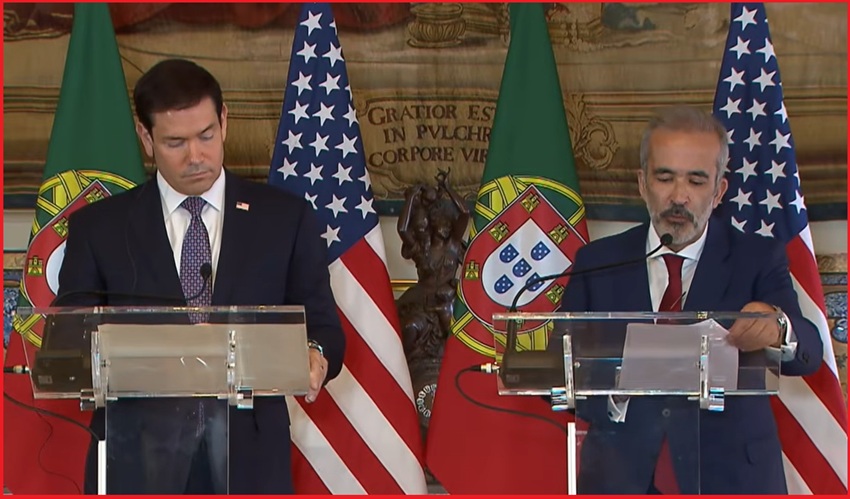
Secretary of State Marco Rubio is in Portugal on the third stop of his NATO alliance tour. Portugal is very strategic and holds as strong intelligence network through its well-regarded diplomatic corps. [Listen to what Rubio says about the narcotrafficking operation that Portugal and the USA conduct together.]
Secretary Rubio held a press conference with Portuguese Foreign Minister Paulo Rangel. Video and Transcript below:
[Transcript] FOREIGN MINISTER RANGEL: Welcome to Lisbon, Secretary Marco Rubio.
(Via interpreter) Portugal and the United States are historic allies which together have enjoyed a lengthy relationship which defends state of law, democratic values which represent the free world, and we have strong links in economy, defense, economy, and culture.
Obviously, I want to once again highlight the 250 years of American independence, remembering that the independence was done with Portuguese wine from Madeira, and we were the third country in the world which recognized the independence of the United States of America. This historic friendship of allies consolidated in ‘95 with the cooperation agreement and defense agreement, which brings together the bilateral commission, which is functioning on a permanent basis. And this bilateral commission has been a diplomatic channel of privilege for dialogue with a legal basis on many areas of our relationships, and with the military presence of the United States in the Lajes air base.
This visit takes place at a time of great, big developments in our bilateral relations, especially in key areas like the economy and tourism. The interest of the United States and of United States citizens and their companies to Portugal continues to grow. In ‘25, United States visitors brought in 11 percent of revenue from tourism, and in the first quarter of ‘26, U.S. citizens were ranked third as visitors to Portugal.
In the economy, our companies increasingly present in the United States, whether in renewable energies, pharmaceuticals, car industry. And we have also increased investment of – United States investment in Portugal like Goldman Sachs, Aquaterra, UPS, IBM, AWS, Google have a very strong presence in our country and obviously the United States, for us, our strategic partner. And as a member of the EU, Portugal is surely one of the countries which is a champion of the priorities that Europe should give to the transatlantic relationship.
As part of that transatlantic relationship, Portugal agrees and agreed with your appeal from the United States for Europeans, members of NATO, to guarantee their responsibilities for their defense. And so we have been made a effort in our budget, which has reached 2 percent of GDP in ‘25, and so a transition of 1.6 to 2 percent in a very difficult year. And we will continue to comply with objectives of NATO, which are the 5 percent objective in medium-term future, with 3.5 in defense and 1.5 in investments related to defense sector. For us, NATO is a fundamental pillar of our defense and our safety, our security, and so is one of our priorities in foreign policy.
Obviously, we continue to believe that our relationship with the United States is fundamental. We have always supported Ukraine, and we believe that the contribution of the United States is decisive in that conflict to reach a long-lasting and fair peace. In the Middle East, we recognize the threats and the risks created by Iran and their proxies. We defend full respect for the integrity of our friends, states in the Gulf, and we have to – essential to recover free maritime movements in Hormuz and total respect for the rule of the sea. And the contribution of the United States is essential to solve this conflict.
When we prepared our mandate for the Security Council, we established relations and contacts with all members of the Security Council and other states of the United Nations, and obviously we have been discussing and preparing our presence with the United States, where obviously the majority of our positions converge.
Today, which is so important for our bilateral relationship, I’d like to welcome you especially – the important Portuguese community that lives in the United States; and they’ve been from one coast to the other – and welcome the new, enormous, and dynamic, visible U.S. citizen community in Portugal that have contributed to a new stage, a new dynamic thrust to our 50-year relationship – 243, in fact. Thank you, Marco Rubio.
SECRETARY RUBIO: Well, thank you. I almost understood everything he said. I almost – like, I got very close because it’s very similar to Spanish. And so I almost turned this thing off but I said no, let me just finish it. So anyway, but thank you. I appreciate you having me here in your beautiful country, and I’m glad to be here. It’s my first visit ever and I hope it will not be my last. And I appreciate the welcome you’ve given us – not just in this extraordinary setting but the opportunity to meet with you and obviously, of course, to meet previously with – before this meeting with the prime minister.
Our two countries have accomplished many things together in the past, and we look forward to deepening and building that relationship in the future. In the past, for example, we’ve worked very closely on forging the arsenals of our allied forces. We together built your F-16 fleet, strengthening not just our two nations’ security and defense, but frankly strengthening NATO as a result of it. This is through decades of shared maintenance and training and joint operations, and we know that that will continue.
We applaud you, by the way, on the work – and I know it’s difficult, but the commitment that you’ve made that you’re living up to in spending more – and I don’t even want to use the term spending more – in investing more on defense, and for being on track to meet all of the commitments that were made at The Hague in – by the year 2035. And I always highlight this, because people sometimes view this call to invest more in defense as a hostile thing. It is not a hostile thing. On the contrary, what we are arguing is that NATO is important. For NATO to matter, NATO has to be strong. For NATO to be strong, NATO’s member-states need to be strong. And for members – for NATO’s member-states to be strong, they have to have capabilities.
Now, every country is of a different size and proportion. Some countries can contribute more than others. But every country in NATO needs to be as strong as they can possibly be. Because the stronger the members of NATO are, the stronger NATO is, the stronger the Alliance is, and the stronger the deterrence is. NATO exists, more than anything else, as a defensive Alliance that acts as a deterrent against hostility, and it has served us well for decades. And if we want it to continue to serve us, we need to make sure that it is strong.
So we look forward to the burden – to the – we look to share the burden of defense in the future, and we look forward to collaborating on constructing the next generation of weaponry that’s going to be needed and advanced military technology that’s going to be needed in order to deter the adversaries of the future. I believe working together, along with all of our Allies and partners in NATO, we can make our nations and our continents safer from foreign threats and more secure for our people.
Now, I don’t want to focus this relationship solely on our defense cooperation, because what happens between our countries goes far beyond that. And I want to talk a little bit about the economic realm, where Portugal plays an integral role in fostering U.S. commerce and in delivering U.S. technology to the European continent and beyond. As an example, Portugal’s undersea cables, affordable energy, critical mineral reserves, and hyperscale data centers make it the ideal gateway – the ideal gateway from a geographic and economic perspective – the ideal gateway for American technology companies to enter Europe.
I think it’s also important to point to the amount of investment that’s going on in our respective countries. Last year, investors from the United States invested over $20 billion in Portugal. And Portuguese companies invested over $2 billion in the United States, which is a big number for a country of this size. So if you think about that, that’s only going to grow and we have ideas on how that’s going to continue to grow.
And so our governments are going to continue to make the necessary pathways for future investment in the critical industries – things like super intelligence and aerospace and defense and other strategic sectors. And one way we intend to do that, hopefully very soon, is through a CEO forum that I know our ambassador – who is doing a great job – has been working on. It’s a forum that gives businesses in our two respective countries a mechanism to cut through the red tape, cut through any sort of bureaucratic impediments that exist, and turn the existing connections into more investment, into more jobs, into more economic growth on both sides of the Atlantic.
Together, we have many opportunities to expand the commercial diplomacy and relations between our two countries in ways that will bring not only profit and prosperity to our people, but I think also bring resilience and the security that comes with resilience against future economic and technological risks.
I also want to point, for a moment, to the number of U.S. travelers that come here. The number is stunning. And what I learned even earlier is that, despite how many direct flights we have from the United States here, if they added more flights they could fill more seats. So a lot of Americans want to come and visit here and not just to do business, but to visit and to see the beauty of your country and all that it has to offer and the richness of its history and so forth, and I hope that that will continue. We also have a growing number of American retirees that are coming here as well, and I hope – that’s an important component, and I know our embassy does an excellent and hard – it’s a hard but excellent job of – in consular services and responding to all of that.
Finally, let me say this. I want to complement Portugal – something we don’t talk enough about, and that is on your growing and successful efforts to combat narcoterrorism, not just in your country but around the world. In the last two years, Portugal has seized nearly 200 tons of cocaine, including approximately – what is that? A robot? Was that – did you see that? Okay. Sorry. I’m easily distracted, guys. We’re talking about cocaine, so let’s go back to that. (Laughter.)
For nearly two years – so 200 – Portugal has seized 200 tons of cocaine, including approximately 47 tons to date in 2026. And they’ve done that in partnership with the Drug Enforcement Agency of the United States. And in addition, Portugal’s been partnering with multiple countries in the Western Hemisphere to combat drug trafficking and transnational criminal drug organizations. So we applaud you and we thank you for your serious response to these threats to national security.
We’ve been partners for a very long time, as you pointed out. Our consulate in Ponta Delgada has been there since 1795. And that makes it the oldest continuously operating American consulate in the world – in the world. So I look forward to future centuries of American-Portuguese collaboration as we create a more secure, stronger transatlantic alliance and foster a more prosperous future for our people. Thank you.
MODERATOR: (Via interpreter) Now, as agreed, we will have questions from the press, United States press first, Eric Martin from Bloomberg and then Alex Raufoglu from Radio Free Europe.
SECRETARY RUBIO: Oh, I hate this guy. This guy always speaks the language of the country we’re going to. Do you know Portuguese? (Laughter.)
QUESTION:Um pouquinho.
SECRETARY RUBIO: Okay.
QUESTION: Secretary Rubio, in the economic realm that you just mentioned, the U.S. has encouraged countries in the EU to work to reduce dependencies on China. I’m wondering if that’s something you discussed with Minister Rangel or Prime Minister Montenegro here in Lisbon, or in the meetings with Greek officials this week. And do you and your European counterparts see the challenge differently?
(Via interpreter) One question for Minister Rangel. You have invested in key sectors, including renewable energy. The question of investment in these strategic infrastructure in Portuguese state companies, as Secretary of State has mentioned – are you going to impose new restrictions on these strategic sectors?
Thank you.
SECRETARY RUBIO: What a show-off. This is good? Is it a good – is he good in Portuguese?
FOREIGN MINISTER RANGEL: Yes.
SECRETARY RUBIO: Okay, good. I understood. He’s asking basically same question. So let me start first, and that is – look, here’s our thing. Because you focused on China, let me just say it this way. We think it’s not good for us, for Portugal, for any country in the world to present – to depend on any country for 95 percent of anything, your pharmaceuticals, your – we think there needs to be diversity.
And we learned that the hard way during COVID. You saw during the pandemic, there were things that we took for granted that weren’t available to us – not because of tariffs, not because of an embargo, not because somebody – they got cut off because the supply chains were disrupted. And we learned how dangerous it is to be over-reliant on any single part of the world for everything we get. It is why we have spent so much time diversifying our energy portfolio.
And even now recent events remind us that we can’t continue to rely on X percent – large percentage of the globe’s – of the world’s energy coming from a part of the world that’s often finds itself in conflict. So I think there’s a desire on our part, as I think there is on the part of many countries, to diversify where we source things – whether it’s critical minerals or key technologies and things of that nature.
Added to that, there is always the concern that there are certain industries that are so critical to our national security that we have to be careful about who we allow or what kind of companies we allow to invest in our economies. This is particularly sensitive in biotechnology, but it’s also sensitive in telecommunications. Because if your telecommunications are vulnerable to foreign companies that respond to a foreign government’s demands, then you’re – everything you do is vulnerable, because all your ability to communicate.
And by the way, the threats to these things aren’t simply from a trade realm; they’re also kinetic. The undersea cable security – it’s something people don’t think a lot about because you don’t see them. Now, the undersea cables are increasingly being threatened all over the world by bad actors that are trying to access them and cut them in a time of conflict, or even as a point of leverage.
So this comes up in every meeting we do around the world, simply because I think it’s a shared value and a shared concern that we have with many, if not all of our allies.
FOREIGN MINISTER RANGEL: Well, I’ll answer you in Portuguese, once you have sympathy to put the question in Portuguese.
(Via interpreter) Just to underline what Secretary of State Marco Rubio stated, and for Portugal, the security of underwater cables is essential. There is no meeting in which I’m present where this topic isn’t on the table. It’s one of our major concerns exactly because we are a gateway of many undersea cables which link both sides of the Atlantic.
Also, in answer to your question, as you know, the Portuguese relationship with China goes back 500 years. But investment – investment in Portugal – follows our own screening, and all countries. And that is laid down by the EU. And to answer your question, what happens is that the EU has just approved in July and enforced new rules for screening, for screening investments. And these rules are very sophisticated and demanding more than in the past. And at the moment, several different ministries are working based on this new legislation, which we’ll implement this EU regulation, and which will obviously strengthen our ability to control from the point of view of security, our national interests, and vital interests, whether economic or of another nature. And so that will be implemented as soon as this legislation is ready. And that applies to all countries. So it’s not just geared or directed to one.
So we follow EU legislation and policy in this matter. And they are discussing on a commercial basis their relations with China; there’s a Franco-German proposal. And in that environment, we will follow the EU standards and rules. But as regards investment, we will wait for this new legislation, which will apply to all countries. It doesn’t affect one country or the other; it’s a European legislation, and they’re very similar to what the United States has adopted in this field.
QUESTION: Thank you so much. Alex Raufoglu, Radio Free Europe. Mr. Secretary —
SECRETARY RUBIO: No, no, you have to answer – you have to ask your question in Portuguese. I’m sorry. (Laughter.)
QUESTION: My best in English.
SECRETARY RUBIO: All right. It was worth a try.
QUESTION: Mr. Secretary, yesterday you urged Europe to wake from its long slumber and defend its borders. With Russia today killing at least 33 in Ukraine, threatening Europe beyond its borders, Belarus pressuring Latvia, and a U.S. troops drawdown looming, can NATO’s eastern flank still count on —
SECRETARY RUBIO: U.S. troops what? U.S. troops what? I didn’t hear.
QUESTION: Drawdown looming. Can the Allies rely on American support moving —
SECRETARY RUBIO: Yeah. Well, first of all – yeah – my speech yesterday wasn’t simply about protecting the borders. That’s certainly critical. When I said we want Europe to reawake from its slumber, we want Europe to recognize and remember who we are. We are the West. We have a lot to be proud of in our history and what our civilization has provided to the world. And it’s something not only should we be proud of, we should be defend – we should defend. I don’t just mean militarily defend it; I mean culturally defend it. I mean remember who we are as a nation, remember who we are nations, remember who we are as a civilization. That was the point of the speech.
Now, your question about what’s happening with Russia and Ukraine – yes, this is a very dangerous war. It’s an extremely dangerous war because, frankly, right now it seems to be at a stalemate. And stalemates are very dangerous. Because stalemates only end one of two ways: number one, you have a negotiated settlement, one in which each sides have to give up something in order to get peace. And we have tried, and we will continue to try, and do what we can to facilitate a negotiated settlement to the end of that war.
The other way that stalemates end is through escalation. One side or the other, or both, escalate what they are doing in order to try to break the other side and break the stalemate. And that’s very dangerous. That’s very dangerous in the context of the Russia-Ukraine war, because that – that escalation could wind up being a sabotage campaign in neighboring countries that are members of NATO. It could be the strikes that you’re pointing to. It could be a number of other things that could happen that could quickly turn what is a war between two countries into a much broader and far more dangerous regional conflict.
So I think and I hope that the risk of escalation is one of the things that will bring both sides to the table and willing to negotiate a settlement to this war. In the end, we do not believe that there is a military solution to this conflict, to this war. We think this war needs to end in a negotiated settlement, the sooner the better. The United States stands ready to facilitate that. We have tried, we will continue to try, but we’re also not going to invest in pointless processes if we can’t make progress. In many cases, it’s proven to be counterproductive. But we’d love to see a negotiated settlement to this war that is permanent, enduring, and fair. And that’s what we’re committed to continuing to do.
QUESTION: If I may, the same question goes to the foreign minister as well. If you would like to weigh in of today’s Russia’s deadly attack on Ukraine, I will be grateful. Thanks so much.
FOREIGN MINISTER RANGEL: Well, I think that in my first address, I really answered to your question. So Portugal sees the aggression of Russia as a big danger for the world, for the multilateral system, for the charter of the United Nations, for the international law. We stand by Ukraine in a very, very clear manner. The support in our public opinion is very, very high, probably one of the highest, in spite we are the most distant country from Ukraine in Europe.
Then let me say that we fully agree that there’s a need to a diplomatic solution, and we support all the efforts that the United States that in this moment are, I think, the only interlocutor that is capable to find sustainable and fair peace deal. And so of course we support these efforts and we really would like to have a solution because everybody agrees that the situation is very difficult. We are in a stalemate in terms of the war on the ground, and the attacks, especially to Ukrainian civilians, are becoming more and more aggressive. And so of course this shows that there’s a need to have a ceasefire, and in the meanwhile, appropriate peace agreement where these two countries can live respecting the sovereignty of each one. And that is our message.
MODERATOR: (Via interpreter) Now the Portuguese part from Reuters and CNN, two Sergios. First question.
QUESTION: (Via interpreter) Minister, question. The new agreement to replace the old F-16s. So the question is – has the Portuguese Government decided with political criteria or based on political criteria and not just military (inaudible), because some people say about the Portuguese air force prefers the F-35s. And the fact that we have competition from European fighters, does that put the F-35s at a disadvantage in this tender?
(In English) And another question for you, Mr. Secretary. It’s the same question, obviously. Are you confident Portugal will ultimately choose the F-35 to replace its aging F-16 fleet? What advantages can the F-35 offer to the Portuguese air force? And again, are you confident that the F-35 will be chosen?
FOREIGN MINISTER RANGEL: (Via interpreter) Easy answer. The decision hasn’t been taken, and it’s not the foreign minister that will take that decision. It’s all the government, including the minister of defense, that will have to answer your question. But I can tell you obviously Portugal will decide based on our national interest. So the criteria will be the national interest. That will always be the underlying criteria.
Having said that, let me add that obviously we are looking at the United States’ proposal regarding the F-35. We are looking at it in a serious fashion like we look at others. So I can’t add anything else because that’s not my responsibility alone. And as you know, the minister of defense will have a large part in this decision; obviously this will be a whole government collective decision. And because of that I can’t add anything further.
SECRETARY RUBIO: I would just add the following. Number one is the plane that they decide to buy for their air force to replace the F-16 is going to be up to this government, the elected representatives of the people of this country through the process they select. They’re going to make the decision about what’s best for them.
Now, you’re asking me as the Secretary of State of the United States which plane I think they should buy. We think they should buy the F-35 because we think it’s the best fighter jet in the world. And we – all we ask is a fair chance, and I think we’ll get one, to make a presentation and a proposal that will be very competitive with every other plane that is offered on the table. In the end, they will make that decision. Obviously, I’m not here to promote the airplanes made by some other country, so we want them to buy the F-35 and we think it’s the best plane in the world, and we’ve made these sales.
But this sort of decision is made all over the planet. I mean, many other countries have bought them from us as well. So we recognize they will decide the process by which they make the selection; we just want an opportunity, and I believe we will receive the opportunity to make a very competitive presentation on why we think the F-35 is the best one. But ultimately, they will get to choose, and we’re going to have a good relationship.
Now, I will say there’s advantages to interoperability, having the F-35, because it’s the same system we use and we understand it. But the choice will be theirs to make. We think the F-35 is the best plane in the world. We want them to buy it. We’ll make a very good presentation. But they’ll make the choice.
QUESTION: Good afternoon, Mr. Secretary. Boa tarde, Senhor Ministro. My first question is for the Secretary of State and it’s regarding the Lajes airfield during Epic Fury. The public attorney has opened an inquiry regarding the use of the air base, and with concerns of violating international laws. And Amnesty International said that Portugal should not support war crimes and the way to war crimes. My question is: You said that Portugal – and you gave an example – didn’t even ask for what was the mission that was passing through Lajes. They immediately gave the authorization for that – those flights that were made by KC-35s refuelings, also F-18 Growlers, also some drones. My question is: Did you inform the Portuguese Government about the nature of that mission? Because those planes flew to Lajes before and after the start of Epic Fury.
SECRETARY RUBIO: Yeah —
QUESTION: I would like to —
SECRETARY RUBIO: I got it. So I can’t comment on your public – who was it again? Your public —
QUESTION: Attorney.
SECRETARY RUBIO: — the prosecutor, yeah. Yeah, I can’t comment on that. That’s your internal process, so that’s not up to us to comment on.
I – Amnesty International is a fraud. If you’re asking me what I think what Amnesty International thinks, you know what I think Amnesty International should be focused on? An Iranian regime that murdered, in cold blood, tens of thousands of people in the streets of Tehran and in other parts of the country. What Amnesty International should focus on is how the Iranian regime goes into hospitals – when protesters are injured – and murders the people in their hospital bed, and by the way sometimes murders the doctors or the nurses who treated them. So they should focus on them. Those are war crimes. Those are crimes against humanity, and those are crimes they’re committing against their own people.
As far as your other questions, we have a strong, regulated relationship with Portugal, as we do with every one of our NATO Allies, and we follow those protocols every single time. We follow those protocols. We would never violate the sovereignty of any country. We don’t violate the – that’s not how allies behave. So I’m not going to get into the details of conversations that happened or didn’t happen. Suffice it to say that we have existing protocols that govern our presence here and how we use our bases, and we always follow them out of respect and out of compliance with the agreements that we have with our NATO Allies.
One of the advantages of the NATO Alliance – okay – I’ve been a longtime supporter of NATO, going back to my time in the Senate, because one of the arguments I always made was that NATO allowed us to have a presence in this part of the world, in Europe, that allowed us to project power in a time of crisis or contingency into other parts of the world. That is one of the reasons why NATO is valuable to the United States.
Not every country has sort of behaved in that way in the past. They’ve not understood that in terms of their treatment of us. Portugal’s been a great ally. And we’ve had others that have been great allies, but Portugal has been a great ally. But it’s always been a great ally within the construct of the rules and the agreements that we have in place that regulate our presence here and the use of our bases.
QUESTION: (Via interpreter) (Inaudible) the base in the Azores, the Lajes Air Base, and strengthening your presence in the future and the strategic position it occupies. What’s the (inaudible)?
FOREIGN MINISTER RANGEL: (Via interpreter) We didn’t discuss the future of the Lajes Air Base today. Our agenda was directed to economic issues, trade, tourism, and also dealt with a review of the major international topics. So the bilateral relations in defense, we didn’t discuss it today because we have a bilateral commission that does that, which meets on a regular basis, as I told you at the beginning.
And so it wasn’t discussed today because the agreement in force, the treaty in force between the two countries, has served both parties equally and fairly, so there’s no justification to talk about that. But anything regarding the future will also be dealt with by the permanent bilateral commission, and then it will go on to a political level. We have the right place to discuss those issues, so we didn’t need to do that today. Thank you.
MODERATOR: (Via interpreter) Thank you for your presence. The press conference has come to an end.
Posted originally on the CTH on October 8, 2026 | Sundance |
Many of us have watched each step in the process as President Trump executes a deliberate strategy to reindustrialize American manufacturing.
In this video Mike Steger examines plans for new shipyards, submarine production, and advanced manufacturing at Sparrows Point and across the country. He contrasts this rebuilding effort with the collapse of Bethlehem Steel and Baltimore’s industrial economy, arguing that restoring basic industry is essential to America’s future.
The discussion then turns to Henry Kaiser, whose World War II shipyards transformed American production through workforce training and new construction methods. Mike connects that history to today’s shipbuilding ambitions, steel investments, and the industrial foundation needed to support both naval strength and space exploration.
From American shipyards to SpaceX’s stainless steel rockets, Mike makes the case that industrial growth can renew the confidence and purpose of Western civilization. Drawing on Marco Rubio’s remarks in Athens, the symbolism of Prometheus, and John Paul Jones’s refusal to surrender, he argues that America’s greatest achievements may still lie ahead. WATCH:
Chapters
00:00 America’s Revival of the West 01:25 A New Era at Sparrows Point 03:10 Rebuilding America’s Shipyards 04:55 Bethlehem Steel and Baltimore’s Decline 07:10 Henry Kaiser and Freedom’s Forge 09:10 The Ship Built in Under Five Days 10:00 Rebuilding American Steel 11:10 From Shipyards to Starships 12:35 Prometheus and the Torch of Progress 13:35 John Paul Jones: “I Have Not Yet Begun to Fight”
Posted originally on the CTH on October 8, 2026 | Sundance |
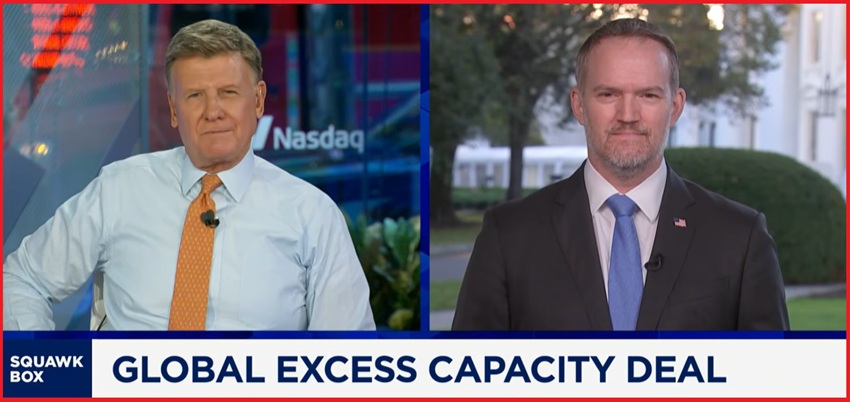
U.S. Trade Representative Jamieson Greer appears on CNBC to discuss details of a new G20 sideline agreement with 14 other major economies to crack down on global factory overproduction, targeting excess manufacturing.
The discussion about the issues with Canada is around the 5:00 mark of the video below. As previously noted, President Trump and USTR Greer are happy with the current status of tariffs against Canada, they are having the desired effect, and meanwhile the U.S. is negotiating a ¹bilateral trade deal with Mexico.
¹♦ $30.76 billion in remittances reached Mexico in the first half of 2026 — a lifeline tethered to U.S. manufacturing employment, which depends on whether both governments can reach a durable trade framework. {source} Mexico, the govt, the economy, their internal stability, cannot afford to risk losing that influx of financial support.
Mexico’s Economy Secretary Marcelo Ebrard came out of the G20 Trade Ministerial in Milwaukee last week sounding the most optimistic he has in months. He had just spent nearly an hour across the table from U.S. Trade Representative Jamieson Greer, and his message was direct: “We are getting closer on many things — moving forward, narrowing positions, resolving issues. Every day we are closer to having new agreements,” Ebrard told reporters from Milwaukee.
Posted originally on the CTH on October 8, 2026 | Sundance |
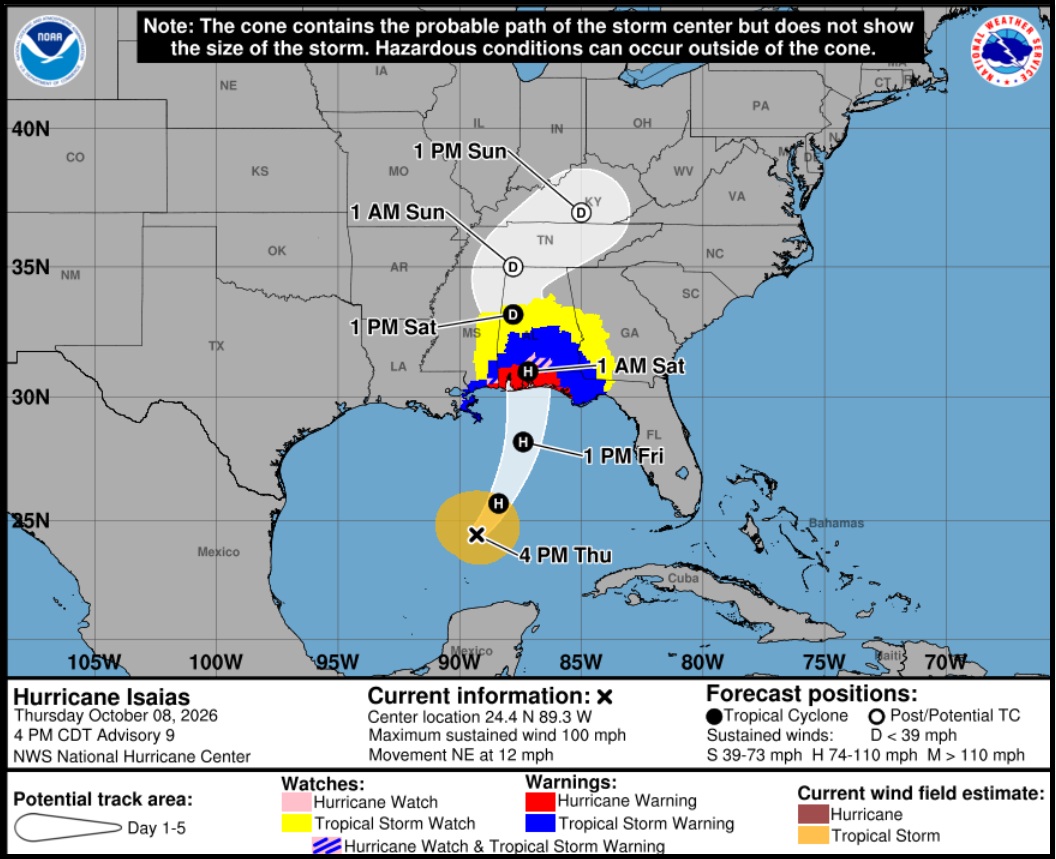
Hurricane Isaias continues nearly on the predicted track while the intensity forecast remains a challenge. No substantive changes to the overall thinking. Outdoor preparations and home-hardening in advance of the hurricane should be completed by early tomorrow. Inland residents should prepare for power outages due to excessively high wind gusts.
[National Hurricane Center] – At 400 PM CDT (2100 UTC), the eye of Hurricane Isaias was located near latitude 24.4 North, longitude 89.3 West. Isaias is moving toward the northeast near 12 mph (19 km/h). A turn toward the north is expected on Friday. On the forecast track, Isaias is expected to pass to the north of the Yucatan Peninsula through this evening and make landfall along the U.S. northern Gulf Coast within the warning area late Friday or early Saturday.
Maximum sustained winds have increased to near 100 mph (155 km/h) with higher gusts. Additional strengthening is expected through early Friday, and Isaias should remain a dangerous hurricane as it approaches the northern Gulf Coast Friday night.
Hurricane-force winds extend outward up to 15 miles (30 km) from the center and tropical-storm-force winds extend outward up to 125 miles (205 km). The estimated minimum central pressure is 975 mb (28.80 inches). (more)
A hurricane watch is in effect from Bay St. Louis, Mississippi, to Indian Pass, Florida. A storm surge watch is in effect from the mouth of the Mississippi River in Louisiana to Yankeetown, Florida. {Nat Hurricane Center} Those in the forecast areas are strongly advised to pay close attention to local officials and heed all evacuation orders.
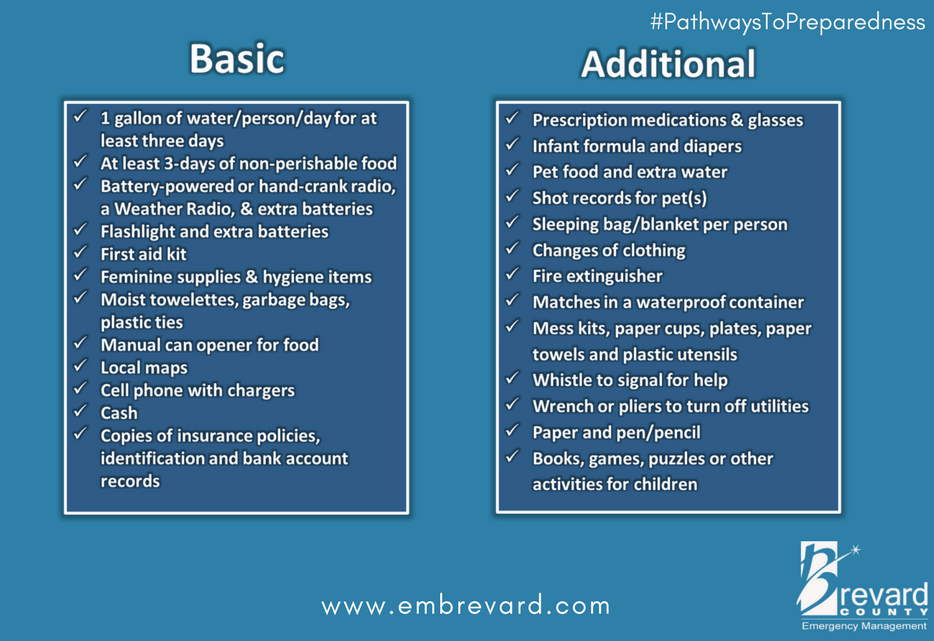
Prepare for the worst and hope for the best. Everything is replaceable, except you and your family. We have a lot of Treepers in the path of this storm. If you need assistance, use the comments section of any ‘Isaias Update thread’ to reach out, or use the email address in the upper right of the site.
Right now, you are in control. Have a solid plan, work that plan – stay busy, and don’t get caught up in the hysteria. Try to avoid national media hype. Stay updated via your local news stations. Friday morning looks like the key day impact zones will be identified. Reach out to your neighbors; touch-base and check to see if they are okay or need anything. Community restoration begins before the storm arrives. Look out for each-other.
Remember the inland lessons in Tennessee and Western North Carolina from Hurricane Helene. Regarding any evacuation plan, please pay attention to your local officials who will be coordinating with state Dept. of Transportation. As the path and impact zone of the storm becomes more predictable your local officials will alert to best route(s) for evacuation.
For those in the cone of uncertainty; remember, planning and proactive measures taken now can significantly reduce stress in the days ahead. Plan when to make the best decision on any evacuation (if needed) consider Friday morning the decision timeframe. As a general rule: take cover from wind – but evacuate away from water.
DAY ONE (Wednesday) √
Determine Your Risk
Make a Written Plan
Develop and Evacuation Plan
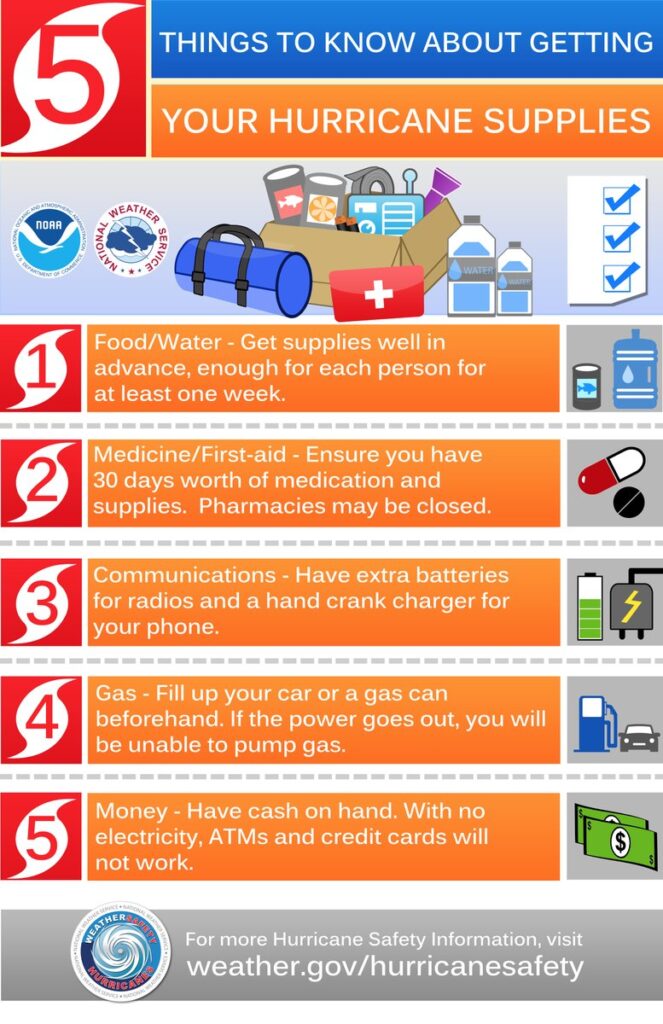
Inventory hurricane/storm supplies.
Withdraw cash based on plan/need.
Get gas and storm supplies
DAY TWO (Thursday) TODAY:
Get Storm Update
Assemble and Purchase Hurricane Supplies
Contact Insurance Company – Updates
Secure Important Papers.
Update/upload your phone data.
Strengthen and Secure Your Home
Discuss Evacuation Decision with your Family.
Fill freezer with 3/4 full water jugs.
DAY THREE (Friday) TOMORROW
Get Storm Update
Re-Evaluate your Supplies based on storm update
Finish last minute preparation
Plan for a minimum of THREE DAYS without power
Assist Your Neighbors
If Needed – Evacuate Your Family
.
Communication is important. Update your friends and family contact list. Stay in touch with family and friends, let them know your plans. Select a single point of contact for communication from you that all others can then contact for updates if needed.
Today is the last day to organize your important papers, insurance forms, personal papers and place them in one ‘ready-to-go’ location.
Evaluate your personal hurricane and storm supplies; update and replace anything you might have used. Assess, modify and/or update any possible evacuation plans based on your location, and/or any changes to your family status. Fill car with gasoline. Review prescriptions, refill if needed.
Check your shutters and window coverings; test your generator; re-organize and familiarize yourself with all of your supplies and hardware. Check batteries in portable tools; locate tools you might need; walk your property to consider what you may need to do based on the storm’s path. All decisions are yours. You are in control.
Consider travel plans based on roads and traffic density. Being proactive now helps to keep any future stress level low. You are in control. If you have pets, additional plans may be needed.
One possible proactive measure is to make a hotel reservation further inland that you would consider evacuating to. Follow updates of the storms’ progress; make reservations tonight or tomorrow if determined; you can always cancel if not needed. It is better to have a secondary evacuation place established in advance. Being proactive reduces stress. Even if you wait until much later to cancel, it is better to pay a cancellation fee (usually one night charge) than to not have a plan on where to go. Trust me, it’s worth it. Protect your family. Make the booking decision in the next 36 hrs.
Posted originally on the CTH on October 8, 2026 | Sundance |
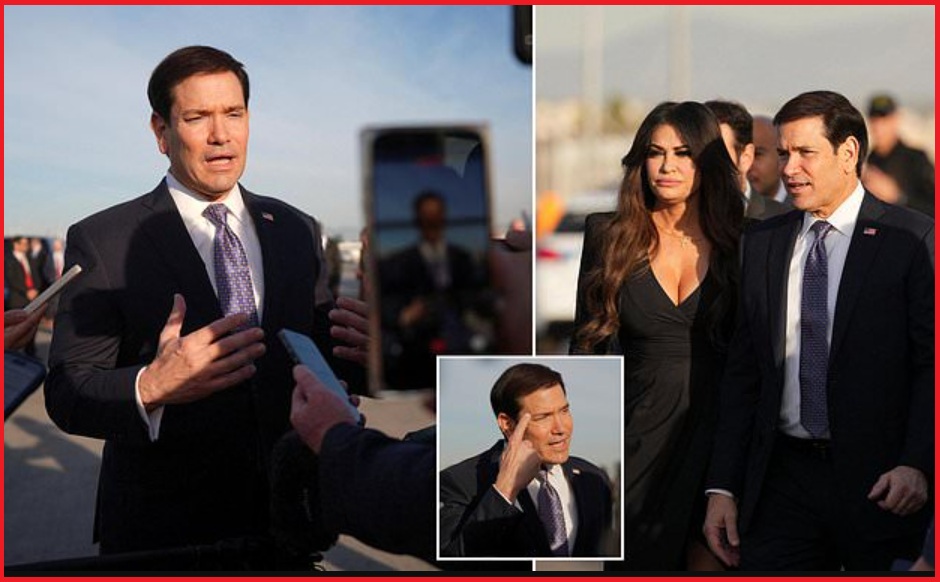
Secretary Marco Rubio was heading to Portugal when he gave a brief tarmac presser to the traveling pool of media narrative stenographers. One of the questions surrounded {THIS STORY} about Kimberly Guilfoyle, Donald Trump Jrs former girlfriend and current ambassador to Greece. WATCH:
From what I am able to determine, the State Dept has actually opened an internal investigation and review of Ambassador Guilfoyle’s conduct while in her post. That said, Rubio is correct in that it is impossible to answer questions about something just written by media for the purpose of questioning Rubio. The media is working overtime trying to frame narratives in advance of the 2026 midterm election.
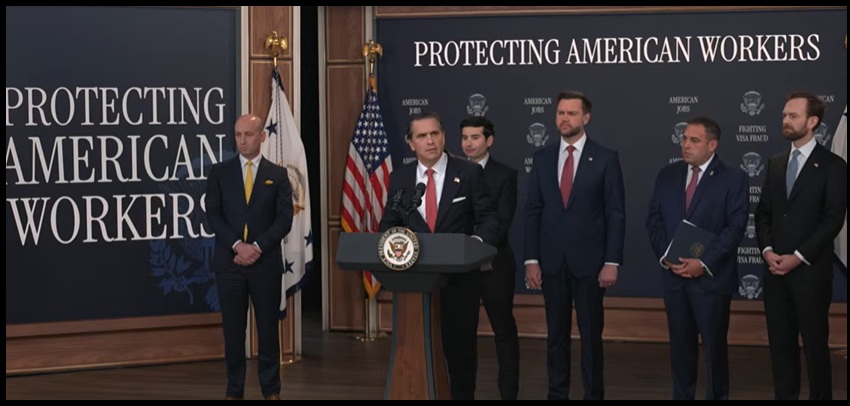
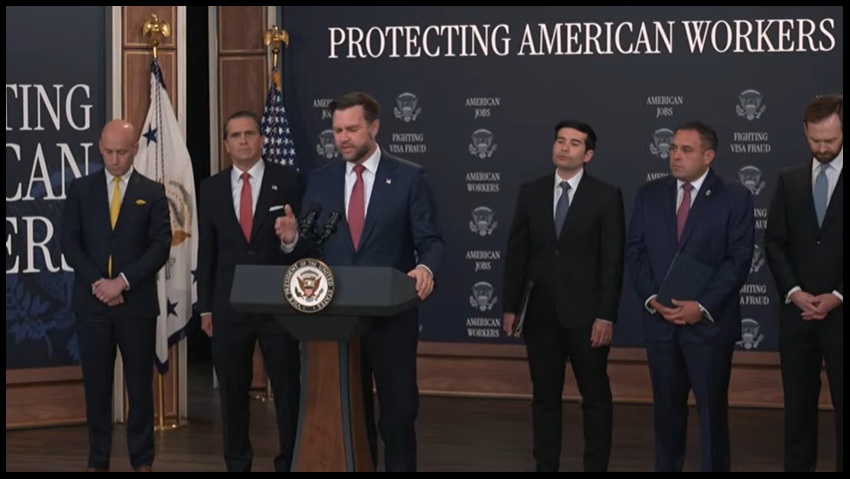
Vice President JD Vance and the federal Fraud Taskforce held a press conference today announcing their investigative findings of H1B visa abuse and manipulation of green card program by U.S. corporations who hire foreign workers over Americans.
During the press conference, JD Vance announced that Microsoft and Adobe have been suspended from the H1B visa process, as well as several other tech companies. The taskforce also announced immediate investigations into nine major U.S. universities for J1 student visa fraud. The entire visa program is being targeted by the fraud taskforce and DOJ in order to ensure that American students and American workers benefit from employment and college entrance opportunities. This is well worth watching in full:
[Transcript] JD VANCE: “Yes. Good morning. Thank you all. Well, good morning to the press and good morning to all the people who’ve worked so hard on this. This is a great day for American workers because we are taking some very concrete actions to cut down on some of the H-1B and J-1 visa fraud that we’ve been tracking over the past several months.
I want to give a particular shout out to Andrew Ferguson, Stephen Miller, and of course Todd Blanche, our great Attorney General, who are standing behind me. A particular shout out to DOL Secretary Keith Sonderling, who’s been really an amazing partner in the anti-fraud Task Force. Thanks to Keith’s hard work, we’ve uncovered about $20 billion in fraud just within his, his department and secured over 200 convictions in the last five months alone.”
So Keith has been one of our real all-stars on the anti-fraud task force, and of course the IGF DOL and. All of them will speak and then you guys can ask us a few questions, but here’s the basic problem, something that we’ve been working towards fixing in the Trump administration for a long time.
The H-1B visa program is meant to allow companies to bring in really the best of the best from outside the United States of America for positions that are completely impossible to fill with American workers. Unfortunately, the program has become rife with fraud. over the last several years, probably the last several decades, and here’s the basic game that American corporations and foreign corporations will play. They will say maybe they’ll put an advertisement in a small town newspaper. They’ll go out there and say that we have advertised for a position with our company and nobody is responding to it, and they will use that lack of response to then go and replace American workers with what is effectively. And indentured servants, and I’ll get into that in a second, but these are not people who are coming into the United States of America. These H-1B visas with the full rights of an American citizen or an American employee. They’re coming in and being mistreated by their employers and being used to undercut the wages of American workers.
Now there are two ways this system fundamentally works. The H-1B visa is how the people get into the United States in the first place, and then a perm program. is how those employees stay. So after a couple of cycles of H-1B reapplication, the companies will then apply for a perm, a PERM, which will allow the employee to stay, get a green card, and potentially stay in the United States indefinitely. So if the H-1B visa is how people come into the country, the perm. Program is how they stay in the United States to begin with.
Now, there has been no company in the United States unfortunately that has abused this system more than Microsoft. And let me just give you a couple of statistics on this. So in the last year, Microsoft, and I want to be clear about the data here, so let me check this, but Microsoft laid off last year 6000, 6000 American workers. At the same time, the company benefited from 6300 H-1B visas and almost 3000 green cards.
In other words, if you do the math, for every worker that Microsoft laid off, they replaced that worker with 1.5 foreign indentured servants. Now that is a scandalous system that we’ve allowed in this country for far too long, but thanks to the work of Task force and thanks to the empowerment of the President of the United States, we’re going to stop it because thanks to an ongoing investigation we have decided to suspend the perm program for Microsoft, which means they will no longer be able to apply their they’ll no longer be able to take those H-1Bs and apply for permanent resident status within the United States of America.
Now, our message to Microsoft and to any other foreign or domestic corporation is quite simple. We obviously want you to thrive. In the United States of America, we want people to invest in the United States of America, particularly the American technology sector. We are the biggest boosters of your industry. We want you to continue to grow and to employ a lot of people, but we want you to employ American workers. And so our message to Microsoft is you’re a great American company, but you’ve got to hire great American workers. You cannot lay off American workers and then replace them with foreign indentured servants, and I want to talk a little bit about that.
When I say indentured servants, here’s what I mean. When somebody comes in on an H-1B, they are completely, they’re completely subordinate to that company. If they lose that job, they have to leave the country. So if you think of the basic idea of an American constitutional republic where we bring people in who are fair and equal citizens of the United States. States of America, they are not controlled by their employer, but you bring people in and you basically tell them that if they get out of line, if they get too uppity at work, they’re not just going to lose their job, but they’re going to be deported back to their country of residence. Those people are not full citizens, and that’s why those people are earning wages that are far below the average for American citizens.
The second thing I want to say about that is this fraud is facilitated not just by the companies themselves but in some ways it’s facilitated by these foreign outsourcing firms, these firms that help corporations apply and find H-1B visa candidates. They’re commonly called the witches, the four major outsourcing firms, and these firms. Are as complicit or maybe more so complicit in the visa fraud than any American corporation.
And here’s the basic data. If you are working as an H-1B visa in the United States of America, you’re earning $20,000 less than an American citizen hired in the same position. If you were brought in by one of these foreign outsourcing firms, you’re making $48,000. Is less than an American citizen in a similar position. So I’m sure that everybody here understands the game that is being played. You bring in indentured servants from outside the country. You lay off American workers, and if you’re a corporation, you make a ton of money by undercutting the wages of American workers, replacing them with people who, frankly, shouldn’t be in the United States of America to begin with.
This is a terribly pernicious system. It’s gone on for too long, and we’d all encourage, by the way, Congress to do something about it, but there are things within our authority under the law, our regulatory authorities and administration to fix this problem, and that’s exactly what we’re going to do.
I want to make one final announcement here because while we see a lot of H-1B visa fraud, we also see a lot of J-1 visa fraud. And this is where some of America’s most elite universities bring in foreigners again to undercut the wages of American residents.
Now, there are 9 universities in particular that we believe merit an investigation. Those universities are Harvard, Yale, Stanford, Brown, the University of Pittsburgh, UC Davis, Caltech, Arizona State, and MIT. And what we see is that when you employ an American worker as a graduate student, as a researcher, they’re making about $20,000 more than someone brought in under a J-1 visa.
And importantly, these universities are employing J-1 visas for federally funded grants at a rate of about 61%. The national average is 38%, so something weird is going on at these universities. They’re using these visas way too much. They’re using them to undercut the wages of American grad students and American researchers, and it simply has to stop.
Let me make one final point before I turn it over to Keith. This is a fundamental Insult to the American worker and to the American way of life. We cannot allow visa programs that were designed to ensure that American corporations had access to the best and the brightest to use them to undercut the wages of American workers.
Now it’s one thing if you want to bring in a person like Elon Musk. I think 99% of American citizens look at somebody like Elon Musk or Lisa Su, the CEO of AMD, and they say, Obviously if that person wants to come in and build something great in the United States of America, we support that.
But if you’re bringing in an accountant who’s making $40,000 a year and you use that foreign indentured servant making $40,000 a year to replace an American worker who is making $70,000 a year, you’re not bringing in a genius to build a great American corporation. You’re committing fraud against the American people and against this visa program. It has to stop. And thanks to the work of this task force and again the empowerment of the President of the United States, we are doing something to stop it.
I again would encourage Congress to reform this program. It is very clear that it’s not working the way that it should, but we have tools in the administration to make this program work better for the American people. A lot more we could do if Congress. Willing to play ball. And again we extend an invitation to both Democrats and Republicans. If you want the H-1B visa program to stop being used to defraud the American taxpayer and to undercut the wages of American workers, get to work and we will help you. But we’re going to do everything that we can in the interim to ensure the program works as it was designed to work. And with that, I want to turn it over to our great Labor Secretary Keith. Take it away.
DOL Secretary Keith Sonderling: Well, thank you, Vice President Vance for the task force and all the task force members for the amazing work we do together. Because of this task force, the Department of Labor has uncovered $22 billion in visa fraud. But today we are protecting something far more valuable than any dollar amount. We are protecting the American worker.
The Department of Labor. Taking historic action by shutting down the pipeline of systemic fraud, the fraud that has flooded our country with foreign labor at the expense of American workers. It begins with universities and companies that have turned into visa mills, promoting foreign workers that have lied about their qualifications to take jobs from our beloved American workers. But these foreign workers aren’t coming here just for the job.
Employers have enabled this pipeline through fraud, putting foreign labor ahead of American workers, and the fraud doesn’t end with getting the job. That job becomes a pathway for foreign workers and their families to stay in America permanently and eventually becoming US citizens. And who pays for it all? The American worker.
This administration knows that American workers are the best and brightest in the world. These jobs that were stolen from them. Um, should have gone and will now go to Americans first, not foreigners and especially not foreign fraudsters. And today, thanks to President Trump, Vice President, and the task force, we are cutting off the head of the snake.
The companies that have enabled this abuse for decades, due to ongoing criminal investigations led by the Department of Labor’s Inspector General Anthony Disposito, who will get into this shortly. I am hereby suspending from the permanent labor certification program, some of the largest IT outsourcing firms in the world, Cognizant, Infosys, Tata, WIPro, HCO, and Cap Gemini. And also due to multiple active federal investigations, the Department of Labor is suspending Microsoft and Adobe from the program.
So what does this mean? We will not accept any new or process any pending permanent labor certification applications involving these companies.
Since 2009, just these companies alone have requested almost 3 million foreign workers. They’ve received over 230,000 H-1B visa approvals and over 100,000 permanent labor certifications. That’s hundreds of thousands of jobs that were taken from American workers. Our historic action is the first critical step to stop the fraud and the abuse, and ensure that these programs never come at the expense of the American worker.
Under President Trump’s leadership and thanks to Vice President Vance and this task force, we’re ending the fraud that has fueled reliance on foreign labor. President Trump’s Department of Labor will ensure that American businesses now look first to the most talented workforce in the world, and that’s the American worker. Thank you, and now I invite the Attorney General Blanche to the stage.
AG TODD BLANCHE: “Thank you very much, Keith, and congratulations on your recent confirmation. So this announcement today. Should send and does send a strong signal to every single employer in the United States that the Trump administration will not tolerate discrimination against American workers.
For too long, employers have engaged in tactics as, as you’ve just heard from the Vice President and Secretary Sonderling. To protect and in some cases prefer foreign workers for all types of job opportunities, these practices have shut American workers out of the economy of their own country and have made it more difficult for both recent college graduates and also experienced, experienced workers to get a fair shake at the employment. Market and a fair wage, but no longer.
I want to thank, thank the Department of Justice, the folks that work in the in the Civil Rights Division, and the Department of Labor and their IG’s office. You’re going to hear from the Inspector General in a moment and also the other members of the task force that have worked so hard over the past several months to get where we are today.
And just let me make clear, if it’s not clear that the Department of Justice, my department, is actively investigating companies that do this that favor foreign workers over the American people. The American people have spoken loud and clear. If a company, even including Microsoft, Adobe, or any other discriminates against an American worker. In favor of someone on the other side of the world. That company has violated the trust of the federal government and the American people and will be investigated.
This issue has affected Americans across generations, but it’s especially important to young people with a lot of talent who can’t find a job because their potential employer may be engaging in these sort of improper and nefarious practices. I want to thank the Vice President and Secretary Sonderling for the leadership on this issue. It’s an honor to be a part of the administration that takes this issue seriously. The issue of foreign labor favoritism is something that nobody should ignore, and we at the Department of Justice will continue to do our part to make sure that doesn’t happen. Thank you very much. I’ll now turn it over to to Stephen Miller.
White House Deputy Chief of Staff, Stephen Miller: Thank you very much. Good morning everybody. Thank you, Mr. Vice President, for your leadership not only on this issue, but The entire body of work the fraud task force has done since President Trump launched the fraud task force and put the Vice President in charge.
Our worst nightmares about the fraud that had been taking place in this country were exceeded fraud that has been going on for years, decades, in some cases generations. Vice President Vance and his team have exposed historic volumes of food stamp fraud, daycare fraud, Medicaid fraud, healthcare fraud, Social Security fraud, every kind of fraud you can imagine that steals from and betrays American families and workers. Today is no different.
What the task force and its partners in law enforcement have uncovered is systemic immigration fraud that violates the laws and statutes of the United States to undercut American workers and labor. The H-1B program. And the perm programs attached to it have explicit statutory commands that must be followed. It requires individuals, for example, to have a unique, highly specialized occupation as one example. And yet in case after case after case we see individuals that are being brought into the country for skills that are not special. is that are not unique and that are not skilled and that are doing work that is currently being done by American workers but at vastly lower pay.
If you go back a few decades in this country, this was an issue that was covered commonly by our media. In fact, there’s a famous special that was done by Mike Wallace at CBS probably almost 30 years ago now when this program was first starting. Documenting and detailing these abuses.
If you remember in 2015 when President Trump first campaigned for president, he had at his rallies American workers in good paying middle class jobs with pensions who were laid off and forced to train their foreign replacements as a condition of their severance, a phenomenon that is widespread and well documented. And again, because of this task force. This kind of unlawful conduct has been exposed, detailed, documented, and resulted in real concrete federal action.
I think one of the important things that I would like everyone to take home today is that America is blessed with some of the most exceptional talent that has ever existed in the history of the world, homegrown American talent. This has been true since the day our country was founded. Go back to the Wright brothers and the journey into the skies.
The industrial base, the power through World War II, the genius of American space flight and aviation, homegrown American talent. Has been at the center of one revolution after another, as the vice president said, we always welcome and bring to this country individuals who have exceptional gifts to share with our country, but what we don’t do and can’t do is crush and kill the dreams of millions of young children in middle school and high school who want that first step in the ladder, but Unable to get it.
We’re mid-career workers who’ve dedicated their lives to a company and are given two weeks’ notice just because someone else somewhere in the world is willing to do the job 2030, 40, 50% cheaper than they are. And a lot of the reason why they can do it so much cheaper is they are able to then go back to their home countries in the future. And if they’re living in a country where the average salary is $2 a day or $3 a day, taking half of an American worker’s salary is still a raise in their home country.
The last thing I want to say is that There’s been a lot of attention given to how President Trump has secured the southern border of the United States, which is the most significant security achievement in American history. In other words, the most open border to the most secure border in the span of days. Nothing has equaled that since this country was founded in terms of a security achievement. But what President Trump has done to fix and reform the immigration system more broadly is equally as astonishing and impressive.
He completely fixed and repaired the refugee program. He battled the issue of visa overstays for the first time ever and created a program all throughout the world to ensure people are abiding by and obeying the rules of their stay. He cracked down for the first time ever on birth tourism, something that has been a scourge and an embarrassment for years. He dealt with the issue of Immigration from terrorist havens and dangerous nations with the travel bans and travel restrictions.
He’s applied the public charge gender for the first time ever to ensure people who are coming to this country are not going to be seeking or reliant on welfare. He’s dealt with systemic fraud across every different visa program that exists, generations of work done in less than 2 years, so that it is true today that under President Trump, America is the only country in the world. That has managed to turn an immigration system from being against its people to for its people and in particular in the Western world where this has been simmering for a long time, President Trump is the only Western leader to deliver for the citizens of this country an immigration system that puts them first.
No other Western leader has done this. President Trump stands alone. I’d now love to have. Mr. Disposito, the Inspector General of Labor, take the stage. Thank you.
DOL Inspector General Disposito: “Thank you very much, Steven. Thank you for your leadership and commitment. Under President Donald Trump and Vice President JD Vance, fraud is no longer being dismissed as an accounting error. Fraud is a crime.
Fraud steals American jobs. Fraud fuels violence. Fraud threatens our national security. President Trump and Vice President Vance understand that protecting America means standing behind the men and women who wear the uniform. Giving them the resources to do their jobs and letting cops be cops.
Alongside my partner, Secretary Keith Sonderling, I am announcing a historic investigation into the J-1 visa fraud involving 9 major American universities. Pitt. Yale, Harvard, Stanford, Brown, UC Davis, Caltech, Arizona State, and MIT. Subpoenas have been served. Investigations are underway, and nobody will be getting a free pass because their name is carved into an expensive building.
Improperly used J-1 visa classifications to avoid employment obligations, exploit taxpayer funded programs, and undermine American workers will not be tolerated. Approximately 61% postdoctoral researchers and federally funded workers at these institutions are foreign nationals.
American taxpayers send billions of dollars to these universities to support research and innovation. They deserve to know where that money is where it’s going and whether it’s being used lawfully. And China The Chinese Communist Party doesn’t need to kick down the doors of America’s research laboratories if our own institutions are willing to leave the doors wide open.
China is not simply an economic competitor. The Chinese Communist Party is a sophisticated adversary, actively targeting American technology, intellectual property, and national security interests. We will investigate whether foreign influence, improper financial relations. or visa abuse are compromising federally funded research.
If an American university is breaking the law to save a dollar while exposing American research to a foreign adversary, that is not academic excellence. It’s institutional betrayal.
Let me make something else crystal clear. I spent a career as an NYPD detective. I worked the streets of Brooklyn investigating violent criminals. Who thought that they were untouchable. I did not back down then, and I sure as hell will not back down now. I don’t care how prestigious a university thinks it is. Break the law and the American people, and I will personally cuff you in the university square. I don’t care how large your endowment is, how powerful your alumni are, or how many politicians you have on speed dial.
As Vice President Vance said, nobody is above the law. That’s why we’re establishing a visa fraud strike team, bringing together investigative expertise from across government. We will follow the money, uncover the schemes, and work with Attorney General Todd Blanche to prosecute criminals.
We are also launching a Labor Inspector General Most Wanted fraudster list, featuring 16 criminals who have stolen nearly a half a billion dollars from Americans. To those fugitives, as AG Blanche’s team has said, they will find you anywhere on this planet. And our results speak for themselves.
Since Vice President Vance’s task force to eliminate fraud was established, our investigations have contributed to 171 indictments, 203 convictions, 80 arrests, more than 70 search warrants, and over a billion dollars identified for the taxpayers, and we’re just getting started.
During my time wearing an NYPD shield, I learned that crime doesn’t happen in a vacuum. Fraud doesn’t end with a stolen dollar. That dollar can become a gun in someone’s hand, narcotics that kill, a payment to a human trafficker, or resources for a foreign enemy. That’s why we’re investigating the connections between fraud, organized crime, forced labor, human trafficking, and threats to national security.
President Trump and Vice President Vance have unleashed the resources, empowered law enforcement, and made it clear that protecting American workers and taxpayers is a national priority. To the hardworking men of the hardworking men and women of the Labor Inspector General’s Office, you have my full support, and we will give you every tool you need to get the job done.
Anyone exploiting our immigration system, stealing taxpayer dollars, or compromising American security, your university’s reputation will not protect you. Your political connections will not protect you. Your money will not protect you. The only thing that matters is the evidence. We will bring to prosecutions. President Trump demands America first, and we, this task force is delivering.
No amount too small, no fraud too large, and absolutely no institution above the law. And now it’s my honor to introduce the co-chair of the White House Task Force to Eliminate Fraud, Andrew Ferguson.”
ANDREW FERGUSON: “Morning. America is not a jobs program for the rest of the world. We didn’t build our institutions for the rest of the world. We built them for Americans. Our rule of law, our system of sane and sound regulation, our capital markets, our justice system, everything that makes the American economy thrive.
We did not build for the planet. We built it. For us, we built it for Americans first. The fraud described today denies Americans that institution, and that is what the fraud that the task force has spent the last 9 months uncovering has consistently done. It denies Americans of their own patrimony.
Benefits fraud denies Americans their Medicaid and Medicare benefits. SNAP takes the food out of the mouths of children. CDL fraud denies Americans a safe road. Immigration fraud denies the Americans the right to decide who will be citizens, fellow citizens of their country, and this fraud denies Americans their just wage, a sin that cries out to heaven for vengeance. That is why this task force is so important.
Fraud of every kind is a frontal assault on every institution that Americans hold dear, and if we do not confront it, those institutions will keep eroding. Our benefits programs will disappear. Americans will lose their livelihoods. Our roads will be unsafe. Crime will continue to rise.
Only President Trump and Vice President Vance have ever taken these problems seriously. They have deployed the entire federal government to stop. And that is ultimately what this is today. This is protecting institutions that Americans built for Americans and preserving them for Americans. That is why this announcement is so huge.
I also want to acknowledge the work of Andrea Lucas, who’s the chairman of the EEOC. She is the greatest chairman of that institution since Clarence Thomas back in the 1980s on every issue that previous EOCs. EEOC’s refused to touch, protecting white American men from discrimination, protecting American citizens from national origin discrimination. She has led the EEOC headlong to defend Americans from these abusive practices. She has been an incredibly valuable partner of the task force. I know she’s been a very valuable partner of the Department of Justice, and we are thrilled to work with her on these issues. And with that, I will return it to the Vice President.”
JD Vance: “So let me just echo what Andrew just said about Andrea Lucas and of course Harmeet Dillon, who have been amazing partners in this work, and it wouldn’t be impossible without them. We finally have an administration, a Department of Justice led by Todd Blanche who are taking seriously that American citizens have rights in their own country.
It sounds like a novel concept. But for so long we sent a message to people whether they were white or male or the wrong national origin. We said that we weren’t going to defend your rights if you looked the wrong way or you didn’t belong to the right category. No more in this administration, and that’s because of the hard work of Harmeet Dillon and Andrea Lucas.
Let me make one final point. There’s this pernicious idea, and Steven alluded to it, which is that Americans are not good enough for the jobs in their own country. You hear people say that in subtle ways and sometimes explicit ways. When people say that Americans won’t work on farms or they won’t work in certain dirty jobs, what they’re really saying is that Americans won’t work in those jobs for poverty wages, nor should they.
When you hear people say that we have to bring in foreign accountants because there aren’t enough American accountants, what they’re saying is that there aren’t enough people who can do math in the United States of America, which is absurd.
When people say we need to bring in foreign IT specialists and quite literally force people to train their own replacements, what we’re saying is that there are Americans who cannot do those jobs, and that is absurd to the American. People, this visa fraud is a frontal assault on the idea that you deserve to inherit the jobs and the positions in your own country.
Never believe the lie that Americans are not good enough to build a future for Americans. That’s what visa fraud tells you. It is a lie, and the President of the United States does not stand for it, and neither does anybody on this stage. Thank you.
Go ahead. Good. Thank you very much.
~ QUESTIONS ~
JOURNALIST: I wanted to ask, um, you had some harsh words for Microsoft at the top of your speech just then. Yet in that case, why is President Trump awarding the nation’s top technological medal to the CEO of Microsoft this afternoon?
JD VANCE: “Well, like I said, Microsoft is a great American company, and we have a great relationship with them. They do a lot of important things. They also laid off 6000 American workers. Workers while replacing them with 6300 H-1Bs, and our message to Microsoft is not that we want to harm your company, it’s that we want your company to thrive, but we want it to thrive by employing and empowering your fellow Americans. So we’re going to continue to support Microsoft and have a great relationship with Microsoft, but we’re also going to deny them the ability to apply for these permanent residencies until they show that they’re going to get serious about putting American workers first.
Go ahead. Yeah, in the, in the orange and then the red. Thank you.
JOURNALIST: Um, so assuming that a lot of these people have, they brought families over, this is kind of a two-part question. If they brought families over and they were living in, uh, high cost living areas, so if the were those families then eligible for social benefits, SNAP benefits, educational benefits, if that’s the case, uh, because of the lower cost. Because they weren’t being paid as much, is the federal government going to be holding some of these companies liable for that to try to recoup some of that money that was on the basically at the taxpayers’ expense?
JD VANCE: “Well, in some cases we actually already have tried to ensure that if you’re coming to the United States of America and benefiting from our very generous welfare system, that you should stop doing that. We’ve seen that in some of the mortgage application programs that we have. We’ve seen that. Number of other programs as well. So yes, I mean our message to newcomers to the United States of America, whatever program they’re coming on, is that you should come to the United States to enrich this country, to make this country better, to participate, of course, in the institutions of American democracy.
If your purpose in coming to the United States of America is to cash a check, meaning a check not for working, but from our generous welfare program, then you’re not going to enrich the United States of America, and we would prefer that you not come here. We’re going to continue to look at a number of these things again. We’ve already done some of this work, but we’re going to continue to look at ways of recouping American taxpayer money that has effectively gone to subsidize cheap labor all over the United States of America.”
JOURNALIST: “Thank you so much, Mr. Vice President Kara Castronova with Lindell TV. You came from working class and understand poverty and know the American worker more than anyone else. Where do you think the narrative came from that American workers don’t want these jobs? And after that, a quick question for the Attorney General.
JD VANCE: Yeah, well, look, I think that that narrative came from a very profitable lie because if you’re an American corporation and you’re paying an accountant. In Southern California $70,000 a year, but you have an opportunity to replace that accountant with a foreign worker making $40,000 a year, then you can make a lot of money by telling American workers that they’re not good enough. And that’s why we have to push back against this lie.
Americans are good enough to inherit the great things about their country. Americans are good enough to build a future in this great country. We cannot allow. Both either foreign or domestic companies to send a message to the American people that they’re not good enough for their own nation, because when they do, it pads their profits. It depresses the American spirit of camaraderie and self-determination. It’s a terrible deal for American workers, and we’re putting a stop to it.
And then go ahead and ask your questions, Todd.
JOURNALIST: The Attorney General, just about sort of accountability and repercussions for anybody that are breaking these rules. Mr. Disposito mentioned cuffs, which everybody smiled at. Will there be arrests or what will the penalties at least be for these companies?
AG Todd Blanche: Well, I mean, it depends on the case. So yes, there are criminal laws that make a lot of this conduct not only illegal but a violation of the criminal laws. And so, and I do think that there are times when, when whether it’s an institution or leadership. An institution where they are able to avoid criminal liability because of a settlement or something like this and there are other times when the Department of Justice does need to go forward and ultimately whether it’s indicting individuals, leaders, people that were part of it or going after the institutions or companies that were doing it.
So yes, that’s the way investigations work. I Can’t forecast one in particular, but absolutely what the IG said is exactly right, that this is, you have to, you know, it’s empty threats are just that, they’re empty. So unless we’re actually going to come through and, and, and whether it’s prosecutions, whether it’s civil suits to get the money back and stop the conduct, yes, of course we’re going to do that.
JD VANCE: Great, thank you, Todd Kaitlin.
JOURNALIST: “Um, two questions. One, you said that Microsoft is being suspended from this program. Is that temporary or permanent, or what is the future forecast for that? And secondly, given how close we are to the midterms and you’ve been out on the campaign trail, given inflation, mortgage rates, and gas prices are all higher than when you took office, why does this administration deserve an A+ on the economy, as President Trump says?”
JD Vance: Well, first of all, it’s The suspension of perm is going to last as long as it needs to. We have a number of tools to suspend it indefinitely, but we actually want these companies to change their behavior, improve their behavior, and actually get better. That’s the goal here. We’re not just punishing them to punish them. We’re punishing them because we want them to change their behavior.
This, by the way, is something that applies to Adobe, but it could apply to a number of other technology companies as well. Stop defrauding the American worker. Stop importing an indentured servant to do a job. That an American worker would happily do. They’re just not going to do it for poverty wages. That’s the message that we’re sending. And obviously we have a number of enforcement tools to continue to drive that message home.
You know, to your question about the economy, you have to remember, Caitlin, that we inherited the worst inflation crisis in 48 years in the United States of America. We have seen $19 trillion of new investment come. We’ve seen a manufacturing boom. We’ve seen a factory construction boom in the United States of America. We’ve seen. A lot of companies, technology companies and otherwise, who are reinvesting and reindustrializing the United States of America.
Do some of those benefits take time to fully, you know, it takes time to build a factory. It takes time to hire the people who are going to work in the factory. But what we’ve seen the president do is really reverse 40 years of economic and industrial stagnation in the United States of America. I think it’s going to completely recharge the American economy.
You’re already seeing great benefits, but. I, you know, we’re going to see a lot more benefits come in the months and years ahead. And the final point on that is one of the reasons why I think we deserve an A+ from the American worker is because we’re finally cutting down on the fraud that’s depriving them of good wages and good jobs. This program has been defrauded for generations in the United States of America.
I mean one of the most heart-wrenching stories I’ve ever read was a story about an IT worker, I believe, in California. Who had to train his foreign replacement in order, as Steven said, to get his severance package, and then he left his job completely eviscerated, lacking his sense of self and a sense of purpose, and he committed suicide the very day that he left his job, having replaced his foreign replacement. This is not how you treat fellow citizens in the constitutional republic, and we’re stopping it, and that’s one of the reasons why I think we deserve great marks for the American worker, Jen.
JOURNALIST: Thank you, Mr. Vice President. Do you have any reaction to a US government official, in this case, the US ambassador, asking someone to pay off debt in exchange to access to other government officials?
JD VANCE: Well, so with, with, with that hypothetical, Jen, obviously I don’t love that, but I, I, you know, I don’t know exactly who you’re talking about. I don’t know the full details. What I find with these stories is that you never want to comment in a purely abstract way because a lot of times the details really matter and the details and the context inform the reality of the situation. So of course I don’t like anybody selling access to another government official, certainly a high level government official, but you know I You’re talking about a specific case, and I can’t say with confidence that the case you’re talking about is actually reflective of the way you’re describing it. No insult to you, by the way, but context really matters on this stuff, so I’d like to get the full story before offering a real opinion. A good lesson for a politician is never speak about something you don’t have the full facts on, and I just don’t have the full facts on that one.
Go ahead. Yep, yeah, yeah, go ahead, Amy.
JOURNALIST: Thank you, sir. You mentioned that you want people like Elon Musk to come to this country and, but he didn’t build his companies overnight. He studied here. He was accepted at Stanford, one of the universities that you’re studying. So how do you decide who’s the next Elon Musk and who is not?
JD VANCE: Well, we have a process to do this and have done this for a long time successfully, but also, as others have talked about, with a lot of fraud. We ask a very basic question. Number one, does a person coming in Fill a position that simply cannot be filled by an American worker. That’s question number 1.
Question number 2, very importantly, is this person a truly elite human being? Are they truly bringing in a special set of skills and abilities and work ethic and competence? Unfortunately, what we see with most H-1Bs is that you’re taking somebody, I’m sure in most cases a decent human being, and they’re using them to replace an American middle class. Worker, you know, Elon Musk obviously has done a lot of great things. We want a lot of other people to come into the United States of America if they have truly elite specialized skills, but that’s not what the H-1B visa program has become. It’s become a program of taking, for example, an accountant making a nice middle class wage and replacing them with a foreign indentured servant who’s making something closer to poverty wages.
That is a scandal, and the fact that they’re undercutting. In the wages of American workers is a big tell that they don’t have a hypers specialized skill. You know, one of the things I’m proudest of that we’ve done on the H-1B program, we did it early on. Steven and I worked very closely on this, is that we said we wanted to impose a fee on the H-1B application process. And the thought there is very clear. If you’re actually bringing a truly elite genius level, super specialized person in the United States of America, you’re going to be willing to pay. A little bit extra to bring that person into into your company.
But if you’re just bringing in somebody who’s going to undercut the wages of the American worker, which is what most H-1Bs are today, then you shouldn’t bring that person in. We should actually prioritize our workers first.
We’ll do a couple more.
JOURNALIST: Yeah. How do you define socialism personally and why do you think socialist candidates are popping up everywhere across the country?
JD VANCE: “Oh man, you know, I guess. It’s honestly, it’s a hard term to define these days because very often socialism, you know, classically you would think socialism is about prioritizing workers, and yet in reality I guarantee that most of the self-described socialists running across the United States of America are going to howl about this announcement today which is prioritizing American workers over foreign workers.
So, I don’t know what the term means anymore. I think in reality what it actually means in the American context. is that you want to replace American workers with foreign workers and you want boys to play in girls’ sports. That’s what unites the socialists that I see running across the United States of America today.
You know, it’s, it’s funny. Back in 2016, 1 of the most interesting things that happened is when Bernie Sanders, then of course the leading socialist in the United States of America, was asked about open borders. He gave an answer. that sounded similar to Stephen Miller’s where he said, Of course we’re not going to have open borders because that’s going to displace American workers. It is ironic that so many of the self-described socialists running across this country, they love the idea of replacing American workers with foreign workers, which suggests to me it’s really not about the working class, it’s about their hatred of native-born citizens. I saw real clear over here.
JOURNALIST: Can you clarify what exactly the fraud element of this is? What is the scale of, you mentioned Microsoft with the 6300. Were they lying on those applications? Was there some sort of law that they were breaking, or is it that this was a legal pathway through the system and you’re taking objection to the system?
JD VANCE: No, we don’t think it was a legal pathway through the system. The nature of the fraud is fundamentally that when you apply for these visa programs, you make a couple of. One of those certifications is that the person that you’re bringing in has a hyperspace specialized, hyper capable skill set, and that’s clearly not the case if you’re just replacing one American worker with a foreign indentured servant and undercutting their wages in the process.
And so the fraud is that they’re making representations when applying for this program that are fundamentally illegitimate and therefore ultimately illegal.
And then we’ll do one more in the back there.
JOURNALIST: Just sir, just a broader question about the task force. There’s been calls to investigate uh allegations of fraud into Planned Parenthood. Is that something that the task force isn’t looking at, or is that sort of another anti-abortion, uh, step that the administration will take after the midterms?
JD Vance: “Well, I’ve certainly heard some of those calls. I don’t think that we, I mean, Andy, maybe you can speak to this a little bit. I don’t believe that we’ve taken significant steps on this task force yet, but obviously when we see credible allegations of fraud against any organization of any political persuasion, whether to Anthony’s point, whether it’s an institution big or small, we take it very seriously.
Unfortunately, and others have made at this point, there is so much. Fraud in the United States of America that we’re investigating a lot of it, but we’re kind of drinking out of a fire hose because unfortunately the US government allowed this stuff to go on for way too long without actually checking on it. So we’re certainly looking into any credible allegation of fraud, but we have not done a large amount of work on that particular issue just because it’s something that we found out about relatively recently.
All right guys, have a great day. Thank you all. We got some.
DOJ PRESS RELEASE– Sheikhdoon Abdullahi Mohamud, 18, of Richfield, Minnesota, was charged today by complaint with one count of knowingly receiving a firearm and ammunition in order to commit a federal crime of terrorism.
The FBI arrested the defendant on Oct. 6, and he made his initial appearance before U.S. Magistrate Judge Elizabeth Cowan Wright on Oct. 7.
“This individual allegedly obtained a weapon he hoped to use in a mass casualty attack in support of ISIS, but this FBI arrested him and put a stop to his plans,” said FBI Director Kash Patel. “Once again this FBI is moving more effectively than we ever have before at stopping terrorists before they can attack Americans – with over 1,100 individuals prevented from conducting attacks, over 4,000 foreign terrorist organization related disruptions and arrests, a 38% increase, and more. We will continue to use every resource we have to detect and prevent acts of terrorism and wipe out their networks all over the country. Thank you to FBI Minneapolis who did an outstanding job in the investigation and likely saved lives.”
Secretary of State Marco Rubio held a press conference with Giorgos Gerapetritis, the Greek Foreign Minister earlier today. Rubio is on a three-nation strategic alliance tour of Iceland, Greece and Portugal.
The video and transcript of the press remarks and questions are below.
[Transcript] – SECRETARY RUBIO: Thank you. Thank you for your welcome. It’s actually great to be here to have our sixth Strategic Dialogue, which is ongoing, and we’ve begun downstairs a few minutes ago. It’s an event where our two countries commit to continue to work together on a range of issues.
We are two countries that are bound by a common heritage and by proud histories. The United States and Greece share a long history of friendship and partnership and alliance. In fact, the importance of this historical alliance is highlighted by the instability in the world today that we see as a result of conflicts in Hormuz with Iran, or the conflicts in the Red Sea with – in Yemen, or the conflicts in Ukraine and Russia. As you see a world that faces these destabilizing events, you recognize how important this alliance with Greece is to the United States.
It’s both historic – historical in its foundation, but it is also critical. It is a source of stability in an unstable world. And I’m thankful – we’re thankful – that Greece remains a great ally and that we share a common understanding – this is really important – not just a great ally – we share a common understanding of the threats that face our countries, the face – the threat – that face our societies. And we share a common understanding about the means to address them.
One thing we agree on, for example, is that the nations of Europe need to take on a greater share of the burden in defending their continent, and Greece is doing just that. They’re on track to meet the commitments that have been made to spend 5 percent of their GDP on defense this year, with over 3.5 of that – of their GDP – percent of GDP being spent on core defense. They’re also joining the National Guard’s Bureau of State Partnership Program, and they’ll be paired, ironically enough, with the Florida National Guard, which will bring our military collaboration even closer.
I have created this site to help people have fun in the kitchen. I write about enjoying life both in and out of my kitchen. Life is short! Make the most of it and enjoy!
This is a library of News Events not reported by the Main Stream Media documenting & connecting the dots on How the Obama Marxist Liberal agenda is destroying America