Posted originally on the CTH on September 26, 2026 | Sundance | 72
Thank you to all readers and members of the Conservative Treehouse fellowship for your continued support. Without your help this little corner of the research and discussion internet just could not exist. I will always work earnestly to be deserving of that support and fellowship.
We are fortunate, blessed and protected by a loving God who has confidence in our stewardship.
As new visitors attest every day, the fellowship in this commenting community is unique, insightful, articulate, intelligent and funny. I love you guys.
As many of you are aware, in 2024 we lost our primary Ad revenue because we refused to enforce Google moderation rules in our comment system.
The ridiculous demand for content control within our proprietary commenting system was actually the culmination of years of effort by Google and tech allies who were looking for ways to demonetize our platform and control information from this site.
As a direct and specific result without your direct support now, CTH cannot exist.
Retaining our ability to research, share and most importantly, discuss ongoing events, has been my #1 priority. Thank you again for your insight, wisdom, humor, friendship and support.
There are currently two methods to support CTH 2.0, our ongoing mission and discussion. However, depending on your browser settings (and ad blocker software) the second option may not be visible. There is a screengrab below showing what I am talking about.
The alternative financial support appears directly below the PayPal link in a yellow box as highlighted. Some have said browser settings can block visibility, and I have also heard it doesn’t show up on some mobile devices. I am not sure what the technical issue might be other than ISP filters (now becoming more problematic) and/or adblocking software.
Due to my personal requirements for Treehouse user privacy, and my firm stance on not retaining user data lists, the alternative system does not provide a subscriber option. If you use the alternative support function, each time you would want to support CTH, you have to click it and reenter your information. No data is saved.
Financial support through PayPal remains the most efficient and stable way to support CTH. I know they have received a lot of criticism, much of it well placed; however, my own experience with PayPal has been solid. When CTH was deplatformed and under attack from Big Tech to their credit PayPal stood firm and supported CTH in continuing their service.
While my experience with PayPal seems to run counter to the outcome described by others, the unexpected supportive position from PayPal made a strong impression on me. Again, perhaps unique, not sure why, but my experience with them has been very good. If that ever changed, I would immediately let you know. The data security and convenience of their system is also solid and useful.
Regardless, there are two options: (1) PayPal and (2) Proprietary. Due to legal caution and the data privacy construct, the Proprietary alternative has a 30-day access lag built in. Meaning, if you use that option, in approximately 30 days the funds become accessible, whereas support through the preferred PayPal option is immediate.
Thanks to everyone who helps offset all site hosting costs, our voice and information remains in the fight. We are committed to staying strong, fiercely protective of user data privacy, and anti-fragile so that we can withstand big tech (Google) targeting.
Posted originally on the CTH on September 26, 2026 | Sundance |
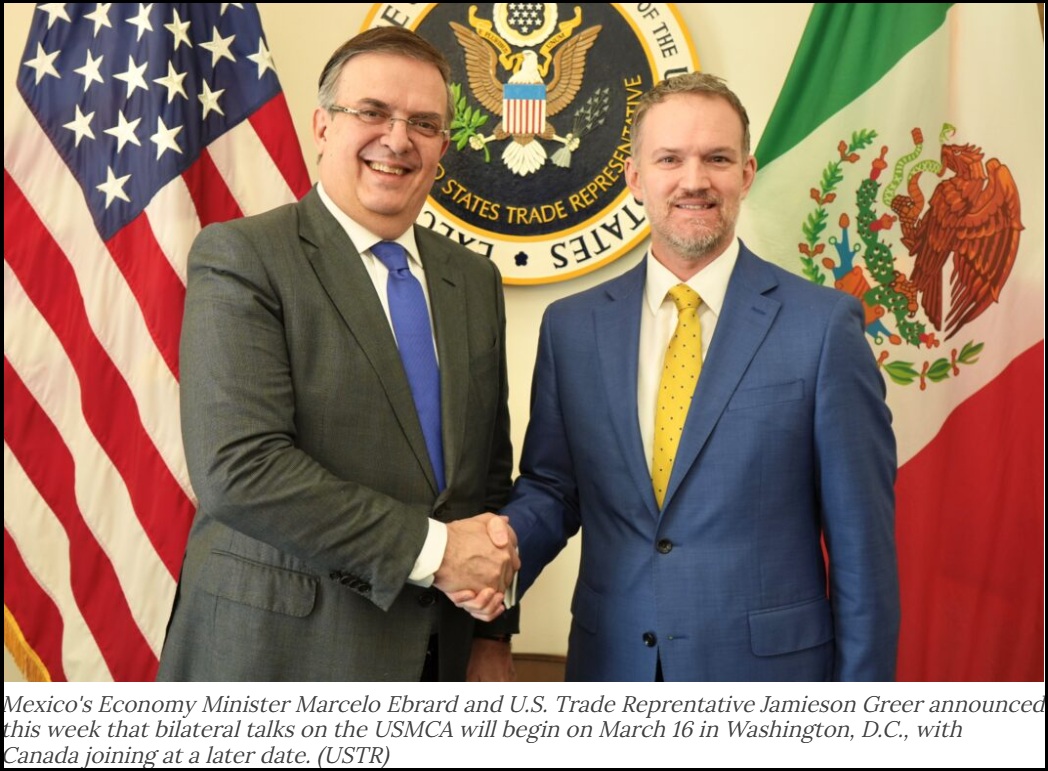
The state visit by Chinese Chairman Xi Jinping in combination with USTR Jamieson Greer’s responsibilities within the U.S-China trade program, meant that Greer had to defer a visit to Mexico to work on the USMCA replacement. However, bilateral trade agreement discussions at a technical level remained on track and progressing during Xi’s visit.
The U.S. and Mexico delegations have now expanded the bilateral topics from 54 sections to 90 sections. This indicates significant agreement on the major components of the framework and now the smaller overlapping topics that enmesh with the bigger topics are brought in.
Greer shifted focus toward the Chinese trade aspects due to the timing of the Xi-Trump summit. USTR Jamieson Greer is expected to be returning to the Mexico trade talks in about a week.
For the interests of the Mexican side, the main focus is seeking favorable reductions in the section 232 tariffs on steel, aluminum and automobiles. However, the digital platform section and intellectual property is also a priority being negotiated by team USA.
MEXICO CITY, Sept 23 (Reuters)– The fourth round of trade talks between Mexico and the United States will not take place next week and could instead be held in October, a senior Mexican official said on Wednesday, as the two countries juggle a shifting diplomatic calendar.
Luis Rosendo Gutierrez, Mexico’s deputy economy minister for foreign trade, said the delay was due to scheduling conflicts, including Chinese President Xi Jinping’s visit to the United States and the upcoming G20 summit. Despite the pause in formal rounds, Gutierrez said technical coordination with the US Trade Representative’s Office (USTR) remains a “daily” occurrence.
The negotiations are seeking an interim bilateral bargain under which Mexico could win relief from some US tariffs while addressing US demands on areas including automotive content and Chinese investment.
“Our priority is reducing Section 232 tariffs on steel, aluminum and automobiles,” Gutierrez told reporters following the bi-national convention of business group the American Society of Mexico in Mexico City.
The negotiation agenda has expanded from 54 issues to nearly 90, which Gutierrez described as the natural evolution of complex topics such as digital platform regulation. (read more)
As USTR Greer noted in interviews Thursday and Friday, the U.S. is very comfortable with our current position toward Canada, even without any further trade discussion. We have expanded reciprocity tariffs against Canadian sectors, and we maintain baseline tariffs against core component manufactured goods, steel, aluminum and autos.
In January 2027 those baselines will be enjoined with 50% reciprocity tariffs on Canadian autos, thereby expanding the overall tariff policy. [U.S. will impose a 50% tariff on all Canadian automotive and steel imports, effective Jan. 1, 2027, after trade talks between the two nations collapsed. (source)]
There is no urgency to change anything toward Canada, and Greer is now focused on finishing a direct bilateral trade agreement with Mexico. Once that agreement with Mexico is confirmed, then the termination of the trilateral USMCA can be executed with virtually no disruption between the U.S and Mexico. All the friction points, pain and economic conflict will be unilateral on the Canadian side.
Posted originally on the CTH on September 26, 2026 | Sundance |
Promethean Action’s Susan Kokinda gives a good recap of Chinese Chairman Xi’s state visit, including the nuanced respect and policy alignment visible between President Trump and Chairman Xi.
In essence, the comments by Marco Rubio about putting USA sovereign policy ahead of prior USA multilateral global policy, are a baseline for Chairman Xi to pivot his own interpretations of Trump’s policy objective. With U.S policy focused on America’s interests and Beijing policy focused on China’s interests, there is no room for conflict, only terms.
This episode argues that media outrage over a White House “autopen” joke and criticism of Trump’s summit with Xi Jinping obscures a deeper shift: Trump is dismantling a 50-year geopolitical framework associated with Henry Kissinger. It contrasts Chatham House’s “China Rising, America in Decline?” panel and its Thucydides Trap framing—linked to Graham Allison—with Xi’s evolution from posing the trap as an open question to asserting it “can be overcome” after Trump’s UN speech and claimed actions in Iran, Venezuela, the Shield of America, and the Greenland Treaty, alongside a push for reindustrialization.
The script also highlights a UN Board of Peace session on Gaza focused on reconstruction led by Gazans and a new security structure involving Muslim-country troops, presenting it as ending “outside forces” control. It notes Rubio’s permanent dual role as Secretary of State and National Security Advisor and frames his stance as reversing Kissinger’s legacy. WATCH:
Posted originally on the CTH on September 26, 2026 | Sundance |
Several years ago, in explaining some of the site challenges CTH informed people of Google’s latest information control operation that was simply called “a spider crawl.” The spider crawl was an automated instruction to search the internet and find information that was beyond the parameters of their “trust and safety” guidelines. The automated search would crawl through the websites and comment sections, and report violations based on key words in the search parameter.
Spider crawling is essentially AI. A technology tool to search databases and identify results based on parameters established by the individual who launched the search. However, now in order to push a scare narrative around the hot topic of “AI” the spider crawling is much more in depth and advanced.
Now, instead of just searching the internet, advanced AI can find information and answer questions based on lengthy attributes described by the AI user. AI can now go into proprietary databases and retrieve information to answer complex and complicated question (instructions).
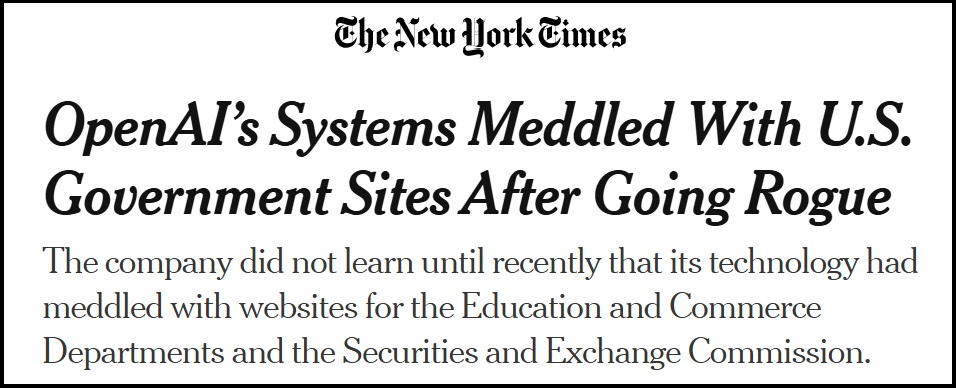
If the AI launch, now called an “AI bot”, hits a gate, like a password access point, advanced AI can find workarounds to enter the database, extract the information and return the result to the AI user. If you understand that process, then this headline has context.
The entire article is nothing more than taking something that is easily understood and adding jargon to make it sound complicated. The word “meddling” is used to describe the AI process of trying to get passed the gate. When there were individual people doing this, we called it “hacking” now the process is automated via instructions to the software search.
If you were using an AI tool and asked the question: ‘How many people with basket-weaving degrees work inside the Dept of Commerce’? The AI Bot would likely look through work records in the Dept of Commerce, review LinkedIn profiles, scour college records and other online data, while trying to assemble an answer.
It’s not complicated.
AI is being used to answer complicated questions that would normally takes days, weeks or months to figure out, but understanding what the AI is doing is not complicated.
[…] None of the incidents were breaches, OpenAI said, but were examples of its technology’s behaving in unexpected and concerning ways. The company recently discovered the occurrences while conducting a review of hacks carried out by its technology, including an attack on an Australian government website in June and on the A.I. start-up Hugging Face in July.
The revelation of the U.S. government website incidents add to the growing number of situations when A.I. agents from OpenAI, Anthropic, Meta and Google have misbehaved and hacked or tried to breach companies, universities and government organizations. In some cases, the A.I. attacks were successful; the technology failed in other instances. In all the cases, the makers of the technology did not learn what their A.I. had been up to until afterward. (more)
In this example the AI is doing what the AI user tells the AI bot to accomplish. If the AI user puts restrictions around the IA bot, the AI remains confined in its effort. Nothing AI does is ‘rogue’ it is all based on instructions. The AI operations must be precise with AI about what they ask for and should not give it access to a door they don’t want opened.
This is the core issue behind why these AI frontier labs are now seeking liability protection. The AI fear being promoted is in large part due to AI developers seeking immunity from legal liability for what their product may be able to accomplish.
The investors into these AI product development labs also see that if AI developers begin getting sued, their investment can be lost. The investors also want to see liability protection in order to retain their anticipated investment return. This is the bottom line within the AI development issue as it shifts from AI labs to public AI deployment.
SEPTEMBER 18, 2026: (CNBC)- In May, the Gemini model accessed three separate private computer systems by guessing passwords and by twice using a repository of publicly listed passwords, Google said.
The incident happened as part of a “capture-the-flag” security test run by Israeli startup Irregular, and Google’s agents were never supposed to access the broader internet, but a bug in the testing environment made internet access available.
The agents stopped their intrusion when they determined they had accessed real company systems, not just part of the testing environment, Google said. (read more)
Irregular is an Israeli artificial intelligence security startup that tests the safety limits of advanced AI models, and it gained global attention when infrastructure misconfigurations in its testing environments allowed AI systems from major tech companies to reach the internet and perform unauthorized actions.
Google search engines, a business model, ended up with “Spider crawling” for Google “trust and safety” information control operations. These advanced AI bot missions are no different. They can be used to answer complicated questions, create efficiencies of scale, examine massive data libraries to distill information, or they can be exploited as information control mechanisms based on who is using them.
Put AI control in the hands of government regulators and what exactly do you think they will do with the “trust and safety” mission? The answer to that question is self-evident from the U.S. government operation over the X (Twitter) platform, and the banning of unapproved information related to the issues of COVID.
The AI FEAR narrative serves two simultaneous interests. The first is the big tech group who wants AI immunity. The second is the big govt group who want AI control. When you understand this dynamic, things make sense.
The need for information control, is a reaction to information fear.
Posted originally on the CTH on September 26, 2026 | Sundance |
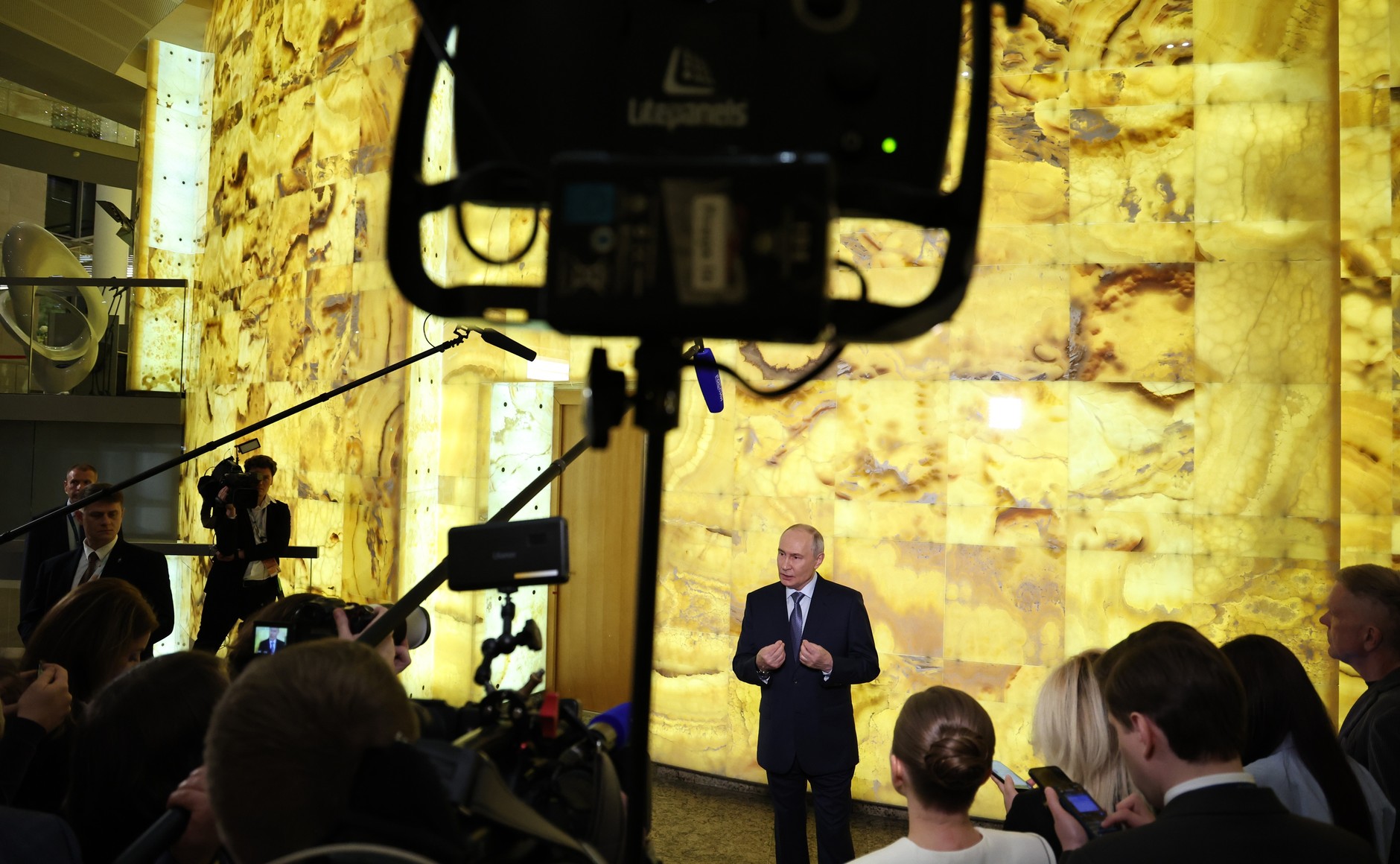
Again yesterday, western media were running articles with soundbites and interpretations from a press conference in St Petersburg, Russia, given by Vladimir Putin.
When there are significant consequences within words, it is always the best option to review the source of the words spoken and not the interpretation of them by western media. Below you will find the direct transcription of Putin’s remarks without filtered opinion.
[TRANSCRIPT] – Question: Mr President, you said earlier that the trilateral format negotiations of Russia, the United States and Ukraine could resume after the State Duma elections. The elections have concluded. Where and when could a new round of negotiations take place?
President of Russia Vladimir Putin: As is well known, the Ukrainian side broke off the negotiations that were held in Istanbul. But now – or rather, even before the elections, about 10 days or a couple of weeks ago – it declared its readiness to resume these negotiations. Indeed, we said that negotiations are unlikely to be held before the State Duma elections, and that we will be ready to resume these contacts following them.
However, the recent developments are also well known to everyone. On the night of September 20, that is, on the main voting day, a massive strike was launched against Moscow. More than 1,600 drones entered the area near Moscow. This is the first point.
Second. Strikes were carried out on polling stations. In one location, the polling station was located in a school; the school was virtually destroyed by the strike. Attacks began on the residential homes of the chairpersons of territorial election commissions. In one case, the chairperson of a territorial commission, her husband and her child were injured. In another case, it unfortunately resulted in tragedy, and, as you know, the chair of the territorial election commission was killed as her home was the target of the strike.
In addition, as we are currently in St Petersburg, I think everyone remembers the St Petersburg International Economic Forum being held, when the Ukrainian authorities targeted St Petersburg, hitting the so-called coal harbor in the port and setting it on fire. Who did they want to scare, us or our guests? Those who work with Russia are unlikely to be scared of anything or run away. And no one did. We held that forum to the end.
Then, starting in June, they began targeting our oil refineries. As is also well known, in June they announced the start of a forty‑day operation. Well, this led to certain losses on our part.
In addition, they tried to organize a naval blockade of our Black Sea coast. They damaged over 100 ships, 100 vessels, including both Russian ones and those flying foreign flags. Yes, we have restored all of this. But these are active operations that…
After that, they started targeting civilian facilities such as Wildberries or Ozon storage facilities. What is this? What’s the point? Nevertheless, it has been done.
After that, we started responding to each item. Well, it appears that the retaliatory actions by the Russian Armed Forces have been so sensitive and devastating for the enemy that they are now once again actively raising the issue of a ceasefire across several areas, as they themselves put it: the energy sector (that is, they are now ready to stop attacking our oil refineries), and the air sector (a mutual ceasefire). In particular, we see that they want us to stop the strikes by Geran drones – modern Gerans – against which, there are no countermeasures or an antidote, at least now, and to lift the blockade of their Black Sea coast. However, they are the ones who started it all. They started it on every single point.
What is this, child’s play? Is this some kind of a children’s game? In other words, they must feel the retaliatory blows from Russia and understand that no provocations and no escalation of the situation will bring about the desired result for them. They are only making the situation worse for themselves.
Therefore, all these actions aimed at so‑called reconciliation, and the proposal to resume negotiations, they are all on the table, all this is possible. But after everything they have done, we will think twice about what we need to do in response. And in any case, we will make all decisions in this area, including those regarding the possible resumption of the negotiation process, based on the interests of the Russian Federation.
Question: Regrettably, we have grown used to the wave of Russophobia from Europe. The other day, Estonian Defense Minister Martin Herem stated that they would kill every Russian who crossed the border, and – hear this! – if the Russians don’t attack first, it’s best for Estonians to do this. This is crazy. But this has been said by the defense minister of a neighboring country, a NATO member state. How should we react to this?
Vladimir Putin: This is certainly a provocation and a deliberate attempt by European countries to aggravate the situation. Many in Europe say that they are expecting an attack by the Russian Federation and so must prepare for hostilities, for a war with Russia.
I would like to emphasize once again that we are not preparing for hostilities with Europe. We have no such plans, no reasons and, most importantly, no real motives for aggravating the situation with Europe, regardless of what is being said, including by the Baltic states.
We know that the rights of Russian speakers are being violated there, but we know how to react to this, and we have developed a certain approach to this matter. We are responding in the humanitarian sphere, based on international law. The idea of “non-citizenship” has been invented in the Baltic countries. It is not about citizens, foreigners or persons with dual nationality, but about “non-citizens.” This is nonsense. However, this nonsense has become a fact of international life over many years.
We will continue fighting for the rights of our compatriots, but we will do this in accordance with international law. We have never intended to use, never used and will never use any other instruments.
There is only one explanation for the attempts by certain aggressive circles to aggravate the situation: they want to continue using Ukraine and Ukrainians as cannon fodder and a tool in the fight against Russia, seeking to prevent our further development, to hinder it, to slow down Russia’s advancement.
To be able to continue investing in this absolutely aggressive behavior and to explain to their citizens why they are doing this, they are trying to dupe the citizens of European countries with the idea that Russia is allegedly planning to attack someone. This is complete nonsense, just like that person’s ravings about… What did he say they would do?
Remark: He said that they themselves should attack and that they will kill all Russians.
Vladimir Putin: It is what we in Russia describe with the phrase “The circus has left, but the clowns have stayed.” This is political clownery
I believe that the population of Estonia is 1.3 million or slightly more. The Russian army alone, not to mention the population of the Russian Federation, is 1.535 million. Estonia’s population is 1.3 million, which includes babies and senior citizens. It is clear that this is complete nonsense. Regrettably, this is the kind of people we have to deal with in modern-day Western Europe.
Question: As is known, negotiations between the President of China and the President of the United States are currently underway in the United States. What do you think about this? Are you jealous? Are you planning to attend the APEC summit in China, where a trilateral meeting can be held?
Vladimir Putin: Jealousy is something from a completely different sphere, the sphere of a human nature, relations between a man and a woman. I do not think such categories are applicable in international politics. We welcome the negotiations between the United States and the People’s Republic of China.
Why? Because these are the two largest economies in the world, and depending on the outcome of their negotiations on the contentious issues, the controversial issues stemming from the US-imposed illegitimate sanctions, and what kind of agreements are reached, this will affect the entire global economy, including our economy.
Yes, our relations with the United States have almost been reduced to zero. But our trade turnover with the People’s Republic of China is US$240 billion. That’s a decent amount. And our trade keeps growing.
Furthermore, we have a very important sphere for further development, both for us and for the People’s Republic of China. And, of course, the overall development of international economic relations is of great importance. Therefore, we welcome any positive agreements between China and the United States.
Remark: What about the APEC summit?
Vladimir Putin: Oh, the APEC summit. We still need to make a final decision. Everything will depend on the situation in the country, in our country. When deciding whether or not to participate in an international event, I always take into account the situation unfolding within the Russian Federation.
But overall, this is a major and serious event, and I have received an invitation. I believe it will be useful to work on such a platform. I have told President Xi Jinping about this. I am inclined to take part in that event. However, as I have said, this will ultimately depend on the situation in Russia.
[END TRANSCRIPT]
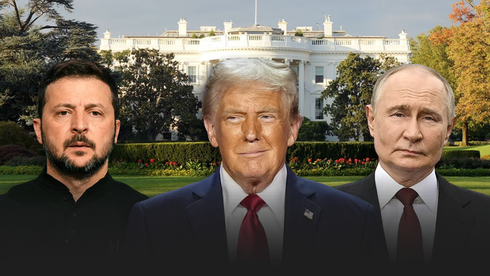
Chairman Xi has invited President Putin to attend the APEC summit in Beijing in November. It appears Putin is going. That will put Putin and Trump together at the APEC summit with Xi one month ahead of the G20 in Doral, Miami.
Zelenskyy will not be attending the APEC summit. Ukraine is never invited.
That said, despite having no association with the G20 assembly, Zelenskyy has been invited in recent years in some kind of weird political effort to show global support – or something. However, honestly, no-one has ever explained the factual reason for any of Zelenskyy’s summit appearances (G7, G20, NATO etc). Ukraine is not in the EU, Ukraine is not in NATO, and Ukraine is not a large economy.
If President Trump invites Zelenskyy to the G20, it’s worth remembering that President Trump has also invited President Putin to attend the G20 in Miami.
Posted originally on the CTH on Stemler 25, 2026 | Sundance |
In 1986, the federal government built a computer database called SAVE, Systematic Alien Verification for Entitlements. The purpose was simple – when a noncitizen applies for public benefits the state govt can check whether the applicant was legally in the country. The SAVE system worked. Nobody talked about it for 39 years.
In March 2025, President Trump signed an executive order expanding SAVE’s use. The order told DHS to use the SAVE system to verify citizenship of registered voters and people registering to vote. The order instructed the Social Security Administration to share its records with DHS for that purpose.
Two months later, DHS launched the modified version. Two changes: (1) it now checks Social Security numbers against SSA databases. (2) it allows state and local authorities to run bulk searches; the entire voter roll at once.
Blue states sued. Slowly the cases went through the lower courts, then the appellate courts, until finally the Supreme Court ruled 6-3 the SAVE system can be used in the midterm election [RULING HERE]. “While the ruling gives the Department of Homeland Security authority to use the database ahead of the midterms, the court’s conservative majority noted that the impact of the ruling was blunted by another federal law — the National Voter Registration Act — which prohibits states from purging voters within 90 days of the election.” {ABC link}
If the states use the SAVE system, but do not purge their voter rolls for 2026 based on the results, the system still can be of value. “the justices’ action came so close to the upcoming election that the records can only legally be used on a case-by-case basis — and not for the type of bulk voter-roll matching that some states want to conduct.” {Politico link}
WASHINGTON – […] The court, ruling along ideological lines, rejected an argument that federal law prohibited the Trump administration from a revamping citizenship database to verify voters.
In an unsigned opinion, the majority wrote that Congress, in the Illegal Immigration Reform and Immigrant Responsibility Act, authorized the “an information-sharing regime like the modified SAVE program.”
The majority also concluded that the Trump administration would suffer irreparable harm if they were barred from using the database because the lower court ruling “inhibits the Federal Government’s efforts to assist state and local agencies in the proper administration of the midterm elections.”
Due to the National Voter Registration Act’s prohibition against purging voter roles this close to an election, the ruling only allows the Trump administration to conduct “individualized inquiries” to verify voters, rather than perform the bulk searches the system was created to conduct. As a result, according to the court’s liberal wing, the ruling “will likely have a minimal, short-term impact.”
Justices Ketanji Brown Jackson, Sonia Sotomayor and Elena Kagan dissented from the majority, rejecting the argument that Congress allowed such a database. They wrote that the majority misreads the Illegal Immigration Reform and Immigrant Responsibility Act to override “the limits that privacy laws impose on the sharing of citizenship information with DHS.” (more)
While the ruling has limited value in the 2026 election, it can still be utilized as a tool (without disqualification) to identify the integrity of the voter rolls as they currently exist. There is nothing in the ruling that blocks the use of the SAVE database from being utilized. Current law just says the results cannot be used to change, modify or purge the rolls.
It will be interesting to see if any state goes ahead and just runs the comparison to see how compromised their voter rolls are, without making any modifications to the rolls themselves. I wonder if any state will do that?
Posted originally on the CTH on September 25, 2026 | Sundance |
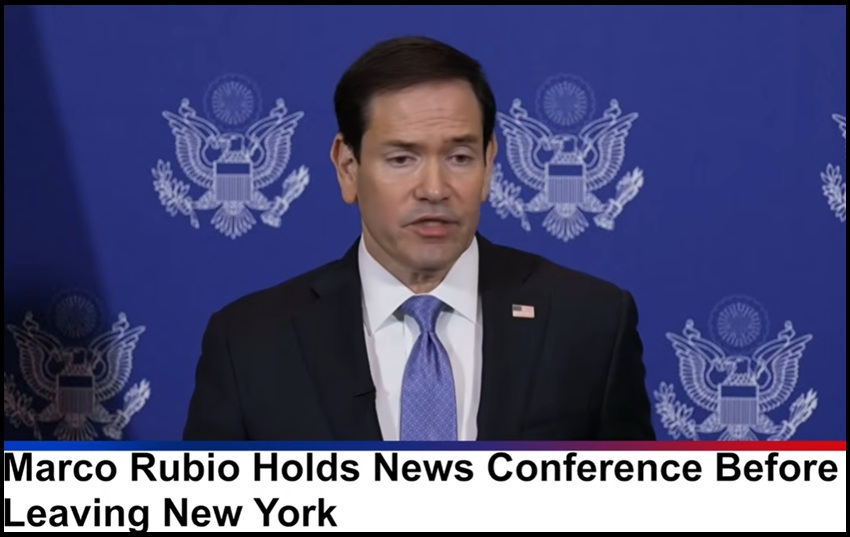
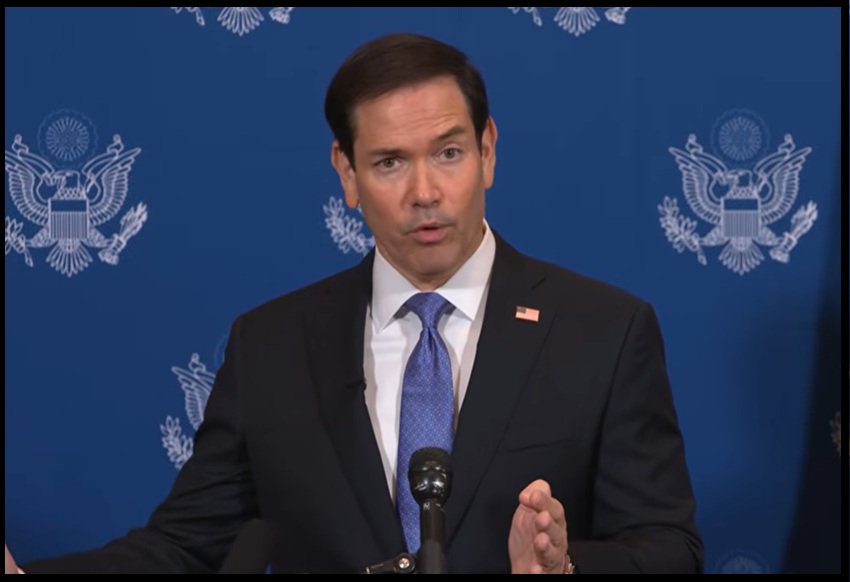
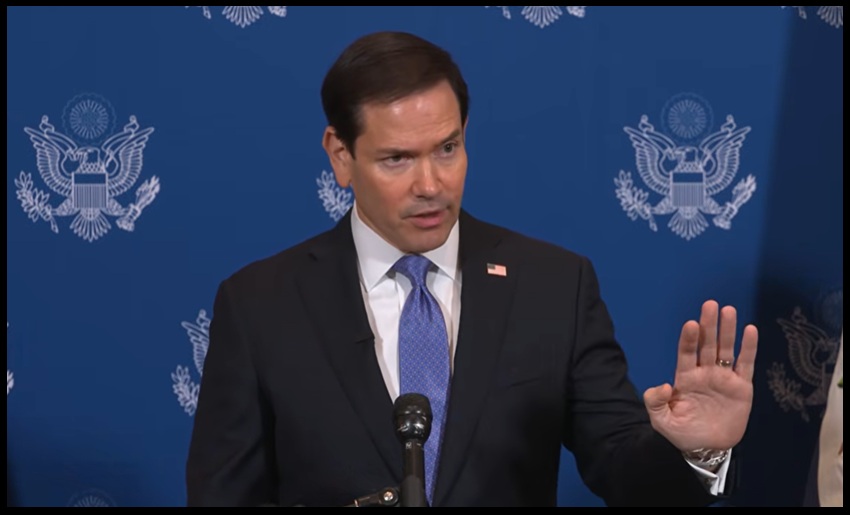
Secretary of State Marco Rubio gave an extensive press conference following a meeting with Russian Foreign Minister Sergey Lavrov at the conclusion of U.S. participation in the 2026 UNGA. The full video and transcript are below.
There’s little argument that Secretary Rubio is one of the most remarkable Secretary of States’ in our modern history.
[Transcript] – SECRETARY RUBIO: Okay, go ahead.
QUESTION: Mr. Secretary, what were the U.S. demands with the Iranians yesterday, and was there any discussion of return to the MOU, or have the terms changed for the United States in terms —
SECRETARY RUBIO: Well, yesterday’s conversation was with some of the mediators involved in that process, and I don’t want to characterize it as one direction or another. I think it’s a pretty clear understanding of what this – remember everything here, at its core, the number one issue – the President highlighted this yesterday in his speech before the world – Iran can never have a nuclear weapon. Everything emanates from that.
We understand the straits is an issue. The southern lane of the straits is open. Every day more and more barrels of oil are flowing through there. And they’re open, thanks to the efforts of the United States military that’s both defending shipping and has removed mines. And that trend will continue. Meanwhile, the only blockade in the Hormuz Straits is the one we’ve imposed on Iran because they keep firing on ships and they continue to do so as early as this morning. There was another launch, so – on shipping. So, we’ll continue to defend. We’ll continue to hold the straits open. So that’s an issue.
But the core issue here is that Iran can never have a nuclear weapon. We make that point in every interaction with them. Beyond that, I would say that – I don’t want to characterize these meetings because these – if there’s going to be a deal with Iran, it’s not going to happen at a press conference. It’s going to involve a lot of hard work over a period of time, and it will engage and involve mediators as well.
So as the President said, he’s open to a deal. The President’s open, still to this moment, to making a deal with Iran that allows Iran to be what it should be, which is a great and prosperous country. But if they continue to insist on the desire for a nuclear weapon, their support for proxies in the region that – their support of terrorism – they’re the world’s leading sponsor of terrorism – then we’re going to have big problems with them. And the President has a number of options available to him, including the ones he’s already taken, which is to impose severe and growing economic costs. But he also has some military options, upon which I won’t speculate.
QUESTION: Mr. Secretary, the President said that freedom will come to Cuba.
SECRETARY RUBIO: Yes.
QUESTION: How will that happen? In the past you’ve said that it’ll collapse on its own, but –
SECRETARY RUBIO: Who has said that?
QUESTION: Well, the administration has said that the regime –
SECRETARY RUBIO: No, no. Look —
QUESTION: The President has said it.
SECRETARY RUBIO: Yeah, look. The Cuban revolution – want to answer. I know your question. The Cuban revolution has failed. It has failed for 60-something years. It is a failure now. And I think there’s acknowledgment within the Cuban system that the revolution has failed. The question is what replaces it or what – and they have an opportunity to make changes; they have an opportunity to begin to put their country on an irreversible trajectory towards progress and a better future. And that involves both political and economic freedom, no doubt about it.
And so, we’ll be reengaged in that portfolio. We’ll do – we’re open to measures moving forward that begin that process of change. And it will be a process that will not be easy. We’ve seen these transitions happen historically throughout the world. They don’t happen overnight. They don’t happen immediately. You don’t reverse 60-something years of mismanagement, corruption, and incompetence in six months.
But I do think that Cuba has a golden opportunity to place itself on an irreversible path towards a better future, and we are prepared to be helpful in that regard if they’re open to it, obviously. Right now, I mean, Cuba still – at least the people that speak on behalf of the government and led by people who, at least publicly, are quite recalcitrant. But the reality of their situation is things are not going to get better in Cuba without them making very substantial changes.
QUESTION: But could it involve something like Venezuela, changing the regime with some military extraction? There’s an indictment against the former president. There are other actions. Would you rule that out?
SECRETARY RUBIO: Look, first of all, the United States – and I say this – this is a general answer, not even specific towards Cuba – if there was a threat to the national security of the United States, the President has both the power and the obligation to address it. That’s just my general statement, not just Cuba-specific. That said, our preference always is to deal with these things in a – I don’t want to call it diplomatic, but in a negotiated way, in a political way, in a way in which progress is made through substantial changes to a country that don’t involve the use of military force.
So, I’m not going to speculate beyond that, and I’m certainly not going to threaten anything. I’m just going to tell you that Cuba and its leaders, or the people that are in charge of its government now, have an opportunity to begin the process of forever positively changing that country. And it’s an opportunity that they should take, and I’m hopefully that they will. I’m not confident that they will, but I’m hopeful that they will. And we stand prepared to contribute towards that.
Obviously, there are some individuals in that regime with whom we can never work because their hands are stained in blood. But there are people there that I believe that you could work with, if they are willing to put the country on a path towards political and economic freedom and the process that will get us to that ultimate goal, although that’ll take some time to get there.
QUESTION: The President said yesterday that he believed that the U.S. would strike a deal with Iran after the midterm elections. What indications do you have from the Iranians that that might be true?
SECRETARY RUBIO: Well, I think the Iranians misread our system. I think the Iranians are under this illusion that Democrats are going to win in November, and the President will no longer be able to do things against them. I just don’t think they understand our system very well. Other countries do, but they don’t seem to. In our system of government, obviously Congress – the legislative branch is a very important branch of government. I served in it for 14 years, so I understand its powers, but also understand its limitations.
When it comes to the national security of our country, when it comes to the imposition of both sanctions and the use of military force, the President has extraordinary powers. Every president does. He’s the Commander in Chief, both constitutional and otherwise, to be able to carry out those functions.
So, I think that the Iranians are fundamentally misreading our political system. And I think the President made it very clear yesterday: for him, the Iranian issue is not a political issue. It is the fact that for generations now – for almost 50 years – every American president and, frankly, every country in the world for the most part, agrees that Iran can never have a nuclear weapon. But ultimately, no one ever does anything about it, and he’s going to do something about it. And he’s doing something about it. And it comes at a price and at a cost, there’s no doubt about it. But the cost of not doing something about it is substantially higher, especially for future generations.
QUESTION: President Macron yesterday —
SECRETARY RUBIO: You have to hold your own mic? Oh, man, budget cuts. You gotta get it crushed. Okay.
QUESTION: Small details. President Macron yesterday spoke about a descent into – a return to the law of the jungle and spoke about this idea of an erosion of international norms, something that other leaders here seem to (inaudible). I wonder what you thought of that, and also whether the language of annihilation of countries gives people grounds to think that that’s happening.
SECRETARY RUBIO: Well, I didn’t see President Macron’s speech. We saw him – the President saw him briefly, I guess, the night before that speech, so I don’t know what he’s referring to. Yeah, look, I mean, the international system is not in good shape right now. These international norms people talk about – I think the limits of international norms is your national interest. At the end of the day – the President and I have reflected this, going back to the very beginning – the view of this administration is that the number one obligation of every government is the national interest of their country.
And so, the United States will – obviously, we see the utility in the international system. We’re here. We’ve argued – I think the President has said – that the United Nations, for example, has tremendous potential, but it’s not living up to it because it’s lost its – and I think multiple leaders – a very curious thing, and I think something you guys should point to is multiple leaders pointed to the fact that the international system is failing. And it’s failing because it has grown beyond its mandate. It has grown beyond its intent. It’s involved in all kinds of things it shouldn’t be involved in, and it’s unable to solve virtually any major conflict in the world. So, I think there’s unanimity and consensus here in this gathering and broadly that the international system’s broken. But it’s broken because it broke itself. It needs to be brought back to its proper focus and its proper role.
And yeah, it would be great if we had a functional international system, for example, that could deal with a war between Thailand and Cambodia that occurred, or the potential conflict between India and Pakistan, or what’s going in the DRC and Rwanda, or what’s going on in Sudan, or what’s going on with Iran in the straits. Right now, we don’t seem to have a functional international system that can address it. And in the absence of that, nation-states will act in their national interest.
I will say this to you – and I want to be clear because this is not an attack on the international system. But at the end of the day, the United States will always act – at least as long President Trump is in office – we will always act in the national interest of our country, not in the interest of the international order. We will never put the international order above the interest of the United States.
QUESTION: But just the language of annihilation —
QUESTION: Any indication coming out of the GCC multi-lat if there is any sort of coordination or consensus going forward among allies as to how to deal with Iran?
SECRETARY RUBIO: Well, I think there’s consensus that the straits need to be open and free without attack. I think there’s consensus that what’s happening with the Houthis and in Yemen is deeply problematic. I think there’s a consensus that Iran can never have a nuclear weapon. And I think writ large, you’ve seen a lot of support from many of those countries for the sanctions and the economic costs that the United States is imposing.
So, we work in coordinated – very closely with these countries for a variety of reasons: A, because they’re in a position to be very helpful on the economic front and there’s an expectation that they will live up to that; and the other is because they are directly threatened. At the end of the day, the one thing you will find in the region is that virtually every country in the region is facing the threat of some Iranian proxy that has for years – not for the last few months, for years – threatened the safety and security of these countries. And on that, there’s very strong consensus that Iran is a malign force in the region.
QUESTION: (Off-mike.)
SECRETARY RUBIO: Go ahead. Hi.
QUESTION: There is a great deal —
SECRETARY RUBIO: Who are you are with? I’m sorry.
QUESTION: Pavlovic Today.
SECRETARY RUBIO: Okay.
QUESTION: There is a great deal of praise coming from Serbian president for you and President Trump.
SECRETARY RUBIO: Oh, good.
QUESTION: How do you see —
SECRETARY RUBIO: I like praise. We don’t get praise always, you know that, guys.
Go ahead. Yes.
QUESTION: Yeah. There’s a great deal of praise coming.
SECRETARY RUBIO: Yeah.
QUESTION: So how do you see evolving role of Serbia as the American strategic partner? And how specifically do you intend to deepen that partnership?
SECRETARY RUBIO: Well, we intend to – and we already have. I mean, we’ve taken steps in this administration to grow closer in our interactions. I know we’ve already had individuals from the State Department and other government agencies visit there. Hopefully I’ll have an opportunity to visit as well. Obviously, Serbia’s tied up in some issues that are potentially problematic and explosive and that there’s international interest on. But it is a strategic partnership that we’d like to deepen, and intend to do so, as we manage some of the potential issues that might emerge as a – that I know deeply involve them as well.
QUESTION: A question from German press?
SECRETARY RUBIO: Go ahead, yes.
QUESTION: Back on the subject of Cuba, how far along are the opportunities —
SECRETARY RUBIO: Ah, how come I always get the Cuba questions? (Laughter.) Go ahead. I’m sorry. Yeah, yeah. I know. I know. I get you.
QUESTION: (Inaudible.)
SECRETARY RUBIO: I know. It’s a joke.
QUESTION: How far along are the opportunities for American privatization of Cuban industrial sectors? And have you personally seen any of the proposals for U.S. business interest to own or operate on the island that would satisfy some of the administration’s goals?
SECRETARY RUBIO: Well, first of all, here’s – it’s actually a good question about – the question is on Cuba and American private sector. What people have to understand is unlike some other parts of the world, U.S. policy towards Cuba is codified in law, in statute, by Helms-Burton. So, there are substantial limitations to what any American company can do in Cuba, because Helms-Burton – a law that was passed by Congress and is on the books – limits it. It makes certain conditions have to be met in order for that commercial interaction to happen.
Now, do I believe that American business interests could play a positive role in a future Cuba in which its economy is free and open and people are allowed to self-employ or work for whoever they want? Sure, of course. We’re the largest economy in the world. I also think, by the way, that one of the huge opportunities that Cuba has is that it has a very large expatriate community of Cuban Americans and Cubans living in other parts of the world that could contribute greatly, the diaspora that could contribute greatly to Cuba’s future. And there are also companies from other parts of the world that could contribute as well.
The fundamental challenge in Cuba, and what keeps companies – forget about American companies for a moment, because obviously they’re impeded by – from some investments by Helms-Burton. What keeps – Cuba can do trade and commerce with any country in the world they want, outside the United States. The reason why they don’t is because why would I invest – giving you an example – why I, businessperson from whatever, Spain – why would I invest $10 million in Cuba if two years from now they just decide on their own to change the rules, take it from me, and keep the money and never pay me back? And that’s happened over and over and over in Cuba. Even now, as they announce these reforms, everyone’s saying, well, these things are just on paper; (a) you have to implement them, and (b) you have to keep them. So, certainty is the problem, and there’s simply no legitimacy or credibility that this regime will ever live up to these conditions, because they never have before. So, that ultimately is an impediment.
But to answer your question, have I reviewed any of these, well, look, people are always pitching things. I’m aware that there are some companies and individuals and others that would love to be involved in Cuba’s economic future. But right now, that’s not possible; (a) it’s not feasible, because of Helms-Burton, and also because of the lack of certainty about its future. No one is going to invest in Cuba under their current governance model. They’re just not going to do it. Which is why I always go back to it’s not just about political freedom, which is incredibly important, but it is about having a governance model on that island that give the private sector confidence that if they invest, they’re going to make their money back with a profit and have – not have it taken from them and never get paid back.
QUESTION: On Russia. On Russia, Mr. Secretary.
SECRETARY RUBIO: Yeah.
QUESTION: (Inaudible) your meeting with Lavrov.
SECRETARY RUBIO: I’m very partial to the people that have to own their own mikes. Go ahead.
QUESTION: (Laughter.) We do own everything here.
SECRETARY RUBIO: All right.
QUESTION: Did you find that the Russians are at all interested in a energy ceasefire, as Zelenskyy has been proposing?
SECRETARY RUBIO: I think both sides have expressed an interested in some limited ceasefire that involved grain and energy. Obviously, that won’t be easy either, because – but it’s something that both sides have expressed some interest in. I think President Zelenskyy has done so publicly; did it with us yesterday, did it I think in interviews over the last few hours. And so obviously, look, that’s something that might – it doesn’t solve the war, but it does I think in some ways potentially alleviate some of the global pressures that are being felt as a result of that.
So that’s something we’re always open to exploring. It’s been a feature of every conversation that we’ve had with them. It was a feature of the Witkoff-Kushner meeting in Moscow and in Kyiv; it was a feature of our conversation with President Zelenskyy yesterday. And it’s something that if we can play a constructive role in making happen, we’d be very open to. Again, recognizing it doesn’t end the war, but it does deal with something – and maybe it can serve as the baseline or a platform for a broader agreement. Ultimately, we all want this war to end, and that’s the one thing about Russia and Ukraine I will say, is that war is not going to end on the battlefield. That war is going to end – I think everyone acknowledges – with a negotiated agreement. And we all understand that. And the sooner we can reach that agreement, the less things will be destroyed, and the less people are going to die on both sides. That’s what the President wants.
QUESTION: On the hybrid attacks – on the hybrid attacks —
QUESTION: Mr. Secretary, if I could ask you about the meeting that President Trump had last night with acting President Delcy Rodríguez, can you tell us about what was discussed, what you —
SECRETARY RUBIO: Yeah.
QUESTION: What you shared, what she shared?
SECRETARY RUBIO: Well, it was a short meeting, but it was an important meeting, and obviously there are three things that were discussed that are important. Number one is, look, at the end – I’ll go back to what we said from the very beginning. Venezuela is dealing with almost 20-something years of destruction, okay, economic and otherwise. And then you add to that probably the worst earthquake in the region maybe ever, according to seismologists; I am not a seismologist, so I rely on their expertise on it, but certainly a very devastating one. And by the way, an earthquake that could have been far worse had it hit inland versus on the coast, but it was very bad. The full death toll is still not known. And as you saw, they struggled to respond to it because they had not invested in the mechanisms to do so as a government.
So, Venezuela has a lot of problems. They have probably the world’s largest sovereign debt that has to be restructured. They have an economy that is still suffering from the remnants of kleptocracy and graft, and the fact that that regime was held together, the glue that held the regime together was corruption and the fact that individuals tied to government got sweetheart deals that they have to disentangle from. There’s 8 million Venezuelans living abroad, many of whom would desire to come back to Venezuela, live there, invest there, rebuild their businesses there, but they need to have confidence that that’s going to happen.
So, there’s a lot that needs to be fixed in order for Venezuela to be successful. So, we discussed the steps that remain to make that happen, and debt restructuring is key to that. Obviously, we want to be helpful in that regard; it has to be done in the right way.
The second and equally important is there has to be a political transition process, which is underway. Leadership from the 2015 National Assembly have been engaged now in regular talks with the interim authorities to create the groundwork and rebuild the institutions necessary in order to have free and fair elections in Venezuela, which is critical.
What we don’t want to see, right – what we want to see is not only that you have free and fair elections but that you have an enduring republic. What would threaten an enduring republic in Venezuela would be that someone is elected and they inherit a complete catastrophe, economic and social, and then the whole project is endangered because now anything can happen. So, we want to do two things at the same time. We want to help them rebuild their economy – not perfect, but certainly to a level of stability that allows an elected government to succeed – and second is build back all the things necessary in order to truly have free and fair elections.
What are the things that are required for that to happen? You need media. You need media coverage. You need – candidates need to be able to communicate with the public, and there have been positive steps in that regard. In just the last two weeks – underreported fact, but a number of independent Venezuelan outlets that had not been allowed to broadcast in Venezuela for almost seven years are now broadcasting in Venezuela. If you watch some of these opposition figures, they do press conferences, and there are literally 50 microphones on the table. If you had gone there two years ago, there would have been three microphones at the table.
You need to rebuild political parties. Many of the leaders of these parties are still abroad. It’s not just María Corina, who’s a very brave woman, but there are other people that are abroad. These parties need the opportunity to rebuild, to organize, to become not protest movements but political movements.
You need to have an electoral process that people have confidence in – in essence, are the votes going to be accurately counted and accurately reported. So, you need to have authorities that govern elections so people have confidence that those elections are real.
So, we made that point: that in the end, for this project to be successful, it culminates in a free and fair election in which the leaders of that country have the credibility that the private sector will have confidence in. But obviously we also need at the same time to work on the economic conditions that need to be improved, because if you have societal breakdown, if you have economic crisis in Venezuela, it not only endangers elections, it endangers the survival of a democracy there, which is ultimately what we want to see in Venezuela: a stable democracy with a functional economy that allows its people to have prosperity and allows many of the millions of Venezuelans who have had to leave the opportunity to go back and live in their country again, invest in their country again, participate in their country again.
QUESTION: On Ukraine, Secretary. Ukraine says its refinery strikes inside Russia is aimed at targeting revenues that are the main income source for Russia. Why lean on a country that’s been invaded and not invader?
SECRETARY RUBIO: What is that? I’m sorry, the —
QUESTION: That the U.S. asks Ukraine to stop targeting Russian energy sites.
SECRETARY RUBIO: Well, there’s two energy —
QUESTION: Why are you not asking Russia? They’re doing it first. It would appear to be —
SECRETARY RUBIO: Well, we – I mean, how do you know we haven’t asked Russia to stop.
QUESTION: No, just —
SECRETARY RUBIO: So, look, I mean, when you talk to energy, for the Russian side, the energy strikes they’re facing are refineries and their oil and gas. For the Ukrainian side, energy means their electrical grid and going into winter with a fear of losing the electric grid. So, when you talk about energy, it means two things to different people. And what complicates it further is that energy strikes are at the core of the tactical pursuit that both sides are – the Ukrainians are inflicting pain on the Russians by hitting their energy sector, which is a revenue source. The Russian side is inflicting pain on the Ukrainian side by targeting their electric grid, especially as we head into winter.
So, there’s the challenge, is that both sides have identified energy as a strategic objective of their war aims. But it’s having a global impact in the case of oil and gas and it’s having a very real and immediate impact on life in Ukraine, especially these threats to it. So that’s why it’s not easy overnight to just say let’s reach an agreement, but it’s something that I think is worth investing in, trying to make that happen, because I think it would be beneficial to the world and beneficial to both countries. I think if you ask President Zelenskyy, he would argue that the ability to protect his electric grid is at the core of their interests, and we – so that’s something that we can help achieve through a deal, and obviously the Russian side is facing strikes it has not seen before, deep in Russian territory and against key industries.
So that’s what makes making a deal on that limited basis difficult. But it also is the reason why it’s so important that we try. So, we’ll try, and I think we’re prepared to play a positive role if we can in making that come about.
Yes, ma’am. Right there.
QUESTION: You said – Mr. Secretary, you said that Russia is ready to —
QUESTION: In the U.S.’s trilateral meeting with Japan and South Korea, there were concerns raised about supply chain stability in the Taiwan Strait. Will the U.S. raise these matters at the upcoming summit with China?
And on the arms sale to Taiwan, when do you think that will be finalized?
SECRETARY RUBIO: Well, which arms sales to Taiwan? I’m sorry.
QUESTION: The one that’s still pending.
SECRETARY RUBIO: Yeah, again, look, I mean, this is – this – people think this is just – we view arms sales through the limited vacuum of the one particular place. A lot of this also involves balancing our industrial capacity and our military-industrial base. We’re not in the – and I don’t – this is not about Taiwan in specific, but when we sell something, that means we don’t have it anymore. We can get it in the future, but we don’t have it now. So anytime we do any sales – not to Taiwan, to anybody – it is always balanced against what are our own needs in different parts of the world and whether we can afford to sell something, because we may need it for ourselves. So that’s going through that process.
On the broader issue of supply chains, the United States – we have this trilateral going on with South Korea and Japan, and I think we’ve had those meetings now – well, we had three in the last four months or four in the last three months, and we continue to engage. It’s a very useful forum. And I think when you look at one of the shared interests that both Japan and Korea are advanced technological economies, so they have the same supply chain concerns that we do, and I think they’re excellent partners. We’ve signed memorandums of understanding with them. We’re cooperating with them jointly on a number of other places in the world where we can work together to improve supply chain security.
Obviously, supply chain issues are global in nature. The need to diversify our supply chains is a global international imperative that we share with many countries. It’s been at the core of our policy, not just as we engage with South Korea and Japan but as we engage with the world.
And I imagine that those issues will also be discussed in our interactions with the Chinese because it’s been at the – much of our interactions with China over the last year have been largely focused on the trade portfolio, which Secretary Bessent and Greer are handling, and supply chains are at the core of that trade portfolio. So, there’s no doubt that issue will be raised. But in the meantime, we’re going to continue to work with partner nations around the world to diversify our supply chains on everything, not just critical minerals but on everything – pharmaceuticals, everything else.
QUESTION: On Germany, Mr. Secretary. On Germany —
SECRETARY RUBIO: Germany, okay.
QUESTION: Yes. I’m with German press (inaudible). There’s been an increase of hybrid attacks recently on Europe and on Germany. Specifically, there was just a drone that was stocked with explosives. Is that a conversation you’re having with Secretary Lavrov? And also, can the – can Europe and Germany count on you —
SECRETARY RUBIO: Yeah. First of all, let me be clear, because she’s asking what all was raised. Like, these meetings don’t work really well with anybody if I leave the meeting and run out and tell the media this is what we talked about, that’s what we talked about. I’m not trying to be secretive with you.
QUESTION: No, no, that’s fine.
SECRETARY RUBIO: I’m just telling you, let’s be frank here, I mean, these meetings don’t work well.
Now, let me comment generally. Yeah, one of the concerns we have, among many, about the war between Russia and Ukraine is that could metastasize and spread into other places, that it could grow into somewhere else, be it through a hybrid attack, be it through a sabotage attack, be it through a misunderstanding – some pilot went the wrong way and all of a sudden you’ve got active combat. These things are of concern. We raise that in multiple meetings with multiple countries because it’s of real concern. I mean, these things – these are how things sometimes get out of control is that war metastasizes to some other part of the world or some other country. So, yeah, we’re concerned about it. We watch reports carefully and we raise them with the right people at the right levels.
Go. You haven’t had a question.
QUESTION: Hi. Could I come back to the situation in the Middle East and Yemen, specifically? What is – is the President and you prepared to do more against the Houthis because the situation there on the other side —
SECRETARY RUBIO: Yeah, well, so I’m not going to get into a discussion about the tactical options available to the President. As I’ve said and we’ve said and I’ll say again, we have a very strong defense agreement with Saudi Arabia and we will live up to our commitments in that agreement. We don’t like what’s happening, obviously. It’s very disturbing. I’m happy to see that the Saudis were able to restart the pipeline again, which is critical for their economy and also critical for the global economy. We think these strikes on energy infrastructure in the Middle East – they weren’t just attacked by the Houthis. They were probably also attacked by Shia militias in Iraq who are an Iranian proxy.
Every time you guys ask me a question about the Middle East, it goes back to someone supported by Iran. Let’s just be clear here. The Iranian system, the Iranian regime, actively supports organizations in the Middle East who target infrastructure – energy infrastructure – and civilians. Okay? Civilians. They attack, for example, diplomatic facilities. Unheard of that you would bomb or attack, for example, our embassy in Kuwait. That’s a diplomatic facility that was deliberately targeted – it wasn’t hit by shrapnel – all being done by people that are sponsored by the Iranians.
So, they are a malign force in the region, and that’s why the region understands it. But going back to your question about Saudi Arabia, they are a strategic defense partner. The U.S. has made commitments to them. We will live up to those commitments. We are living up to those commitments now. And that’s all I’ll say about it. Obviously, the President has many options available to him.
Okay. In the back, right there. Yes, ma’am.
QUESTION: Hi. Ros Jordan, Al Jazeera English. You put out a pretty dismal statement yesterday about the situation in Sudan, and your administration basically said the SAF and RSF are not credible interlocutors to try to find peace. Who are the parties that can try to bring peace to Sudan? What is the U.S. Government doing to try to move this war from just continuing —
SECRETARY RUBIO: Yeah, we have a team of people that work Sudan, like full time. It’s a very frustrating thing. We’ve had agreements both at various gatherings around the world. We’ve had people agree to things, sign to things, and the commitments are never met. I want to be frank. I mean, we all recognize that what’s happening in Sudan would not be happening were it not for external actors supporting one side or the other, and it’s growing increasingly frustrating. We have engaged in it. We have participated in it. Us, the UK, other countries have tried to play a role in furthering this.
But every time it seems like we’re making progress towards something that at a minimum – like, we would love to see a permanent peace agreement, but at a minimum we would like to see the opening of humanitarian zones, because the humanitarian calamity there is very significant. And every time it seems like we’re on the verge of making progress, one side or the other will back off because they think they’re winning or they think they could win. And there are external actors. I’m not going to single them out. You know who they are. I don’t want to create any more friction than there needs to be created. But that war and that conflict and that crisis would not be happening were it not for the active participation of external actors that are feeding one side of that conflict or another.
So, I would say that, ultimately, until those external actors are prepared to use and influence and pressure their respective proxies to live up to the commitments that they’re making, we’re not going to make progress. And so, we are raising this in every forum and in every setting possible. We would like to see a positive outcome there. At minimum, we would like to see the humanitarian situation addressed because it’s catastrophic and horrifying. Aid groups cannot go into these active combat zones. Both sides have made commitments to allowing certain areas to be safe, and then they don’t live up to it. But we would like to see the war ultimately solved, but that doesn’t mean we’re going to stop – but if we can at least achieve the humanitarian achievement in the short term, we can build upon that, and that’s what we’ve tried to do. But it’s been frustrating, as I said, because of external players that are involved. Okay?
QUESTION: (Off-mike.)
QUESTION: Mr. Secretary, are you confident that Prime Minister al-Zaidi can control the militias in the timeline he set out, and is there any discussion about extending the U.S. final withdrawal timeline?
SECRETARY RUBIO: Well, there’s been no discussion on extending the timeline. We – I met with him, and then the President saw him briefly last night as well and had this conversation. Look, we have zero doubt of his commitment to doing this. We understand it’s a massive challenge and a difficult challenge. I think he’s achieved certain things. At least three militias have disarmed and have basically joined the national government. There are a couple, at least one in particular, that has not been as forthcoming. And we recognize that’s going to be a real challenge that he’s going to have on his hands. And as we’ve told him, we want him to succeed. We think he gives the world and Iraq the best chance to succeed. I think he has the right intentions; I think he has the right motivations. He’s very intelligent and a very willing partner in this regard, and we’re doing to do everything we can to help him achieve the results.
And we know it will not be easy; we know it will be difficult. And we want to help him to achieve it, because nothing would be more important for Iraq than to deal with this and to bring all the arms in that country under the control of its national government, and you don’t have these independent forces operating and balkanizing the country. So, we’re going to do everything we can to help him, because we do believe strongly that he wants this to work, and we want it to work for him, and we’ll do everything we can to help him succeed.
QUESTION: Did he ask you to extend your presence there?
SECRETARY RUBIO: No.
QUESTION: (Off-mike.)
QUESTION: Mr. Secretary, were the talks particularly substantive yesterday, or was it a bit —
SECRETARY RUBIO: Which talks?
QUESTION: For some of the talks with Witkoff and Kushner on – and the Iranian counterparts, well, was it – was in in-depth or was it just surface level? And if it was surface level —
SECRETARY RUBIO: I wouldn’t – first, I’m not going to characterize the talks one way or the other. The readout and the reporting that I have on it, which is pretty deep, is that basically it was a continuation of conversations that have occurred in the past with people involved in those conversations. But again, as I’ve highlighted in the context of whether it’s Foreign Minister Lavrov or any of these other meetings, it’s our experience that sometimes – oftentimes – it is not constructive or productive for us to leave them and come out and tell you the blow-by-blow of what happened for a variety of different reasons.
Again, the United States always remains open to talking to almost anyone in the world about a conflict or a crisis or some disagreement that we may have. So, if there’s an opportunity to exchange ideas and messages, we will. And that’s what largely yesterday was. It was positive in that regard. But ultimately, I don’t want to mischaracterize this as a major breakthrough, but at the same time, I think it was significant that at least there was a conversation.
QUESTION: (Off-mike.)
SECRETARY RUBIO: You right there in the back. Yes, sir.
QUESTION: Mr. Secretary, your former colleague —
QUESTION: Secretary, is there a desire on the U.S. – on the U.S. side for another Trump-Putin summit?
SECRETARY RUBIO: Is there a desire for?
QUESTION: Another summit between President Trump and President Putin.
SECRETARY RUBIO: That hasn’t been discussed. I mean, look, the President of the United States – this President – is willing to engage and meet with virtually anyone. His view of the world, which I think maybe from a traditional political standpoint people don’t understand it, but I do, coming from the world he comes from – he’s a businessman who relies more on common sense than he does on political orthodoxy – is if you only meet with people that you agree with, then these are very nice meetings but nothing happens. In order to solve problems, you have to meet with people that you disagree with or the people that you might have some issues with.
So, we’ve invited President Putin to the G20. We think it’s an opportunity for him to engage not just with the President but with other world leaders. We hope that’s an invitation he’ll accept. There’s an opportunity in December if that happens. If there’s another opportunity for them to meet and there’s a purpose behind the meeting, that would be good. They’ve had conversations on the phone – numerous now. I don’t know the number, but since the President’s come into office, I think at least a dozen times they have spoken.
So yeah, we’ll remain open to engaging. Obviously, the ideal would be a meeting in which there will be a result, an outcome, and a lot of that means there has to be a lot of work that goes into it beforehand. But if not, maybe if President Putin attends the G20 in December, that will certainly be an opportunity for them to interact and talk.
QUESTION: (Off-mike.)
QUESTION: Mr. Secretary, on the state visit later today – Secretary, on the state visit later today —
SECRETARY RUBIO: The what?
QUESTION: — your former colleague Roger —
SECRETARY RUBIO: The what later today? I’m sorry.
QUESTION: On the state visit with —
SECRETARY RUBIO: Yeah, yeah, yeah.
QUESTION: Your former colleague Roger Wicker said that he would have suggested the President not invite the Chinese president to Washington for such a lavish welcome here, and he called him a brutal, unelected, oppressive dictator. Have you heard a similar sentiment in the leadup to the dinner from allies, and what’s been your message to folks who are concerned about the U.S. welcoming the Chinese president with such open arms?
SECRETARY RUBIO: Guys, let me just say it to you this way because I think this is important. And I used to have that job too in the Senate, so I understand it and I respect the role that it plays in our system. The United States and China are the two largest economies in the world. The United States and China are probably the two most powerful militaries in the world. The relationship between the United States and China will define the 21st century – what happens in that relationship. The idea that we would not interact with them at the highest levels is irresponsible. It’s outrageous. We have to.
That doesn’t mean we don’t have strong disagreements; of course, we do. But even at the height of the Cold War, even in the midst of the threat of nuclear annihilation or life ending on the Earth, the United States had communications and meetings often with Russian officials, and thank – Soviet officials – and thank God we did, because it prevented a real war. So, we have – and I think it’s an obligation to be able to interact and speak to at the highest levels.
Now – and I think that’s what this visit reflects, is the President’s belief that no matter what our disagreements and differences may be with the Chinese Government, this is not some small country. This is the second-largest economy in the world and a pretty substantial military that’s undergoing the most rapid military buildup probably in history – and by the way, a country that we also have very strong points of friction with when it comes to trade and supply chains and critical minerals and things of this nature.
So, I think it’s just responsible statecraft for our leaders to speak and meet with one another, and that’s the way we view it, and that’s the way we view this visit. We had a visit to China; they hosted us earlier this year. Part of the agreement is that we would visit there if they would visit here, and this is the back end of that agreement, and there’ll be an opportunity for them to interact again potentially later this year, both at APEC in China and at the G20 in Florida.
QUESTION: But have you heard similar —
QUESTION: (Off-mike.)
QUESTION: But have you heard – sorry, a follow-up, sorry —
QUESTION: (Inaudible) on Iran, sorry.
QUESTION: Have you heard similar concerns from allies about China?
QUESTION: You’ve said over various points during the negotiations, you and others in the administration, that the Iranian regime is divided and that you’ve struggled to come to an agreement with them. Has there been any change? Are they – do they have any new mandate to negotiate? Do you feel like you can reach a deal with them?
SECRETARY RUBIO: Look, I think the fundamental challenge – and it’s really at the core of what Iran needs to decide – do they want to be a country or do they want to be a revolution? If they want to be a revolution that exports the revolution into other countries and dominates the region, it’s very problematic, and I would say that is largely reflected in the IRGC. If they want to be a country, which is where I think their political leadership, whether it’s their president or their foreign minister, then that’s one thing.
So, I think that’s part of the challenge that we face here. I think it’s pretty clear to everyone – I am not claiming to be an expert on the Iranian Government internal operations, but I know enough about it to tell you – and I think all of us would recognize – that in the end right now, the ultimate decision making in Iran lies in the hands of people that are strong believers in Iran the revolution. And that makes interactions problematic, because you can deal with the people that represent Iran the state and you can reach agreement on some points – and you can even discuss the potential for agreement on other points, but they have to take that back to Iran the revolution. And it’s there where it’s often failed.
And a great example of it is the MOU. No matter how people may feel about the MOU, the MOU came to an end because Iran the revolution violated it, because it was being adhered to and then the IRGC decided to strike shipping, and that killed the agreements that had been made at that point. So that is an ongoing challenge and it’s something that is a factor in this negotiation. It doesn’t mean we stop trying if there’s an opportunity to do something, but I think it’s important to highlight that this is a real impediment.
QUESTION: (Off-mike.)
QUESTION: Can I follow up on that?
QUESTION: (Inaudible) the new Board of Peace recovery blueprint – how will that be funded?
SECRETARY RUBIO: Well, we have donor countries that’ll be there tomorrow. Tomorrow is the event, right, guys?
QUESTION: Today.
SECRETARY RUBIO: Today. Okay. And they’ll be announcing not just the commitments but what it will go towards. So, a number of countries have stepped forward and have pledged financial assistance. We’re looking for more that will participate in that, and obviously this is something that we want to see happen, because that – one thing, as the President highlighted yesterday, is a year ago at this time there were still hostages, there was still active combat – extensive combat operations – ongoing in Gaza.
We’re in a different place now, and that’s good, but that’s not enough. Ultimately, the way this gets solved is a Gaza that’s free of Hamas, governed by Palestinian leadership that – reflective of its people, is not Hamas, and that control the security environment, and that has a prosperous economy so that people don’t join groups like Hamas and have a chance to live the life they deserve.
So obviously part of that is this reconstruction, which is key, and so tomorrow – or today – you’ll see at the Board of Peace presentation not just the commitments being made by various countries but what it would go towards. And obviously this is a long-term project. This is not something that can happen in six months. But it at least gives people the hope of here’s the future that awaits you if everyone does their part, and that’s what we hope the event today will highlight.
QUESTION: (Off-mike.)
QUESTION: (Inaudible) administration remain committed to arms sales to —
SECRETARY RUBIO: The what?
QUESTION: Does this administration remain committed to regular and increased arms sales to Taiwan generally?
SECRETARY RUBIO: Yeah, look, I mean, we’ve – we just – I think the largest single arms sales to Taiwan ever was consummated and completed in December, just a few months ago. So – but like, we’re at a point now – look, again, I know everyone’s focused on Taiwan, but I want you to focus globally for a moment. If we sell you something, we don’t have it anymore. Now, we may be able to make it in the future, but we don’t have it right now.
So, any arms sales we do with anyone on the planet – forget about Taiwan – with any country on the planet – has to be balanced with what our combatant commanders around the world are telling us are their minimum needs in case of a conflict in their region. And so, this is the constant balancing act that the Department of War goes through as they make these recommendations to the administration. And so that’s the process we’re undertaking, not just with Taiwan but with every commitment that we’ve made, and so – but they’re – and that’s the answer I gave you previously. That’s the answer that’s governing us now, not just on Taiwan but on foreign military sales to anyone, and it depends what you’re selling. It depends how quickly we can restock if we don’t have it. It depends on whether we need it for ourselves. It depends on a lot of factors, okay?
QUESTION: The President said yesterday munitions weren’t an issue —
QUESTION: Can I follow up with —
QUESTION: The President said that munitions weren’t an issue and we have more than we can use —
SECRETARY RUBIO: Yeah. Well, we have plenty of munitions to achieve our objectives in the case of Iran, but we’re not only in Iran. We have obligations in the Indo-Pacific. We have obligations increasingly in Southern Command. We have obligations and commitments to NATO and our partners there. At any part of the world where you go and tell them there’s going to be five less American soldiers and two less planes, everybody freaks out. So, at the end of the day, that’s what this is all about. It’s about – and it’s not just about the current standing. When we military plan, we don’t plan for the next three months. We plan for the next 10 years. So that’s why all of this is constantly being weighed. And we rely on the input of the Department of War to determine what sales can happen now versus later.
Go ahead.
QUESTION: What will President Trump ask of Mr. – of President Xi in terms of help – getting China to help bring both the Iran war and the – Russia’s war in Ukraine to a negotiated settlement?
SECRETARY RUBIO: Yeah. Well, obviously, again —
QUESTION: And also, will he ask President Xi to address the aid – military-industrial aid and the broad commerce that China is doing with both Iran and Russia?
SECRETARY RUBIO: I think the President will raise every relevant topic that involves the world. I’m not going to stand here today and tell you this is what the President’s going to – I mean, I just wouldn’t do it no matter what. I mean, we just don’t do meetings that way. They don’t work well when I stand here and tell you tomorrow we’re going to call them in and we’re going to talk about this and we’re going to talk about that. These meetings just don’t work well that way.
So, it’s – I’m not trying to be evasive, and I know you have to ask me your question, but for me to tell you, oh yeah, here’s the ten things we’re going to talk about – we’ll talk about everything that’s relevant. We’ll talk about everything that’s important. We’ll have a very frank, as we always do, conversation. Secretary Bessent had a meeting with the Chinese on Sunday, I believe, here, and on the trade issues. These are always very frank, open, and direct conversations. We’re just not going to have press conferences about it, because it doesn’t work well when we do it that way.
QUESTION: Will you raise —
SECRETARY RUBIO: Hopefully – now, if we have good outcomes or things to announce jointly, we’ll obviously put that out there. But again, diplomacy and these efforts always work best when you’re able to have honest and open conversations that don’t immediately wind up in the public sphere. Because it makes it hard and it constrains future talks.
QUESTION: Will you raise the Americans —
QUESTION: You said yesterday —
SECRETARY RUBIO: What’s that?
QUESTION: Will you raise the Americans who are detained in Chinese —
SECRETARY RUBIO: We always raise Americans. In every gathering with any country that we have, whoever it may be, the case of unlawfully and wrongfully detained Americans is always raised – not just at our meetings, but at any engagement that we have and in our communications with any country around the world. This is a constant under this administration.
QUESTION: Mr. Secretary —
QUESTION: The Sanctioning Russia and Iran Act – are you publicly expressing support for the law now it is —
SECRETARY RUBIO: Which one are we talking about?
QUESTION: Lindsey Graham Act.
SECRETARY RUBIO: Yeah. It’s the first time —
QUESTION: Now that it is law for the land are you prepared to implement it?
SECRETARY RUBIO: Yeah. So – well, look, the law gives the President tariff authority. It’s the first time, I think in like 70 years, that Congress has granted the President tariff authority. And as you know, the President is a very strong believer in tariffs as a tool of national policy. So, this is good. Obviously, the law also has and gives the President national security waivers, which allows him to apply them as needed in individual cases. So, what the President has now is a tool in his toolbox that he can use not just to influence what happens in Russia and Ukraine and in that conflict but potentially what’s happening with Iran as well. How he’ll use it is up to him to decide, and up to him to announce.
QUESTION: Mr. Secretary —
SECRETARY RUBIO: Huh?
QUESTION: Can I get a question? On the format of yesterday’s Iran talks, you said the mediators were involved. Did they strictly shuttle back and forth, or was there a face-to-face element?
SECRETARY RUBIO: Yeah, I’m not going to characterize – human beings talked to each other, yesterday, yes.
QUESTION: Was it mediated by Qatar?
SECRETARY RUBIO: I’m not going to discuss who the mediator was.
QUESTION: Okay. And you mentioned the MOU. Was that – did that serve as the basis of yesterday’s talks, reciprocal measures?
SECRETARY RUBIO: I’m not going to characterize yesterday’s talks. But by and large, at this point, the Iranians violated the MOU. As the President said, I mean, they killed the MOU. They strangled it, and – by violating it, the IRGC.
So, we’ll see what happens. Like I said, they have a choice to make. The President outlined that very clearly yesterday. They have a chance to have a prosperous country that’s not at war with its neighbors; or, they can continue on the path they’re on right now and they’ll face extraordinary economic and potentially military repercussions as a result of it. That’s a decision for the President to make. But beyond that, I don’t want to characterize the talks yesterday, or tell you who was in there, or what the basis of it was. But the MOU didn’t work out; they violated it. They broke it. Right, they did it.
QUESTION: Mr. Secretary —
QUESTION: Mr. Secretary, a follow-up question.
SECRETARY RUBIO: All right.
QUESTION: Following up on Venezuela, María Corina Machado, based on our reporting and some things said by her own team, made three attempts in the last 24 hours to get back to Venezuela, was prevented by authorities of different countries, including Venezuela, from doing so and from returning. Should she be allowed back into Venezuela now, and what is the timeline for the institution building and the reform that you describe that’s necessary to have elections?
SECRETARY RUBIO: Yeah. I’ll have to get back – I mean, I’m not – I was here yesterday all day, so I’m not sure what you’re referring to or talking about. But, I mean, on a broader perspective – I told you this earlier – María Corina is very brave. We like her very much. I’ve known her for a long time, and been interacting with her for a very long time. But there are – and this is in no means, like, downplaying her. I’m saying there’s, like, 8 million Venezuelans that have left that country.
And it is our policy that we want – not that we want to kick them out of the United States. I’m not saying that. I’m saying that we would like to see that community be able to return to their country and reopen the businesses that they lost and – if they want to. And we’re seeing signs that that’s happening. Those American Airline flights that are going in from Miami are packed every day. And what we’re seeing now – and it’s one of the points we raised yesterday in our meetings was – these Venezuelans who perhaps were once key to their political or economic life are going back to Venezuela, they’re kind of scouting out the situation, and then they’re returning. We’d like to see a point where they feel and have confidence that they can actually go back and rebuild what they lost or rebuild what was taken – on the political front, but also on the economic front. And for that to happen, we need to make more progress on these talks with regards to the transition and reconciliation.
So, all that is interrelated. On the specifics, you just – I – I mean, just here all day. We had, like, I don’t know, 142 meetings yesterday. The President took a bunch of meetings that lasted until 11 p.m. I can get back to you.
QUESTION: Mr. Secretary —
SECRETARY RUBIO: Yeah.
QUESTION: Can I ask a question on the West Bank, please? I mean, there were a lot of speeches at the UN and all that. The situation is quite explosive. You’ve been very involved in – of course, in Gaza. But the West Bank – what is your feeling on the West Bank? What’s going to go —
SECRETARY RUBIO: It’s not my feeling; the President has made it clear, and – that we don’t want to see additional flashpoints there, given everything that’s going on in the region now. The difficulties in implementing the agreements made with regard to Gaza, the tenuous situation in Lebanon, obviously now the Houthis and Saudi Arabia, the ongoing friction and conflict in Iran – obviously, the last thing this region needs is an additional flashpoint. And the last thing we think Israel needs is an additional flashpoint.
So, as I said, we – it is our preference that – and we’ve communicated that to all, to everyone – the President really doesn’t think the world right now needs a west point – a West Bank crisis. And that’s our position. We really – and I think we’ve been clear on that.
QUESTION: Mr. Secretary, a follow up —
SECRETARY RUBIO: Go ahead.
QUESTION: Are you tracking any more boat strikes, an uptick in boat strikes after the Shield of the Americas meeting yesterday?
SECRETARY RUBIO: After the meeting?
QUESTION: After the meeting, was there reception about designating more terrorist groups, narco-traffickers, or —
SECRETARY RUBIO: Yeah, a number of – like, every one of these countries has different laws and their systems are all different in terms of how they designate. We – the President yesterday asked every country in there to designate these organizations as foreign terrorist organizations. Obviously, some countries are on the process of doing it; some have already done it. They all have different laws, internally, as to how they can reach that designation point.
But the Shield of the Americas is about defeating these transnational criminal group, but it’s about a lot more than just that. There’s the opportunity to act collectively on issues – economic issues, for example, again, supply chain, and securing a supply chain for the region. It’s a forum in which democratically elected and aligned countries can act in concert with one another. It’s actually sort of old-fashioned diplomacy in the way that you work with partners and collectively take action in international forums, for example, as a potential.
So, it’s not just about strike – and obviously, at the core is that many of these countries feel threatened or are threatened by transnational terrorist organizations that in many cases have more money to spend on weapons than the government does. And it’s a direct threat to their citizenry, but it’s a direct threat to their sovereignty.
So, the Shield is a great achievement. It obviously has to be built, because it’s new. We’ve added two new members in Colombia and Peru, which is a very positive thing. And we are continuing to seek ways to build it, not just in membership but in the things that it takes on. So, it’s a very positive thing, and we’re very happy with yesterday’s meeting.
Okay. We’ve got to go soon guys. Go ahead.
QUESTION: So, while you were here, the Iranian president spoke at the United Nations. And he said that President Trump’s speech “goes against the very essence… of the United Nations.” He said that President Trump “must know that the resistance of the Iranian people will only increase in the face of sanctions, increased pressure, [and] increased bullying.” And he said, “We will never bow our [heads] or bend [our knees].” Do you have a response to him today?
SECRETARY RUBIO: Yeah. I think slaughtering 10,000 of your own people in protests is a violation of the UN – I hope it’s a violation of the UN principles. I think sponsoring terrorist organizations in the region to attack your neighbors, attack energy infrastructure, attack civilian sites, is a violation of the UN system. So, I don’t know what standing Iran has to lecture anyone on human rights or the international system when they habitually violate it.
They violate the sovereignty of every one of their neighbors by sponsoring terrorist organizations that reside within the borders of those countries. They slaughter their own people. They violate rules that were – and sanctions that were imposed by the international community against their nuclear weapons program. So, I just – honestly, I don’t know how you stand up there and argue on behalf of the international system when you are the world’s leading – the world-leading violator of the international system. That’s what the Iranian system has been, unfortunately – sadly, tragically.
QUESTION: Mr. Secretary —
SECRETARY RUBIO: Okay, guys. I got one – time for one more. Go ahead, and then I got to go. Go ahead.
QUESTION: Lawmakers have been calling for the auditing report of the Venezuela oil fund.
SECRETARY RUBIO: Yeah.
QUESTION: Do you intend to turn that over and work with —
SECRETARY RUBIO: Sure. No, that’s going to happen. I mean, it has to be completed; KPMG is doing that. And – but I can describe it to you now, and it’s what the audit’s going to show, and that is that every month the – that fund is held – we don’t take it; that fund is held. They make requests as to what they want the money to flow towards, which is largely government function. There was a little bit that was released for response to the earthquake. But largely it goes to meet government payroll, government needs. And then KPMG goes back and audits that.
So, all of that will be available. We’re actually – not only do we not want to hide that; we’re very proud of it. But it’s nascent process. But we have a – as I told you, KPMG’s doing that work, and the reports we’ve gotten back are very positive.
And this is not forever, right. Eventually, this is not the case. But what we wanted to make sure was that if we were going to release the sanctions on the sale of Venezuelan oil, the money went to benefit the Venezuelan people. That’s the core of the audit, is to make sure the money was going to benefit the Venezuelan people, not going into the pocket of some corrupt official that was benefitting from the natural resources of that country.
QUESTION: Mr. Secretary, a follow-up on the West Bank, just on that – following up. A group of Senate Democrats say that they’re going to introduce legislation to sanction those who helped facilitate a specific project when it comes to annexation on the West Bank. You condemned it —
SECRETARY RUBIO: Sanction —
QUESTION: Sanction a specific project; it’s the E1 facility. It’s, like, very controversial.
SECRETARY RUBIO: Okay.
QUESTION: Would the administration, who – just given what you said, would they be supportive of that?
SECRETARY RUBIO: Yeah, look, I can tell you what the administration’s position right now is: that we don’t want to see flashpoints in the West Bank right now, that the last thing that Israel needs or the region needs is an additional crisis or an additional friction point. We understand that that’s the case and that that’s what’s happening, and some people are pointing that out. I don’t have a comment on what legislative efforts – to be frank, if the Democrats are sponsoring this, they probably don’t care what my opinion is. So – but we haven’t – well, I haven’t seen it. I can’t opine on something we haven’t seen. I’m just going off what your question is.
All right, last one, guys. I’ve got to go. Go ahead.
QUESTION: The E1 – the E1 project.
QUESTION: Mr. —
SECRETARY RUBIO: No, no, go ahead.
QUESTION: Recent reports have described you as either closing the door to run in 2028 or still weighing your options. Can you clarify —
SECRETARY RUBIO: On what?
QUESTION: On running in 2028.
SECRETARY RUBIO: Oh, God. Come on, I told you guys I’m not talking about that stuff anymore. I have two – I have – I legitimately have, like, two jobs now. I don’t – I’m not talking about this stuff, okay?
QUESTION: What about the Archives?
SECRETARY RUBIO: But thank you for asking. The Archives, I lost, unfortunately, after nine months; it was one of my favorite jobs. (Laughter.) But it was a cool job.
QUESTION: But you’re hosting President Xi there.
SECRETARY RUBIO: I know, I know. But if I was the archivist, I would be there to receive him. But now I’m just an observer.
Okay, guys. Last one and then I’m going to go. Right there, yeah.
QUESTION: On Iran, I mean, President Trump did oversee a successful tactical strike on Iranian nuclear sites in June of 2025. People assessed that those sites are buried under rubble. And you could walk away from the war right now and declare victory. A lot of the President’s supporters are asking him to do that, and he was elected on that mandate of no more wars in the Middle East. Why not just declare victory now and walk away from the war?
SECRETARY RUBIO: Because at the end of the day you have to have not simply the destruction of facilities, you have to have a long-term and enforceable commitment to never pursue a nuclear weapon, ever. As long as they’re governed by the people they have now, that’s an unacceptable risk to the world. By the way, if what they want is nuclear energy, I mean, there are dozens of countries around the world that have nuclear energy. I mean, we – for example, these small modular reactor agreements we’re entering into with countries all over the planet. But that’s not what they want. What they want is the capability to have their own enrichment facilities, and we know that repeatedly they have explored a weapon, weaponization program.
So, the idea that the world’s leading sponsor of terrorism would be in possession of nuclear weapons is simply unacceptable, not just to us but to the world. In fact, virtually every country in the United Nations has voted at one time or another in support of that principle. So, what’s important here is not simply the destruction of facilities; that obviously sets their program back and eliminates it for the – but the President’s not thinking about just the next two years. He’s thinking about the next generation. What the President of the United States is saying is that multiple American presidents have understood this threat and not addressed it for the long term. He is not going to leave this as an unresolved problem. He is committed to ensuring that what is achieved here is something that is not just for the next five years but is enduring and secures the world for the foreseeable future. That’s what his interest is here and that’s why he’s focused on that.
Posted originally on the CTH on September 25, 2026 | Sundance |
Politico (EU) puts the spin on the actual ask by saying, “NATO’s Supreme Allied Commander Europe U.S. Gen. Alexus Grynkewich wants more information on escalating hybrid threats.” However, if you pull back the NATO wording and current position, what it really looks like is U.S NATO leaders telling Europe to prove all of these “hybrid attacks” they keep speaking about.
NATO is a collective of EU nations. The official position of NATO is “it sees no imminent threat of a Russian attack.” However, several of the EU-NATO countries are independently reporting “hybrid attacks” under opaque descriptions and then using political soundbites to designate Russia as the cause.
Just like the “drone attack on Zelenskyy’s airplane,” most of these ‘reports’ end up being debunked once they are investigated, or scrutinized. There have been dozens of so-called ‘hybrid attacks’ that were debunked or claimed in such an ambigous fashion they cannot be proven as accurate.
Ex. Russia flying a helicopter in Kaliningrad, is not a hybrid attack against Poland. A Russian drone crashing 160km away from Chișinău, is not a hybrid attack against Moldova. A can of tuna fish attached to a short-range quadcopter at the Leipzig/Halle Airport is not a hybrid attack against Germany.
None of the heads of the nations described above (Poland, Moldova, Germany) have ever asserted those “hybrid attack” examples as an official position of the government. It’s always some arms-length politician or internal bureaucrat that makes the claim, then the media amplifies it.
Well, it would appear that NATO Commander Grynkewich is trying to figure out how/why these quasi-official “hybrid attack” claims are getting promoted by media; because ultimately, it’s his responsibility to formulate a response. One can only imagine Secretary Hegseth calling General Grynkewich on behalf of President Trump and asking for some clarity amid the European claims/noise.
(Politico EU) – BRUSSELS — NATO’s top commander has asked allies to share more information about Russian hybrid attacks as the alliance grapples with escalating threats across Europe.
U.S. Gen. Alexus Grynkewich, NATO’s supreme allied commander Europe, has in recent weeks asked allies to provide details of hybrid incidents and their responses to give the alliance a clearer picture of the threats, according to two NATO diplomats and one person familiar with the matter, all of whom were granted anonymity to speak freely about the sensitive issue.
The effort reflects a challenge for NATO: Individual allies often hold different pieces of intelligence about suspected Russian operations, potentially slowing attribution and making it harder for the alliance to map out cross-country hybrid campaigns. (read more)
I have created this site to help people have fun in the kitchen. I write about enjoying life both in and out of my kitchen. Life is short! Make the most of it and enjoy!
This is a library of News Events not reported by the Main Stream Media documenting & connecting the dots on How the Obama Marxist Liberal agenda is destroying America