Mukoyōshi


Posted originally on Jul 31, 2026 by Martin Armstrong |  

The statistic surprises many people because Japan is one of the few countries where adult adoption is far more common than child adoption. This practice, known as mukoyōshi, has existed for centuries.

People in the West often assume that wealth is inherited simply by bloodline. That is one of the reasons so many family businesses collapse by the third generation. Japan looked at the problem centuries ago and came up with an entirely different solution. If there was no capable son to inherit the business, they simply adopted one.

The practice is known as mukoyōshi. An adult man marries the founder’s daughter, is legally adopted into the family, takes the family name, and eventually assumes control of the company. To many Westerners this sounds bizarre, yet Japan has quietly used this system for generations to preserve businesses rather than sacrifice them on the altar of family entitlement.

Some of Japan’s largest corporations have relied on this tradition. Suzuki was led for decades by Osamu Suzuki, who was born Osamu Matsuda. After marrying into the founding family, he was adopted, took the Suzuki name, and ultimately transformed a relatively small manufacturer into one of the world’s dominant producers of compact automobiles. Under his leadership, Suzuki expanded across Asia, built a powerful presence in India, and became one of Japan’s great industrial success stories.

In Japan, a tradition called “mukoyoshi” lets families adopt adult men as  sons-in-law so they can pass on family businesses to someone capable, even  if not related by blood. Many major Japanese

Another notable example is Toyota. While not every succession at Toyota has involved adoption, the founding Toyota Group has historically used marriage and adoption within the extended family to preserve continuity across its industrial empire. Rizaburō Toyoda himself was adopted into the Toyoda family through marriage after wedding the founder’s daughter. He took the Toyoda name (company later changed its name to “Toyota”) and became instrumental in expanding the family’s textile machinery business, laying the foundation from which the Toyota industrial group ultimately emerged. The lesson was never about preserving a bloodline. It was about preserving competence. Japanese business families understood that selecting the strongest leader was often more important than selecting the closest relative, a philosophy that helped many of their enterprises survive while countless Western family fortunes disappeared after only a few generations.

The same tradition has appeared repeatedly throughout Japanese commerce. Kikkoman, whose history stretches back centuries, has long relied on family succession through adoption and marriage. Many of Japan’s oldest businesses have survived for hundreds of years because preserving competent leadership mattered more than preserving genetics. While Western corporations often become obsessed with quarterly earnings, the Japanese frequently think in terms of generations.

There is an important lesson here that extends far beyond Japan. A business is not merely an asset to be inherited. It is a living institution that employs thousands of people and represents decades, sometimes centuries, of accumulated knowledge. Handing control to an incompetent heir simply because of bloodline is often the fastest way to destroy what previous generations spent a lifetime building. History is full of family empires that disappeared because succession was based on entitlement rather than ability.

Institutions survive when competence is rewarded. They fail when politics, nepotism, or ideology overrides merit. Japan’s adoption tradition may appear unusual to outsiders, but it reflects a society that historically placed continuity above ego. The founder’s name survives, the company survives, and the employees benefit from stable leadership.

Perhaps the West should spend less time laughing at Japan’s traditions and more time asking why so many of its own family businesses disappear within a generation or two. There are countless billion-dollar companies in America and Europe that will soon face succession battles. Many will discover that creating wealth is far easier than preserving it. The Japanese understood that centuries ago.


Note: Armstrong stopped allowing “some” of his videos to be copied. You can see them if you go to his blog.

The Debt to GDP Ratio


Posted originally on Jul 31, 2026 by Martin Armstrong |  

There are very few economic statistics that actually matter. Most of what governments publish every month is little more than political theater. They constantly revise GDP, unemployment, inflation, and virtually every other number after the headlines have faded. One measure, however, deserves attention because it tells you whether government is expanding faster than the economy that supports it. That is the debt-to-GDP ratio.

Politicians love to talk about the national debt in dollar terms because the numbers sound dramatic. Trillions upon trillions make for good campaign speeches, but the absolute number means very little by itself. A country with a $40 trillion economy can carry more debt than one with a $2 trillion economy. What matters is whether the economy is growing fast enough to service that debt. Debt-to-GDP attempts to answer that question by comparing what the government owes with the total value of goods and services produced in a year.

The problem begins when government debt consistently grows faster than the productive economy. That is when politicians stop borrowing to finance extraordinary events such as wars or national emergencies and instead begin borrowing simply to pay the bills. Debt ceases to be temporary and becomes permanent. Every budget assumes more borrowing because nobody in government has any intention of paying down the principal. They simply refinance the old debt with new debt and hope the markets continue buying their bonds.

This is why I have repeatedly said the crisis we face is a sovereign debt crisis, not merely a fiscal problem. Governments do not fail because they suddenly run out of money. They fail because they lose confidence. As long as investors believe the government remains creditworthy, the debt can continue expanding. The moment confidence begins to disappear, interest rates rise, refinancing becomes more expensive, deficits explode, and the cycle begins feeding upon itself.

Many economists argue there is no magic debt-to-GDP number where disaster automatically begins. On that point, they are correct. Japan has carried debt exceeding 250% of GDP for years, while other nations have collapsed with ratios well below 100%. Greece entered crisis around 146% of GDP. Argentina has defaulted repeatedly at much lower levels. The difference has never been the number itself. The difference has always been confidence, capital flows, demographics, monetary sovereignty, and whether investors believe the government has both the willingness and the ability to honor its obligations.

This is why comparing one country with another is often meaningless. Japan finances most of its debt domestically and has maintained an enormous pool of domestic savings. Emerging markets often rely heavily on foreign creditors who can leave overnight. The United States enjoys the unique advantage of issuing the world’s primary reserve currency, creating demand for Treasury securities that many other nations could never achieve. That privilege has allowed Washington to borrow on a scale that would have bankrupted almost any other government decades ago.

Yet reserve currency status is not a permanent law of nature. History demonstrates that every monetary system eventually reaches its limits. Rome debased its currency. France repeatedly defaulted before the Revolution. Spain exhausted the wealth of the New World through endless borrowing and military spending. Britain gradually surrendered financial dominance after financing two world wars. Governments always convince themselves that this time is different because they possess some unique advantage. Every empire has believed exactly the same thing.

The debt-to-GDP ratio also reveals another dangerous trend. As government expands, it absorbs a larger share of national resources. Capital that could finance private investment instead finances public consumption. Governments do not create wealth. They redistribute it. When an ever-growing percentage of economic output is devoted to servicing debt and funding government promises, productivity slows, innovation weakens, and long-term growth inevitably declines. Eventually the economy begins working for the government instead of the government working for the economy.

The Keynesian school argues that deficits stimulate growth because government spending increases demand. That theory ignores one critical fact. Borrowed money is not free money. Every dollar the government borrows must ultimately come from the productive sector of the economy, whether through taxation, inflation, or borrowing that competes with private investment. Governments can postpone the reckoning, but they cannot eliminate it. The debt simply becomes someone else’s problem until confidence finally breaks.

People often ask me what debt-to-GDP level is dangerous. That is the wrong question. The danger begins the moment government becomes structurally incapable of balancing its finances during periods of economic expansion. If politicians continue borrowing even while employment is strong, tax revenues are healthy, and the economy is growing, then what happens during the next recession? That is precisely where many Western governments now find themselves. They are running deficits during relatively normal times, leaving themselves with virtually no room to maneuver when the next downturn inevitably arrives.

Throughout history, sovereign debt crises have never been about mathematics alone. They have always been political crises. Governments refuse to cut spending because elections are won by promising benefits, not sacrifices. Every political party campaigns on giving voters something while sending the bill to future generations. Eventually the markets stop believing those promises can be financed. That is when governments resort to higher taxes, financial repression, capital controls, inflation, and every other desperate measure designed to preserve the system.

The debt-to-GDP ratio is therefore not a prediction of imminent collapse. It is a barometer of long-term fiscal health and, more importantly, political discipline. When that ratio continues rising year after year, it tells you that government has become larger than the productive economy can comfortably sustain. History has never been kind to nations that ignore that warning.

Note: Armstrong stopped allowing “some” of his videos to be copied. You can see them if you go to his blog.

Pfizer Altered America’s Cheese Supply


Posted originally on Jul 31, 2026 by Martin Armstrong |  

Localize - Farmers Market on X: "Few realize that almost all U.S. cheese is  made with a GMO rennet created by Pfizer The FDA approved it through the  GRAS process, which lets

Cheese is a staple in most American diets. Milk was coagulated with rennet taken from the stomach lining of an unweaned calf to produce cheese. The calf naturally produces chymosin to digest its mother’s milk, and cheesemakers learned centuries ago how to use that enzyme to separate milk into curds and whey. Then the laboratory entered the barn.

During the 1980s, Pfizer developed a chymosin preparation made through genetic engineering. Scientists took the genetic instructions associated with bovine chymosin and placed them into a microorganism. The altered organism could then be grown in industrial fermentation equipment and made to produce the desired enzyme in enormous quantities.

In 1990, the Food and Drug Administration affirmed Pfizer’s fermentation-derived chymosin preparation from genetically modified E. coli K-12 as generally recognized as safe. The FDA record identifies Pfizer Central Research as the petitioner and amended federal regulations covering animal-derived rennet and fermentation-derived chymosin. This was not some internet rumor. It is written directly into the government’s own regulatory history.

That approval marked a major turning point. One of humanity’s oldest foods could now be produced using an enzyme manufactured by a genetically engineered microorganism rather than obtained from the animal source nature provided.

The product is called fermentation-produced chymosin, or FPC. It performs the same basic task as calf chymosin by cutting a milk protein known as kappa-casein, destabilizing the milk and forming curds. The attraction to the industry was obvious. It offered consistency, scale, predictable strength, fewer supply constraints, and less dependence on slaughtered calves.

This was not introduced because consumers marched through the streets demanding genetically engineered cheese enzymes. It was introduced because industrial production wanted a cheaper and more controllable input.

That is how the modern food supply changes. Nobody holds a national referendum. The corporation submits its data. The regulator gives its approval. Manufacturers adopt the technology. Thirty years later, the consumer discovers that the traditional ingredient quietly disappeared from much of the mass market. Then the public questions why instances of dairy intolerance are on the rise, or why America has become the least healthy nation in the developed world.

Now, 90% or even 95% of American cheese uses genetically engineered rennet. Pfizer’s current production volume is not publicly disclosed, and today’s enzyme market includes other large biotechnology suppliers. Pfizer was an early commercial and regulatory pioneer. It helped establish the technology, but there is no evidence that it currently controls the American cheese supply. That does not make the story less disturbing.

Pfizer

The United States Department of Agriculture also acknowledges exactly what FPC is. USDA organic-review materials state that fermentation-produced chymosin is derived from genetically modified organisms and is not permitted in organic processing. A 2024 USDA document added another extraordinary fact: regulators currently lack the ability to determine the origin of an enzyme sample after it has been produced.

Think about what that means. The government can approve the production process, yet once the enzyme is isolated and purified, the regulator may not be capable of examining a sample and determining whether it came from a genetically altered microorganism. Traceability therefore depends heavily on company records, supply chains, certifications, and paperwork.

Federal law generally requires ingredients to be identified by their common or usual names. Yet food enzymes can also function as processing aids, and American cheese labels frequently use broad declarations such as “enzymes.” That does not tell the buyer whether the coagulant was traditional calf rennet, a fungal or bacterial coagulant, vegetable rennet, or fermentation-produced chymosin manufactured using genetically engineered microorganisms.

You could stand in the dairy aisle and read every package. Unless the manufacturer voluntarily provides greater detail, you may still have no idea which process was used. How can consumers reward traditional cheesemakers when the government permits the essential production method to disappear behind the word “enzymes”? Price, fat, and sodium are visible. Yet the origin of the substance that turned the milk into cheese may remain concealed.

Europe is not entirely free of fermentation-produced chymosin, although there are restrictions. It permits food enzymes made with genetically modified microorganisms after regulatory safety assessments. The European Food Safety Authority has evaluated chymosin produced by genetically modified yeast and fungal strains for use in cheese and fermented dairy products. The difference is that Europe has also preserved legally enforceable production standards for many traditional regional cheeses.

Put it on the label! State “animal rennet” when it comes from an animal. State “microbial coagulant” when it comes from a conventional microorganism. State “fermentation-produced chymosin made using genetically engineered microorganisms” when that is how it was produced. Let the public decide.

The FDA did not require special labeling when it approved Pfizer’s fermentation-produced chymosin in 1990. Even today, supporters point out that roughly 90% of American cheese is made using this process because it is cheaper, more consistent, and less dependent on calf rennet. The issue, however, has never been whether industrial production is more efficient. The real question is why consumers were never given meaningful transparency. If government and industry are so confident there is no practical difference, then simply tell people how their cheese was made and let the market decide. A free market depends on informed consumers, not information filtered through regulators and multinational corporations.

Note: Armstrong stopped allowing “some” of his videos to be copied. You can see them if you go to his blog.

Sanctions & American Distaste for Wars


Posted originally on Jul 31, 2026 by Martin Armstrong |  

Sanctions Chains

QUESTION #1: Why are you always against sanctions on Russia or Iran?

WH

QUESTION #2: Marty; you said the American people are more often than not anti-war. Was that limited to Vietnam?

Paul

ANSWER #1: Look, historically sanctions ALWAYS lead to war. Joe Biden imposed sanctions on Russia 10 months BEFORE the Ukraine-Russia War began. His administration was in the hands of the Neocons. FDR imposed sanctions on Japan BEFORE Pearl Harbor. There is no instance where sanctions were imposed that did not lead to military action.

The United States imposed sanctions on Cuba BEFORE the 1962 missile crisis. The sanctions began in 1960 under President Eisenhower, and the comprehensive embargo was enacted in February 1962, months before the crisis in October.

The U.S. established a partial trade embargo on Cuba in October 1960, which notably excluded food and medicine. Then in January 1961, the U.S. broke diplomatic relations with Cuba. This was followed by February 1962 when President John F. Kennedy ordered a complete commercial, economic, and financial embargo on Cuba. This embargo went into full effect on February 7, 1962. The comprehensive embargo in February 1962 was a significant escalation of existing measures. The missile crisis, which began in October when the U.S. discovered Soviet nuclear missiles in Cuba, occurred later in the year.

Look, I must deal with facts, not politics. The historical record shows that U.S. sanctions have NEVER achieved clear behavioral changes. Just look at the Cold War. Sanctions have typically failed to meet their primary political objectives in high-profile, long-standing disputes.

I cannot imagine that the Neocons who push for sanctions all the time, are that stupid to actually expect this will cause some mythical political objective. They have to understand that they always begin military objectives with economic war actions.

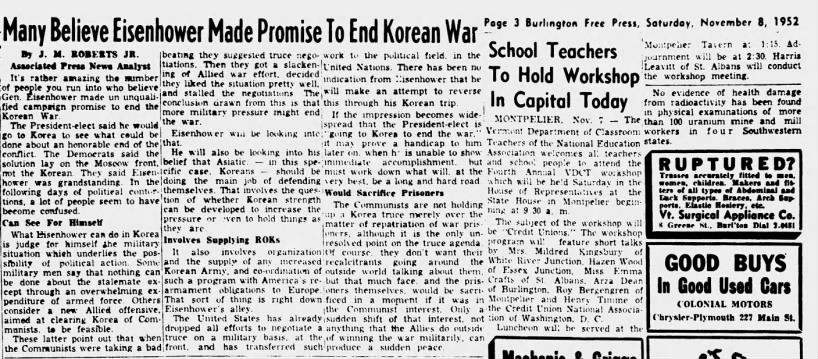
Eisenhower end war
Eisenhower end war 2

ANSWER #2: The Korean War is most likely beyond all of our memories. The 1952 U.S. presidential election was significantly about ending the Korean War. The conflict was a central and decisive issue that Dwight D. Eisenhower leveraged to win the presidency. For you see, the public’s frustration with what was a Neocon endless war was real before Vietnam. By 1952, the Korean War had become a bloody, costly stalemate, deeply unpopular with the American public as we are seeing now with Ira. The war had turned into what some called the “detestable Korean War” consuming the blood and lives of so many American youths. President Truman’s approval ratings plummeted, dropping as low as 23%, largely due to his perceived inability to resolve the conflict. Trump needs to look at history here.

Dwight D. Eisenhower, the Republican candidate, recognized the public’s discontent for this war and made ending the war a cornerstone of his campaign. He anchored his campaign on a pledge to quickly end the war if elected. This message was encapsulated in a powerful promise that resonated with voters.

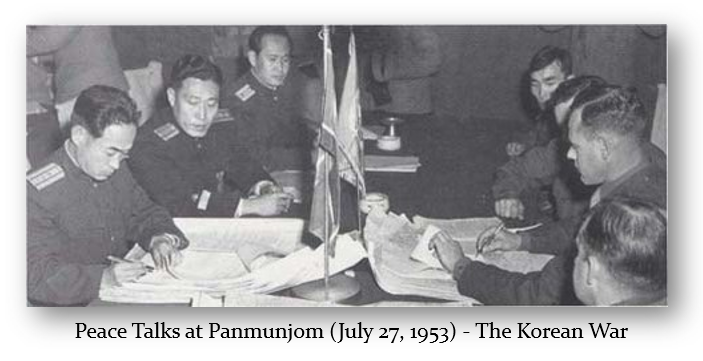
Peace Talks at Panmunjom July 27 1953 The Korean War


Eisenhower won the election in a landslide, and the Korean issue was a primary driver of his victory. Following his election, he followed through on his commitment. Upon taking office, Eisenhower used a mix of threats, including hinting at the use of nuclear weapons, to pressure China into agreeing to a cease-fire. The armistice talks, which had stalled, eventually made progress and led to the signing of the Korean Armistice Agreement in July 1953.

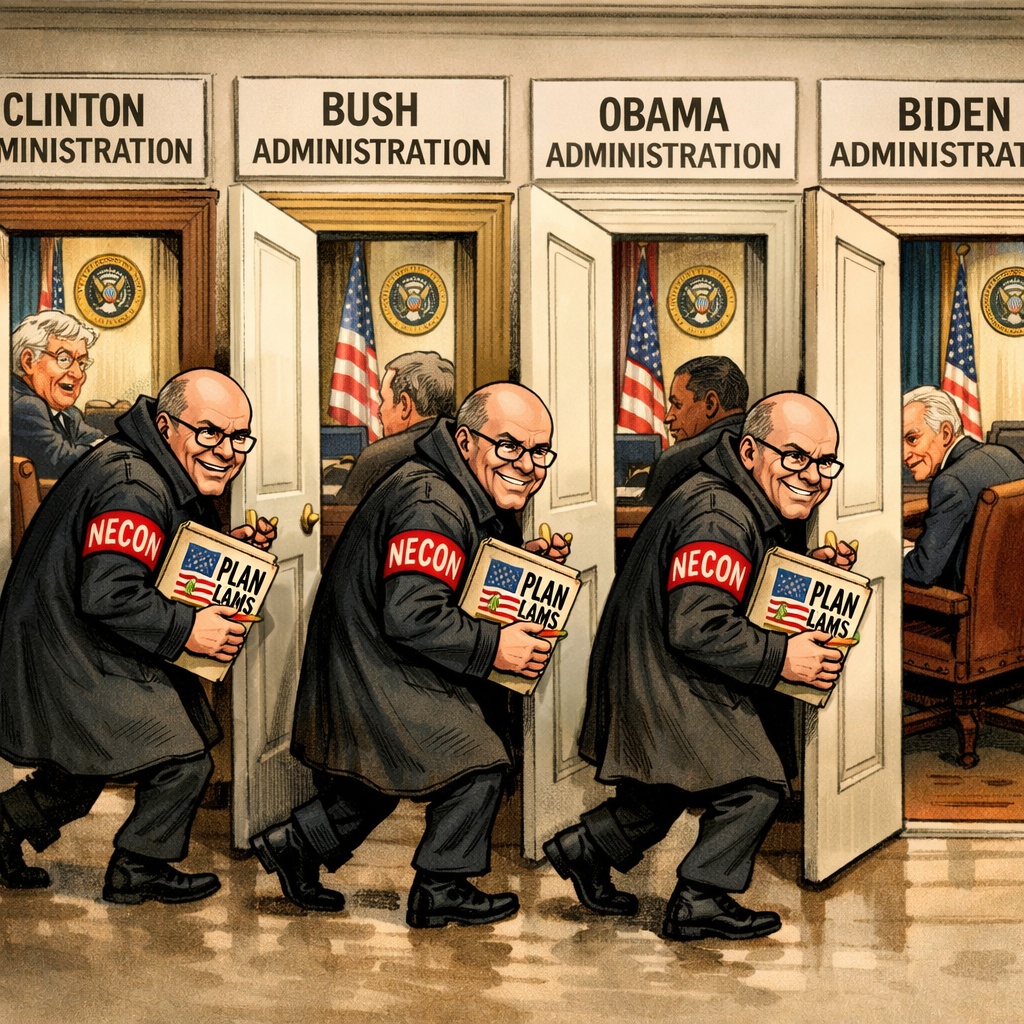
Nerocon Every Administration

All I can say is that EVERY war that has NOT actually threatened the United States has been UNPOPULAR. The Neocons have their agenda. They infiltrate every administration seeking to usurp American foreign policy. This is a policy coup that unfolds every time.

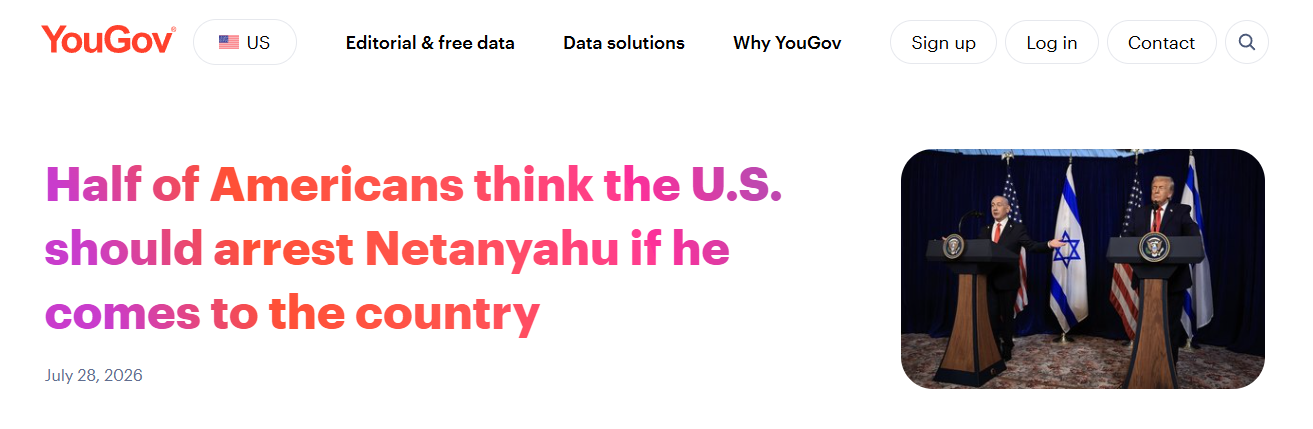
2026_07_30_21_27_33_Half_of_Americans_think_the_U.S._should_arrest_Netanyahu_if_he_comes_to_the_coun

Israel’s influence in the United States is in crash mode all because Netanyahu has abused the relationship for his personal hatred of Iran. He has manage to sucker-in Trump, and now he is trapped in an unpopular war he cannot control Netanyahu.

Envelop

Note: Armstrong stopped allowing “some” of his videos to be copied. You can see them if you go to his blog.

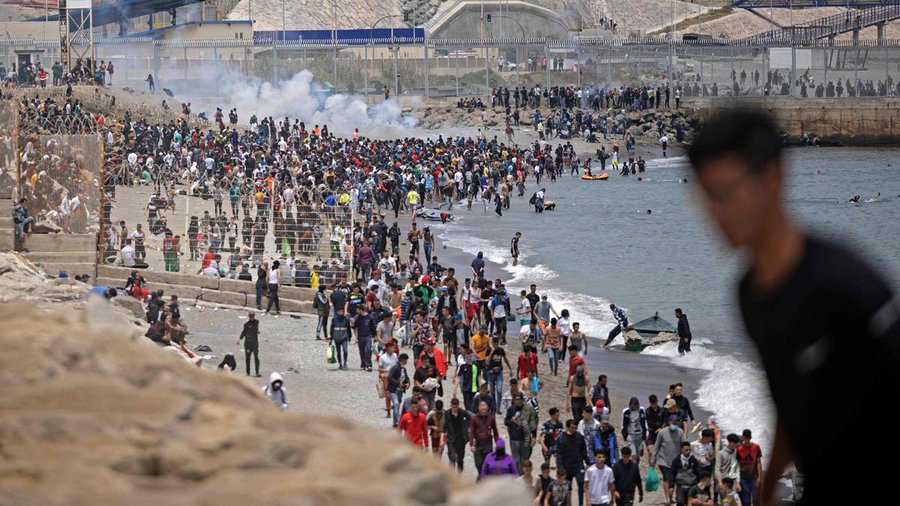
More than 50,000 Migrants from Morocco and sub-Saharan Africa Swarm Spain’s Enclave of Ceuta


Posted originally on CTH on July 30, 2026 | Sundance

Western media are downplaying the numbers, continually saying a “few thousand.”  However, local officials and eyewitnesses are describing the migrant invasion as something substantially more; over 50,000 more.

As night fell, the horde of migrants continue to overwhelm the region of Cueta, a region of Spain in North Africa.  The invasion force shows no signs of slowing down and the region is entirely overwhelmed.  There are 80,000 Spanish residents trying to retain their safety against the arrival of 50,000 invading north-Africans.

The video images from the region are jaw-dropping.

(REUTERS) – […] A Guardia Civil spokesperson said earlier migrants were “massively entering from the sea” around the Tarajal breakwater, a border seawall that migrants can swim around and enter Ceuta. The spokesperson could not estimate the number of migrants but said police were overwhelmed.

Many local shops were shuttered. Enrique Serrano, who runs a women’s clothing store in central Ceuta, told Reuters business owners were organising self-defence because they believed police resources would be insufficient.

“I’m not opening this afternoon because the situation is extremely tense … The first thing I have to do is protect my business and my family,” he said, adding that when the fence was breached after midnight, hundreds of migrants rushed through in a matter of minutes.

Ceuta and Melilla — another Spanish autonomous city located in North Africa —  have the European Union’s only land borders with Africa. Both cities periodically experience surges in attempted crossings by migrants seeking to reach Europe.

[…]  Spain’s Socialist government stands out in Europe for its pro-migrant stance, and it has recently launched a programme to provide legal status for some 500,000 undocumented migrants, triggering an influx of applications double that number.

Right-wing parties criticised the drive, arguing it would attract more migrants to Spain, and were quick to blame Sanchez for allowing the situation in Ceuta to reach crisis proportions.

Conservative opposition People’s Party leader Alberto Nuñez Feijoo said in a post on X: “The situation in Ceuta is desperate. The government cannot look the other way… because we are facing a national security crisis.”

Earlier on Thursday, Ceuta Mayor Juan Jesus Vivas had urged the national government to declare an emergency over the mass arrivals.  (read more)

President Trump tried to warn the Spanish people that socialist President Pedro Sánchez Pérez-Castejón would open the borders and destroy their country.  Trump was right!

“Fernando Rodríguez Contreras, an official in the government, said the working estimate for the number of people who had crossed was in the tens of thousands, though that figure could not be confirmed.” ~NYT

Young Defense Minister Fired by Zelenskyy Says Removal Was Due to His Audit of Military Spending – Ukraine Officials Demanded Cash Flow Continue


Posted originally on CTH on July 30, 2026 | Sundance 

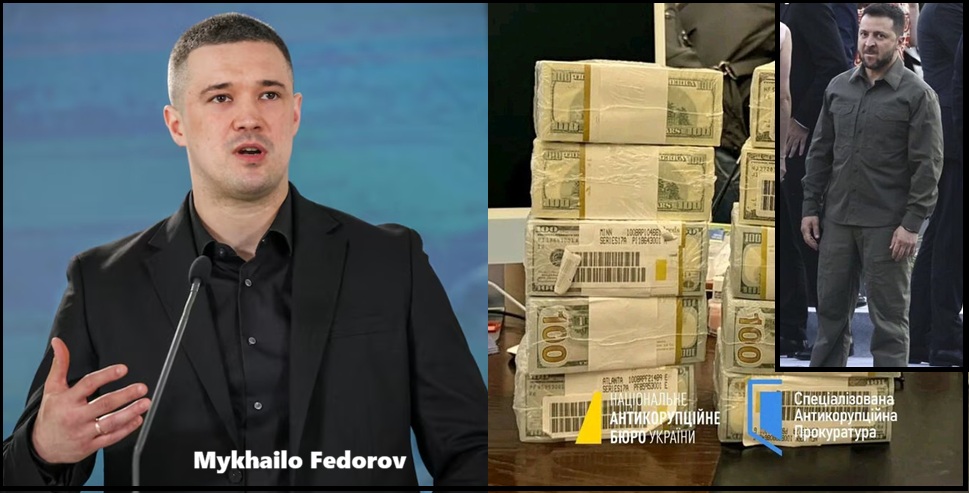
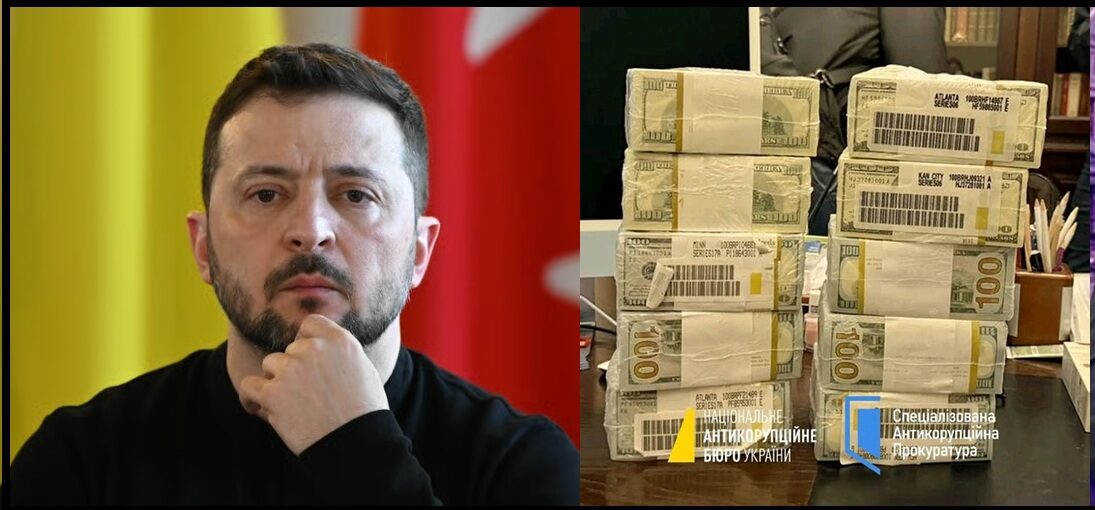
Well, well, well.  There it is. Even if it is clouded in Reuters News doublespeak and coded language, the answer to the big question about why Zelenskyy fired the most effective military leader is right there.  The key words are, “military procurement system”; or in common language “military spending.”

It never made sense; the 35-year-old Defense Minister, Mykhailo Fedorov, was heralded as turning the tide of the war in favor of Ukraine through his adaption of technology, specifically drones, and his very close relationship to Alex Karp of Palantir, a military contractor.  Fedorov was young, smart, strategic and exceptionally capable.  Yet, Zelenskyy fired him.

Now the real motive for dispatching Mykhailo Fedorov surfaces in his interview with Reuters.  Fedorov had taken control of how the military funding was being spent, and as a result, all of those Ukraine government officials and military generals who were pocketing money, redirecting funds, giving indulgences to their families and stealing resources were blocked.

The corruption is so widespread, Zelenskyy had no choice except to eliminate the guy taking control of the payments, Defense Minister Mykhailo Fedorov.

(July 29 – Reuters) – Former Ukrainian Defence Minister Mykhailo Fedorov, in an interview published on Wednesday, said his efforts to overhaul the military’s procurement system were the main reason behind his dismissal this ​month in a military and political shake-up.

Fedorov, a technical expert seen by many ‌as an agent for change in the nearly 4-1/2-year-old war against Russia, told the media outlet Ukrainska Pravda that the proposed changes met resistance from officials inside and around the ministry.

“The reason is connected with ​procurement, tenders, to the fact that we began overhauling the processes in this ​area,” Fedorov, 35, told Ukrainska Pravda.

“This caused significant dissatisfaction among many people, ⁠who then started constantly exerting influence and spreading negativity, not just around the president but ​across the broader media space.”

Fedorov, who held office for six months, said his first undertaking ​in office was to introduce a tender system for procurement. “Our task was to fix the root of the problem as quickly as possible,” he said.

“First, launch tenders. Second, restructure the management system in the Defence Ministry, ​and choose the people working there differently, based on the goals we came in ​with.”

Fedorov was dropped from President Volodymyr Zelenskiy’s cabinet and replaced by Yevhenii Khmara, previously head of the SBU security service, in a shake-up that also saw Prime Minister Yulia Svyrydenko removed. (read more)

9th Circuit Court of Appeals Says Illegal Alien Detention Unlawful Because No Other President Did It


Posted originally on CTH on July 30, 2026 | Sundance 

The issue of illegal aliens being detained while awaiting their transport out of the country is destined to eventually hit the Supreme Court.

Several courts of appeal have split on the issue of whether illegal aliens can be detained during processing out of the country with some saying yes and some saying, no.  The Nineth Circuit Court of Appeals weighed in today and also said no, with a rather goofy and odd reason in their opinion. [Court Ruling Here]

The 9th CCA doesn’t like the term “illegal alien” so they use the politically correct term, “unadmitted aliens” to describe non-Americans who are in the country illegally.  Technically, the entire population of planet Earth is “unadmitted” to the United States, so far. However, as Orwell noted twisting the jargon makes it easier to violate common law.  I digress.

According to the 9th CCA because no other President has attempted to round up the tens of millions of illegal aliens, it must mean that detaining tens of millions of illegal aliens, while the govt processes them out, is unlawful.  In essence, it hasn’t been done, therefore it must be against the law.

[Page 5…”That no Administration has ever found a duty mandatorily to detain unadmitted aliens present in the interior of the country is strong evidence that [such duty] does not exist.”….

Because Reagan, Bush, Clinton, Bush, Obama and Biden never detained illegal aliens, the Ninth CCA uses their failure to protect the nation as an affirmation that protecting the nation is not the goal of immigration law.

This is how far away from commonsense we have traveled in this bastardized lawfare judicial system.

(VIA POLITICO) – ““The government’s change in policy has resulted in detained aliens filing thousands of habeas petitions in federal courts across the country, seeking bond hearings and possible release from detention,” Judge Daniel Bress, a Trump appointee, wrote for the majority. “The implication of the government’s position is that Congress in 1996 made a major change to the immigration laws by subjecting millions of unadmitted aliens present in the United States to mandatory detention, but that this change then went unnoticed and unheeded, with the Executive Branch for the next three decades … We accordingly do not think that Congress in 1996 made such a large-scale change to our established system of immigration detention in the way that the government now contends.” (more)

Senators Cornyn and Tillis Block Todd Blanche from AG Confirmation


Posted originally on CTH on July 30, 2026 | Sundance 

Republican senators John Cornyn and Thom Tillis are refusing to support Acting Attorney General Todd Blanche for full senate confirmation.

President Trump notes he will not accept the threats and blackmail from both outgoing senators and will renominate Todd Blanche if needed after the two senators are removed from office.

[Via Truth Social] – “Todd Blanche is a STAR, and everyone knows it! He has the potential to go down as one of the Greatest Attorney Generals of All Time. However, John Cornyn, of Texas, and Thom Tillis, of North Carolina, both of whom I refused to Endorse, and whose political careers have been ended by my action, are refusing to vote for this Great Nominee, who will remain, in any event, as Acting.

Remember, both Cornyn and Tillis voted for Merrick Garland, and others, too numerous to mention. I have no objection to temporarily withdrawing Todd’s name, if they do not do the right thing, and putting him back after Cornyn and Tillis are out of office.”

President DONALD J. TRUMP

Israeli Prime Minister Benjamin Netanyahu Recaps His Visit with President Trump


Posted originally on CTH on July 30, 2026 | Sundance

Prime Minister Benjamin Netanyahu has become one of the most controversial figures in Israeli politics for discussion within the U.S.  Support for the Netanyahu government has eroded during his terms in office. Netanyahu blaming social media for the drop in support is not a good defense.  Opinion within the United States has become highly polarized in the past two years.

During an interview with ABC News, Prime Minister Netanyahu answers questions about Israel’s position in the ongoing conflict with Iran as well as Netanyahu’s recent visit with President Trump to discuss regional challenges.

.

86-year-old French priest donated church land to build a mosque and an INVADER then slit his throat


Posted originally on rumble on Bannons War Room on: on July 29, 2026