Posted originally on the CTH on September 24, 2026 | Sundance September 24, 2026 | Sundance
President Trump and Chairman Xi Jinping will be delivering remarks this evening during the official state dinner. Livestream Links Below:
.
Tech CEOs attending President Trump’s state dinner for Chinese Chairman Xi Jinping includes Jeff Bezos, Elon Musk, Sundar Pichai, Michael Dell, Jensen Huang, Sam Altman, Jane Fraser and Tim Cook according to White House officials.
During the state banquet tonight, U.S tech leader Tim Cook will meet China’s new tech leader (from Xiaomi). U.S and China innovators will also meet, like OpenAI on the U.S side and BYD autos on the China side.
Posted originally on the CTH on September 24, 2026 | sundance
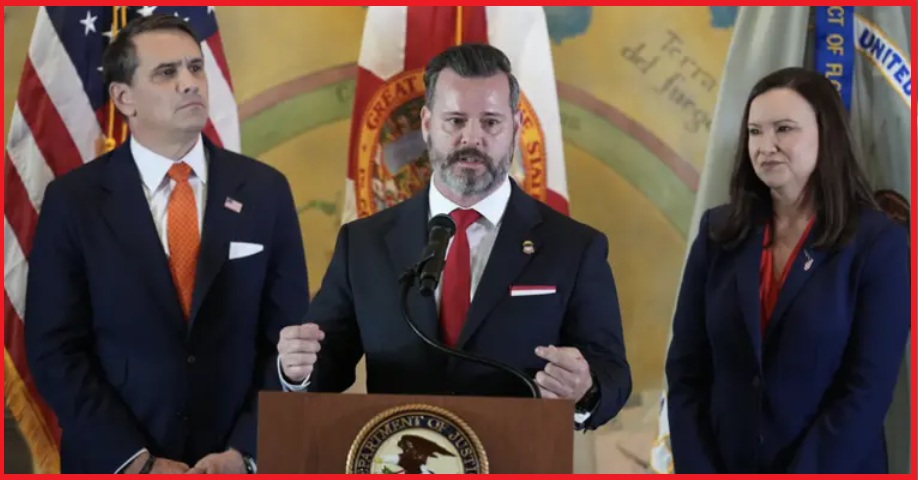
After writing the lengthy outline about the problem faced by Joseph diGenova, a Reagan-era former U.S. attorney and longtime Trump ally who served as counselor to Attorney General Todd Blanche and exited over strategic differences {GO DEEP}, several people provided feedback, generally expressing understanding and agreement.
A few asked for suggestions.
Having looked at the challenges from every direction, and having a deep understanding of the complications within any prosecutorial effort on this highly complex ‘conspiracy’ case, I am going to outline my best advice.
This is how you arrange the case.
In any successful endeavor like this, you need the hook. You need a central point of focus that brings the entire operation into a clearer view. Stories like this are not told in a linear fashion; you need a central point of focus and then you build out the storyline from there.
So, what it that inflection? What is that moment that establishes the point from which everything else falls into place?
First, look at the requirements. The central event needs to encompass the foundational unlawful activity. The event needs to be clearly unlawful in nature and highlight the mindset that existed within each of the participants. The evidence must have a clear, distinct and actionable set of facts that can be directly proven beyond doubt.
The event needs to have been previously investigated, so that time is not wasted repeating a lengthy and exhaustive investigation around the fact pattern. The event needs a specific set of witnesses, who cannot escape being truthful about the preexisting irrefutable facts. And the event needs to highlight a conspiracy by every participant who cannot deflect their participation by claiming they were unaware of the intent of every action within the process.
Those are the predicate requirements that establish the value of the central point of focus. This is what makes a grand jury or criminal case jury have a consistent reference point. If this fact pattern is demonstrably true, then that action or outcome is incontrovertibly self-evident.
That moment I am describing is March 17, 2017, when the Top-Secret Compartmented Intelligence (TSCI) product, a Title-1 Surveillance Warrant, a FISA warrant, was unlawfully leaked to the media with a very specific intent.
There is no statute of limitations on this event. It was unlawful when it took place and it is unlawful today.
The leaking of the March 17, 2017, Carter Page FISA warrant is the moment that establishes evidence of a larger conspiracy to manipulate the legal apparatus of the United States government and weaponize an effort to impede then remove a sitting U.S. President from office.
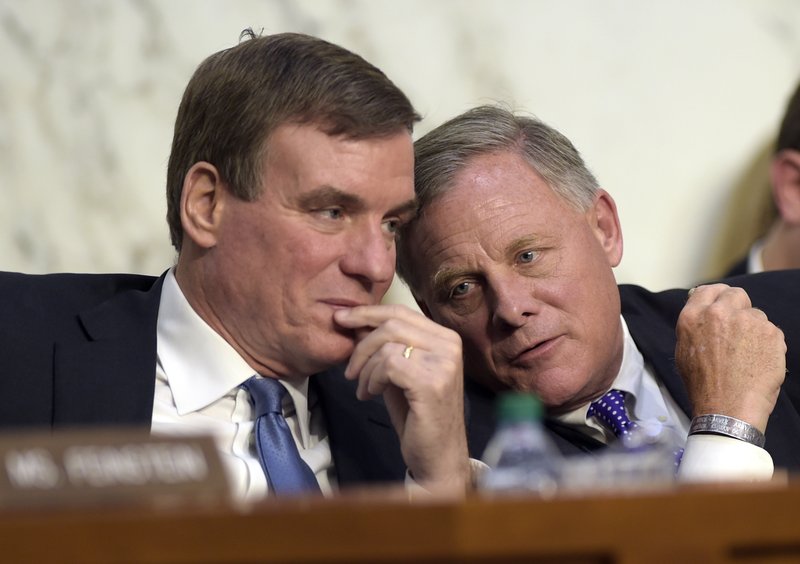
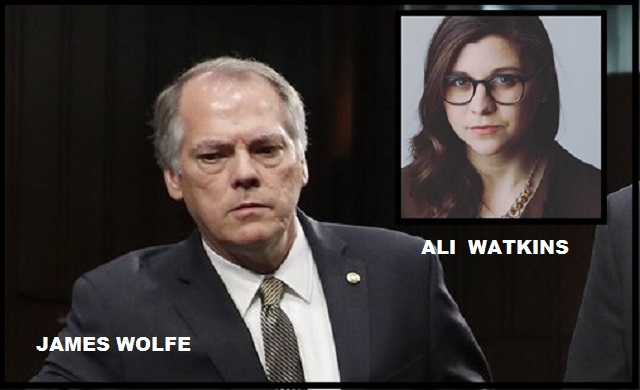
SUMMARY: FBI Washington Field Office Supervisory Special Agent Brian Dugan picked up the ‘read and return’ FISA warrant from the FISA Court and delivered it to the Senate Select Committee on Intelligence (SSCI) on March 17, 2017, where he handed it to SSCI Security Director James Wolfe and awaited it for return. SSCI Vice-Chairman Mark Warner then reviewed the warrant. James Wolfe then took 82 individual pictures of each page of the warrant, and sent the images via a Signal encrypted app to Buzzfeed journalist Ali Watkins.
After Ali Watkins wrote an article in early April 2017, using Wolfe and the FISA leak as her anonymous source, she became a target for investigation. Washington Field Office FBI Agent Brian Dugan investigated James Wolfe. FBI Agent Jeffrey Rambo investigated Ali Watkins.
The leak of the FISA warrant is not in question. The warrant was leaked by James Wolfe, and Wolfe was indicted for the event. However, this is where the conspiracy expands.
Following Wolfe’s legal team informing Main Justice DAG Rod Rosenstein, and Washington DC U.S Attorney Jessie Liu, who was prosecuting the case, Wolfe’s defense would bring the senate intelligence committee into any trial, a decision was made to drop the classified leak charge and a deal reached to prosecute Wolfe for a single 18 U.S. Code § 1001 violation of lying to investigators.
The judge in the case was, wait for it, US District Judge Ketanji Brown Jackson who is now a Supreme Court Justice.
Nothing about these events is in doubt. There was an 8-month FBI investigation which culminated in an indictment assembled in Jan/Feb 2018, processed through a grand jury and sealed until June 2018 when it was unsealed and made public.
In reaction to the Wolfe indictment, within a month in July 2018, the Robert Mueller special counsel then did something that was unprecedented. The Mueller team released the Title-1 TSCI Carter Page FISA application to the public. Never before had anyone ever seen a Title-1 warrant released to the public.
This leak on March 17, 2017, is the thread that binds the entire Russiagate narrative together. Three days later on March 20, 2017, FBI Director James Comey appeared before the House Permanent Select Committee on Intelligence (HPSCI) and admitted for the first time publicly that President Trump was under an FBI investigation since July 31 of 2016.
James Comey could not explain why the Gang-of-Eight oversight had never been informed of the FBI investigation in the past 8 months. Instead, Comey arrogantly -albeit nervously- shrugged and said, “because of the sensitivity of the matter?”
The March 2017 FISA leak connects, through timing, sequence and investigative outcome, most of the “Russiagate” participants because the evidence gathered within the leak investigation encompassed telephone communication and text messages from inside the SSCI as Vice-Chairman Mark Warner was conducting the organized effort.
After Wolfe made his admissions to the FBI on December 17, 2017, and in-between the time the evidence was being organized for grand jury presentation, and before the indictment of Wolfe was unsealed, there is a massive amount background activity that exposed the larger plot. All of that activity has identified names, people who can be called as witnesses.
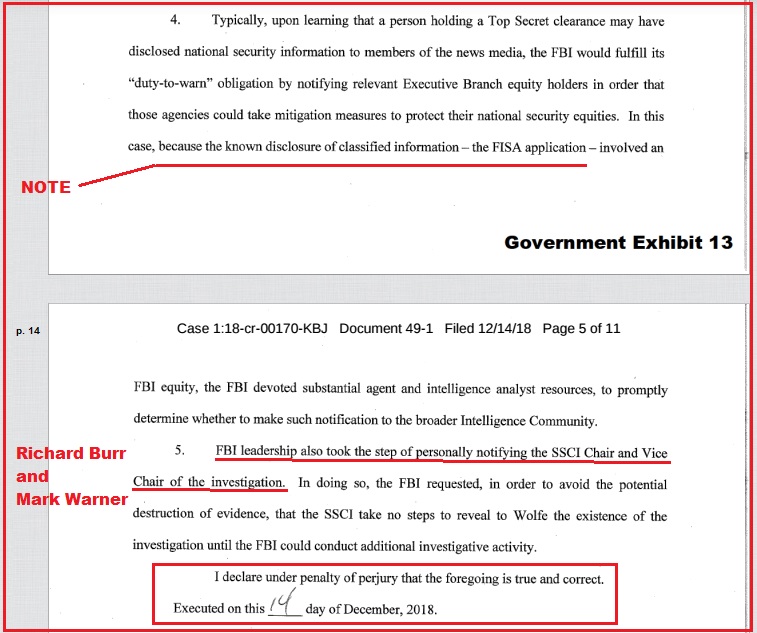
One of the ramifications during this period was the risk that then SSCI Chairman Richard Burr represented to the conspiracy crew. During the FBI investigation of Wolfe, FBI Agent Brian Dugan was told by Rod Rosenstein and FBI leadership to inform SSCI Chair and Vice-Chair Burr and Warner of the investigation. In essence, Warner who likely directed the leak was given a head’s-up that he was exposed. FBI leadership did this intentionally.
After the failed CIA organized impeachment effort, agents from the Federal Bureau of Investigation seized a cellphone belonging to Burr from his home, and Senator Richard Burr was then forced to step down from his position. The investigation surrounded “insider trading” but appeared to be a cover-up targeting to silence Burr for prior knowledge.
The evidence against Wolfe represented a threat to multiple interests. This activity -and more- reveals the scope and severity of risk represented by that singular moment in March 17, 2017, the classified FISA leak.
The tentacles from that leak extend backward in time to the FISA organizers, forward in time to the group who weaponized Lawfare and sideways into both the legislative and executive branch participants. This is the conspiracy centered on a focused moment.
As a sidebar, keep in mind that before March 17, 2017, when Warner demanded a copy, Senate Judiciary Chairman Chuck Grassley and his senior staff had already seen and reviewed the Title-1 surveillance warrant.
The evidence exists, this was a massive leak of classified information, the witnesses are known and the participants are all clear. However, Main Justice and the U.S. Attorney in DC made the decision not to address it – too big to jail? The ramifications were widespread and far reaching.
WITNESSES FOR GRAND JURY (in sequence):
♦ FBI Supervisory Special Agent Brian Dugan. He can explain all of the events as they unfolded, answer questions about what evidence was gathered, outline events as they unfolded during his investigation, and he can tell the story as to why the prosecutorial decisions were made that ran counter to the overwhelming evidence. Dugan also filed a sentencing memo with the court (Judge Ketanji Brown Jackson presiding) swearing under oath and penalty of perjury that Wolfe leaked the FISA application.
♦ FBI Agent Jeffrey Rambo. He can explain his discoveries on how the leak was distributed from Ali Watkins, to which outlets, for what intents and purposes, as well as share his notes from interviews with Ms Watkins about her relationship to James Wolfe. [NOTE: there was NOTHING romantic about it – that was a cover story.]
♦ Former USAO Jessie Liu who was responsible for all the decisions in the non-prosecution of James Wolfe. Why was Wolfe not prosecuted. Who, beyond her, made the decision not to prosecute after the indictment was released. Liu can explain the conversations that were happening in the background and also take the GJ into the Mueller probe who she informed of the issues around Wolfe after things were in evidence.
♦ Deputy AG Rod Rosenstein. Almost certainly a conduit between the Mueller probe and Jessie Liu during the issues that surfaced after the Wolfe capture was identified. Rosenstein was involved in Main Justice’s response to the risk that Wolfe represented to the overall Intelligence Community aspect within government. Rosenstein had conversations with USAO Jessie Liu about the matter and about the ramifications not only to government but to the Mueller investigation.
♦ SSCI Security Director James Wolfe. With all that context and evidence now captured, give James Wolfe immunity on this specific matter. Remember, while Wolfe lies at the heart of this event, Wolfe was never prosecuted for the actual leak itself. It is not a double-jeopardy issue. Wolfe’s testimony, under immunity, gets to Mark Warner and beyond.
♦ Ali Watkins. Again, in order to compel information and avoid journalistic avoidance, offer immunity for truthful testimony about how the leak was used and distributed. If the New York Times lines up a legion of lawyers to protect her from testimony (likely), then just skip the media aspect, or slide it off to others and keep moving forward.
♦ Daniel Jones. The former chief of staff to Dianne Feinstein and bagman who carried money to Fusion GPS and beyond, appears in the conduit conversations with Mark Warner at the time of the leak. Dan Jones was making visits to Mark Warner’s office carrying messages from Chris Steele’s lawyer Adam Waldman.
♦ Adam Waldman. The lawyer and representative of Oleg Deripaska and Chris Steele who was in communication with Mark Warner and organizing “no paper trail” discussions about the overall Russiagate strategy. Waldman text messages with Mark Warner are part of the evidence file assembled by FBI Agent Dugan.
♦ Chris Steele. Previously he refused to cooperate with Special Counsel John Durham or lead investigator Bill Aldenberg. Steele would be a hostile witness although he may be out of reach hiding behind U.K intelligence efforts. If expressed testimony is limited to cooperation surrounding contact with Waldman and Warner, specifically as it relates to the FISA leak, perhaps Steele would reevaluate.
♦ Secretary of State Marco Rubio. As a former SSCI member (Rubio replaced Burr) Senator Rubio previously defended the Warner’s contact with Waldman saying he was aware Warner was trying to organize committee testimony with Chris Steele. However, Rubio’s defensive remarks were made four months before awareness of James Wolfe’s leak was public. In hindsight what did Rubio know in February 2018 as it relates to the committee activity in 2017.
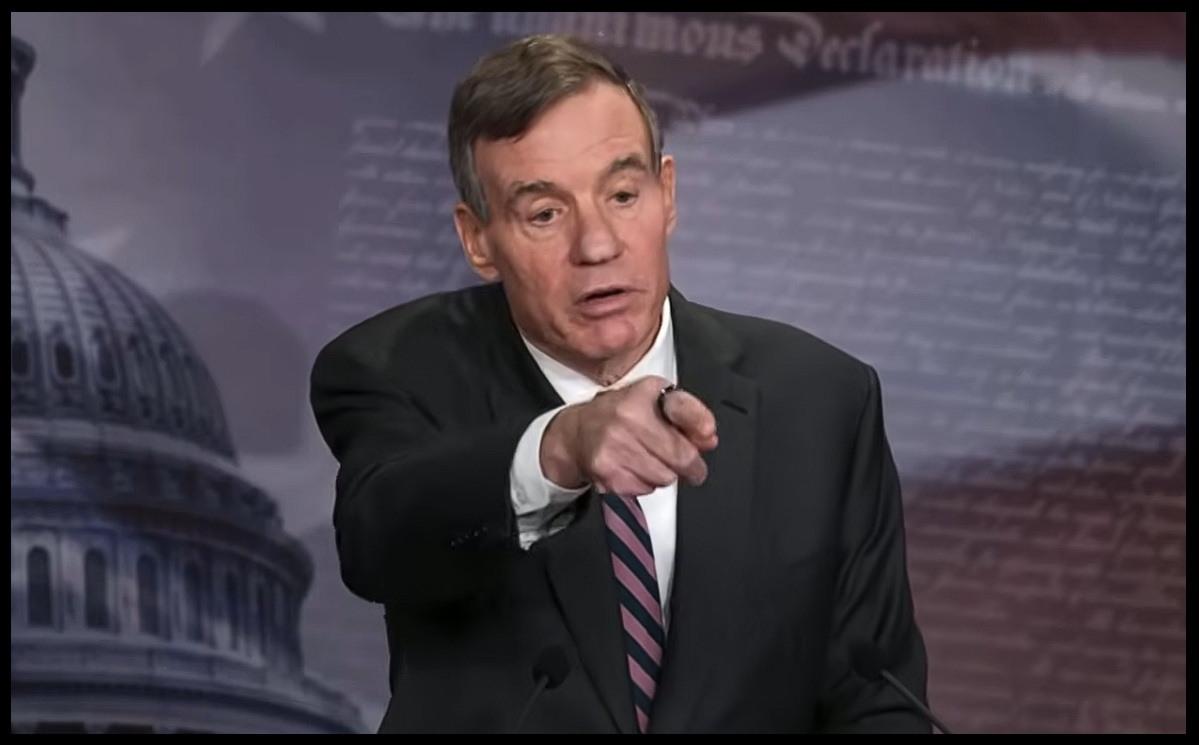
♦ SSCI Vice Chairman Mark Warner. Now you get to the heart of the conspiracy. Warner instructed Wolfe to leak for what purpose? Was Warner coordinating with James Comey? If all of the previous testimony and evidence aligns to tell the factual story of events as they appear, Senator Mark Warner is in a position of extreme legal risk. However, that said, Warner is also the Vice Chair of the most powerful Senate committee. A grand jury subpoena to Warner will hit the headlines within seconds, much faster than John Brennan, as the entire Russiagate apparatus recognizes the potential of his testimony. Remember, Warner took the position as Vice-Chair of the SSCI specifically to lead, organize and conduct the operations against incoming President Donald Trump.
♦ Andrew Weissmann. Obviously, Robert Muller is impossible to question, he has dementia. However, someone in a position of knowledge within the Special Counsel operation should be questioned about the information they received from FBI Agent Dugan and USAO Liu as an outcome of their mechanism of control over anything to do with Trump-Russia. Because the Wolfe leak touched on Trump-Russia via the FISA warrant, the Mueller special counsel team was notified. Rosenstein likely has information about this within his testimony, hence the sequencing.
From that series of testimonials, it is then possible to question the person responsible for the technical and legal FISA assembly, former legal counsel to the AADAG in charge of the DOJ National Security Division, Michael Atkinson. It was Atkinson’s job to review the technical details about the FISA assembly, and yes, it is also obvious Atkinson later moved to the ICIG position and helped frame the impeachment narrative. Use the FISA leak aspect to open up Atkinson.
From Atkinson you get to another key player, Atkinson’s former boss, Mary McCord. Get her in the witness box under the auspices of her knowledge about the FISA warrant that she submitted and you open up an entire new network of conspirators and specific questions related to her activity as Acting Asst Deputy Attorney General in the National Security Division, and beyond to her activity questioning Michael Flynn, the leak of the Flynn cuts, and as lead staff for Adam Schiff and Jerry Nadler on the impeachment effort.
Start at March 17, 2017, and expand the network from there.
We know from the indictment itself the investigation of James Wolfe was completed by December 15, 2017, when he was fired from his position. Wolfe’s indictment did not surface for another six months – until June 08, 2018. Wolfe was indicted for lying to the FBI investigators. However, Wolfe was not indicted for leaking the FISA application despite the FBI having direct evidence of the leak; which was then sworn and affirmed in Wolfe’s December 2018 sentencing memo [pictured below] when the U.S. Attorney Office in DC requested an upward departure for longer term sentencing, specifically because Wolfe leaked top secret classified information.
Wolfe leaked the FISA application! Pull that string….
RESOURCES:
1. Adam Waldman text messages. (release date Feb 9, 2018)
2. Justice Dept. Letter to journalist Ali Watkins (release date Feb 13, 2018)
3. James Wolfe indictment (release date June 8, 2018)
4. FISC / Senate Judiciary Letter (public release April, 2020 – event date July 12, 2018) The letter from DOJ-NSD (Mueller Special Proseuctors) to the FISC is important.
Posted originally on the CTH on September 24, 2026 | Sundance
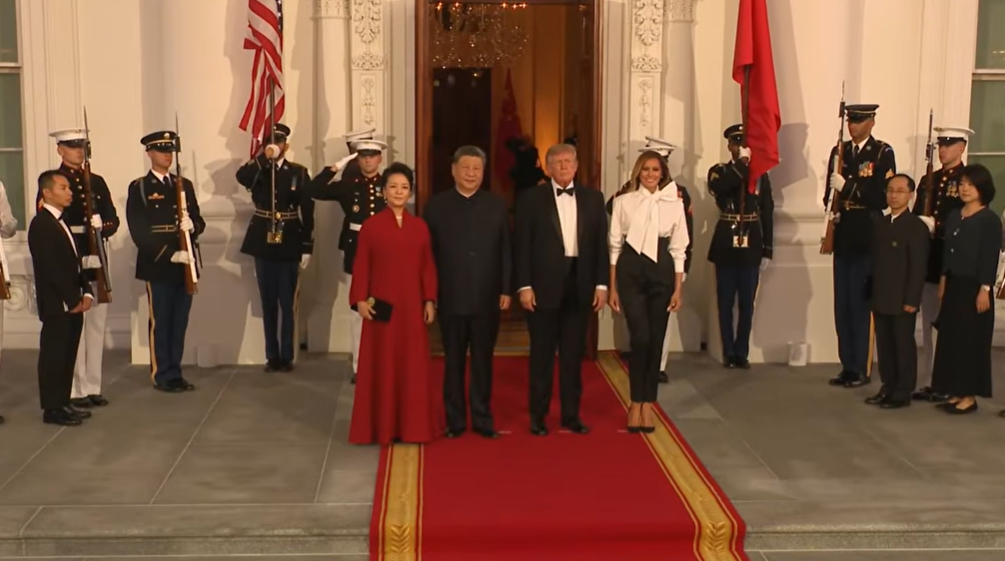
President Donald J. Trump and First Lady Melania Trump welcome His Excellency Xi Jinping, President of The People’s Republic of China, and Madame Peng Liyuan for a State Dinner in the East Room of the White House this evening.
The First Lady led the preparations for the dinner, which will be attended by the official delegations as well as business leaders and government officials.
MENU
The menu showcases American ingredients with subtle Chinese influence, bringing the culinary traditions of both nations together. The meal begins with a toast of Schramsberg “Blanc De Noir,” honoring the historic “Toast to Peace” shared by President Nixon and Premier Zhou Enlai in Beijing in 1972. The same American sparkling wine served at that historic gathering continues to be enjoyed at White House functions today.
The first course offers a refined and silky-smooth velouté made of sweet yellow squash. This course is gently blended to highlight its delicate seasonal flavors of earthy wild mushrooms, sautéed with fresh herbs. Together, these ingredients create a rich fricassee, complemented by crispy pancetta for a savory and smoky contrast. A finishing drizzle of scallion oil adds vibrance and a subtle allium brightness to the dish.
Second Course Sesame Crusted Sea Bass Braised Baby Bok Choy Roasted Garden Eggplant Sauce Verte
The second course is prepared delicately with fresh seabass and coated in toasted sesame seeds. This combination creates a fragrant nutty crust while keeping the fish tender. The fish is served with crisp baby bok choy and roasted garden eggplant, creating lightly caramelized flavors. The dish is finished with a vibrant sauce verte of fresh herbs, which add brightness, acidity, and a garden character.
Dessert Vanilla Crémeux & White House Honey Ice Cream Walnut Frangipane Sour Cherry Confit
The dessert course is a smooth vanilla crémeux with a vibrant sour cherry confit center, set a top a rich walnut frangipane. The dessert’s fruit shaped form is complimented by a delicate ice cream made with harvested White House honey.
ENTERTAINMENT
There will be several performances during the formal dinner, which will be headlined by Mr. Christopher Macchio, a classically trained tenor who performed at the 2025 Presidential Inauguration. The evening’s entertainment will feature performances by military musicians from the United States Marines Corps and the United States Army, including “The President’s Own” United States Marine Band, “The Commandant’s Own” United States Marine Drum and Bugle Corps, the United States Army Chorus, and the United States Army Strings.
FLORAL & DÉCOR
The décor for the evening is an expression of warmth and celebration and draws on the color red’s longstanding cultural significance throughout Chinese history. Urns showcase overflowing red blossoms. Tables are dressed in rich red linens and adorned with dahlias and ranunculus. Among the seasonal blooms, the tables feature vermeil from the White House collection. The Reagan State Service is featured on the tables. These details blend Chinese artistry and American tradition together, showcased within the timeless elegance of the White House.
I have created this site to help people have fun in the kitchen. I write about enjoying life both in and out of my kitchen. Life is short! Make the most of it and enjoy!
This is a library of News Events not reported by the Main Stream Media documenting & connecting the dots on How the Obama Marxist Liberal agenda is destroying America