
Posted originally on Jan 28, 2026 by Martin Armstrong |
UK Home Secretary Shabana Mahmood announced the largest national AI surveillance program, using Live Facial Recognition (LFR) technology, to be deployed in cameras across England and Wales. “You can’t enjoy any of your liberties if you’re not safe,” she warned.
Police.AI is the new artificial intelligence branch of security that cost the government 140m pounds to develop. “For 20 years we’ve been talking about Big Brother societies, maybe for even longer than that, I just really reject that analysis. I think that law-abiding citizens going about their daily business can do so in security, nothing about that will change,” she decided, later adding, “We have seen what happens when facial recognition technology is rolled out without clear safeguards: children are wrongly placed on watchlists, and black people are put at greater risk of being wrongly identified.”
The AI branch of policing will rapidly analyze CCTV, phone, doorbell, and other sources of footage to pinpoint citizens based on their clothing, vehicles, and of course, facial recognition. The AI system can transcribe phone calls and sift through hours of information, constantly monitoring the public. Government claims it will equate to six million policing hours annually, or the workload of 3,000 officers.
The ethics behind such measures present a challenge. Who has access to this wealth of data? Individual organizations in the UK must obtain permission and be transparent about their policies, but no such restrictions exist for the government. We have seen countless data breaches in recent years, with independent hacker groups infiltrating every supposedly secure data center. Civil liberties groups believe the government is infringing upon human rights by spying on their every move, but governments no longer permit individual freedoms.
Everyone is a potential criminal—your face and likeness exist within a government database, and your file is ever-expanding. The Home Office has even stated it would monitor citizens’ emotions and body language at known suicide hot spots.
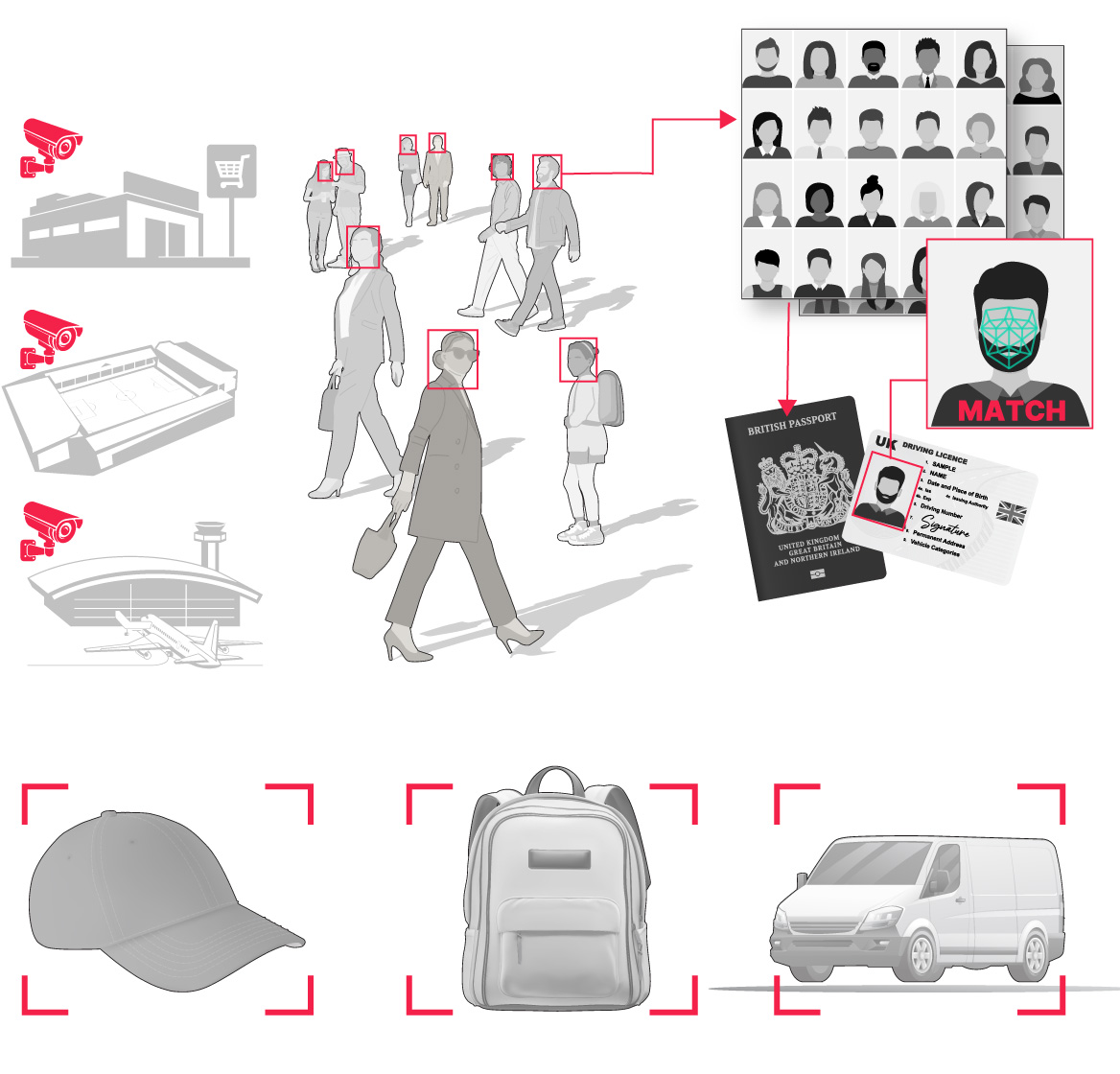
UK Biometrics and Surveillance Camera Commissioner Fraser Sampson admitted that private companies will have access to user data. “We, the people, are now using sophisticated surveillance tools once the preserve of state intelligence agencies, routinely and at minimal financial cost,” he writes. “We freely share personal datasets – including our facial images – with private companies and government on our smart devices for access control, identity verification and threat mitigation. From this societal vantage point it seems reasonable for the police to infer that many citizens not only support them using new remote biometric technology but also expect them to do so, to protect communities, prevent serious harm and detect dangerous offenders.”
Live cameras are monitoring the public at all times. Both the private and public sector have access to your whereabouts at all times. This is one of the reasons why the UK is implementing a digital ID system, which will later become linked to digital payment systems and CBDC. At the final stage, everything will be linked to a social credit score that includes each citizen’s water and carbon footprint. The plans are well-documented but sound too dystopian for the public to accept, but this is not a conspiracy—they are watching you.
 Centinel2012