
Posted originally on Feb 4, 2026 by Martin Armstrong |
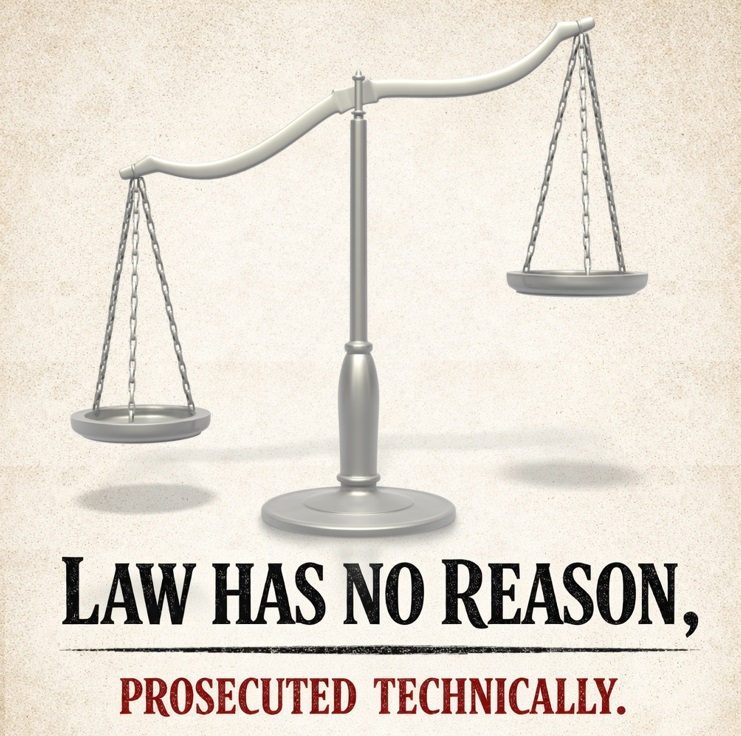
I have often received emails asking why I did not want to become a lawyer. The rule of law has no true validity. It is applied without reason and often technically. The law is NEVER applied with reason. A high-profile case that mirrors this scenario is that of Genarlow Wilson in Georgia. In 2003, at age 17, he engaged in consensual oral sex with a 15-year-old at a New Year’s party. He was convicted of aggravated child molestation, a felony requiring a mandatory 10-year prison sentence and sex offender registration. Public outcry and media attention eventually led to his sentence being re-examined; he served over 2 years before the law itself was changed and he was released. His case highlighted the potential cruelty of laws without close-in-age protections.

A man read a story about an illegal alien being deported who was from Afghanistan and pleaded not to be deported for he would be killed by the Taliban. The prosecutor did not care. When the story was reported, a reader wrote to the prosecutor.
“Mr. Dernbach, don’t play Russian roulette with H’s life,” he wrote. “Err on the side of caution. There’s a reason the US government along with many other governments don’t recognise the Taliban. Apply principles of common sense and decency.”
As the Washington Post wrote, “five hours and one minute later, Jon was watching TV with his wife when an email popped up in his inbox. He noticed it on his phone. “Google,” the message read, “has received legal process from a Law Enforcement authority compelling the release of information related to your Google Account.” Listed below was the type of legal process: “subpoena.” And below that, the authority: “Department of Homeland Security.”
As the Post went on, “soon would come a knock at the door by men with badges and, for Jon, the relentless feeling of being surveilled in a country where he never imagined he would be.” The American Revolution began over the 4th Amendment – illegal search and seizure. The courts have undermined that right because they are the hand-maiden of government. There are NOT there to restrain government, but to enable them to circumvent your human and constitutional rights they regard as a nuisance.
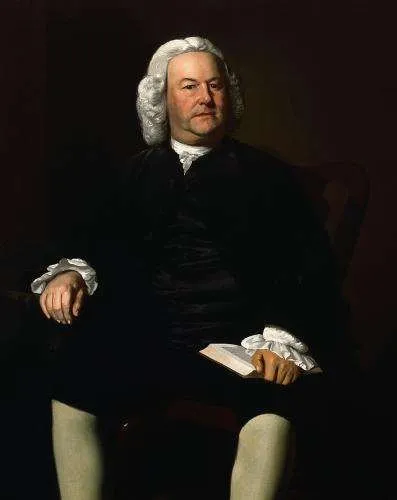
There was a legal case that became the seminal beginning of the American Revolution known as Entick v. Carrington and Three Other King’s Messengers (1765), reported at length in 19 Howell’s State Trials 1029. This case was the start of the American Revolution and was also based upon abuse of the king’s agents. The action, dated November 1762, was for trespassing and interfering with the plaintiff’s dwelling by breaking open his desks and boxes and searching and examining his papers.
After George III became king in 1760, by February 1761, Parliament enacted the Writs of Assistance that was challenged in court in Boston, Massachusetts. These were writs that empowered the king’s agents to search anything they suspected, like the NSA today at their discretion. The defending lawyer James Otis (1725-1783) pronounced these writs as “the worst instrument of arbitrary power, the most destructive of English liberty, and the fundamental principles of law, that ever was found in an Englishlaw book.” Otis warned that the king placed discretion in the hands of every agent to act as he desired. Nothing has changed, for our current government can do whatever it desires today, and it is always the burden of the citizen to prove he has any rights whatsoever.

John Adams (1735–1826; 2nd President 1797–1801) was in the audience at that hearing that day, and the four-hour speech of James Otis so moved him that he declared:
“Then and there was the first scene of the first act of opposition to the arbitrary claims of Great Britain. Then and there, the child independence was born.”
I am sure the king’s men also viewed their power as necessary, as the government does today. The abuse of the king’s agents was simply that they could enter someone’s home and search all their papers. If you wrote anything derogatory against the king, off you went to prison. This is what inspired the Fourth Amendment, which stated that there had to be a reason to search, not just an arbitrary desire to see what we could find. This is the very essence of LIBERTY. You cannot pretend to be the leader of the free world and then advocate that the government has a RIGHT to know everything everyone is doing or what wealth they have. This is incompatible with the term “FREEDOM.”
Administrative Subpoenas
Administrative subpoenas have been extensively challenged in both the U.S. Courts of Appeals and the Supreme Court. The challenges form a significant body of administrative law and the court have effectively eliminated the entire foundation of the 4th Amendment. They willo routinely do precisely the same as took place in Entick v. Carrington. Agencies circumvent all your Constitutional Rights with total impunity. The Supreme Court has established the foundational constitutional and procedural limits on administrative subpoenas. Here are the legal cases that have rule you have no rights whatsoever.
The Supreme Court has long held that administrative agencies have the power to issue subpoenas as part of their investigatory functions, provided they are within the agency’s statutory authority and not overly broad or oppressive.
- FTC v. American Tobacco Co. (1924): An early limit, where the Court struck down a “fishing expedition” demand for all documents without any reason to believe they contained evidence of wrongdoing. However, later cases like Morton Salt have significantly narrowed this restriction.
The first case addressing Administrative Subpoenas took place in 1924. At first, they ruled that a “fishing expedition” was illegal.
- Oklahoma Press Publishing Co. v. Walling (1946): This is a cornerstone case. The Court ruled that the Fourth Amendment’s protection against unreasonable searches and seizures applies to administrative subpoenas, but the standard is less stringent than for criminal searches. An agency need NOT have “probable cause” as in the criminal sense; it only must show that the investigation is for a legitimate purpose, the inquiry is relevant to that purpose, and the demand is not too indiscriminate or burdensome.
The court played the fiction between civil and criminal. They used this fiction against me. I was thrown in “civil” contempt where you have no right to a trial by jury as you would in a criminal contempt. The statute set the maximum as 18 months and the court every 18 months would renew it until the Supreme Court was taking my case. Then they had to release me.
- United States v. Morton Salt Co. (1950): Reinforced that agencies can investigate “merely on suspicion that the law is being violated, or even just because it wants assurance that it is not.” This grants agencies broad “fishing license” authority for routine oversight.
The next case in 1950 reaffirmed that an agency need only have a suspicion. That is no different that Entick v. Carrington.
See v. City of Seattle (1967): While affirming agency power, the Court held that the Fourth Amendment does apply to administrative inspections of commercial property. This led to the development of specific rules for inspection subpoenas.
This was followed by a 1967 decision that said an “inspection” subpoena was subject to the 4th Amendment.
Here is how they then dispose of the Constitution. Someone can absolutely be charged criminally based on evidence obtained through an administrative subpoena. This is a common and legally permissible practice. Administrative agencies (like the SEC, EPA, FDA, IRS, or FBI) often conduct civil or regulatory investigations. If, during that investigation, they uncover evidence of what appears to be a crime, they can refer the matter to the Department of Justice or a state prosecutor. The evidence obtained via the administrative subpoena can be used to secure an indictment or support a criminal prosecution.
“Parallel Proceedings”
It’s common for an agency to pursue both civil/administrative and criminal investigations simultaneously or sequentially based on the same underlying conduct. Evidence gathered through the administrative subpoena powers often forms the foundation for the later criminal case. Thus, the Department of Justice would have evidence thrown out if it illegally conducted a search as in Entick v. Carrington, so it uses a parallel civil proceeding to complete eliminate your Constitutional Rights.
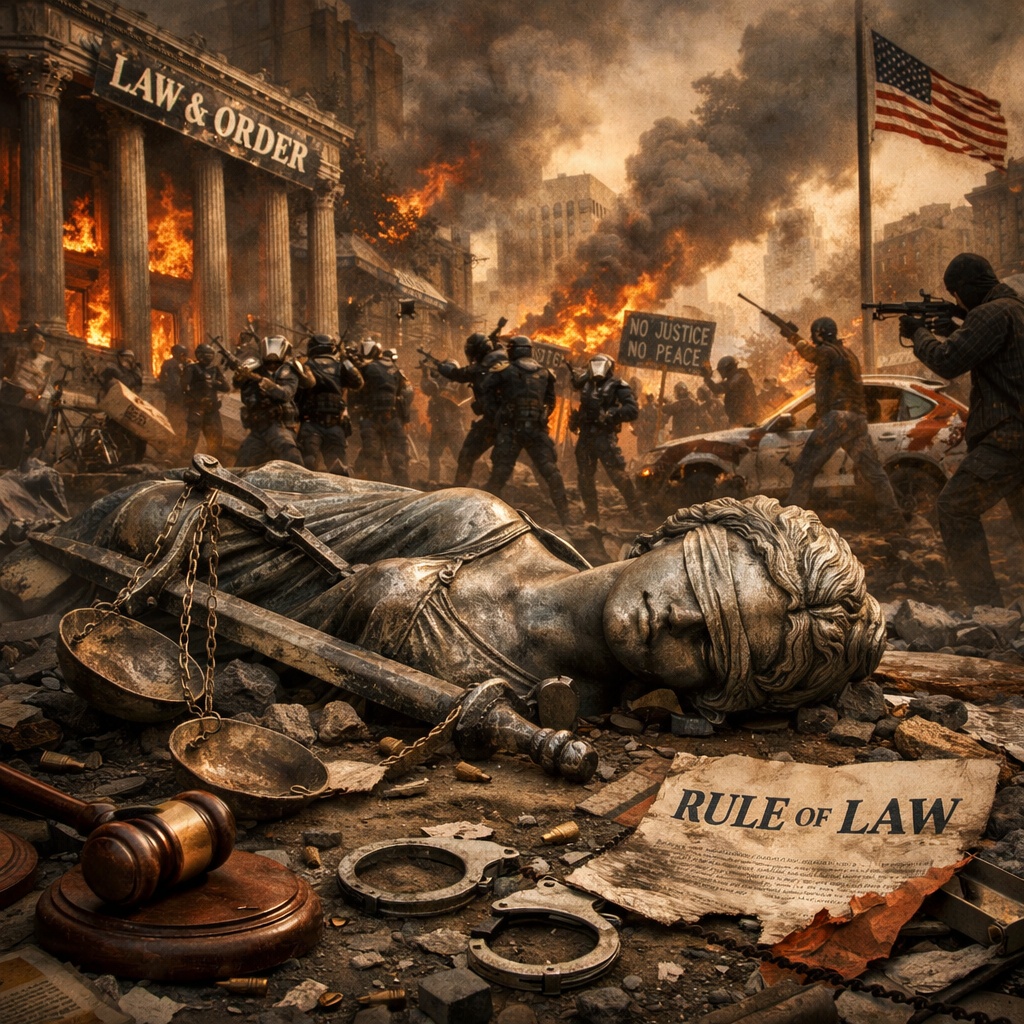
There are two books I highly recommend. The first was written by the historian Charles Hibbert wrote in his classic book, the Roots of Evil, how government used the law to be cruel as well as to confiscate wealth. At the time of the American Revolution, there were about 240 felonies. These all carried the death penalty. Why death? The king then got to confiscate your property and threw your family out on the street. The accused would be tortured to try to force him to confess. They would throw you in prison indefinitely just to win without a trial as the US government has now authorized thanks to one of the most ruthless Senators of all time, Lindsey Graham.
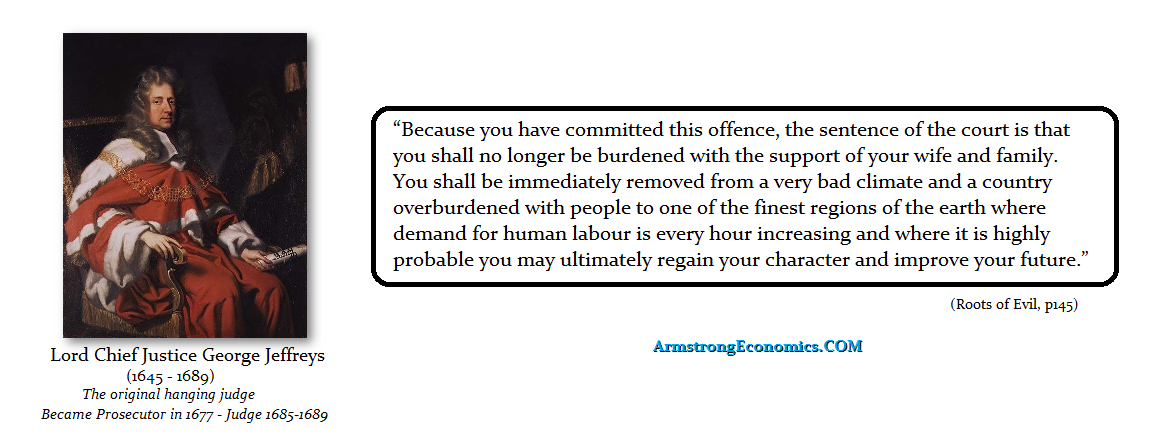
A misdemeanor carried the penalty of indentured servitude. The king sold you as a slave for a specified period. He would relieve you of supporting your family and could care less what their fate would be. It was all about the king making money. Hibbert wrote in his classic work quoting from court record of Chief Justice Jeffreys the actual sentence of many he shipped to America:
It was Ben Franklin who responded to this practice. When the American Revolution took place, England sent their prisons to Australia and the South, which had relied on prisoner labor from England, turned to buying blacks from the Dutch who were supposed to be the spoils of some war in Africa.
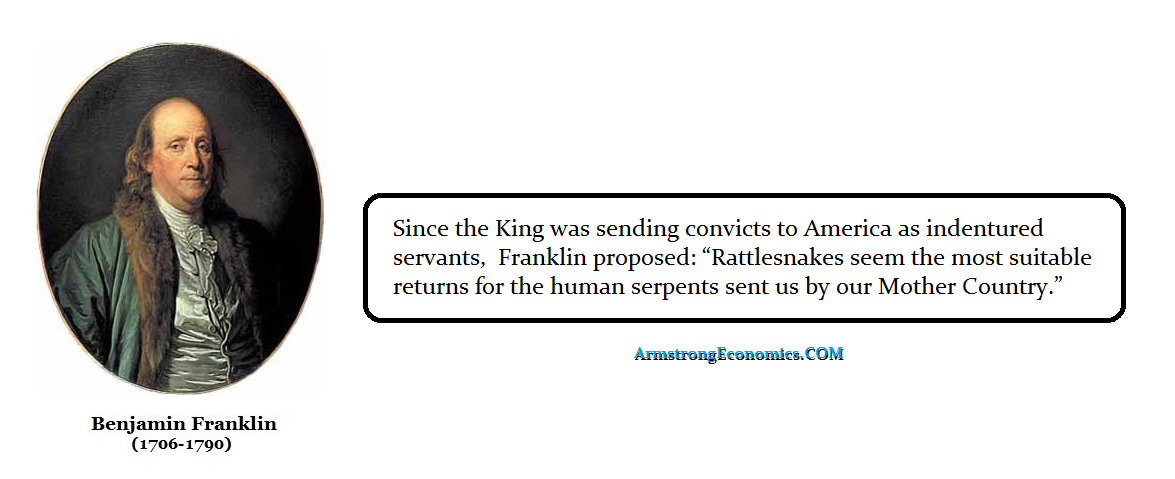
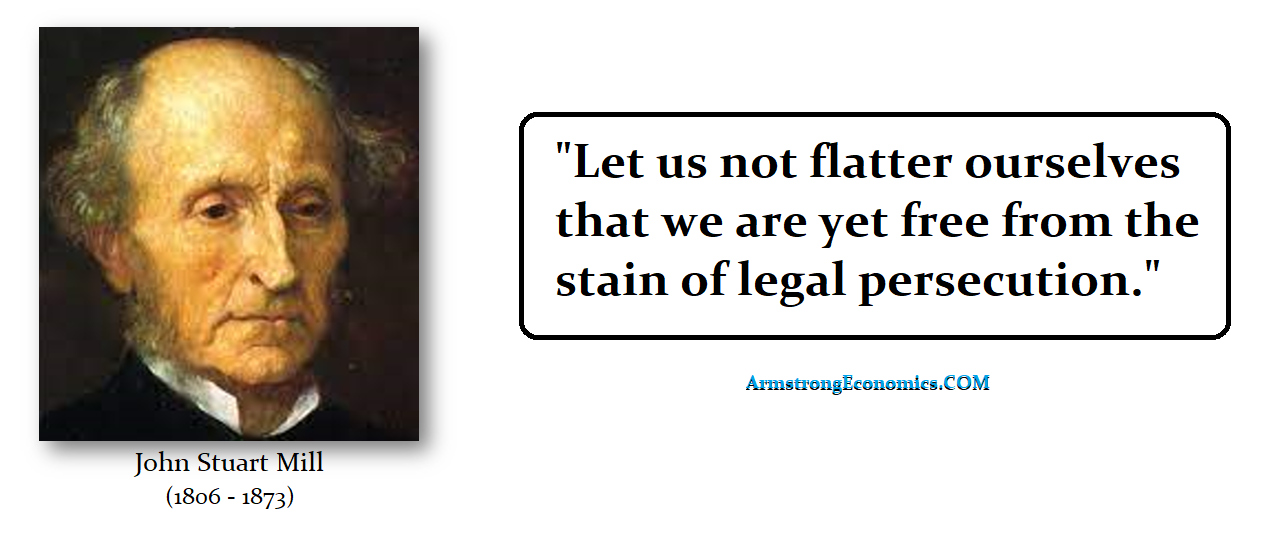
Eventually, the rule of law collapsed in Britain during the 19th century. The Second book I recommend is John Stuart Mill’s On Liberty, published in 1859. Even the novelist Charles Dickens in his 1853 opening Chapter in Bleak House said suffer any wrong rather than go to the corrupt English court system.
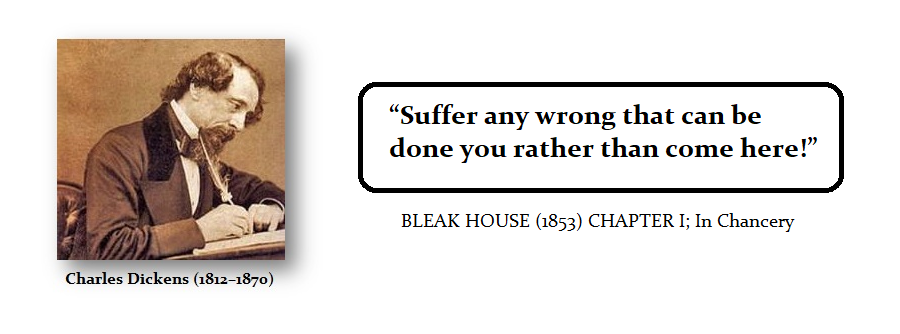
By the late 19th century in England (roughly 1870-1900) was a period of profound legal and social reform, often described as an “upheaval” or a “quiet revolution.” This era, part of the broader Victorian period, saw the state take a more active role in regulating society, the economy, and individual lives.
The Prison Act 1877 nationalized prisons, moving them from local control to a centralized, standardized system under the Home Office, aiming for more uniform and “reformative” regimes. The Probation of First Offenders Act 1887 introduced the concept of probation, allowing courts to suspend sentences for minor first-time offenders—a move towards rehabilitation over pure punishment.
The Judicature Acts of 1873-1875 was a monumental overhaul. It fused the historically separate courts of Common Law and Equity into a single Supreme Court of Judicature. This simplified procedure, ended conflicting rulings from different courts, and made the administration of justice more efficient and accessible.
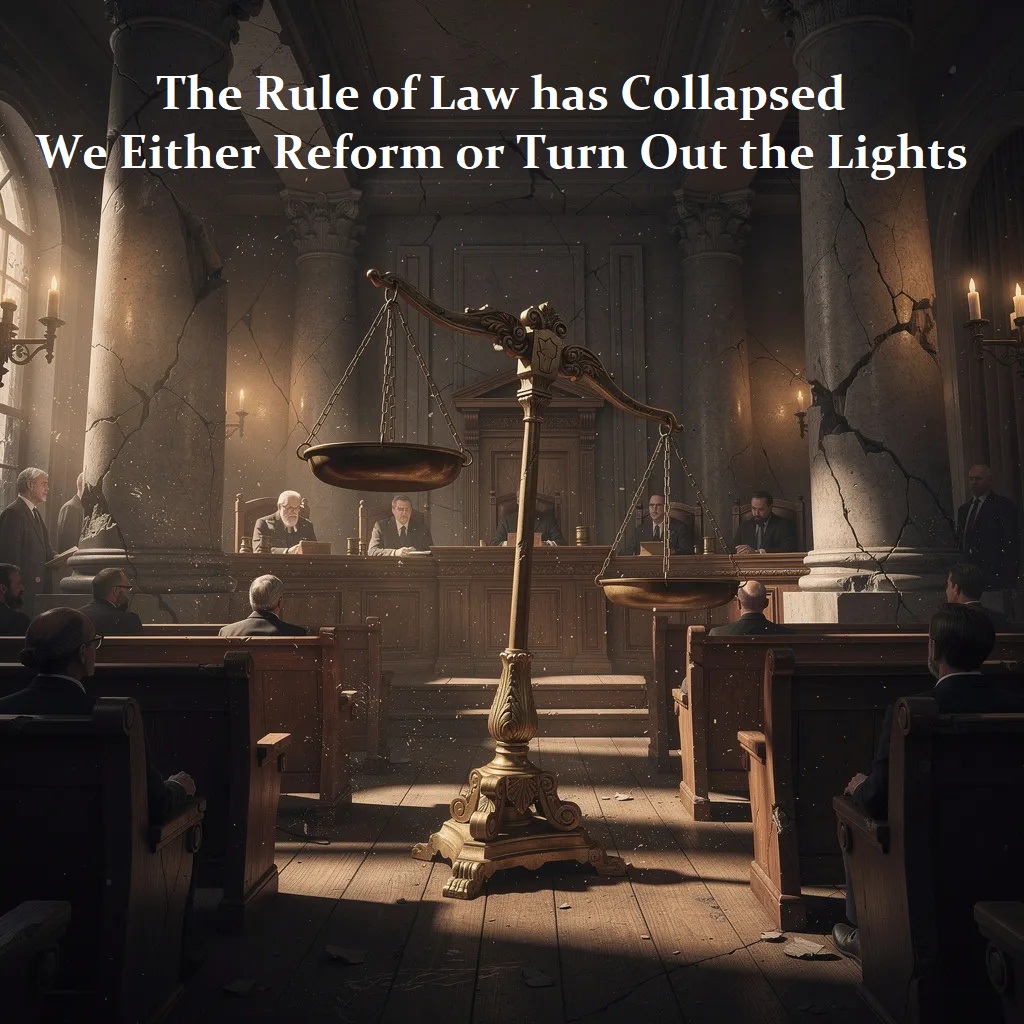
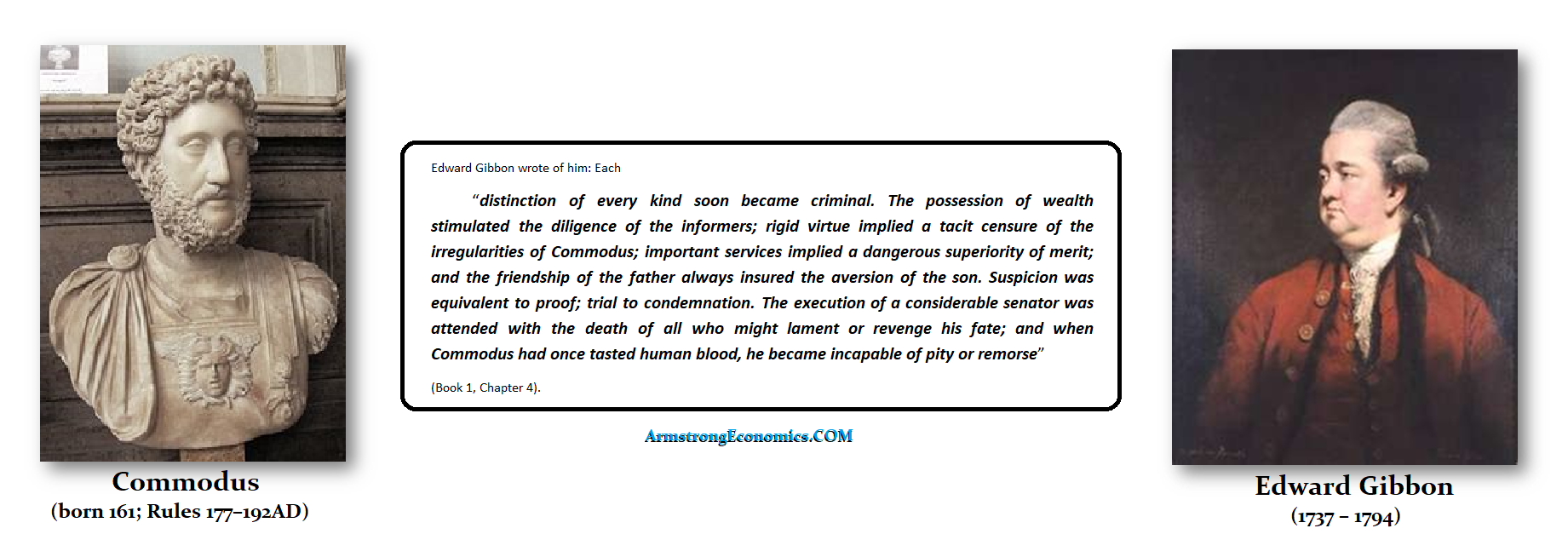
If you have watched the movie Gladiator, the emperor in question was Commodus (177-192AD). The rule of law simply collapsed during his reign because like today, the government must always win. When the rule of law collapses, it is no longer safe for investment. How do you buy a house if the courts do not honor the rule of law? Whenever the rule of law has reaches 90%+ this is when the system collapses. I have offered to testify before the House Judiciary Committee but there is absolutely NOBODY in Congress that is interested in addressing this issue.
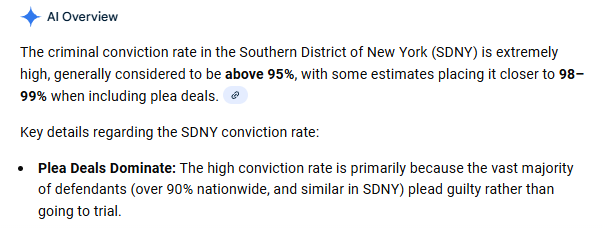
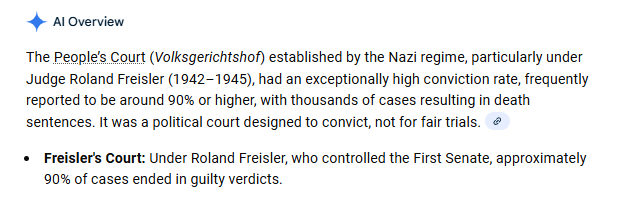
Here is what AI looked up with the conviction rate in New York City compared to Adolf Hitler. This is part of the collapse in the entire system as we head into 2032 because there is NOBODY interested in reform or even questioning what is going on. Consequently, the system will implode. It cannot historically survive and this is what is bringing the CONFIDENCE in government crashing down. Without the support of the people, no government can survive.
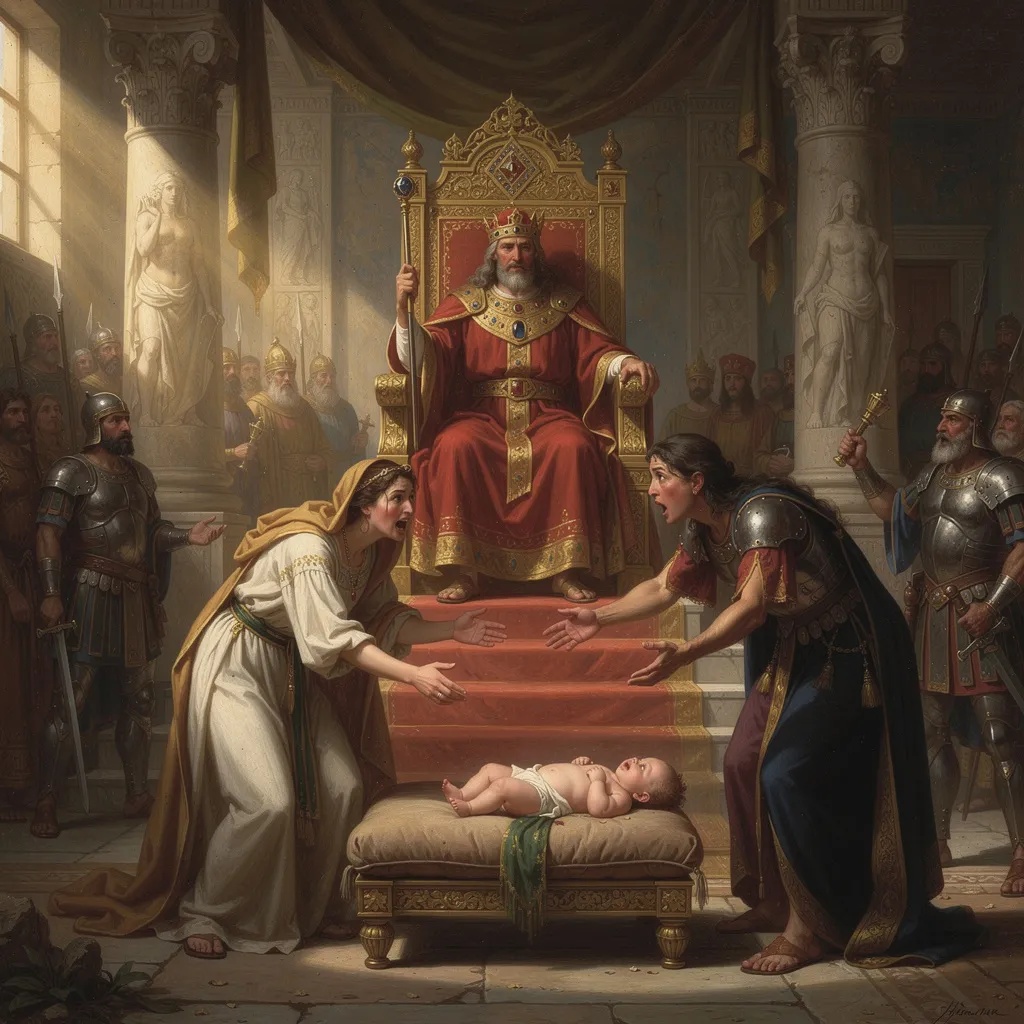
The very duty of the king from ancient times was to mitigate disputes between private parties. That is the famous story of King Solomon and ruling who is the mother of the baby. It was after Magna Carta when the English king, to restore his revenue from fines, suddenly claimed to be a victim by a dispute between two private people disturbed his peace. That was the beginning of the decline and fall of the rule of law. It was all about money. When the rule of law collapses from the abuse of the state, this is often the very definition of the collapse of government legitimacy itself. While it doesn’t always lead to immediate overthrow, it marks the point where a government transitions from a lawful authority to a regime reliant on pure coercion, making its downfall not merely highly probable, but inevitable.
The Rule of Law as the Foundation, Not Just a Pillar
A government isn’t just about armies, taxes, and borders. Its modern legitimacy rests on its role as the impartial guarantor of a predictable, just, and transparent legal order. When that collapses, everything crumbles. Civilization cannot exist without the rule of law for then there is no purpose for people to come together. Contracts become unenforceable and thus the economy seizes up. Property rights vanish redenering investment impossible, and thus capital flight begins and this is obvious when a state nationalizes private assets like Iran did to the oil companies. Personal security is at risk and this necessitated the privatization where history shows that militias and gangs surface. The state’s monopoly on force evaporates. This is how Rome collapse and people fled the cities and became serfs working the land for a landlord in return for protection behind his castle walls. People no longer see themselves as a nation, but separate typically into ethnic groups as in the Middle East as well as in the Balkans and Ukraine. This isn’t just a problem; it’s the unraveling of the social contract.
Historical Patterns: How the Collapse in the Ruke of Law Precedes the Fall
The French Revolution (1789) serves as just one example. The Ancien Régime’s legal system was seen as arbitrary, unequal, and a tool of the aristocracy. The paralysis and illegitimacy of the royal courts (like the Parlements) were a primary catalyst. The revolution began with the demand for a constitutional and lawful order.
We saw the same pattern during the Russian Revolution (1917). The Tsarist state had long governed by decree and repression (“Autocracy, Orthodoxy, Nationality”). During WWI, its institutions buckled, law broke down, and the Provisional Government that followed failed utterly to establish legal authority or order, creating the vacuum the Bolsheviks filled.
The 1918 German Revolution that even saw many seeking to join Russia and its Communist Revolution led to the the Slow-Motion collapse that followed the Weimar Republic (1933). The Nazis didn’t just seize power; they used legalistic maneuvers (the Reichstag Fire Decree, the Enabling Act) to destroy the rule of law from within. Once judges were coerced, the press silenced, and opponents “legally” imprisoned, the government’s democratic form was hollowed out. The collapse of law was the essence of the Nazi takeover.

Is It the “Final Straw”?
More accurately, it’s the point of no return unfolds with the collapse of the rule of law. Earlier symptoms might include economic crisis, corruption, and political deadlock. But the collapse of the rule of law is the phase change. It signals that the ruler cannot protect their property or enforce contracts. People begin to defect. (This was crucial in the fall of the Shah of Iran and the Philippines’ Ferdinand Marcos). It means the state is now a source of danger, not security. Passive obedience turns to active resistance or flight. When orders are clearly illegal or the chain of command fractures, soldiers and police may refuse to fire on civilians or even switch sides. We saw that during the 1991 attempted Russian Coup.
The Search for External Enemies
When a state begins to see the writing on the wall, they will typically point to an external enemy. The Ayatollah Khomeini (1902-1989) during the 1979 Islamic Revolution needed an external enemy in order to defeat his opponents who did not want a religious state. He turned the United States into the Great Satan justifying the taking of the American Embassy and held them hostage for 444 days. This was how he secured domestic power for anyone who dared to speak against him was am American sympathizer or supporter.
An Overwhelming External Threat is a strategy and we are witnessing this in the EU and NATO using Putin. A wartime unity that temporarily papers over institutional failure. As in North Korea, where the state prevents the organizational alternatives to itself from forming, through pervasive terror and ideology.
Historically, the sustained collapse of the rule of law is a near-certain predictor of governmental collapse. It is less a “final straw” and more the accelerant that turns a smoldering crisis into an uncontrollable fire. It dismantles the reason for the state’s existence in the eyes of its citizens and elites. While a regime can survive for a time through sheer terror or wealth, it has, at that point, ceased to be a functioning government in any traditional sense and becomes a predatory or failing entity living on borrowed time.
 Centinel2012