
Posted originally on Feb 26, 2026 by Martin Armstrong |
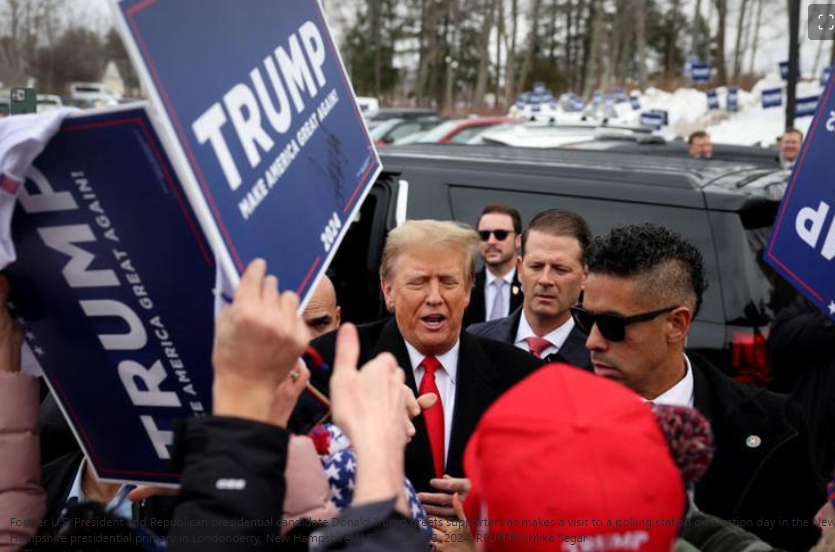
Americans “still trust Trump more than the Democrats — and in every category,” according to an ABC poll. The joke used in the piece is actually very telling: in politics, you do not need to outrun the lion, you just need to outrun the other candidate. That is a far more accurate description of modern democratic systems than any ideological explanation.
People do not suddenly develop blind trust in government. They shift confidence away from institutions they believe have failed them. When voters say they trust one political figure more than a party, it is often a vote against the establishment rather than a vote for a personality. Left-leaning policies failed. Every American suffered a decline in their quality of life during the Biden Administration as a direct result of his policies that curbed the US economy in favor of globalist policies. The Build Back Better community collectively agreed that America should no longer be the world’s leading superpower. Then an anti-establishment politician entered the arena and demanded nationalism. Meanwhile, the Democrats continue pushing the same failed policies that the majority no longer support.
Approval ratings for Trump’s presidency still sit in the low 40% range, with disapproval in the mid-to-high 50% range, depending on the aggregate, which demonstrates a deeply divided electorate rather than unified support. At the same time, surveys repeatedly show dissatisfaction with both major parties, leaving many voters mistrusting the political system as a whole. Modern polling is highly fragmented, and partisan interpretation dominates the narrative. One poll may show distrust of Trump on specific issues like inflation or foreign policy, while another shows voters trusting Republicans more than Democrats on key economic concerns.
In October, only 18% of Americans said they were “better off” under Trump compared to 22% today. Most realize that the nation’s economic reality is not the result of a single politician. Furthermore, the difference between an isolated politician and the entire Democratic Party is ever so slight. There is only a 1% difference, for example, in voters believing Trump solely is reducing the cost of living compared to Congressional Democrats.
In the end, the real takeaway is not that one side is overwhelmingly trusted. The real story is that confidence in the political class as a whole continues to decline, and voters are making choices based on credibility rather than absolute belief. That is a far more dangerous long-term trend than any single poll headline.
 Centinel2012