
Posted originally on CTH on March 12, 2026 | Sundance
When the Supreme Court made their ridiculous decision to nullify the import tariffs under the International Emergency Economic Powers Act (IEEPA) use, the high court noted several alternate approaches would not be legally problematic. One of those approaches would be the use of Section 301 trade tariffs.
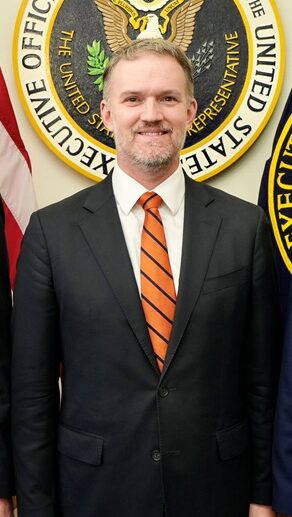
Yesterday USTR Jamieson Greer quietly announced that a Section 301 review would be taking place for the following countries: China, the European Union, Singapore, Switzerland, Norway, Indonesia, Malaysia, Cambodia, Thailand, Korea, Vietnam, Taiwan, Bangladesh, Mexico, Japan, and India.”
♦ Section 301 tariffs are a trade enforcement mechanism established under the Trade Act of 1974. They allow the U.S. government to impose tariffs on imports from countries that are found to be engaging in unfair trade practices. The Office of the United States Trade Representative (USTR) conducts investigations to determine if a country is violating trade agreements, and if so, it can impose tariffs as a corrective measure {SOURCE}
USTR PRESS RELEASE – WASHINGTON — Today, United States Trade Representative Jamieson Greer announced the initiation of investigations regarding the acts, policies, and practices of various economies under Section 301(b) of the Trade Act of 1974 relating to structural excess capacity and production in manufacturing sectors.
The investigations will determine whether those acts, policies, and practices are unreasonable or discriminatory and burden or restrict U.S. commerce. The economies subject to these investigations are: China, the European Union, Singapore, Switzerland, Norway, Indonesia, Malaysia, Cambodia, Thailand, Korea, Vietnam, Taiwan, Bangladesh, Mexico, Japan, and India.
“The United States will no longer sacrifice its industrial base to other countries that may be exporting their problems with excess capacity and production to us. Today’s investigations underscore President Trump’s commitment to reshore critical supply chains and create good-paying jobs for American workers across our manufacturing sectors,” said Ambassador Greer.
“The Trump Administration’s reindustrialization efforts continue to face significant challenges due to foreign economies’ structural excess capacity and production in manufacturing sectors. Across numerous sectors, many U.S. trading partners are producing more goods than they can consume domestically. This overproduction displaces existing U.S. domestic production or prevents investment and expansion in U.S. manufacturing production that otherwise would have been brought online. In many sectors, the United States has lost substantial domestic production capacity or has fallen worryingly behind foreign competitors.” (read more)
Additionally, Section 232 [Steel and Aluminum examples] of the Trade Expansion Act of 1962 (19 U.S.C. §1862, as amended) authorizes the President to impose trade restrictions—such as a tariff or quota—if the Secretary of Commerce determines, following an investigation, that imports of a good “threaten to impair” U.S. national security. {SOURCE}
Section 232 is currently covering all the steel and aluminum import tariffs.
Section 122 of the Trade Act of 1974 allows the U.S. president to impose tariffs of up to 15% to address “large and serious” balance-of-payments deficits. This authority can be exercised without prior congressional approval for a limited duration of 150 days. After this period, any tariffs must be extended by Congress. {SOURCE}
Section 122 has already been deployed to retain the “baseline reciprocity tariffs.”
USTR Greer is now walking through the process of deploying Section 301 and will eventually become the legal underpinning to replace Section 122 and retain all tariff status without congressional extension needed. Most of this is technical and legal compliance as several of the aforementioned nations have already finalized free trade agreements.
 Centinel2012