
Posted originally on Mar 27, 2026 by Martin Armstrong |
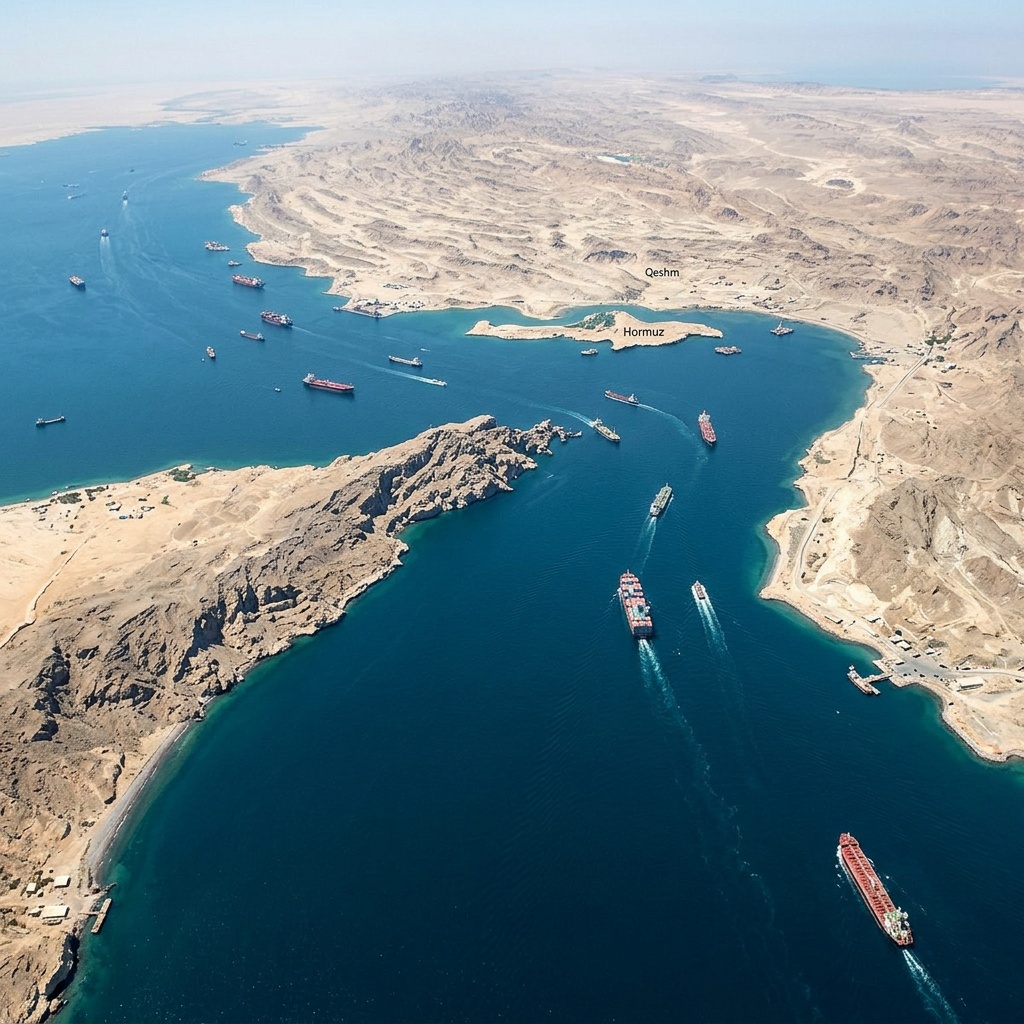
Spain has now emerged in an unexpected position in the Strait of Hormuz crisis. Reports indicate that Iranian authorities are allowing Spanish-linked vessels to pass without the heavy tolls or restrictions imposed on others. Spain is not the largest maritime power moving through Hormuz. However, it is deeply integrated into European shipping networks, ports, and energy supply chains. That means any preferential treatment can ripple across Europe and influence how trade is routed.
What is unfolding is not just control of a chokepoint. It is selective control. Iran has made clear that only “non-hostile” vessels may pass freely. Others face restrictions or high fees. This transforms the strait from a neutral international waterway into a politically managed corridor. Once access depends on alignment rather than law, globalization begins to fracture.
The scale of the disruption is significant. Under normal conditions, about 130 to 140 ships pass through the strait daily. These vessels carry roughly 20 million barrels of oil, close to one-fifth of global supply. Recent reports suggest traffic has dropped sharply. Some estimates show only a handful of ships moving per day, with total monthly crossings far below normal levels. This is no longer a stable trade route. It is operating under wartime conditions.
If Spanish-linked ships move more freely, they gain a cost advantage. Markets will respond quickly to that distortion. Other European actors may try to route cargo through Spain. They may use Spanish partnerships, flags, or intermediaries to bypass higher costs. This is how arbitrage works. It does not wait for political approval.
Iran’s decision centers around Spain’s refusal to support the US and Israel in this war. Not only has Spain refused to offer support, it has openly condemned actions taken against Iran. Now those who supported sanctions and military aid tied to Ukraine and will see this as a betrayal. They accepted economic costs for a unified policy. Now they face higher shipping costs while another member gains relief. That undermines the idea of a coordinated European response. This is how alliances begin to weaken. You cannot maintain unity when access to critical trade routes is uneven. Some countries gain advantages, others absorb losses. Over time, that creates internal competition rather than cooperation.
From a capital flow perspective, the outcome is predictable. Capital moves toward efficiency. If Spain offers a cheaper path through a restricted chokepoint, flows will shift in that direction. That concentrates activity and amplifies divisions across Europe. The deeper issue is structural. The Strait of Hormuz is no longer functioning as an open route but as a controlled gateway.
Trade is now being filtered through alliances rather than markets. That shift has already begun.
 Centinel2012