
Posted originally on Mar 27, 2026 by Martin Armstrong |

COMMENT: Mr. Armstrong, I just had to say that your 1985 clip explaining how the dollar rose because they thought the US would default on its eurodollar obligations was fascinating. You are the only real analyst with genuine experience and sources. The latest stats show that foreign holdings of US debt have risen, while holdings of metals have declined. So much for the constant dollar haters, as you call them. They are always wrong.
Thank you so much for your view of the world. Experience counts.
GP
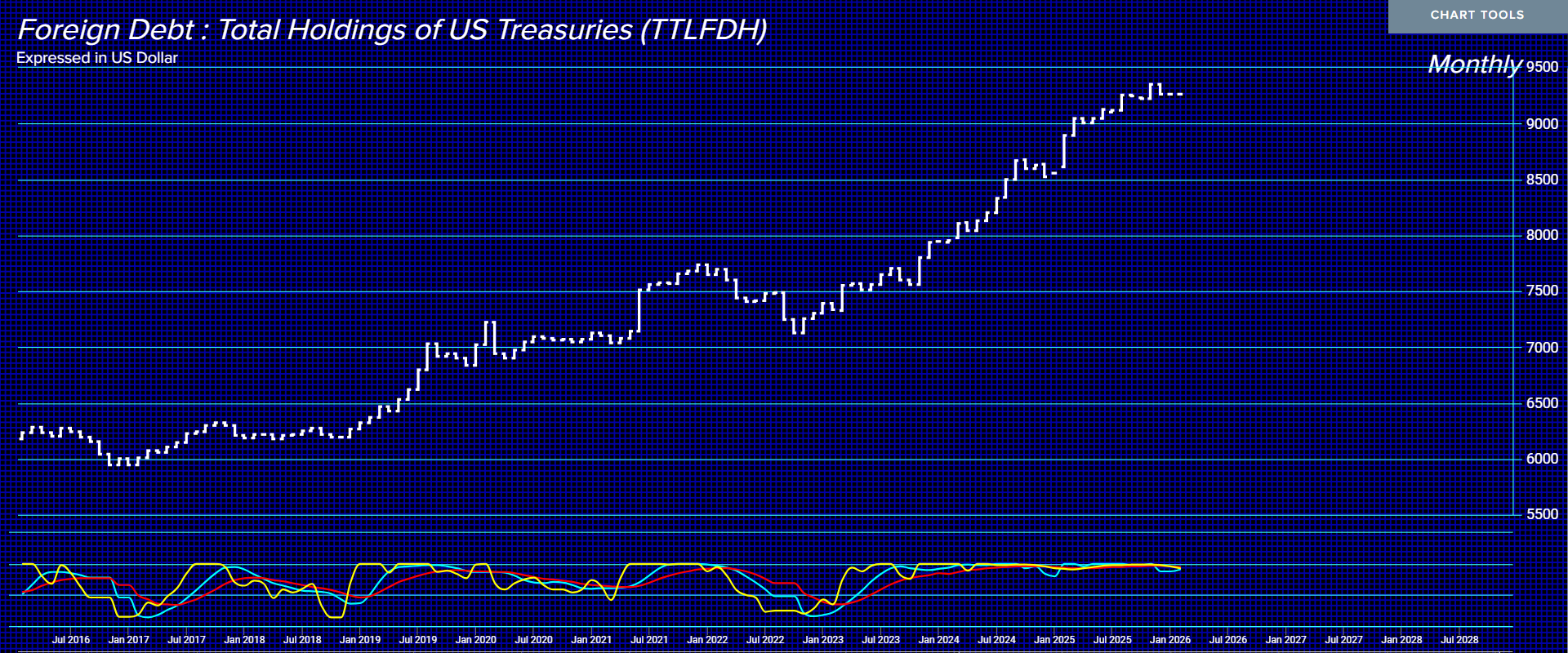
REPLY: Those perpetual dollar haters have been singing the same song since the 1970s. It gets frustrating for me to see the same old claims regurgitated constantly with no reflection or original analysis ever and certainly no historical investigation. As Julius Caesar once said, people believe what they want to believe, not the facts or truth.
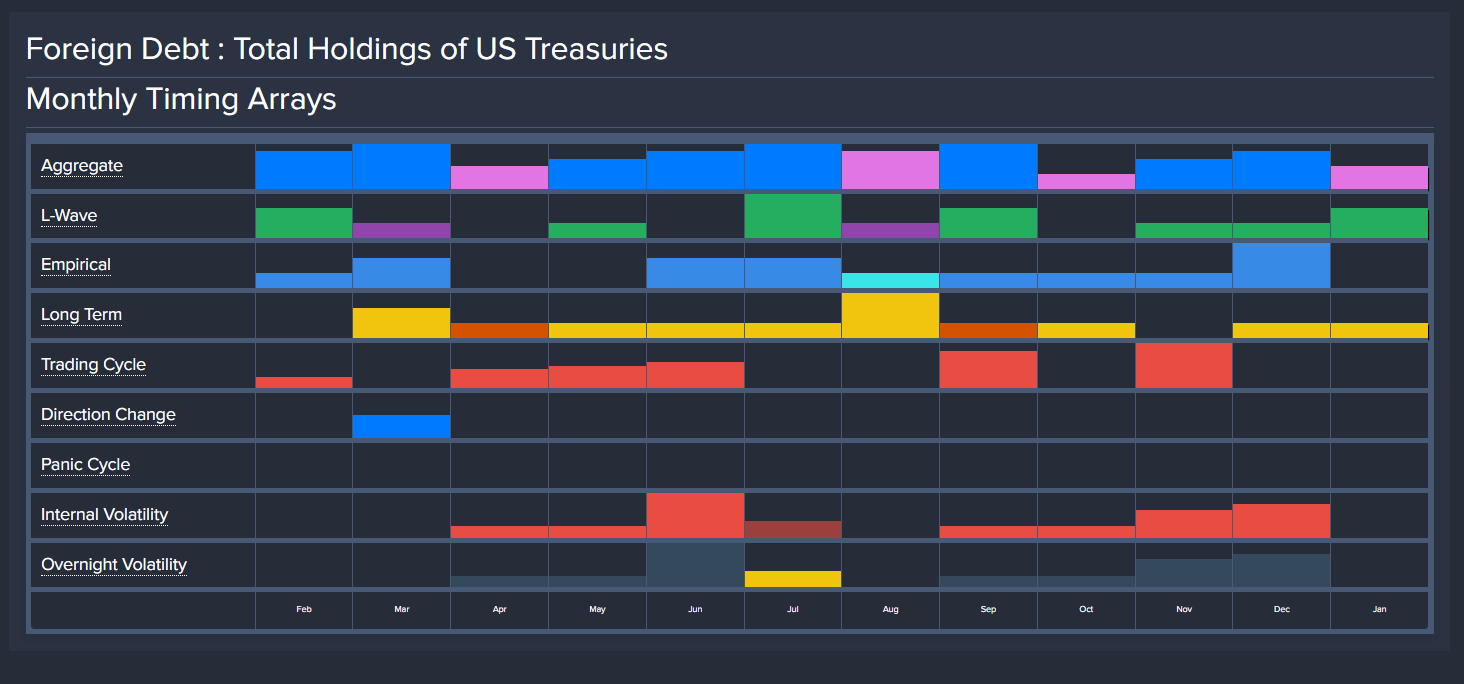
Socrates is showing that March could be a low and we have a Directional Change and the volatility rises sharply in June. We have Panic Cycles in July even in our War Index. It is suggesting that capital flows will shift into the USA with escalating war in Europe and the Middle East. These dollar haters are generally the fiat currency crowd who have been insisting on a commodity backed currency for decades when they do not understand the first thing about the economy and how it functions globally.
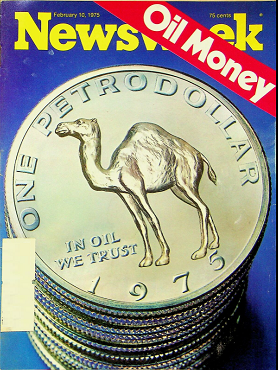
The Petrodollar was a their desperate attempt to explain why the dollar did not crash after the collapse of the Bretton Woods in 1971. When the dollar did not collapse after the end of the gold standard, they had to cover-their-ass because they were WRONG. So, to save face, they claimed that the dollar was now backed by oil rather than gold because oil was priced in dollars. They sold that BS to the press and it was pure sophistry. To this day, we still hear the conspiracy theory about the Petrodollar.
The percentage of world trade attributed to oil and petroleum products is approximately 8-10% based on the 2022 data. Merchandise Trade in 2022 globally totaled around $25 trillion (WTO data). Of that, crude oil and refined petroleum product exports worldwide were estimated to be between $2.2 and 2.5 trillion (depending on price fluctuations and trade volumes). This includes contributions from OPEC, which are only 40% of crude exports, and non-OPEC exporters like the U.S., Russia, and Canada.
The whole Petrodollar theory was absolute nonsense and it diverts people from understanding the importance of the financial capital movements. The USA has the largest consumer-based economy and everyone has to sell their products in dollars to American consumers. Comparing Per Capita Spending internationally, the US consumer spends $32,700, European comes in at $18,000 – $22,000 (varies by country), and Japan comes in at $8,800, despite the fact that Japan is the second largest consumer-based economy.
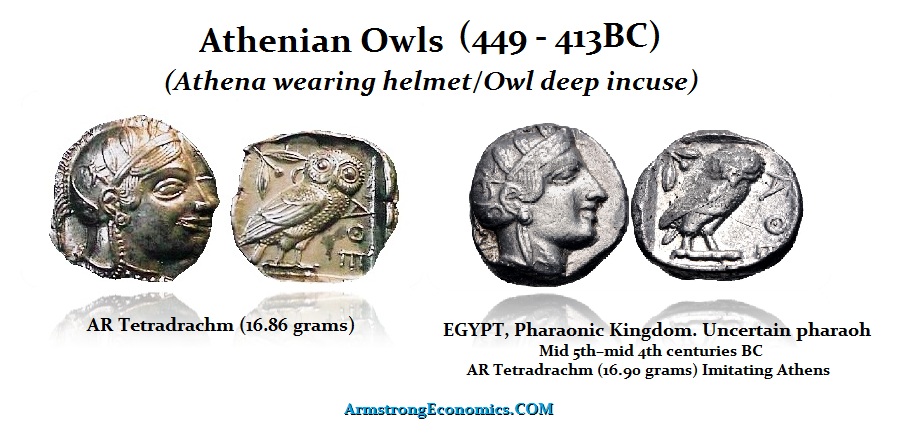
The backing of ANY currency is the productivity of the nation – it’s people. Russia is the largest country with $75 trillion in natural resources, but they are still in the ground. If a currency is would only some commodity, then Russia should be #1 and if oil backs a currency then why is Venezuela or Saudi Arabia not the reserve currency? Part of what makes a reserve currency is also military power. When Athens defeated the Persian invasion, they rose in stature. The Athenian Owl became the dominant currency in the ancient world to the point that Egypt, which never issued coinage, struck imitation Athenian Owls for international trade. The US dollar is also the reserve currency in part because of the military power.
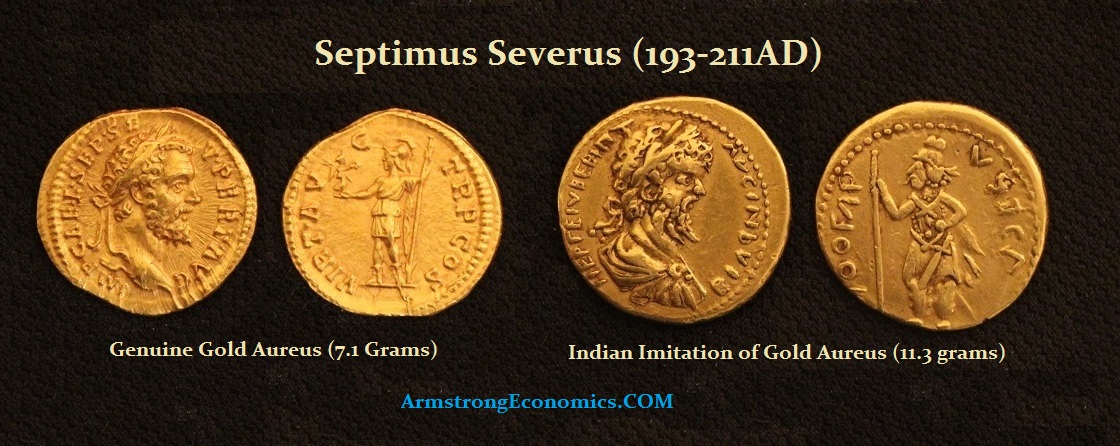
The Roman Empire was the first society to develop a massive, market-driven urban consumer culture on a scale never seen before. This is why you see imitation of Roman coinage produced in India for the Roman coinage carried a premium over and above the metal content. This example shows that the imitation contained more gold then original. Ancient Rome (particularly the city itself) was a consumer city—a term historians use to describe cities that consumed far more than they produced locally. Rome’s population of about one million people was sustained by:
- State-distributed grain (annona) paid for by taxes from the provinces
- Elite wealth extracted from conquered territories
- A vast network of imports (wine, olive oil, metals, pottery) from across the Mediterranean
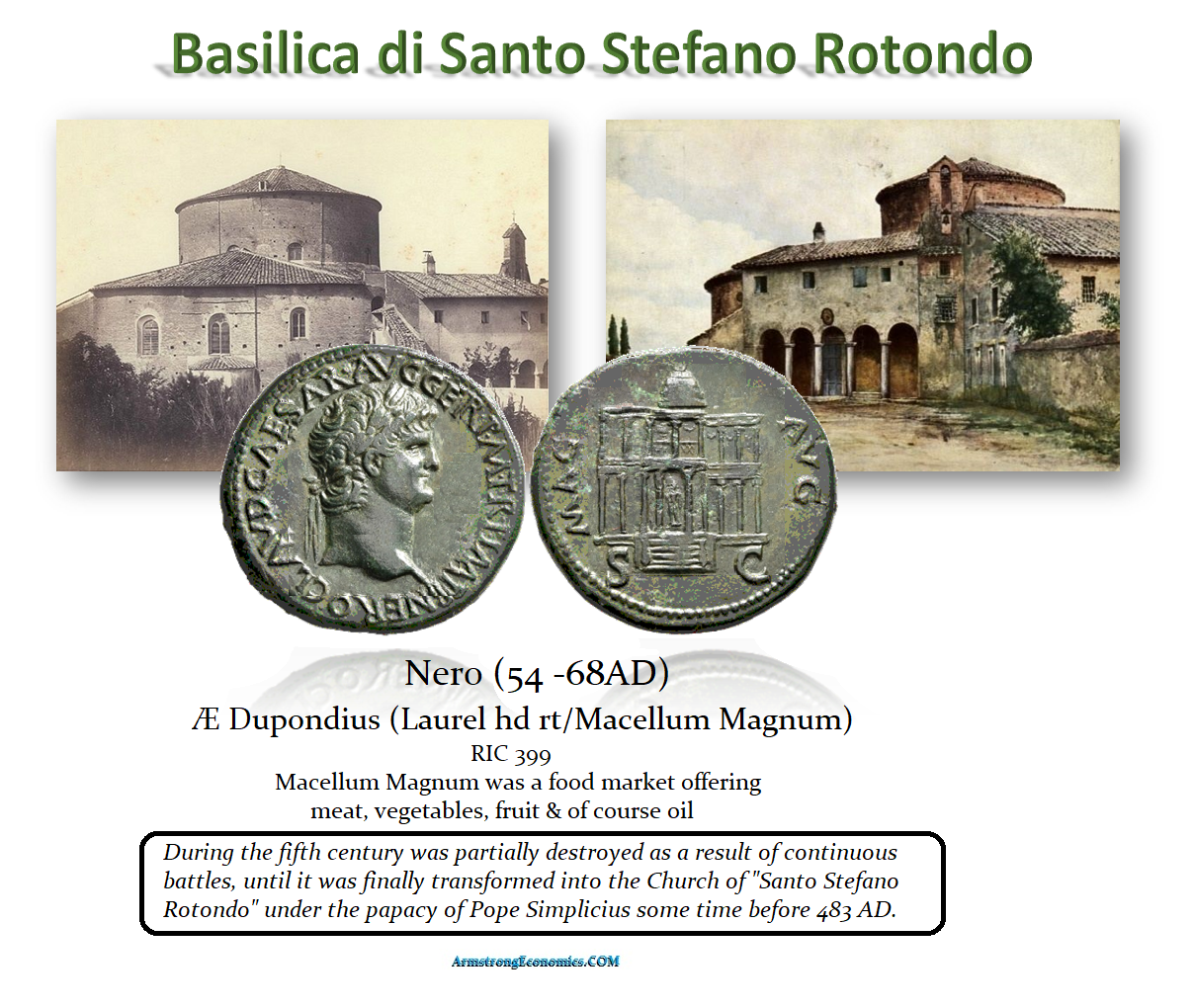
This created an unprecedented concentration of demand. In Rome you found sophisticated retail shops (tabernae), competitive markets, standardized coinage, and even early forms of branding (e.g., wine amphorae stamped with producers’ names). Here is a coin of Nero announcing the construction of essentially a food mall, Macellum Magnum. This coin is a fascinating artifact because it serves both as a piece of imperial propaganda and a unique historical record of Roman urban life.
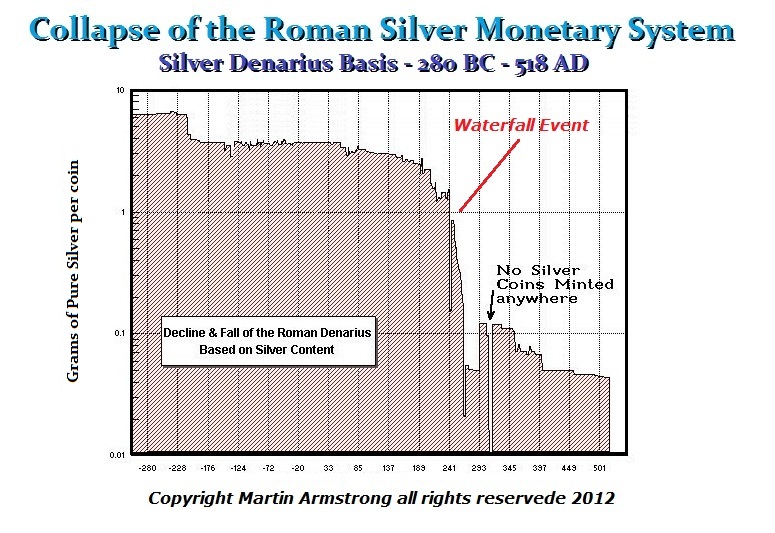
I have explained that once Emperor Valerian I was captured by the Persians in batte during 260AD, that sent a shockwave throughout the empire and encouraged the barbarian of the North to invade smelling Rome was weak. Thie became the crisis of the Third Century; silver denarius collapsed within just 8.6 years and provincial coinages began to come to an end. The severe debasement destroyed confidence.
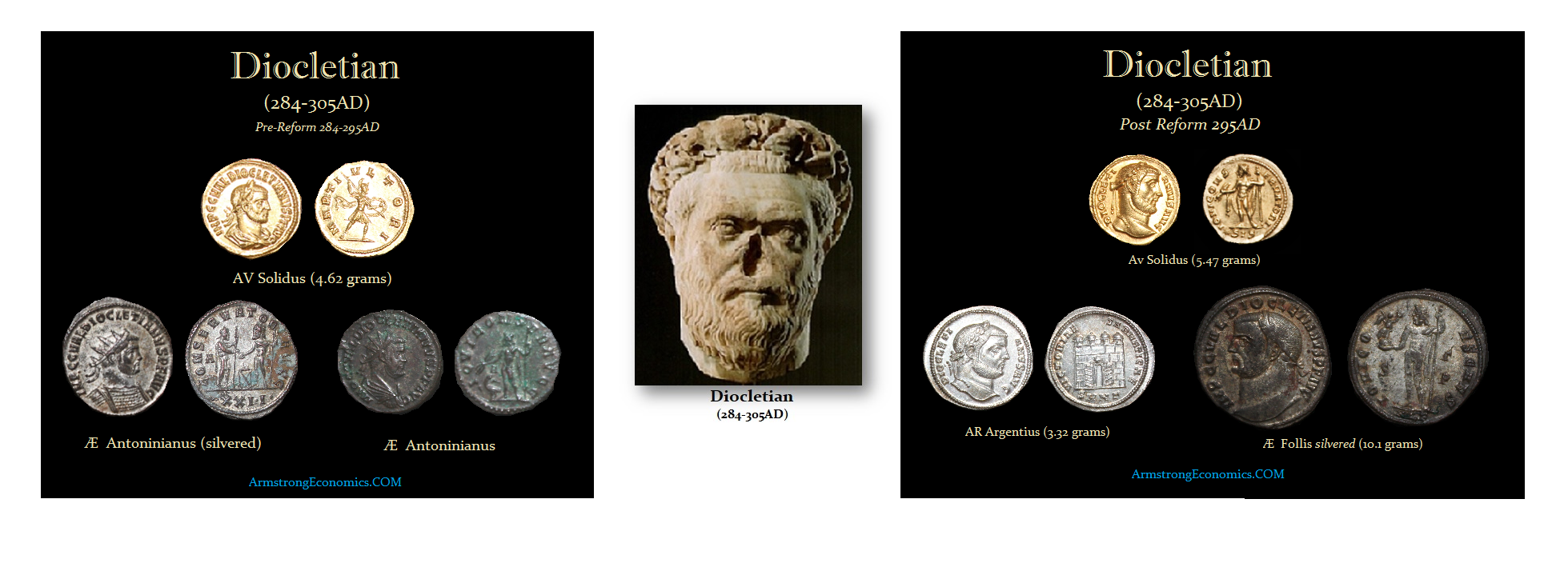
Emperor Diocletian (284-305AD) sought to reestablish that confidence reforming the currency. He introduced the gold solidus and new silver/bronze coinage in an attempt to revive the economy. Yet, only the gold remained stable as the silver coinage began to decline and vanish.
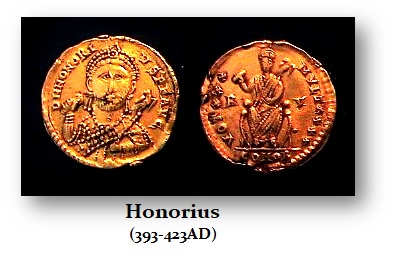
Britain was a special case of total collapse. Unlike Gaul or Italy, where some continuity was maintained, coinage in Britain came to a complete halt after the Roman departure. By about 435 AD, coins had ceased to be used as a medium of exchange. The island would not see a new, native coinage until the late 7th century. The Romans exited Britain primarily in 410 AD, when Emperor told the cities of Britain to “look to their own defenses,” effectively ending central Roman rule. However, this was not a single event but a process over several decades, with key troop withdrawals starting as early as 383 AD.
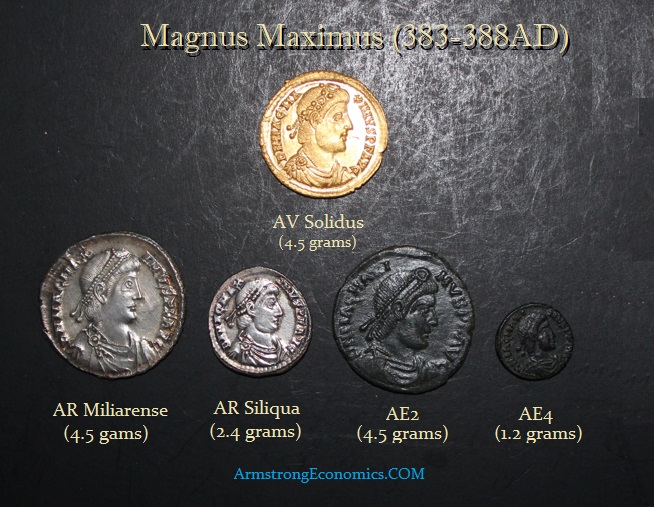
The formal break in 410 AD was the culmination of a long period of decline and withdrawal. The first major troop withdrawal came in 383AD when General Magnus Maximus took a large portion of Britain’s garrison to Gaul to launch a successful (but temporary) bid for the Roman throne. He never returned the troops, leaving local leaders in charge of defense in northern and western Britain.
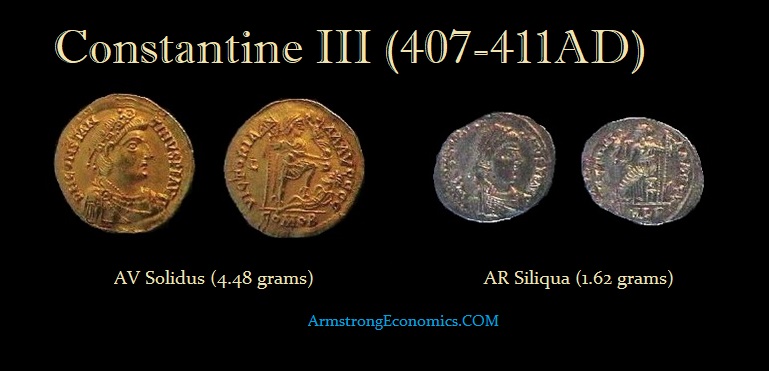
The usurper Constantine III stripped the remaining mobile Roman soldiers from Britain in 407AD, crossing to Gaul in another attempt to become emperor. These forces also never came back. The Formal Break (409-410 AD) came with no army for protection, facing increasing raids, and paying taxes to a distant emperor who could no longer help, the Romano-British elites expelled Roman officials around 409 D. The following year, Emperor Honorius sent his famous rescript telling the British cities to arrange their own defense, officially acknowledging the end of Roman authority.
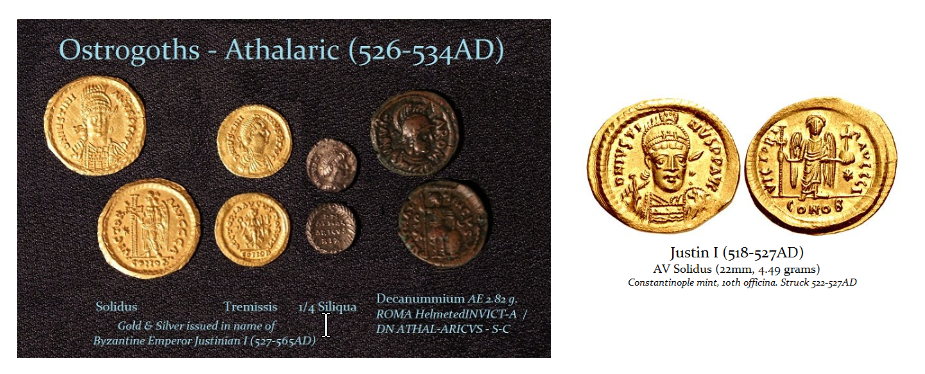
By the late 5th century, it was over for the West. Following the final loss of Roman political control, the various barbarian kingdoms (like the Franks, Visigoths, and Ostrogoths) took over the existing Roman mints. They continued to strike coins, often in the names of the remaining Roman emperors for a time, but this was the beginning of a new, post-Roman monetary system.
The idea that the dollar will collapse because it is fiat and is not backed by gold is just laughable. German and Japan rose to the strongest economies in their respective regions without gold. They did so by productivity.
 Centinel2012