
Posted originally on Apr 8, 2026 by Martin Armstrong |
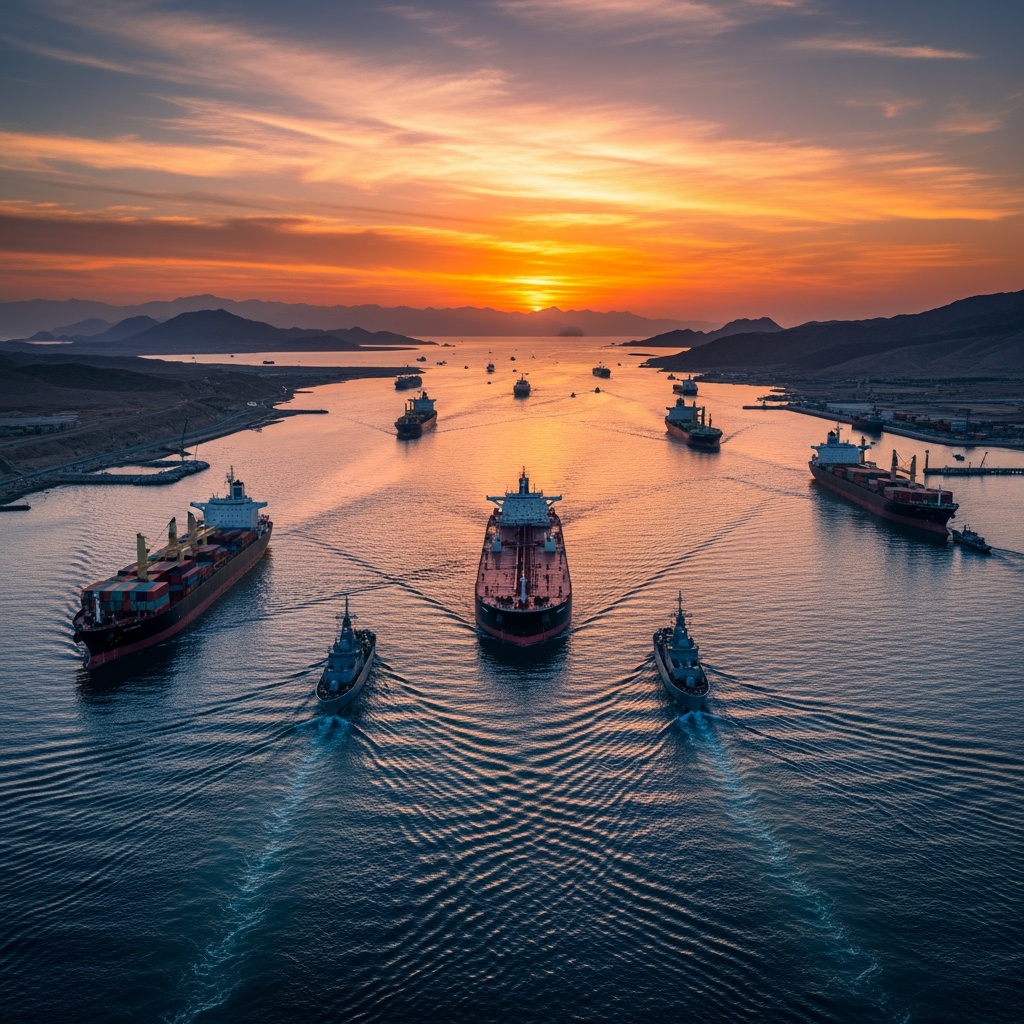
The problem with an oil crisis is that the public never feels it all at once because oil does not move by magic. It moves by ship, and ships move slowly. That delay is precisely why people are still underestimating what lies ahead. Before this war shut the Strait of Hormuz, roughly 20.7 to 20.9 million barrels per day of crude, condensate, and petroleum products were moving through that chokepoint, including about 14.7 million barrels per day of crude and condensate and another 6.1 million barrels per day of petroleum products. The IEA now says the war has created “the largest supply disruption in the history of the global oil market,” with flows through Hormuz plunging from around 20 million barrels per day to a trickle, Gulf producers cutting output by at least 10 million barrels per day, and nearly 20 million barrels per day of crude and product exports disrupted.
People keep looking at gasoline prices and assume the worst has already been discounted. It has not. What is cushioning the system right now is the oil that was already loaded before the crisis fully shut traffic down. Reuters reported that Iran alone exported about 13.7 million barrels of crude after the February 28 attacks, while Kpler estimated about 16.5 million barrels in the first eleven days of March, which means cargoes already on the water have been acting as a temporary buffer. The IEA also noted that observed global oil stocks were 8.21 billion barrels in January and that about 25% of that total was “oil on water,” or roughly 2.05 billion barrels floating in transit or storage at sea. That is the bridge the world has been living off, but bridges end.
The transportation lag is what masks reality. Tankers from the Persian Gulf do not teleport into refineries. Cargoes from the Gulf to Japan typically take about 20 to 30 days, and cargoes from the Gulf to Europe via the Suez Canal take about 19 days under normal conditions. If ships are forced around the Cape of Good Hope, the Persian Gulf to Amsterdam-Rotterdam-Antwerp route stretches to nearly 35 days. Even product cargoes from the U.S. Gulf Coast to Chiba, Japan face additional delays depending on whether they use Panama, Suez, or the Cape. In other words, there is always a lag between disruption at sea and pain on land, which is why the last normal shipments are still being burned through now.
The market has already started telling you this in the only language that matters, which is the price for prompt physical barrels. Reuters reported today that European and Asian refiners are paying near $150 a barrel for some immediate-delivery crude grades, with North Sea Forties hitting $146.09. Brent futures only tell part of the story because the real panic is in physical cargoes needed now. Dated Brent is trading almost $20 above June Brent futures, while European jet fuel has been near $226.40 a barrel and diesel around $203.59. That is what happens when refiners suddenly have to replace missing Gulf barrels with cargoes from the North Sea, West Africa, Brazil, or the United States. Everyone begins bidding for the same limited replacement supply.
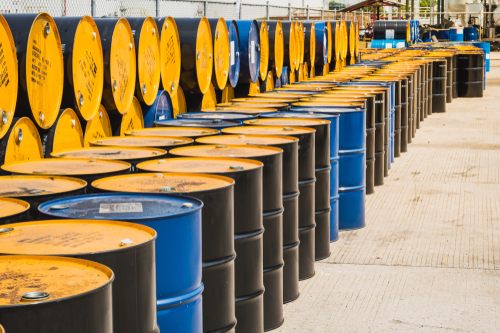
This is where the public still does not grasp the supply chain. Energy sits beneath everything in the economy. It is not just the price at the pump. The Middle East exported more than $10 billion of kerosene tailored for aircraft engines last year, and Reuters Breakingviews noted that much of it is now inaccessible. Heavy Gulf crudes also yield different product slates than American barrels. A barrel of WTI produces significantly more heavy naphtha, while heavier Middle Eastern crude yields more asphalt and ship fuel. That means even if you find replacement crude, you do not necessarily replace the same downstream products. Trucking, aviation, manufacturing, farming, shipping, chemicals, plastics, packaging, fertilizer, all of it sits on top of energy and all of it feels the mismatch.
The shipping side is getting worse, not better. The EIA said March tanker rates for VLCCs from the Middle East to Asia reached their highest level since at least November 2005 after the Strait closed on March 2. It also said vessels that had already loaded crude and became confined in the Gulf reduced effective global tanker availability, pushing rates higher everywhere else. Reuters then showed the second-round effect: availability of VLCCs on the U.S. Gulf Coast halved to 10 from 20 in a month, net vessel availability there fell 41%, and freight for Suezmaxes and Aframaxes surged to as much as $300,000 a day from an average of about $60,000 over the previous five months. That is the hidden tax of an oil shock. When voyages take longer and insurance costs explode, you need more ships just to move the same amount of crude, and there are not enough ships to do it.
The IEA has been blunt that this is not some replay of 1973 in miniature. Fatih Birol said this oil and gas crisis is worse than 1973, 1979, and 2022 together, and Reuters reported his warning that April’s disruptions would be roughly double those of March. The agency already coordinated the release of 400 million barrels from emergency reserves last month, yet it is still warning that shortages of diesel and jet fuel are moving from Asia toward Europe in April and May. That is the key point. The crisis does not end when futures stop screaming. It progresses as inventories are drawn down, ships arrive late, and the last pre-war cargoes are consumed.
This is why I have always said energy is foundational. You can pretend inflation is under control, you can manipulate statistics, and you can lecture the public about temporary volatility, but none of that changes the physical chain. If roughly one-fifth of the world’s seaborne oil system is disrupted, then the entire globe is forced to compete for what remains. Once those final shipments are exhausted and the slower replacement routes fail to keep up, this energy crisis will move from headline risk to economic reality. That is when the public finally realizes that oil is not just another commodity. It is the base layer under the entire economy.
 Centinel2012