Posted originally on CTH on July 28, 2026 | Sundance | 130
It has been said that all wars are “bankers wars,” however, against the modern era of inverted fascism where corporations tell the govt what policies take priority, the more accurate truism ‘is all wars being controlled by money’, not necessarily banks.
The European Commission has constructed a very special kind of proactive financing for Ukraine that doesn’t require them to give their own €uros to the historically corrupt country. Partly because the EU doesn’t have their own money, and partly because everything the EU does in the sphere of finance is always a false construct, what the EU put together was a financial system based on sanctioned, confiscated (ie stolen) Russian sovereign wealth funds {citation}.
As part of the sanction regime, the EU and western NATO alliance seized roughly €250 billion, $300 billion USD, in Russian sovereign wealth assets. As long as the USA was financing the Ukraine government and war effort, those funds sat on the sidelines undiscussed. However, once the USA stopped writing checks to Ukraine an alternate finance system was needed.

What the EU (Ursula von der Leyen) put together was a finance package using the confiscated $300 billion in the Russian sovereign wealth fund as collateral for loans to Ukraine. The EU would send the money to Ukraine as a loan that did not have a payback mechanism. Instead, the thinking goes that when the negotiations for a ceasefire take place, Russia would be forced to give up the confiscated $300 billion as part of a reparations package to Ukraine.
Ukraine doesn’t have to pay back the loans because Russia will be forced to give up their sovereign wealth fund, and those funds will repay the loans. That’s the way the EU financing of Ukraine is set up. {SOURCE} The EU isn’t giving Ukraine EU money; the EU is giving Ukraine the Russian wealth fund money.
Now, immediately you can see a few problems.
♦ PROBLEM 1 – What happens if Russia demands the return of their $300 billion as one of their baseline terms for a peace deal? If the confiscated money is given back to Russia, the EU and Ukraine are on the hook for the $300 billion they would have spent.
♦ PROBLEM 2 – With #1 in mind, there is now an incentive to never reach a peace agreement or ceasefire; at least never reach a solution that would consider the return of the $300 billion. Russian Federation President Vladimir Putin has previously said the stolen money belongs to the Russian people and must be returned; he will never accept the theft.
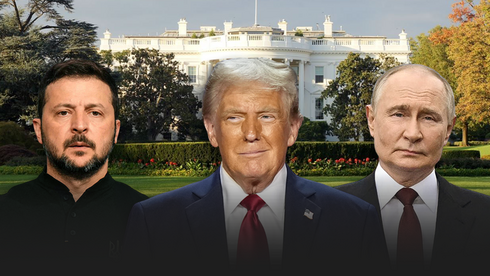
Zero Sum Loggerheads – If Vladimir Putin refuses to accept the theft, and the EU won’t return the stolen assets, it seems the only option left is to escalate the Ukraine conflict, with the EU aiming to defeat Russia. It doesn’t seem like a coincidence that this appears to be their current approach.
Yesterday in a stunning interview with Sky News, President Zelenskyy said a few remarkable things. One, he has plenty of money and two, Zelenskyy wants to build big, big factories in Great Britain in order to build missiles and drones away from the threat of Russian countermeasures.
The sick irony is that Zelenskyy would be building missiles and drones in the U.K to attack Russia using money confiscated by the EU/U.K and given to Ukraine. However, in this bizarre world that’s the reality of the thing.
When you overlay the pragmatic, transactional nature of President Trump into this dynamic, we can see how things look even more muddied over this confiscated Russian sovereign wealth. President Trump has often advocated for “taking the oil” or assets of a country to pay for the military expenditures incurred by the USA. Both in Afghanistan (theoretical) and in Venezuela (reality) this Trumpian approach is visible. To the victors go the spoils.
Russia is militarily holding approximately 20% of the land mass of Ukraine, the Donbas region, with no intention of ever returning it. Putin wants his sovereign wealth fund restored, and, if his doctrine is to be consistent, President Trump has no room to say Putin shouldn’t get it back.
The Europeans likely understand that President Trump is ideologically on the side of President Putin on this national economic aspect. The EU is against the return of sovereign Russian wealth. This part is a very interesting dynamic to watch.
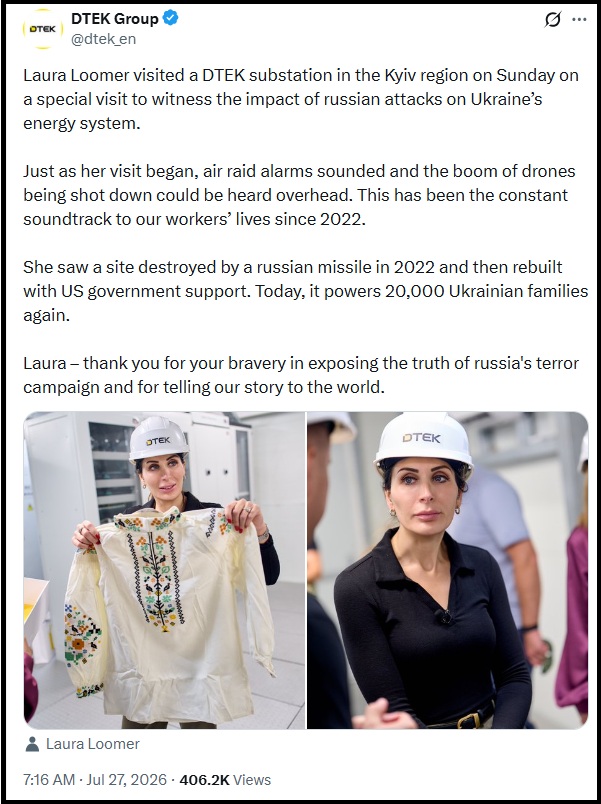
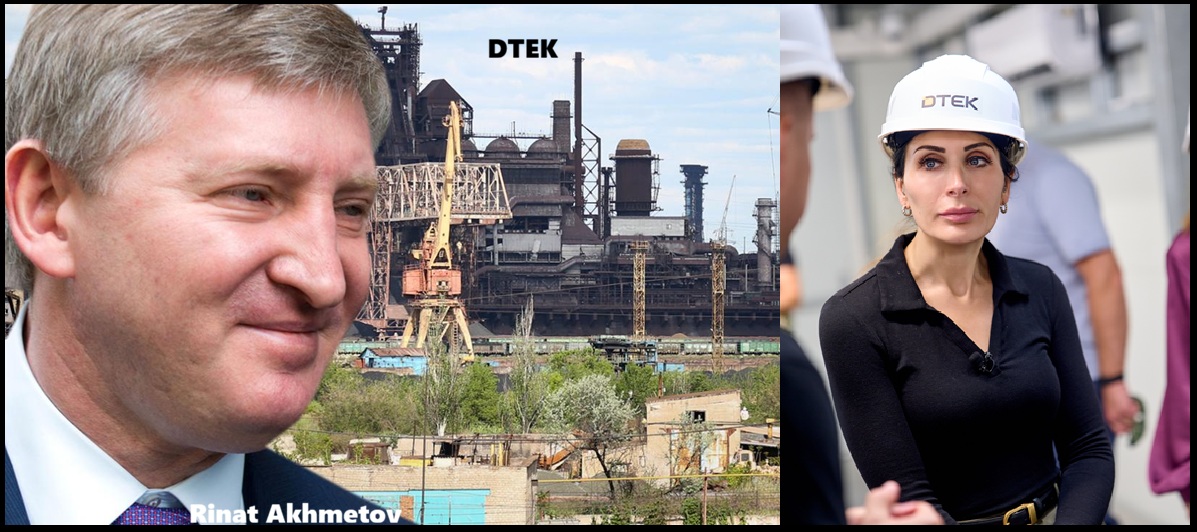
Meanwhile, there are ancillary interests that exist within the economics of the conflict with direct stakes into the billions of euros. One of those interests is held by Ukraine’s richest person, a very corrupt billionaire Rinat Akhmetov, the owner of mining and steel firm Metinvest and the Ukraine power company DTEK.
Pay close attention. Billionaire Rinat Akhmetov (DTEK) has a lot on the line in the Russia -vs- Ukraine conflict.
[…] Akhmetov lost more than half of his assets as a result of the full-scale invasion, with many of his industrial holdings, such as the Azovstal steel plant in Mariupol, destroyed or damaged during the fighting. According to the Bloomberg Billionaires Index, as of Oct. 31, Akhmetov’s net worth fell by 52% to $5.39 billion compared to the pre-war numbers.
Billionaire oligarch Rinat Akhmetov operated in that very lucrative space between Ukraine and Russia. Akhmetov’s assets are directly tied to both nations now in conflict. Akhmetov even has operational loans from Russian banks that have not been repaid due to the sanction’s regime, and if there ever was a resolution to the fighting, he would also be on the hook for repayment as well as the loss of his industrial assets in the Donbas.
[NOTE: Keep in mind, one of the primary issues that brought Putin to power was his opposition to the Russian oligarchs who surfaced as wealthy control agents following the collapse of the Soviet Union. The billionaire oligarchs controlled Russian politics until strong man Putin diminished them, smacked them in the nose and took back control.]
There is a lot of motivation for Rinat Akhmetov (DTEK Energy Co.) to support funding pro-Ukraine influence operations against Russia considering the billions at stake from direct energy company asset losses and reconstruction funds that he could also benefit from…
YAHOO NEWS – Ukraine’s richest man Rinat Akhmetov allegedly borrowed $400 million from Russia’s largest bank, Sberbank, the International Consortium of Investigate Journalists (ICIJ) said on Nov. 14, citing information obtained from leaked documents dubbed “Cyprus Confidential.”
The documents are part of a massive leak of millions of files obtained from Cypriot financial service providers.
The files also shed light on Akhmetov’s involvement in Russia’s coal industry after the annexation of Crimea in 2014. In 2016, Akhmetov’s energy company DTEK transferred ownership of a number of coal mines to a subsidiary of Fabcell Ltd., based in Cyprus. She bought these mines four years earlier in the southwest of Russia in the Rostov region. DTEK also transferred to the subsidiary a significant loan obligation in the amount of about USD 400 million from Sberbank (Russia’s largest state-owned bank).
In January 2017, Fabcell reclassified its shares into 7,999 common shares and one gold share. The gold share was assigned to Sberbank, which would allow the bank to gain control over Akhmetov’s company in case of non-fulfillment of its obligations.
[…] In response to the investigation, Akhmetov issued a statement to ICIJ saying that the loans provided by Sberbank and others before Russia’s illegal annexation of Crimea in 2014 were “standard practice for Ukrainian borrowers.”
Transferring the ownership of the Russian coal mines to the Cypriot subsidiary was a way of “limiting [DTEK’s] exposure to the claims of Sberbank as creditor and paved the way to exiting DTEK’s investment in the Rostov Coal Mines.”
In June 2022, Akhmetov filed a lawsuit at the European Court of Human Rights against Russia for gross violations of his property rights. Akhmetov asked for “billions of dollars” to compensate for the blockade, looting, destruction, and theft of his grain and metal from Ukraine to Russia. (read more)
With all of that said, we now have a solid baseline for how some financial interests in Ukraine are positioned.
All of the above information should help us to understand the dynamics and stakeholders.