Posted originally on CTH on October 27, 2025 | Sundance
The American Federation of Government Employees (AFGE) union has now released a statement [SEE HERE] saying both sides have proved their point, and it is now time to end the federal government shutdown and pass a short-term continuing resolution (CR).
This move will put significant pressure on the Leftists and Democrats to stop their federal government shutdown. The AFGE represents 820,000 federal and D.C. government workers. The position by the AFGE carries with it a cultural component in alignment with the DC membership makeup.
In approximately one week SNAP benefits will be at risk, and collectively the interests of the AFGE and the AME (African Methodist Episcopal Church) come into alignment. The change in position is not coincidental.
WASHINGTON — The country’s largest union representing federal workers is calling for lawmakers to pass a short-term spending measure to immediately end the government shutdown, urging Democrats to abandon their current position and join Republicans in supporting a stopgap solution.
“Both political parties have made their point, and still there is no clear end in sight,” American Federation of Government Employees President Everett Kelley wrote in a statement first shared with NBC News. “It’s time to pass a clean continuing resolution and end this shutdown today. No half measures, and no gamesmanship.”
The statement could increase pressure on Democrats to budge from their stance. Senate Democrats have insisted that they won’t vote to reopen the government without a commitment from Republicans and President Donald Trump on extending health care subsidies through the Affordable Care Act, which are set to expire at the end of the year. Without them, health insurance premiums on Obamacare markets will skyrocket for many individuals and families. (more)
Posted originally on CTH on October 27, 2025 | Sundance
Aboard Airforce One on route to Tokyo, Japan, President Trump, Secretary Rubio, Secretary Bessent and USTR Greer held a press conference and debriefing with the traveling press pool. The main focus of their comments were trade and economics.
If you are interested in trade discussions, this video and presser is for you. Video Below:
Posted originally on CTH on October 26, 2025 | Sundance
Malaysia hosted the ASEAN conference attended by President Trump and positioned themselves very favorably for warm ongoing relations with the United States.
As President Trump thanked the various dignitaries for their warm hospitality, he invited them to the USA and delivered personal messages of great appreciation. The departure ceremony is below. WATCH:
Posted originally on CTH on October 26, 2025 | Sundance
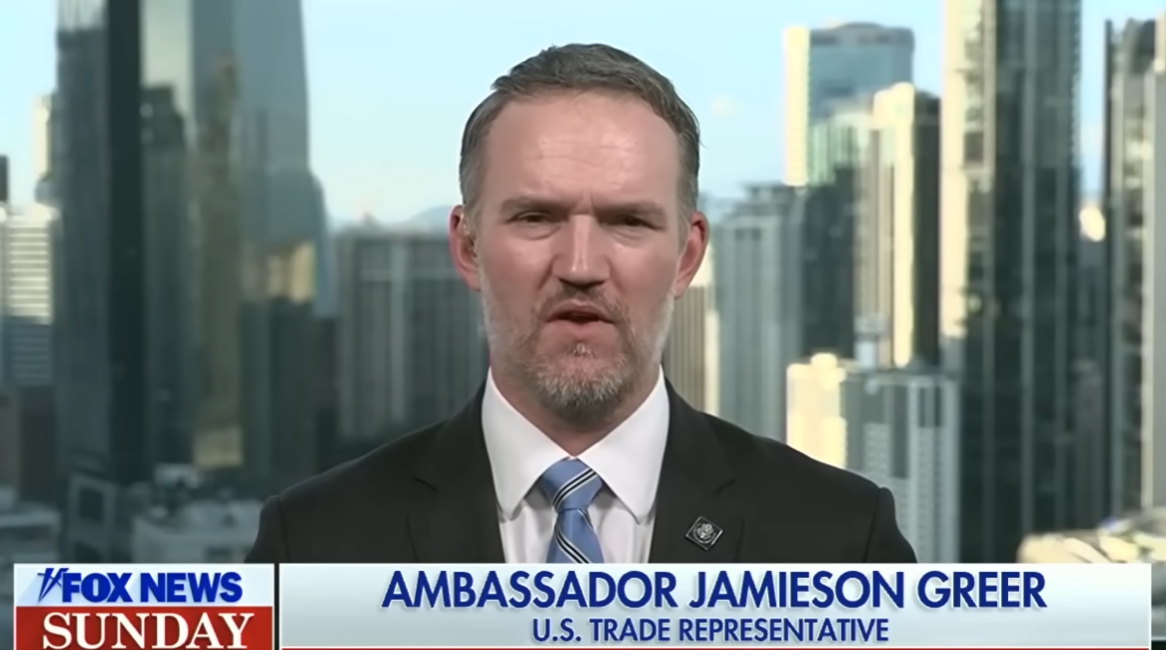
United States Trade Rep. Jamieson Greer is a very solid member of the Trump trade team. Having learned at the knee of former USTR Robert Lighthizer, you can see the stability of thought in the consistency of approach.
USTR Greer outlines the ongoing discussions between the U.S. and China on the framework of a stable trade relationship. Against a myriad of geopolitical chess moves on the economic and trade front, Greer and Treasury Secretary Bessent play key roles in executing the Trump Doctrine.
.
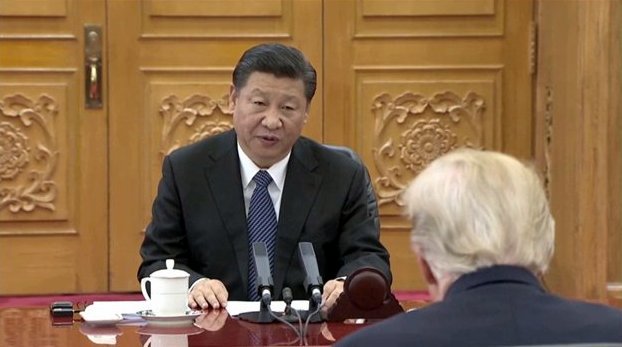
In the background of the President Trump and Chairman Xi meeting, we can see the broad contours of President Trump’s strategy toward both the Russia-Ukraine conflict and the China-Canada trade relationship.
If President Trump can formulate a strong, actionable and enforceable free trade agreement with Chairman Xi, it will undercut the ability of Canada to assemble cheap component goods not available in the U.S. manufacturing equation for total cost of goods. This puts Trump in an even stronger position heading into the 2026 USMCA (CUSMA) dissolution phase.
Additionally, despite the mainstream thoughts to the contrary, putting distance between Russia and China is not averse to the interests of Russian Federation Vladimir Putin, who would strategically prefer to do business with the ‘West’ over Beijing. However, China does not want to see their Biden-created tentacle weakened in Russia.
China retains a vision of a global financial market option beyond the dollar, and Xi plays that long-term strategy game with Putin quite effectively. It is only President Trump who holds the key to weakening that strategy, and Chairman Xi likely reminds everyone -through his emissaries- that they can wait out the Trump administration.
During the ASEAN conference, again we see President Trump drawing heavily on the personal factor as a part of his strategic influence operation to push distance between Southeast Asia and Beijing. Cunning Panda can undoubtedly see that play, however, culturally they may underestimate the strength of the dynamic. President Trump leverages the world’s biggest market with a smile. The world’s biggest sellers want and need to keep that smile on the face of their #1 customer.
Jamieson Greer, like Scott Bessent, both outwardly show their respect for this intrapersonal dynamic that President Trump uses in these negotiations, and it is very interesting to watch the recipients of President Trump’s praise remain positioned to receive it.
President Donald Trump is a friendly dealmaker, until he is not. Southeast Asia understands this dynamic very well.
It is a pleasure to watch the U.S. economic team circle the concentric interests into alignment and then stand back and let the closer finish the deals.
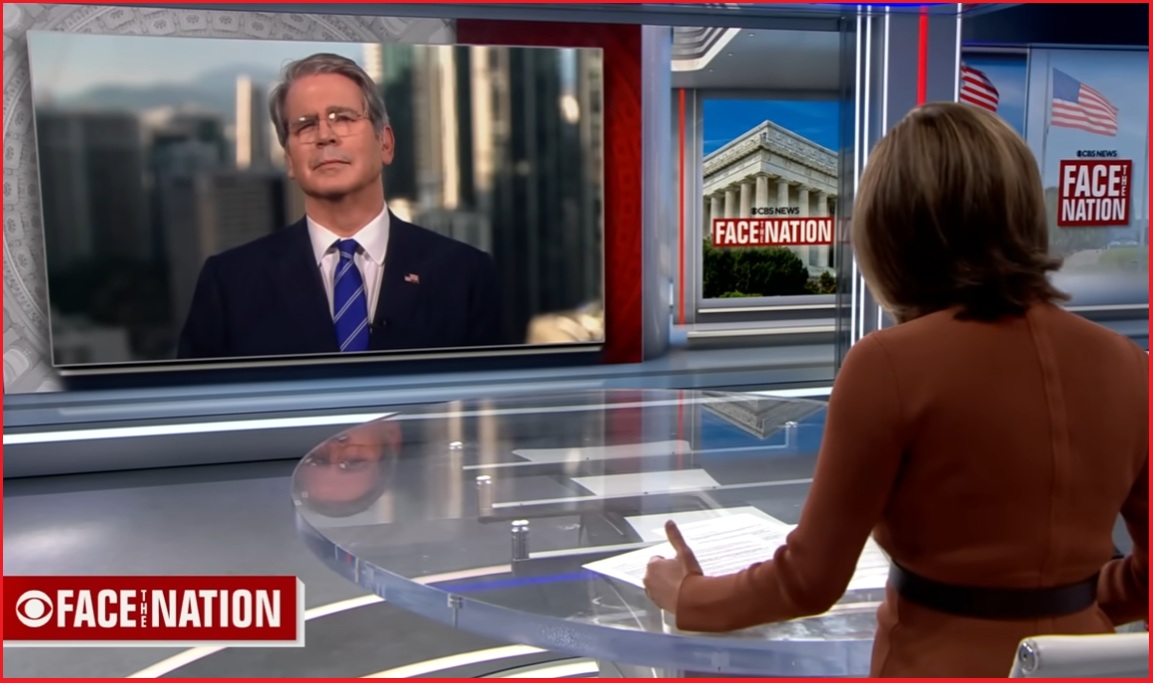
CBS stenographer Margaret Brennan attempts to play the role of geopolitical trade expert in this interview with Treasury Secretary Scott Bessent. She fails miserably.
Secretary Bessent gives a few more details on the upcoming trade agreement that will be signed by President Trump and Chairman Xi at the upcoming meeting in South Korea. Brennan asks if the export controls on Chinese rare earth minerals “will be lifted.” Bessent reminds Brennan the export controls have never been imposed. lol WATCH (or read):
[Transcript] – MARGARET BRENNAN: We begin this morning with Treasury Secretary Scott Bessent, who is traveling with President Trump. He joins us from Kuala Lumpur, Malaysia. Good evening to you.
TREASURY SECRETARY SCOTT BESSENT: Margaret, good to speak to you.
MARGARET BRENNAN: You have been negotiating directly with the Chinese. You said today a truce may have been reached. The threat on the table was a 155% tariff on China. The President said that would be effective November 1. Is that off the table? What are the terms?
SEC. BESSENT: Margaret, I think we had a very good two day meeting. I would believe that the- so it would be an extra 100% from where we are now, and I believe that that is effectively off the table. I’m not going to get ahead of the two leaders who will be meeting in Korea on Thursday, but I can tell you we had a very good two days. So I would expect that the threat of the 100% has gone away, as has the threat of the immediate imposition of the Chinese initiating a worldwide export control regime.
MARGARET BRENNAN: That export control on rare earths, which is used in all sorts of electronics and automobiles. That will be lifted?
SEC. BESSENT: Well, it was never imposed, so they threatened to impose it in December, and President Trump, to give me and the trade team leverage, decided that it would be a good idea for him to threaten a 100% additional tariff, and it did give us a great deal of leverage. President Trump’s very good at creating leverage for us. This is the fourth meeting- excuse me, the fifth meeting that we’ve had with the Chinese. My Chinese counterpart is the Vice Premier, He Lifeng, so we had a very good two days. We discussed a wide variety of issues, from the rare earth- from the rare earth magnets to trade, to substantial purchases of American agricultural products, to the Chinese helping us in this fentanyl crisis that we have in the US.
MARGARET BRENNAN: On the purchases of American goods. American farmers have been hit hard by China’s boycott of American soybeans that went into place after the tariff war began here. The administration is pumping at least $3 billion in financial aid to farmers to help make them whole, or at least offset the pain. Can farmers expect to sell their soybeans to China again and when?
SEC. BESSENT: Margaret, I’m not going to give you the details here, but I can tell you that the soybean farmers are going to be extremely happy with this deal for this year and for the coming years.
MARGARET BRENNAN: A few weeks ago, there was a photographer who snapped a photo of you texting with the agricultural Secretary about this. She indicated concern about the unintended damage to American farmers from the U.S. financial lifeline being given to Argentina because that country was able to sell more to China, that gave Beijing leverage over the United States. Is that leverage still a problem today?
SEC. BESSENT: Well, first- first of all, the text from Secretary Rollins was talking- talking about a purchase of soybeans that the Chinese did and Margaret, those soybeans were always going to get purchased. They just did it at a time when the Argentines had lifted their export taxes. So those- those soybeans, were always going to be on the market. It’s a global market. The three leading suppliers are Brazil, Argentina and the U.S. And I believe that we have brought the market back into equilibrium, and I believe that the Chinese will be making substantial purchases again.
MARGARET BRENNAN: So you dispute the idea that America hurt itself by giving this $20 billion lifeline to Argentina? Can you guarantee Americans, they’ll be made whole on that?
SEC. BESSENT: Margaret, I can tell you that the Exchange Stabilization Fund has never lost money. It will not lose money this time. And we are not giving money to Argentina. It is a swap line, which the U.S. has done many times in the past, and we’ve never lost money
MARGARET BRENNAN: On the Chinese, I saw that you mentioned TikTok was discussed. Are the details of the President’s Executive Order, released in September, are those finalized? Has China agreed to give up control of the algorithm that determines what users see?
SEC. BESSENT: Margaret, we reached a final deal on TikTok. We reached one in Madrid, and I believe that as of today, all the details are ironed out, and that will be for the two leaders to consummate that transaction on Thursday in Korea.
MARGARET BRENNAN: Can you tell us any details of that transaction?
SEC. BESSENT: Margaret, I’m not part of the commercial side of the transaction. The- my, my remit was to get the Chinese to agree to approve the transaction, and I believe we successfully accomplished that over the past two days.
MARGARET BRENNAN: Over the past two days, did the U.S. make any concessions here beyond what we discussed with the tariffs? Are you dropping restrictions on exports of, for example, semiconductor chips, or restrictions on Chinese investment in the United States?
SEC. BESSENT: There have been no, no changes via- in our export controls.
MARGARET BRENNAN: When presidents Xi and Trump are able to speak on Thursday. Do you believe that the president’s position here, his ability to negotiate a deal with China, is going to be hurt by the fact that he’s been unable to get a deal here at home, to reopen the US government?
SEC. BESSENT: Well, look, I don’t think it’s going to, I don’t think it’s going to hurt. It’s a global embarrassment what these Democratic senators are doing, keep- keeping the government shut down. I mean, look at the numbers. It’s 52-3, 52 Republican senators, three Democratic senators have come across the line. So I just think it’s an embarrassment, doesn’t affect his ability on the international stage. Now what it does affect, it’s starting to affect the economy. It’s starting to slow down air traffic. And I would urge moderate Democrats to be heroes, come across the aisle, like they did in the spring, and pass a clean CR.
MARGARET BRENNAN: A continuing resolution just to fund the government without any add-ons. Does that mean when the President comes back to the United States, he’s going to summon congressional leaders to the White House to end what you call the global embarrassment?
SEC. BESSENT: I don’t know what good it does to summon them to the White House. This is a Democratic-led boycott, and I’m just not sure what they’re doing. What’s changed between now and March other than Chuck Schumer’s poll numbers? And I think Hakeem Jeffries is now going to be primaried from the left, and I didn’t think there was a lot of room over there. So both of them are worried about their primaries, and not the American people, not the government employees, not our military employees, because we were able to pay the military employees from excess funds at the Pentagon, middle of this month. I think we’ll be able to pay them beginning in November. But by November 15 our troops and service members who are willing to risk their lives aren’t going to be able to get paid. What an embarrassment.
MARGARET BRENNAN: Understood. We’ll talk to Hakeem Jeffries later in the program. I want to ask you about what the President just announced in regard to Canada. Today, the President said he wants to raise tariffs on Mexico. Yesterday, he said he’s going to raise tariffs on Canada by 10%. He blames what he called a fraudulent ad that featured Ronald Reagan advocate- advocating for free trade. It was put up by the province of Ontario. Is this ad really the issue here, or is it just a tactic in this negotiation? Does the President want the USMCA free trade deal renegotiated, or is he looking to do two separate deals, one with Canada, one with Mexico?
SEC. BESSENT: A lot of questions there, Margaret, but let’s go to the first one. I’ve read that the province of Ontario is spending up to $75 million on these advertisements, and it’s propaganda coming across our border to decry the tariffs. So the Premier of Ontario seems to have come off the rails a little. He has taken the ads down. But what’s the purpose of that other than to try to sway U.S. public opinion? We’ve seen the- I’m sure the- you at your network have decried election interference. Well, this is interference in U.S. sovereign matters.
MARGARET BRENNAN: But is it really the premise for damaging negotiations with a top trading partner?
SEC. BESSENT: Well, it’s clearly damaged our relationship the- with the most populous province in Canada.
MARGARET BRENNAN: When it comes to inflation here at home, the president said it’s been defeated. But as you know, that core inflation edged up to 3% in September, less than forecast, hotter than August. But for people at home, they are seeing prices still high on furniture, energy, gardening, lawn care, apparel. Do you expect these things to cool off and when?
SEC. BESSENT: Well, it is cooling off because the core inflation number that you referenced was 0.2% which is down the- from the previous sequence over the previous months. And you listed the things that are up, but we’re seeing plenty of things that are down, whether it’s energy and rents. Inflation is a composite number, and I think we are on a glide path to lower inflation over the coming months.
MARGARET BRENNAN: Lower inflation, but not necessarily that Americans will look around and things have gotten cheaper.
SEC. BESSENT: Margaret, again, there’s affordability and then there is inflation. So some of the things that can get cheaper, rent has gotten cheaper, mortgages have gotten cheaper. We are at, I believe, an 11 or 12 month low on mortgage rates.
MARGARET BRENNAN: Mr. Secretary, before I let you go, I want to ask you, the U.S. sanctioned Russia’s top oil and gas companies this past week, but Vladimir Putin’s envoy, who is here in the United States, Kirill Dmitriev, I know you know him, said the sanctions will have, quote, “absolutely no effect on Russia’s economy. They will simply lead to higher prices at gas stations in the United States.” Is Dmitriev wrong? And when will Russia actually feel the pain?
SEC. BESSENT: Well, I think Russia is going to feel the pain immediately. I can tell you that we’ve already seen India has done a complete halt of Russian oil purchases. Many of the Chinese refineries have stopped. And Margaret, are you really going to- the- publish what a Russian propagandist says? I mean, what else is he going to say? That oh, it’s going to be terrible, and it’s going to bring Putin to the table. Of course- the Russian economy is a wartime economy. Growth is virtually zero. Inflation, I believe, is over 20% and everything we do is going to bring Putin to the- to the table. It’s oil that funds the Russian war machine, and I think we can make a substantial dent in his profits.
MARGARET BRENNAN: I understood, you had some competing noise there, but just to be clear, Dmitriev is in the United States because sanctions were- were lifted on him to conduct meetings here, including with President Trump’s envoy, Steve Witkoff. When you say he’s a propagandist, do you mean that we shouldn’t listen to anything he says?
SEC. BESSENT: I- what do you- what do you think is going to happen to him if he goes back home and says the- the- good lord. What if he had said on TV, this is terrible, President Trump just did the right thing. This is a maximum pressure campaign that’s going to work. Margaret, what’s he going to say? Of course, he’s going to say this. If you go through and look at every Russian talking point, they seem to use the word, we have immunized the economy against this. Well, they haven’t immunized the economy. Their oil earnings are down 20% year over year. I would suspect that this could take them down another 20 or 30%. So again, President Trump was criticized for not doing enough. He takes his bold maneuver, and then you’re quoting a Russian propagandist.
MARGARET BRENNAN: All right, we’ll leave it there with you, Mr. Secretary. I know you’ve had a long day. Thank you for your time.
Posted originally on CTH on October 26, 2025 | Sundance
Treasury Secretary Scott Bessent made the legacy media rounds Sunday saying that he and his Chinese negotiating counterpart had reached an agreement on export controls for rare earth minerals, that would lead to the United States not imposing 100 percent tariffs on China.
Secretary Bessent said that trade negotiations with China had been very productive. The plan was to create a deal for President Donald Trump’s meeting with Chinese Chairman Xi Jinping this week in South Korea. However, NBC’s Kirsten Welker was not prepared for Bessent to make a positive announcement about U.S-China trade negotiations.
Because the script in front of her did not factor in the announcement by Bessent, what you see is Secretary Bessent breaking news about a U.S-China trade agreement, but Welker’s pre-scripted follow up questions didn’t align with that news. Welker ends up asking about tariffs and rare earth minerals, after Bessent says a deal to avoid tariffs and retain rare earth mineral access was developed.
Welker then continues asking about U.S-China trade conflicts until Bessent makes the point of saying something akin to ‘can you not hear me, the trade friction is resolved.’ Welker is then forced to abandon her script and ask about Canada. WATCH:
Posted originally on CTH on October 26, 2025 | Sundance
President Trump participates in a peace treaty, trade and critical mineral agreement signing with the Prime Minister of the Kingdom of Cambodia and the Prime Minister of the Kingdom of Thailand.
President Trump was the witness signatory for a declaration of peace and security between Cambodia and Thailand.
We, the Prime Minister of the Kingdom of Cambodia and the Prime Minister of the Kingdom of Thailand, as witnessed by the President of the United States of America and the Prime Minister of Malaysia, having met in Kuala Lumpur, Malaysia, on October 26, 2025, declare the following:
We reaffirm the unwavering commitment to peace and security between our two countries — as declared in Putrajaya, Malaysia, on July 28, 2025 — and reiterate our firm commitment to refrain from the threat or use of force, peaceful settlement of disputes, and respect for international boundary and of international law, for the promotion of peace, security, stability, and prosperity in the region on the basis of mutual respect for the independence, sovereignty, equality, territorial integrity, and national identity of our respective nations.
We reaffirm our firm commitment to upholding and implementing the agreements reached by both sides at the General Border Committee meetings.
We signed the Terms of Reference (TOR) on the establishment of the ASEAN Observer Team (AOT), which will comprise personnel from ASEAN Member States with the objective of ensuring the full and effective implementation of the ceasefire. We call on ASEAN Member States to provide the appropriate support to ensure the AOT can successfully meet its objectives.
Furthermore, we committed to de-escalating tensions and restoring confidence and mutually beneficial relations between the Kingdom of Cambodia and the Kingdom of Thailand. To achieve and reinforce these objectives, we agree to the following steps to ensure the full and effective implementation of the ceasefire, and restoration of peace, security, and stability in the border areas:
Implement military de-escalation under the observation and verification of the AOT, to include the removal of heavy and destructive weapons and equipment from the border and returning them back to their respective normal military installations. In this context, both sides will designate their respective teams to discuss — with a view to finalizing — a practical and step-by-step action plan which will be under the observation of the Interim Observer Team, and subsequently the AOT once it is established pursuant to the TOR.
Refrain from disseminating or promoting false information, accusations, allegations, and harmful rhetoric, whether through official government channels or unofficial platforms, in order to de-escalate tensions, mitigate negative public sentiment, and foster an environment conducive to peaceful dialogue.
Agree to the full and immediate implementation of confidence-building measures to restore and maintain confidence, mutual trust, and peace along the border; to resolve differences peacefully, in the spirit of good neighborliness, friendship, and solidarity; and to work towards the restoration of diplomatic relations between the two countries.
Coordinate and implement humanitarian de-mining in the border areas, as agreed by the General Border Committee — without prejudice to the survey and demarcation of land boundary between both countries — to protect civilian lives and contribute to socio-economic development.
Reaffirm our commitment to the settlement of border dispute and border demarcation through peaceful means and international law, refraining from the threat or use of force or any acts of provocation, and recognize the Regional Border Committee, General Border Committee, and Joint Boundary Commission (JBC) as the bilateral mechanisms to work through border-related issues through peaceful means, in accordance with their respective mandates, in coordination with local governors, to peacefully manage the situation on the ground, including the issues of alleged encroachment by either side in accordance with the outcome of the discussion under the JBC, and the cessation of all activities which expand the scope of the disputes and further escalate tensions.
Upon effective implementation of above-mentioned measures, both sides will recognize the cessation of active hostilities. Further, as a demonstration of Thailand’s desire to promote mutual confidence and trust, Thailand undertakes to promptly release the prisoners of war.
We agree to enhance cooperation, information sharing, and strategic communications efforts, and strengthen border controls to prevent and suppress transnational crimes that impact both our citizens and the wider international community.
We acknowledge the need to chart a course for a bright future not bound by conflicts of the past. Both Governments reaffirm the commitment to peacefully resolve disputes in full respect for international laws and existing treaties and agreements. The conditions have been created for our nations to look forward and embark on building neighborly relations in keeping with the letter and spirit of the United Nations Charter and principles enshrined in the ASEAN Charter on peaceful conflict resolution, paving the way for a new chapter of peace and cooperation between our two nations.
We express our confidence that this meeting, in the presence of and supported by President Donald J. Trump of the United States of America and Prime Minister Anwar Ibrahim of Malaysia, is a strong foundation for mutual respect and the advancement of peace in the region. We note with deep appreciation President Donald J. Trump’s significant contributions to advancing the restoration of productive bilateral relations between the Kingdom of Cambodia and the Kingdom of Thailand.
Signed at Kuala Lumpur on October 26, 2025, in quadruplicate, in the English language.
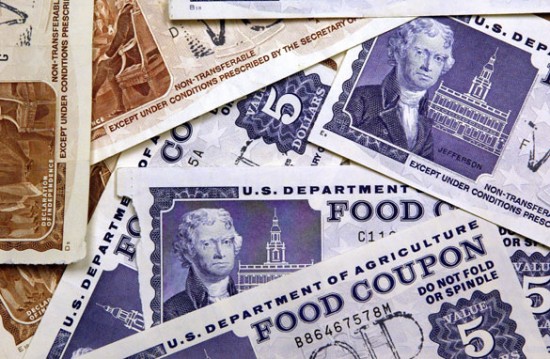
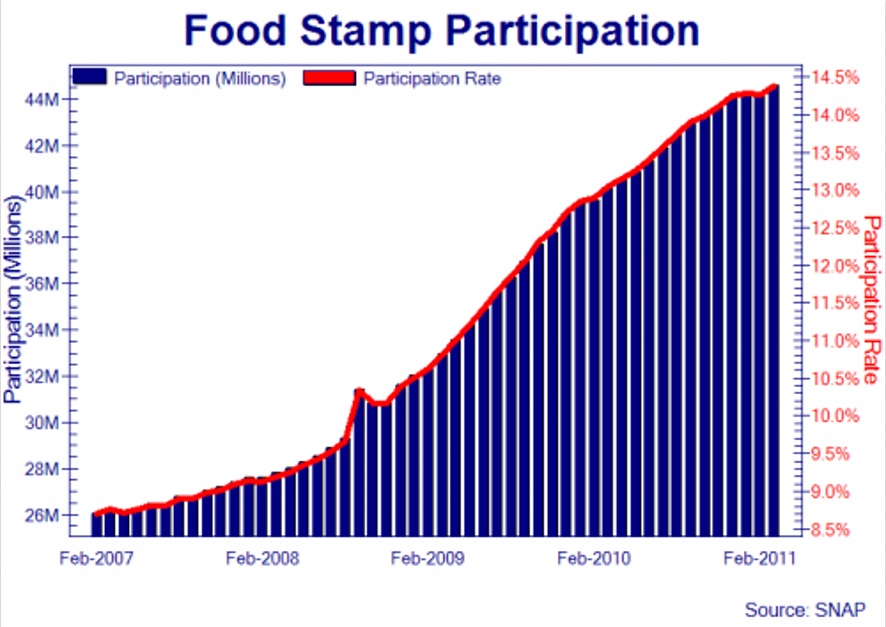
I had no idea the number of people receiving supplemental food assistance was over 40 million.
With the federal government shutdown continuing, several media reports now say federal food assistance payments will likely lapse on November 1st.
WASHINGTON – More than 40 million low-income food stamp beneficiaries are expected to receive less help with grocery bills — or no help at all — in the coming days.
The U.S. Department of Agriculture (USDA) is threatening to withhold billions of dollars in Supplemental Nutrition Assistance Program (SNAP) contingency funding, which Congress has already allocated for emergency scenarios, if the government shutdown stretches into November.
There is between $5 billion and $6 billion currently in that fund, experts say. That’s not enough to cover the estimated $8 billion in SNAP benefits due out next month, but it would allow for partial payments to help low-income Americans defray food costs.
On Friday, however, USDA released guidance saying it won’t use those funds to cover SNAP benefits if the government shutdown extends beyond Oct. 31 — a move that appears designed to maximize the pressure on Senate Democrats to support a GOP spending bill to reopen the government.
In a memo, first reported by Axios, the USDA said the reason is simple: The contingency fund was designed to respond to unforeseen events, like natural disasters, and the current shutdown doesn’t qualify because it was manufactured by Democrats. To spend the money on SNAP benefits during such an event, the USDA argues, would be illegal. (read more)
Posted originally on CTH on October 25, 2025 | Sundance
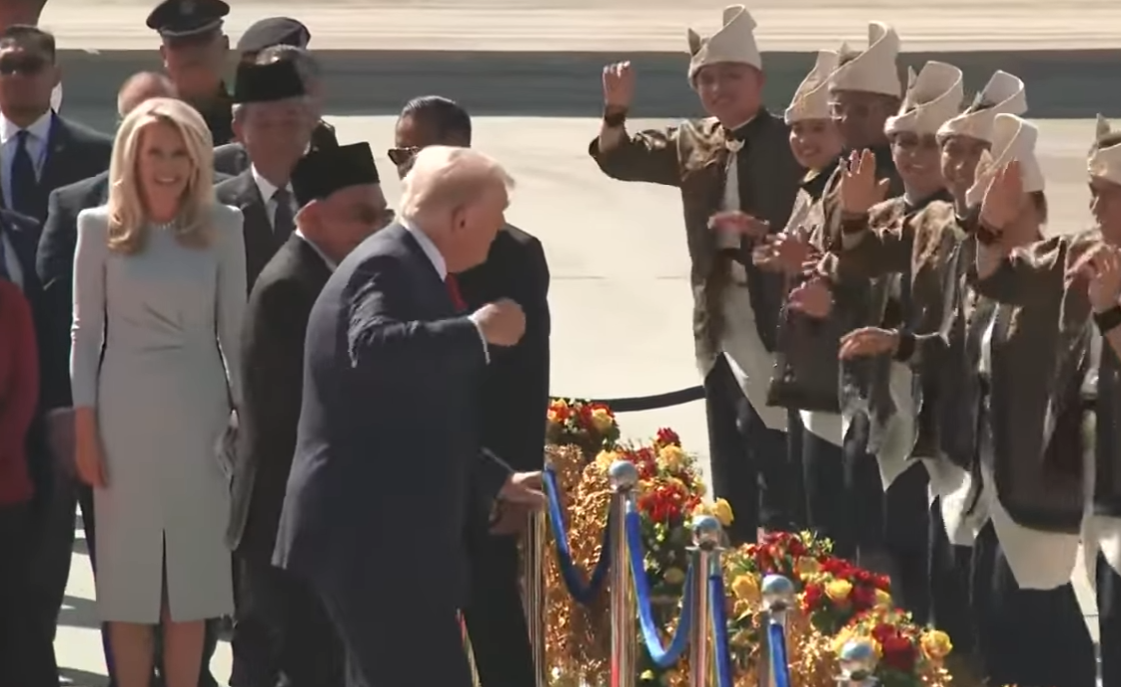
Great respect was delivered by the Malaysian Prime Minister Anwar Ibrahim as President Donald Trump arrives for the ASEAN summit. The full honor guard were present, and President Trump even enjoyed a little dancing fun with the cultural attachés. Good Stuff. WATCH:
I have created this site to help people have fun in the kitchen. I write about enjoying life both in and out of my kitchen. Life is short! Make the most of it and enjoy!
This is a library of News Events not reported by the Main Stream Media documenting & connecting the dots on How the Obama Marxist Liberal agenda is destroying America





 Centinel2012