Acting Attorney General Todd Blanche Holds a Press Conference


Posted originally on CTH on April 7, 2026 | Sundance

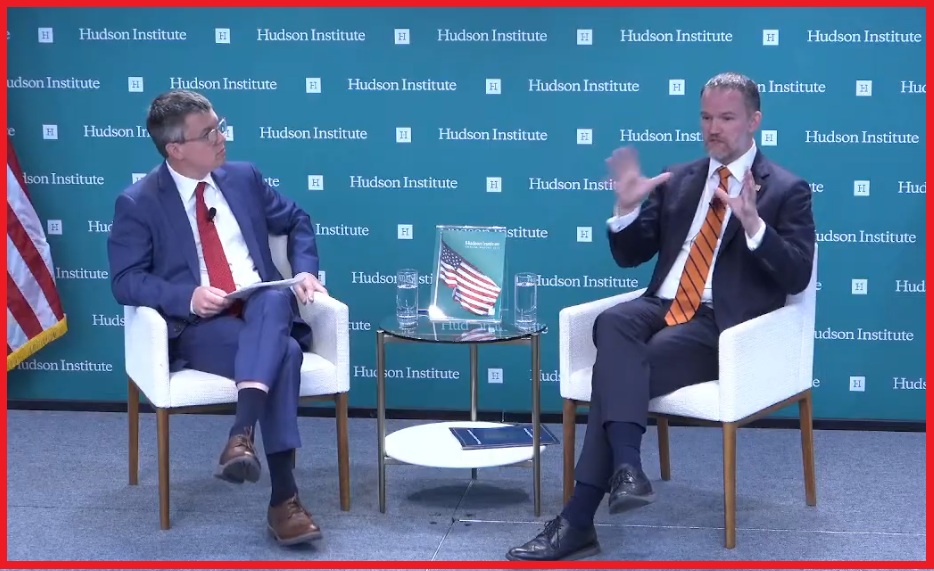
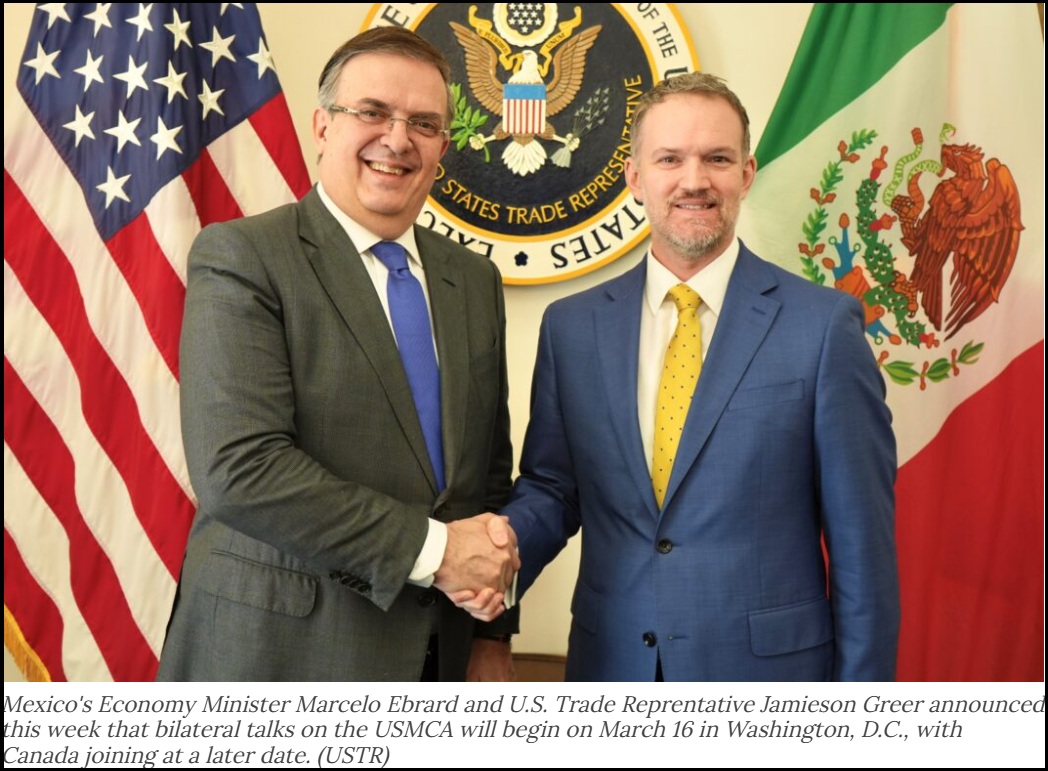
During an appearance at the Hudson Institute, U.S. Trade Representative Jamieson Greer is asked to summarize the administration’s approach to upcoming USMCA (CUSMA) renegotiations.

USTR Greer emphasized the focus is on outcomes in review of the USMCA, not focusing on the previous trade structure itself. The results carry more weight than reviewing what was intended.  On June 1st Greer anticipates telling congress that the U.S. intends withdrawal, pending unilateral negotiations with both Canada and Mexico to resolve conflict.

Greer describes two different protocols within any negotiation to deal with the structural differences between both Canada and Mexico.  Those differences include a completely different import/export profile with each country, different sectors of goods, difference in the wage rates within each country and a structural difference in the way each country is establishing their own, independent free trade agreements with other third-party countries.  These baselines form the reason to tell congress of the dissolution, and on July 1st inform both Canada and Mexico about it.

In the interim, the points of conflict are currently being negotiated with Mexico toward resolution.  The same negotiation is expected later between the U.S. and Canada; however, it sounds like that engagement will take place after congress is informed of the points of conflict.  WATCH (prompted):

.

U.S. Trade Representative Jamieson Greer Discusses USMCA Review and Two Different “Protocols”


Posted originally on CTH onApril 7, 2026 | Sundance

During an appearance at the Hudson Institute, U.S. Trade Representative Jamieson Greer is asked to summarize the administration’s approach to upcoming USMCA (CUSMA) renegotiations.

USTR Greer emphasized the focus is on outcomes in review of the USMCA, not focusing on the previous trade structure itself. The results carry more weight than reviewing what was intended.  On June 1st Greer anticipates telling congress that the U.S. intends withdrawal, pending unilateral negotiations with both Canada and Mexico to resolve conflict.

Greer describes two different protocols within any negotiation to deal with the structural differences between both Canada and Mexico.  Those differences include a completely different import/export profile with each country, different sectors of goods, difference in the wage rates within each country and a structural difference in the way each country is establishing their own, independent free trade agreements with other third-party countries.  These baselines form the reason to tell congress of the dissolution, and on July 1st inform both Canada and Mexico about it.

In the interim, the points of conflict are currently being negotiated with Mexico toward resolution.  The same negotiation is expected later between the U.S. and Canada; however, it sounds like that engagement will take place after congress is informed of the points of conflict.  WATCH (prompted):

.

Exceptional Sky News Global Energy Report Highlights Dependency Risk for Entire British Commonwealth


Posted originally on CTH on April 4, 2026 | Sundance

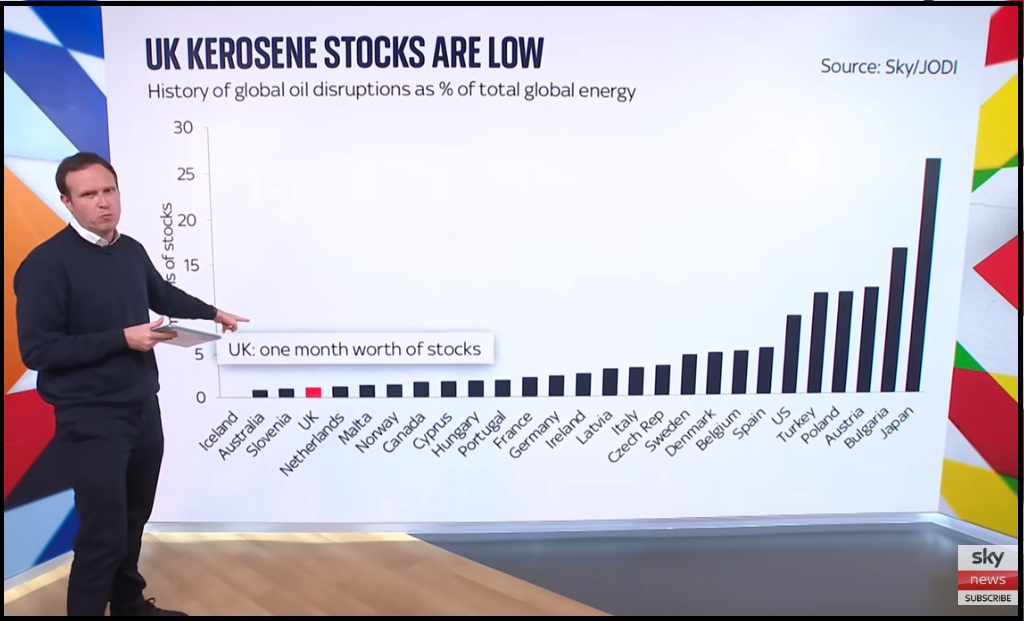
You would have to read dozens of energy industry reports to get the information provided here in this exceptionally well-done news segment.

Sky News economics and data editor Ed Conway presents a fantastic look at how the issue with the Strait of Hormuz has impacted the global distribution of energy, oil, LNG and Kerosene (jet fuel), with particular emphasis on the vulnerabilities of the “modern industrialized western nations.”

Conway never points the finger to the “net zero” carbon goals of Europe, the U.K and Australia. However, he shows the outcome of their dependence on production and refining by other non-participating nations. The timelines clearly show, as the Green Energy policies were pushed the vulnerability inherent within any supply shock begins to get worse. This is a very well-presented data-driven analysis that is worth watching.

The last two-minutes also shred the claims by EU and British leadership, and highlights how Europe and the U.K are now dependent on the United States to meet their energy needs. WATCH:

.

Susan Kokinda Gives a Recap of the Latest U.S. Distancing from EU/NATO Alliance


Posted originally on CTH on March 30, 2026 | Sundance 

Susan Konkinda from Promethean Action, touches on the recent developments where President Trump and Secretary Bessent have distanced themselves from the old regimes of the former global alliances. Striking out anew, by charting a new course for sovereign nations.

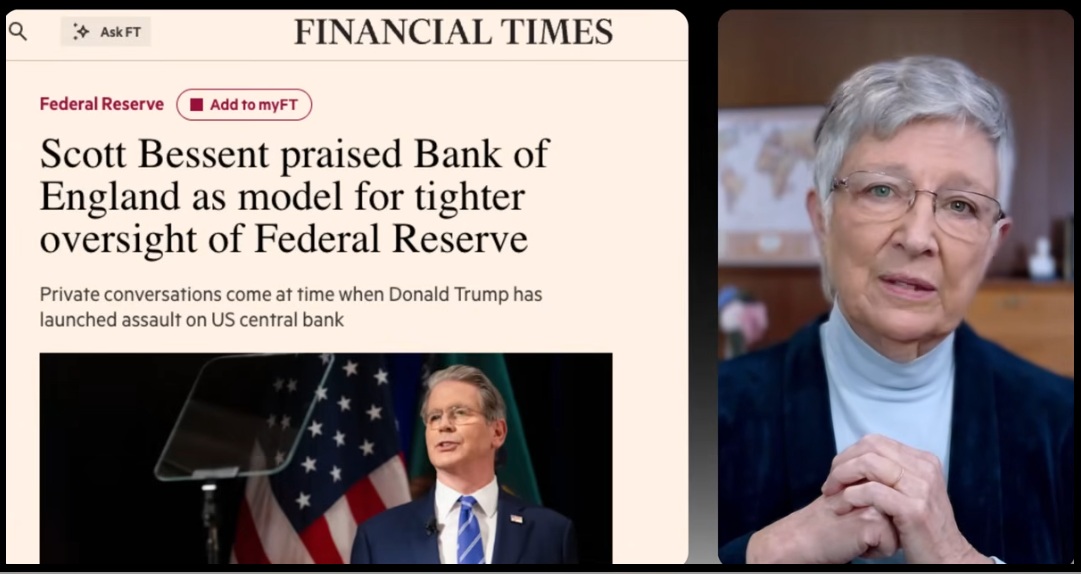
Susan Kokinda argues that RFK Jr.’s CPAC remarks—praising Trump’s use of power and saying JFK and RFK would back Trump on Iran, Ukraine, and rebuilding the middle class—cut through media narratives and signal a break from post–WWII imperial management. She says Britain and allied institutions are being sidelined, citing Chatham House’s warnings about UK limits and a “Not So Special Relationship” under Trump 2.0, while Pakistan, Saudi Arabia, Turkey, and Egypt convene in Islamabad to open U.S.-Iran dialogue without the UK, EU, or NATO.

Trump names Vice President JD Vance lead negotiator, presented as an anti–forever war interlocutor who has challenged Netanyahu’s regime-change expectations. Kokinda links this foreign-policy shift to a broader “American System” agenda: Peter Navarro’s protectionist trade revolution and Treasury Secretary Scott Bessent’s rejection of Bank of England–style Fed models, framing it as American System versus British System.” WATCH:

.

Susan Kokinda Outlines the Shift in Strategic Alliances


Posted originally on CTH on March 25, 2026 | Sundance 

The rebranded Lyndon LaRouche PAC has another good outline on the new strategic alliances assembled by President Trump as the ongoing conflict with Iran continues.

Susan Kokinda reviews how the United Kingdom and Europe have been sidelined as President Trump directly negotiates with key stakeholders in the middle east and Asia.  Kokinda correctly notes the messaging from Russia indicates a strategic awareness that old systems are fracturing and the potential for new strategic alliances is rising.

Susan Kokinda argues President Trump has opened a new diplomatic space to de-escalate the Iran conflict by working through a regional roster—Saudi Arabia, Egypt, Turkey, Pakistan, Gulf States, and back channels into Iran—while the U.K., EU, and NATO are absent and increasingly irrelevant. Citing reporting that ministers met in Riyadh and that Egypt, Turkey, and Oman carried messages, she says this “Board of Peace” architecture is isolating Iran and weakening its proxies, pointing to Lebanon’s move against Hezbollah, the Palestinian Authority’s condemnation of Iran, and Hamas considering disarmament. Kokinda links Europe’s exclusion to self-inflicted energy weakness from Green and anti-Russia policies, noting rushed LNG moves and a delayed Russian oil ban vote. She concludes Ukraine’s outlook darkens as Europe and Britain lack leverage, highlighting Zelenskyy’s scramble for support in London and Washington.” WATCH:

.

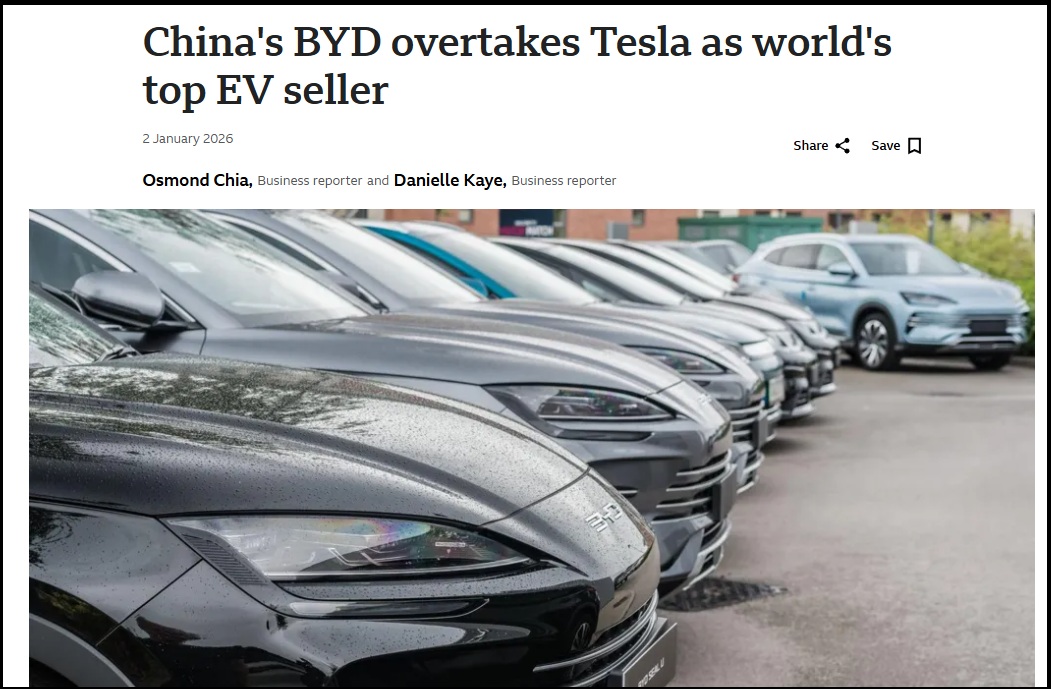
Put this in the USMCA (CUSMA) elimination/negotiation file.  Europe has already been the visible example of what happens when you open your market to low price Chinese EVs.


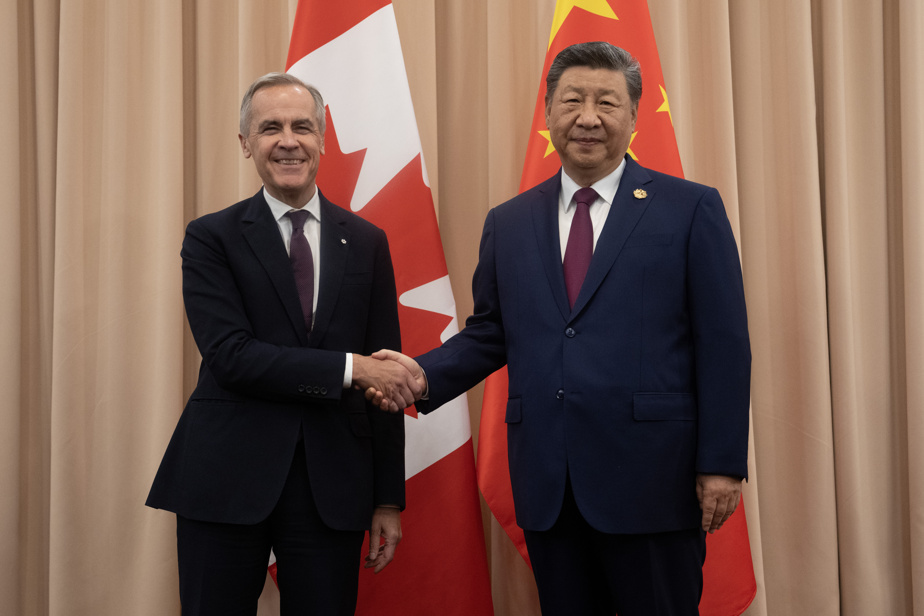
With the recent agreement by Canadian Prime Minister Mark Carney, Chinese auto manufacturers are now rushing to establish the dealerships, before the Beijing-Canada deal becomes an issue in the USMCA negotiation.

China is NOT going into Canada because they foresee a great market of Snow Mexicans purchasing their low price EVs.  They are going into Canada as a proactive measure to establish a North American footprint with an eye toward the USA.

(VIA MSM) – BYD and Chery are accelerating plans to establish a dealership network in Canada after the country introduced a quota allowing tens of thousands of Chinese-made EVs to enter at reduced tariffs. The rollout will begin in Toronto before expanding to other major cities, with BYD targeting about 20 dealerships in its first year. This marks a significant new front in North American EV competition, as Chinese automakers seek growth outside the U.S., where prohibitive tariffs keep them out.

Canada’s updated trade policy allows 24,500 Chinese-made EVs annually at a reduced 6.1% duty, giving BYD and Chery a rare North American entry point. This follows China’s surge to become the world’s top vehicle exporter, with similar pushes into Mexico, Europe, and Latin America. The quota’s scale is modest but strategically valuable for testing market response and building brand awareness.

The companies will launch in Toronto before moving into Vancouver, Montreal, and Calgary. BYD aims for around 20 dealerships in its first year, using consultants and internal teams to secure prime sites. While the network could strengthen visibility in key urban markets, experts warn the quota’s limited volume may test the viability of multiple outlets.

With U.S. tariffs exceeding 100% effectively barring entry, Canada offers Chinese automakers a platform to establish presence, gauge consumer interest, and potentially influence future trade talks. Similar strategies have been used in Europe, where Chinese EV makers have gained ground despite strong local competition. Success in Canada could pave the way for local assembly or increased quotas. (read more)

USDA Rural Announces a $115+ Million Investment to Expand USA Sawmills and Timber Development


Posted originally on CTH on March 23, 2026 | Sundance

This is one of those small stories that carries the potential for significant domestic economic gains.

As many are aware, the U.S. imports a lot of softwood lumber from Canada. Combined with the energy products the lumber sector represents the top two U.S. imports from Canada.  With Venezuela now potentially positioned to replace the former, USDA Rural Development now stimulates domestic lumber development potentially positioned to replace the latter.

Taken as a whole, these two approaches significantly weaken the Canadian leverage that could be deployed in a Free Trade Agreement negotiation.  Assuming, of course, the USMCA is dissolved in favor of two bilateral FTAs.

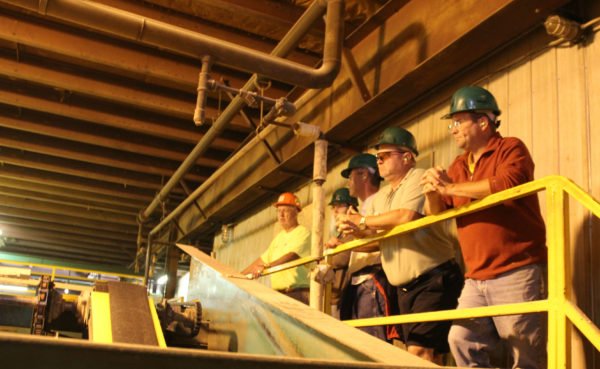
USDA Press Release – At the Advanced Bioeconomy Leadership Conference today, U.S. Department of Agriculture Administrator for the Rural Business and Cooperative Service J.R. Claeys announced the U.S. Department of Agriculture is guaranteeing $115.2 million across eight states through the Timber Production Expansion Guaranteed Loan Program (TPEP) to ensure sawmills and other wood processing facilities have the necessary funding to establish, reopen, expand, or improve their operations.

Today’s announcement includes recipients in the states of California, Idaho, Kansas, Louisiana, Maine, Oklahoma, Virginia, and Wisconsin.

These investments represent a commitment by the Trump Administration to expand American timber production by 25%, reduce wildfire risk, and save American lives and communities by strengthening domestic wood processing capacity.

“We cannot allow wildfires to devastate and destroy our rural communities,” said Administrator Claeys. “That’s why the USDA is taking bold action to stop the destruction of our forestlands by investing in sawmills and wood processing facilities that support sustainable timber harvesting. These actions strengthen local businesses, support rural prosperity, and create jobs for hardworking Americans.” (source)

This is not to say that expanded U.S. sawmill production would completely eliminate Canadian softwood lumber imports. However, it does create inventory and a stronger domestic supply chain that would diminish any applied leverage that Canadian trade negotiators would seek to deploy.

Without pipelines flowing East or West, Canada is stuck pumping their heavy oil south for processing.  Nothing about that is likely to change in the next few years, even if Canada abandoned their climate change policy (highly unlikely).

Then comes the cross-border auto manufacturing industry, and the realization that -sans USMCA- both U.S. and Japanese automakers are likely to stick with the manufacturing center where their greatest customer base exists, the USA.

Now overlay softwood lumber, and you can see the top three economic dependencies of the U.S and Canada are slowly being uncoupled, simultaneous with the trilateral USMCA provisions being reviewed starting with the U.S. and Mexico having direct conversations.

We keep watching.

Israel Unilaterally Strikes Iran/Qatar South Pars Gas Field – President Trump Is Not HappyPosted originally on CTH on


Posted originally on CTH on March 19, 2026 | Sundance 

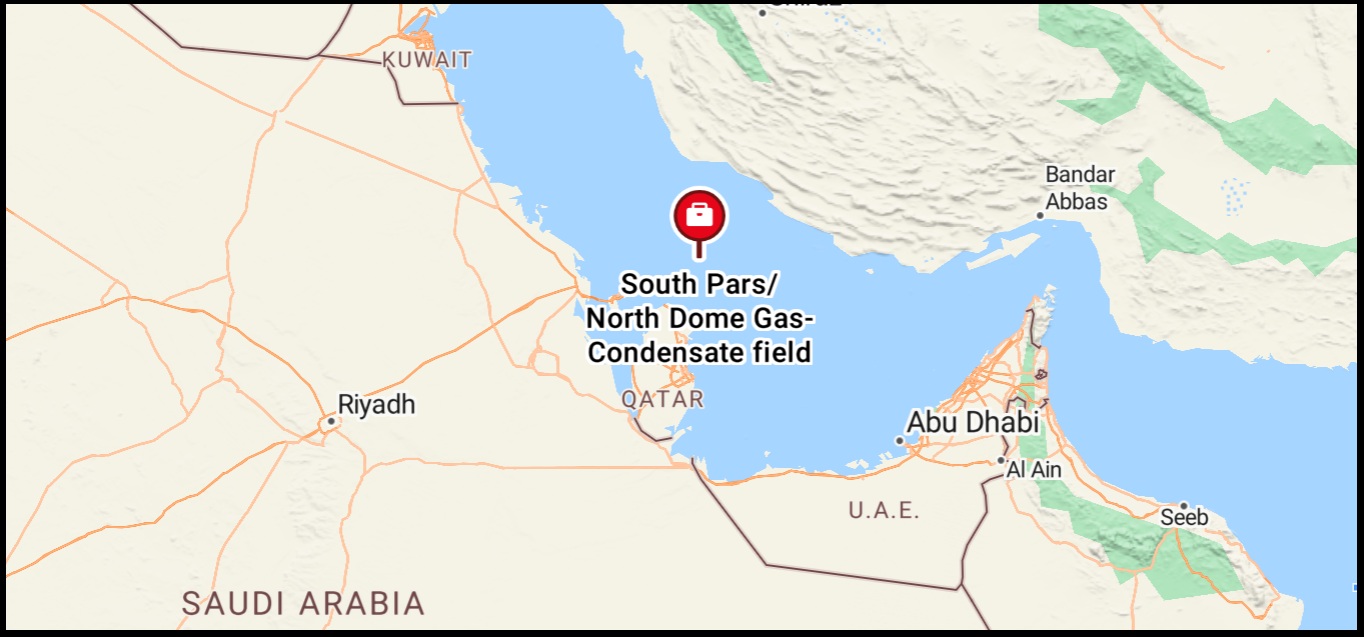
The South Pars/North Dome field is a natural-gas condensate field located in the Persian Gulf. It is by far the world’s largest natural gas field, with ownership of the field shared between Iran and Qatar. According to the International Energy Agency, the field holds an estimated 1,800 trillion cubic feet of in-site natural gas.

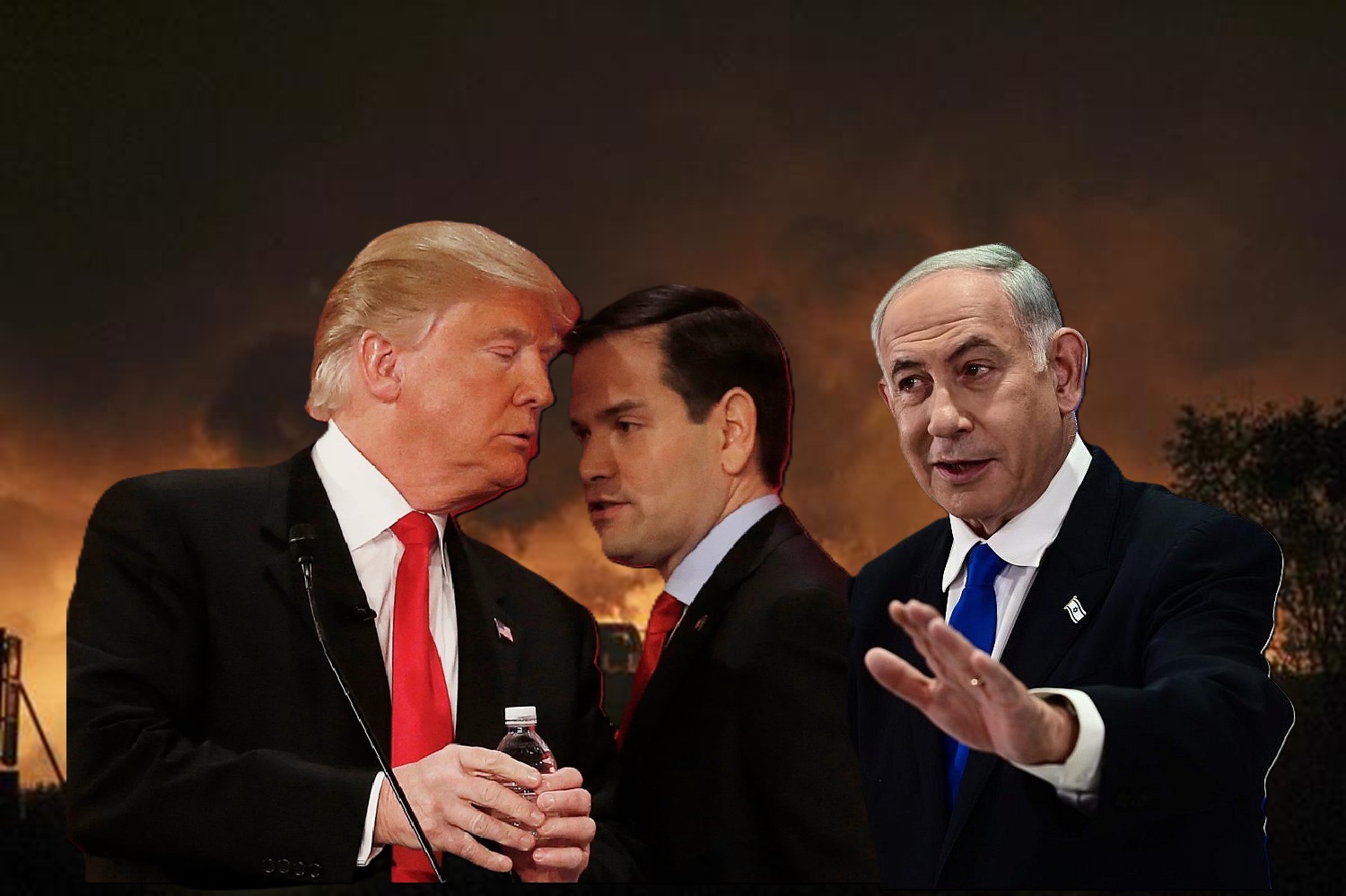
President Trump is not happy about Israel’s unilateral decision to strike at the Pars gas field; however, pay attention to what Trump diplomatically describes as the motive:

[TRUTH SOCIAL] – “Israel, out of anger for what has taken place in the Middle East, has violently lashed out at a major facility known as South Pars Gas Field in Iran. A relatively small section of the whole has been hit. The United States knew nothing about this particular attack, and the country of Qatar was in no way, shape, or form, involved with it, nor did it have any idea that it was going to happen.

Unfortunately, Iran did not know this, or any of the pertinent facts pertaining to the South Pars attack, and unjustifiably and unfairly attacked a portion of Qatar’s LNG Gas facility.”

“NO MORE ATTACKS WILL BE MADE BY ISRAEL pertaining to this extremely important and valuable South Pars Field unless Iran unwisely decides to attack a very innocent, in this case, Qatar – In which instance the United States of America, with or without the help or consent of Israel, will massively blow up the entirety of the South Pars Gas Field at an amount of strength and power that Iran has never seen or witnessed before.

I do not want to authorize this level of violence and destruction because of the long-term implications that it will have on the future of Iran, but if Qatar’s LNG is again attacked, I will not hesitate to do so. Thank you for your attention to this matter.”

President DONALD J. TRUMP

The joint economic relationship over the Pars gas field is part of the connective tissue between Iran and Qatar and underpins why Qatar has always been an intermediary for all issues of deconfliction that surround the U.S and Iran.

Factually Qatar was always the mediator, and within that mediation relationship the USA used Qatar as the bank to receive the confiscated funds Obama delivered when he lifted sanctions.  There are hundreds of examples of the USA using Qatar as the intermediary for Iran policy, just as there are hundreds of citations and examples available for Qatar supporting the Muslim Brotherhood.

It is only recently, very recently, like only in the era of Donald Trump as U.S. President, when Qatar started pulling away from a very friendly relationship with Iran.  So recently, that for the past 15-months, since long before it even made sense, CTH has been calling attention to this weird Qatar -vs- Israel division dynamic within USA domestic politics.

Then this happens….

The United States and Israel are working together on the targeting and military objectives of Operation Epic Fury.  But, for some unknown reason the United States did not know Israel was going to strike the Qatar Pars gas field?  Interesting.

President Trump assigns the motive for the Israeli attack as “out of anger for what has taken place in the Middle East.” However, Israel has another, perhaps opportunistic motive, worth billions.

[SOURCE]

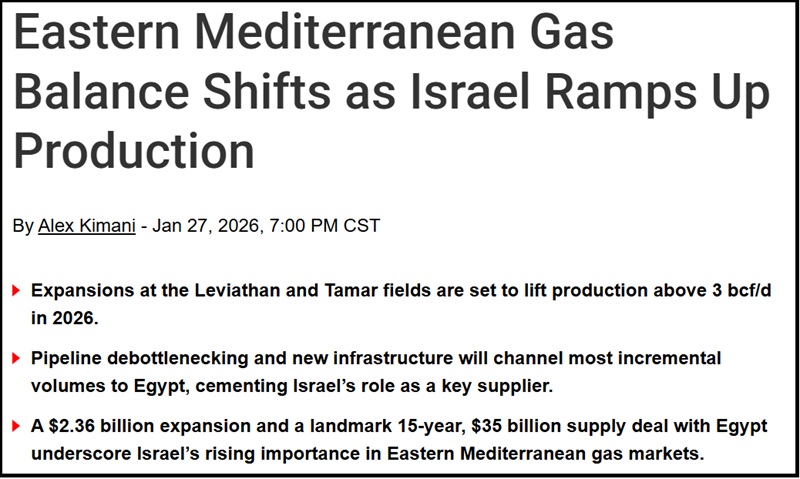
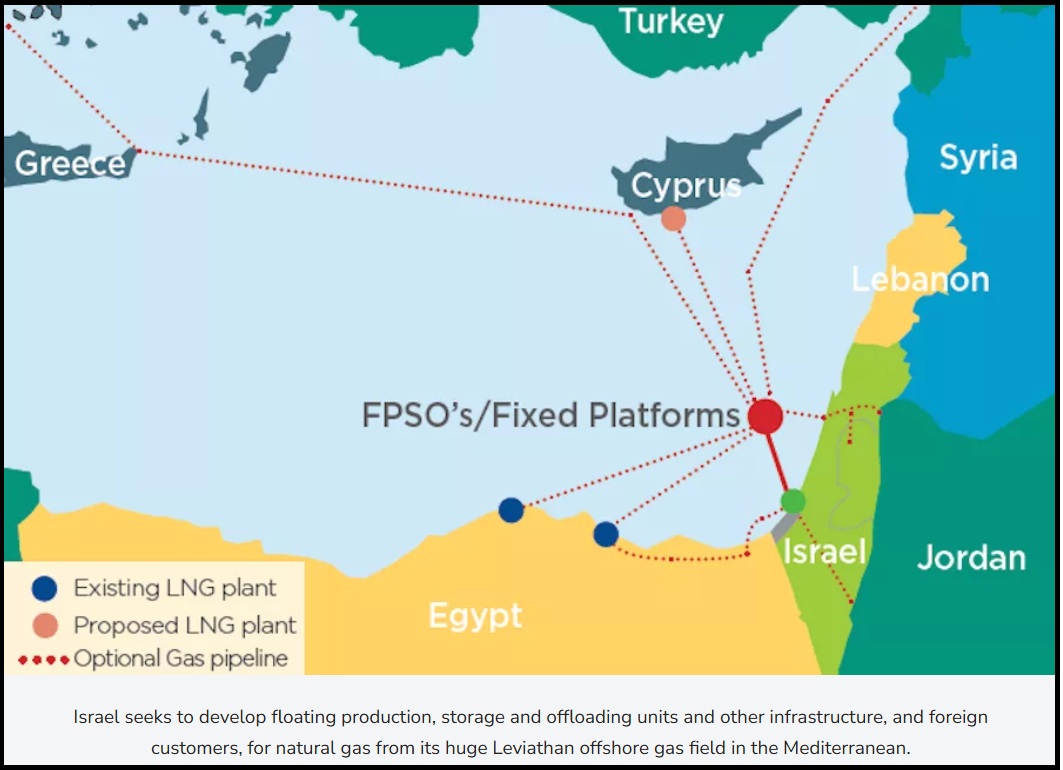
Israel is set to achieve record natural gas production in 2026, with expansion projects in the Leviathan and Tamar fields expected to push total output above 3 billion cubic feet per day (cfd) for the first time ever. According to the experts, the Chevron (NYSE:CVX) operated fields are expected to add a combined 600 million cfd in the coming months, with the bulk of the extra gas piped to Egypt after the removal of bottlenecks in the export pipeline network. Israel’s gas output in 2025 is estimated to have dropped slightly from a record 2.587bn cfd achieved in 2024 as fields were shut-in during Israel’s conflict with Iran in June.

Chevron and its partners NewMed Energy (OTCPK:DKDRF) and Ratio Energies (OTCMKTS:RTEXF) confirmed a $2.36 billion Final Investment Decision (FID) in January 2026 to expand the Leviathan field, increasing production capacity from 12 bcm to roughly 21 bcm annually. The expansion involves drilling three additional offshore wells, installing new subsea infrastructure and enhancing the platform’s processing capabilities. The expansion aims to significantly increase natural gas exports to Egypt and Jordan. The companies managed to boost production at the Tamar field to increase capacity from approximately 1.1 billion cubic feet per day (bcf/d) to 1.6 bcf/d in 2025.

Debottlenecking of the export pipeline network is enabling higher volumes to reach Egypt, helping to fill their domestic supply gapsKey projects, including upgrading the Ashdod-Ashkelon pipeline and constructing the Nitzana pipeline (expected to be operational by 2028). The projects are designed to boost exports to Egypt and Jordan by 1.8 billion cubic feet per day. The 46-km offshore natural gas Ashdod–Ashkelon pipeline is undergoing upgrades scheduled for completion in the current year to handle increased capacity. Approximately 55% of the gas flows through the offshore Eastern Mediterranean Gas (EMG) pipeline, while 45% is transported via the Arab Gas Pipeline through Jordan.

[…] The Leviathan and Tamar gas fields are key Israeli offshore natural gas assets, with current capacities of approximately 12 billion cubic meters (BCM) per year and 11 BCM per year, respectively. Both fields are expanding, with Leviathan projected to increase to 21–23 BCM annually to meet rising regional demand and exports. Still, the Middle East oil giants have potential for higher gas production. (SOURCE)

Did Israel bomb the collaborative Iran-Qatar gas field “out of anger for what has taken place in the Middle East.” Or did Iseael just diminish an LNG competitor?

President Trump is not happy with this one Bibi.

We’ll keep watching…

Japan Signs Major $56 Billion Energy Deal with U.S, Strategically Boosting Energy Relationship


Posted originally on CTH on March 17, 2026 | Sundance

CTH has said to watch the U.S.-Japan trade relationship closely because the outlines of multiple geopolitical shifts can be referenced from a new strategic relationship surrounding multiple sectors, including energy.

The U.S, relationship with Japan is both leverage and a hedge against old alliances that may seek to disrupt the global reset currently underway through President Trump policy.  The issues with the European Union, U.K, USMCA and other tenuous allies, look entirely different when President Trump has alternative partnerships for massive energy exports.

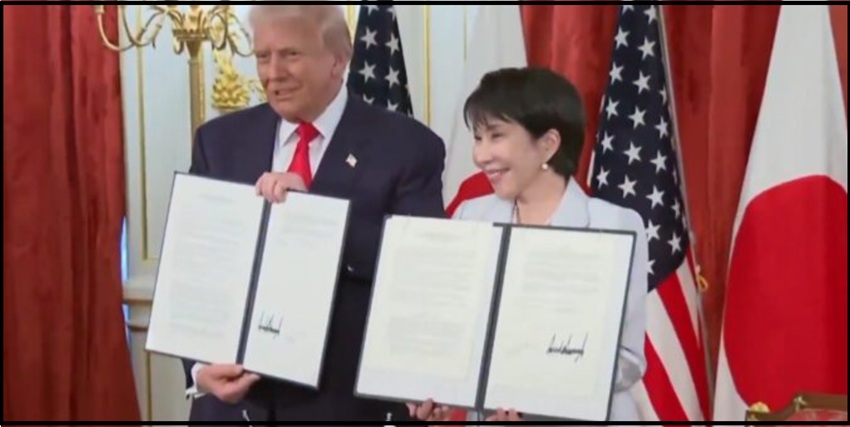
ENERGY NEWS – In a major move to secure stable energy supplies amid escalating geopolitical tensions, Japan has inked deals worth up to $56 billion with the United States for oil, natural gas, and liquefied natural gas (LNG) purchases and investments.

This agreement, finalized at the Asia-Pacific Energy Security Forum in Tokyo on March 14, 2026, underscores Japan’s push to diversify its energy imports and deepen economic ties with the US under Prime Minister Sanae Takaichi’s administration.

The deals come as part of a broader framework stemming from the 2025 US-Japan trade agreement, where Japan pledged $550 billion in US investments over several years, with energy as a key pillar.

The $56 billion package represents a significant escalation in Japan’s commitment to American energy, building on an initial $36 billion tranche announced earlier in 2026.

This latest round emphasizes immediate purchases and long-term infrastructure projects, responding to global market volatility driven by conflicts in the Middle East and disruptions in key shipping routes like the Strait of Hormuz.

[…] The agreements encompass a mix of direct energy purchases, joint ventures, and infrastructure investments. (read more)

As a nation that needs energy partnerships, Japan seeks stability and predictability.  Japanese Prime Minister Sanae Takaichi has gone all-in on a strategic energy partnership with the United States.

As the tectonic plates are shaken:

♦ If Canada wants to try and leverage the energy trade infrastructure against a USMCA reset, President Trump has Venezuela production as an offset.

Japanese automakers have already told Canadian trade ministers that if Canada loses the USMCA, there’s no value in maintaining auto manufacturing north of the border – because the target customers are all in the USA.  Japan would move all production out of Canada.  I doubt China could replace at scale.

♦ If Europe, who is now dependent on LNG from Norway and the USA, wants to create geopolitical friction, President Trump now has Japan as a replacement customer.  More behavioral leverage.

U.S. firms are making a lot of money selling LNG to Europe, but Trump has just created a customer base that is more reliable and politically consistent.

♦ Then, as the short-term lifting of LNG and oil sanctions on Russia is proving (petrodollars used), think about the potential for India and Southeast Asia to be supported by Russian exports.  Who holds that distribution key, again Trump.

It is not accidental that India is sending support vessels to the Strait of Hormuz as requested by President Trump.  Here’s the kicker… With oil and gas from Russia, India doesn’t need the Iranian oil and gas; yet, they are sending support. Why? Because Prime Minister Modi wants Trump to keep their Russian purchase exemptions in place.

We can see how a strong collaborative relationship with Japan can negate any negative economic impact the mask wearing Europeans and Canadians might want to try and leverage.  In actuality, Canada, the U.K and Europe don’t have any leverage at all in the new world of trade.

One way to look at this is to say the primary “Build Back Better” nations, those most entrenched in the selling of climate change as a tool for manipulation and control, are being positioned to have the least amount of input into a new, tiered set of established nations for global energy development.

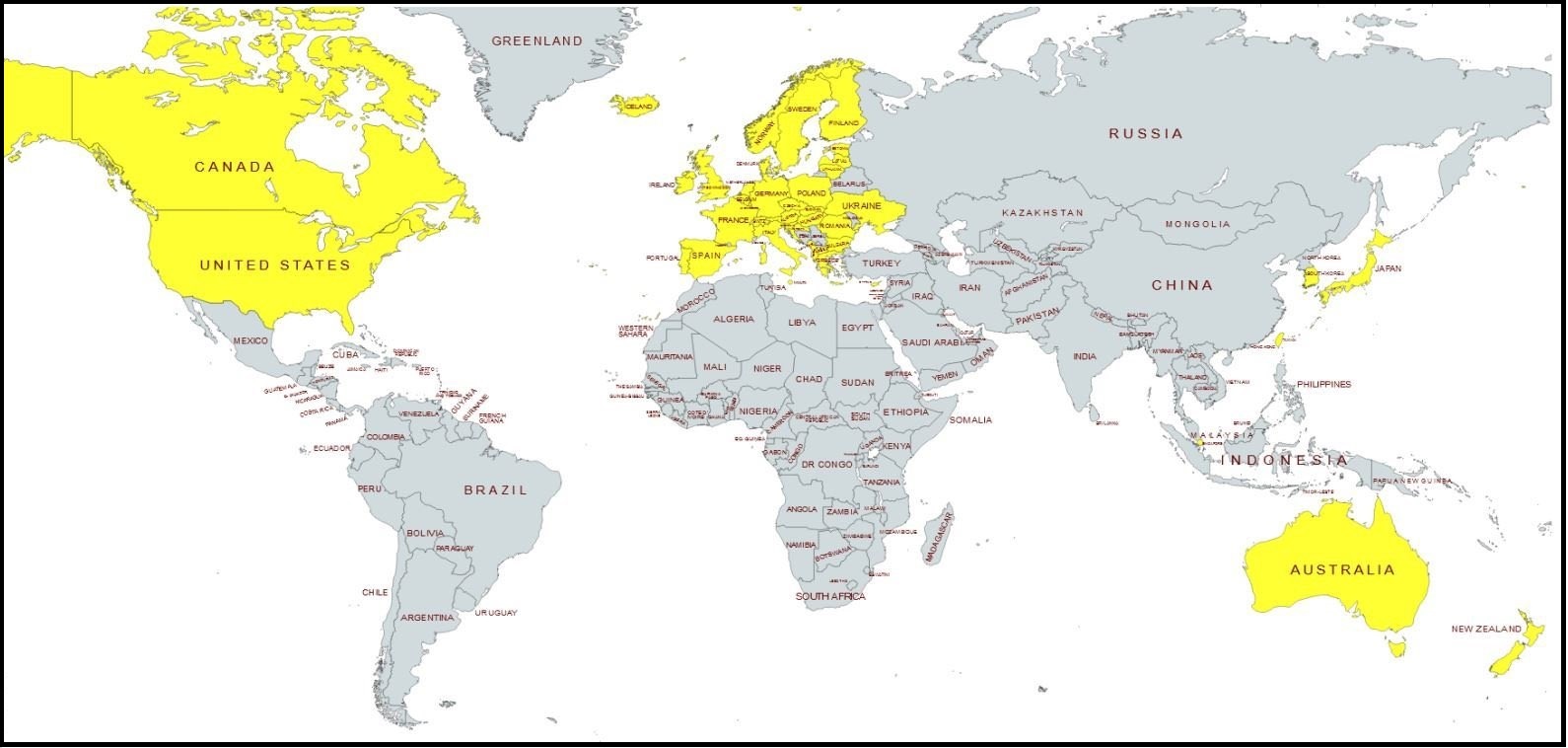
Take a look at that Russian Sanctions map again.  The nations in yellow created the sanctions:

Now, overlay the new energy trade relationships that are forming.

The USA fuels the Western Hemisphere.

Russia fuels the Eastern Hemisphere.

Europe is reliant on the Middle East.

China loses geopolitical power, Russia gains power.

Europe loses geopolitical power, India gains power.

Deal with Iran and most conflict is resolved in the Middle East.

The USA controls the Western Hemisphere.  And with India and Japan as allies, the Indo-Pacific outline is realized.

President Trump Calls on Oil Dependent Nations to Send Military Ships to Backstop Security in Hormuz


Posted originally on CTH on March 14, 2026 | Sundance 

President Trump’s latest two messages via Truth Social present an interesting geopolitical approach with multiple enmeshed aspects.

First, some background context is needed.  Treasury Secretary Scott Bessent and USTR Jamieson Greer are in Paris to meet with Chinese government officials ahead of a scheduled meeting between Chairman Xi Jinping and President Trump.

The main objective of the pre-summit assembly before President Trump goes to Beijing, is to hammer out the actionable agreement details that can be signed off by Xi and Trump.  Bessent and Greer are looking to put a deal together with their Chinese counterparts so that Trump and Xi can announce mutually beneficial outcomes during their summit.

Second, President Trump has already indicated the March 31/April 1 meeting with Xi will be all business. The traditional pomp and splendor will not be present, and Trump will only be visiting Beijing – no sidelines.

Third, Secretary Rubio will be accompanying Trump on this trip to Beijing, which might seem ordinary were it not for the fact that in 2020 China sanctioned and banned Rubio from entering China for criticizing Xinjiang and Hong Kong.

Fourth, there are rumors that President Trump is going to announce a significant weapons deal with Taiwan at some point immediately following the trip.  If those rumors are true, it would be a top priority for the Chinese advance team in Paris to stop that from happening.

Regardless of what happens in the next few weeks, President Trump will be meeting with Chairman Xi with full Eagle eye confrontation toward the returning dragon stare.  There will be no panda mask on this trip whatsoever; this face to face is an apex predator showdown, while the world watches intently.

Everything President Trump does between now and his arrival in Beijing, should be contemplated through this adversarial position.  With strong moves in Venezuela and Iran President Trump has already pulled Chairman Xi into the jianshu circle, showing the soul of his blade.

Chairman Xi does not have anything resembling a retreat position. He has a highly focused domestic audience, and the eyes from the Great Hall of the People will be watching intensely.

In the next two weeks we will likely see critical probes of both Trump and Xi’s wills surface in ancillary stories connected to each stakeholder, most likely swirling around the Iran conflict. Do not be surprised if we see all of the advanced USA influence purchasing by China now activated with very specific anti-Trump narratives.

That is the context for President Trump to call out many of the oil dependent countries:

TRUTH SOCIAL – “Many Countries, especially those who are affected by Iran’s attempted closure of the Hormuz Strait, will be sending War Ships, in conjunction with the United States of America, to keep the Strait open and safe. We have already destroyed 100% of Iran’s Military capability, but it’s easy for them to send a drone or two, drop a mine, or deliver a close-range missile somewhere along, or in, this Waterway, no matter how badly defeated they are.

Hopefully China, France, Japan, South Korea, the UK, and others, that are affected by this artificial constraint, will send Ships to the area so that the Hormuz Strait will no longer be a threat by a Nation that has been totally decapitated. In the meantime, the United States will be bombing the hell out of the shoreline, and continually shooting Iranian Boats and Ships out of the water. One way or the other, we will soon get the Hormuz Strait OPEN, SAFE, and FREE! President DONALD J. TRUMP

There is a significant overlay here.

First, any nation that sends supportive military ships into the Strait of Hormuz is openly taking a position against the Iranian regime.  China cannot take that position, and President Trump knows it – so he’s calling out the dragon’s alignment for the world to see.

…. If you get oil from the region, come protect your ships while I kill the bad guys…

Remember, Japan has a very limited military, and their post-World War II constitution was blocking them from building one.  Changing that position was the goal of Japanese Prime Minister Shinzo Abe, a friend of Trump, and he was traveling throughout Japan with that message when he was assassinated.  That objective now falls to the protege’ of Abe, Prime Minister Sanae Takaichi.

Japan is included on that list of countries specifically to antagonize the dragon, with President Trump saying I have a strong industrial friend in your back yard.

For the rest, notice the countries Trump did not name: India, Thailand, Vietnam, Philippines or any of the Asian countries that are dependent on oil from the middle east.   Trump is not asking the dependency allies of the United States to participate. Instead, President Trump is calling upon the fake-ally countries that oppose the United States but hide behind a friendly smiling mask.

This is a bold underline for President Trump’s former statement where he publicly doubted the NATO allies would ever come to assist the USA (ie. Greenland), even though they are dependent on the security the USA provides.

In this Iranian conflict, the Europeans are dependent on oil from the middle east, but they will not put their military into the fight even if it secures their own economic future.  Opening the Strait of Hormuz benefits the Europeans, but they only want to pontificate grand prose about it; similar to how they pontificated about the threat Iran presented, then lost their supportive tongue when Trump finally did something about it.

A few hours later, President Trump drives home the point:

TRUTH SOCIAL – “The United States of America has beaten and completely decimated Iran, both Militarily, Economically, and in every other way, but the Countries of the World that receive Oil through the Hormuz Strait must take care of that passage, and we will help — A LOT! The U.S. will also coordinate with those Countries so that everything goes quickly, smoothly, and well. This should have always been a team effort, and now it will be — It will bring the World together toward Harmony, Security, and Everlasting Peace!” President DONALD J. TRUMP

Now we wait to see who steps up.

Spoiler Alert – ¹No one will!

¹And that’s the point Trump is making.

I also concur with this point:

Shanaka Anslem Perera“The coalition call is not about Iran. Iran’s military is destroyed. The coalition call is about the world that emerges after Iran. If America escorts the tankers alone, the Strait reopens under American control and dollar pricing survives. If a coalition escorts them, the Strait reopens under international consensus and the yuan-for-Hormuz proposal dies. If nobody escorts them, the Strait stays closed and China’s shadow fleet is the only commerce moving through it.”