Prime Minister Carney Pledges to Upend U.S. Conflict Negotiations, Announcing Intent to Advance Ukraine into NATO
Posted originally on the CTH on September 10, 2026 | Sundance |
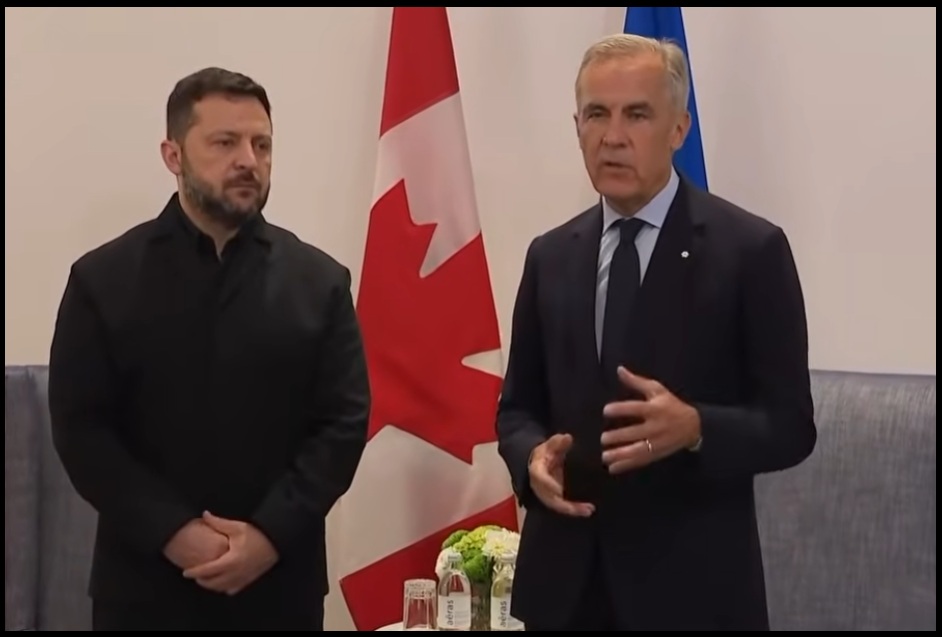
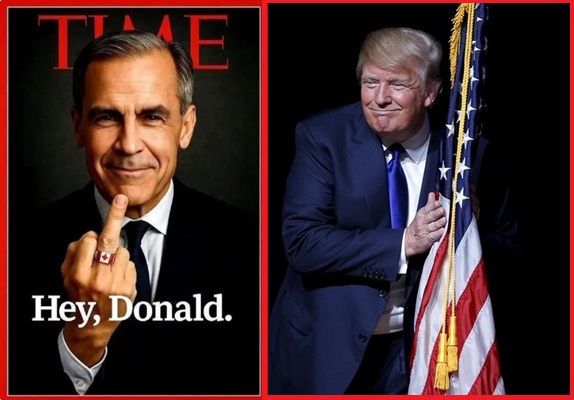
Prime Minister Mark Carney really is a globalist piece of work. As Ukraine Prime Minister Volodymr Zelenskyy arrives in Alberta, Canada, to coordinate with the latest European leader Mark Carney, the remarks said in this brief greeting and introduction video are stunning in a geopolitical context.
It is obvious that Prime Minister Carney is trying to position himself as a decisionmaker in the outcome of the Russia-Ukraine conflict by pushing Zelenskyy even deeper into intransigent positions that will only lead to greater conflict.
Carney positions Canada squarely on the side of Ukraine and in violent opposition to Russia. Not coincidentally, this is the exact opposite ¹position of the United States, and that is a feature not a flaw.
Carney really does view himself as European first and foremost. He even remarks that Canada in general, and he as the Prime Minister specifically, will ensure that Ukraine advances to become a European member state. How, exactly, does he as a North American leader expect to make this happen?
Worse still, Prime Minister Carney injects himself into the Ukraine-Russia negotiations by stating his intention to ensure that Ukraine becomes a member of NATO. Ukraine not becoming a NATO member state is a hardline for Russia, and that aspect is deeply enmeshed in the ongoing negotiations between the U.S. led discussions with Russia and Ukraine.
Carney is putting his nation and himself into direct conflict with President Trump and the goals/objectives of peace.
No one outside of Canada gives a tinkers’ damn about Canada giving more money to Ukraine; however, when Carney directly aligns his military with Ukraine and pledges to support Zelenskyy with military hardware, NORAD defense missiles, things change. Do the Canadian people really want to get pulled into this quagmire as an outcome of Mark Carney’s grand aspirations to become a protectorate of the European Union?
Carney is playing a very dangerous game, and I hope the Canadian people can see just how far over his skis he is putting them.
Watch these remarks carefully and contemplate just how much Carney is positioning Canada to be a direct enemy of the United States. This will not end well. SEE BELOW:
¹In the big picture for Americans who want to put this issue into a box and label it foreign policy while thinking it is disconnected from domestic, economic or cultural issues, let me assure you we will not be able to outrun this problem for generations if President Trump doesn’t deal with it now.
The global reset underway by the Trump administration is the embodiment of ‘begin with the end in mind’. Everything related to the hemispheric security agenda in combination with sovereign nationalism as expressed in the complete reconstruction of global alliances has a financial impact on you, your family and this nation.
Posted originally on the CTH on September 9, 2026 | Sundance |
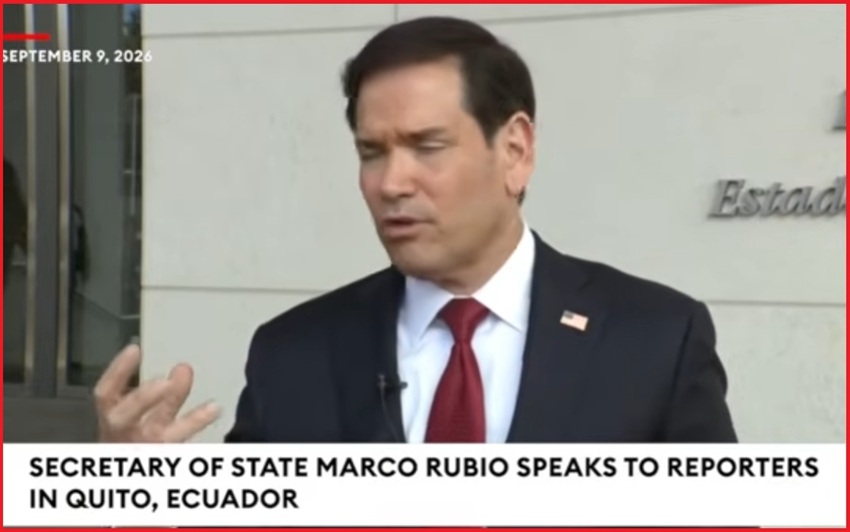
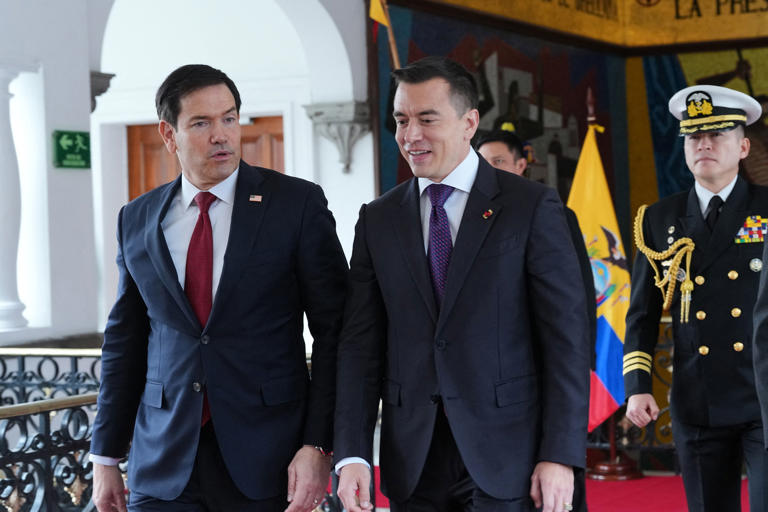
This is one spectacular impromptu presser by Secretary of State Marco Rubio following discussions with Ecuador’s President Daniel Noboa at Carondelet Palace. All of it is direct, deliberate, targeted and without any reserved remarks held back due to regional sensibilities.
Secretary Rubio emphatically outlined how the United States is going to work with Latin-America officials to remove narco-terrorism in all its forms from the region like “cutting out a cancer.” Rubio walks through the issues and the importance of direct confrontation, including the use of the U.S. military, the U.S. intelligence agencies and every element of power at our disposal to help leaders like President Daniel Noboa fight the corrupt gangs and domestic terrorist networks within the region. Rubio’s strength of statements is exceptional.
These remarks come on the heels of the State Dept today designating corrupt Ecuadorian officials as facilitators of Foreign Terrorist Organizations [SEE HERE]. He also praised the government of Ecuadorian President Daniel Noboa as being “the most involved and aggressive partner” the US has had in its work dismantling criminal networks and “bringing people to justice that have never been brought to justice before”. Rubio outlined all of it, soup to nuts. This is a must watch presser:
STATE DEPT – […] Pablo Ramírez Erazo, former director of Ecuador’s Prison Authority; Wilman Terán Carillo, former judge on Ecuador’s National Court of Justice; and Ronaldo Xavier Guerrero Cruz, former criminal judge on Ecuador’s Judicial Council, each significantly abused their former government positions by accepting bribes from gangs linked to narco-terrorist organizations. In exchange for bribes, these officials interfered with judicial, electoral, or public processes on behalf of Ecuadorian gangs linked to designated FTOs Cartel Jalisco Nueva Generación (CJNG), Los Choneros, and Los Lobos.
Pablo Bolívar Muentes Alarcón, former member of the Ecuadorian National Assembly; María Fabiola Gallardo Ramia, former President of the Guayas Provincial Court; Johann Marfetán Medina, former criminal judge of the Guayas Provincial Court; and Mayra Carolina Salazar Merchán, former public relations officer of the Guayas Provincial Court, each abused their former public positions by accepting bribes in exchange for interfering with judicial processes to benefit narco-terrorist organizations like Los Choneros and the Sinaloa Cartel, and their criminal facilitators. (SOURCE)
Posted originally on the CTH on September 9, 2026 | Sundance |
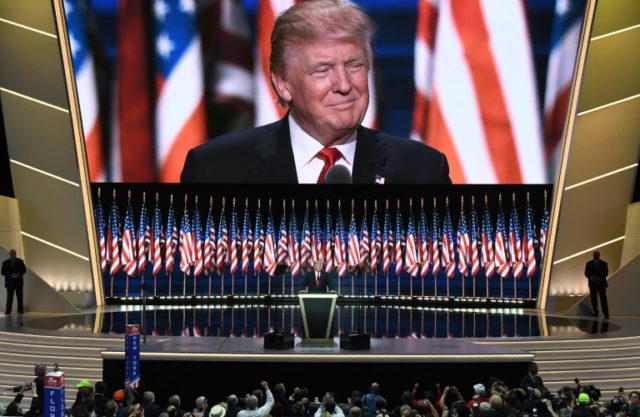
A historic Republican midterm convention is being held in Dallas, Texas, to be headlined by a President Trump address later today. The livestream links to the event are below. President Trump is anticipated to take the stage during the final hour of the convention, specifically from 8 to 9 p.m. Central Time. The event’s schedule indicates that the programming will run from 3 to 9 p.m. CT each evening.
Vice President JD Vance will deliver his speech at the conclusion of today’s events. Links Below:
Posted originally on the CTH on September 9, 2026 | Sundance |
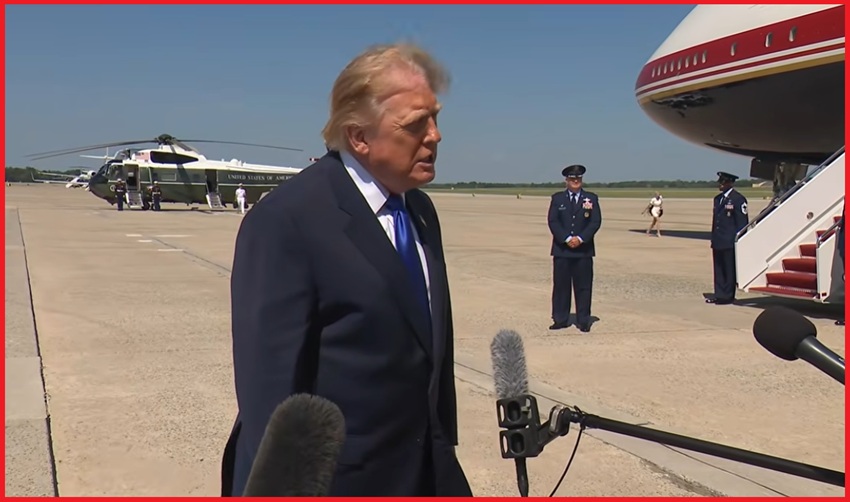
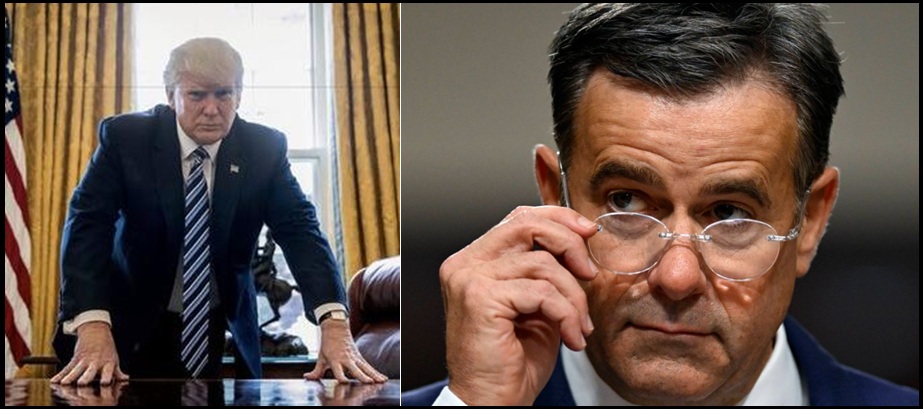
Within media reporting there is usually a ring of truth, albeit spun into a fake news narrative. President Trump famously said, “the reports are real, the news is fake.” I suspect this report today about CIA Director John Ratcliffe being more involved in the Ukraine-Russia conflict negotiations is a prime example.
We’ll start here: “CIA director John Ratcliffe is preparing to take a bigger role in U.S. negotiations with Russia and Ukraine, U.S. officials have told their European counterparts, in a bid to jump-start moribund diplomatic efforts to end the four-and-a-half-year-long war,” the Financial Times reports.
“The move comes as the White House is considering paring back the involvement of U.S. special envoy Steve Witkoff and President Donald Trump’s son-in-law Jared Kushner, who have been leading the talks with Moscow and Kyiv.” {Source)
I suspect the first paragraph is accurate, and I suspect the second paragraph is entirely fake news. That opinion seems verified by the White House refuting the Financial Times report. Pay attention to what they actually refute:
“This entire story is totally fake news attributed to low-level, anonymous ‘sources’ who have no idea what they are talking about. None of these supposed conversations are happening. Special Envoy Witkoff and Jared Kushner continue to work incredibly hard towards a peace agreement, and the President trusts them fully to lead negotiations on behalf of the United States. It’s a shame that Financial Times has devolved into a left-wing gossip rag that has zero interest in reporting accurate information.” ~White House, Anna Kelly
I have a theory on this, and generally I don’t get out in advance of things – preferring to wait, assemble data, and then citing the backstory in the full context outline. However, this story is different. There’s a geopolitical clock ticking and I suspect events will unfold rather quickly, so it’s worth peeking around the corner in advance of the picture emerging.
To start, understand the Russian psychology and how the Kremlin specifically presents their positions. Russians don’t do small talk at all. If a Russian has nothing to say, if they perceive no value or transactional purpose in words, they stay quiet.
Russians speak when there is value in the conversation. Russians do not do small talk; that’s a western attribute.
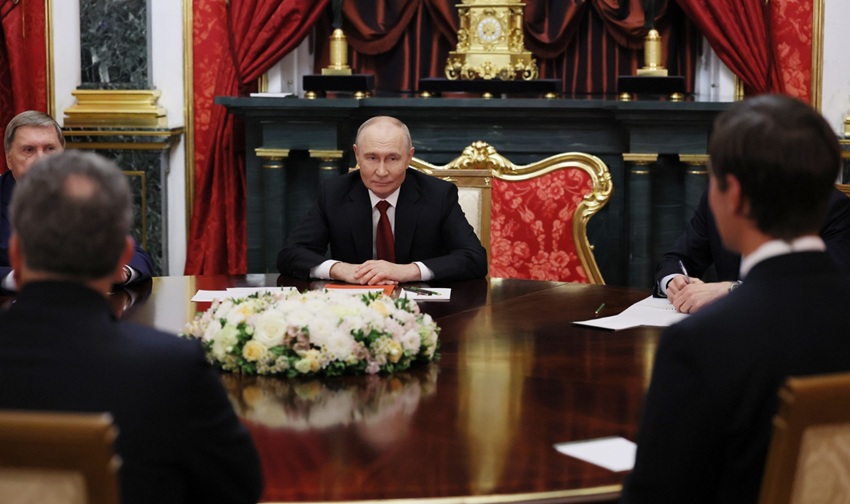
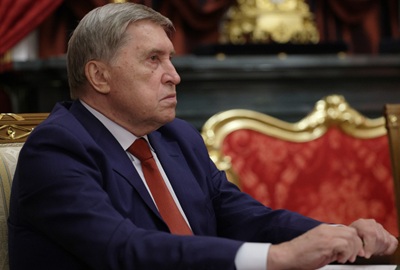
That’s why when the Kremlin quickly broadcast video of Steve Witkoff and Jared Kushner immediately meeting with Russian Federation President Vladimir Putin and top aide Ushakov, it seemed odd. Letting the cameras roll while Witkoff, Kushner and Putin himself engaged in small talk diplomatic introductions was very odd. Beyond odd. That’s the thing that interested observers noted was unusual. Something was different.
Then came the follow-up. President Trump speaking with President Putin for an hour, and the specific wording used by Ushakov to describe the conversation itself. There were several points of interest in how the readout was worded, with particular interest to these paragraphs:
[…] “Clearly, the conversation centered on Ukrainian settlement. Donald Trump directly communicated the desirability of bringing the conflict to an end as soon as possible, as it would immediately open up prospects – impressive and far-reaching ones at that – for the full restoration of relations between the U.S. and Russia. In his view, this would have a particular impact on trade and economic ties, promising huge benefits for both nations. Donald Trump is keen to see a breakthrough achieved during his presidency.
President Putin supported this approach in the context of potentially building a constructive partnership between the two great powers and praised the mediation efforts by the US and Donald Trump personally with respect to finding solutions to the Ukrainian conflict. An objective and extensive analysis of the current developments in the special military operation was provided, along with our vision of the overall progress on the battlefield and achieving the goals and objectives of the special military operation. Speaking of which, actual tangible actions that the Americans could take to expedite the cessation of the hostilities were outlined.”… {source, Kremlin}
I am very confident that President Trump is looking at Russia as a mechanism to solve the Iran conflict and beyond. {GO DEEP} That’s why the “trade and economic ties, promising huge benefits for both nations,” directly attributed to President Trump, is part of the readout.
Then you get to the more surprising part. “[Russia’s] vision of the overall progress on the battlefield and achieving the goals and objectives of the special military operation. Speaking of which, actual tangible actions that the Americans could take to expedite the cessation of the hostilities were outlined.” President Putin outlined tangible actions “Americans could take.” Putting that in a readout of a call between Trump and Putin is quite remarkable.
I suspect that Russian President Vladimir Putin and President Trump had a very honest conversation about the overall conflict, and when President Trump brings up the restoration of the economic relationship as well as the removal of sanctions, Putin then challenged Trump.
Russian President Putin doesn’t believe that President Trump or any other U.S. President actually controls the mechanisms of government. This opinion is underlined and emphasized when it comes to the U.S. Intelligence Community and the CIA.
Putin has long stated that no U.S. President controls the CIA, and Putin has said while he never views the U.S. President or the people of America as his enemy, the CIA are the problem. Putin views the CIA as the real control mechanism within the U.S. government.
America is not Russia’s enemy, the CIA is. That’s Putin’s perspective in a nutshell.
When it was revealed how the FBI, ODNI and CIA had targeted candidate Donald Trump and later President Trump, Vladimir Putin used this reference point in all of his statements about “Russiagate” as an I-told-you-so point of emphasis. Putin has a long-held belief that U.S. intelligence agencies operated outside the framework of government, and the “Russiagate” operation against Trump proved it. At least that was his public perspective.
There is nothing evident to sway Putin’s perspective and opinion toward President Trump in term-2. Putin doesn’t believe Trump controls the intelligence agencies, and Putin certainly doesn’t believe Trump controls the CIA.
Now, put that Putin-Trump phone call (use the readout as a reference) together with the report today that CIA Director John Ratcliffe will take a “greater role in Russia-Ukraine talks.”
I suspect that President Trump discussed the benefits to Russia of rejoining the world economy, the removal of sanctions, the financial benefits from the sale of Russian oil and gas and the geopolitical benefits of Russia and the United States forming a strategic relationship. However, I also suspect that Putin returned that outlook by telling President Trump he was not in control of USIC and as a consequence really not in control of the U.S relationship with NATO.
Obviously, President Trump would counter that he was in control of the USIC and all the downstream institutions, but Putin would be incredulous to the possibility. History is on the side of Putin and DNI Gabbard could only achieve so much.
[‘Sure, if you are really in control – then do XXXX’] which in a readout becomes “actual tangible actions that the Americans could take.”
“CIA director John Ratcliffe is preparing to take a bigger role in U.S. negotiations with Russia and Ukraine, U.S. officials have told their European counterparts, in a bid to jump-start moribund diplomatic efforts to end the four-and-a-half-year-long war,” the Financial Times reports.
Posted originally on the CTH on September 9, 2026 | Sundance |
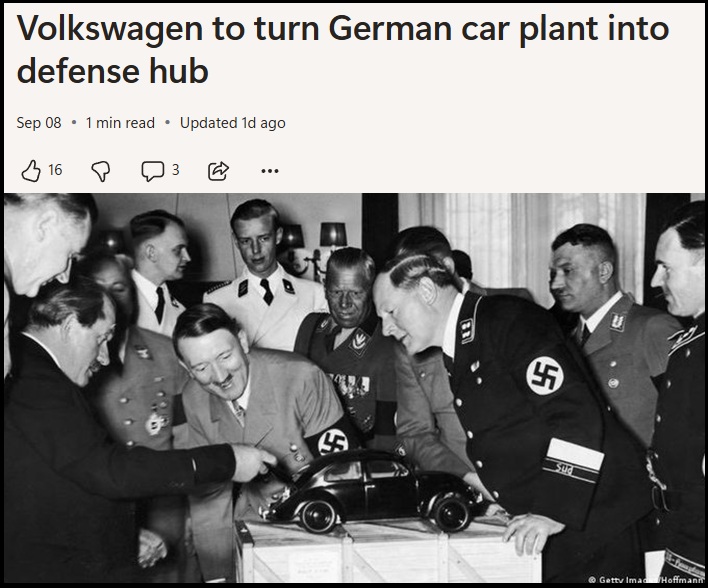
Unfortunately, if my memory is correct, this did not work out too well the last time. The irony thickens when you look at the brand name Volkswagen, and how they got their start.
GERMANY – Volkswagen (VWAGY) has agreed to sell its Osnabrück plant in Germany to Israeli investor Aurelius Capital and the state of Lower Saxony, paving the way for the factory to shift from car production to defense manufacturing.
Vehicle production at the plant is scheduled to end in summer 2027. Aurelius would become the majority owner alongside Lower Saxony, with the aim of preserving the site and a large part of its workforce.
The new owners plan to develop the site gradually into a competence center for security and defense solutions. Aurelius and Lower Saxony are planning an initial anchor project with Israel’s Rafael Advanced Defense Systems in air defense, with further industrial partnerships and projects expected to follow.
The project could involve producing air-defense systems and components for Germany and Europe. About 1,400 of the plant’s 1,800 jobs could be preserved, according to labor officials. {source}
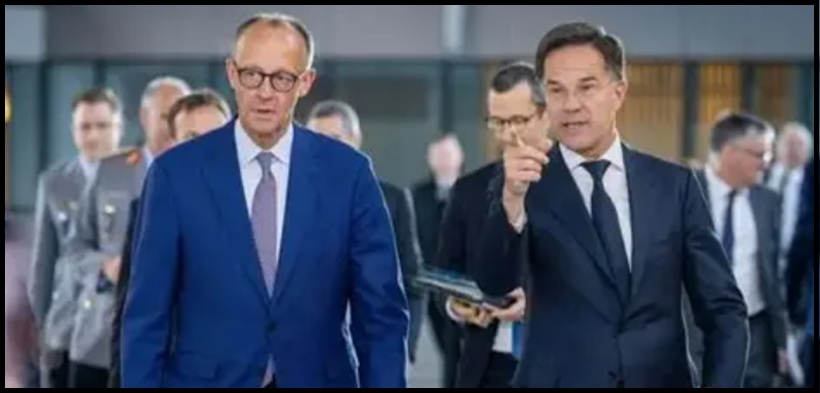
German Chancellor Friedrich Merz and NATO General Secretary Mark Rutte
Posted originally on the CTH on September 9, 2026 | Sundance |
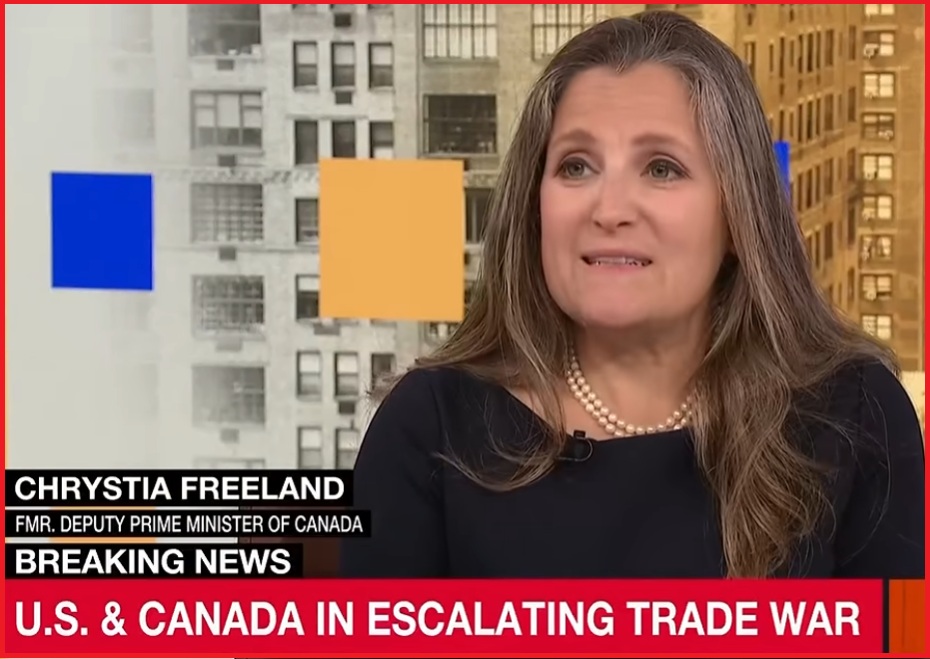
Chrystia Freeland is an exceptional representative of the mindset showcased by 80% of Canadians. During her tenure as Deputy Minister to Justin Trudeau, Freeland organized “emergency powers” to target government opposition which included the seizure of bank accounts and government control over the income of Canadian citizens they disliked. The events described are not in question.
Current Prime Minister Mark Carney then placed Freeland as the advisor to Ukraine President Zelenskyy on the Ukraine reconstruction banking and finance agenda. A charter member of the globalist control mechanisms within the World Economic Forum, Chrystia Freeland is currently working for Ukraine and the EU-NATO allies in the banking and finance capacity; inside the mechanics of the system that controls the financial fraud within Ukraine.
As Mark Carney is desperately trying to organize a globalist response to President Trump’s program of economic nationalism and sovereignty, Freeland travels back to the U.S. to appear on leftist media outlets and proclaim that Trump’s economic perspective is evidence of “authoritarianism.” The current Canadian approach is to try and influence domestic politics inside the United States, on behalf of the global interests opposed to Trump.
It should be noted that the activity underway by Canadian officials inside the USA is against the law in Canada. The Canadian govt do not permit foreign influence to undermine them and have strict controls over their media. WATCH (prompted):
.
Don’t lose sight of the forest while looking at the trees. Ultimately this fear by the Canadians and others is about economics, it’s about money, it’s the “there are trillions at stake” aspect to globalism. There are ideological components, yes; however, the ideology is evident because it is a tool. At the root of their apoplexy all of this is about control of money.
Leftists, progressives, communists et al, use money as a tool and weapon in the dynamic of their power and control. Hence, the banking example previously in Canada. Take away the leftist’s ability to weaponize affluence, and their influence diminishes. Take away their money and they lose power. That’s the heart of the matter, and why President Trump’s economic approach toward geopolitics is so fundamentally against their interests.
Posted originally on the CTH on September 8, 2026 | Sundance |
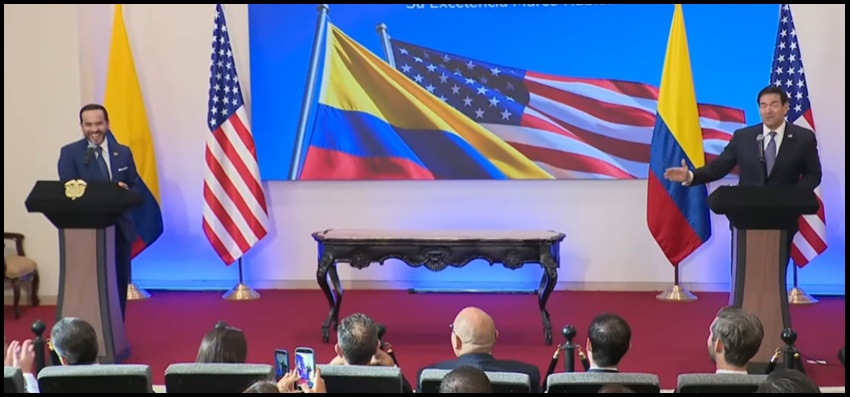
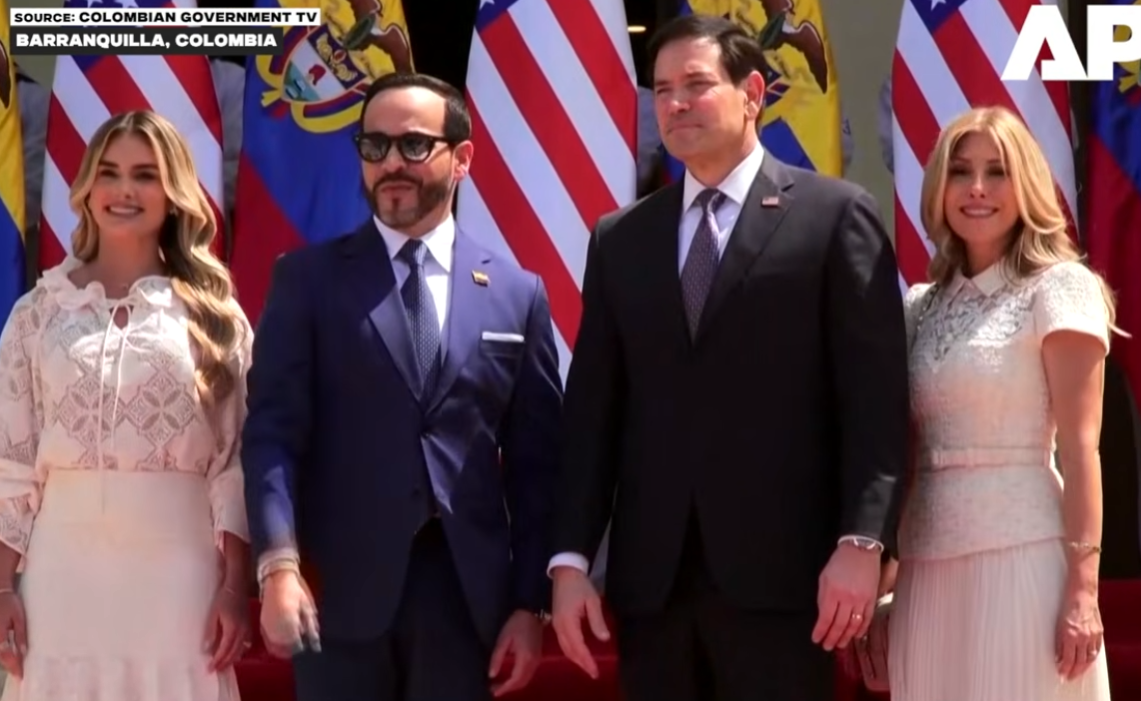
Earlier today U.S. Secretary of State Marco Rubio participated in a joint signing ceremony with Colombian President Abelardo De La Espriella at a Strategic Civil Nuclear Cooperation and Critical Minerals Framework discussion. Both leaders signed the Memorandum of understanding and delivered remarks to the assembled media.
Secretary Rubio delivered the majority of his remarks in Spanish for the audience and media. His bilingual skills come in very handy as Secretary Rubio travels Latin America carrying forth the U.S. strategic policy for the western hemisphere. Video and Transcript Below:
[Transcript] – MODERATOR: (Via interpreter) Good afternoon. Good afternoon. The Presidency of Colombia and the Ministry of Foreign Affairs would like to welcome you to the – to the ceremony of two memorandums of understanding between the Government of Colombia and the Government of the U.S. of America.
We are pleased to have His Highness President Abelardo De La Espriella, who is the president of Colombia, that’s going to be in this act as the witness – as a witness of honor. And we would also like to greet Omar Bula Escobar, who is the Minister of Foreign Affairs of Colombia, and His Excellency Marco Rubio, who is the Secretary of State of the United States of America, who are going to sign both agreements.
(In English) Good afternoon. The Presidency of the Republic of Colombia and the Ministry of Foreign Affairs welcome you to the signing ceremony of two memoranda of understanding between the Government of the Republic of Colombia and the Government of the United States of America. We are honored by the presence of His Excellency Abelardo De La Espriella, President of the Republic of Colombia, who joins us as witness of honor. We also welcome His Excellency Omar Bula Escobar, Minister of Foreign Affairs of Colombia, and the Honorable Marco Rubio, Secretary of State of the United States of America, who will sign both instruments.
(In Spanish.)
(In English) We will now proceed with the signing of the first memorandum of understanding, the Framework Between the Government of the United States of America and the Government of the Republic of Colombia for Securing of Supply in the Mining and Processing of Critical Minerals and Rare Earths. (Applause.)
(The Memorandum is signed.)
(Applause.)
(Via interpreter) Okay, thank you so much. We will now proceed with the signing of the second memorandum of understanding that it’s called the Memorandum of Understanding Between the Government of Colombia and the United States of America about Civil Strategic Cooperation, signed by the chancellor of Colombia and the Secretary of State of the U.S.
(In English) We will now proceed with the signing of the second memorandum of understanding, the Memorandum of Understanding Between the Government of the United States of America and the Government of the Republic of Colombia Concerning Strategic Civil Nuclear Cooperation. (Applause.)
(The Memorandum is signed.)
(Applause.)
(Via interpreter) Thank you so much. Thank you so much. And now we were going to go to the joint declaration about the meeting between the – the statement between Abelardo De La Espriella and the Secretary of State of the United States Marco Rubio. And we’re going to initiate with the Secretary of State Marco Rubio. Mr. Secretary, welcome. Welcome.
SECRETARY RUBIO: (Via interpreter) Thank you so much, Mr. President. And thank you. I’m so glad – I’m so glad. I came here last time as a senator but in the last four years as a senator, and then as the Secretary of State we hadn’t traveled here. And I think that until a certain point, this is a signal of the distance that had been created between our governments, which is not natural because the relationship between Colombia and the United States is almost impossible to replicate because they are personal links, cultural links, and also – and also at the economic level. And also we also have the opportunity to restore that natural relationships that we have between our countries, but also to grow into a new stage, a new cooperation stage with our president even stronger than we had before.
We talked a lot about security, because always security is key, because without security there is no prosperity. But the opportunities that exist between Colombia and the U.S. is much more than security because it’s the base of everything. Without security it’s impossible to operate as a country and as a society. But beyond that – because sometime people say that I – now they’re telling me I’m speaking in a low – you can hear me well, right? They say I’m speaking in a very low voice.
There is no doubt that without security a country cannot progress, and the threats to security that Colombia is facing, it’s the same things that we face in the U.S.: the same networks, the same criminal groups that, although they commit their crimes here, they also commit crimes in the U.S., and they damage our people. But that’s the base. That’s the key. That’s the most relevant thing.
And because the most important role of any – of any government in any part of the world, it’s the security of its people. But above that, we can build on prosperity, which is extremely important to move forward. And also the opportunity that exists for Colombia at the economic level are huge, are amazing, and these are opportunities that Mr. President has in mind that we can work together so that it benefits both countries.
We have a lot to do because, unfortunately, this government inherited a series of disasters, bad decisions, and we feel – we feel the same when we went into power a year and a half ago. But you are facing the errors of the last four years, and you need to face this. And besides that, there was a disaster. There was an earthquake that was tragical.
But there are amazing opportunities, and we’re going to use this opportunity that we have nowadays, because the links between our two governments are so solid to ensure that not only are we going to focus on security, but this is something going to be key in our relationship, but we’re also going to focus in what we call the opportunity of creating a prosperity that helps the North American people and also helps the Colombian people.
And this relationship between our governments have a – have direct impact on the daily life of people here but also the people in the U.S., and especially people in the certain part of Florida where I’ve lived most of my life.
If you allow, Mr. President, I’m going to give a couple of words.
(In English) I want to say a few words in English as well. First, I want to thank the president for receiving us. It – it’s not every day – let me say in this in Spanish first. I should’ve said it earlier.
(Via interpreter) It’s not – and we’ve not always traveled to a country and we have the opportunity to exchange with chief of state that you met before they were president, before he was a politician, because of the mutual relationships that we have. And even when we were talking not long ago, the two years ago when we were in the same – we were in the same table at a wedding in the southern part of Florida. That’s why this is a place where the president of the – the president is someone that I’ve met at a personal level. And then he went crazy and decided to become a politician and decided to turn president.
(In English) So I think that it’s unusual that you travel to a country that you meet with a head of state and a president who you’ve actually known for years before he was president, before he was even in politics. And as I was joking, when he lost his mind and went into politics, and – but he’s going to do a great job for this country, and I know that. I know that from what I know about him from before he was president. This is a man of energy. This is a man of strength. This is a man of vision and of courage because he’s confronting a very difficult situation. He has inherited many disasters.
Obviously, the country faces the aftermath of a natural disaster in an earthquake, but he also faces a disaster that’s institutional, that goes through four years of very bad management and that, frankly, harmed the relationship between the United States and Colombia, something that simply is not natural. The United States and Colombia have a strong bond that exists well beyond just the cooperation of our governments. It’s a strong economic bond. It’s a strong cultural bond. It’s a strong people-to-people bond, a social bond.
I can tell you personally, having lived in south Florida the majority of my life, how we follow so closely the events that happen in Colombia, because it has a direct impact on life in south Florida and ultimately in our country. This is the natural state of things, is for the U.S. and Colombia to be strong allies and strong partners, and the last four years is an aberration between our governments. But that is changing as well.
Clearly, the most important obligation of any government is to provide for the security of their people. It’s the number one obligation, and that is certainly an issue that you will confront here and that I am confident the president and his team are very serious about, and we’re going to do everything we can to help you.
But security is the basic and most important requirement of a government, but prosperity follows closely behind it, and that is opportunity of a country and an economy that provides the opportunity for upward mobility and prosperity for all of its people. And we believe we have a lot we can do together in the field of energy, in the field of trade, in the field of commerce, that allows both countries to benefit: the people of the United States, who I work for, and the people of Colombia, who the president works for and his team works for.
So I’m excited that after not having been here for a while, to be back, to be back with someone I know so well as president, who I know has a great vision and energy for the future, and excited to be back in a country that has been our strongest ally and partner in the region for many, many years. And we look forward not just to restoring that but building upon it and creating a golden age of relationships between our two countries and our two people.
Muchas gracias. (Applause.)
PRESIDENT DE LA ESPRIELLA: Thank you.
(Via interpreter) A very special welcome to all of you today. Barranquilla has been the scenario of a – of a very strategic conversation for the present and for the future of Colombia and of our relationship with the United States of America. To welcome the Secretary of State Marco Rubio here in the Colombian Caribbean has a very special meaning, because Barranquilla has been historically the Golden Door of Colombia to the world and represents an absolute conviction of my government because Colombia, it’s not just governed from Bogotá, Colombia; it’s governed from its regions.
I would like to thank Secretary Rubio. His presence – we are honored by his presence. He has been an inspiration for this battle for democracy, institutionality, and freedom because there is no Latino in the world that doesn’t feel represented by Marco Rubio, that has always done things the best way possible. And with regards to our community, that’s why I thank you so much, Mr. Secretary of State. It’s a pride and honor to have you here in the land of Barranquilla.
I also would like to publicly acknowledge the solidarity of the U.S. Government after the earthquake that we endured on August 10th. They have helped us with 26.5 million U.S. dollars in humanitarian assistance, and besides all of what they are doing regarding the fires that people are suffering near Tolima. No country in the world has helped as much as the United States, and today we’re giving a step forward. We are not going back from the solidarity in the emergency, to a very strategic partnership, a long-term strategic partnership.
From this meeting there is a guideline that we’ve called the Barranquilla agreements, and they follow three main topics that are highly relevant for our country and for the hemisphere. We are going to rebuild the homeland, we are going to recover the economy, and we are going to protect the hemisphere. And we’re initiating a historical and close relationship that was interrupted during four years, but it has always been there in the deeper areas, in the deeper basis of Colombia, because the United States has been our partner. We have been their ally and partner, and when the United States and Colombia have worked together, the only thing that we have had, it’s development, security, and progress.
The main purpose of this agreement, it’s the rebuilding and the economic recovery. The earthquake left huge challenges in households, in bridges, utilities, and in productive capacity. We were thinking where we wanted to work on cooperation, investment, and funding mechanisms, including the – including the International Development Corporation, other agencies, the private sectors and companies from both countries. We would like to attract investments to the infrastructure, energy, households energy, and the productive reconstruction Colombia is also going to do (inaudible) because we are going to do what we have to do regarding fiscal discipline, the legal certainty, efficiency, expanding better investment conditions.
In the same way, I requested Mr. Secretary of State to accompany us before multilateral organisms to enable instruments that allow us to fund these transitions without sacrificing the economic transition of our countries.
We are proposing to the U.S. a partnership where Colombia puts project territories, productive capabilities, resources, and clear rules and regulations (inaudible) the U.S. supports investments funding technologies and business capability.
Other of the important points, it’s shared prosperity. I have proposed Mr. Secretary to have this bilateral prosperity dialogue with very specific projects with – that has funding, timelines that our teams in Washington are going to continue developing. We identified some policies regarding infrastructure, technology, industry, rebuilding, and also rare – and also rare minerals, which is the treatment we’ve just signed. Colombia has access to two oceans, has the strategic resources and human talent. We need to turn all those opportunities that Colombia has in investments and productive chains, in manufacturing and also in employment for our people.
Another very important point, it’s security in the struggle against drug terrorism. Colombia wants to become the first hemispheric security partner with the U.S., and we’re going to be the partner number one in South America. The 21st centuries require new capabilities. That’s why we have proposed to the government, and I said it once again today, the Patriot Plan 21st century is to update airplanes, drones, radars, helicopters, anti-drone systems, aerial defense, mobility, intelligence, cyber defense, special forces, and the maintenance and the operationality. We’re going to have our own resource and we hope to build together capabilities to be able to face sophisticated threats.
But at the same time, we need the support – we need the support, a push from the United States, and we’re going to work in a very decisive manner in our fight against drug trafficking. We’re going to start with – we’re going to go through the precursors, we’re going to go through the pathways, we’re going to go through the leaders, we’re going to go to the narc terrorists, we’re going to go through the money laundering and other criminal equity and also those international networks that are a huge challenge not only for the hemisphere but also for humankind. Colombia, it’s ready to have annual quotas, verifiable indicators, and very specific agreements. We’re going to do what we are (inaudible), and with that basis we want to have a co-responsibility that is effective for both countries.
Another important thing – it’s the Shield of Americas. We’re already operational. Colombia is going to fulfill its responsibilities. We’re going to have the site in Medellín, and we’re going to do whatever it takes to be able to attack and to be able to give them the place that they deserve, which is either a prison or a tomb. And I say it: If a criminal doesn’t – if a criminal doesn’t follow the law, he is going to – he’s not going to get it his way.
And we also talked about Venezuela because we share more than 2,000 kilometers of borders with the neighboring countries, and everything that happens in Venezuela has a direct consequence in Colombia regarding security, migration, smuggling, armed – and armed groups, and also energy. Colombia will participate along with the United States in a very responsible manner in the focused efforts to be able to ensure regional stability and will – and will delve on trans-border cooperation, migration, and security. Our interest, Mr. Secretary of State, it’s that we each have institutionality, stability, and also security. We want to avoid any type of issue.
Another very important point that I mentioned to Mr. Secretary, it’s our foreign policy is based on a main policy. It’s that Colombia relates with the world from its own national interests. It has sovereignty, autonomy, pragmatism, and also a long-term vision, and this is where we’re perfectly tuned with the United States. We have now resources, geographic positions, human talent, and also very strategic assets. Our diplomacy needs to turn those strengths in opportunities to be able to become the best partners of the U.S. And we’re going to do it, Mr. Secretary, because this is a new rebirth.
Another very important topic, it’s migration and the rule of law. We agreed to delve on migration – more migration cooperation, exchange of information, biometric tools, identifying of the people (inaudible) to struggle against the migrants’ networks, and also the strengthening of border controls. Our idea, it’s that legal migration and – legal, safe, and organized migration, because our principle, it’s the same one that the United States shared. We’re not against migration. We’re against illegal migration, which is something different.
And there is a topic that it’s very close to my heart, and I said, Mr. Secretary, you know that many years ago we had – we had a consulate. And I said, hey, as the son of this region, I said if you can please open a consular office in Barranquilla, the alternate capital city of Colombia. And we are – we want a venue. We would like to consider it if possible, Mr. Secretary, because it’s been something that we’ve expected for years. First we had a consular office in Barranquilla, and then they took – and they removed the one from Barranquilla. The idea, it’s to go back to things as were before, and we hope to have here in (inaudible) Barranquilla the American consular office.
And once again, a topic that it’s also close to my heart, it’s cooperation to follow the path of the money. We would like to – we would like to see what’s money laundering resources that come from resources and hidden assets, strengthening judicial cooperation and financial cooperation. All of this, it’s going to be under the evidence of the framework of law, due process, and the respect for institutions, because to catch criminals, it’s not enough. We also need to strike the money that supports those financial structures. We need to affect the pocket of the criminals because it will hurt them.
This was a very deep, cordial, strategic conversation. Not only are we talking about the United States can do for Colombia, we also talked about what Colombia and the United States can do together for the hemisphere, because Colombia contributes a geographic position, strategic resources, productive capability, human talent, a very experienced armed forces, and a government that is committed. And we would – wanted this – this new stage to start here in Barranquilla, in the Colombian Caribbean, and in the region. The Barranquilla agreements need to turn into projects, investments, and cooperation.
In the security and also specific outcomes, we need to rebuild the homeland. We need to recover the economy. We need to protect the hemisphere. As of now, our teams (inaudible) will start to work to turn those expectations, those desires, those projects, and realities. May God bless the United States of America. May God bless Colombia hoy more than ever. (Inaudible.) Thank you. (Applause.)
Posted originally on the CTH on September 8, 2026 | Sundance |
President Trump and U.S. Trade Representative Jamieson Greer waited to see if Canada was going to follow through with their retaliatory tariffs against U.S. imports.
The Canadian government carried out their tariffs, so today the White House introduced 50% ‘stacking tariffs’, on top of pre-existing tariff rates, and additional import bans against several Canadian products.
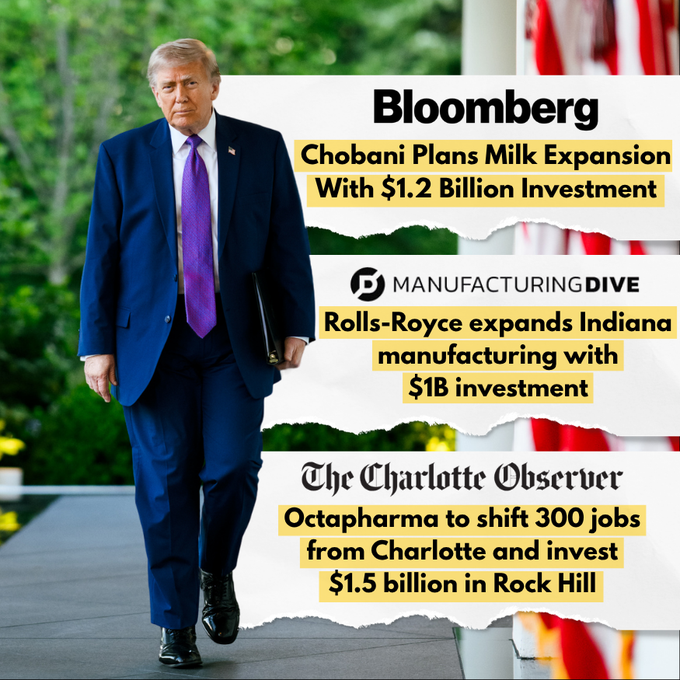
It should be quickly noted that several North American corporations are already making moves to avoid the issues by shifting production lines and adding additional investment into U.S. manufacturing. As expected, getting locked out of a 32 trillion economy is not an option for survivability.
The easiest way to review the issues is not to read media reports, but rather to read the actual outcomes as announced by the White House and USTR. CTH has noticed several Canadian outlets are already making false claims.
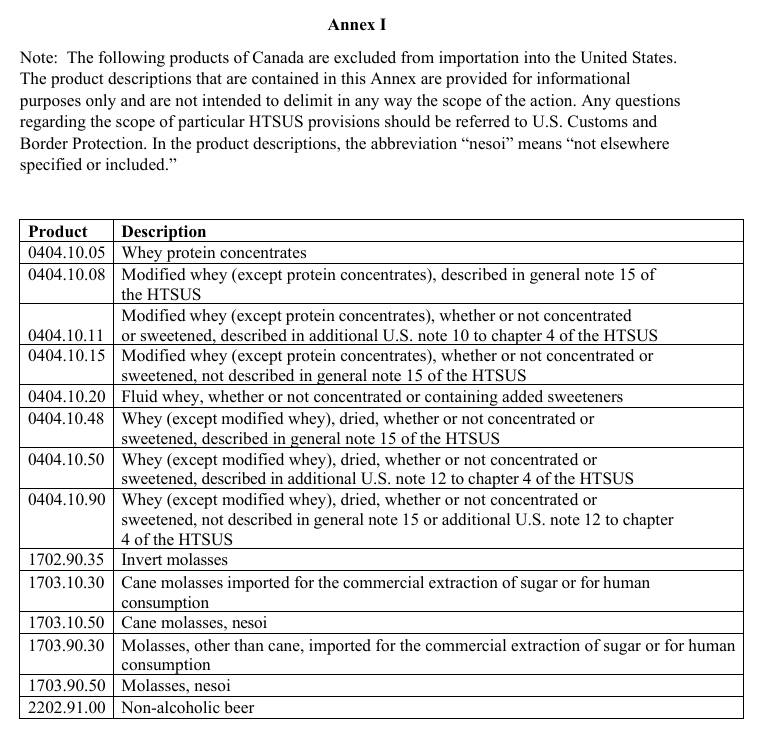
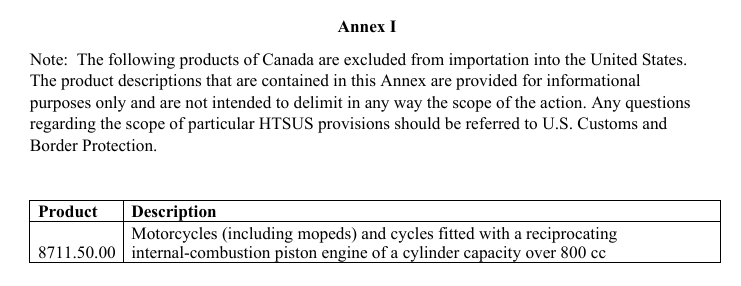
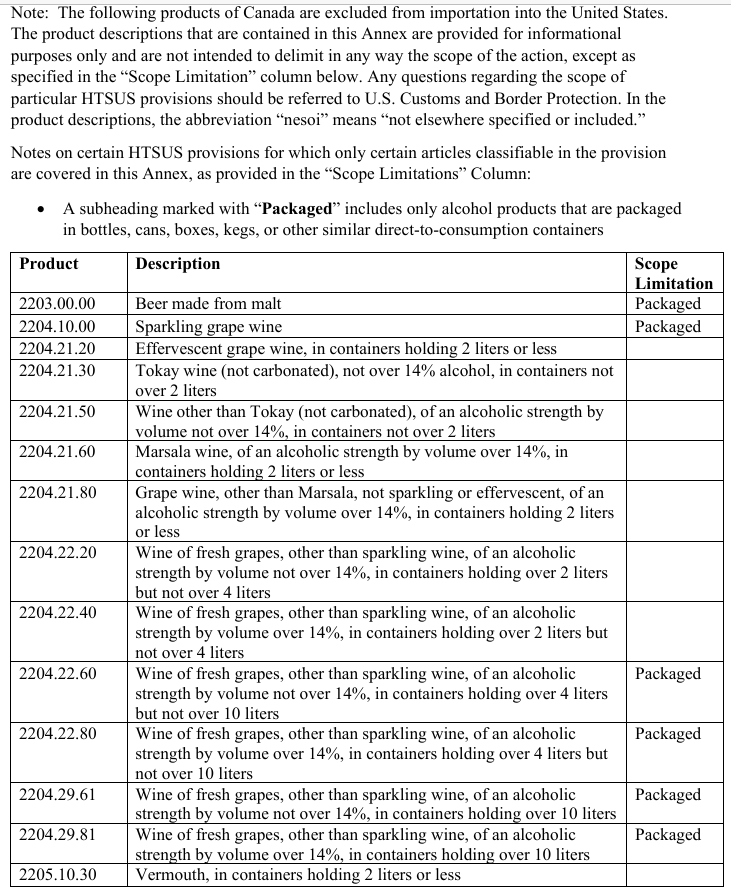
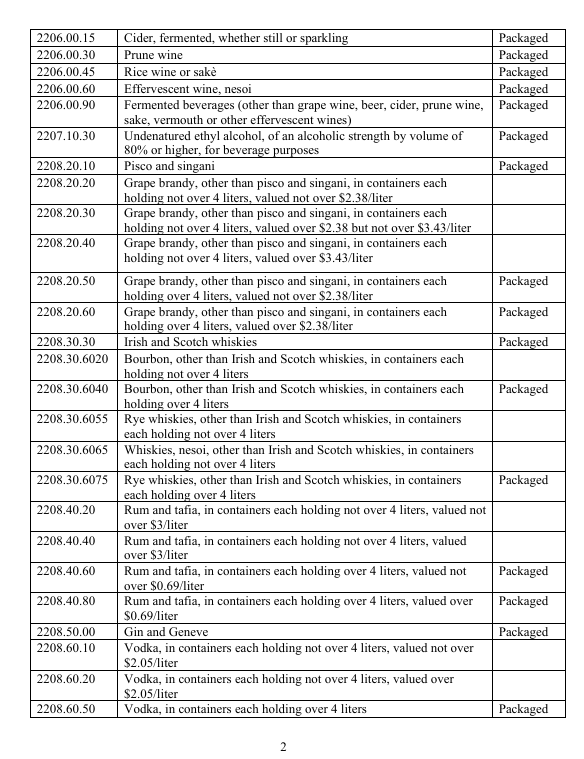
It is worth reviewing both sets of outlines as well as accompanying links to determine the exact types of Canadian products being targeted by stacking tariffs and import bans.
WHITE HOUSE – Today, to address Canada’s increased discrimination against U.S. commerce, President Trump signed five Proclamations pursuant to Section 338 of the Tariff Act of 1930 to ban certain products from Canada and modify the scope of the tariffs on certain Canadian products previously announced on July 20, 2026. President Trump is taking decisive and appropriate action to respond to Canada’s additional retaliation and continued discriminatory treatment of crucial American exports.
After breaking off trade talks with the United States last month, today Canada imposed new retaliatory tariffs on about $20 billion of U.S. exports, including steel, dairy, and agricultural equipment.
Because Canada maintained and in fact increased its discrimination against U.S. commerce with respect to U.S. alcoholic beverages, President Trump, under Section 338, imposed import bans on certain Canadian alcohol and other products that were subject to the 50 percent tariffs imposed under Section 338 in Proclamation 11046.
Moreover, because Canada maintained its discrimination against U.S. commerce with respect to dairy, President Trump, under Section 338, imposed import bans on certain Canadian dairy and other products of Canada that were subject to the 50 percent tariffs imposed under Section 338 in Proclamation 11047.
To offset the burden to U.S. commerce while better serving the public interest, President Trump is also modifying the July 20, 2026 actions by removing certain products, such as rock salt and cement, from the scope of the Section 338 tariffs and replacing those products with new ones, ranging from all-terrain vehicles (ATVs) to additional dairy products.
These Section 338 tariffs apply to all covered goods regardless of whether a good originates under the U.S.-Mexico-Canada Agreement (USMCA) and apply in addition to tariffs imposed under Section 232 of the Trade Expansion Act of 1962.
The import bans will take effect on September 29, 2026, and the product additions and removals will take effect on September 15, 2026.
WASHINGTON – Today, Ambassador Jamieson Greer issued a statement after President Trump exercised his authority under Section 338 of the Tariff Act of 1930 to ban certain Canadian products from entering the U.S. market and modify the scope of the July 20 actions to effectively offset the burden or disadvantage to U.S. commerce by Canada’s discriminatory measures.
“After weeks of good faith and intensive efforts between U.S. and Canadian negotiators, Canada walked away from a near-final trade deal that offered better treatment than any other trading partner, and instead Canada chose to embark on senseless retaliation against the United States,” said Ambassador Greer. “Today’s action, combining targeted import bans as authorized by Section 338 and a calibration of the underlying Section 338 tariffs, is a natural consequence of Canada’s continued discriminatory treatment of crucial American exports, ranging from alcoholic beverages to dairy products to motor vehicles. President Trump will continue to leverage the tools at his disposal to defend the interests of American workers and exporters, and restore reciprocity in our bilateral trade relationships.”
Additionally, the President has directed USTR (Office of the United States Trade Representative) and GSA (General Services Administration) to remove $50 billion dollars’ worth of Canadian-origin products from GSA’s Multiple Award Schedules.
To view the lists of Canadian products banned under the Section 338 actions, click here (motor vehicles), here (dairy), and here (alcohol).
To view the lists of product modifications to the Section 338 actions, click here (motor vehicles) and here (alcohol).
To read the proclamations making the above changes, please see:
Section 338 of the Tariff Act of 1930 (19 U.S.C. 1338) empowers the President to, among other things, impose duties of up to 50 percent on imports of a foreign country to offset the burden or disadvantage from a foreign country’s unequal imposition on or discrimination against the commerce of the United States. On July 20, 2026, finding that the public interest will be served by his actions, President Trump took three separate Section 338 actions to level the playing field for important American exports to Canada—motor vehicles, alcoholic beverages, and dairy. Section 338 further empowers the President to exclude products from importation into the United States if a foreign country maintains or increases its discriminatory practices against U.S. commerce.
Based on Canada’s continued retaliation and discrimination against U.S. commerce, President Trump has determined that it is necessary and appropriate to ban certain Canadian products from entering the U.S. market and refined the scope of the July 20 actions to target strategic Canadian sectors while removing certain non-sensitive Canadian goods from the scope of the actions. {Source}
It appears that some of the product categories would be limited by ‘stacking tariffs’, as a consequence the U.S. is simply moving to ban the products altogether.
Posted originally on the CTH on September 8, 2026 | Sundance |
This is what they call one of those dangerous ‘ah-ha‘ moments. A British Police Commissioner from Hampshire, was discussing the newest illegal migrant influx that has been happening on the eastern coastline of the U.K. During the final 19 seconds of Donna Jones remarks, she identified the core issue that has perplexed many:
…”This is a real wake up call to the government, yet again, that the British people are fed up with the lack of control of our borders. Which is why, we really need to be looking as a country about our membership in the European Court of Human Rights (ECHR), because that’s why we can’t turn the boats around and send them back to France”…
That 19-seconds was immediately cut out of the BBC rebroadcast of the interview. However, the moment was caught and shared on the X platform.
Apparently, when the U.K voted to exit the European Union, ie. ‘Brexit, there were some EU bureaucratic institutions the government of the U.K chose to remain aligned with. The EU Court of Human Rights was one of those institutions, and it is from the charter and agreement within that body the government of the U.K has their hands tied. This is the core of the issue and the one element the BBC do not want the British people to understand.
I have created this site to help people have fun in the kitchen. I write about enjoying life both in and out of my kitchen. Life is short! Make the most of it and enjoy!
This is a library of News Events not reported by the Main Stream Media documenting & connecting the dots on How the Obama Marxist Liberal agenda is destroying America