Posted originally on Mar 29, 2026 by Martin Armstrong |
Interview published on June 27, 2019:
“The game is on. Martin believes that gold’s recent advance was just the opening salvo. He wouldn’t be surprised to see it take a hit for now and then come screaming back to start making new highs. As Martin says, people are starting to wise up to the monetary debasement game. Confidence in the Government Con, as low as it might be now, is going to all but disappear. And that’s bad news for paper money of all descriptions. Following this line of reasoning it’s not hard to understand why the Dow will eclipse its current highs and hit 35000 in the not too distant future. Loss of confidence will keep money pouring into real assets, and the stock market still represents shares in somewhat real enterprises, although how real is open to debate. It’s all setting up for 2020 and Martin says the computer is predicting an outright Trump win. Let’s see what happens next!”
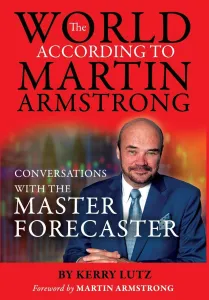
“The World According to Martin” compiles over a decade of interviews between Kerry Lutz and Martin Armstrong. Countless forecasts have come to fruition, including situations that seemed improbable if not impossible at the moment. Socrates’ unremarkable ability to decode patterns is truly unparalleled by any analyst or system.
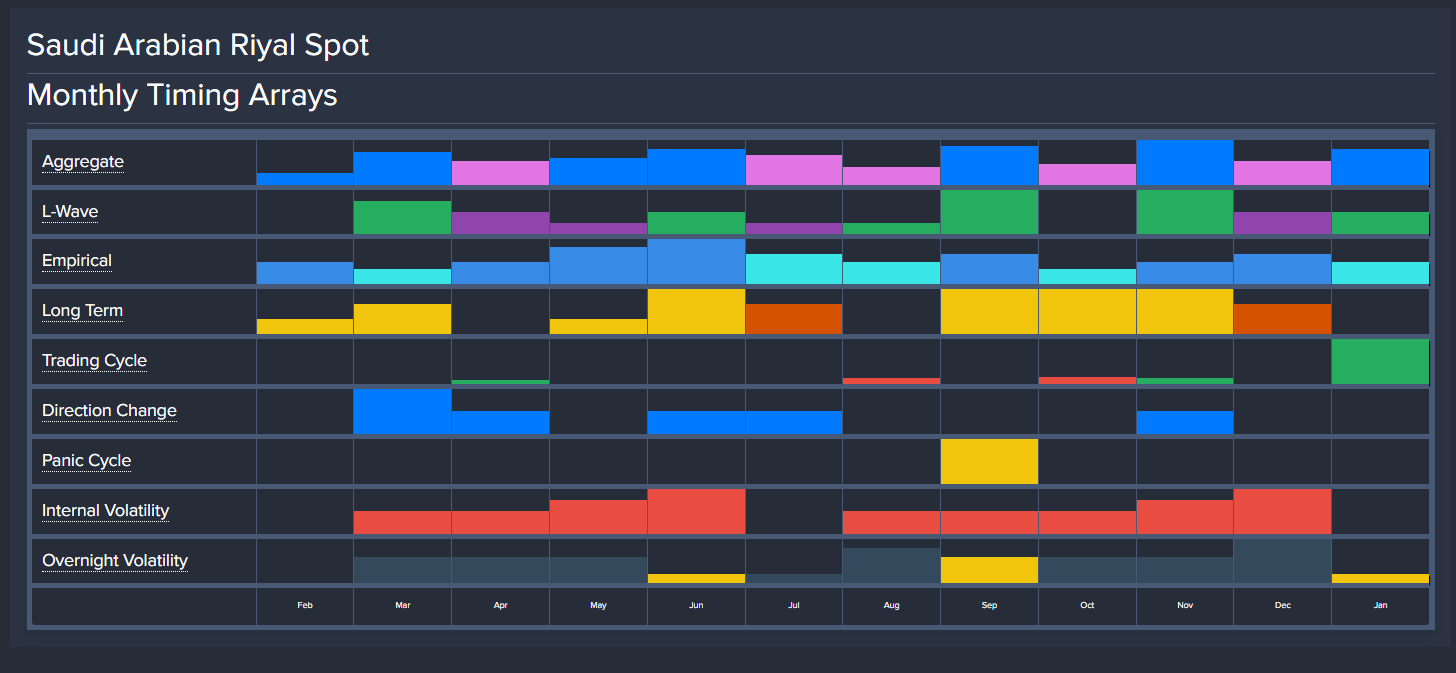
QUESTION: How is it possible that Trump was not briefed on the fact that Iran would attack the Gulf States when you pointed out Iran is Shia and the others are Sunni, and shutting down the Strait of Hormuz would not bring down the West without attacking the production as you yourself said they would do? Even Socrates warned of a Double Directional Change in Saudi Arabia in March. Are you sources far better than the CIA? Why do they not use you?
Sam
ANSWER: I cannot image that the CIA et al would not have anticipated that. Saudi Arabia has been the enemy of Iran, which was why they were cutting deals with Israel and UAE even held military exercises with Israel. You have to be completely ignorant of the Middle East not to have known this outcome. Since one tanker and that is just a rounding error. Attack the refineries and not you bring the world to its knees.
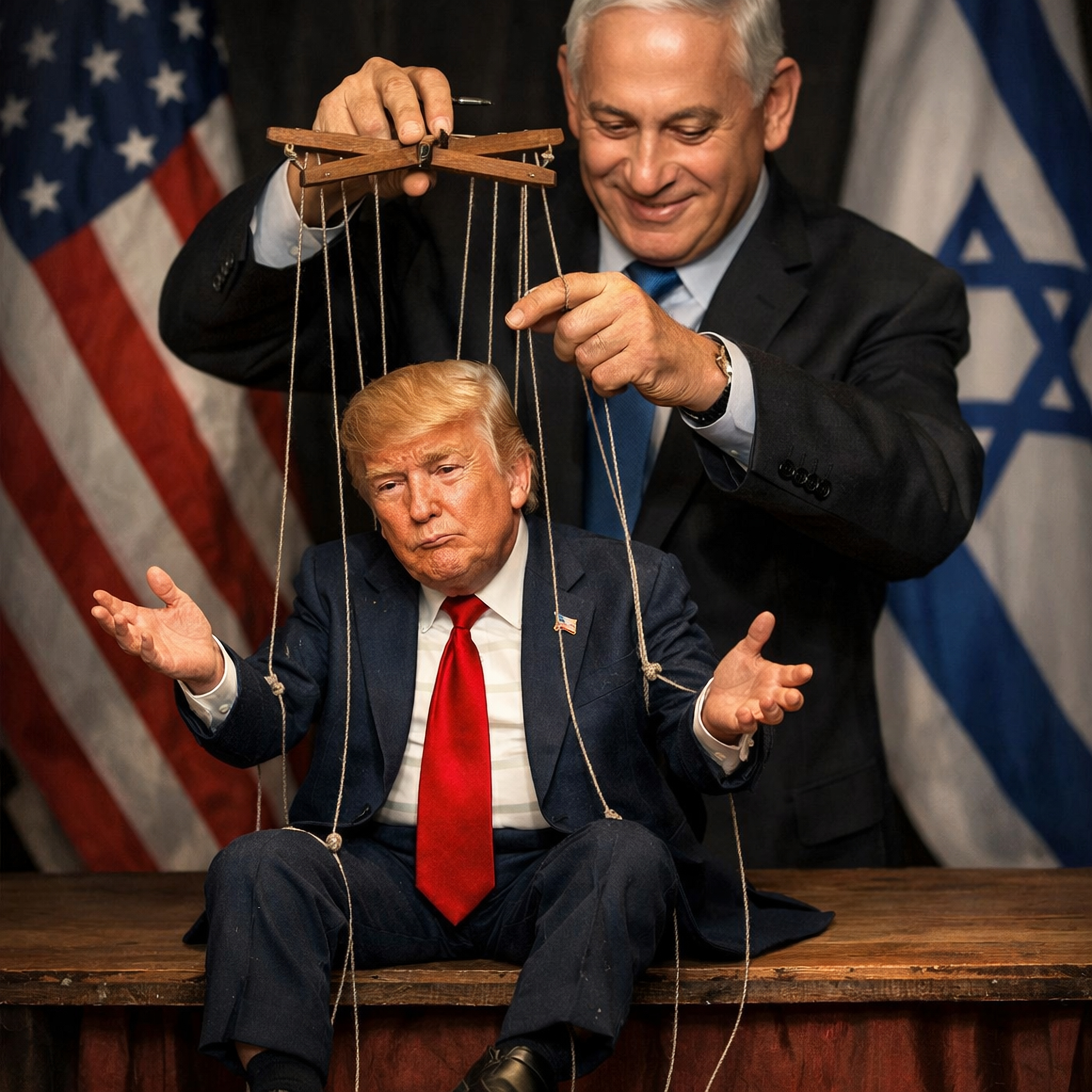
I knew that the Neocons were using Netanyahu to manipulate Trump for he assumed he was responding to a head of state when in fact he grew up in Philadelphia and hung out with the Neocons. I know of a private phone call in which Netanyahu manipulated Trump, stressing that he could “make history” by toppling the Ayatollah regime and taking revenge for Iranian efforts to assassinate him, which was central in Trump’s decision to strike when he did.
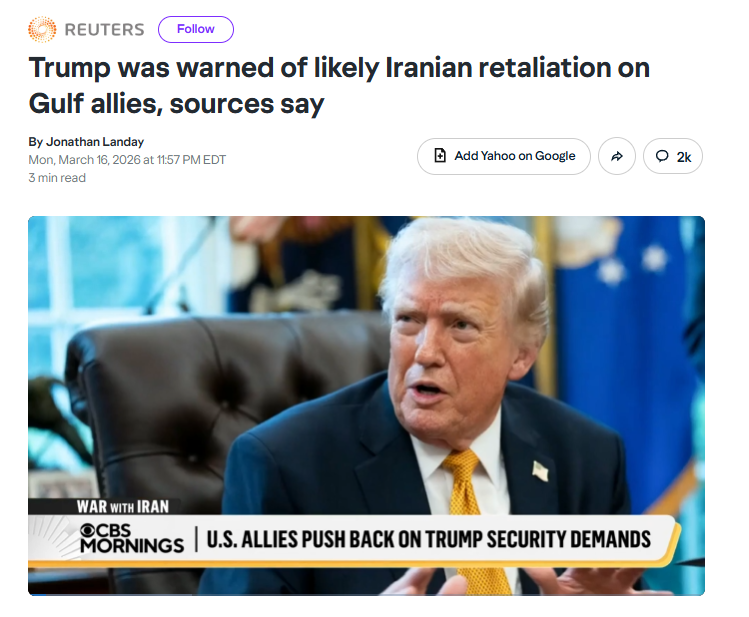
It appears that Trump was not fully briefed because the Neocons wanted this war. Yet, the intelligence community is now covering their ass claiming Trump was brief on the fact that Tehran would likely seek to close the economically vital Strait of Hormuz. That I can confirm. As Reuters reported that pre-war intelligence assessments did not say that Iran’s response was “a guarantee, but it certainly was on the list of potential outcomes.” This is clearly a cover-your-ass position.
As far as claiming that the war was over “in the first hour” was a public declaration he made himself, not a claim derived from an official intelligence or military briefing. He appears to have come to that conclusion from video clips of blowing up things in Iran.
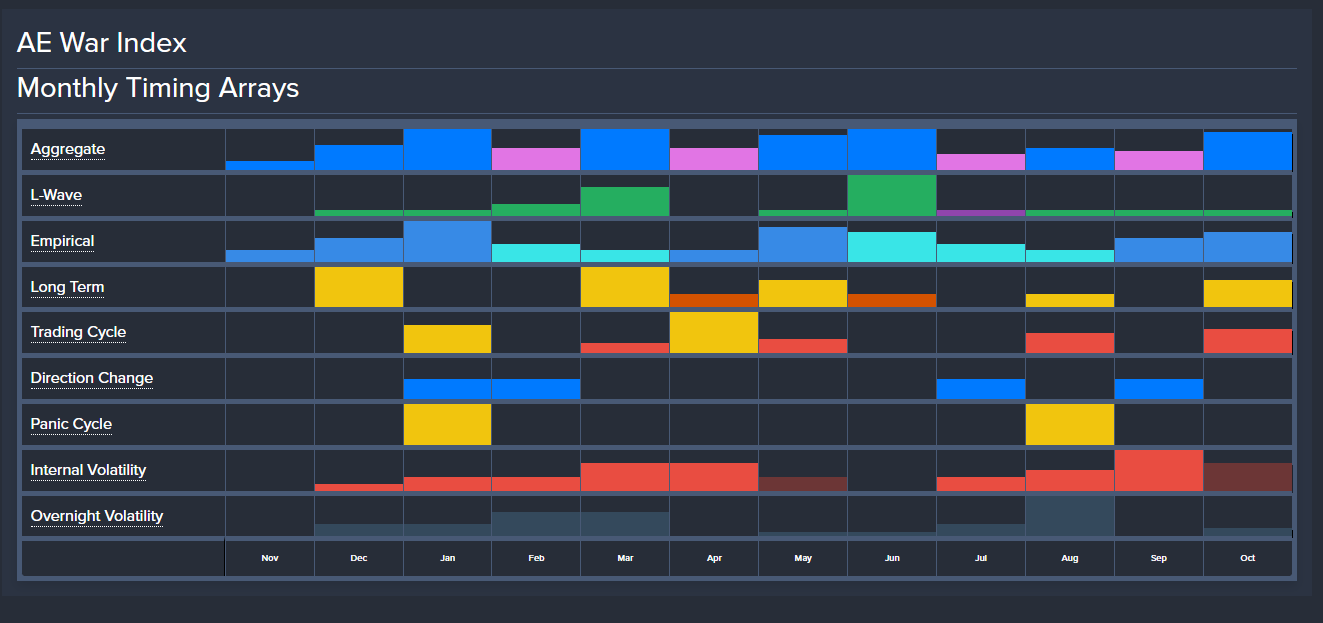
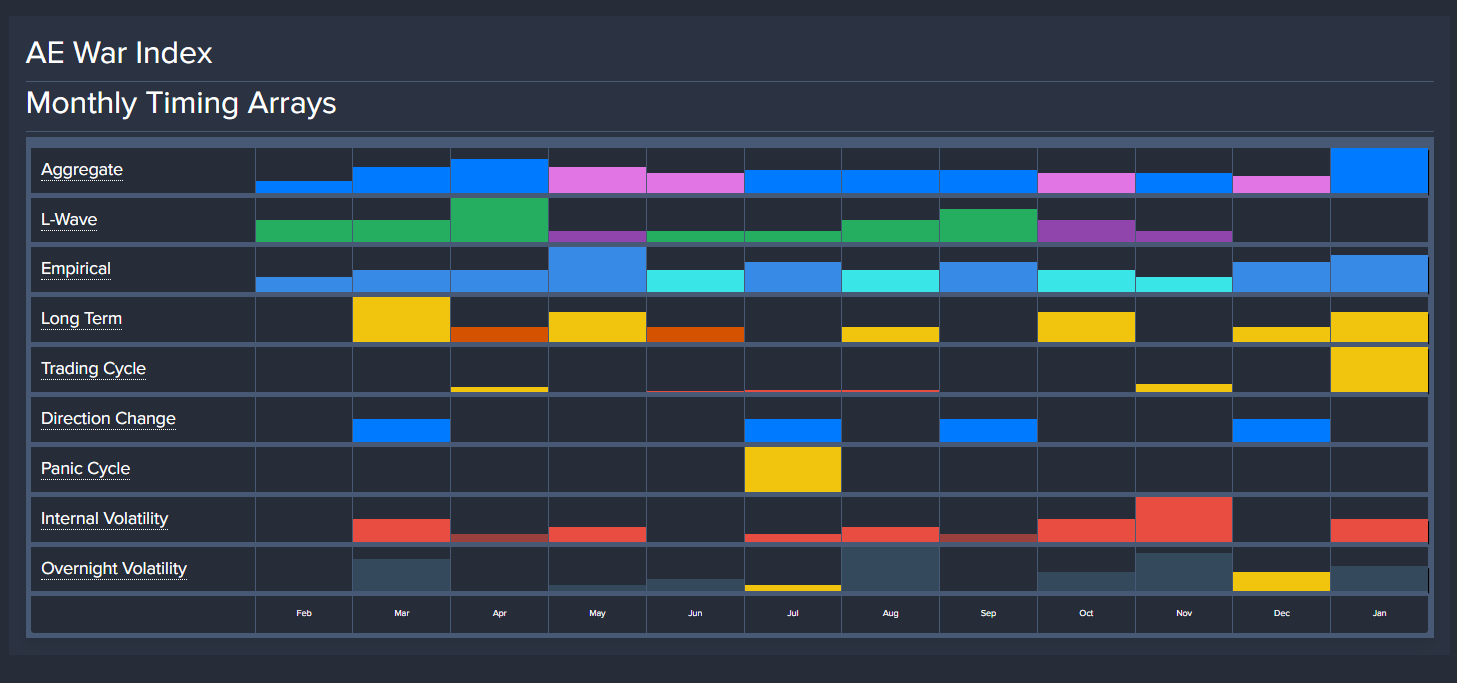
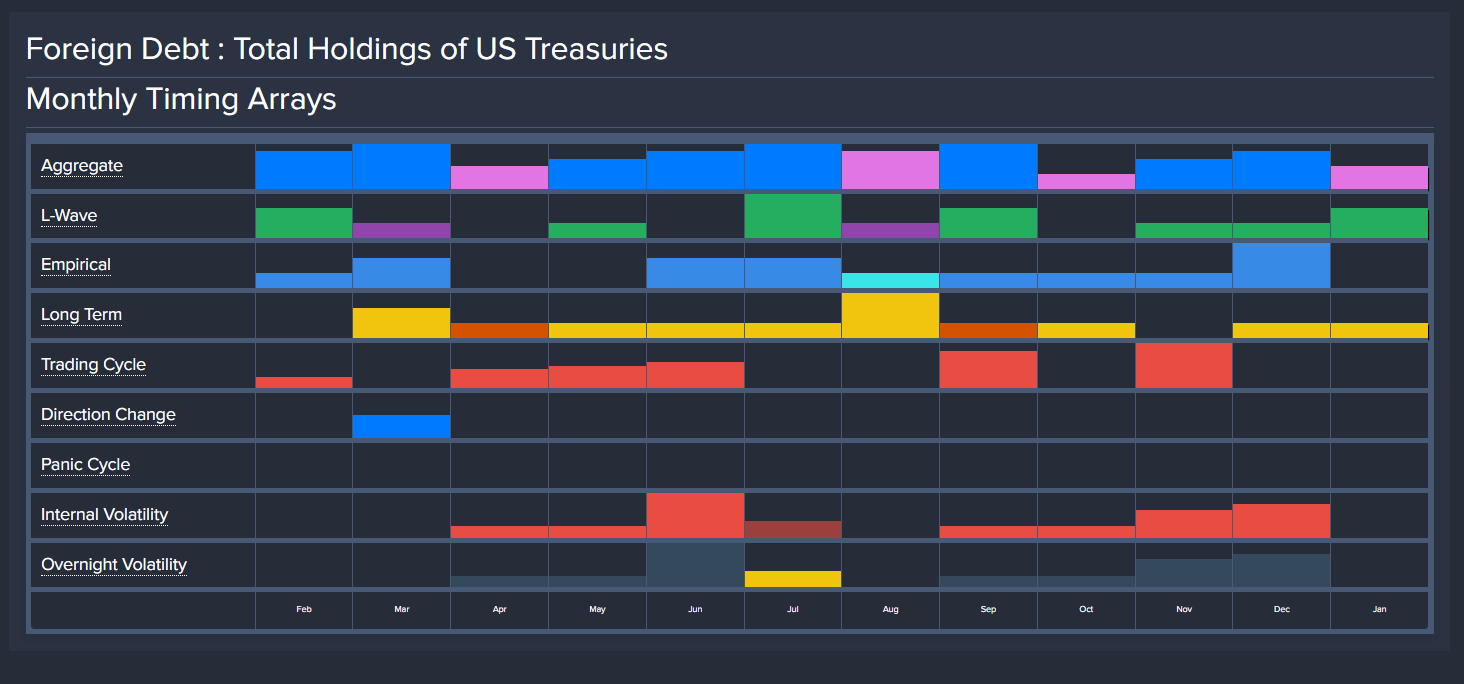
The computer has shown this war in everything from interest rates, holding of US debt, to all of the arrays on the Gulf States aside from the oil markets, commodities, and the war cycle. Our War Index targeted March last November with rising volatility from January into April ’26 where we do have Panic Cycles in many markets. The second array is the current one showing a Directional Change in March ’26 escalating into April with a Panic Cycle in July. As far as the CIA sources, they are informants. My are economic.
Posted originally on Mar 27, 2026 by Martin Armstrong |
On March 31, Martin Armstrong will be speaking live in Vancouver with Michael Campbell, addressing what lies ahead in 2026, 2027, and beyond. This is based on the Economic Confidence Model, the same model that has tracked major turning points in markets, geopolitics, and global trends decades in advance. We are entering one of the most critical periods in modern history, and the window to prepare is narrowing.
In-person tickets are sold out, but you still have the opportunity to watch the event via the available virtual ticket, which gives you access to the full event without needing to be in the room.
We are looking at a convergence of events, rising geopolitical tensions into 2027, sovereign debt stress, and a restructuring of the global economy. Capital flows are already shifting. Governments are tightening control. The risks ahead are not isolated. They are connected, and they are unfolding precisely on target with the cycles.
The room in Vancouver may be full, but the opportunity to hear this live is not gone. You can still attend virtually and gain the same insights into what is coming next.
Posted originally on Mar 27, 2026 by Martin Armstrong |
The U.S. Army has raised the maximum enlistment age to 42 and relaxed drug restrictions. They present this as modernization, adapting to changing times, expanding opportunity. That is how it is always sold. But this is a warning sign. Every time governments prepare for prolonged conflict, they begin expanding the pool of who they are willing to accept into the military.
The Army has now increased the enlistment age from 35 to 42 and eliminated the need for waivers for certain drug offenses, particularly marijuana. This is being justified as aligning with other branches and recognizing changing laws. But let’s be clear. This is about numbers and manpower. You do not suddenly expand eligibility like this unless you are preparing for something larger than peacetime operations.
We have seen this before. The last time the Army raised the enlistment age to 42 was during the Iraq and Afghanistan wars in 2006, when recruitment was falling short and the demand for troops was rising. They needed bodies. They lowered standards, increased waivers, and expanded eligibility because the war required it. And here we are again, repeating the same pattern almost verbatim.
The recruitment crisis has been building for years. In 2022, the Army missed its recruitment targets by roughly 25%, and even when goals were later met, it was achieved by lowering standards and expanding eligibility programs. The reality is that only about 1 in 4 young Americans even qualify for military service due to physical, mental, or legal issues. So they start removing barriers that once existed.
They are now even easing restrictions on drug-related offenses. Previously, even a single marijuana conviction required a waiver, waiting period, and review. That has now been scrapped. Again, this is not about social policy. This is about expanding the recruitment pool. When the military begins issuing more waivers, including criminal waivers, it is a direct response to strain. During the Iraq War, the number of recruits with criminal records surged, raising serious concerns about readiness and discipline. That was not because standards improved. It was because standards were relaxed.
Now connect the dots. We have rising geopolitical tensions, talk of boots on the ground in the Middle East, and at the exact same time the military expands eligibility, raises age limits, and lowers barriers to entry. This is preparation. Governments never come out and say they are gearing up for a prolonged conflict. They adjust policy quietly and only later does the full picture become clear.
Whenever the United States entered major conflicts, recruitment standards and age ranges shifted. During World Wars I and II, the government expanded eligibility, adjusted age brackets, and even moved to compulsory systems when voluntary enlistment could not meet demand. The pattern is always the same. First comes policy change. Then comes escalation.
Posted originally on Mar 27, 2026 by Martin Armstrong |
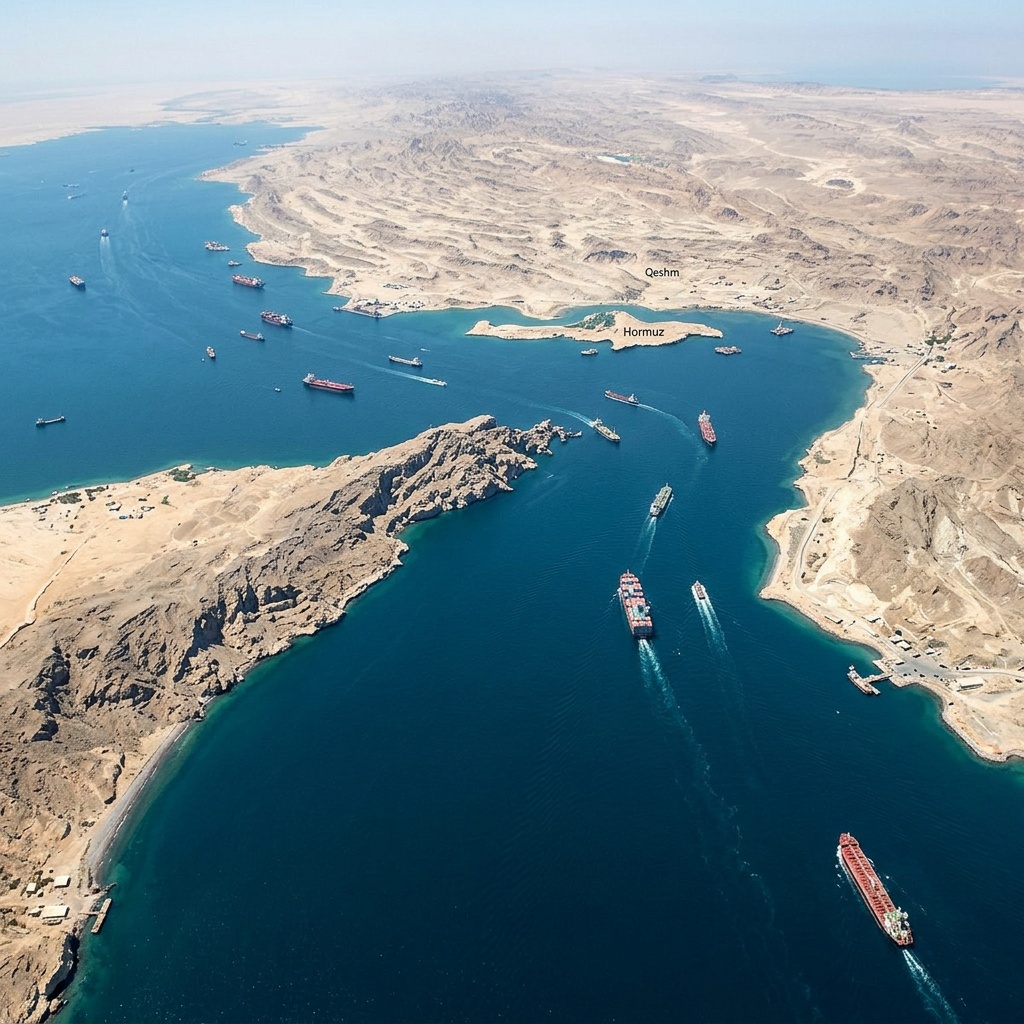
Spain has now emerged in an unexpected position in the Strait of Hormuz crisis. Reports indicate that Iranian authorities are allowing Spanish-linked vessels to pass without the heavy tolls or restrictions imposed on others. Spain is not the largest maritime power moving through Hormuz. However, it is deeply integrated into European shipping networks, ports, and energy supply chains. That means any preferential treatment can ripple across Europe and influence how trade is routed.
What is unfolding is not just control of a chokepoint. It is selective control. Iran has made clear that only “non-hostile” vessels may pass freely. Others face restrictions or high fees. This transforms the strait from a neutral international waterway into a politically managed corridor. Once access depends on alignment rather than law, globalization begins to fracture.
The scale of the disruption is significant. Under normal conditions, about 130 to 140 ships pass through the strait daily. These vessels carry roughly 20 million barrels of oil, close to one-fifth of global supply. Recent reports suggest traffic has dropped sharply. Some estimates show only a handful of ships moving per day, with total monthly crossings far below normal levels. This is no longer a stable trade route. It is operating under wartime conditions.
If Spanish-linked ships move more freely, they gain a cost advantage. Markets will respond quickly to that distortion. Other European actors may try to route cargo through Spain. They may use Spanish partnerships, flags, or intermediaries to bypass higher costs. This is how arbitrage works. It does not wait for political approval.
Iran’s decision centers around Spain’s refusal to support the US and Israel in this war. Not only has Spain refused to offer support, it has openly condemned actions taken against Iran. Now those who supported sanctions and military aid tied to Ukraine and will see this as a betrayal. They accepted economic costs for a unified policy. Now they face higher shipping costs while another member gains relief. That undermines the idea of a coordinated European response. This is how alliances begin to weaken. You cannot maintain unity when access to critical trade routes is uneven. Some countries gain advantages, others absorb losses. Over time, that creates internal competition rather than cooperation.
From a capital flow perspective, the outcome is predictable. Capital moves toward efficiency. If Spain offers a cheaper path through a restricted chokepoint, flows will shift in that direction. That concentrates activity and amplifies divisions across Europe. The deeper issue is structural. The Strait of Hormuz is no longer functioning as an open route but as a controlled gateway.
Trade is now being filtered through alliances rather than markets. That shift has already begun.
Posted originally on Mar 27, 2026 by Martin Armstrong |
The U.S. Postal Service is now introducing its first-ever fuel surcharge, and that should stop everyone in their tracks. This is not just about postage going up. This is a reflection of something much bigger unfolding beneath the surface of the economy. When even a government institution like the Postal Service, which has avoided these charges for decades, suddenly imposes an 8% surcharge, you are looking at systemic stress, not a temporary inconvenience.
The surcharge will apply to package services like Priority Mail and Ground Advantage, beginning in late April and expected to last into early 2027. This is being justified as a response to rising transportation costs, particularly fuel. But let’s not pretend this is isolated. Fuel prices have surged dramatically, driven in large part by geopolitical instability and the disruption of global energy flows. The war cycle is feeding directly into the cost structure of the entire economy, and now it is hitting something as basic as delivering a package.
What is remarkable is that the Postal Service itself admitted it has resisted fuel surcharges until now, even as competitors like FedEx and UPS have imposed far higher fees. That tells you this is not a policy shift driven by competition. This is a necessity. When costs rise to the point where even a federally backed entity cannot absorb them, the pressure has reached a critical level.
Behind this is a deeper financial problem that has been building for years. The Postal Service has lost roughly $118 billion since 2007 and is now warning it could run out of cash within a year without reform. This is not simply about declining mail volume. It is about a system that has been structurally broken for a long time, now being pushed over the edge by rising energy costs. You cannot run a nationwide logistics network, delivering to more than 170 million addresses, and not be exposed to fuel prices. The fact that the Postal Service is now forced to pass those costs on is a sign that inflation is not under control, regardless of what any central bank claims.
What we are witnessing is the direct connection between geopolitics and the economy. War disrupts energy. Energy drives transportation. Transportation drives costs. And costs ultimately reach the consumer. This is the chain reaction that has played out throughout history. The difference now is that it is happening globally and simultaneously, precisely in line with the rising volatility the Economic Confidence Model has been projecting into 2026 and beyond.
When even the Post Office starts charging a fuel surcharge for the first time in its history, that is a signal to note.
Posted originally on Mar 27, 2026 by Martin Armstrong |
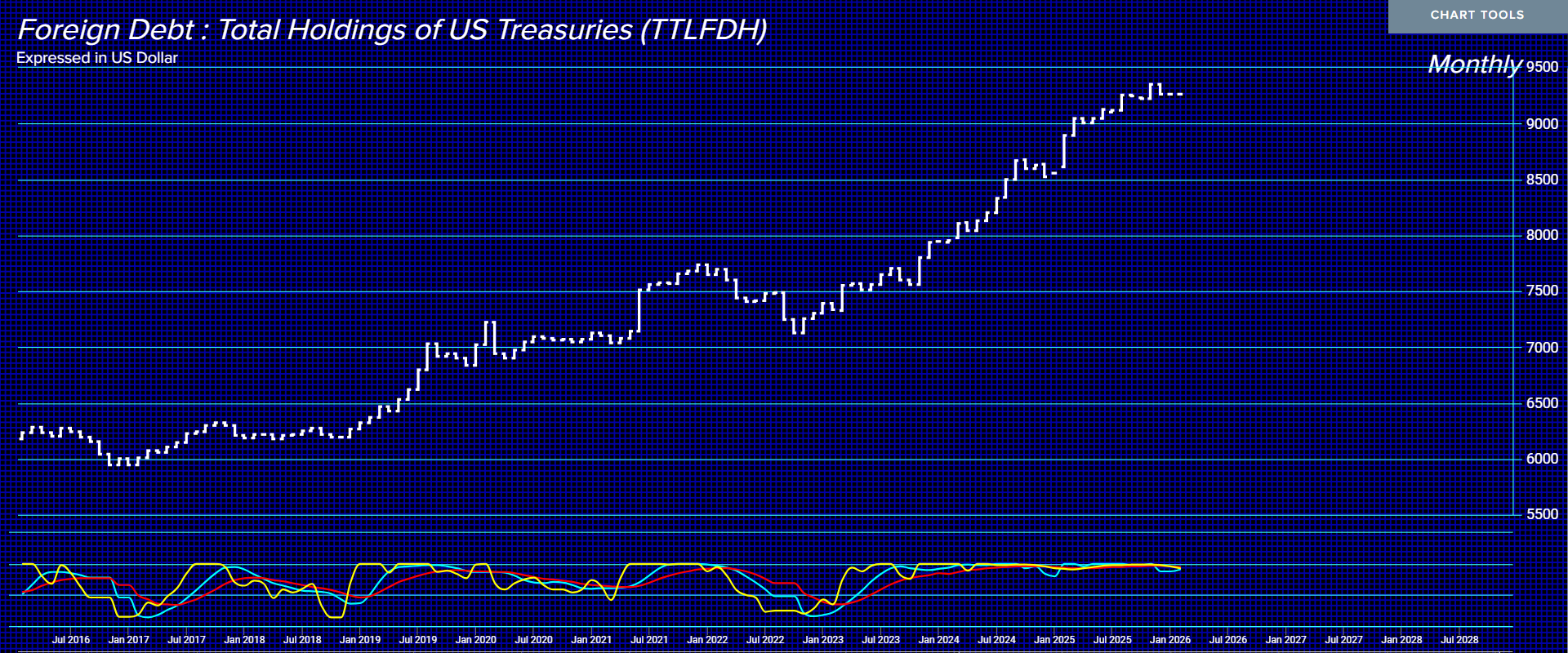
COMMENT: Mr. Armstrong, I just had to say that your 1985 clip explaining how the dollar rose because they thought the US would default on its eurodollar obligations was fascinating. You are the only real analyst with genuine experience and sources. The latest stats show that foreign holdings of US debt have risen, while holdings of metals have declined. So much for the constant dollar haters, as you call them. They are always wrong.
Thank you so much for your view of the world. Experience counts.
GP
REPLY: Those perpetual dollar haters have been singing the same song since the 1970s. It gets frustrating for me to see the same old claims regurgitated constantly with no reflection or original analysis ever and certainly no historical investigation. As Julius Caesar once said, people believe what they want to believe, not the facts or truth.
Socrates is showing that March could be a low and we have a Directional Change and the volatility rises sharply in June. We have Panic Cycles in July even in our War Index. It is suggesting that capital flows will shift into the USA with escalating war in Europe and the Middle East. These dollar haters are generally the fiat currency crowd who have been insisting on a commodity backed currency for decades when they do not understand the first thing about the economy and how it functions globally.
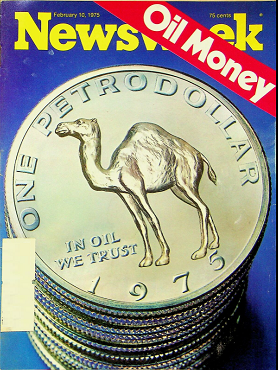
The Petrodollar was a their desperate attempt to explain why the dollar did not crash after the collapse of the Bretton Woods in 1971. When the dollar did not collapse after the end of the gold standard, they had to cover-their-ass because they were WRONG. So, to save face, they claimed that the dollar was now backed by oil rather than gold because oil was priced in dollars. They sold that BS to the press and it was pure sophistry. To this day, we still hear the conspiracy theory about the Petrodollar.
The percentage of world trade attributed to oil and petroleum products is approximately 8-10% based on the 2022 data. Merchandise Trade in 2022 globally totaled around $25 trillion (WTO data). Of that, crude oil and refined petroleum product exports worldwide were estimated to be between $2.2 and 2.5 trillion (depending on price fluctuations and trade volumes). This includes contributions from OPEC, which are only 40% of crude exports, and non-OPEC exporters like the U.S., Russia, and Canada.
The whole Petrodollar theory was absolute nonsense and it diverts people from understanding the importance of the financial capital movements. The USA has the largest consumer-based economy and everyone has to sell their products in dollars to American consumers. Comparing Per Capita Spending internationally, the US consumer spends $32,700, European comes in at $18,000 – $22,000 (varies by country), and Japan comes in at $8,800, despite the fact that Japan is the second largest consumer-based economy.
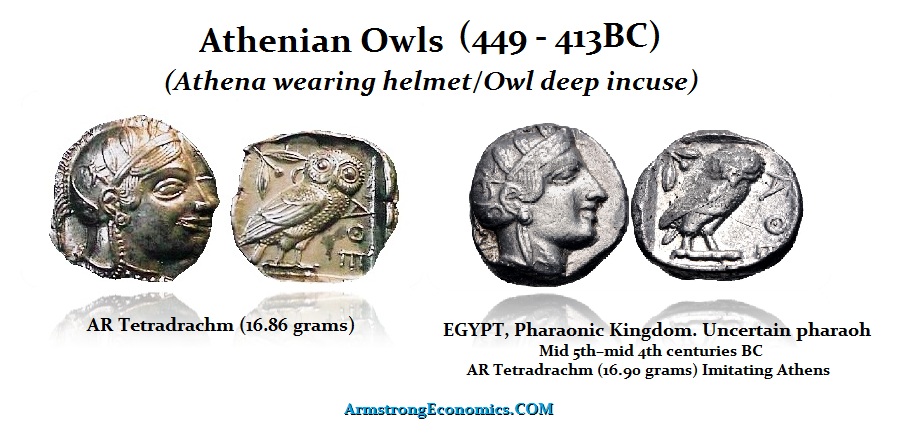
The backing of ANY currency is the productivity of the nation – it’s people. Russia is the largest country with $75 trillion in natural resources, but they are still in the ground. If a currency is would only some commodity, then Russia should be #1 and if oil backs a currency then why is Venezuela or Saudi Arabia not the reserve currency? Part of what makes a reserve currency is also military power. When Athens defeated the Persian invasion, they rose in stature. The Athenian Owl became the dominant currency in the ancient world to the point that Egypt, which never issued coinage, struck imitation Athenian Owls for international trade. The US dollar is also the reserve currency in part because of the military power.
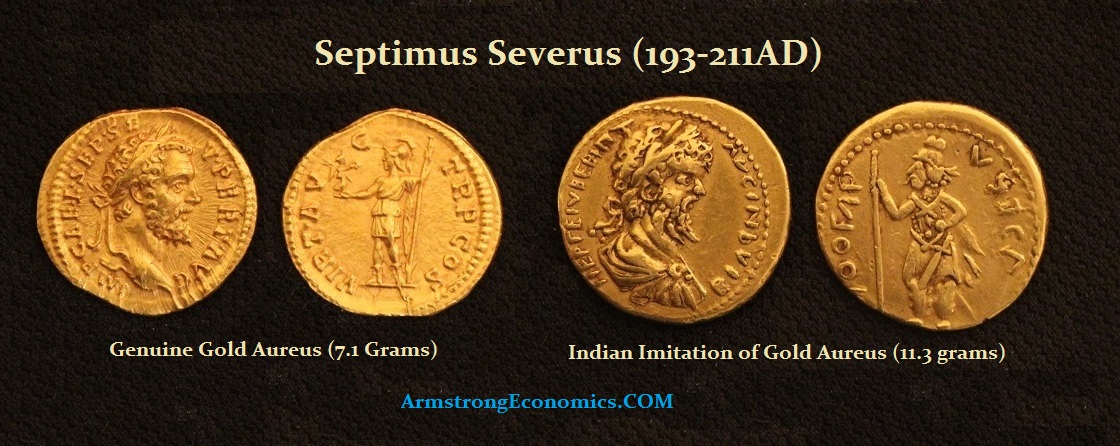
The Roman Empire was the first society to develop a massive, market-driven urban consumer culture on a scale never seen before. This is why you see imitation of Roman coinage produced in India for the Roman coinage carried a premium over and above the metal content. This example shows that the imitation contained more gold then original. Ancient Rome (particularly the city itself) was a consumer city—a term historians use to describe cities that consumed far more than they produced locally. Rome’s population of about one million people was sustained by:
State-distributed grain (annona) paid for by taxes from the provinces
Elite wealth extracted from conquered territories
A vast network of imports (wine, olive oil, metals, pottery) from across the Mediterranean
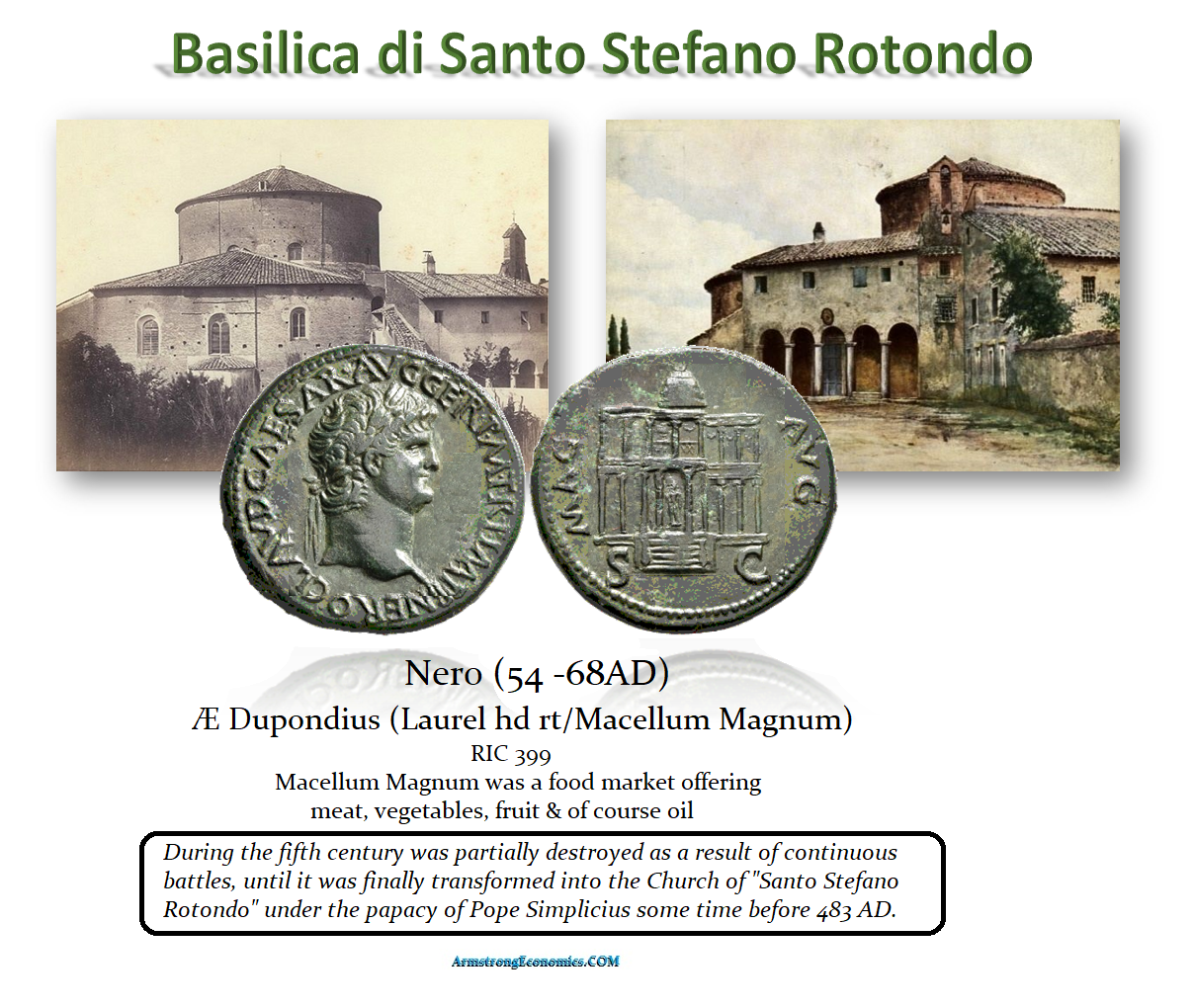
This created an unprecedented concentration of demand. In Rome you found sophisticated retail shops (tabernae), competitive markets, standardized coinage, and even early forms of branding (e.g., wine amphorae stamped with producers’ names). Here is a coin of Nero announcing the construction of essentially a food mall, Macellum Magnum. This coin is a fascinating artifact because it serves both as a piece of imperial propaganda and a unique historical record of Roman urban life.
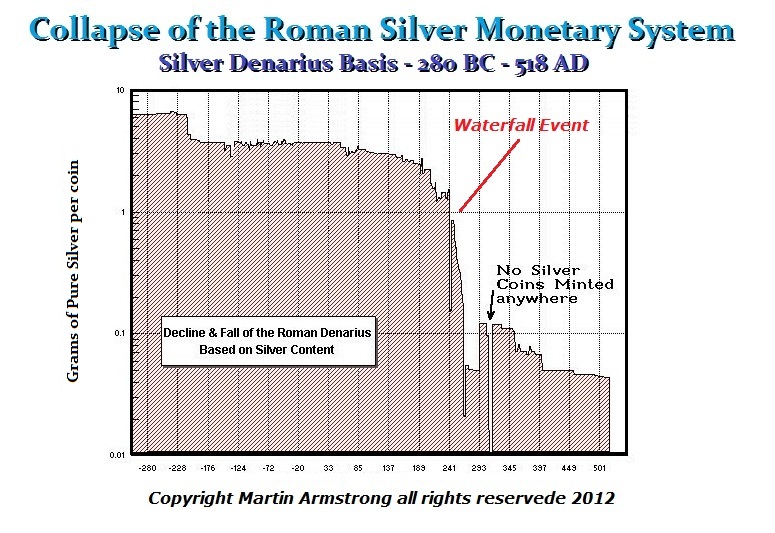
I have explained that once Emperor Valerian I was captured by the Persians in batte during 260AD, that sent a shockwave throughout the empire and encouraged the barbarian of the North to invade smelling Rome was weak. Thie became the crisis of the Third Century; silver denarius collapsed within just 8.6 years and provincial coinages began to come to an end. The severe debasement destroyed confidence.
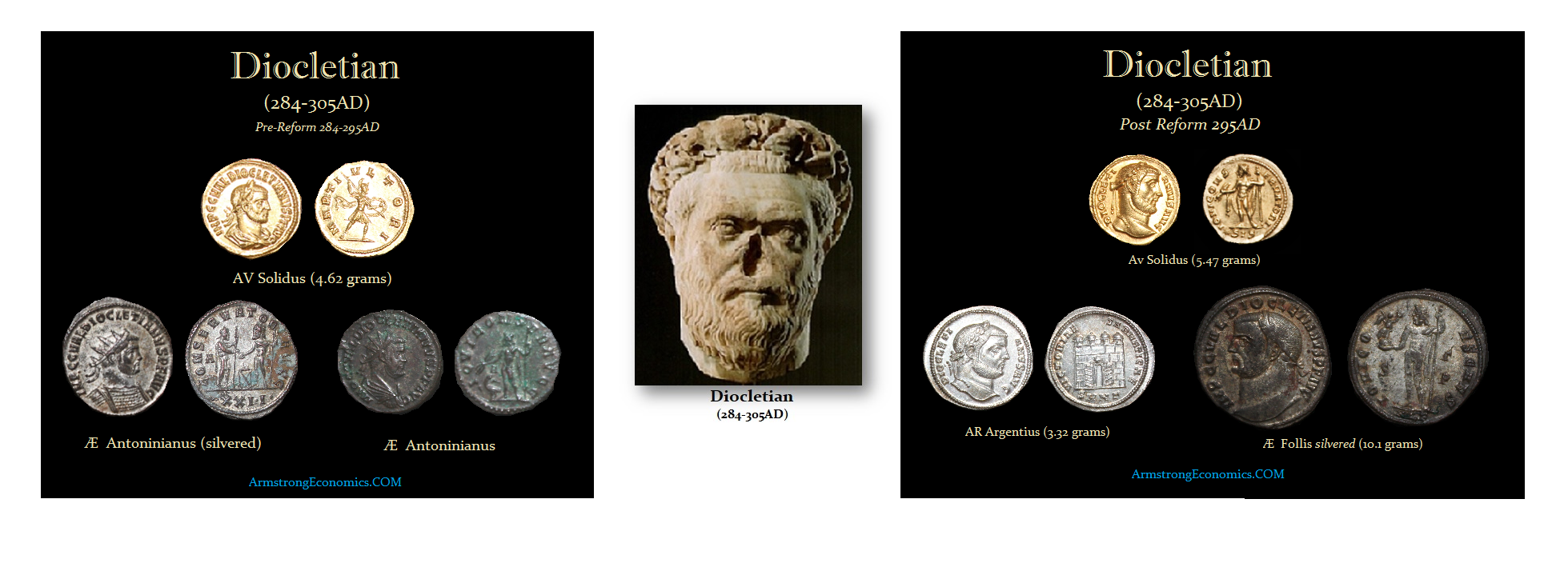
Emperor Diocletian (284-305AD) sought to reestablish that confidence reforming the currency. He introduced the gold solidus and new silver/bronze coinage in an attempt to revive the economy. Yet, only the gold remained stable as the silver coinage began to decline and vanish.
Britain was a special case of total collapse. Unlike Gaul or Italy, where some continuity was maintained, coinage in Britain came to a complete halt after the Roman departure. By about 435 AD, coins had ceased to be used as a medium of exchange. The island would not see a new, native coinage until the late 7th century. The Romans exited Britain primarily in 410 AD, when Emperor told the cities of Britain to “look to their own defenses,” effectively ending central Roman rule. However, this was not a single event but a process over several decades, with key troop withdrawals starting as early as 383 AD.
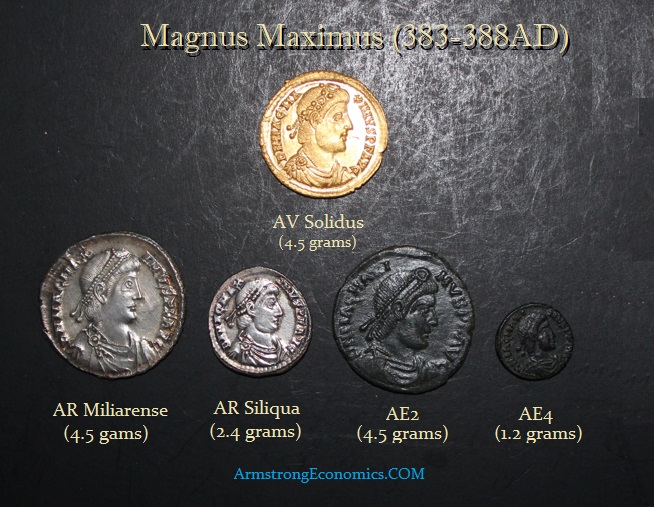
The formal break in 410 AD was the culmination of a long period of decline and withdrawal. The first major troop withdrawal came in 383AD when General Magnus Maximus took a large portion of Britain’s garrison to Gaul to launch a successful (but temporary) bid for the Roman throne. He never returned the troops, leaving local leaders in charge of defense in northern and western Britain.
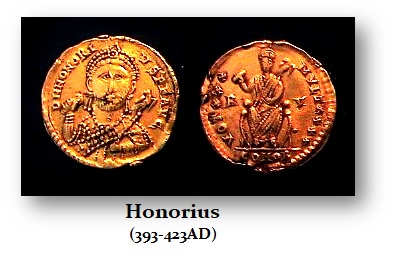
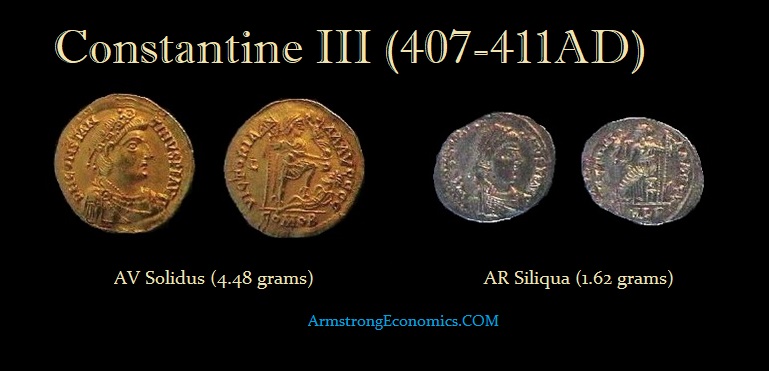
The usurper Constantine III stripped the remaining mobile Roman soldiers from Britain in 407AD, crossing to Gaul in another attempt to become emperor. These forces also never came back. The Formal Break (409-410 AD) came with no army for protection, facing increasing raids, and paying taxes to a distant emperor who could no longer help, the Romano-British elites expelled Roman officials around 409 D. The following year, Emperor Honorius sent his famous rescript telling the British cities to arrange their own defense, officially acknowledging the end of Roman authority.
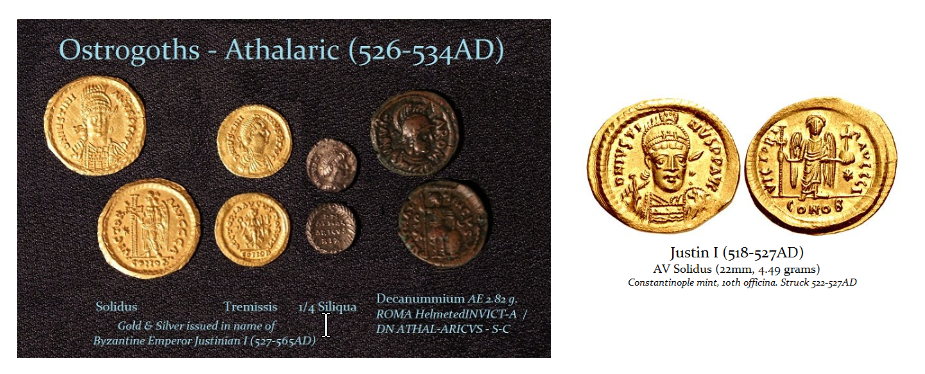
By the late 5th century, it was over for the West. Following the final loss of Roman political control, the various barbarian kingdoms (like the Franks, Visigoths, and Ostrogoths) took over the existing Roman mints. They continued to strike coins, often in the names of the remaining Roman emperors for a time, but this was the beginning of a new, post-Roman monetary system.
The idea that the dollar will collapse because it is fiat and is not backed by gold is just laughable. German and Japan rose to the strongest economies in their respective regions without gold. They did so by productivity.
Posted originally on Mar 26, 2026 by Martin Armstrong |
QUESTION: Do you think Trump will send in troops and what will be the result?Will Iran defeat the United States?
ZT
ANSWER: You’re asking the question that NOBODY in Washington wants to confront. Will the United States be defeated by Iran? Based on my cyclical analysis, historical precedent, and current trajectory, let me give you the answer that will make the neocons furious: YES. The United States will be defeated in Iran—not necessarily not just on the battlefield, but STRATEGICALLY, ECONOMICALLY, and POLITICALLY.
Sending in troops that end up with thousands in returning home in body-bags will show the entire world that Iran can defeat the mighty USA. That will send a smoke signal to Russia and China that the US cannot possible deend both Europe and Taiwan while also tied up defending Netanyahu.
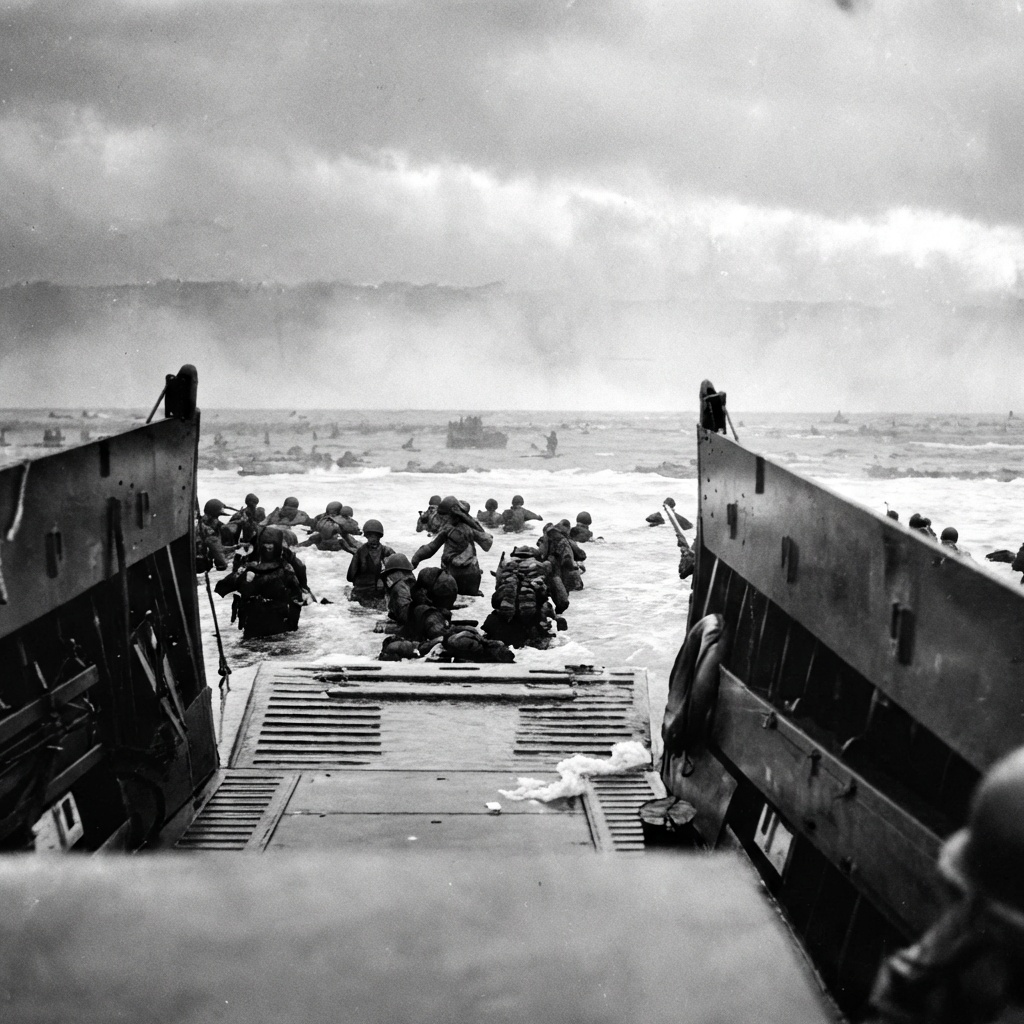
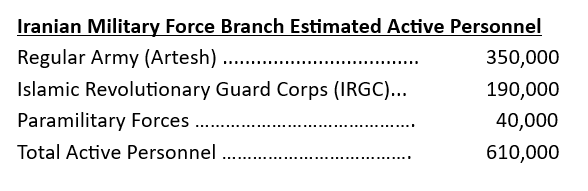
Sending in troops will be a suicide mission. This is not going to be D-Day. We do not have the troops to conquer Iran, and Netanyahu does not care how many Americans will die for his personal vendetta. Iran has a major army, and this is NOT going to be a cakewalk. The advice being given to Trump is such a bald-faced lie that it is putting the entire world at risk, all for the defense of the sadistic character of Netanyahu. Sending in troops will be a suicide mission. We do NOT have the personnel to wage this war, and my sources are screaming that even the Marines are not renewing all because this is NOT a war that is in the American interest, but is a religious war for Netanyahu.
The military strength of Iran is far superior and Trump may claim we have already won by taking out their Navy and bombing their above ground operations, but Iran has dozens of deep underground facilities that nothing should of a nuke would possible reach. Aside from that, I would be very concerned that Iran is now pushing for a nuclear weapon ASAP and they have the missile capability. Once they announce that they now have the nukes, this changes everything.
Israel is effectively out of defense. Trump is now taking resources from Ukraine and sending them to Israel, which will not change the outcome. Iran has strategically planned for the end game and has the largest stockpile of ballistic missiles perhaps in the world, but certainly in the region.
Now even Saudi Arabia is demanding the US wipe out Iran for now Epic Fury has risen the Epic Persian Lion. They have seriously underestimated Iran and Trump did not listen to American intelligence and took Netanyahu’s word instead.
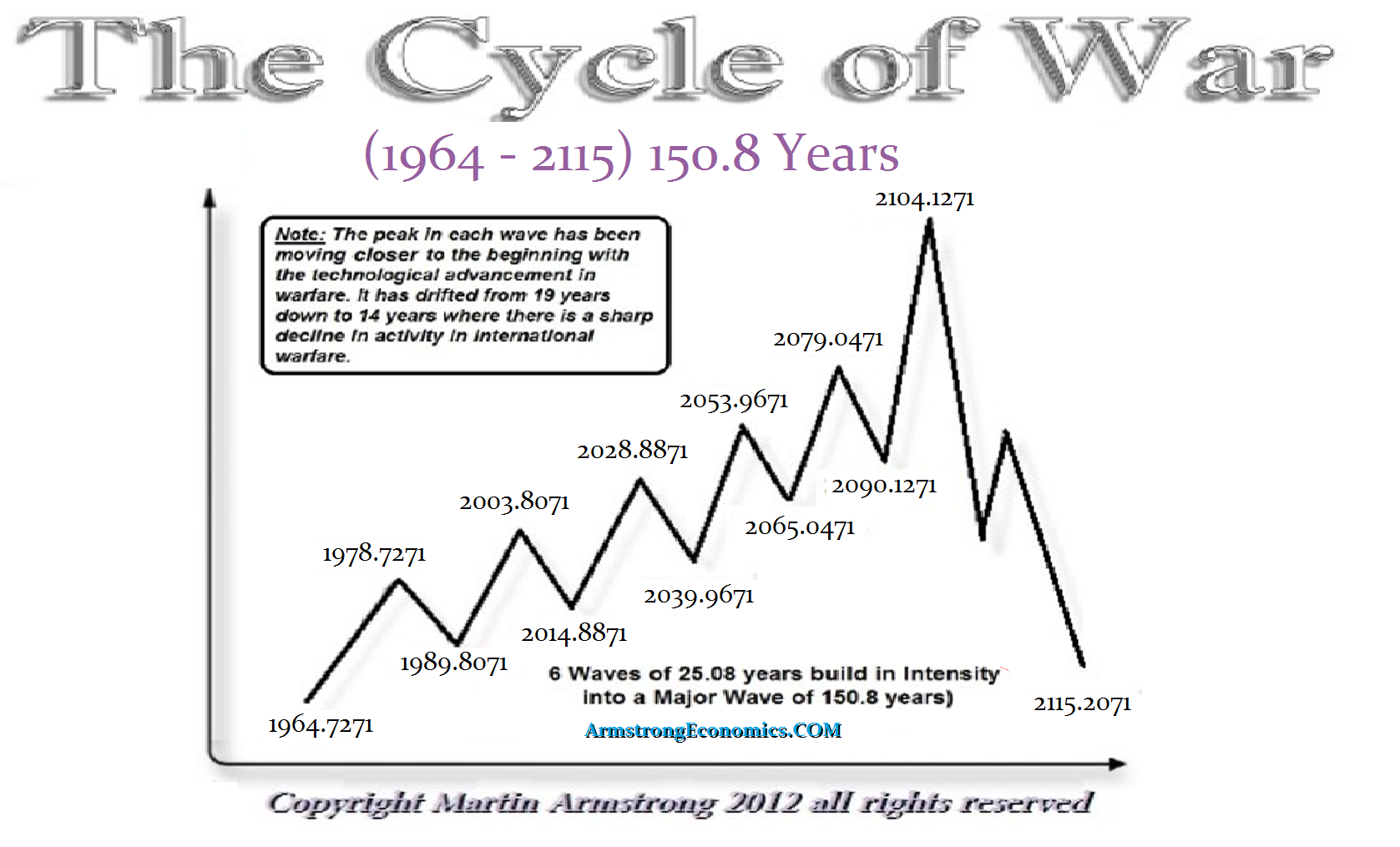
I warned that the war cycle turned up in 2014 and that would begin in Ukraine. But I also warned that WWIII will NOT be a single front, but we are looking at wars around the globe. The computer is showing this is going to extend into 2028 and that it should have turn higher exponentially here in 2026.
The half-cycle turning point was here in 2026. At the last WEC I also warned that 2026 would be a Panic Cycle Year when it came to war, markets, and the economy. It pains me deeply to see how the Neocons have infiltrated the Trump Administration and that this insane arrogance will lead to the defeat of the United States for the stated goals of regime change, causing a revolution, destroying their ballistic misiles, and ending their nuclear program have all failed. At this point, if I were Iran, I would be working night and day to finish that nuke for that is the only way at this point to discredit Netanyahu. This was a stupid move sold to Trump that just killing the Ayatolla would bring down the government which was totally fictional. Now Trump risks the entire stability of the world as a whole all for Netanyahu. Instead of securing the future for Israel, Netanyahu may undermine its future as it can no longer defend agains Iranian missiles and Russia is now sending drones to Iran.
I have created this site to help people have fun in the kitchen. I write about enjoying life both in and out of my kitchen. Life is short! Make the most of it and enjoy!
This is a library of News Events not reported by the Main Stream Media documenting & connecting the dots on How the Obama Marxist Liberal agenda is destroying America







 Centinel2012