The War on Crypto Was Always About Control


Posted originally on May 5, 2026 by Martin Armstrong |  
Cryptocurrency bitcoin basket

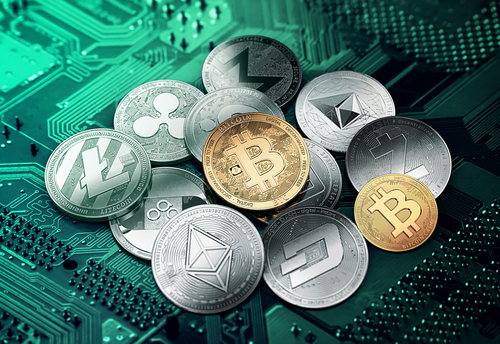
The U.S. Treasury has now frozen $344 million in cryptocurrency tied to Iran, according to Treasury Secretary Scott Bessent, who announced sanctions targeting multiple digital wallets allegedly connected to Tehran. Most people will view this story narrowly through the lens of sanctions on Iran or Middle East politics. The larger issue is far more important. Governments are proving in real time that cryptocurrency is not outside the system and never truly was once governments decide to intervene aggressively enough.

Crypto enthusiasts promote the fantasy that digital assets exist beyond government reach. Blockchain transactions themselves are permanently recorded publicly. The moment governments force centralized exchanges, stablecoin issuers, banks, custodians, payment processors, and infrastructure providers into compliance, they gain enormous leverage over the ecosystem.

According to Reuters and other reports, the Treasury Department sanctioned multiple wallets allegedly tied to Iran, effectively freezing the assets connected to them. The broader campaign, now branded “Economic Fury,” is specifically targeting Tehran’s ability to move money internationally through both traditional banking systems and digital assets.

The key detail people are missing is that these actions demonstrate governments can increasingly identify, blacklist, freeze, and isolate digital wallets whenever geopolitical conditions justify intervention. Stablecoin issuer Tether reportedly cooperated directly with authorities by freezing addresses linked to the sanctioned funds.

Once governments can freeze wallets at the protocol or issuer level, governments effectively gain a form of programmable financial enforcement. Today the justification is Iran. Tomorrow it could be sanctions violations, tax enforcement, political extremism, climate compliance, misinformation enforcement, or virtually anything governments define as threatening.

I have repeatedly warned that governments will never tolerate parallel monetary systems indefinitely once sovereign debt crises intensify. As confidence collapses in government finances globally, states become increasingly aggressive toward anything perceived as undermining capital controls, taxation systems, or financial surveillance.

This is why Europe is simultaneously discussing CBDCs, wealth taxes, digital IDs, beneficial ownership registries, and expanded financial reporting requirements. Governments want visibility into every transaction. They want to know where money moves, who controls it, and how quickly they can stop it.

The Iran case is particularly important because Tehran increasingly turned toward crypto precisely to bypass sanctions and restrictions imposed on traditional banking access. Reuters reported earlier this year that Iranian crypto activity surged dramatically, with estimates ranging between $8 billion and $10 billion in annual transactions. Blockchain intelligence firms reportedly estimate that roughly half of those flows may be connected directly or indirectly to the IRGC.

Iran is not unique here. Russia, Venezuela, North Korea, and numerous sanctioned entities worldwide have explored crypto networks as alternatives to the Western banking system. Governments understand this perfectly well, which is why they are moving aggressively now to integrate blockchain surveillance into broader financial enforcement systems.

Ironically, blockchain itself may become one of the greatest surveillance tools governments have ever possessed. Cash transactions disappear physically. Gold moves privately. Offshore banking once created opacity. Blockchain creates permanent transaction trails. Once authorities identify wallet ownership, entire financial histories become visible forever. Governments no longer need to guess where money moved because the ledger itself preserves the record permanently.

The world is fragmenting into competing financial blocs as sovereign debt pressures intensify globally. The United States increasingly weaponizes dollar access, sanctions systems, and payment infrastructure against geopolitical rivals. In response, countries seek alternatives to traditional banking channels.

The ECM has warned for years that sovereign debt crises eventually lead governments toward tighter financial control mechanisms. The more unstable the system becomes, the less tolerance governments have for unrestricted capital movement. Digital currencies were always destined to collide directly with state power because money itself ultimately represents political authority.

The freezing of $344 million tied to Iran is not just another sanctions story. It is a glimpse into the future of financial control. Governments are building the ability to monitor, freeze, isolate, and potentially program digital money flows globally. Most people still believe crypto exists outside the reach of the state. That illusion is disappearing very quickly.

Europe’s Inflation Spiral Is Fueling the Depression Into 2028


Posted originally on May 5, 2026 by Martin Armstrong |  

inflation

Eurozone inflation is accelerating again at the worst possible moment for Europe. Consumer prices rose 3% in April compared to 2.6% the previous month, driven primarily by surging energy costs tied to the Iran conflict and fears surrounding the Strait of Hormuz. Energy inflation alone jumped 10.9% year-over-year. At the same time, economic growth across the eurozone has nearly stalled.

Europe now faces rising prices alongside weakening economic activity, and that combination becomes extraordinarily difficult for central banks to manage. The European Central Bank is trapped. If it raises rates aggressively, it risks crushing already fragile economies. If it eases policy too quickly, inflation accelerates further as higher energy costs spread through the system.

The real issue is that Europe constructed an economic framework completely dependent on stability. Cheap Russian energy, low interest rates, globalization, and endless debt expansion became the foundation supporting the European model. Once those pillars started cracking, the weaknesses underneath became impossible to hide.

Germany is already paying the price. Its industrial sector has been steadily weakening under high electricity prices and declining export competitiveness. Major manufacturers have reduced operations or shifted investment outside Europe because production costs no longer make economic sense. Heavy industry cannot survive indefinitely when energy becomes a luxury good.

France is stagnating economically while debt continues climbing. Britain’s retail sector just recorded its worst collapse in over 40 years. Across southern Europe, younger generations remain trapped between weak job markets and rising living costs. The political class continues promising climate transitions, military expansion, social spending, and migration support simultaneously while economic growth disappears underneath them.

Oil markets reacted immediately to the Middle East conflict because roughly 20% of global oil flows through the Strait of Hormuz. Even temporary disruptions create ripple effects throughout Europe’s economy. Transportation costs rise first, followed by food, manufacturing, chemicals, agriculture, shipping, and consumer goods. Inflation then spreads outward into virtually every category of daily life.

The ECB cannot solve a geopolitical energy crisis with monetary policy. That is what policymakers still fail to understand. Europe spent years shutting nuclear plants, discouraging domestic production, restricting fossil fuel investment, and relying on unstable foreign supply chains. The continent deliberately reduced its own resilience. Once war entered the equation, the vulnerabilities became obvious.

Consumers are now being squeezed from every direction. Mortgage costs remain elevated compared to the zero-rate era. Utility bills continue rising. Food inflation remains persistent. Business investment is slowing as uncertainty spreads. Retail sales are collapsing because households are being forced to prioritize essentials over discretionary spending.

This is precisely why the ECM projected Europe entering a depressionary phase into 2028.

A depression is not always a dramatic overnight crash. Sometimes it unfolds as a long erosion of living standards, industrial capacity, and public confidence. Europe is entering that process now. Governments borrow more while growth weakens. Private investment retreats. Capital leaves the region searching for safety and opportunity elsewhere. Political fragmentation intensifies because the middle class becomes increasingly squeezed.

The inflation spike tied to the Iran war is exposing how fragile Europe had already become underneath the surface. The continent entered this geopolitical crisis economically weakened, overregulated, energy dependent, and burdened by unsustainable sovereign debt. The ECM warned this period would become the turning point. Europe is now moving directly into that cycle.

n

Canada Is Running Toward Europe as the West Fractures


Posted originally on May 5, 2026 by Martin Armstrong |  

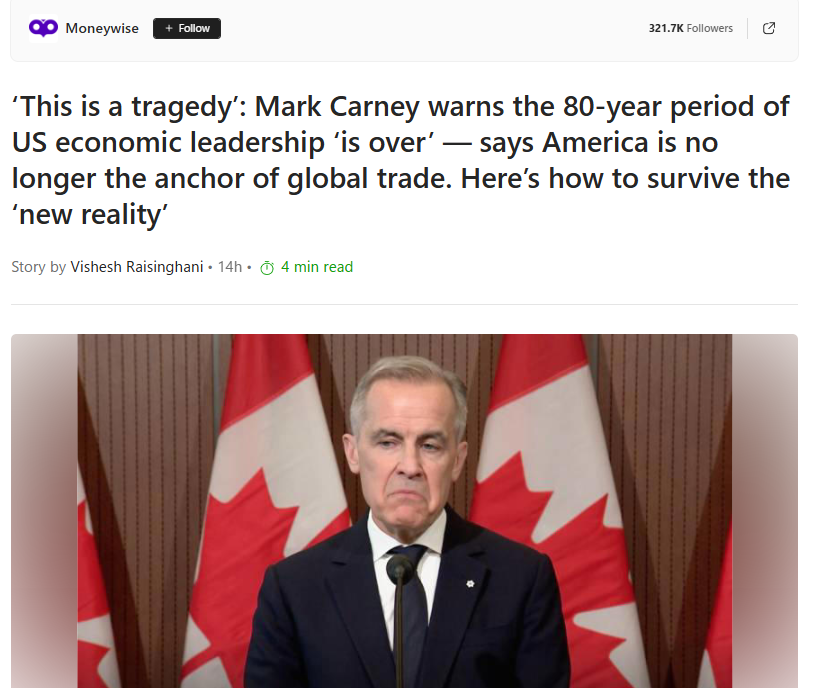
2025_04_26_23_05_29_This_is_a_tragedy_Mark_Carney_warns_the_80_year_period_of_US_economic_leaders

Mark Carney’s decision to make Canada the first non-European nation ever invited into the European Political Community summit tells you everything about where Ottawa is heading politically. Canada is desperately trying to reposition itself away from the United States because Carney fundamentally views the Trump administration as a threat to the entire postwar global order that people like him spent decades building.

The summit in Armenia was never simply about diplomacy. It was about constructing a new bloc of so-called “middle powers” aligned against the growing nationalist shift coming out of Washington. Carney has been openly pushing this idea for months, arguing that countries like Canada and Europe must deepen cooperation because the “old order” is breaking apart. That is globalist language for saying the United States is no longer willing to carry the system financially or militarily the way it once did.

What Carney and the European leadership fail to understand is that Europe itself is collapsing economically underneath the surface. The European Political Community was launched by Emmanuel Macron after the Ukraine war began because Brussels realized confidence in the European Union was weakening badly. The EPC was effectively designed as a parallel geopolitical structure tying together EU states, NATO partners, former Soviet republics, and pro-European governments under one umbrella.

Now Canada wants in. That alone tells you how desperate Ottawa has become to diversify away from the United States economically and politically. Reuters reported that Carney specifically sees Europe as part of a new alliance structure after the deterioration in relations with Washington under Trump.

2025_04_29_08_13_32_Canada_s_Carney_sends_a_message_to_Trump_as_he_chooses_Europe_for_first_foreign_

Canada’s economy is tied overwhelmingly to the United States geographically, financially, culturally, and structurally. Roughly three-quarters of Canadian exports still flow into the American market. Canada cannot simply replace the U.S. economy with Europe. That is fantasy politics.

Europe itself is entering a depressionary phase into 2028 according to our ECM models. Germany’s industrial base is weakening, France is drowning in debt, southern Europe never recovered from the euro crisis properly, and Britain remains economically unstable despite Brexit. The euro itself failed because Europe created a monetary union without consolidating sovereign debt. Northern Europe protected its banking system while southern Europe absorbed austerity and economic collapse.

Carney’s summit appearance also reflects a broader ideological alignment between Canada’s political establishment and Brussels. Both support centralized governance, climate policies, digital regulation, ESG frameworks, expanded financial oversight, and increasingly aggressive speech regulation. Europe and Canada now resemble each other politically far more than either resembles the United States under Trump.

That is why Carney fits naturally into these European summits. He spent years inside the central banking system, running both the Bank of Canada and the Bank of England. He was one of the loudest advocates globally for climate finance structures, ESG investing, and coordinated global financial governance. Europe views him as one of their own intellectually.

Carney Mark WEF

Meanwhile, the geopolitical timing could not be worse. The summit agenda reportedly focused heavily on Trump’s planned troop reductions in Germany, the Iran war, Russia, energy instability, and Europe’s broader security concerns. Europe is becoming increasingly militarized because leaders understand NATO’s future is uncertain if Washington continues shifting inward politically.

The irony is extraordinary because Canada spent decades benefiting enormously from proximity to the United States while underinvesting militarily itself. Now Ottawa fears becoming too dependent on Washington while simultaneously attaching itself to a Europe facing its own sovereign debt and demographic crisis.

Carney is essentially betting Canada’s future on closer integration with declining globalist structures just as voters across the Western world increasingly revolt against them politically.

The fragmentation of the West is accelerating. Europe fears abandonment by Washington. Canada fears economic dependency on the United States. Germany fears industrial collapse. France fears social unrest. Britain fears irrelevance. The alliances that dominated the postwar era are beginning to crack under debt, migration, energy instability, war pressures, and collapsing public confidence. The EPC summit itself is really a symptom of that fracture.

Alberta Separatism Is Rising Because Ottawa Destroyed Canada’s Economic Balance


Posted originally on May 4, 2026 by Martin Armstrong |  

Alberta Separatist 2

I have warned for years that Alberta would eventually reach a breaking point with Ottawa because the federal government has systematically undermined the very industries that support Canada’s economy. Now we are seeing separatist tensions escalating to a new level after Elections Alberta secured a court order forcing a pro-sovereignty organization known as the Centurion Project to remove a searchable voter database containing information tied to millions of Albertans.

The establishment media is focusing narrowly on “privacy concerns,” but they are ignoring the larger political reality underneath this entire story. Separatist organizations do not seek voter data for entertainment purposes. They want to identify, organize, mobilize, and communicate directly with people who may support Alberta sovereignty outside the traditional political system.

According to court filings, Elections Alberta determined the voter list had originally been legally distributed to the Republican Party of Alberta, a political party openly advocating Alberta independence. The Centurion Project, registered as a third-party advertiser, later posted the information online in searchable form. Reports indicate the database included names, addresses, and voting district information connected to millions of Alberta voters.

Why would a separatist movement want such a list? Because modern political movements are built on data. The objectives are likely voter targeting, grassroots organizing, fundraising, campaign coordination, petition drives, volunteer recruitment, and identifying regions most supportive of sovereignty. Every major political operation in the world now relies heavily on voter databases. The difference here is that Alberta’s sovereignty movement exists outside the traditional federal establishment, which immediately makes Ottawa nervous.

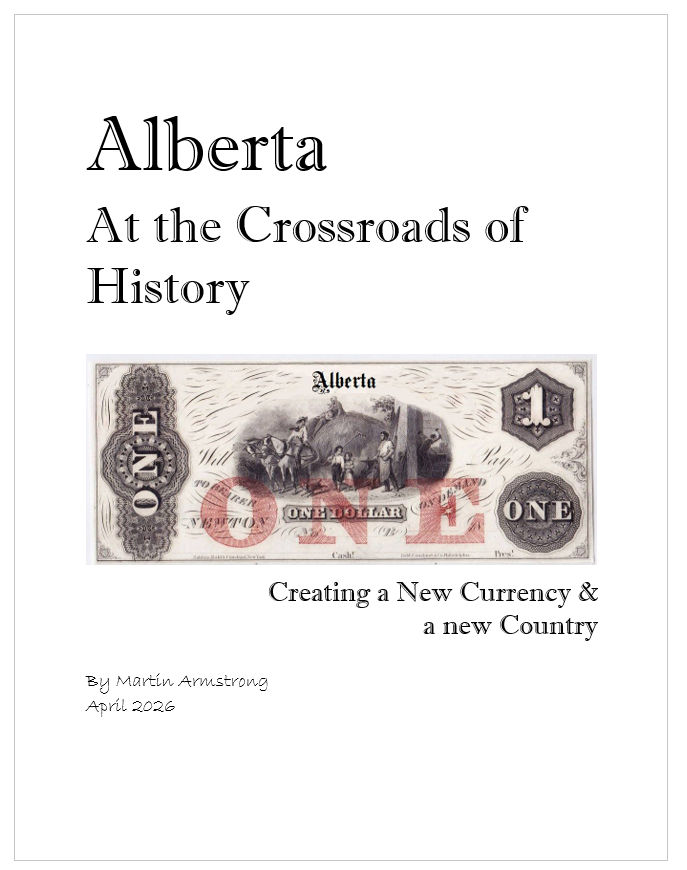
Alberta_2026

The political class understands something else as well. Once regional independence movements become digitally organized and data-driven, they become far harder to suppress.

I have repeatedly stated that Alberta has every economic reason to separate from Canada. The province has effectively become the financial engine forced to subsidize a federal structure increasingly hostile toward energy production itself. Alberta possesses enormous oil and gas reserves, generates massive export revenues, and contributes disproportionately to federal finances, yet Ottawa continues imposing carbon taxes, pipeline restrictions, emissions caps, and climate policies directly damaging Alberta’s economy.

At some point, productive regions begin asking why they should remain attached to governments actively undermining their future. This is not unique to Canada. I have seen this pattern repeatedly throughout history. Once centralized governments become too disconnected from regional economic realities, fragmentation pressures emerge naturally. Catalonia, Scotland, northern Italy, Brexit, these movements all stem from economic resentment mixed with political alienation.

Ottawa’s policies increasingly resemble the same anti-energy ideology that destroyed competitiveness across Europe. Canada is attacking the productive sectors that generate actual wealth while expanding bureaucracy, debt, regulation, and redistribution. Alberta’s oil industry has been treated as though it were politically inconvenient despite being one of the primary pillars supporting Canada’s national economy.

Alberta holds approximately 165 billion barrels of proven oil reserves and remains one of the world’s largest energy-producing regions. The province has contributed hundreds of billions in revenues and equalization imbalances over the decades, yet much of the federal political establishment behaves as though Alberta’s industries should be phased out entirely.

The ECM has projected increasing political fragmentation globally because confidence in centralized governments is collapsing. As living standards weaken, taxes rise, and debt expands, people begin identifying more regionally than nationally. They stop believing national institutions represent their interests.

The sovereignty movement in Alberta will continue growing so long as Ottawa pursues policies viewed as economically punitive toward the province. Court orders and database removals may slow organizational efforts temporarily, but they do not eliminate the underlying resentment driving the movement itself.

The Euro Devastated Southern Europe and Greece Is Proof


Posted originally on May 4, 2026 by Martin Armstrong |  

Greece Merkel Banks

The politicians in Brussels are celebrating Greece again because the country has returned to “growth,” wages have risen modestly, and the government has stabilized its finances after years of austerity. Yet the average Greek worker remains among the poorest in Europe despite working some of the longest hours on the continent. That contradiction exposes the real failure of the euro itself.

According to the latest reports, Greek workers continue struggling with some of Europe’s weakest purchasing power even after years of so-called recovery. Housing costs, food prices, electricity, and daily living expenses have risen far faster than wages. Many Greeks are working full-time while still relying on family support simply to survive.

This is precisely what I warned would happen when Europe created a monetary union without a true fiscal union. The euro locked together economies that were fundamentally incompatible. Germany entered the euro with an industrial export powerhouse and strong productivity. Southern Europe entered with weaker industrial competitiveness, structurally higher debt burdens, and economies more dependent on tourism, agriculture, and domestic consumption. Once they surrendered monetary sovereignty, countries like Greece lost the ability to devalue their currencies during downturns.

Weaker economies often adjust through currency depreciation. Their exports become cheaper, tourism becomes more competitive, and debt burdens can be inflated away gradually. Under the euro, Greece could no longer do that. Instead, Brussels imposed austerity to protect the banking system and preserve the currency structure itself.

shutterstock_495258178

Greek GDP collapsed roughly 26% during the debt crisis. Youth unemployment exploded above 50% at one point. Tens of thousands of businesses failed. Entire generations emigrated looking for work. Wages were crushed while taxes rose relentlessly. The country became trapped in permanent austerity because the eurozone refused to consolidate debts properly across member states.

When the United States has a regional downturn, federal transfers and debt consolidation mechanisms stabilize weaker states automatically. Europe never created a comparable system because northern European countries refused to mutualize debt obligations with southern Europe. Germany, the Netherlands, and northern creditors demanded austerity instead.

Southern Europe paid the price. Greece became the sacrificial example used to preserve the euro system politically. Brussels and the ECB understood that once one country escaped the euro successfully, the entire structure could begin unraveling. So Greece was forced into brutal austerity programs largely designed to protect European banks holding sovereign debt exposure.

Capital controls were imposed. Banks shut down temporarily. ATM withdrawals were restricted. The entire system nearly fractured because the euro was never designed to survive a sovereign debt crisis involving structurally divergent economies.

Today the media points to falling deficits and improved bond ratings as proof of “success.” But ordinary Greeks do not live inside bond markets. They live inside the real economy. If workers remain among the poorest in Europe despite years of recovery headlines, then the recovery itself is deeply flawed.

Spain, Italy, Portugal, and parts of southern Europe all suffered under the same structural imbalance. The euro effectively benefited Germany far more than southern Europe because it prevented weaker countries from adjusting competitively through currency markets. Germany enjoyed a relatively weaker shared currency than it otherwise would have had independently, boosting exports enormously. Southern Europe absorbed debt deflation and austerity instead.

The ECM has projected that Europe enters a depressionary phase into 2028 because the underlying structural problems were never solved. Europe papered over the sovereign debt crisis with ECB intervention, debt purchases, and monetary engineering, but the real economic divergences remain intact underneath the surface.

Now Europe faces another dangerous phase simultaneously: rising military expenditures, migration pressures, energy instability, inflation shocks, industrial contraction, and exploding sovereign debt burdens. The eurozone survived the last crisis only through extraordinary intervention from the ECB. The next crisis may become much harder to contain politically.

What Greece demonstrates is that official “growth” statistics mean very little when living standards remain weak for ordinary people. You can stabilize government finances while impoverishing large portions of the population. That is exactly what much of Europe has done.

The euro was sold politically as a path toward unity and prosperity. Instead, it increasingly divided northern and southern Europe economically while concentrating financial power inside Brussels and the ECB.

Chatrie v. United States and the Rise of Geofence Surveillance


Posted originally on May 4, 2026 by Martin Armstrong |  

Geofences: What They Are, What They Aren't, and Why They're Effective

The case of Chatrie v. United States exposed just how far governments have moved toward mass digital surveillance through a technique known as geofencing. This technology allows law enforcement to identify every device present within a designated geographic area during a specific period of time. Instead of investigating a suspect first and gathering evidence second, geofence warrants reverse the process entirely by collecting data on everyone nearby and sorting through it afterward.

To understand why this case matters, people first need to understand how geofencing works in practice. Smartphones constantly transmit location information through GPS signals, cellular towers, Bluetooth, Wi-Fi connections, mobile applications, operating systems, and advertising identifiers. Companies like Google collect enormous quantities of this data through Android devices, Google Maps, search histories, application permissions, and background tracking systems tied to user accounts. Google reportedly stores much of this information inside an internal database commonly referred to as “Sensorvault,” which contains detailed historical location records tied to devices around the world.

Geofencing creates a virtual perimeter around a real-world location. Retail companies originally used the technology for advertising and logistics purposes, allowing businesses to target consumers entering certain stores or regions. Governments quickly realized the same systems could be used for surveillance and criminal investigations. Law enforcement can define a geographic radius around a crime scene and request data from Google showing every device detected within that area during a specified timeframe.

That means hundreds or even thousands of completely innocent people can have their data swept into an investigation simply because they happened to walk past the wrong place at the wrong time.

What is geofencing? Geofencing definition, history, applications, and more

The Chatrie case began after a bank robbery in Virginia in 2019. Investigators obtained a geofence warrant demanding Google provide device information connected to the area surrounding the robbery. Google returned anonymized device identifiers for phones detected inside the geofenced perimeter. Investigators then narrowed the results step-by-step until eventually identifying one device allegedly connected to Michael Chatrie, who was later charged.

The constitutional concern is obvious. Traditional warrants were designed around individualized suspicion. Police were expected to identify a suspect first and demonstrate probable cause before obtaining private information. Geofence warrants instead function like digital dragnets. They gather location data from everyone first and sort out who might be relevant later.

This is where modern surveillance becomes extraordinarily dangerous because technology eliminates the manpower limitations governments once faced. Authorities no longer need teams physically following people through cities. The population now voluntarily carries tracking devices everywhere they go. Smartphones effectively document movement patterns, travel routines, shopping habits, social interactions, political activity, religious attendance, and personal behavior automatically.

The government’s argument in Chatrie should concern everyone. Prosecutors claimed users voluntarily shared their location information with Google and therefore had a diminished expectation of privacy. That logic becomes incredibly dangerous because modern life increasingly requires digital participation. Smartphones are no longer optional conveniences for many people. Banking, transportation, employment, navigation, communication, healthcare access, and financial transactions are all becoming dependent on digital systems.

In practical terms, governments are arguing that participation in modern society reduces constitutional privacy protections.

The implications extend far beyond criminal investigations. Once geofence surveillance becomes normalized, authorities naturally expand its use into broader areas. A geofence could capture data connected to political demonstrations, labor strikes, churches, medical clinics, gun stores, journalists, or private meetings. The technology itself does not distinguish between criminal suspects and ordinary citizens because it collects everyone first.

I have warned repeatedly that technology always migrates toward centralized control once governments recognize its potential. Systems originally marketed for convenience eventually become tools of enforcement and surveillance. Europe is already moving aggressively toward digital IDs, centralized financial monitoring, beneficial ownership registries, CBDCs, and expanded online controls. China built social credit systems openly, while Western governments are constructing similar infrastructure gradually under the language of public safety, financial compliance, cybersecurity, and misinformation control.

The danger is not merely the technology itself but the consolidation of multiple systems together. Once governments integrate geolocation tracking with facial recognition, banking data, biometric IDs, vehicle monitoring, online communications, and AI-driven analytics, anonymity effectively disappears from society.

People continue trading privacy for convenience without understanding what is being built around them. By the time most realize how extensive these systems have become, the infrastructure will already be impossible to escape.

Interview: Gold and the Stock Market Will Rise Together


Posted originally on May 3, 2026 by Martin Armstrong |  

Geofence Warrants


Posted originally on May 2, 2026 by Martin Armstrong |  

HEALTHY Life Expectancy in the UK Declined by 2 Years in Past Decade


Posted  originally on May 1, 2026 by Martin Armstrong |  

doctor offering medication variety 9kor6c1pdyh4i5no

study from the UK has revealed that people may be living longer on paper, but they’re more likely to spend their final years in poor health. Healthy life expectancy plummeted to roughly 60–61 years despite overall life expectancy hovering around 81. In practical terms, this means that a large portion of the population is now living a decade or more in declining health before even reaching retirement.

This decline in quality of life is being driven by a combination of factors that governments continue to treat as separate problems rather than part of a single systemic breakdown. Obesity alone has reached levels where roughly two-thirds of adults in the UK are now overweight or obese, with about 30% classified as obese, a figure that has steadily risen over decades. This is not just about weight, because obesity directly increases the risk of diabetes, cardiovascular disease, cancer, and even mental health disorders, creating a compounding effect where individuals become progressively sicker over time rather than recovering.

“The UK has the highest levels of obesity in western Europe and there has been a surge in mental ill health, especially among young people,” a data analyst told the BBC, creating “a significant economic cost, with poor health driving people out of the workforce and locking young people out of education, employment and training.”

Mental health is following the same trajectory, particularly among younger generations where roughly one in five adults suffer from common mental health conditions. Rates among those aged 16–24 have climbed sharply over the past decade. The data shows this is not stabilizing but accelerating, with younger people entering adulthood already burdened with anxiety, depression, and other conditions that historically emerged later in life. When you combine this with rising physical health problems, you are looking at a population that is both physically and psychologically weaker than previous generations.

The economic consequences are already becoming evident, as poor health is increasingly removing people from the workforce while preventing younger individuals from entering it in the first place. Reports show growing economic inactivity tied directly to long-term illness, alongside rising numbers of young people not in education, employment, or training. This creates a feedback loop in which a shrinking productive base must support an expanding population that is dealing with chronic health issues, placing further strain on public finances and economic growth.

COVID 19 Risks

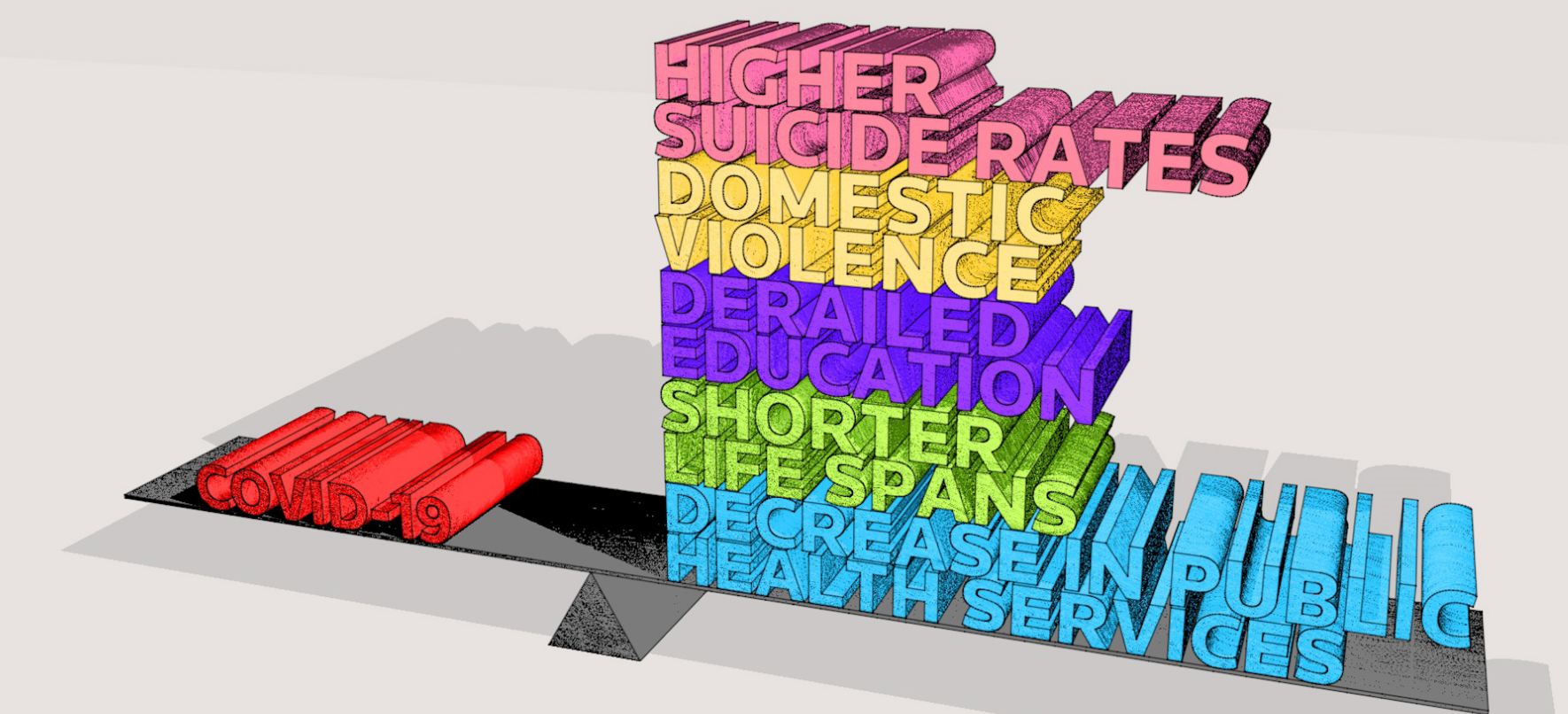
COVID accelerated this entire process in a way that policymakers are reluctant to fully acknowledge. Health data now shows a persistent decline in reported good health since the pandemic, alongside rising dissatisfaction and long-term illness. You cannot suspend normal life for extended periods without long-term consequences, yet governments continue to frame COVID as a temporary disruption rather than a turning point that altered the trajectory of public health.

At the same time, the cost of living crisis has compounded these issues by reducing access to healthier food, increasing stress, and limiting people’s ability to invest in their own well-being. Surveys show that households remain under pressure from high food and energy costs, with many cutting back on discretionary spending even as inflation moderates. When people are forced to prioritize survival over health, diet quality declines, preventative care is delayed, and stress levels rise, all of which feed directly into both physical and mental deterioration.

There is also the uncomfortable reality that modern food itself has become a contributing factor, with the widespread availability of ultra-processed foods, high sugar consumption, and limited regulatory intervention creating conditions in which unhealthy choices are often the cheapest and most accessible. Policymakers discuss obesity as if it were purely behavioral, yet the data shows long-term structural changes in diet and lifestyle that align closely with rising chronic disease. But it is cheaper to mass produce barely edible junk with a longer shelf life, possibly grown from seeds that were genetically modified to withstand poor weather conditions and pests.

What emerges from all of this is a clear pattern where people are not necessarily dying younger, but they are living longer in a state of declining health, which represents a fundamental deterioration in quality of life. This is the hallmark of a system under stress, where economic pressures, policy decisions, and societal changes converge to produce outcomes that cannot be reversed through simple healthcare spending alone.

UK Retail Sector Collapse


Posted  originally on May 1, 2026 by Martin Armstrong |  

shopping cart fallen street by grassy field_1048944 25982677

Britain’s retail sector has just posted the worst collapse in sales in more than 40 years, and this is precisely the type of economic deterioration our models have been warning would emerge across Europe into 2028. The Confederation of British Industry reported that its retail sales volume balance plunged to -68 in April from -52 in March, marking the lowest reading since the series began in 1983. An astonishing 77% of retailers reported declining sales while only 9% reported increases.

This is the type of collapse normally associated with a major recession or sovereign crisis environment. The mainstream press continues trying to isolate every economic problem into separate headlines, but the reality is that Europe is entering a broad systemic downturn. Consumer confidence is collapsing because households are being crushed simultaneously by inflation, energy costs, taxes, war fears, and declining real economic growth. Britain may no longer be formally inside the European Union, but its economy remains deeply tied to the broader European financial structure.

The CBI survey showed expectations for May falling further to -60, the weakest outlook since the COVID lockdown period in March 2021. That is an extraordinary statistic because it demonstrates businesses themselves see no near-term recovery.

The important detail here is that this collapse is occurring before the full economic consequences of the Middle East conflict have even filtered through the system. Reuters specifically noted that the Iran war and the closure of the Strait of Hormuz sharply increased inflation fears among households. Europe remains highly vulnerable to energy disruptions because politicians deliberately destroyed domestic energy independence under the Net Zero agenda.

Germany shut nuclear plants. Britain reduced North Sea production. Europe sanctioned Russian energy while simultaneously deindustrializing itself with climate regulations. They constructed an economic model dependent on cheap imported energy and permanent globalization, then shattered both pillars at the same time.

Now the consumer is breaking. The CBI itself admitted that “weak consumer confidence was weighing on spending in April.” That phrase understates the seriousness of the situation. Consumers are not merely cautious. They are running out of purchasing power.

Food inflation remains elevated. Energy costs remain structurally high. Mortgage rates across Europe have exploded compared to the zero-rate era. Governments continue raising taxes while simultaneously expanding spending on migration programs, military expenditures, green subsidies, and Ukraine funding.

What people fail to understand is that consumer spending is the final domino in an economic cycle. Manufacturing weakens first, business investment slows second, layoffs begin third, and finally the consumer collapses. Europe is now entering that final phase.

The ECM has been projecting that Europe would enter a depressionary phase into 2028 because confidence in government was collapsing alongside sovereign debt sustainability. This is not merely about economics. It is political. European governments continue behaving as though they can tax, regulate, borrow, and spend infinitely without consequence.

What we are witnessing now is the early-stage consumer retrenchment that typically precedes a much larger sovereign debt crisis. Governments across Europe are already discussing wealth taxes, exit taxes, digital asset registries, CBDCs, and enhanced financial surveillance precisely because they know capital is leaving and growth is evaporating.

Britain’s retailers are now begging the government to lower electricity bills, reduce property taxes, and avoid new employment regulations that increase business costs. Yet the political class across Europe remains completely disconnected from economic reality. Their answer to every crisis is more regulation, more taxation, and more centralized control.

This is exactly why capital has continued flowing toward the United States despite all its own political chaos. International capital always seeks the least-worst alternative during periods of sovereign stress. Europe has become openly hostile toward productivity, investment, industry, and private wealth itself.

The collapse in UK retail activity is not an isolated British story. It is another confirmation that the European depression into 2028 is unfolding exactly on schedule according to the ECM.

Categories:BRITAIN