Surviving Your Own Trading Strategies


Posted originally on Apr 26, 2026 by Martin Armstrong |  

Debt Burden

COMMENT: I find it curious how people like ___________ pretend to be great forecasters but are simultaneously fund managers, which precludes them from speaking to central banks. Yet they seem to mimic you. You had to give up even personal stock investing to be able to even speak or advise. All they do is listen to you and copy what you say yet they do not have the database nor are they free of conflicts of interest.

Sometimes, you know… It just won’t fit.  You can fiddle with it, you can try to accommodate it, but you will never make it work. They are doing the world a disservice because they lack the database to forecast the future all by themselves.

RD

ANSWER: That is the dark side of humanity. Then they turn and ask for money to manage. What they do not realize is that when you get too big, your performance declines because you cannot invest the same with $10 billion as you do with $10 million.

There is a large and well-established body of research indicates a negative relationship between fund size and performance across most major asset classes. A 2015 paper by Pástor, Stambaugh, and Taylor, for example, provided strong evidence of what is known as “diseconomies of scale” in the active fund management industry. The effect is widely recognized as a major factor that erodes performance, particularly in strategies focused on less liquid assets like small-cap or micro-cap stocksand real estate funds as we have seen.

Elephant in the Room 2

The bigger they are, the more you should be on guard. The performance decline is driven by a few core challenges that come with managing a larger pool of assets:

Liquidity Constraints, Reduced Information Edge, and Difficulties in Exiting Positions Large funds struggle to take meaningful positions in smaller, less liquid stocks without significantly moving the market price against themselves. This is particularly true for small and micro-cap stocks, where a fund’s size can destroy its own potential for gain. Exiting a large concentrated position can be as challenging as entering it if not worse, when everyone knows you are the elephant in the room. When a very large fund tries to sell, its own selling pressure can drive the stock’s price down, eroding returns.

I had to develop Natural Hedging dealing with portfolios in the trillions. Everything had to be strategically selected and correlated. Even when I testified before the House Ways & Means Committee, I had 50% of the equivalent of the US national debt under contract. You have to come up with a whole new way of funds management to survive.

White House Correspondents’ Association dinner at the Washington Hilton


Posted originally on Apr 26, 2026 by Martin Armstrong |  

White House Dinner 1996

COMMENT: Marty, where were you? Looked all over for you at the White House Dinner. Wanted to catch up. You missed all the action.

B

REPLY: I haven’t been there in a while. It was always good fun. The best one was 1996. Bill Clinton gave a fantastic speech. He really knew how to work the crowd. I was sitting at the table with George will and other conservative commentators. I remember saying that was a fantastic speech. Well delivered. They were all upset. I just appreciated his speaking talent.

There were no gun shots that year. Just moans. Sorry I could not make it. I sure this one will be more memorable.

Categories:Uncategorized

Interview: Uprisings Everywhere – Iran WAR Just the Start of Global CHAOS


Posted originally on Apr 26, 2026 by Martin Armstrong |  

Categories:Armstrong in the Media

There are Microphones in the Pasta Sauce


Posted originally on Apr 25, 2026 by Martin Armstrong |  

Tony's Gangster Sausage & Rigatoni ? - by BowTiedOctopod

As we enter deeper into a dystopian hellscape, even pasta sauce companies are entering the mass surveillance, data harvest game. Prego partnered with StoryCorps to launch “The Connection Keeper,” a device equipped with two microphones that I intended to record dinnertime conversations among families.

“The recordings are designed to help families preserve the authentic sounds of time spent together, creating a personal archive to revisit for years to come. Families will have the option to preserve their recordings private within the StoryCorps archive or share them publicly as part of a special Prego Collection. Public recordings will also be preserved at the Library of Congress, so they can be accessed for generations to come,” the company stated on its website.

Prego Connection Kepper V1

Although this is more of a publicity stunt, one must question who would be willing to voluntarily record their personal, intimate conversations with family. Previous generations of authoritative governments are rolling in their graves. Ironically, our family dinner conversations are already tracked and recorded by the devices we willingly use (i.e., cell phones), but in this situation, people are active volunteers.

Data harvesting has become a monumental mission for governments and corporations that want to know how to control and extort you, specifically you. There is not a piece of technology left that does not actively track your movements to predict future behavior, and eventually, subconsciously control that behavior.

The future of AI depends on the data it will be provided, as no human can decode the endless stream of real-time incoming information. Go outside, touch the grass, and hope that the collective consciousness of humanity remains intact as we move closer to the inevitable societal reset.

Categories:New Norm

Armstrong on Sara Westall


Posted originally on Apr 25, 2026 by Martin Armstrong |  

Sara Westall

May 2026 Live Webinar Series


Posted originally on Apr 24, 2026 by Martin Armstrong |  

Webinar.Generic

There are very few opportunities to step inside the actual models that track capital flows, forecast market turning points, and map global economic cycles. This May, we are offering three highly focused educational webinars designed to take you from understanding the system… to applying it in real time.

These sessions are built on over 40+ years of research and are taught by Erwin Pletsch, who has spent decades working directly with Martin Armstrong’s models.


Understanding the Economic Confidence Model

May 12

LearnMoreButton

The official training, titled “Understanding the Economic Confidence Model,” walks through the origins, structure, and real-world application of the ECM—the model that tracks global booms, busts, and shifts in confidence.

You will learn:

  • How the ECM was discovered and constructed
  • How to interpret its timing and turning points
  • The connection between confidence, capital flows, and global markets
  • Real-world examples of ECM alignment across countries and asset classes

This session is designed for anyone serious about understanding why markets move—not just reacting to them.


Understanding the Monetary Crisis Cycle

May 13

LearnMoreButton

If the ECM shows when confidence shifts, the Monetary Crisis Cycle explains what happens when that confidence breaks. This session dives into the cyclical nature of sovereign debt crises, currency transitions, and global capital migration.

You will learn:

  • The origins and recurring patterns of monetary crises
  • How foreign exchange and capital flows behave during instability
  • The relationship between the MC Cycle and the ECM
  • Historical turning points and trend changes tied to the cycle

This webinar is suited for anyone looking to understand the broader global financial system—from currencies to sovereign risk.


Updated Advanced Techniques and Considerations for using Reversals and Arrays

May 15–16

LearnMoreButton

This is where theory becomes execution. The official advanced training, “Updated Advanced Techniques and Considerations for using Reversals and Arrays” focuses on applying the Socrates model in real-world trading environments.

You will learn:

  • How to use Reversals (price) and Arrays (time) together
  • Advanced techniques for identifying high-probability trades
  • How to interpret market structure using Socrates tools
  • Practical strategies based on real trading scenarios

This is an advanced, two-day intensive workshop designed for experienced traders already familiar with the concepts.


These three sessions are designed to work together:

  • The ECM teaches you when major turning points occur
  • The Monetary Crisis Cycle explains why they happen
  • Reversals & Arrays show you how to act on them

These are the actual models used to interpret global financial trends—delivered in a format that allows direct interaction, Q&A, and deeper understanding. Capacity is limited. These are live, interactive sessions designed for anyone interested in better understanding the inner workings of Martin Armstrong’s analyses.

Google is Tracking Your Life – Photo Cloud Feeding AI System


Posted originally on Apr 24, 2026 by Martin Armstrong |  

Google Photos - Apps on Google Play

There was a time when your photo album sat in a drawer, private, personal, and disconnected from the outside world. Privacy no longer exists in the modern world as personal data will become the key tool of control, and now Google is taking the next step by turning your memories into fuel for artificial intelligence.

According to a recent report, Google has rolled out a major update to its Photos platform that allows its AI system, Gemini, to scan your entire photo library to build what it calls “Personal Intelligence.” What this means in plain English is that your images are no longer just stored, they are analyzed and integrated into a broader behavioral profile. Google openly admits the system can use actual images of you and your loved ones to generate AI content, eliminating the need for users to manually upload reference photos.

This is not a minor tweak to a photo app, but a structural shift in how data is harvested and understood, because every image you have ever taken now becomes part of a living model that attempts to understand who you are, who you associate with, where you go, and how you live your life. What was once private into something continuously processed and categorized.

Google Photos - Review 2025 - PCMag Australia

The justification is framed as efficiency, where users no longer need to search or describe anything since the system already understands the context, and Google presents this as innovation by claiming the AI will automatically fill in the blanks by learning from your data, yet what is being constructed is an algorithmic identity that merges your private life with machine interpretation.

The system analyzes faces, objects, and even text within images, grouping individuals, identifying locations, and extracting written information from receipts, documents, and signs, which means your photos are no longer static files but are converted into structured intelligence that becomes searchable, categorized, and increasingly predictive.

Once this data is created, it does not remain isolated, because Google has confirmed that when Photos is connected to other services like Gemini, information from your images can be shared across platforms to fulfill requests, which is how ecosystems evolve from separate tools into unified systems that construct a comprehensive profile of the individual.

The industry will argue that participation is optional, and while users technically have the ability to opt in or out. In reality, companies deliberately make it difficult, if not impossible, for users to fully opt out of tracking.

AI is evolving from general tools into deeply personal systems, integrating email, calendars, search history, and now personal photos into a single framework that reflects an increasingly detailed digital version of the individual, marking a transition from utility to behavioral modeling.

Governments have already demonstrated a willingness to expand surveillance through financial monitoring, communication tracking, and regulatory oversight, and the infrastructure being built by Big Tech provides a foundation that can be leveraged for broader control, especially when financial data, behavioral patterns, and visual intelligence are combined into a single ecosystem.

OPT-OUT: Go to myaccount.google.com and begin by turning off every tracking and personalization setting available, because leaving even one active continues to feed the system. Do not permit any form of “personalization,” as that is simply the mechanism used to justify data collection across services. Google is not limited to your photos, it tracks your location through Maps and embedded photo metadata, it records your browsing history, and it logs every video viewed and every search made, all of which are combined into a single behavioral profile. It is not enough to disable these settings going forward, since the historical data remains intact, so you must also go back and delete all prior activity to reduce what has already been collected.

Pentagon Requests $54 Billion for AI War


Posted originally on Apr 24, 2026 by Martin Armstrong |  

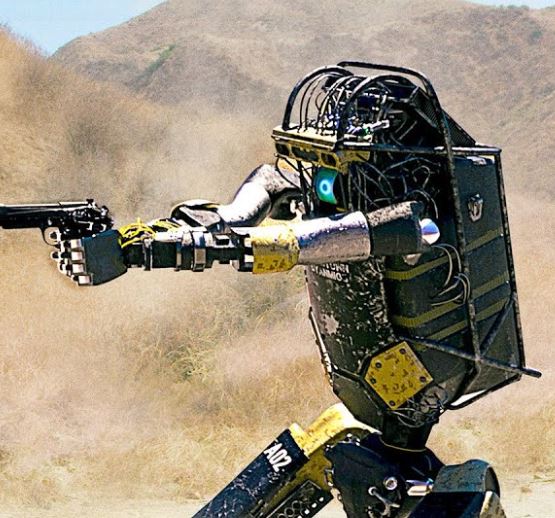
Robot Soldier

The Pentagon has requested $54 billion for artificial intelligence–driven warfare, a figure that dwarfs prior allocations and signals a decisive shift in how conflicts will be conducted going forward.

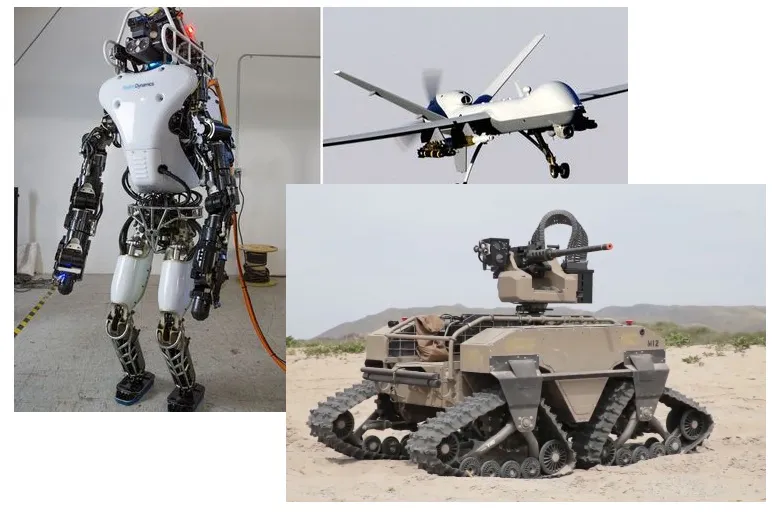
This is a restructuring of warfare, where autonomous systems are being positioned to operate across air, land, and sea, replacing traditional deployments with machine-driven execution at scale. CIA director David Petraeus said it was “the largest single commitment to autonomous warfare in history.” As the Guardian noted, $54 billion is an astounding figure that amounts to half of the UK’s entire defense budget.

What stands out immediately is the pace, because this is not a gradual transition. Autonomous drones, remote systems, and AI-assisted targeting are already being deployed in active theaters, and the cost structure of warfare is changing as a result, since low-cost, scalable systems reduce the financial barrier to engagement. This is a new arena with untold potential for destruction of civilizations.

Robot Soldiers

This is why the government and private sector are harvesting surveillance data. The same systems designed for data processing, automation, and consumer use are now being adapted for surveillance, targeting, and operational control, creating a convergence that centralizes both capability and influence.

Government is simulating battlefield outcomes in real time, which reduces reliance on human judgment and shifts authority toward machine-generated conclusions. A top general with experience will be second-tier to an advanced AI system capable of computing millions of scenarios in real-time.

There is no fully established doctrine governing the deployment of autonomous systems at scale, particularly for coordinated drone operations, and current models remain vulnerable to failure and manipulation. Again, deploying such systems without fully understanding their limitations introduces risks that extend far beyond conventional warfare.

This $54 billion request is absolutely absurd, considering the Pentagon already has a $1 trillion budget. But the Pentagon has never had a real budget—the agency has failed EVERY audit, and when a whistleblower was close to exposing fraud, a rogue terrorist defied the laws of physics by flying a plane into the building where the files were held. The Pentagon will spend that money whether the funding is approved or not, but the real question remains: how will advanced artificial intelligence change the future of warfare?

Inflation Pressures Rise in Turkey


Posted originally on Apr 24, 2026 by Martin Armstrong |  

Syria Map

I have said many times that interest rates do not lead inflation but react to it, and what we are seeing in Turkey right now is a central bank attempting to hold the line as external pressures rise, because the Central Bank of the Republic of Turkey has kept its benchmark rate at 37% while warning that inflation risks are increasing again, largely due to geopolitical tensions and rising energy costs tied to the Iran conflict.

This decision is not a sign of stability, but rather a reflection of constraint, because inflation in Turkey remains elevated above 30%, and the central bank itself is acknowledging that price pressures could accelerate again, particularly as energy imports become more expensive and global uncertainty feeds into domestic costs.

What many overlook is that Turkey’s economy is deeply integrated with the West, both financially and structurally, which means it is highly dependent on foreign capital inflows, dollar-based trade, and access to international financing. That connection ultimately limits its policy flexibility, despite political rhetoric about independence.

Turkey relies heavily on imported energy, and when global oil prices rise, those costs immediately feed into inflation, forcing policymakers to maintain higher interest rates to defend the currency and prevent capital flight, even though those same high rates put pressure on domestic growth and credit conditions.

This creates the classic dilemma that I have described for decades, where a country does not fully control its own economic direction because it must constantly respond to shifts in global capital flows, and when confidence declines due to war, inflation, or instability, capital moves quickly, leaving policymakers with limited options.

The Iran war has added a new layer of pressure, because disruptions to energy markets and rising geopolitical risk reduce investor confidence, and when that happens, countries like Turkey must offer higher returns to attract or retain capital, which explains why rates remain elevated despite the strain on the economy.

At the same time, maintaining high rates for an extended period slows economic activity, increases borrowing costs, and creates internal stress within the financial system, which leads to a growing conflict between political objectives and economic realities that cannot be resolved easily.

This is where Turkey’s position becomes particularly fragile: it is trying to balance its role between East and West, maintaining access to Western capital markets while pursuing an independent foreign policy. But when financial pressure rises, the reality is that capital flows dictate outcomes regardless of political intent.

Europe Turns on Turkey as the War Cycle Expands


Posted  originally on Apr 23, 2026 by Martin Armstrong |  

Turkey steps into EU defence plans as bloc eyes independence from US -  International report - RFI

I have warned that once geopolitical tensions ignite, they do not remain contained, and what we are now witnessing is the steady expansion of conflict lines as Turkey is being recast from a strategic NATO partner into a geopolitical threat by the very alliance it once helped anchor.

The European Union has now openly shifted its tone, with European Commission President Ursula von der Leyen effectively grouping Turkey alongside Russia and China, stating that Europe must ensure it is not influenced by “Russia, Turkey or China,” which is an extraordinary statement when directed at a NATO member and signals a clear break in strategic trust, especially when such language aligns closely with broader geopolitical narratives emerging from the Middle East.

Not so coincidentally, tensions are escalating rapidly between Turkey and Israel. Prime Minister Benjamin Netanyahu has repeatedly warned that Israel faces a widening circle of adversaries and must prepare for emerging threats across the region. Turkish officials have responded by accusing Israel of deliberately seeking its “next enemy,” with Foreign Minister Hakan Fidan stating that Israel “cannot live without an enemy.” Bibi has remained in control by posturing Israel as on the defensive against external enemies, yet he has become the aggressor. It is Netanyahu, not Israel, who could not survive without an enemy to ward off.

When you step back and examine Turkey under Recep Tayyip Erdoğan, this is a nation that has never accepted a subordinate role within Europe. Turkey has long viewed itself as a regional power with deep historical roots tied to the Ottoman Empire, and Erdoğan has made that posture explicit by declaring that no one can “threaten or bully Turkey,” reinforcing Ankara’s willingness to confront both Europe and its traditional allies when it perceives its sovereignty to be at risk.

Turkey eyes bigger role in EU defence strategy as Europe rearms

What makes this situation far more dangerous is that Turkey is not a minor player that can simply be pressured into compliance, because it possesses one of the largest and most capable militaries in NATO, second only to the United States in manpower, with hundreds of thousands of active personnel, advanced drone capabilities, and a strategic geographic position controlling access between Europe, the Black Sea, and the Middle East, which makes any deterioration in relations far more consequential than policymakers appear willing to acknowledge.

Europe continues to depend on Turkey for migration control, regional security, and energy transit routes, yet it is now publicly labeling the nation as a threat. This is precisely how alliances fracture and friends turn into foes.

The growing hostility between Turkey and Israel introduces an additional layer of risk, because both nations operate militarily within overlapping regions such as Syria.

Europe’s decision to move against Turkey also risks pushing Ankara further away from the Western sphere and toward alternative alliances, including Russia and China, thereby accelerating the fragmentation of the global order and weakening NATO cohesion at a time when it is already under strain.

Broader conflicts are not triggered by a single event, but by a series of shifts in rhetoric, policy, all building momentum until the system reaches a breaking point. The reality is that Turkey is no longer treated as a reliable ally by Europe. As Israel elevates Turkey within its own threat framework, Europe appears to be following that trajectory, signaling a deeper realignment that will have far-reaching consequences for regional stability and the future of the Western alliance.