Posted originally on Aug 4, 2026 by Martin Armstrong |
CNBC reported on the latest Institute for Supply Management survey, and the comments from manufacturers should frighten anyone who thinks inflation has been defeated. One electrical-equipment producer said pricing volatility and delivery delays are “arguably worse than the pandemic era,” with both moving relentlessly higher. A primary-metals manufacturer was even more blunt: “It makes me yearn for the coronavirus pandemic chaos, which was more manageable than whatever this is that we are in.” This is what lies beneath the government’s sanitized inflation statistics: factories are expanding, but the cost and difficulty of obtaining the materials needed to produce anything have become worse than during the supply-chain nightmare of COVID.
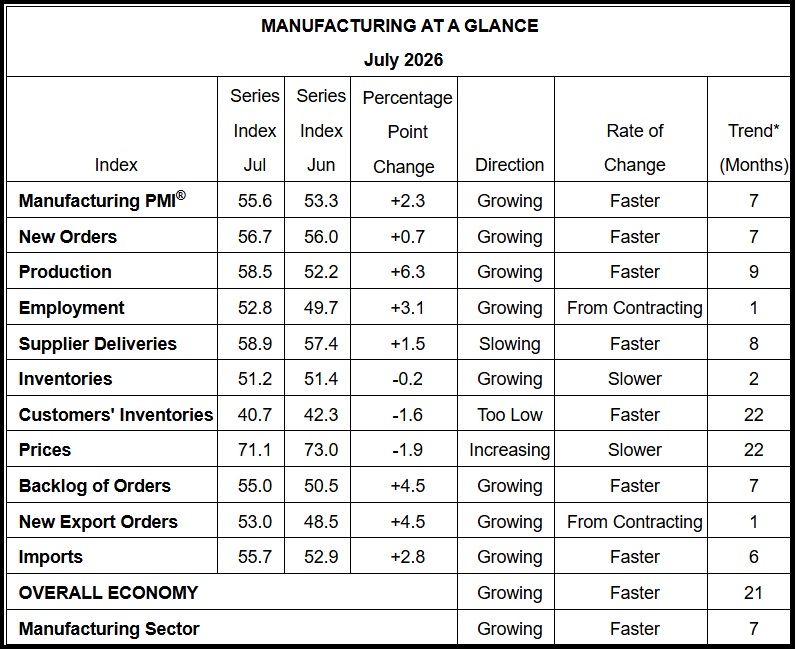
The headline Manufacturing Purchasing Managers’ Index surged to 55.6% in July from 53.3% in June, far above the consensus estimate of 54%. Any reading above 50% signals manufacturing expansion, and the July figure was the strongest since May 2022. Manufacturing has now expanded for seven consecutive months following ten months of contraction, while the ISM says the July result is consistent with annualized real GDP growth of approximately 2.8%.
New orders increased for the seventh consecutive month, rising to 56.7% from 56%. Production exploded to 58.5% from 52.2%, reaching its highest level since November 2021. Backlogged orders increased to 55% from 50.5%, while employment finally moved into expansion territory at 52.8%, up from 49.7%. That was the first manufacturing-employment expansion in 33 months.
Fifteen manufacturing industries reported growth, led by computer and electronic products, machinery, petroleum and coal products, and other sectors tied to AI infrastructure, defense, transportation, and capital investment. Customers’ inventories remain too low, new orders are rising, and factories are rebuilding backlogs. There is genuine demand here, particularly from the construction of data centers, the AI spending boom, defense production, and the reshoring of certain supply chains.
However, the same expansion is colliding with a supply system that is already strained. Supplier deliveries deteriorated again, with that index rising to 58.9% from 57.4%. In the ISM survey, a number above 50% means deliveries are slowing, and the present delays are not merely the healthy result of stronger orders. Manufacturers cited shortages, transportation disruption, extended lead times, metals chaos, computer-chip demand, energy costs, tariffs, and geopolitical uncertainty throughout the Middle East.
The Prices Index remained at a punishing 71.1%. That was down from 73% in June and below the 84.6% recorded in April, but a reading above 70% still means broad and aggressive price increases. Celebrating a decline from an extreme level is like celebrating because the house is now burning through only one floor instead of two. The rate of deterioration may have moderated, but input prices are still rising throughout the manufacturing chain.
The Federal Reserve has now been placed in the impossible position that government repeatedly creates for central banks. Manufacturing is growing at its fastest pace in more than four years, production is surging, orders are expanding, factory employment has finally turned positive, and price pressures remain severe. This is not the environment that justifies cutting interest rates merely because Wall Street and Washington demand cheaper money.
The Fed held the federal funds rate at 3.50% to 3.75% on July 29, but three members dissented and wanted a quarter-point increase. That was an unusually divided vote, and it demonstrates that internal pressure is building. The Fed’s statement admitted that inflation remained elevated above its 2% objective while economic activity continued expanding at a “solid pace.” The ISM report has now reinforced both sides of that statement.
The preferred PCE inflation gauge stood at 3.7% in June, down from 4.1% in May but still nearly twice the Fed’s target. Core PCE, which excludes food and energy, remained at 3.3%. Inflation did not disappear because one monthly headline index declined by 0.1% after energy prices pulled back. The underlying annual rate remains entrenched well above target, and manufacturers are warning that the next wave of costs is already moving through the production pipeline.
The political class will blame the Fed regardless of what happens. If the Fed raises rates to fight inflation, politicians will accuse it of damaging housing, employment, and government finances. If it cuts rates while manufacturing prices are surging, the same politicians will blame it when consumer prices accelerate again..
Interest rates do not rise solely because of inflation. Rates also rise when the demand for capital increases, the economy expands, government competes with the private sector for financing, and investors demand a greater return for lending money. The United States is attempting to finance AI data centers, semiconductor plants, defense production, infrastructure, energy development, and enormous federal deficits simultaneously. That creates competition for labor, materials, electricity, machinery, and credit.
The Fed cannot manufacture transformers, reopen shipping lanes, increase refinery capacity, produce computer chips, or resolve a shortage of skilled labor. Raising interest rates will not make a cargo vessel travel faster or produce additional copper. It can only suppress demand elsewhere in the economy until weaker businesses and indebted consumers are forced to retreat. That is the dirty truth of monetary policy that academics rarely admit: the Fed often “fights inflation” by inflicting enough financial pain to reduce somebody else’s ability to purchase goods, hire workers, or obtain credit.
Nor can the Fed safely cut rates simply because the supply problem is outside its control. Cheaper money would feed additional demand into an economy where orders are already rising and suppliers cannot keep pace. It would reward leverage, encourage more speculative investment, support further government borrowing, and potentially push even more money into commodities, equities, real estate, and AI infrastructure. A supply-constrained economy does not need another artificial demand stimulus.
The July ISM report is positive for American manufacturing, but it is poisonous for the fantasy that the Fed can deliver immediate rate cuts without consequences. Production at 58.5%, new orders at 56.7%, employment at 52.8%, and prices at 71.1% describe an economy that is expanding while simultaneously suffering severe cost pressures.
Washington will try to sell this as proof that every policy is working. The administration will point to the strongest manufacturing reading since 2022, while the opposition will point to inflation and pretend it was produced by one man or one party. Neither side will admit that decades of debt, monetary manipulation, geopolitical intervention, outsourcing, underinvestment in infrastructure, and dependence on fragile international supply chains created this mess.
Manufacturers are telling us in plain English that the present chaos is less manageable than the pandemic. Their testimony matters more than another speech from a politician or economist who has never purchased a ton of steel, shipped a container, operated a factory, or met a payroll. The United States may be entering a powerful manufacturing expansion, but it is doing so with insufficient capacity, unstable supply lines, high borrowing needs, and government spending that refuses to retreat.
Posted originally on Aug 4, 2026 by Martin Armstrong |
Spain has demonstrated precisely why government is so often the source of the crisis rather than the solution. The Sánchez government issued a sweeping royal decree to legalize hundreds of thousands of undocumented migrants, bypassed Parliament, and then acted astonished when people outside Spain interpreted the message exactly as any rational person would: enter the country illegally today and the politicians may legalize you tomorrow.
The decree did not explicitly state that every migrant arriving by boat would automatically receive legal status. It applied to undocumented migrants who could prove that they had lived in Spain for at least five months before January 1, 2026, but leave it to government to hide the fine print. Then Spain’s Supreme Court restricted the immediate expulsion of migrants arriving by sea. Smugglers and social-media accounts distorted that ruling into a promise that anyone who entered Spanish territory through the water could not be sent back, and Madrid failed miserably to contain or correct the message before people began moving. The outcome was entirely predictable.
Approximately 60,000 migrants reportedly entered Ceuta in roughly 24 hours. Ceuta normally has around 85,000 residents, so the government allowed a sudden influx equal to about 70% of the city’s entire population, temporarily pushing the number of people in this small Spanish enclave toward 145,000 almost overnight. This was not a normal migration flow. It was the sudden transformation of an entire city caused by politicians who played with human incentives and never prepared for the consequences.
People swam around the Tarajal breakwater, breached barriers, and poured across sections of the border where Moroccan enforcement had weakened. At least 57 people reportedly died from drowning or in stampedes, although the early numbers varied, and those deaths belong on the conscience of every politician who sent the signal that reaching Spain would provide a new life.
Ceuta’s facilities were already collapsing before this mass influx. The city was caring for 472 unaccompanied minors by July 28 after receiving more than 250 in only two weeks, and officials admitted that the child-protection system was operating at 1,600% of its intended capacity.
Residents reported theft, break-ins, assaults, public defecation, and migrants bathing in fountains. Some businesses closed, local people barricaded streets, and frightened residents remained inside their homes because the government had abandoned its first responsibility, which is to protect the people it supposedly represents. Only a fool would believe that social order will survive when 60,000 desperate people arrive without the basic necessities of life.
Pedro Sánchez suddenly denounced the crossing as an attack on Spain’s territorial integrity. The same government that issued a mass regularization decree and promoted itself as Europe’s humanitarian alternative suddenly discovered that a nation must have a border.
Madrid deployed the military, sent additional police and Guardia Civil officers, closed crossing points, erected barriers, and began returning migrants at an astonishing rate. Estimates indicate that more than 48,000 returned rapidly, with later figures approaching 70,000, while only 3,000 to 5,000 reportedly remained in Ceuta by August 3.
Spain reversed its course because its policy finally landed on the doorstep of Spanish citizens. Compassion ended the moment the numbers became politically visible, the shops closed, the streets filled, and voters began demanding to know who was in charge. This exposes the absolute hypocrisy of modern government. Politicians condemn strict border enforcement as inhumane when someone else proposes it, but they deploy soldiers and accelerate removals the moment their own careers are threatened. Spain reportedly expelled or induced the return of tens of thousands of migrants within days. Therefore, the government clearly possessed the ability to defend the border and return illegal entrants; it merely refused to exercise that authority until the crisis became impossible to hide.
The government then complained that the migrants had misunderstood the rules. This is like placing a sign reading “FREE MONEY” outside a bank and then blaming the crowd for failing to read the conditions printed in microscopic letters beneath it.
Spain had already regularized migrants in the past, and the opposition warned that another broad decree would encourage further irregular entry. Sánchez ignored those concerns because European politicians have convinced themselves that repeating the word “humanitarian” exempts them from reality. Morocco also bears responsibility for allowing border enforcement to weaken. Rabat denied deliberately organizing the influx and blamed misinformation and trafficking networks, but European governments have made themselves dependent on North African states to contain migration before it reaches Europe.
That dependency has turned migrants into a geopolitical weapon. Morocco, Turkey, Belarus, Libya, and other transit states understand that they can pressure Europe simply by relaxing enforcement and allowing desperate people to move toward the border. Europe surrendered control of its perimeter and then became shocked when foreign governments discovered the leverage. No country possessing a functioning sense of sovereignty would outsource its border to a neighbor and assume that arrangement would never be manipulated.
The European Union is useless in a genuine crisis because Brussels specializes in bureaucracy rather than reality. It will convene committees, demand solidarity, design another quota, and distribute funds after the local population has already absorbed the damage. The EU wants every nation to surrender border control while Brussels refuses to accept responsibility for the consequences. It demands uniform humanitarian language but leaves local governments and citizens to confront the crowds, shortages, crime, and anger.
France and Italy moved to protect themselves because they understood that Spain’s failure would not remain confined to Ceuta if migrants reached the mainland and traveled through the Schengen zone. Open internal borders cannot survive when external borders are treated as optional.
Migration cannot be managed through moral slogans. A government must decide how many people it can accept, where they will live, how they will support themselves, what happens when facilities are full, and how those without valid claims will be removed. Without enforcement, asylum becomes immigration by incantation. Anyone who reaches the territory says the required words, the bureaucracy begins a process that may last years, and the government loses the political will to remove anyone once that person has established a life.
The people of Ceuta did not vote to increase their population by 70% in a day. They were not consulted, and the officials who created the policy were nowhere near the streets when residents began barricading their neighborhoods. The migrants were also used as pawns. They were encouraged by rumors, smugglers, court rulings, and Spain’s own political signals to risk drowning, only to be pushed back after Madrid realized that it could never accommodate them.
That is not compassion. It is government playing with human lives to maintain a political image and then using force when reality destroys the performance. The politicians responsible will never admit fault because government has perfected the art of blaming the consequences of policy on everyone except those who wrote it. They will blame Morocco, social media, smugglers, the courts, the opposition, and even the migrants themselves before acknowledging that their broad decree helped create an expectation of eventual legalization.
Government cannot repeal human nature by decree. Desperate people move toward perceived opportunity, frightened communities defend themselves when the state fails, criminals exploit confusion, and politicians reverse policy when their survival is threatened. This crisis was not caused by compassion. It was caused by cowardly politicians who wanted credit for being compassionate without accepting the limits, costs, and responsibilities that accompany their promises.
Note: Armstrong stopped allowing “some” of his videos to be copied. You can see them if you go to his blog.
Anthony Fauci’s diary, in his own words, provides ample reason to conclude that this man became intoxicated by attention, obsessed with his public image, and disturbingly comfortable turning a national catastrophe into an Anthony Fauci celebrity show. While you were locked away in your home, glued to the television for answers, waiting by the phone for news of loved ones isolated from society, Fauci was basking in his status as an international celebrity.
On March 10, 2020, Fauci wrote, “For better or worse, I am becoming an international celebrity.” Twelve days later, while Americans were losing jobs and watching their businesses collapse, he recorded that the “press is going wild with me.” He then marveled that doughnuts were being named after him, T-shirts carried his face, songs were being dedicated to him, and celebrities such as Trevor Noah and Steph Curry wanted his time.
By May, the self-admiration had become impossible to miss. Fauci wrote that his fame was “explosive and really unimaginable,” adding that he was “the most famous and talked about person in the country.” Who writes that about himself during a mass-casualty emergency? He carefully documented his television profiles, invitations, celebrity encounters, praise from journalists, and even an invitation to appear on Dancing with the Stars. The country was terrified, children were locked out of schools, elderly people were dying alone, and Fauci was keeping a scrapbook of his own stardom.
His entry about Julia Roberts is particularly revealing. He recalled her exclaiming, “Oh my God. It’s Dr. Fauci,” calling him her personal hero, and expressing her delight at speaking with him. He did not merely record the policy discussion; he preserved every drop of praise. The diary repeatedly reads less like the working notes of a dispassionate scientist and more like the journal of a man thrilled that Hollywood had finally discovered him.
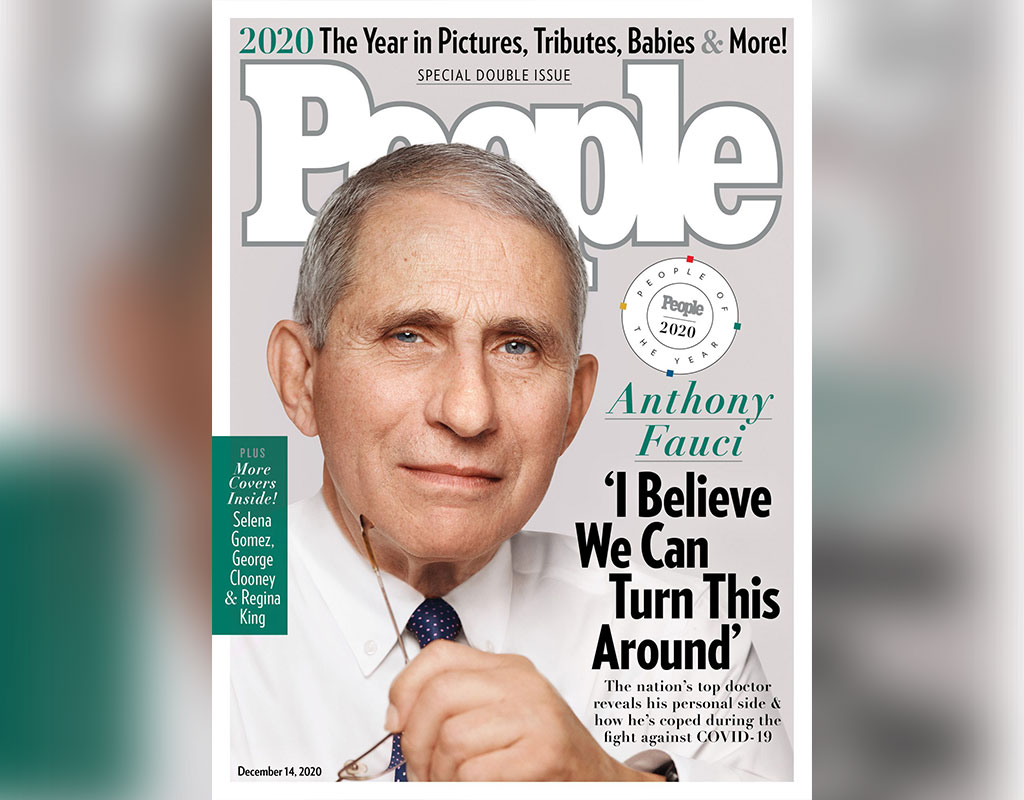
The media devoured the Fauci spectacle because he provided exactly what it wanted: a government official willing to sanctify its preferred narrative while treating dissenters as ignorant or dangerous. He appeared across television networks, newspapers, international publications, and glossy magazines, including a special InStyle digital cover photographed poolside in sunglasses while the country remained under pandemic restrictions. Time placed him among its 100 most influential people, Saturday Night Live had Brad Pitt portray him, documentary filmmakers celebrated him, and journalists treated access to him as though they were interviewing a movie star. The press did not scrutinize Fauci as a powerful federal bureaucrat whose decisions affected hundreds of millions of lives; it built a personality cult around him and then attacked anyone who refused to kneel before “America’s doctor.”
The diary contains even more evidence of how completely Fauci came to view himself as the central figure on Earth. On March 22, 2020, he marveled that there were “many print profiles and features on me” and that the “press is going wild with me.” Days later, he catalogued the doughnuts, T-shirts, songs, celebrity calls, and television appearances created in his honor, while in April he wrote that the press remained “hot and heavy about me” and saved a link to an Atlantic story titled “Why America Is Thirsty for Anthony Fauci.”
By May, Fauci declared that it was not hyperbole to call himself “the most famous and talked about person in the country” and “one of the most recognizable” people in the world. Even at the Kennedy Center Honors in December 2022, he recorded being “completely swamped” by people yelling his name and applauding, adding that he was amazed his recognition had reached “such a height.” This was not a passing observation about unwanted publicity; it was a meticulous, almost compulsive inventory of his own importance, written by a man who seemed unable to encounter a compliment, celebrity, magazine profile, or cheering crowd without preserving it for posterity.
Fauci later insisted that he was “certainly not getting a big head,” which is precisely the sort of sentence people write after devoting page after page to how famous, admired, recognizable, and important they have become. This does not prove a clinical personality disorder, but it displays the traits ordinary people associate with extreme narcissism: grandiosity, hunger for admiration, hypersensitivity to criticism, contempt for opponents, and relentless attention to personal status.
The sickest part of this story is that Fauci’s celebrity required the pandemic to continue dominating public life. Every new restriction, frightening prediction, television interview, and conflict with Trump kept him at the center of the national drama. He became more than a bureaucrat; the media transformed him into an untouchable secular saint, and his diary strongly suggests that he loved every minute of it. Americans were ordered to sacrifice their livelihoods, freedom, education, and family relationships while the man presented as “the science” sat behind closed doors recording just how famous the suffering had made him.
Posted originally on Aug 4, 2026 by Martin Armstrong |
QUESTION: Marty, I wanted to tell you that your Tampa conference was amazing. You really blew the doors off conventional economics. I was especially fascinated by your explanation that making too much money at a young age caused you to lose your fear of money, which ultimately allowed you to manage trillion-dollar portfolios while others were always afraid of losing.
I know your seed money came from silver coins, but you also mentioned your loss in Fidelity Trend. Looking back, did you make more money from silver or from the rare coin market?
Brian
P.S. I can’t wait for the video. I really hope you do another conference.
ANSWER: My mother couldn’t believe that someone would pay me $50 for a quarter. She finally went with me to a coin dealer because she wanted to see if it was true. The dealer paid me $50 for a 1932-D Washington quarter right in front of her. She was absolutely stunned. Until then, she couldn’t understand how I was making money buying and selling coins.
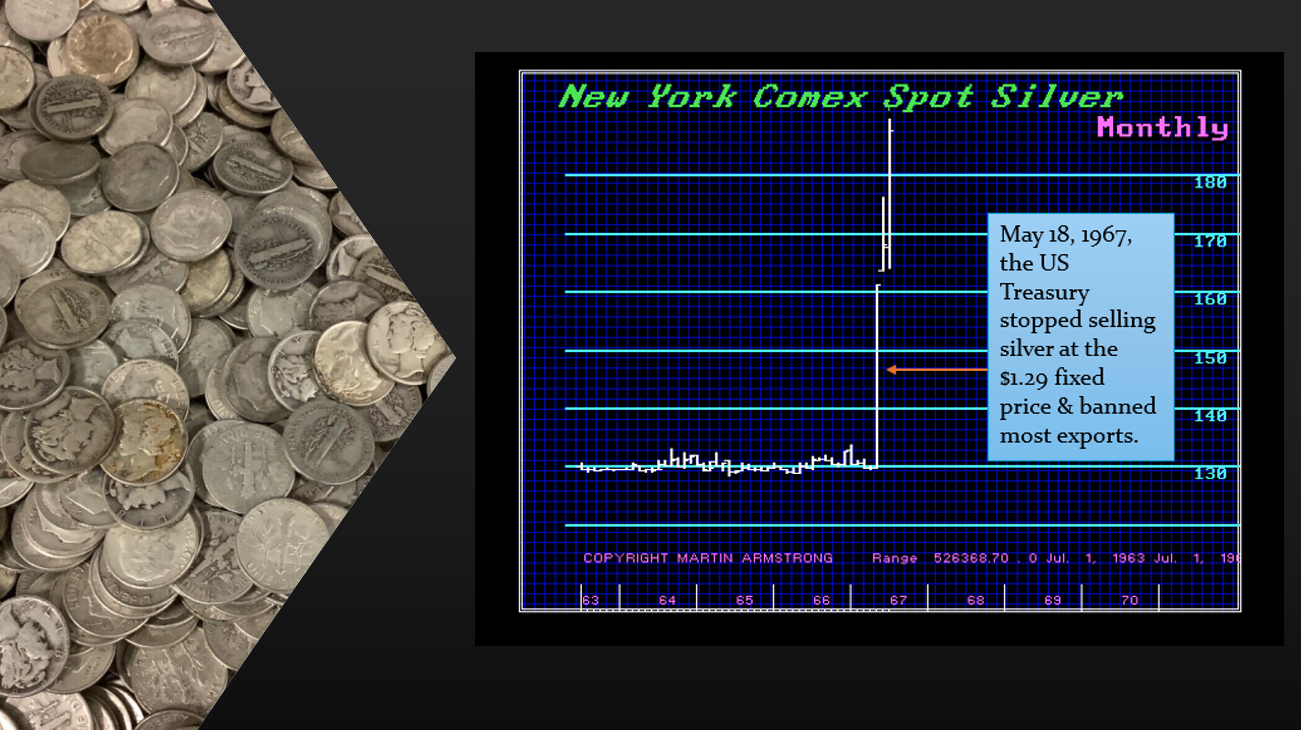
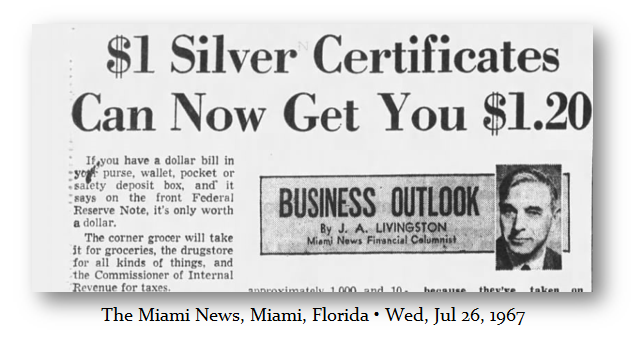
I made a great deal of money from the silver market, particularly when the U.S. Treasury stopped selling silver at $1.29 an ounce in 1967. But, overall, I made even more in the rare coin market.
One of my best purchases was a hoard of uncirculated Athenian Owl tetradrachms from an estate in Princeton, New Jersey. They had a beautiful blue patina and were among the finest examples I had ever seen. I eventually sold the entire hoard to Stack’s Coin Galleries in New York City. If I remember correctly, they brought about $1,000 per coin at the time. I didn’t keep a single one. Today, those same coins would likely sell for $15,000 or more each. I keep looking for one to come up for auction to buy for memory sake.
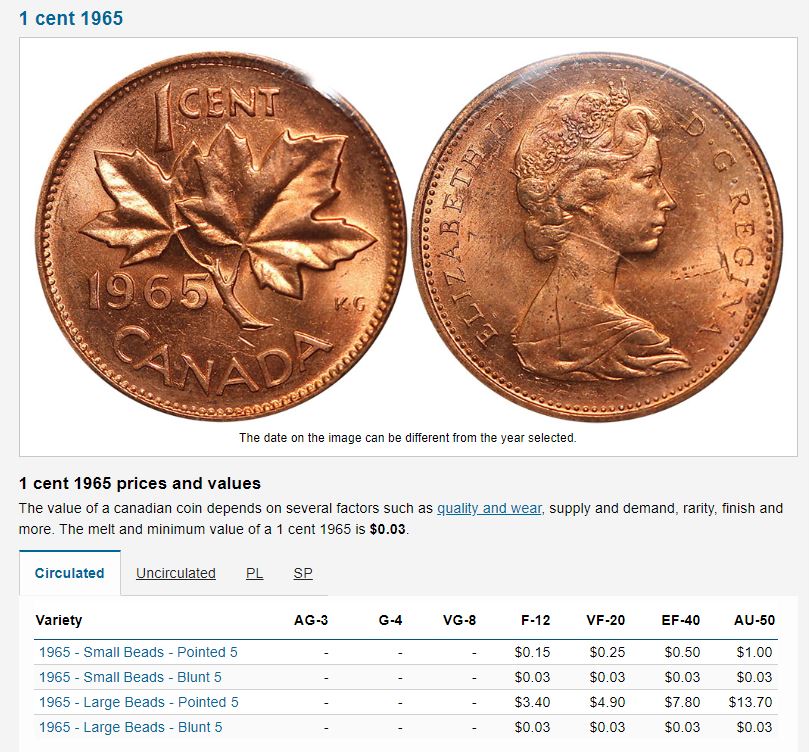
I had three full bags of those Canadian large bead pointed five coins. People actually flew in from around the country just to buy rolls from me. My mother simply could not believe that people would board an airplane to purchase a roll of pennies for $700 and more. For perspective, a standard $50 face-value bag contains 5,000 pennies.
I was also buying Silver Certificates and redeeming them with the U.S. Treasury for silver bullion beginning in 1965. At the time, the Treasury required a minimum redemption of $10,000 face value, which meant most individuals could not redeem them directly. As a result, many people sold their Silver Certificates at a discount to dealers like me who could meet the minimum requirement. The government deliberately established that threshold to slow the heavy demand for silver as the redemption program was coming to an end.
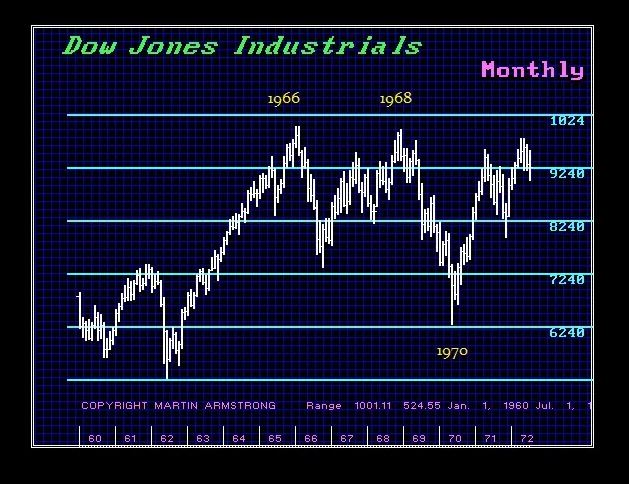
What the 1966 Crash taught me was that its was an EVERYTHING BUBBLE. Stocks crashed, rare coins crashed, real estate crashed. That was my lesson in understanding the interconnectivity of everything. Then in 1968, the Bretton Woods gave way and suddenly there was a free market in gold trading in London starting in 1968.
Then the 1970 Crash saw gold fall BELOW the $35 fix of Bretton Woods. That was earth shattering. Inflation, Vietnam, protests, and gold fell below $35? That was supposed to be impossible.
Those events taught me about false moves and how the majority MUST be wrong for that is the real engine behind market and economic movement.
That taught me more than anything in school ever did.
Posted originally on CTH on August 3, 2026 | Sundance
Olha Stefanishyna says she resigned. Volodymyr Zelenskyy says she was removed. Regardless of which storyline is accurate, the Ukraine Ambassador to the United States is no longer in position. There is no replacement.
Stefanishyna is also under investigation for her connection with financial irregularities involving the Asset Recovery and Management Agency, although she has not been formally charged, yet.
The Western narrative, which has continuously looked like an intelligence community shaping, says that U.S. relations with the government of Ukraine have never been stronger. The reality seems to be something else entirely.
Aug 3 (Reuters) – President Volodymyr Zelenskiy dismissed Ukraine’s ambassador to the United States, Olha Stefanishyna, in a decree published on Monday.
Stefanishyna had been in her job for nearly a year. Her departure had been expected for several weeks.
Her departure coincides with a shake-up in recent weeks of top officials, including the replacement of the prime minister and defence minister. A reshuffle of Ukraine’s diplomatic and ambassadorial appointments is also expected.
Stefanishyna, writing on Facebook, said the decision to leave her post was “my own decision, driven by personal circumstances … ” and said she had accomplished much during her time in the post. (read more)
I am not going to belabor the points, because I’m told by most my review of the data is incorrect. However, once again, I would simply point out the distinct difference between the preferred Western narrative and the reality of events as they unfold.
From the June 11th London visit that preceded the G7 assembly in Paris, things have not made sense when you compare Western narrative to the reality of events. The removal of Stefanishyna is simply just another datapoint.
Western media say Ukraine has turned the tide on the war against Russia. Reality – Russia has methodically gained ground in Eastern Ukraine.
Western media say Ukraine has exceptional drone building and technological capabilities to share with allies. To highlight this expertise Ukraine held a drone exposition in Kiev; Russia blew it up killing hundreds of contractors. Media went silent.
Ukraine drones attack Wildberries warehouses. Russia blows up drone manufacturing factories.
Western media say Ukraine drone capabilities are the most remarkable testimonial to their military effectiveness. Zelenskyy fires the Minister of Defense responsible for the drone capabilities.
Western media say Ukraine is effective in stopping the Russian advancements in the Donbas region. Zelenskyy fires the military general in command of the Ukraine military in the Donbas.
Western media say Ukraine long-range drones are striking deep into Russian oil refining capacity. Zelenskyy says he needs to build drone and missile factories in Great Britain.
If you want to evaluate the war, go back to the timing of events right after Zelenskyy last went to London and met with King Charles. It was a few days before the G7 summit in Paris. Go back to that exact date and then read the headlines on Ukraine/Russia from that date to today.
If you can be emotionally disconnected from the spin, and just focus on what the headlines would mean in every other timeframe, what you will notice is that Ukraine is panicking. Every move is a panic move from that London visit to today.
Every Russian move exists silently, almost in isolation from Western media. Every Ukraine move exists loudly, coordinated and promoted for maximum media value. It looks like an intelligence influence operation.
Go look.
The recently organized U.S. Senate sanctions against Russia are mostly directed toward China and India, while framing censorship in the form of punishment against any action that might “undermine” the government of Ukraine. It’s the ‘be careful what you say’ sanctions.
Russia is methodically destroying Ukraine defenses, and the only response Zelenskyy has put together is flashy political promotion and media headlines to hide a reality that Russia is methodically destroying Ukraine defenses.
Western media says one narrative; the datapoints show something entirely different.
I give it four months, and it’s over.
Perhaps, that’s why President Trump: (A) pulled back from Patriot and Tomahawk missile sharing; and (B) has told his team to reengage both sides in peace negotiations now.
Posted originally on CTH on August 3, 2026 | Sundance
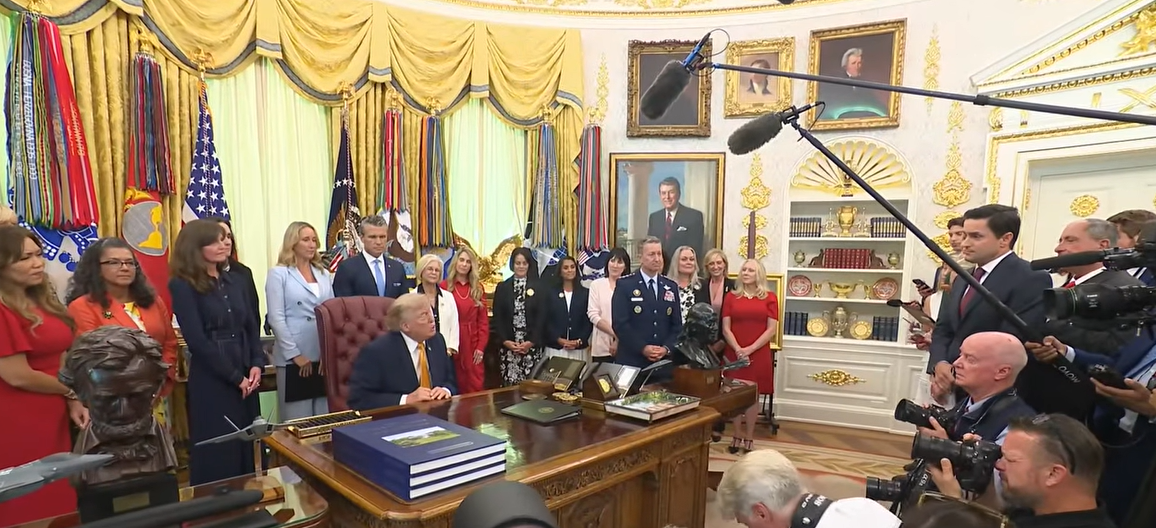
During an oval office event to support military families and servicemembers, President Trump took questions from the assembled press pool. The questioning begins at 23:19 (prompted):
Posted originally on CTH on August 3, 2026 | Sundance
The young man who boosted the public perception surrounding welfare, HHS and Medicare fraud in Minnesota, has travelled to Ceuta, Spain, to see for himself what exactly is going on.
There are various claims about causation and accusations surrounding the horde of 60,000 young male migrants who have swamped the city and created chaos. However, Mr Shirley asks them directly why they came and in general they say they just want a better life with the opportunity to reach mainland Spain. It seems like the average age is 14 to 17-years old.
One of the interesting notes is with the Spanish man who helped to escort and guide Shirley. At 14:50 when asked why Spanish politicians allow the border crisis and mass illegal migration, the man answers, in essence, 3rd world dictators have more absolute power than 1st world democracies. As a consequence, far-left ideologues who rise as leaders in politics see a greater value in having a subservient population for them to rule. Leftists don’t succeed in true democracies, so they need to create the new version of democracy where they can devolve the social structures of the nation and gain power.
Chapters:
00:00 What happened to Ceuta Spain? 1:38 Current situation with Spain vigilante 3:22 Spain-Morocco Border 4:28 Moroccan migrants returning to Morocco 5:42 Was this a setup by Spain? 7:33 Moroccan Migrants inside the city, where are they going? 10:20 Spaniards feel unsafe… vigilante speaks out 12:15 Finding migrants hiding in the mountains 14:47 Why is Spain turning into the 3rd world? 17:19 Migrants showering on the graves of Spaniards 18:12 Spain begins to take action 19:03 Inside the PACKED migrant camp 23:35 Migrants thank Pedro Sanchez 24:00 Interview with Moroccan migrant in English 27:12 Chased with knife by Muslim man
Posted originally on CTH on August 3, 2026 | Sundance
What we can take away from the Institute for Supply Management (ISM) index on manufacturing [Data Here]: overall, the U.S. manufacturing sector is continuing to expand significantly. The current index of 55.6 percent in July is 2.3 percentage points above the June figure and the highest reading since May 2022 (55.9 percent), when we were trying to recover from the COVID-19 shutdowns and supply chain problems.
PMI – The overall economy continued in expansion for the 21st month in a row. (A Manufacturing PMI® above 47.5 percent, over a period of time, generally indicates an expansion of the overall economy.) The New Orders Index expanded for the seventh consecutive month after four straight readings in contraction, registering 56.7 percent, up 0.7 percentage point compared to June’s figure of 56 percent.
The July reading of the Production Index (58.5 percent) is 6.3 percentage points higher than the 52.2 percent recorded in June and the highest figure since November 2021 (60.5 percent). The Prices Index remained in expansion (or ‘increasing’ territory), registering 71.1 percent, a 1.9-percentage point decrease from June’s reading of 73 percent. The Backlog of Orders Index registered 55 percent, up 4.5 percentage points compared to the 50.5 percent recorded in June.
The Employment Index reading of 52.8 percent is up 3.1 percentage points from June’s figure of 49.7 percent, putting the index in expansion territory for the first time in 33 months.” (source)
All that data and a couple of bucks will buy you a cup of coffee, but here’s what it means in common speak.
Overall, companies wanting to make products in the United States are expanding the manufacturing sector. However, they are running into a problem when trying to source the component goods and/or raw materials. The resource goods they need are constantly in a status of flux and the prices are unstable.
For large companies their supply chain management can deal with the short inventory issue through various sourcing networks using multiple suppliers. However, for smaller companies this is frustrating.
The manufacturing system is a network of complex suppliers who make component materials needed for the core product. In order to get really successful, the smaller manufacturing component goods need to start up inside the USA just like the larger companies who are producing a finished product.
This is why even during a manufacturing surge we end up importing a lot of goods on the front end of the transition. Absent a domestic supplier, industrial component products are heavily imported in order to manufacture the finished durable good.
It takes time, well, technically its never been tried – so, no one is sure, but it takes time for all of the component manufacturing to establish inside the USA in order to feed the component parts to the various manufacturers who depend on the sub-sourcing. This is the period we are in at the moment, and prices are fluctuating as people try to get their arms around costs here and abroad.
The 15 manufacturing industries reporting growth in July — listed in order — are: Printing & Related Support Activities; Apparel, Leather & Allied Products; Electrical Equipment, Appliances & Components; Primary Metals; Nonmetallic Mineral Products; Transportation Equipment; Miscellaneous Manufacturing; Textile Mills; Machinery; Computer & Electronic Products; Food, Beverage & Tobacco Products; Wood Products; Plastics & Rubber Products; Furniture & Related Products; and Fabricated Metal Products. The only industry in contraction was Chemical Products.
[…] Commodities Up in Price Acrylonitrile Butadiene Styrene (ABS); Aluminum* (32); Copper (13); Corn; Corrugated Products (4); Electrical Components (2); Electronic Components (7); Freight (5); Fuel* (5); Integrated Circuits; Memory Components (5); Metal Products (4); Ocean Freight (3); Oil Based Products (4); Paper Products (4); Plastic Based Products (4); Plastics (5); Printed Circuit Boards; Resin Based Products; Resins (6); Semiconductors (2); Soybean Meal; Steel (9); Steel — Cold Rolled; Steel — Hot Rolled (7); Steel — Stainless (6); Steel Products (8); and Sulfur Products (4).
Commodities Down in Price Aluminum*(2); Fuel* (2); and Polypropylene Resin (2).
Commodities in Short Supply Aluminum; Copper; Electrical Components (13); Electronic Components (17); Integrated Circuits; Memory (7); Oil Based Products; Printed Circuit Boards; Rare Earth Components; Semiconductors (5); Steel; Steel — Hot Rolled (2); and Tungsten Products.
The blue-collar jobs are expanding significantly. There is massive upward pressure on wages for blue collar workers as the manufacturing sector continues to expand.
I have created this site to help people have fun in the kitchen. I write about enjoying life both in and out of my kitchen. Life is short! Make the most of it and enjoy!
This is a library of News Events not reported by the Main Stream Media documenting & connecting the dots on How the Obama Marxist Liberal agenda is destroying America













 Centinel2012