Posted originally on Aug 3, 2026 by Martin Armstrong |
If the goal is truly to Make America Healthy Again, then the latest decision from the Environmental Protection Agency raises serious questions. According to the article you sent, the EPA has approved two new fluorinated pesticides, diflufenican and epyrifenacil, for use on some of America’s most important crops, including corn, soybeans, and wheat. Neither chemical has previously been approved for use in American agriculture.
Environmental groups argue these compounds qualify as PFAS, or “forever chemicals,” under internationally recognized scientific definitions because they can persist in the environment and eventually degrade into trifluoroacetic acid (TFA), an extremely persistent fluorinated compound found in groundwater around the world. The EPA disputes that characterization, maintaining the products do not meet its regulatory definition of PFAS and that they can be used safely according to their labels.
Diflufenican has already become controversial in Europe. Denmark banned its use in part because of concerns that it contributes to TFA contamination of groundwater, while German monitoring has detected TFA in a large percentage of tested wells. Epyrifenacil has reportedly never received approval for agricultural use within the European Union. Whether those regulatory decisions ultimately prove right or wrong, they demonstrate that this is hardly an uncontested scientific issue. Governments around the world are reaching different conclusions about the same chemicals, yet American consumers are expected to assume there is nothing to debate.
What makes this particularly troubling is the contradiction with the broader Make America Healthy Again movement. Robert F. Kennedy Jr. has made eliminating artificial food dyes, improving nutrition, investigating chronic disease, reforming food ingredients, and reducing Americans’ exposure to harmful chemicals central themes of his public campaign. Those are worthwhile objectives. Yet cleaning up processed foods while simultaneously allowing the introduction of new fluorinated pesticides that have never before been used on American food crops sends a mixed message. If the objective is to reduce unnecessary chemical exposure wherever possible, then many Americans will reasonably ask why entirely new fluorinated agricultural chemicals are being introduced at the same time. That contradiction is becoming increasingly difficult to ignore.
The broader issue is one I have discussed for years in my Agricultural Report. Food has become another battlefield. Farmers are buried under climate regulations, fertilizer restrictions, water controls, and endless bureaucratic oversight, while consumers are increasingly separated from understanding how their food is actually produced. Governments continue expanding their influence over agriculture under the banners of safety, climate, or public health. Regardless of political party, that trend never seems to reverse.
Food security has always been national security. Once confidence in the safety of the food supply begins to erode, rebuilding that trust becomes extraordinarily difficult. The debate over diflufenican and epyrifenacil is therefore much larger than two new pesticides. It reflects a growing public concern that regulators continue introducing new chemicals into the food chain while asking citizens to simply trust that everything has been thoroughly evaluated. History has taught us that blind trust in government regulators is rarely rewarded.
Posted originally on Aug 3, 2026 by Martin Armstrong |
Private land may be seized to construct transmission lines required by the rapidly expanding AI data-center industry. If a property owner refuses to sell an easement voluntarily, a utility may resort to eminent domain, provided the project is declared a “public use” and the owner receives what the government calls “just compensation.” Let us call this what it is: legalized theft.
The government does not ask whether the land has been in your family for generations, whether you built your home with your own hands, or whether the money offered would ever replace what is being destroyed. A bureaucrat determines the supposed market value, a judge blesses the taking, and armed government agents will eventually remove you if you continue to resist. They hide behind legal phrases because “confiscation for corporate benefit” would expose the practice for what it has become.
The United States already has more than 3,000 data centers, with another 1,500 under development. These facilities consumed more than 4% of total US electricity in 2024, and demand is rising rapidly as companies construct gigawatt-scale AI campuses. New transmission lines must cross somebody’s property, and when the owner says no, the state may simply decide that no does not matter.
Seventy percent of Americans reportedly oppose having a data center built near their community. These facilities can consume enormous quantities of electricity and water while creating noise, traffic, pollution, and higher infrastructure costs. Health risks are not fully understood although reports of increased cancer risks are prevalent in communities near these facilities. Yet the same governments that claim to represent the public are preparing to override that opposition because the technology companies have more influence than the families whose land stands in their way.
This is already happening. CBS News reported that Georgia Power acquired more than 300 parcels for a transmission project intended largely to serve data centers. The utility said that between 70% and 80% of the new line’s capacity would support data-center demand. Families were informed that if they refused the proposed sale, Georgia Power could pursue condemnation.
Ansley Brown’s family sold the home her grandparents had built after receiving an eminent-domain notice. She called the process “theft,” and she was absolutely correct. Georgia Power would not even identify the data-center companies benefiting from the project, citing customer confidentiality. The landowner must surrender everything, but the corporate beneficiary is permitted to remain hidden. That tells you exactly who the government serves.
The Fifth Amendment states that private property shall not be taken for public use without just compensation. The government has twisted those words beyond recognition. A transmission line that principally benefits unnamed private technology corporations is now presented as a public necessity merely because the electricity passes through the broader grid. Under that reasoning, nearly any private commercial project can be disguised as public infrastructure.
The Supreme Court opened the floodgates with Kelo v. City of New London in 2005. The Court ruled 5–4 that private property could be taken and transferred to another private party as part of an economic-development plan. The politicians promised jobs, tax revenue, and revitalization. The proposed Pfizer-related development never materialized as promised, and much of the condemned neighborhood remained vacant for years. Families lost their homes so politicians could gamble with property that was never theirs.
I have written about the abuse of eminent domain repeatedly because it destroys the very foundation of a free society. In South Dakota, around 80 farmers faced eminent-domain lawsuits connected to the Summit Carbon Solutions pipeline. Surveyors entered private property while the government protected the corporation rather than the owners. The project was sold under the ESG banner, just as these latest confiscations will be sold under the banners of AI, grid reliability, national competitiveness, and technological progress.
In New Jersey, officials moved to seize the Henry family’s profitable 21-acre farm, which had remained in the family since 1850, to satisfy an affordable-housing mandate. The family rejected a multimillion-dollar offer, so Cranbury Township voted to take the land anyway. Four generations of that family were buried in the town, but government officials decided that their housing quota carried more weight than 175 years of ownership.
This abuse crosses party lines. Republicans support eminent domain when they want pipelines, border infrastructure, or corporate development. Democrats support it for affordable housing, environmental schemes, and urban redevelopment. Both sides believe private property remains yours only until the state discovers a politically favored use for it.
Jamie Dimon openly wrote in 2023 that governments, businesses, and nongovernmental organizations might need to invoke eminent domain to accelerate investments in grids, solar facilities, wind projects, and pipelines. That statement exposed the direction of policy. The political and corporate classes view private property as an inconvenience standing between them and whatever agenda they have declared urgent.
Now AI has become the latest excuse. This is not an argument against technological development. Private companies have every right to build data centers, but they should purchase the required land in a voluntary transaction. If an owner refuses to sell, the company should change the route, improve its offer, develop alternative power supplies, or build elsewhere. The word “no” is supposed to mean something in a free market.
There is no genuine property ownership when the government can determine the buyer, the price, and the date you must leave. What Americans possess under this system is conditional occupancy. You pay property taxes forever, comply with thousands of regulations, and may still be expelled when a corporation with political connections wants the land beneath your feet.
The AI companies will keep the profits. The utilities will recover their investments through rates. Politicians will hold ceremonies and boast about jobs and innovation. The displaced landowners will be handed a check calculated by strangers and told that the seizure was performed for the public good.
That is not capitalism. It is corporatism enforced by the state, and eminent domain is the weapon that makes the r
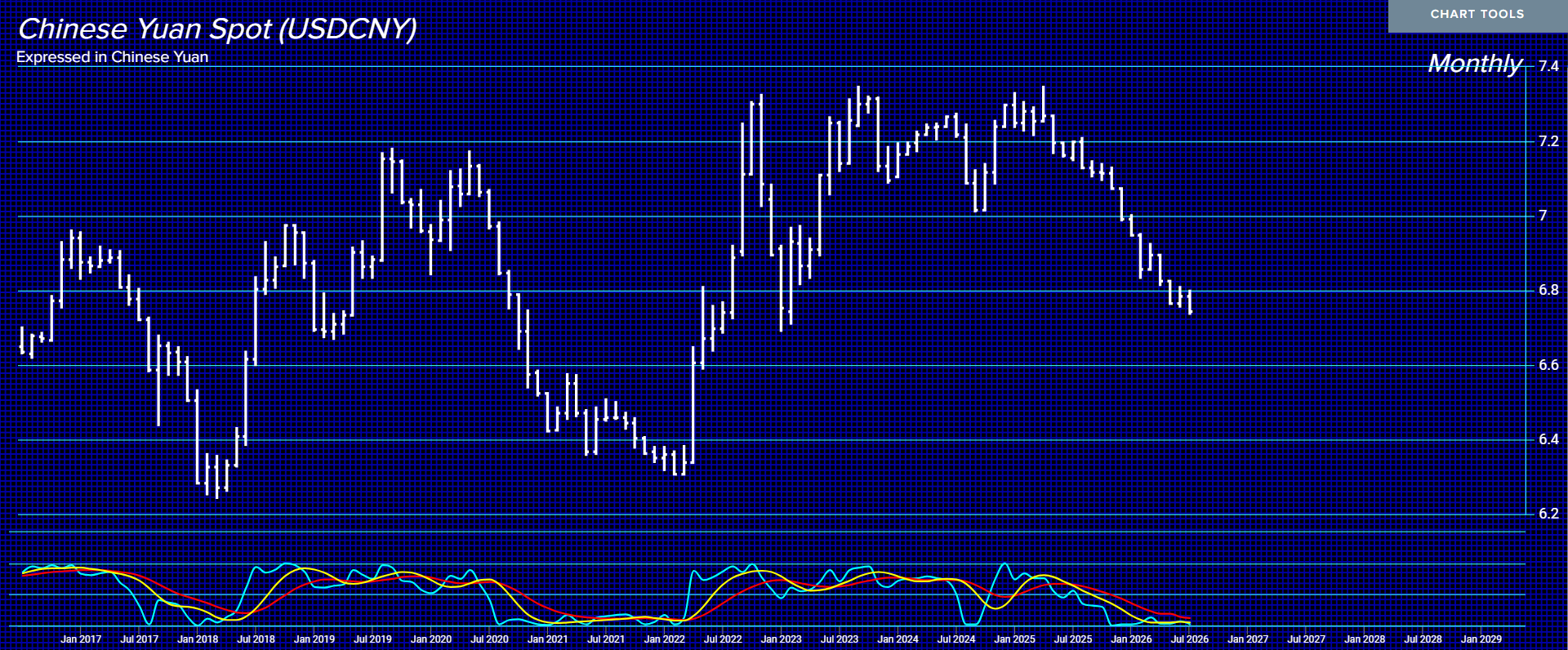
QUESTION: Marty, last March you said the dollar would peak against the yuan and then decline into August–September 2026. You also said the computer suggested this move would coincide with rising tensions in the Middle East, specifically involving Iran. Since then, we’ve seen Operation Midnight Hammer on June 22, 2025. In your debt report, you also explained that China has major strategic and economic interests in the region, including its railroad projects with Iran and its broader ties to Iraq and Saudi Arabia. Given those interests, do you see China becoming directly involved in the conflict with Iran, or will it seek to protect its interests through other means?
ANSWER: Yes, but I do not see China sending troops. Beijing views Iran primarily through the lens of great-power competition. From China’s perspective, a prolonged conflict involving Iran ties down American military, financial, and political resources, leaving the United States less able to focus on what Beijing regards as the primary long-term objective—Taiwan. The drain on military assets has called into question if the US has the missile capacity to even defend Israel while Zelensky is demanding Patriot Missiles.
I have said from the outset that Trump was persuaded by the Neocons, who used Netanyahu to sell the Iran war. Iran has waged its proxy war against Israel for 45 years. Netanyahu has been making essentially the same argument since at least 1996—that Iran is only weeks away from acquiring a nuclear weapon and must be destroyed. Decades later, the narrative remains remarkably unchanged. In my view, this conflict has never been solely about Israel’s security or Iran’s nuclear program. Netanyahu has consistently sought the destruction of the Islamic Republic itself.
Even if Iran had a nuclear weapon they would not use it anymore than Pakistan uses its nukes. Iran sees a nuke as a deterent against Israel which has nukes. But let’s get real. Russia has more nukes than the USA. That does not stop Ukraine even boasting that Moscow will fall. Granted, Iran sees this as taking down Iraq because they did not have nukes. Has Saddam had nukes, the Neocons would not have invaded which was again for Israel.
To understand this conflict objectively, we must first understand its history and we must look at this through each party’s eyes.
Hezbollah officially declared its existence in 1985. What many people overlook is that before the 1979 Islamic Revolution, Iran was the second country in the Middle East to recognize Israel as a sovereign state under the Pahlavi monarchy. That relationship ended with the Revolution. The new Islamic Republic severed diplomatic ties with Israel and adopted a revolutionary anti-imperialist ideology that portrayed Israel as an illegitimate state and a symbol of Western domination. From that point forward, ideology became the principal driver of the conflict.
Iran’s leadership has consistently described Israel as an illegitimate “cancerous tumor” and an American colonial outpost in the Middle East. Support for the Palestinian cause became one of the central pillars of the Islamic Republic’s ideology and a major source of its legitimacy throughout much of the Muslim world.
From Israel’s perspective, however, Iran’s repeated calls for Israel’s destruction and its support for organizations such as Hezbollah and Hamas constitute an existential threat. Netanyahu’s campaign to persuade the United States to confront Iran has therefore always extended beyond the issue of nuclear weapons. The broader objective has been the overthrow of the Islamic Republic.
At the same time, we must also understand why Iran refers to the United States as the “Great Satan.” That did not arise in a vacuum.
The 1953 CIA-backed coup that overthrew Prime Minister Mohammad Mosaddegh and restored the Shah remains the defining event in modern U.S.-Iranian relations. While it is not the only source of hostility, it is the foundational grievance upon which decades of mistrust were built.
From the Iranian perspective, the United States intervened after Mosaddegh nationalized Iran’s oil industry, threatening Western economic interests. Washington and London supported the return of the Shah, who increasingly ruled as an authoritarian monarch. The original conflict in 1953 was fundamentally about control over oil and geopolitical influence.
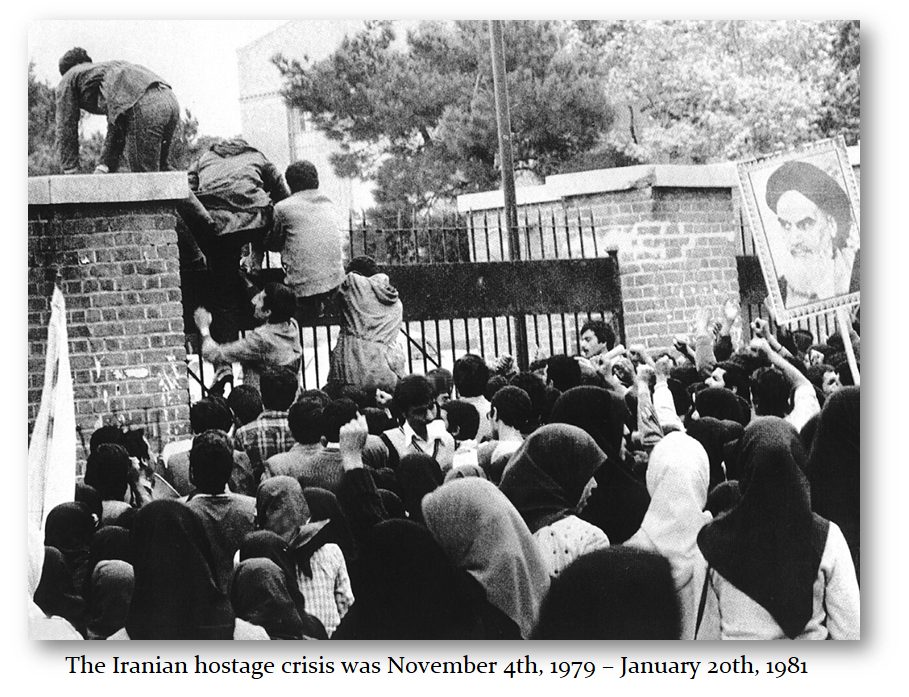
When the Islamic Revolution erupted in 1979, the memory of that coup became one of the principal justifications for the seizure of the U.S. Embassy and the hostage crisis. The revolutionary leadership also faced significant domestic opposition, much of it secular rather than religious. By portraying the United States as the external enemy, the new regime could brand internal opponents as agents of a foreign power rather than simply political adversaries. History repeatedly shows that governments under pressure often strengthen internal unity by emphasizing an external threat.
The same political tactic appears in many conflicts. Rather than addressing criticism directly, opponents are portrayed as supporting the enemy, allowing governments to shift the debate away from the substance of the criticism itself.
Whether one agrees with Iran’s interpretation or not, understanding the origins of the hostility is essential. The deep antagonism between Washington and Tehran did not begin with the nuclear issue. It is rooted in the events of 1953, reinforced by the 1979 Revolution, and has been sustained by decades of mutual confrontation ever since.
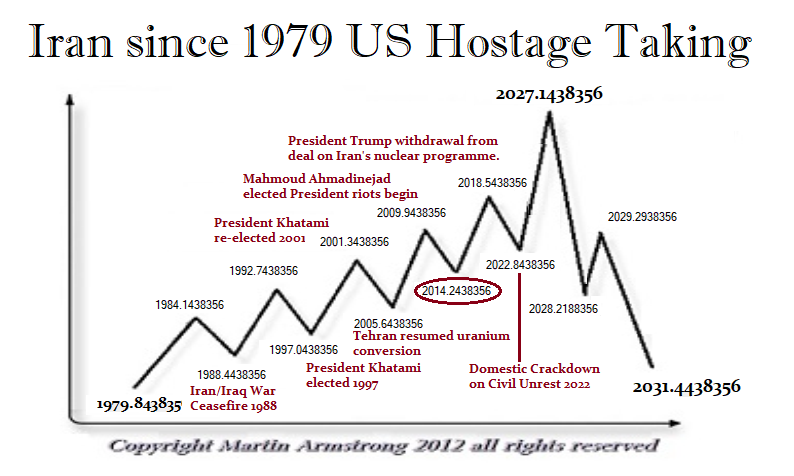
The 1979 revolution set the two nations on a collision course, and the issues over nuclear weapons and proxy warfare have only deepened the divide but are not truly the core issue. This is ultimately a duel to the death. It has been shaping Middle Eastern geopolitics for over 45 years and it appears to be headed into serious confrontation in 2027.
China has been supporting Iran diplomatically and economically, but there is little indication that Beijing intends to become a direct military participant in the conflict. It is important to note that Iranian Foreign Minister Abbas Araghchi traveled to Beijing for high-level discussions during the crisis. The visit underscored the strategic and economic importance that both countries attach to their relationship. Following those meetings, China reaffirmed its support for Iran’s sovereignty while calling for negotiations and de-escalation rather than a further expansion of the war.
I have said before that regime change cannot be achieved simply by bombing a country into submission. In fact, such a strategy often produces the opposite effect. I know Iranians who were strongly opposed to the Islamic Republic, yet the American bombing campaign has caused them to rally behind their country rather than support foreign intervention. The treatment of the Iranian team and its supporters during the World Cup was viewed by many Iranians—including those living in the United States who are otherwise thoroughly Westernized—not merely as criticism of their government, but as an insult to the Iranian people themselves.
That reaction should not surprise anyone. If a foreign power attacked the United States, Republicans and Democrats would almost certainly put aside their political differences and unite in defense of the nation. National identity frequently overrides domestic political divisions when a country comes under external attack.
China has several compelling reasons to maintain close relations with Iran. Energy security is foremost among them. China has long been one of the largest purchasers of Iranian oil, often buying at discounted prices despite Western sanctions. Beyond energy, Iran occupies a strategic position within China’s Belt and Road Initiative, serving as a critical land bridge linking China to Central Asia, the Middle East, and ultimately Europe. Preserving that corridor gives Beijing a strong economic and geopolitical incentive to maintain stable relations with Tehran.
Pelosi Flies to Taiwan
Adding to this, China increasingly views the United States as its principal strategic rival, a perception reinforced by actions it regards as overt attempts at containment. From Beijing’s perspective, policies pursued by successive U.S. administrations, along with highly visible actions such as former House Speaker Nancy Pelosi’s visit to Taiwan, signaled growing American support for challenging China’s claims over the island.
In the case of Iran, China sees the relationship as part of a broader effort to balance American influence rather than simply choosing sides in a regional conflict. Beijing has consistently opposed U.S.-led military interventions and the extensive use of economic sanctions, advocating instead for a multipolar international order.
In my view, American foreign policy since the George W. Bush administration has been heavily influenced by the Neoconservative approach, which has favored sanctions as a precursor to military pressure. China has pursued a very different strategy. Rather than relying on sanctions or military intervention, it has steadily expanded its influence through investment, infrastructure, trade, and long-term economic partnerships.
China today has substantial investments not only in Iran, but also in Saudi Arabia, Iraq, the United Arab Emirates, and other Gulf states. While the United States has often projected influence through military alliances and sanctions, Beijing has quietly expanded its presence throughout the Middle East through economic integration. That difference in strategy explains why China seeks regional stability: its investments span both sides of the region’s geopolitical divides.
Beijing wants to preserve its strategic relationship with Tehran, but it also wants stable relations with the Arab Gulf states, which collectively are even more important economic partners. If we examine China’s position dispassionately, it is difficult to conclude that Beijing seeks military confrontation. Rather, China’s policy is best described as a balancing act—one that stands in sharp contrast to the more interventionist approach often associated with recent U.S. foreign policy.
That does not mean military cooperation between China and Iran is absent. Reports indicate that Iran is expected to receive Chinese-made portable air-defense systems under a commercial agreement. While Beijing has denied direct government involvement, China is unlikely to remain indifferent if it believes the objective has shifted from containing Iran to destroying the Iranian state. From Beijing’s perspective, Netanyahu’s government is pursuing a policy aimed at the complete elimination of the Islamic Republic, making Israel—not Iran—the principal escalatory actor in the conflict.
China will almost certainly continue providing diplomatic support for Iran in international forums while maintaining its extensive economic and energy relationships with Tehran. At the same time, Beijing has consistently encouraged negotiations and de-escalation because it has every incentive to avoid committing Chinese forces to the conflict. This strategy allows China to protect its interests in Iran and throughout the Gulf while minimizing the risk of a direct military confrontation with the United States.
The unfortunate reality is that victory is defined very differently by each side.
For Iran, victory may simply mean survival. If the government remains in power, Tehran can claim it withstood the combined pressure brought against it by the Great Satan and God has protected them.
For the Neoconservative faction, supported by Netanyahu, victory requires something far more ambitious. But how is that measured? Is reopening the Strait of Hormuz a victory when it was open before the war began? Is it the destruction of Iran’s nuclear facilities, even if they can eventually be rebuilt? Or is the objective regime change?
The problem is that there is no clear or lasting victory available because this conflict is fundamentally ideological rather than merely territorial or military. Attempting to topple the Iranian government also carries the serious risk of drawing both China and Russia more directly into the confrontation.
In my view, this is precisely why the conflict risks becoming another open-ended war with no clearly defined end state. The computer continues to indicate a significant risk of escalation into early 2027. At the same time, President Trump will almost certainly need a tangible outcome that can be presented as a victory. Politically, simply walking away without an identifiable achievement would be extremely difficult. That dynamic alone increases the risk that the conflict will continue rather than conclude quickly.
Posted originally on Aug 2, 2026 by Martin Armstrong |
QUESTION: Mr. Armstrong, I understand you are deeply involved in analyzing the unfolding debt crisis in Japan, and the mainstream media rarely seems to grasp the situation the way you do. I would greatly appreciate any comments or insights you can share on what is happening here in Japan and where you believe this crisis is headed.
Aikra
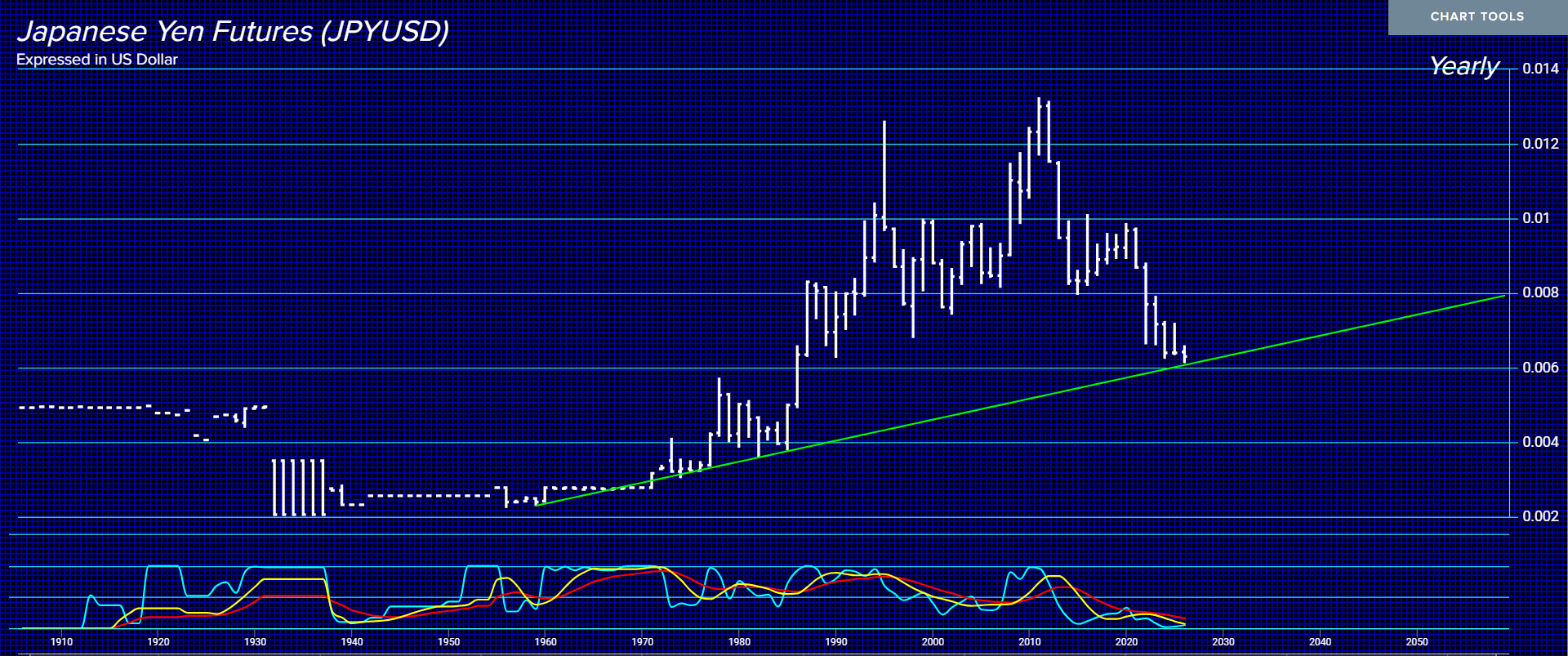
REPLY: I hope you are doing well. I apologize I could not handle all the corporate calls from Japan. I will send a quick Institution assessment shortly. The Japanese yen has come down to major long-term technical support challenging the 1987 Crash Levels.
Yes, I think even the Fed does not quite grasp the extent of the real problem. The media is claiming that the Fed is intervening to prevent Japan from selling US bonds. That just shows their ignorance.
The U.S. has recently taken action to support Japan, but the press claims this is out of self-interest rather than pure altruism. In late July 2026, the U.S. Treasury took the rare step of intervening in the currency market to help boost the value of the Japanese yen, marking a significant shift in policy. But WHY?
U.S. Treasury Secretary Scott Bessent’s intervention occurred in a very public way. During a live-streamed cabinet meeting, he was photographed holding a note that read, “To do: Buy JPY (yen), 5-10 billion.” Granted, the U.S. Treasury instructed the New York Federal Reserve to sell euros and buy yen, directly participating in the intervention. This was a joint effort with Japanese and South Korean authorities, who were also selling dollars to support their own currencies.
This is where the so-called analysts the press routinely quotes reveal just how little they understand.
They argue that the U.S. intervention was not primarily about helping Japan, but about protecting America’s own financial stability. According to their theory, Washington feared that a collapsing yen would force Japan to liquidate its massive holdings of U.S. Treasury securities to defend its currency.
That narrative falls apart once you understand who actually owns those Treasuries.
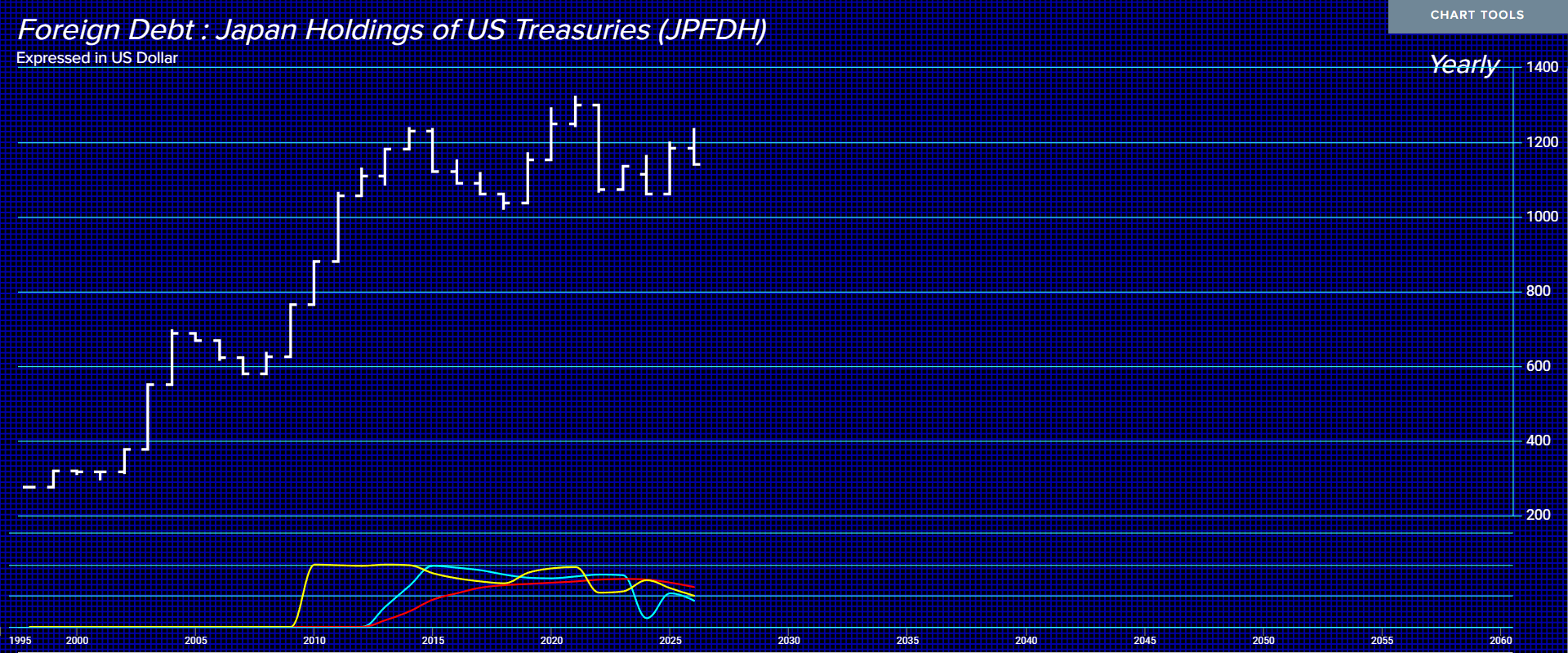
Japan is the largest foreign holder of U.S. government debt, with more than $1 trillion in Treasury securities. However, I have repeatedly pointed out that the majority of those holdings are not owned by the Japanese government. They are held by Japanese corporations and private institutions that use U.S. Treasuries as a hedge against the fiscal recklessness of their own government. Yet these analysts ignore that crucial distinction because they approach every event with the same conclusion—they are permanently bearish on the dollar.
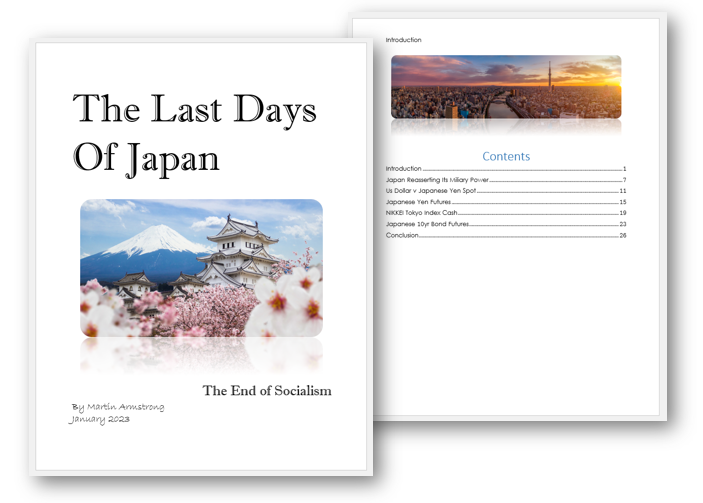
Rather than recognizing that Japan is confronting the highest debt-to-GDP ratio of any major economy, they portray every U.S. action as a desperate attempt to prop up the dollar. I stated clearly in the Japanese Institutional Report earlier this year:
“The sovereign debt crisis has begun, and once confidence starts to crack, governments everywhere will discover that there is no such thing as endless borrowing.”
The dollar bears now claim that U.S. intervention is merely a “financial containment” strategy designed to prevent a crisis in Japan from spilling over into the American financial system. Their argument is that if Japan were forced to dump its Treasury holdings to support the yen, U.S. bond prices would collapse, long-term interest rates would surge, and the Federal Reserve would lose control of the market. They weave this into a broader narrative of global war and a looming crisis of confidence in the dollar.
The problem is that this analysis begins with an assumption instead of the facts.
These same commentators have spent decades predicting the imminent collapse of the dollar. When the dollar failed to implode after President Nixon suspended gold convertibility on August 15, 1971, they invented the “petrodollar” theory, claiming the dollar survived only because oil was priced in dollars. Their forecasts have consistently been driven more by ideology than by data.
The wealth of any nation ultimately rests on the productivity of its people. By that measure, the United States remains substantially more productive than Europe. Capital follows opportunity, not political slogans.
Consequently, the dollar bears insist that the United States is supporting Japan only to prevent a Japanese financial crisis from damaging the American economy. In reality, they demonstrate little understanding of how international capital actually moves. If they had access to the Japanese data, they would immediately see that Japanese corporations and private investors—not the government—hold the larger share of U.S. Treasury securities precisely because they seek protection from the fiscal policies of Tokyo.
Our data shows that total Japanese holdings of U.S. Treasuries are approximately $1.14 to $1.24 trillion. Overall foreign ownership of U.S. federal debt is about $9.2 trillion. Of that amount, roughly 58.1% ($5.4 trillion) is held by foreign private investors—including corporations, pension funds, investment funds, and individuals—while only about 41.9% ($3.9 trillion) is held by foreign governments, central banks, and sovereign wealth funds.
Those facts completely undermine the simplistic narrative that Japan’s Treasury holdings are primarily an instrument of government policy. A substantial portion represents private capital seeking safety, and that distinction is fundamental to understanding both Japan’s debt crisis and the global demand for U.S. government securities.
While the Japanese government, primarily through the Bank of Japan, holds a substantial portfolio of U.S. Treasury securities as part of its foreign exchange reserves, the majority of Japan’s roughly $1.2 trillion in Treasury holdings is not owned by the government. Instead, it is held by Japanese banks, insurance companies, pension funds, and other corporate investors.
These private institutions purchase U.S. Treasuries not only because they offer significantly higher yields than Japanese government bonds, but also as a hedge against the fiscal policies of their own government—a strategy that has proven remarkably successful over the years.
What these analysts completely omit in their explanation of why Secretary Bessent would intervene is the longstanding trade dynamic. A sharply weaker yen gives Japan a significant competitive advantage by making its exports cheaper, widening the U.S. trade deficit, and allowing Japanese manufacturers to undercut American producers.
There is nothing new about this issue. I have dealt with more than $3 trillion under advisory contract from Japan over my career, and I have been dealing with the implications of yen-dollar policy and its impact on international trade for decades.
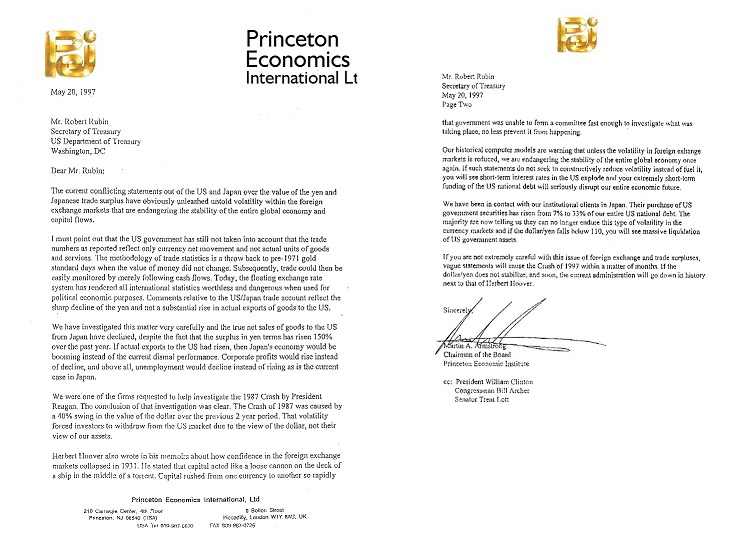
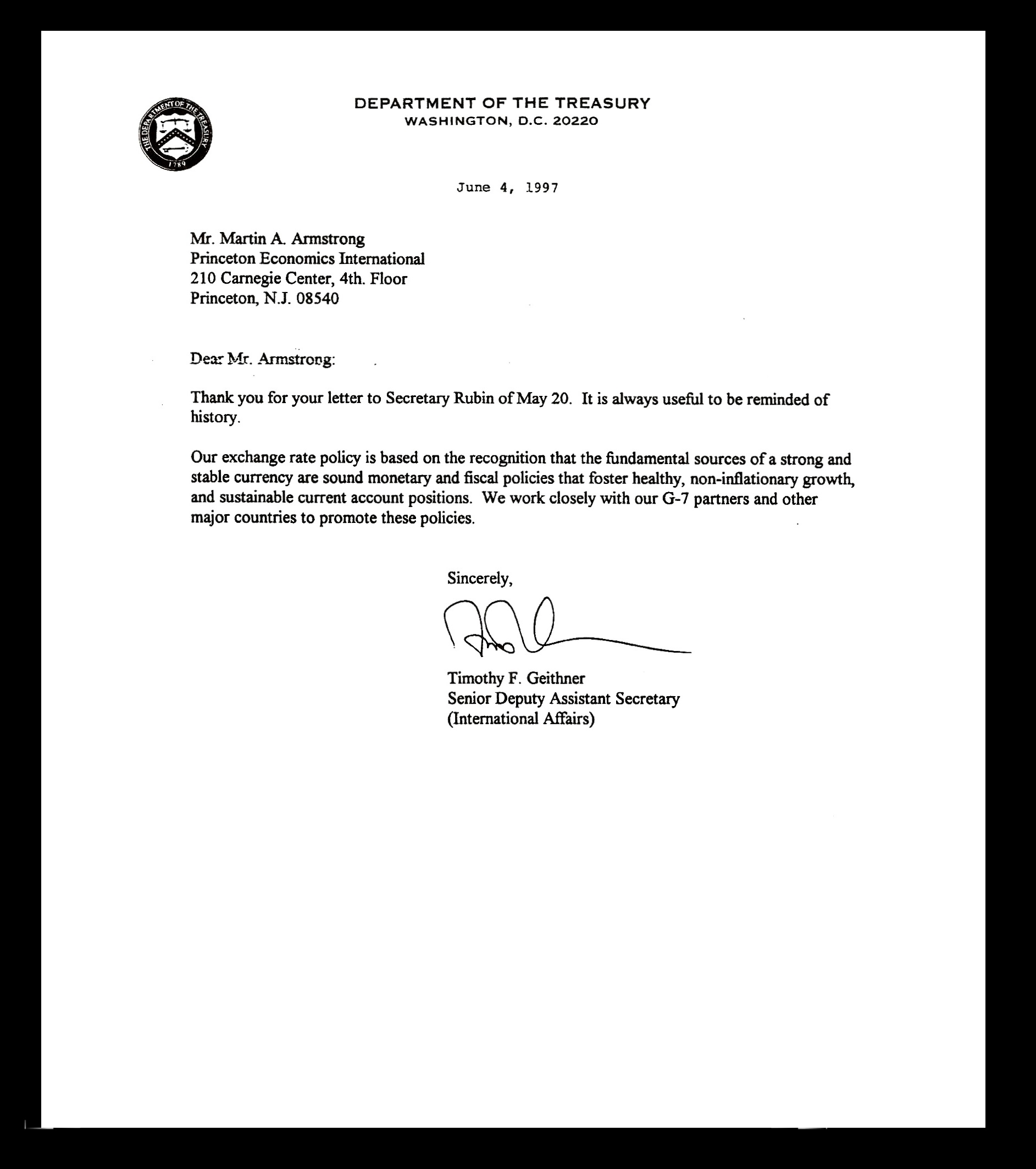
When Rubin, of Goldman Sachs, was Treasury Secretary, then too I would have expected a better understanding of the world economy. He was trying to talk the dollar down once again for trade. I wrote to him in 1997 warning that scenario led to the 1987 Crash thanks to the G5 trying to push the dollar down by 40%. They responded. The 1997 Asian Currency Crisis which began immediately thereafter in July 1997 a few weeks later.
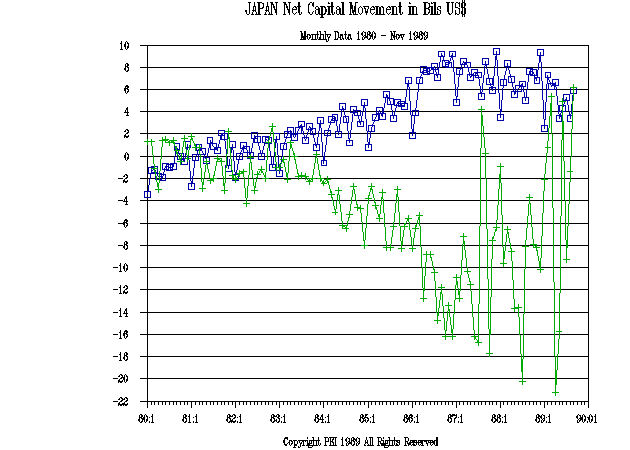
This is a chart of the capital flows that set off the 1987 Crash. Japan dumped Treasuries and Equities because the fear was the dollar would fall another 40% after the Louver Accord on February 22, 1987. A lower yen will benefit Japanese corporates and Bessent is worried once again about trade.
A number of people have also asked whether I advise Secretary Bessent. The answer is no, nor would there be any point in my attempting to do so.
To my knowledge, Bessent was on the opposite side of the Russian trade during the 1998 crisis, when many market participants blamed me for their losses. I believe there is a longstanding personal grudge stemming from that period, which is why I see no purpose in writing to him.
George Soros’ Quantum Fund reportedly lost approximately $2 billion on its Russian investments. Much of that loss was tied to its investment in the Russian telecommunications company Svyazinvest, which Soros later described as “the worst investment of my professional career.” The fund’s assets reportedly declined from roughly $22 billion in 1998 to about $13 billion in 1999.
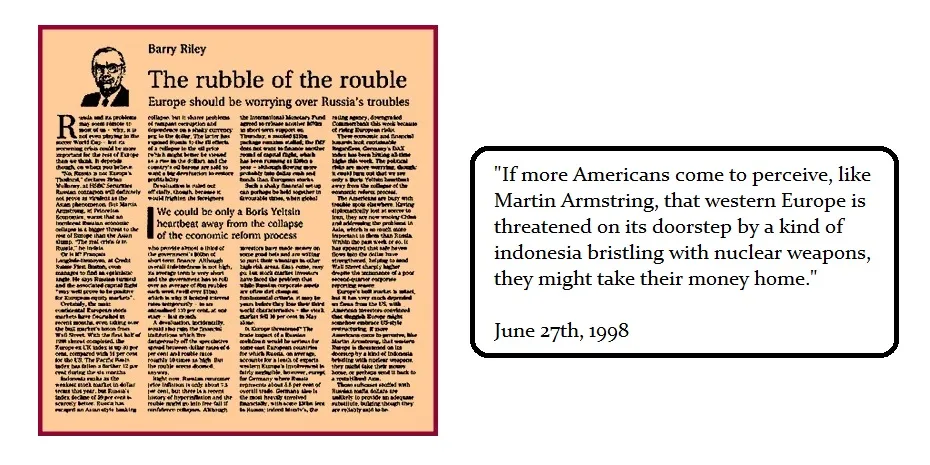
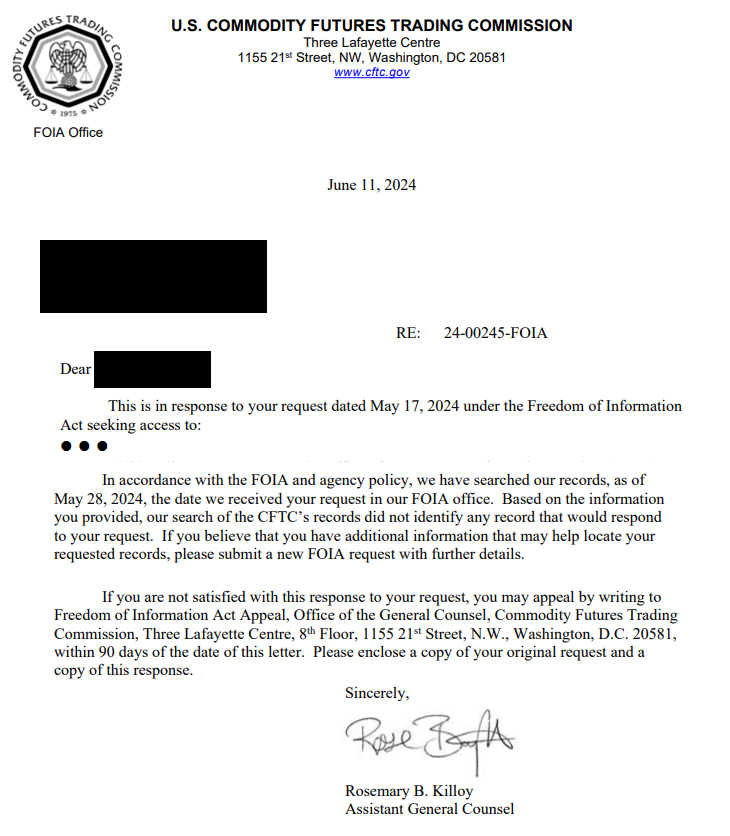
After the Financial Times published my forecast in June 1998 warning that Russia was on the verge of collapse, many people associated those losses blamed my analysis. I was later told that some individuals urged the CFTC to shut down my company in retaliation. Whether that effort was directly connected, I cannot independently verify, the CFTC refused to provide any records on me under a FOIA request. But that is what I was told at the time.
This is why some states NEED war for a distraction from the fact that the entire socialistic system is starting to show its cracks. I have warned that Japan could be even the first to decline.
Posted originally on CTH on August 2, 2026 | Sundance
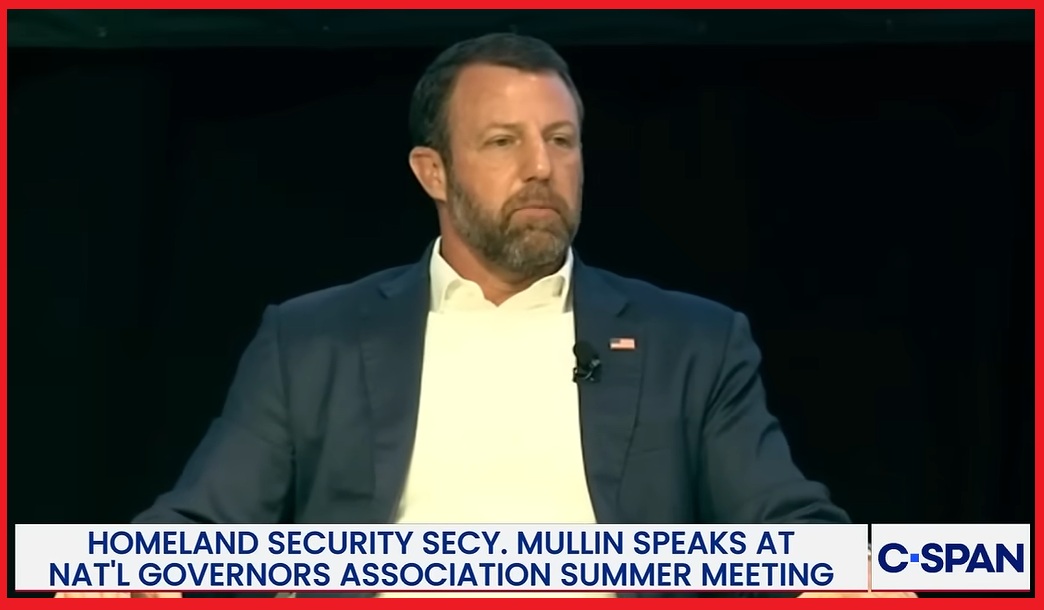
Several people sent me this video with comments about DHS Secretary Markwayne Mullin appearing to be hesitant on deporting illegal aliens. I watched ready to chew (in typeset) his head off. However, I don’t see that amnesty aspect as part of his commentary.
On the illegal alien workers, I structurally disagree with every single person who have used that argument for the past 20 years. We do not need illegal alien workers, not even in the agricultural sector. The illegal farm worker argument is a ruse, created by Big Ag, and promoted by smaller Ag to protect their bottom line and themselves from criticism.
Remove all illegal alien farm workers, deport them. Big Ag will handle it the same way Big Tobacco did and Big Cotton did before them. A combination of higher wages, extended farm worker visas and technology will bridge the gap. We do not need illegal alien workers in any sector; the issue drives illegal trafficking and underground criminal activity. Deport all illegal aliens.
We need 1 million+ deportations every month. Cut illegal aliens off from every subsidy program, enforce employment law with jail time for corporate executives, remove banking activity and block transfer remittances without legal and verified ID.
Deport all illegal aliens, cancel all H1B visas and watch Generation Z thrive and afford homes etc. Deport all illegal aliens.
Posted originally on CTH on August 2, 2026 | Sundance
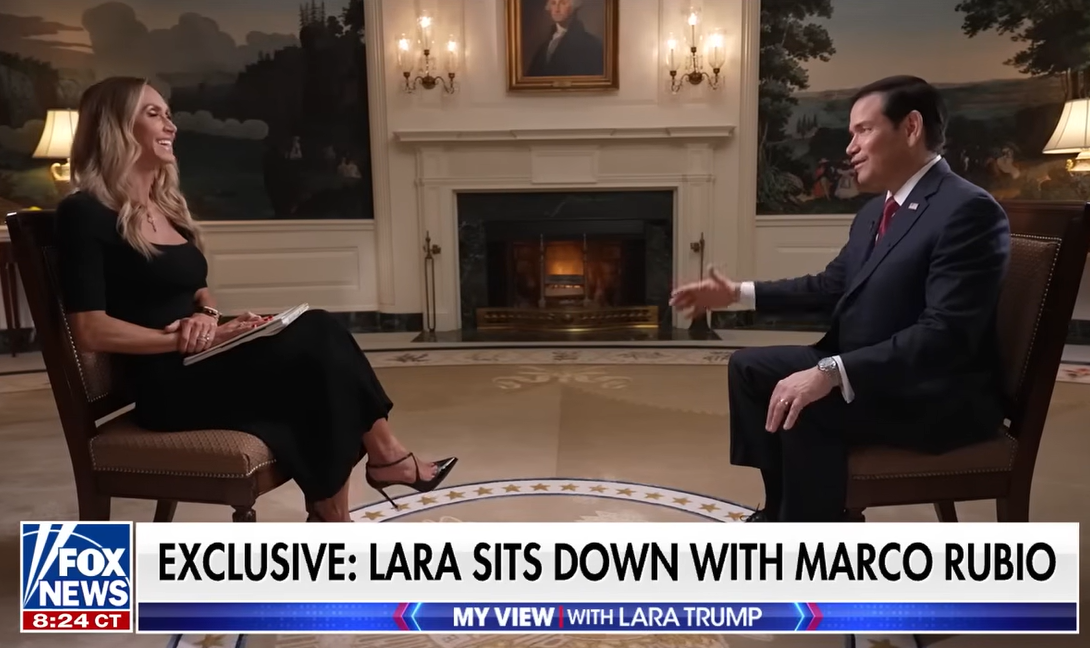
Secretary of State Marco Rubio sat down with Fox News Lara Trump for an extensive discussion on his role and responsibilities in the Trump administration.
In the second segment, Rubio actually touched on something many have been curious about regarding his changed perspectives and positions. It is still annoying that no one has ever asked him directly, ‘why have your views changed so dramatically in the past two years, and/or are you just playing a role.‘
The two video segments and transcript are below:
[Transcript] – QUESTION: Secretary, great to have you back. Thank you so much.
SECRETARY RUBIO: Glad to be back. It’s been a while.
QUESTION: Yeah. There’s so much to talk about, but I want to start with Cuba.
SECRETARY RUBIO: Yeah.
QUESTION: This has been of particular interest to the State Department right now. You guys released a 100-page report on Cuba, calling it, “The Capital of 21st Century Communism.” And this report talks about the fact that Cuba’s goal essentially is to erase the United States from the Earth. It also details a Cuban spy network that’s been undermining American interests. How did we get to a place where Cuba has become so much of a threat – it feels like again – to the United States?
SECRETARY RUBIO: I think for those who have followed the issue of Cuba, this is not unfamiliar to us. But to the average American, you see Cuba, a small country 90 miles off our shores, nine and a half million people population. But people forget that when it comes to things like espionage and influence operations, they actually are an influence and espionage superpower. If you look at the history of espionage in the United States, Cuba is the only country that consistently has implanted and embedded spies in our system without even paying them.
We had an ambassador, a U.S. ambassador, who ended up being a Cuban spy and was recently convicted. We’ve had them penetrate the highest levels of the Defense Intelligence Agency. Ana Belén Montes was one of the single biggest intelligence failures on the part of the United States and one of the biggest penetrations we ever had in our system.
So – and then on the influence front, if you look all throughout Latin America, every communist left-wing insurgency that’s destabilized governments across the region, every single one of them over the last 40, 50 years has found its support, its help, in many cases its birth, from a Cuban influence operation. So, it was an important report just to highlight the role they play in our country, a very negative role.
QUESTION: The report also links Cuban influence to the rise in Antifa, the riots that we saw in 2020, as well as the surge of radical activism that we’ve seen all over these college campuses. To the average person, those things, I think, feel generally organic, but it turns out there are a lot of different powers – Cuba being one of them – that are influencing all of these things day to day.
SECRETARY RUBIO: It’s the same network of protesters around the country. They were the same people you saw on the streets burning things in 2020. They then flip it around and they become the pro-Hamas protesters, then they flip it around and within 48 hours of Maduro’s arrest have preprinted signs outside the courthouse demanding his release. And then they’re out there doing the ICE stuff, attacking ICE agents.
There’s nothing organic about it. It is funded, it is organized, and Cuba is a part of that network, and in some cases a critical part of that network. And it’s a network they will weaponize against us, and they talk about it openly, about how they will use that network to pressure American policymakers – not just here in the United States, like Code Pink, but all over the world.
QUESTION: Critics of this report, of course, are saying, oh, well, these are scare tactics to potentially justify some U.S. military action against Cuba. It sounds like this is something we should take seriously, and this report sounds very real.
SECRETARY RUBIO: Everything in there is factual. And frankly, I don’t think they can dispute it. People can argue that we shouldn’t do with it, and I know there are plenty of people in American academia – and frankly in American press – that sympathize with the Cuban regime and have for a very long time. Part of it is motivated by their anti-Americanism, and part of it is motivated by ideological affinity. There are plenty – there are enough people in key nodes of our society, including professors, but frankly, in the past we’ve seen people within our own government, that sympathize with the Cuban regime. It’s the way they get spies without paying them. But it doesn’t mean we can ignore this threat.
Put aside for a moment my history, the fact that I’m Cuban American, the fact that I grew up in Miami. This is 90 miles from our shores. A failed state 90 miles from our shores that happens to be aligned with adversaries to the United States is a national security threat to our country.
QUESTION: I want to move quickly to Venezuela. The interim government and opposition leaders there are taking steps towards a possible future with democratic elections. What role is the United States currently playing, and what can you tell us about Venezuela?
SECRETARY RUBIO: Well, the first thing about Venezuela is I know we’re not in the era of patience and persistence, but these things take time. You’re dealing with a system that’s been in place for over a quarter-century, so those are deep roots that you have to deal with. It’s also a country that faces a lot of problems, I mean a lot of economic problems, not to mention now they’ve had an earthquake.
So, that’s why we’ve always talked about phase one, where our priority was stabilization. We didn’t want the country devolving into civil war, mass migration, civil unrest, and so forth. Step two is a recovery phase, which I think we’re into. Obviously, the earthquake adds complexity to it. You’ve got to have a functioning economy. You need to have laws and rules and regulations in place so that investors from America and around the world can go in and safely invest and create prosperity.
Ultimately, you have to have transition. At some point in time there has to be legitimate elections at every level so that people know that the government that’s there is a legitimate government chosen by their people. Step one towards that is a national reconciliation. This is a people that have been divided politically for a very long time against each other, and you’re going to have to look at models like what you saw happen in Eastern Europe after the fall of the Soviet Union. I think the role the U.S. Government can continue to play is as a facilitator of all of this.
QUESTION: You’ve been outspoken for many years about the threat from China. President Xi, of course, is going to come visit here in Washington, D.C., in September. You’ve had to sit across the table, though, from China’s foreign minister. You’ve had to negotiate and talk on America’s behalf. How have you found, in this role, negotiating with Beijing?
SECRETARY RUBIO: On the one hand, all the things that China wants to become the most powerful country in the world, and they want to do so at our expense. Obviously, we are Americans; we’re not going to allow that to happen.
At the same time, they are the two most powerful economies in the world, probably the two most powerful militaries in the world, though ours is further along than theirs, but nonetheless. And I think it’s important for two big countries like this, the two most powerful countries in the world, have to have a relationship, have to have the ability to speak to one another and try to deconflict where possible, because it could lead to some really bad things. The foundation of that is the relationship that President Trump has with President Xi, which is a relationship of mutual respect and they get along. And that really is important that our two presidents can speak to one another, and it’s okay. I think it’s almost irresponsible, by the way, to not have direct communications with the Chinese.
We want stability in our relationship. Both sides, I think, recognize that there are areas where we’re not going to agree, and including areas where we’re going to have to compete. Now, there are areas we can work together on. That’s phenomenal, fantastic for the world. But I think there’s going to be a lot of areas of friction and competition, and we have to manage that at the same time as we have to have a relationship with them, but we always have to look out for what’s best for America.
QUESTION: Well, it seems like China has been on their best behavior knowing that President Trump is in the White House, but a lot of people believe that they may just be biding their time in terms of possibly taking over Taiwan. What do you say to that?
SECRETARY RUBIO: Well, I can’t speak 20 or 30 years from now. I can say that our position is we support – we don’t support any change to the current status quo that exists there right now. We would be against any sort of compelled or coerced change in status. That point was made very clear in our meetings with the Chinese. Obviously, they have a very different point of view; it’s a very sensitive issue for them.
So, again, it’s part of that delicate balancing act. Because look, any conflict between the U.S. and China, be it economic or be it military, God forbid, would be catastrophic for both countries and for the world. So, we have to manage that, but we can’t walk away or forfeit our national interests. So, this is the hard work of foreign policy, and it requires every administration to sort of balance these two competing tugs against us.
QUESTION: Well, we hear a lot about tensions with China. We hear a lot about tensions with Russia, with Iran daily. I think Americans probably at some point get very overwhelmed because, unfortunately, the good stuff doesn’t make it out there often enough. What would you say, though, about the stability of the world right now given you’re in your position and the President is who he is?
SECRETARY RUBIO: I think the world has always been complicated and tricky. I think the difference now is if something happens halfway around the world in a place you’ve never heard about before, and it’s really dramatic, you’re going to hear about it almost instantaneously.
I think the world is also going through a period of rapid transformation. I mean, there is clearly a geopolitical reordering that is occurring, and I’ve talked about this repeatedly. We are – after the end of the Cold War, everybody thought the whole world was just going to become free-enterprise democracies and everyone would get along and nation-states would no longer matter. And unfortunately, we made decisions in our foreign policy on that ridiculous basis that actually caused us to hurt our country. We started saying things like we don’t care where things are made, let it be made in another country as long as it’s cheaper prices for America. And it ended up deindustrializing our country and costing us millions of jobs.
So, what you see President Trump doing now is rebalancing those things on the economy using tariffs, on geopolitics using our presence in the world, especially in the Western Hemisphere, our own area neighborhood that we live in.
And then of course there are legacy threats like the Iranian threat of a nuclear program, which can never happen. The President’s been very clear about that. So, you have all the old threats plus the emerging new ones, and they’re all happening at the same time, and they’re happening faster than they ever have before. And it’ll be the work of this administration, but it’ll be the work of future administrations. Some of these things are going to take decades to work themselves out.
(Break.)
QUESTION: And we’re back with more of our exclusive sit-down with Secretary of State Marco Rubio as the ongoing conflict in Iran remains top of mind for the American people.
SECRETARY RUBIO: I don’t think the Iranian regime has ever faced a president like President Trump, which is someone that actually takes action. They got used to for 20 or 30 years not just the U.S. but the broader world allowing them to get away with things like lying, breaking deals, tricking people into agreements, and so forth.
In this particular case, it was pretty straightforward. Iran wants a nuclear weapon, and they were building a conventional missile shield that they were going to hide behind. In essence, they wanted to be in a position a year and a half from now to be able to say: We have so many drones and so many missiles, you can’t possibly defend against them.
That’s the place they wanted to get to. President Trump said we’re not – I’m not going to let you get to that place, and he went after – wiped out their navy, wiped out their air force, wiped out their missile defenses, wiped out their launchers, wiped out their factories that make all of these things, and severely degraded their defense capabilities.
Now, they still have missiles and they still have drones and they can still do damage, but they no longer have that shield, that conventional shield that they could hide behind, and that’s changed the whole dynamic. It’s the only reason why they are now willing and in some cases seem eager to do a deal on denuclearization, to do a deal on the straits. Because we’re now approaching them from a position of strength, not from a position of weakness, which is what they perceived from previous administrations and, frankly, from the world writ large.
QUESTION: The regime change has never been the goal, though. As you say, it has been denuclearization. Can you have one without the other, though?
SECRETARY RUBIO: I think what does – the regime has to change. You might not have a regime change, but the regime has to change. The Iranian regime traditionally has been expeditionary. In essence, their view is they don’t want to just govern Iran; they want to govern the region. They view them – they want to export the revolution. That does have to change, and the only way you’re going to change that is if you make the price of it too high for them to be able to pay.
QUESTION: The fact that so many of these Gulf Arab nations have all kind of aligned against Iran, that must be important.
SECRETARY RUBIO: I would say two things about the Middle East and the Gulf – I mean, they’ve always understood who Iran was and the threat they posed. That threat has now become reality. They have now seen Iranian drones and Iranian missiles launched into their cities and against their energy infrastructure.
The other thing that’s changed is I think you’re going to see more and more energy diversifying outside of the Straits of Hormuz, because from a geographic standpoint Iran will always be on the straits, whether they’re governed by this regime or a future government. But that’s going to be two permanent features that are going to emerge from this: You’re going to see the realignment in how energy flows, less reliant on the Straits of Hormuz; and you’re going to countries in the region that are no longer – now understand that Iran is no longer a theoretical threat. As long as this clerical regime remains in place, they are a real threat and a direct threat to their – not just to their economic interests but their security interests.
QUESTION: Well, President Trump says he is going to confront Valdimir Putin regarding reports that Russia helped Iran target U.S. bases. How much does that relationship concern you?
SECRETARY RUBIO: With Russia?
QUESTION: Between Russia and Iran.
SECRETARY RUBIO: Look, unfortunately, I think you’ll find in the world that there are countries, or at least companies within countries, that work with adversaries of ours. And when we identify it, we raise it, and in some cases very successfully.
Nothing we have wanted to do in the Middle East – none of the actions we’ve taken, none of our successes – have in any way been impeded by anything that any other country in the world did against us. There are things that might be irritants, there are things that might be concerning, but there is nothing any other country is doing that in any way is standing in the way of us achieving the things we want to achieve or the objectives we want.
QUESTION: Just to finish with the situation in Russia and Ukraine, is there anything at this point that the U.S. can realistically do to help bring talks together, bring this to an end?
SECRETARY RUBIO: The President has made very clear if United States can play a role in bringing about an end to that war, we’re going to continue to explore it. We spent a lot of time on it in the first year. There came a point where it got to, like, stalemate, but we always stood willing and ready to play a constructive role.
We’re the only country in the world, and President Trump’s the only leader in the world, that can bring the Russian side and the Ukrainian side to begin to talk about how you end it. The reality is that dynamics have changed just a little bit in that conflict over the last few months. The Ukrainians now are able to conduct long-range strikes deep into Russia, bringing the war toward – to the Russian people.
What we are willing to explore is whether that new dynamic has in any way opened the door to some negotiated settlement. I know there’s going to be – you’re going to see some efforts over the next few weeks to see if we can’t restart talks between the two sides and bring this war to an end. But we also understand that both sides have some pretty strong red lines; and until we can bring those red lines a little closer together, we’re not going to be there yet. But we’re ready to go, and the President’s told his team if you see an opportunity to be a force that brings about some momentum behind peace talks, let’s do it. So, he always prefers diplomacy over war and peace over combat.
QUESTION: Americans have seen so many versions of you, I think. We know Senator Rubio, we know candidate Rubio, now Secretary Rubio. Have you changed throughout the course of all of these different kind of phases of your life? And how do you think the American people’s perception of you has changed? Because you are memes everywhere – I think everybody loves to see all the different sides of you.
SECRETARY RUBIO: Yeah, well, the meme thing, it was interesting because when it first came out, I hated that picture. (Laughter.) Because what happened is in that couch, if you don’t have a pillow behind your back, you kind of sink. So, I looked at the picture; I said, oh, this is terrible, I looked like whatever. And then it turned into this other thing. And it was fine, and it’s funny. I don’t really follow it very closely, but people have shown me pictures out there. We have a good friend here that works at the White House, Dan Scavino, made a nice board for me. (Laughter.) And even since he made that board, we had to update it, so – of all the different pictures. So that stuff is funny.
You asked me if you’ve changed. I think everybody – you go through life, right? And as you go through life you learn new things, you see things you hadn’t seen before, you hear things you haven’t heard before. Certainly, I am a different person at 55 than I was at 25 or even 35 because I have 20 and 30 years of experience in between – in life and in work – that inform that.
I think at your core you always want to remain the same person, though, right? And that is what are your priorities in life and what are the values that sort of drive you to do what you do, and I hope that hasn’t changed. And by the way, the world changes too. There are things that are true today that weren’t true 10 years ago. So, I think that – that’s true for all of us, not just me.
QUESTION: I feel like you’ve been busier than ever. You’ve been traveling all over the place. But you’re doing all of that while being a husband, while being a father. Maybe talk about how that is, because I know for every kind of working parent out there, working spouse, it’s hard to take time, but I am sure your family keeps you very active.
SECRETARY RUBIO: Yeah, it is, and I’m in an interesting season in life. For most of my time in public service, I had very young children or children that were still growing up. Now all four of my children are adults. My youngest graduated high school this year. I have a 26-year-old, a 24-year-old, a 21-year-old, and an 18-year-old. So, they have lives. They don’t just have – when you’re 15 or 16, you have opinions. When you get to 20, 24, 26, you have lives and you have stuff going on. I still look back at the time that they were young and wish I could have one more day with them when they were little, but you also appreciate the moment you live in.
And then as far as being a husband, I think what’s happened is, because your kids are a little older and they have more time doing their own things, whether their school or their career, you spend more time with your – you almost, like, get back to where you were when you first started dating in some ways. So, you get to spend more time with my wife and sort of rediscover. So, it’s the second phase of that relationship, I guess, after all these years.
So it’s an interesting season in life that I think we’re – mixing with what we’re doing here now – and find it pretty fulfilling and pretty happy.
QUESTION: Well, when you go home, I’m curious: What is the first thing you do when Marco Rubio gets home? Do you sleep? What happens?
SECRETARY RUBIO: (Laughter.) No, not when I get home. I don’t go right to sleep. Of course not. Usually, I mean, if you can – you really can’t in this job, and you certainly can’t working for this administration and this President, who never stops working, but I think it is good to try to disconnect for some period of time from your job or from your work. It could be watching a sporting event, it could be watching a movie, just anything that allows you to sort of disconnect and play the reset button.
It’s harder – it was a lot easier to do that when you’re a senator. It’s much harder when you’re in this role and in this job, because the world isn’t going to stop and wait for you. Like, you may want – you may have made a plan tonight to watch a movie, but in the middle of that movie something blows up somewhere in the world, and you’ve got to know about it and you may have to do something about it. So, it’s harder, but it’s not forever, and it’s fulfilling to be in that role.
QUESTION: So, if you could get a full week off without having anyone access you, what would you do?
SECRETARY RUBIO: If I had a full week off, I’d be wondering what was going on. I’m being honest, and maybe that’ll change when I’m out of this job. But if I could – like, if I could make the world stop for a minute and have nothing going on, I’d love to –
QUESTION: Yeah, (inaudible).
SECRETARY RUBIO: Well, my wife’s going to hate this answer, but I’d love to sit down and, like, watch, like, every college football game starting at noon Eastern until one – when the West Coast games end at 2:00 a.m. our time Eastern. I’d love to be able to do that at least one weekend. I doubt I’ll be able to do that anytime soon.
QUESTION: Okay. Final question: Is this going to be the Miami Dolphins season? What do we think?
SECRETARY RUBIO: No.
QUESTION: (Laughter.)
SECRETARY RUBIO: No, they’re in massive rebuilding mode, but I think the needle is pointing in the right direction, but they need a couple years to rebuild that roster.
QUESTION: Okay. We’re always looking to future seasons.
SECRETARY RUBIO: Yeah, that’s right.
QUESTION: Well, Secretary Marco Rubio, you are great.
SECRETARY RUBIO: Thank you.
QUESTION: Thanks for all you do for our country, and thank you so much for your time.
Posted originally on CTH on August 2, 2026 | Sundance
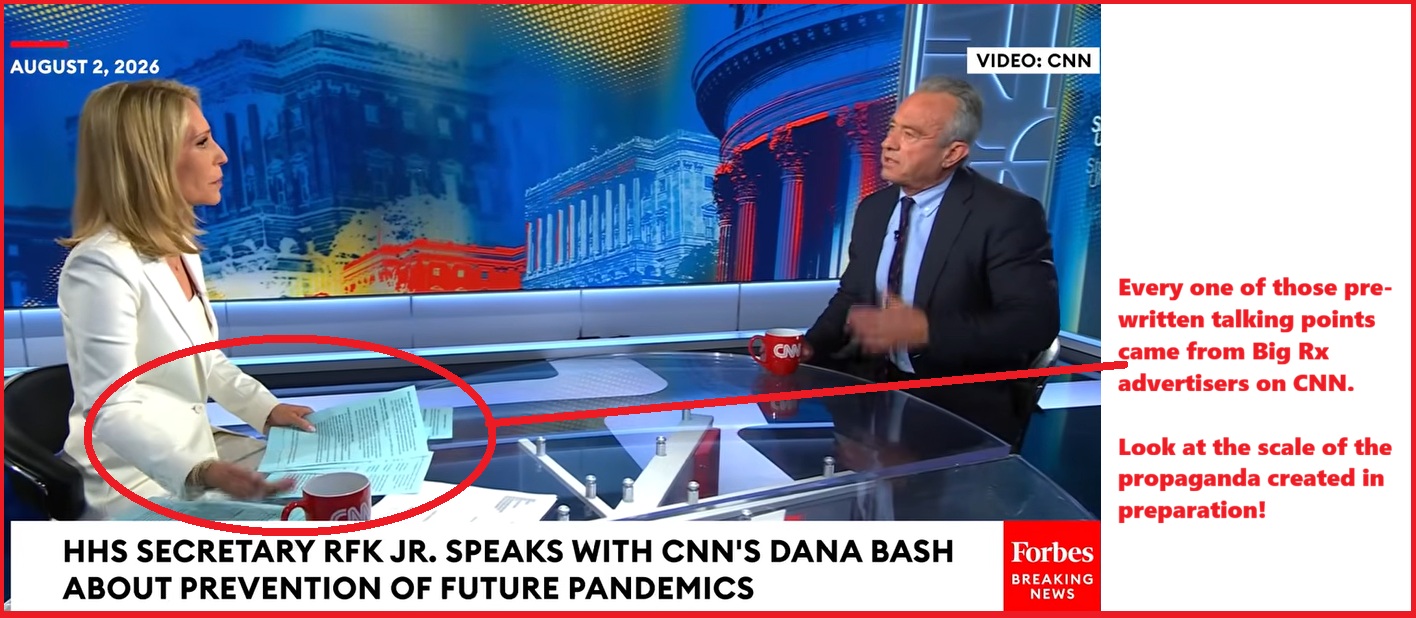
CNN propagandist Dana Bash had a full mask down episode today while trying to deny the truth about COVID-19 (all aspects) and defend Anthony Fauci (who she frequently text with according to Fauci’s diary).
HHS Secretary Robert F Kennedy Jr was not going to allow CNN to fraudulently present nonsense claims under the guise of “settled science,” and he pushed back hard against her claims. At one point Bash notes she didn’t want to litigate the COVID-19 outcomes and RFK Jr appropriately pushed back saying the experiences need to be relitigated because Americans were censored, shut down, lied to and had liberty destroyed by a political health system devoid from science.
Things became even more heated as Bash was staring at the multi-page talking points prepared for her by corporate advertisers and Kennedy was systematically destroying them. Bash doubled, tripled and quadrupled down with the manipulative and combative questioning, ultimately removing any facade of journalism in the process. WATCH:
I have created this site to help people have fun in the kitchen. I write about enjoying life both in and out of my kitchen. Life is short! Make the most of it and enjoy!
This is a library of News Events not reported by the Main Stream Media documenting & connecting the dots on How the Obama Marxist Liberal agenda is destroying America




 Centinel2012