Posted Originally on Sep 16, 2026 by Martin Armstrong |
I wrote on September 9, 2014, just days before Scotland’s independence referendum, that we had been taking the prospect of Scottish separation seriously since the Berlin Conference in 2012. At that conference, I showed the chart illustrating the rise of separatist movements throughout Europe as part of our Cycle of War model. By 2014, when the polls suddenly showed Scotland could actually vote YES and break apart a union dating back to 1707, the political establishment was shocked. I wrote then that “such trends are driven by economics” and that what we were witnessing was the rise in civil unrest as confidence in government declined. Scotland ultimately voted 55% to 45% to remain, and the establishment assumed the threat had passed.
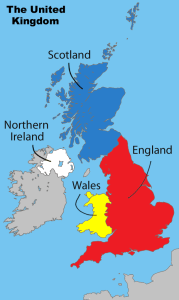
Twelve years later, Scotland’s independence movement remains alive, Wales is showing a rising generational appetite for separation, Northern Ireland has a legal path toward reunification, and now the leaders of all three devolved nations have sat at the same table and declared that “Westminster’s time is coming to an end.” What was appearing on the model as a rising separatist trend more than a decade ago is no longer sitting on the political fringe.
Scotland’s John Swinney and Northern Ireland’s Michelle O’Neill are openly calling for referendums, while Welsh First Minister Rhun ap Iorwerth has joined them in asserting Wales’ right to determine its own future. The SNP, Plaid Cymru, and Sinn Féin declared that “no Westminster government has the right to block democracy” and called upon the British government to “prepare for, plan and facilitate constitutional change.” The agreement itself has no legal power to dissolve the United Kingdom, but dismissing it as symbolism misses what is actually taking place. Political structures begin to break when the consent holding them together begins to disappear.
When everything is prosperous, people tolerate central government because there is little incentive to upset the system. When taxes rise, living standards decline, debt expands, migration creates political tensions, and government becomes increasingly authoritarian or unresponsive, people begin asking a very different question: why are we paying these people to rule us?
The numbers in Scotland are particularly important. Scotland held its independence referendum in 2014 and voted 55% to 45% to remain inside the United Kingdom. That was supposed to settle the issue for a generation. There have now been nearly 300 Scottish independence polls conducted since the Brexit referendum, and support has repeatedly hovered around the dividing line. Recent polling continues to place the country essentially around 50-50 once undecided voters are removed. An independence movement that captured 45% twelve years ago did not disappear; it became a permanent political force capable of splitting the country almost directly down the middle.
Among voters aged 18 to 24, support for independence reached 59% in Wales. Among those aged 25 to 34 it was 54%, and among those aged 35 to 44 it reached 57%. Support collapsed among older voters, falling to just 15% among those 65 and older. That is a generational divide, and political trends driven by younger populations do not simply disappear with time.
Northern Ireland presents an entirely different constitutional problem because the Good Friday Agreement already contains a legal mechanism for a referendum on reunification when the British government believes a majority would likely support it. Current polling does not establish that threshold. Recent estimates place support for Irish unity well below an outright majority, and a University of Liverpool study found that many voters supporting reunification could actually be persuaded to remain in the UK if public services improved and the cost of living declined. That is incredibly revealing because it demonstrates what I have said all along: these constitutional movements are not driven purely by nationalism. ECONOMICS MATTERS.
More than 61% of pro-unity respondents in that Northern Ireland survey said improved public services could persuade them to remain, while 58.5% said a lower cost of living could change their position. In other words, loyalty to political structures is not unconditional. People tolerate government while they believe the arrangement works. Once they conclude that the existing system is failing them economically, the political structure itself becomes negotiable.
Westminster continues to treat independence as something that can simply be denied until the problem disappears. Prime Minister Andy Burnham recently suggested Scotland could receive another referendum if there were a “clear consensus,” only to subsequently tell Swinney that another vote was effectively off limits. That is precisely how separatist movements become stronger. If the United Kingdom truly exists through the consent of its nations, then eventually Westminster must confront the uncomfortable question of what happens when that consent is withdrawn.
The irony in this latest agreement is that Scotland, Wales, and Northern Ireland say their future lies back inside the European Union. Escaping Westminster merely to surrender sovereignty to Brussels is not independence. I have criticized the SNP for precisely this contradiction for years. If Scotland wants sovereignty, then Scotland should have sovereignty. Trading London bureaucrats for Brussels bureaucrats accomplishes very little.
But that does not change the larger trend. The centralized political structures are beginning to fracture. Look across Europe and you can see the same pressure appearing in different forms. Nationalist parties are rising in Germany. Giorgia Meloni is calling for a confederal Europe where sovereignty remains with the nation-states rather than Brussels. Regional identity remains politically potent throughout the globe. Government always believes centralization creates stability. It eventually produces the opposite.
The United Kingdom itself is an excellent example. The union between England and Scotland dates to 1707. For centuries, economic interests, empire, trade, military power, and political institutions bound these nations together. But political unions are not immortal simply because they appear permanent to the generation currently governing them. The Soviet Union looked permanent until suddenly it was not. Yugoslavia looked like a nation on a map until the internal divisions became stronger than the political structure holding it together. Czechoslovakia disappeared peacefully. Political borders change whenever confidence in the central authority collapses sufficiently.
That does not mean Britain will break apart tomorrow. Scotland remains divided.. The significance is not that dissolution is imminent. The significance is that all three separatist movements are now politically aligned at precisely the same moment that confidence in Westminster is under enormous strain. This is how political change develops. It begins on the fringe, moves into opinion polls, enters parliament, captures political parties, and eventually reaches government. By the time the establishment acknowledges the trend, it has usually been developing beneath the surface for years.
Posted Originally on Sep 16, 2026 by Martin Armstrong |
Something is happening in Germany that the political establishment can no longer dismiss as a temporary protest. The Alternative für Deutschland (AfD) secured 43.8% of the vote in the September 6 election in Saxony-Anhalt, more than doubling its 2021 result and finishing far ahead of the CDU. Whether anyone likes the AfD or hates it is beside the point. When nearly half the electorate in a German state votes for a party that the establishment has spent years portraying as beyond the acceptable boundaries of politics, the intelligent question is not what is wrong with the voters. The question is what has gone so terribly wrong with the establishment that millions of people are willing to revolt against it.
This is precisely what Brussels does not understand about nationalism. The European establishment assumed that national identity would gradually disappear as power migrated upward into the European Union. Give everyone the same currency, create common regulations, remove borders, centralize more authority in Brussels, and eventually people would begin thinking of themselves primarily as Europeans rather than Germans, Italians, Frenchmen or Poles. That experiment is moving in the opposite direction because the more power Brussels accumulates, the more people begin demanding their nations back.
Saxony-Anhalt is now an extraordinary example of that political reaction. AfD has built its support around opposition to mass migration, hostility toward the political establishment, resistance to parts of the EU’s climate agenda, skepticism toward sanctions and Germany’s Russia policy, and demands that more authority remain with Germany rather than being surrendered to Brussels. You do not have to agree with every AfD policy to understand why that message is finding an audience. People increasingly believe decisions affecting their jobs, energy bills, borders and communities are being made by political institutions that do not represent them.
Germany has provided perhaps the clearest economic example of what happens when ideology replaces common sense. This was Europe’s industrial powerhouse. Its competitive advantage depended heavily upon manufacturing, exports and access to reliable energy. The country abandoned nuclear power, lost access to the cheap Russian pipeline gas upon which large parts of its industrial model had depended, embraced enormously expensive energy and climate policies, and then watched energy-intensive industries struggle to remain competitive. BASF, Volkswagen and other major industrial names have announced restructuring, investment changes or job reductions while German economic growth has remained painfully weak.
The AfD’s rise is particularly significant because the establishment has tried nearly everything to contain it politically. Germany’s domestic intelligence authorities have scrutinized the party and various branches of it for years. Other parties have maintained a political “firewall” refusing cooperation with AfD. There have been repeated debates over whether the party should be banned altogether. Yet every attempt to isolate the movement without addressing the grievances driving its support risks convincing more voters that the political system does not merely disagree with them but considers their votes illegitimate.
If 43.8% of voters support a party and the answer from the political establishment is simply that nobody may work with that party, then eventually those voters begin asking whether their vote actually matters. Democracy cannot function indefinitely when the establishment accepts election results only when citizens select an approved option. You defeat political movements by addressing why people support them, not by pretending millions of voters have suddenly become defective.
This is also why the AfD result fits into the much larger European trend. Giorgia Meloni is openly arguing that Europe should move toward a confederal structure that returns greater sovereignty to member states. Hungary continues challenging Brussels over migration, Ukraine and national authority. Slovakia has repeatedly collided with the European consensus on Russia and Ukraine. Nationalist and anti-establishment parties have grown across France, Austria, the Netherlands and elsewhere because the centralization of Europe is producing the political reaction that centralization always creates.
Germany is especially important because without Germany the European project cannot function in anything resembling its present form. Germany is Europe’s largest economy and has long provided much of the financial and political weight behind European integration. If German voters themselves begin rejecting the political consensus that supported that system, Brussels has a much larger problem than one election in Saxony-Anhalt.
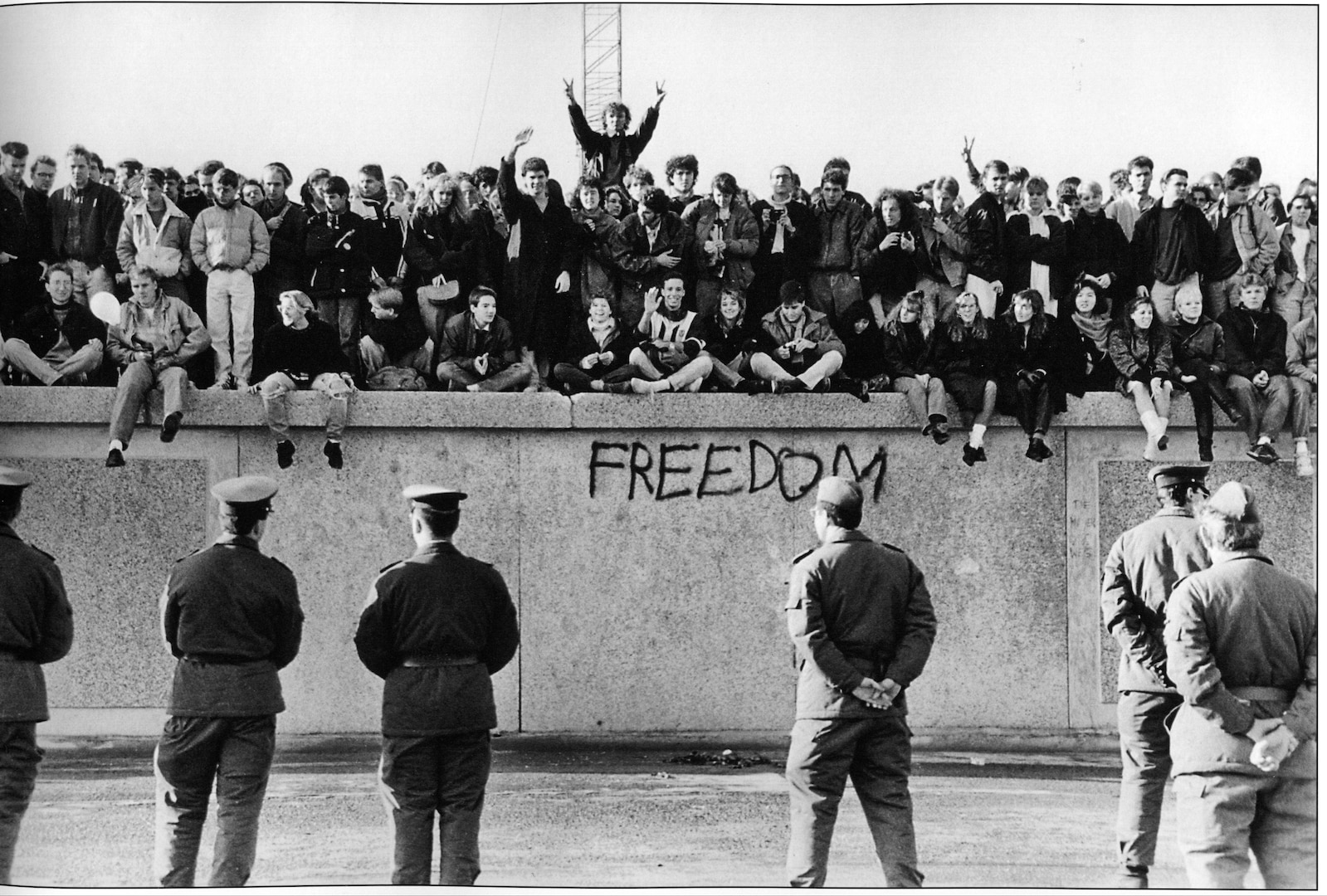
East Germany also carries historical baggage that Western political elites routinely underestimate. People who lived under the German Democratic Republic know what it means when political institutions insist that only certain opinions are socially acceptable. They remember a system in which the state monitored political attitudes and where dissent carried consequences. That does not make modern Germany equivalent to East Germany, nor should anyone make such an absurd comparison, but it helps explain why attempts to stigmatize or administratively suppress political opposition can produce an especially strong backlash in the east.
There is an economic component that Brussels also refuses to confront. People do not vote based upon GDP spreadsheets prepared in government ministries. They vote based upon whether their community feels safer, whether their electricity bill has increased, whether their factory still employs people, whether housing remains affordable, whether their taxes keep rising and whether they believe their children will have a better life. When government tells people everything is improving while their own experience tells them otherwise, confidence shifts away from institutions and toward opposition movements.
Germany’s political establishment can continue attacking the AfD, but that will not solve the underlying problem. If Germans believe immigration is out of control, government must address immigration. If they believe energy policy has damaged German industry, government must address energy. If they believe Brussels possesses too much authority, government must confront the sovereignty question. Calling people extremists does not lower an electricity bill, reopen a factory or restore confidence in government.
Europe was never one nation, and attempting to force radically different populations into an increasingly centralized political structure was always going to produce resistance. The more Brussels pushes toward federalization, common debt, common defense and common political authority, the more national politics will become the battlefield over sovereignty. AfD’s 43.8% in Saxony-Anhalt is therefore bigger than the AfD itself because it represents millions of voters saying that the direction of Germany and Europe is no longer acceptable.
Posted Originally on Sep 16, 2026 by Martin Armstrong |
Something very strange is happening around the United Kingdom, and the political establishment would be foolish to dismiss it. President Donald Trump has now openly endorsed the reunification of Ireland, describing it as one of the “naturals” of all time and saying he would “love” to see it happen. Then he was asked about Scottish independence and suddenly became much more careful, replying, “That one I won’t talk about yet.” Yet? That is an interesting word because Trump did not reject the possibility. He simply declined to discuss it NOW, precisely as separatist pressure is again rising across the United Kingdom.
The timing could hardly be more remarkable. Within days of Trump’s comments, the nationalist leaders of Scotland, Wales, and Northern Ireland came together in Cardiff and declared that “Westminster’s time is coming to an end.” Scotland’s SNP, Wales’ Plaid Cymru, and Sinn Féin in Northern Ireland are now coordinating around the principle that their nations should determine their own constitutional futures. For the first time in the era of devolution, all three governments outside England are led by parties committed either to independence or Irish reunification. These events should not be viewed separately because they are manifestations of the same declining confidence in centralized political authority.
Northern Ireland is especially significant because unlike Scotland or Wales, there is already a legal mechanism for leaving the United Kingdom. The 1998 Good Friday Agreement provides for the possibility of a border poll if it appears likely that a majority would favor a united Ireland. That means Irish reunification is not some theoretical constitutional fantasy. There is an internationally recognized political path through which Northern Ireland could eventually leave Britain and join the Republic of Ireland.
Brexit itself was driven partly by precisely that desire to reclaim political sovereignty. Britain told Brussels that decisions affecting British citizens should be made in Britain. Fine. Scotland can now turn around and make precisely the same argument toward Westminster. Northern Ireland can make it toward London. Wales can eventually make it as well. Once you establish the principle that political sovereignty belongs closer to the people, you cannot simply declare that principle legitimate when Britain uses it against Brussels but illegitimate when Scotland uses it against Britain.
Trump appears to recognize that the political map is not carved in stone. He has long approached geopolitics much more transactionally than the traditional diplomatic establishment. Borders, alliances, trade relationships, and political structures are not sacred merely because politicians have become accustomed to them. His willingness to discuss Irish reunification so casually therefore reflects something much larger than Ireland itself. The assumption that the United Kingdom will remain permanently united is no longer universally taken for granted.
His refusal to discuss Scotland is perhaps even more revealing. Trump owns property in Scotland and has extensive personal and business connections there, so there are obvious reasons for him to tread carefully. But saying “That one I won’t talk about yet” is not the same as saying Scottish independence is impossible.
The SNP, Plaid Cymru, and Sinn Féin broadly envision their futures inside the European Union. They want independence from Westminster while simultaneously embracing political integration with Brussels. I have never understood how surrendering sovereignty to one capital after escaping another constitutes independence. Scotland should have the right to govern Scotland, but genuine independence means sovereignty, not simply exchanging London bureaucrats for European bureaucrats.
Nevertheless, their contradiction does not make the separatist trend disappear. The political pressure itself is real, and it extends far beyond Britain. Catalonia challenged Madrid. Nationalist movements remain active in Flanders, Corsica, and elsewhere. Giorgia Meloni is calling for a confederal Europe that restores greater authority to sovereign nations. Nationalist and anti-establishment parties are gaining ground because centralized political structures are increasingly colliding with local interests.
This is precisely what the Cycle of War and civil unrest models were warning about when I discussed Scotland years before the 2014 referendum shocked Westminster. Economic decline does not merely change stock markets and currencies. It changes POLITICAL STRUCTURES. When government can no longer deliver prosperity, populations begin questioning why the government itself should continue to exist in its present form.
Trump’s comments therefore should not be dismissed as another offhand remark. The President of the United States has publicly said he would “love” to see Ireland reunified while deliberately leaving Scotland unanswered. Within days, the nationalist leaders governing Scotland, Wales, and Northern Ireland were sitting together declaring that Westminster’s era is coming to an end. None of this means the United Kingdom disappears tomorrow, but anyone looking at the direction of the political cycle should recognize what is taking place.
Posted Originally on Sep 16, 2026 by Martin Armstrong |
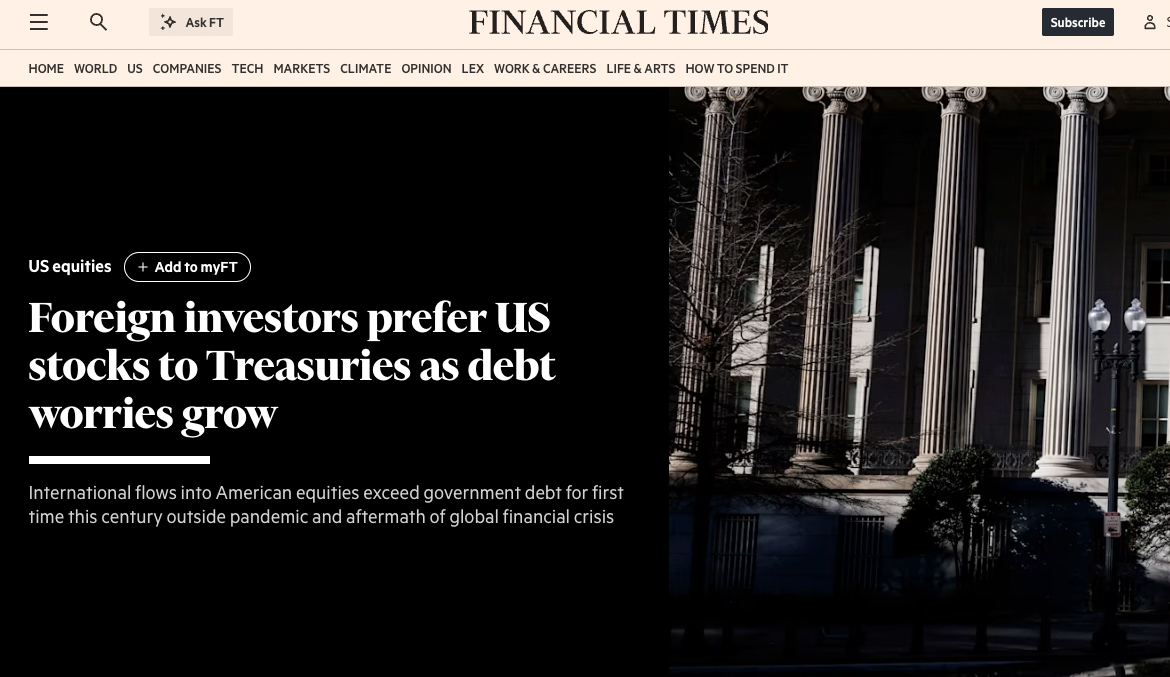
COMMENT: As I’ve just retired, I wanted to tell you that you were framed intentionally because you cost them more than $15 billion+ in losses. You are correct — they blamed you for having too much influence, and they played the NY authorities for fools. They claimed $1 billion was missing and that they didn’t know where it was, without ever explaining how anyone could get $1 billion out of a bank with no trace. The mainstream press still stays clear of you, yet you are widely followed and deeply respected. The FT here just confirmed what you had forecast, and the talk is again that it is all because of your influence.
When Scotty beams you up and your forecasts keep coming true, they will probably claim it was a clone and that you are on some island somewhere. I believe you are also correct that only after you die will they ever acknowledge your contribution to society.
Anonymous
REPLY: I didn’t know how much they lost, I did know between Buffet, Soros, and Safra, that was at least $5 billion. They always judged me by themselves. I also heard the Japanese government was pissed off because the computer had forecast the LDP would lose in 1993 for the first time since World War II. I heard the fabricated the letter to the Fed and then retraced it 13 years later. They too, I was told, blamed me for their loss rather than themselves. for all their attempts to manipiulate a market for their guaranteed trades, they simply blow up. To show their stupidity, they keep trying the same strategy like Netanyahu with his kill the leader and everything will collapse.
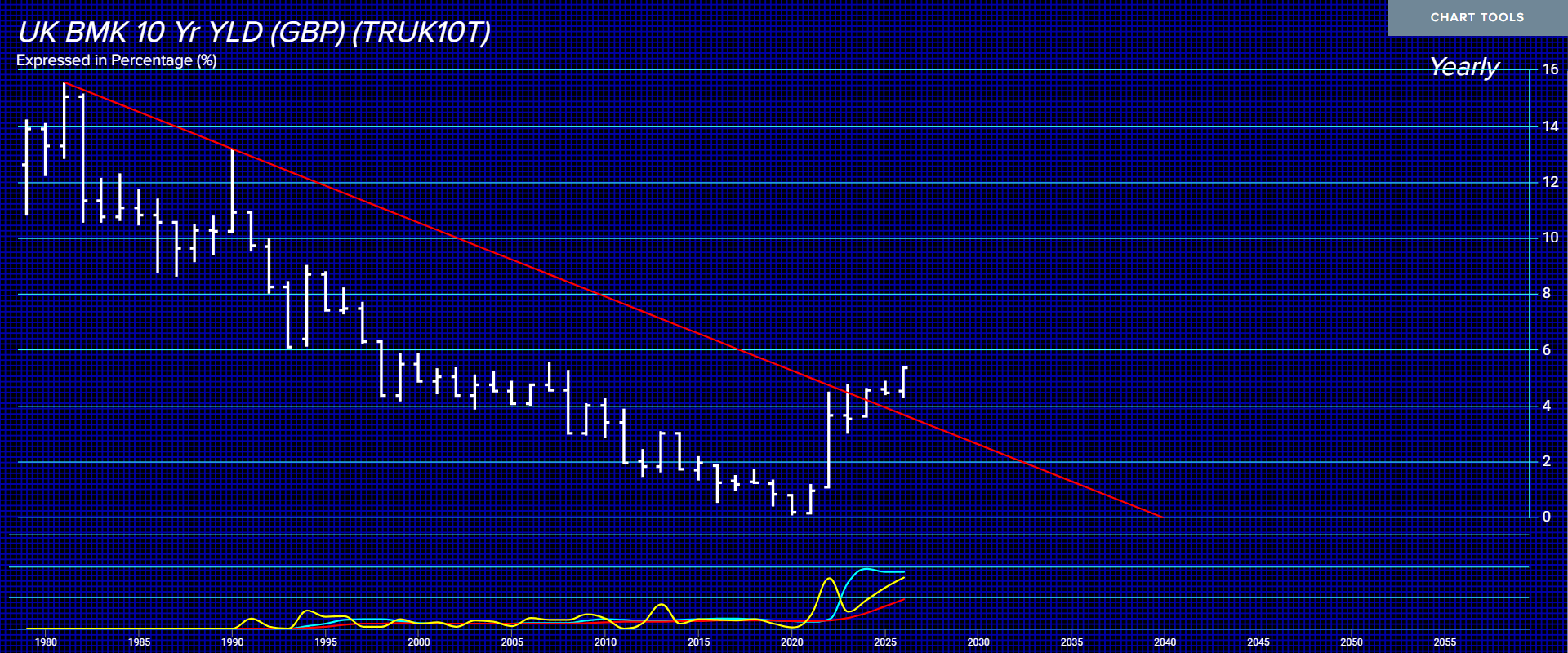
I was a pure trader and they were market manipulators trying to bully the market. Just listen to Bessent – “I am the house.” It is that same bravado and the markets will destroy him as well. In case he hasn’t noticed, long-term rates are rising globally. He thinks he can try to scare the entire world pretend he will be the house and then do a tiny $6 billion. I have clients who can sell that to him is 5 seconds or less and hit the bid as many times as he wants.
You cannot beat the war drums and expect rates to decline. If Trump keeps us out of war with Russia, (see Private Blog) let’s the EU self-destruct, then capital inflows will bring US rates down while they rise externally. They try to intimidate the markets and when they ALWAYS lose, they have blamed me assuming I have more influence than they can buy rather than just once, do some self-examination. Just like government, every crash leads to an investigation to find someone in the private sector. As I have said, there ARE NO MIRRORS in governments. Never do they ever consider that just perhaps they may be the cause.
I think when Scotty beams me up, they will still call me a piece of shit. They are incapable of ever admitting a mistake.
I have created this site to help people have fun in the kitchen. I write about enjoying life both in and out of my kitchen. Life is short! Make the most of it and enjoy!
This is a library of News Events not reported by the Main Stream Media documenting & connecting the dots on How the Obama Marxist Liberal agenda is destroying America