Posted Originally on Sep 9, 2026 by Martin Armstrong |
Malaysia is another country where people are beginning to see economic growth taking place around them rather than hearing politicians tell them that prosperity exists somewhere inside a government statistic. The economy expanded 6.0% year-over-year during the second quarter of 2026, accelerating from 5.4% in the first quarter. Growth for the entire first half reached 5.7%, compared with 4.5% during the same period last year. That is an impressive rate for an economy that has already moved well beyond the earliest stages of development.
The composition is even more important than the headline number. Manufacturing expanded 7.3% in the second quarter, accelerating from 5.9% during the first three months of the year. Electrical, electronic, and optical production surged 14.4%. Information and communications grew 8.3%, transportation and storage increased 7%, construction expanded 6.5%, and mining and quarrying jumped 9.2%. Malaysia is not growing because government bureaucrats moved money from one pocket to another. Production, technology, construction, logistics, and investment are all participating.
This is exactly the type of economy I have described when explaining why some countries are growing while others are collapsing in real time. Malaysia spent decades positioning itself inside the Asian electronics supply chain. Penang became one of the most important semiconductor manufacturing centers outside Taiwan and South Korea. Now the artificial intelligence boom is pushing another wave of investment toward the country as corporations seek semiconductors, cloud infrastructure, data centers, power capacity, and advanced electronics production.
Malaysia secured RM218.5 billion in approved investments during the first half of 2026, an increase of 11.7% from the previous year. These projects are expected to create more than 99,000 jobs. Foreign investment alone reached RM126.9 billion, rising 18.5%, with the United States, Singapore, Japan, and China among the largest sources. Domestic manufacturing investment also increased 23%. Capital is coming from both East and West because businesses care about returns far more than political rhetoric.
The data center story is particularly important. Malaysia has emerged as one of Southeast Asia’s fastest-growing data-center markets as global technology companies look for alternatives and complements to Singapore. Land and electricity are cheaper, the semiconductor ecosystem already exists, and Malaysia sits beside one of the world’s most important trading routes. Johor has become an extension of Singapore’s digital economy, while Penang remains deeply integrated into global electronics production.
This is how capital flows actually work. Singapore becomes expensive because capital pours into Singapore, so some productive investment migrates across the border into Malaysia. China becomes a geopolitical concern for American and European companies, so manufacturing capacity is expanded elsewhere in Asia. The corporation does not care about ideological speeches from politicians. It asks where the infrastructure exists, where electricity remains available, where skilled labor can be found, and where the investment can produce a return.
Bank Negara Malaysia reported that gross fixed capital formation grew 9.6% in 2025, while private investment increased 9.4%. Investment in information and communications technology was heavily concentrated in data centers and cloud services. Data-center investment alone accounted for roughly half of Malaysia’s net foreign direct investment inflows. That is not some theoretical promise of future development. Buildings are being constructed, machinery is being imported, electrical capacity is being expanded, and workers are being hired.
Contrast this with Europe, where governments have deliberately made energy expensive and then express surprise when energy-intensive industries leave. Brussels taxes production, regulates technology, restricts energy, and then produces another subsidy when businesses begin collapsing. Malaysia is attracting the very capital Europe claims it desperately wants.
Malaysia obviously faces risks. It remains deeply exposed to global trade, electronics demand, and the semiconductor cycle. Agriculture contracted during the second quarter, and higher energy prices remain a threat. Rapid construction of data centers also places enormous demands on electricity and water infrastructure. Government intervention can easily become excessive if politicians begin believing they created the boom.
Nevertheless, Malaysia is benefiting from one of the most significant reorganizations of global production since the rise of China. India is expanding. Vietnam is building factories. Indonesia is developing its enormous domestic economy and processing its own natural resources. Singapore is attracting wealth. Malaysia is capturing semiconductor, electronics, AI, and data-center investment.
Malaysia is becoming one of those destinations, and the people living there can see the transformation taking place around them in real time.
Posted Originally on Sep 8, 2026 by Martin Armstrong |
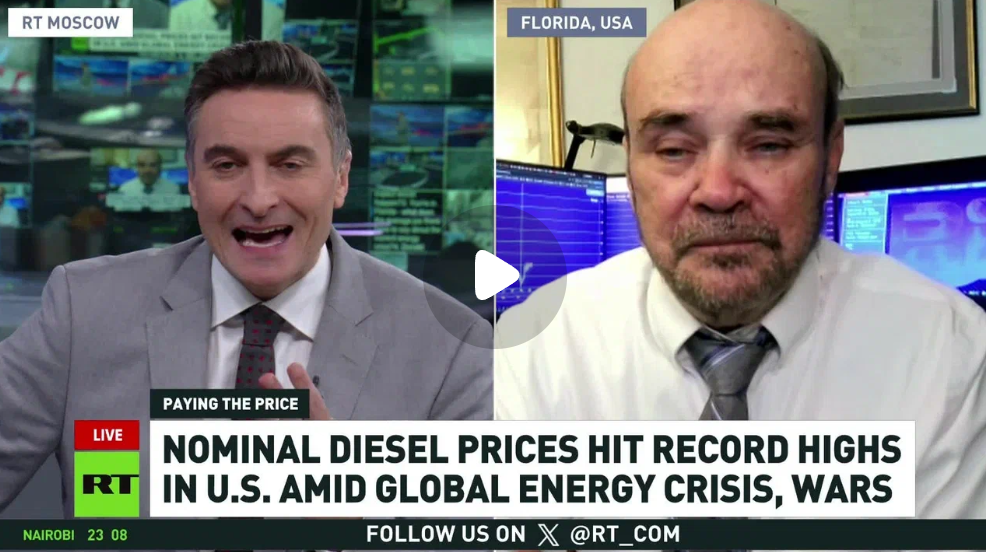
QUESTION: Why do you appear on Russian TV in Moscow?
DF
ANSWER: First of all, it is the Neocons who always wants to prevent any dialogue because that might lead to peace. I go on RT and they do not censor me, it is always LIVE. Moreover, I find it imperative to understand their viewpoint which comes across by their questions. As long as I am free to say what the computer is projecting, then I have no problem.I find ironically more censorhip in the West.
Video Player
00:00
00:23
When I was called in and asked to write the peace plan and to use my back channels to get it to Putin, they concluded the meeting and said:
“You know what we are asking you to do is what they killed Kennedy for.”
I was even shown the KGB file that Russia turned over on their investigation of the Kennedy Assassination. You cannot understand your opponent unless you get into their head. If people do not like that, go get a gun and volunteer for the Front Line in Ukraine. Put you mouth where your life is instead of cheering war and sending someone else’s children to fight while you watch it on CNN like a video game.
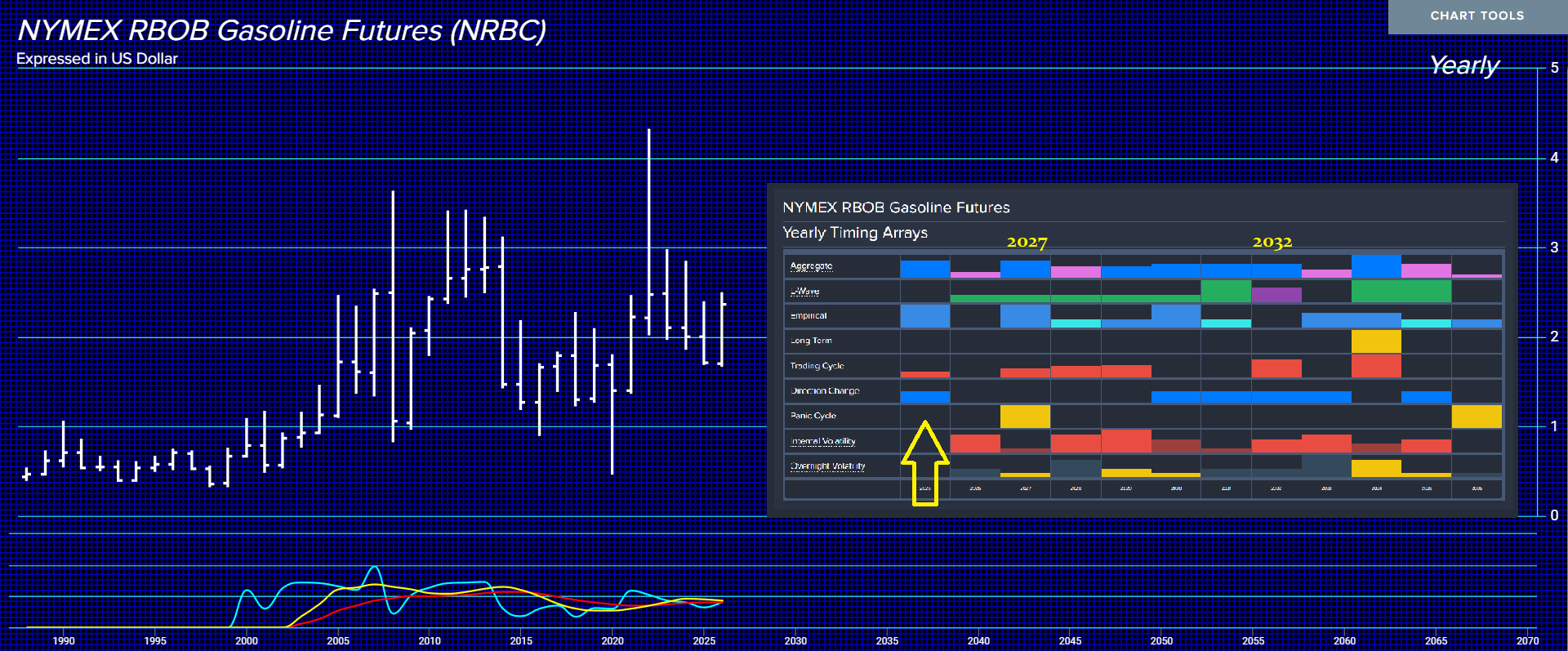
We have a crisis in refined energy products far more than crude oil. Nobody seems to wake up to that issue until it smacks them in the face. As far as the elections, it has nothing to do with my personal opinion. I do not see either party being able to prevent what our computer is forecasting. So, my comments are not political advocating either side.
Zelensky attacking the refineries in Russia is insane. He was behind blowing up the pipeline to Germany. He has no regard for what it would do to Germany or the EU. It has destroyed the Germany economy and undermined the entire EU, yet all he cared about was cutting off Russian sales of energy. Here he has done it again attacking their refineries and in the process he is not just sending fuel prices up, he is creating a very serious crisis in refined products that will bring down the entire world economy into 2028. Washington does NOT listen to our computer or they would have done something about it. So we have a Panic Cycle in Gasoline for 2027. This is where Socrates becomes so important because it is not simply someone’s opinion.
Posted originally on the CTH on September 8, 2026 | Sundance |
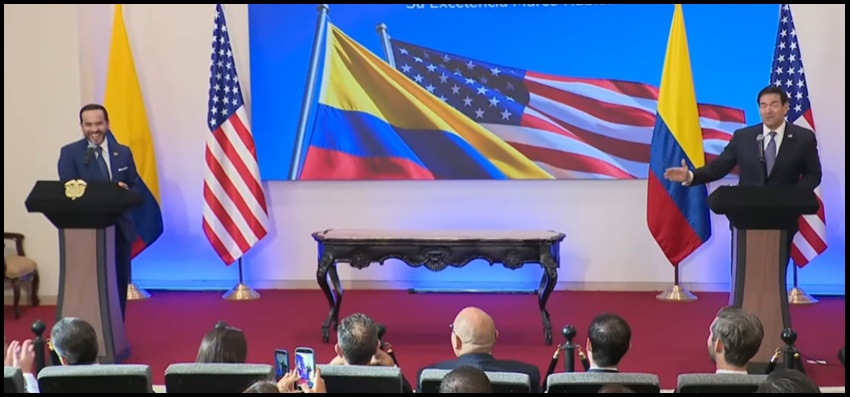
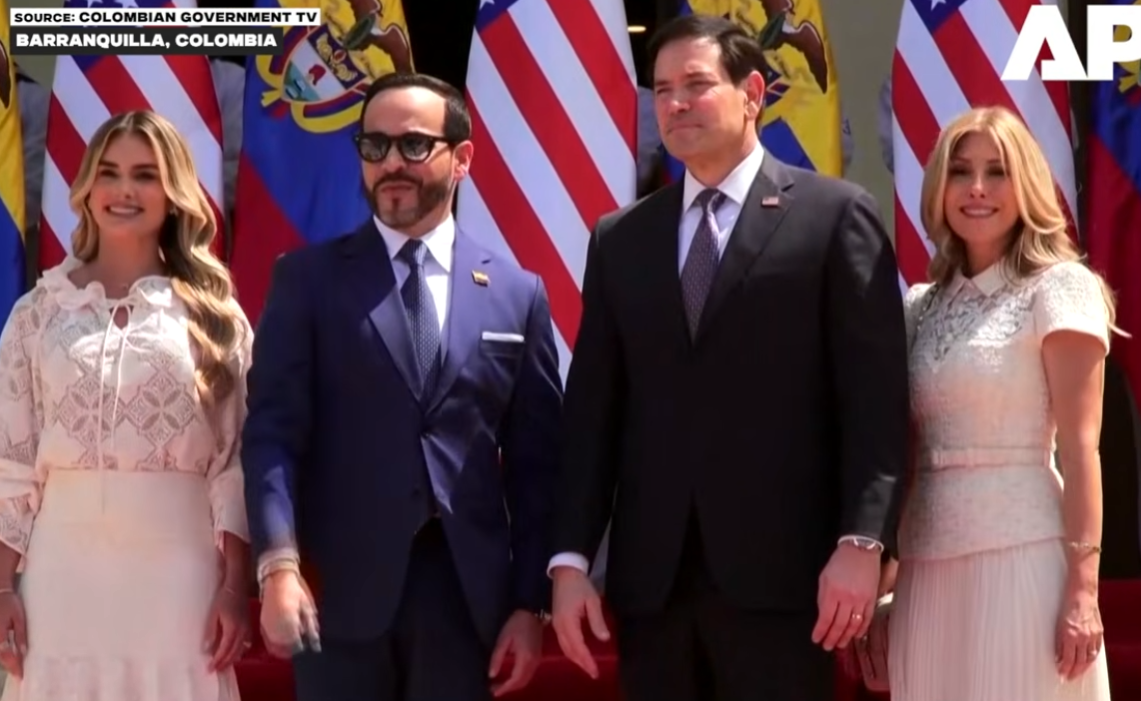
Earlier today U.S. Secretary of State Marco Rubio participated in a joint signing ceremony with Colombian President Abelardo De La Espriella at a Strategic Civil Nuclear Cooperation and Critical Minerals Framework discussion. Both leaders signed the Memorandum of understanding and delivered remarks to the assembled media.
Secretary Rubio delivered the majority of his remarks in Spanish for the audience and media. His bilingual skills come in very handy as Secretary Rubio travels Latin America carrying forth the U.S. strategic policy for the western hemisphere. Video and Transcript Below:
[Transcript] – MODERATOR: (Via interpreter) Good afternoon. Good afternoon. The Presidency of Colombia and the Ministry of Foreign Affairs would like to welcome you to the – to the ceremony of two memorandums of understanding between the Government of Colombia and the Government of the U.S. of America.
We are pleased to have His Highness President Abelardo De La Espriella, who is the president of Colombia, that’s going to be in this act as the witness – as a witness of honor. And we would also like to greet Omar Bula Escobar, who is the Minister of Foreign Affairs of Colombia, and His Excellency Marco Rubio, who is the Secretary of State of the United States of America, who are going to sign both agreements.
(In English) Good afternoon. The Presidency of the Republic of Colombia and the Ministry of Foreign Affairs welcome you to the signing ceremony of two memoranda of understanding between the Government of the Republic of Colombia and the Government of the United States of America. We are honored by the presence of His Excellency Abelardo De La Espriella, President of the Republic of Colombia, who joins us as witness of honor. We also welcome His Excellency Omar Bula Escobar, Minister of Foreign Affairs of Colombia, and the Honorable Marco Rubio, Secretary of State of the United States of America, who will sign both instruments.
(In Spanish.)
(In English) We will now proceed with the signing of the first memorandum of understanding, the Framework Between the Government of the United States of America and the Government of the Republic of Colombia for Securing of Supply in the Mining and Processing of Critical Minerals and Rare Earths. (Applause.)
(The Memorandum is signed.)
(Applause.)
(Via interpreter) Okay, thank you so much. We will now proceed with the signing of the second memorandum of understanding that it’s called the Memorandum of Understanding Between the Government of Colombia and the United States of America about Civil Strategic Cooperation, signed by the chancellor of Colombia and the Secretary of State of the U.S.
(In English) We will now proceed with the signing of the second memorandum of understanding, the Memorandum of Understanding Between the Government of the United States of America and the Government of the Republic of Colombia Concerning Strategic Civil Nuclear Cooperation. (Applause.)
(The Memorandum is signed.)
(Applause.)
(Via interpreter) Thank you so much. Thank you so much. And now we were going to go to the joint declaration about the meeting between the – the statement between Abelardo De La Espriella and the Secretary of State of the United States Marco Rubio. And we’re going to initiate with the Secretary of State Marco Rubio. Mr. Secretary, welcome. Welcome.
SECRETARY RUBIO: (Via interpreter) Thank you so much, Mr. President. And thank you. I’m so glad – I’m so glad. I came here last time as a senator but in the last four years as a senator, and then as the Secretary of State we hadn’t traveled here. And I think that until a certain point, this is a signal of the distance that had been created between our governments, which is not natural because the relationship between Colombia and the United States is almost impossible to replicate because they are personal links, cultural links, and also – and also at the economic level. And also we also have the opportunity to restore that natural relationships that we have between our countries, but also to grow into a new stage, a new cooperation stage with our president even stronger than we had before.
We talked a lot about security, because always security is key, because without security there is no prosperity. But the opportunities that exist between Colombia and the U.S. is much more than security because it’s the base of everything. Without security it’s impossible to operate as a country and as a society. But beyond that – because sometime people say that I – now they’re telling me I’m speaking in a low – you can hear me well, right? They say I’m speaking in a very low voice.
There is no doubt that without security a country cannot progress, and the threats to security that Colombia is facing, it’s the same things that we face in the U.S.: the same networks, the same criminal groups that, although they commit their crimes here, they also commit crimes in the U.S., and they damage our people. But that’s the base. That’s the key. That’s the most relevant thing.
And because the most important role of any – of any government in any part of the world, it’s the security of its people. But above that, we can build on prosperity, which is extremely important to move forward. And also the opportunity that exists for Colombia at the economic level are huge, are amazing, and these are opportunities that Mr. President has in mind that we can work together so that it benefits both countries.
We have a lot to do because, unfortunately, this government inherited a series of disasters, bad decisions, and we feel – we feel the same when we went into power a year and a half ago. But you are facing the errors of the last four years, and you need to face this. And besides that, there was a disaster. There was an earthquake that was tragical.
But there are amazing opportunities, and we’re going to use this opportunity that we have nowadays, because the links between our two governments are so solid to ensure that not only are we going to focus on security, but this is something going to be key in our relationship, but we’re also going to focus in what we call the opportunity of creating a prosperity that helps the North American people and also helps the Colombian people.
And this relationship between our governments have a – have direct impact on the daily life of people here but also the people in the U.S., and especially people in the certain part of Florida where I’ve lived most of my life.
If you allow, Mr. President, I’m going to give a couple of words.
(In English) I want to say a few words in English as well. First, I want to thank the president for receiving us. It – it’s not every day – let me say in this in Spanish first. I should’ve said it earlier.
(Via interpreter) It’s not – and we’ve not always traveled to a country and we have the opportunity to exchange with chief of state that you met before they were president, before he was a politician, because of the mutual relationships that we have. And even when we were talking not long ago, the two years ago when we were in the same – we were in the same table at a wedding in the southern part of Florida. That’s why this is a place where the president of the – the president is someone that I’ve met at a personal level. And then he went crazy and decided to become a politician and decided to turn president.
(In English) So I think that it’s unusual that you travel to a country that you meet with a head of state and a president who you’ve actually known for years before he was president, before he was even in politics. And as I was joking, when he lost his mind and went into politics, and – but he’s going to do a great job for this country, and I know that. I know that from what I know about him from before he was president. This is a man of energy. This is a man of strength. This is a man of vision and of courage because he’s confronting a very difficult situation. He has inherited many disasters.
Obviously, the country faces the aftermath of a natural disaster in an earthquake, but he also faces a disaster that’s institutional, that goes through four years of very bad management and that, frankly, harmed the relationship between the United States and Colombia, something that simply is not natural. The United States and Colombia have a strong bond that exists well beyond just the cooperation of our governments. It’s a strong economic bond. It’s a strong cultural bond. It’s a strong people-to-people bond, a social bond.
I can tell you personally, having lived in south Florida the majority of my life, how we follow so closely the events that happen in Colombia, because it has a direct impact on life in south Florida and ultimately in our country. This is the natural state of things, is for the U.S. and Colombia to be strong allies and strong partners, and the last four years is an aberration between our governments. But that is changing as well.
Clearly, the most important obligation of any government is to provide for the security of their people. It’s the number one obligation, and that is certainly an issue that you will confront here and that I am confident the president and his team are very serious about, and we’re going to do everything we can to help you.
But security is the basic and most important requirement of a government, but prosperity follows closely behind it, and that is opportunity of a country and an economy that provides the opportunity for upward mobility and prosperity for all of its people. And we believe we have a lot we can do together in the field of energy, in the field of trade, in the field of commerce, that allows both countries to benefit: the people of the United States, who I work for, and the people of Colombia, who the president works for and his team works for.
So I’m excited that after not having been here for a while, to be back, to be back with someone I know so well as president, who I know has a great vision and energy for the future, and excited to be back in a country that has been our strongest ally and partner in the region for many, many years. And we look forward not just to restoring that but building upon it and creating a golden age of relationships between our two countries and our two people.
Muchas gracias. (Applause.)
PRESIDENT DE LA ESPRIELLA: Thank you.
(Via interpreter) A very special welcome to all of you today. Barranquilla has been the scenario of a – of a very strategic conversation for the present and for the future of Colombia and of our relationship with the United States of America. To welcome the Secretary of State Marco Rubio here in the Colombian Caribbean has a very special meaning, because Barranquilla has been historically the Golden Door of Colombia to the world and represents an absolute conviction of my government because Colombia, it’s not just governed from Bogotá, Colombia; it’s governed from its regions.
I would like to thank Secretary Rubio. His presence – we are honored by his presence. He has been an inspiration for this battle for democracy, institutionality, and freedom because there is no Latino in the world that doesn’t feel represented by Marco Rubio, that has always done things the best way possible. And with regards to our community, that’s why I thank you so much, Mr. Secretary of State. It’s a pride and honor to have you here in the land of Barranquilla.
I also would like to publicly acknowledge the solidarity of the U.S. Government after the earthquake that we endured on August 10th. They have helped us with 26.5 million U.S. dollars in humanitarian assistance, and besides all of what they are doing regarding the fires that people are suffering near Tolima. No country in the world has helped as much as the United States, and today we’re giving a step forward. We are not going back from the solidarity in the emergency, to a very strategic partnership, a long-term strategic partnership.
From this meeting there is a guideline that we’ve called the Barranquilla agreements, and they follow three main topics that are highly relevant for our country and for the hemisphere. We are going to rebuild the homeland, we are going to recover the economy, and we are going to protect the hemisphere. And we’re initiating a historical and close relationship that was interrupted during four years, but it has always been there in the deeper areas, in the deeper basis of Colombia, because the United States has been our partner. We have been their ally and partner, and when the United States and Colombia have worked together, the only thing that we have had, it’s development, security, and progress.
The main purpose of this agreement, it’s the rebuilding and the economic recovery. The earthquake left huge challenges in households, in bridges, utilities, and in productive capacity. We were thinking where we wanted to work on cooperation, investment, and funding mechanisms, including the – including the International Development Corporation, other agencies, the private sectors and companies from both countries. We would like to attract investments to the infrastructure, energy, households energy, and the productive reconstruction Colombia is also going to do (inaudible) because we are going to do what we have to do regarding fiscal discipline, the legal certainty, efficiency, expanding better investment conditions.
In the same way, I requested Mr. Secretary of State to accompany us before multilateral organisms to enable instruments that allow us to fund these transitions without sacrificing the economic transition of our countries.
We are proposing to the U.S. a partnership where Colombia puts project territories, productive capabilities, resources, and clear rules and regulations (inaudible) the U.S. supports investments funding technologies and business capability.
Other of the important points, it’s shared prosperity. I have proposed Mr. Secretary to have this bilateral prosperity dialogue with very specific projects with – that has funding, timelines that our teams in Washington are going to continue developing. We identified some policies regarding infrastructure, technology, industry, rebuilding, and also rare – and also rare minerals, which is the treatment we’ve just signed. Colombia has access to two oceans, has the strategic resources and human talent. We need to turn all those opportunities that Colombia has in investments and productive chains, in manufacturing and also in employment for our people.
Another very important point, it’s security in the struggle against drug terrorism. Colombia wants to become the first hemispheric security partner with the U.S., and we’re going to be the partner number one in South America. The 21st centuries require new capabilities. That’s why we have proposed to the government, and I said it once again today, the Patriot Plan 21st century is to update airplanes, drones, radars, helicopters, anti-drone systems, aerial defense, mobility, intelligence, cyber defense, special forces, and the maintenance and the operationality. We’re going to have our own resource and we hope to build together capabilities to be able to face sophisticated threats.
But at the same time, we need the support – we need the support, a push from the United States, and we’re going to work in a very decisive manner in our fight against drug trafficking. We’re going to start with – we’re going to go through the precursors, we’re going to go through the pathways, we’re going to go through the leaders, we’re going to go to the narc terrorists, we’re going to go through the money laundering and other criminal equity and also those international networks that are a huge challenge not only for the hemisphere but also for humankind. Colombia, it’s ready to have annual quotas, verifiable indicators, and very specific agreements. We’re going to do what we are (inaudible), and with that basis we want to have a co-responsibility that is effective for both countries.
Another important thing – it’s the Shield of Americas. We’re already operational. Colombia is going to fulfill its responsibilities. We’re going to have the site in Medellín, and we’re going to do whatever it takes to be able to attack and to be able to give them the place that they deserve, which is either a prison or a tomb. And I say it: If a criminal doesn’t – if a criminal doesn’t follow the law, he is going to – he’s not going to get it his way.
And we also talked about Venezuela because we share more than 2,000 kilometers of borders with the neighboring countries, and everything that happens in Venezuela has a direct consequence in Colombia regarding security, migration, smuggling, armed – and armed groups, and also energy. Colombia will participate along with the United States in a very responsible manner in the focused efforts to be able to ensure regional stability and will – and will delve on trans-border cooperation, migration, and security. Our interest, Mr. Secretary of State, it’s that we each have institutionality, stability, and also security. We want to avoid any type of issue.
Another very important point that I mentioned to Mr. Secretary, it’s our foreign policy is based on a main policy. It’s that Colombia relates with the world from its own national interests. It has sovereignty, autonomy, pragmatism, and also a long-term vision, and this is where we’re perfectly tuned with the United States. We have now resources, geographic positions, human talent, and also very strategic assets. Our diplomacy needs to turn those strengths in opportunities to be able to become the best partners of the U.S. And we’re going to do it, Mr. Secretary, because this is a new rebirth.
Another very important topic, it’s migration and the rule of law. We agreed to delve on migration – more migration cooperation, exchange of information, biometric tools, identifying of the people (inaudible) to struggle against the migrants’ networks, and also the strengthening of border controls. Our idea, it’s that legal migration and – legal, safe, and organized migration, because our principle, it’s the same one that the United States shared. We’re not against migration. We’re against illegal migration, which is something different.
And there is a topic that it’s very close to my heart, and I said, Mr. Secretary, you know that many years ago we had – we had a consulate. And I said, hey, as the son of this region, I said if you can please open a consular office in Barranquilla, the alternate capital city of Colombia. And we are – we want a venue. We would like to consider it if possible, Mr. Secretary, because it’s been something that we’ve expected for years. First we had a consular office in Barranquilla, and then they took – and they removed the one from Barranquilla. The idea, it’s to go back to things as were before, and we hope to have here in (inaudible) Barranquilla the American consular office.
And once again, a topic that it’s also close to my heart, it’s cooperation to follow the path of the money. We would like to – we would like to see what’s money laundering resources that come from resources and hidden assets, strengthening judicial cooperation and financial cooperation. All of this, it’s going to be under the evidence of the framework of law, due process, and the respect for institutions, because to catch criminals, it’s not enough. We also need to strike the money that supports those financial structures. We need to affect the pocket of the criminals because it will hurt them.
This was a very deep, cordial, strategic conversation. Not only are we talking about the United States can do for Colombia, we also talked about what Colombia and the United States can do together for the hemisphere, because Colombia contributes a geographic position, strategic resources, productive capability, human talent, a very experienced armed forces, and a government that is committed. And we would – wanted this – this new stage to start here in Barranquilla, in the Colombian Caribbean, and in the region. The Barranquilla agreements need to turn into projects, investments, and cooperation.
In the security and also specific outcomes, we need to rebuild the homeland. We need to recover the economy. We need to protect the hemisphere. As of now, our teams (inaudible) will start to work to turn those expectations, those desires, those projects, and realities. May God bless the United States of America. May God bless Colombia hoy more than ever. (Inaudible.) Thank you. (Applause.)
Posted originally on the CTH on September 8, 2026 | Sundance |
President Trump and U.S. Trade Representative Jamieson Greer waited to see if Canada was going to follow through with their retaliatory tariffs against U.S. imports.
The Canadian government carried out their tariffs, so today the White House introduced 50% ‘stacking tariffs’, on top of pre-existing tariff rates, and additional import bans against several Canadian products.
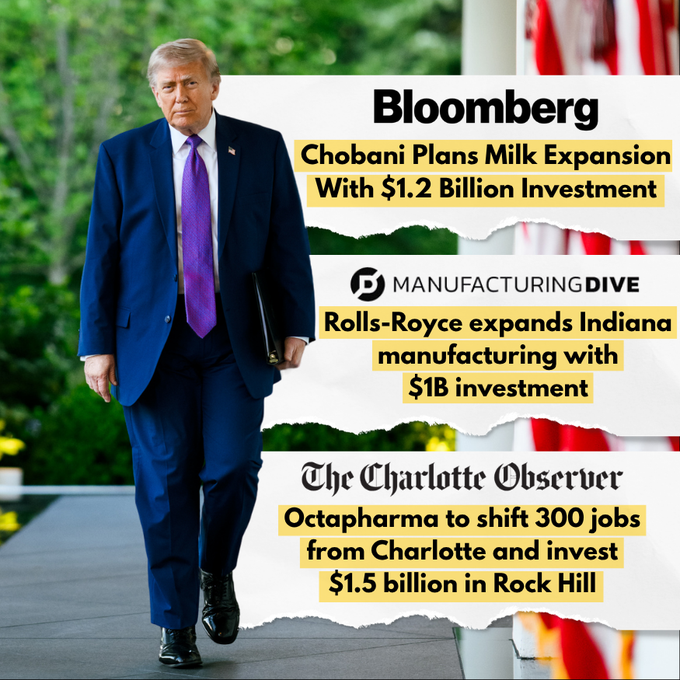
It should be quickly noted that several North American corporations are already making moves to avoid the issues by shifting production lines and adding additional investment into U.S. manufacturing. As expected, getting locked out of a 32 trillion economy is not an option for survivability.
The easiest way to review the issues is not to read media reports, but rather to read the actual outcomes as announced by the White House and USTR. CTH has noticed several Canadian outlets are already making false claims.
It is worth reviewing both sets of outlines as well as accompanying links to determine the exact types of Canadian products being targeted by stacking tariffs and import bans.
WHITE HOUSE – Today, to address Canada’s increased discrimination against U.S. commerce, President Trump signed five Proclamations pursuant to Section 338 of the Tariff Act of 1930 to ban certain products from Canada and modify the scope of the tariffs on certain Canadian products previously announced on July 20, 2026. President Trump is taking decisive and appropriate action to respond to Canada’s additional retaliation and continued discriminatory treatment of crucial American exports.
After breaking off trade talks with the United States last month, today Canada imposed new retaliatory tariffs on about $20 billion of U.S. exports, including steel, dairy, and agricultural equipment.
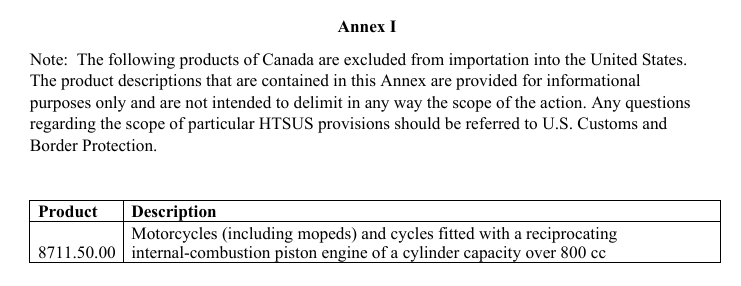
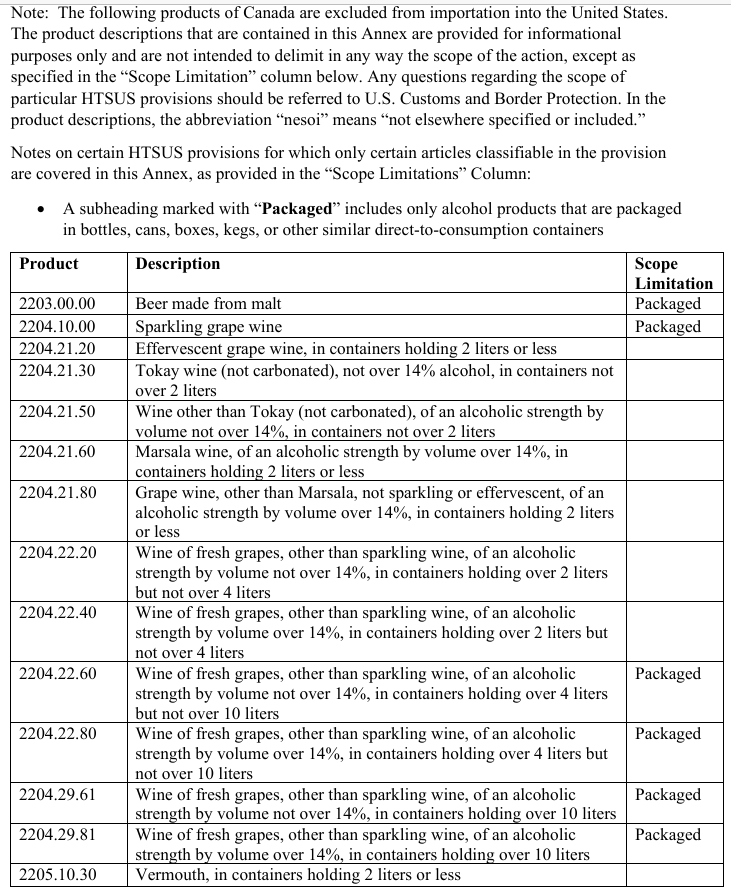
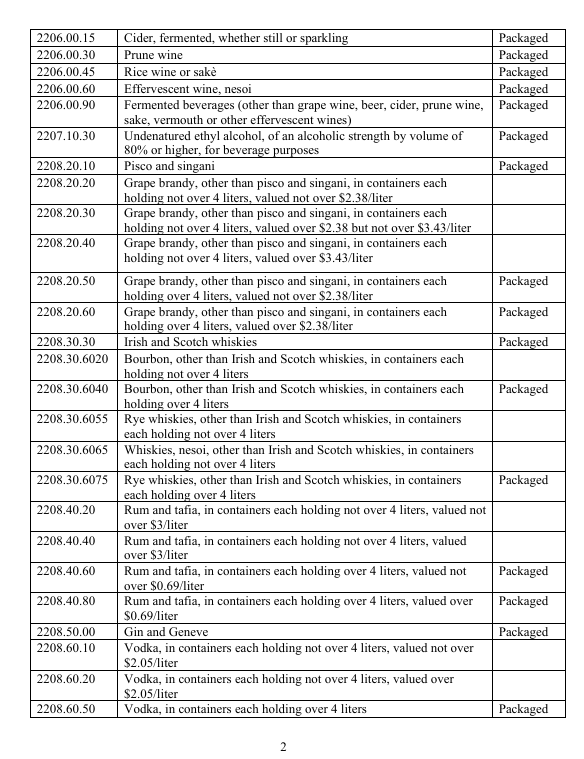
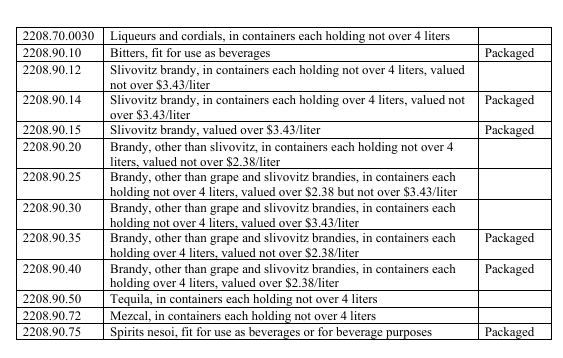
Because Canada maintained and in fact increased its discrimination against U.S. commerce with respect to U.S. alcoholic beverages, President Trump, under Section 338, imposed import bans on certain Canadian alcohol and other products that were subject to the 50 percent tariffs imposed under Section 338 in Proclamation 11046.
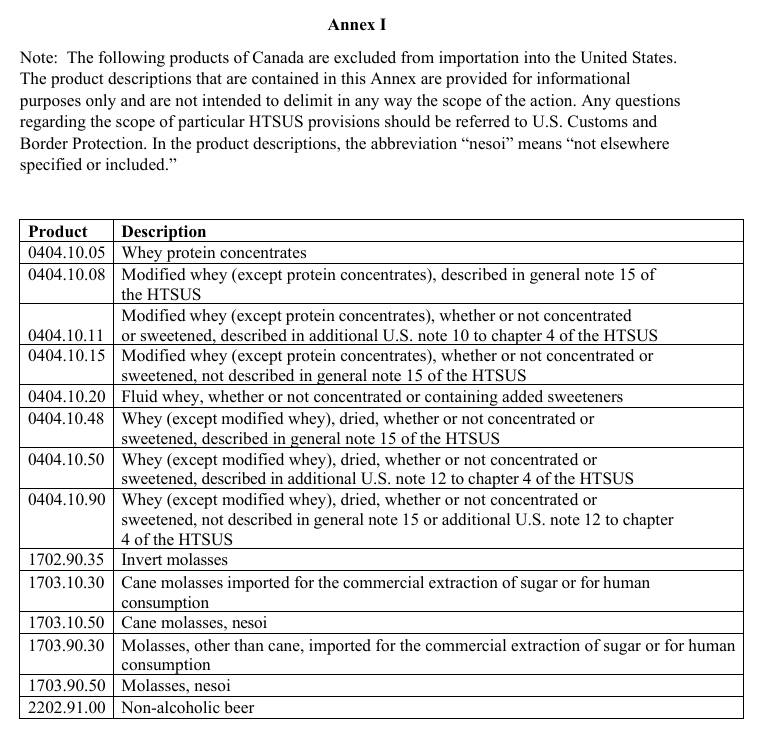
Moreover, because Canada maintained its discrimination against U.S. commerce with respect to dairy, President Trump, under Section 338, imposed import bans on certain Canadian dairy and other products of Canada that were subject to the 50 percent tariffs imposed under Section 338 in Proclamation 11047.
To offset the burden to U.S. commerce while better serving the public interest, President Trump is also modifying the July 20, 2026 actions by removing certain products, such as rock salt and cement, from the scope of the Section 338 tariffs and replacing those products with new ones, ranging from all-terrain vehicles (ATVs) to additional dairy products.
These Section 338 tariffs apply to all covered goods regardless of whether a good originates under the U.S.-Mexico-Canada Agreement (USMCA) and apply in addition to tariffs imposed under Section 232 of the Trade Expansion Act of 1962.
The import bans will take effect on September 29, 2026, and the product additions and removals will take effect on September 15, 2026.
WASHINGTON – Today, Ambassador Jamieson Greer issued a statement after President Trump exercised his authority under Section 338 of the Tariff Act of 1930 to ban certain Canadian products from entering the U.S. market and modify the scope of the July 20 actions to effectively offset the burden or disadvantage to U.S. commerce by Canada’s discriminatory measures.
“After weeks of good faith and intensive efforts between U.S. and Canadian negotiators, Canada walked away from a near-final trade deal that offered better treatment than any other trading partner, and instead Canada chose to embark on senseless retaliation against the United States,” said Ambassador Greer. “Today’s action, combining targeted import bans as authorized by Section 338 and a calibration of the underlying Section 338 tariffs, is a natural consequence of Canada’s continued discriminatory treatment of crucial American exports, ranging from alcoholic beverages to dairy products to motor vehicles. President Trump will continue to leverage the tools at his disposal to defend the interests of American workers and exporters, and restore reciprocity in our bilateral trade relationships.”
Additionally, the President has directed USTR (Office of the United States Trade Representative) and GSA (General Services Administration) to remove $50 billion dollars’ worth of Canadian-origin products from GSA’s Multiple Award Schedules.
To view the lists of Canadian products banned under the Section 338 actions, click here (motor vehicles), here (dairy), and here (alcohol).
To view the lists of product modifications to the Section 338 actions, click here (motor vehicles) and here (alcohol).
To read the proclamations making the above changes, please see:
Section 338 of the Tariff Act of 1930 (19 U.S.C. 1338) empowers the President to, among other things, impose duties of up to 50 percent on imports of a foreign country to offset the burden or disadvantage from a foreign country’s unequal imposition on or discrimination against the commerce of the United States. On July 20, 2026, finding that the public interest will be served by his actions, President Trump took three separate Section 338 actions to level the playing field for important American exports to Canada—motor vehicles, alcoholic beverages, and dairy. Section 338 further empowers the President to exclude products from importation into the United States if a foreign country maintains or increases its discriminatory practices against U.S. commerce.
Based on Canada’s continued retaliation and discrimination against U.S. commerce, President Trump has determined that it is necessary and appropriate to ban certain Canadian products from entering the U.S. market and refined the scope of the July 20 actions to target strategic Canadian sectors while removing certain non-sensitive Canadian goods from the scope of the actions. {Source}
It appears that some of the product categories would be limited by ‘stacking tariffs’, as a consequence the U.S. is simply moving to ban the products altogether.
Posted originally on the CTH on September 8, 2026 | Sundance |
This is what they call one of those dangerous ‘ah-ha‘ moments. A British Police Commissioner from Hampshire, was discussing the newest illegal migrant influx that has been happening on the eastern coastline of the U.K. During the final 19 seconds of Donna Jones remarks, she identified the core issue that has perplexed many:
…”This is a real wake up call to the government, yet again, that the British people are fed up with the lack of control of our borders. Which is why, we really need to be looking as a country about our membership in the European Court of Human Rights (ECHR), because that’s why we can’t turn the boats around and send them back to France”…
That 19-seconds was immediately cut out of the BBC rebroadcast of the interview. However, the moment was caught and shared on the X platform.
Apparently, when the U.K voted to exit the European Union, ie. ‘Brexit, there were some EU bureaucratic institutions the government of the U.K chose to remain aligned with. The EU Court of Human Rights was one of those institutions, and it is from the charter and agreement within that body the government of the U.K has their hands tied. This is the core of the issue and the one element the BBC do not want the British people to understand.
Posted originally on the CTH on September 8, 2026 | Sundance |
Is it a coincidence that during the COVID-19 controversies the largest loss in credibility fell upon the nursing and schoolteacher professions, while the jury in the Lindsay Clancey case were majority female nurses and teachers?
Speaking to NBC in Boston, three of the female jurors speak out about the deliberations behind closed doors. The main issue expressed by each of the women in the interview was how the holdout juror, “had the hardest time getting off the fact that Lindsay viciously killed her children.” WATCH:
The jury’s foreperson, who wrote the note indicating concerns about a juror expressing reasonable doubt but not agreeing to a verdict, is among the jurors who spoke to NBC10 Boston on Tuesday.
In the exclusive interview, which lasted over an hour, the jurors talked about the defense and the prosecution and the lengthy deliberations, as well as confirming what observers had inferred from the foreperson’s note, that there was a holdout juror, who left them frustrated — they said he wouldn’t listen to the rest of the panel. (read more)
…”He had the hardest time getting off the fact that Lindsay viciously killed her children.”
Posted originally on the CTH on September 8, 2026 | Sundance |
As noted by President Trump, U.S. businesses and contractors are blocked from bidding on most Canadian federal and provincial contracts for goods and services. However, the U.S. does not restrict Canadian companies from bidding on U.S. state and federal contracts.
Effective today, that one-way benefit ends.
Keep in mind, as this Truth Social post was made, USTR Jamieson Greer is in a meeting with Canadian USMCA negotiator, Dominick LeBlanc.
(Via Truth Social) – “Everyone knows that Canada doesn’t let our Great Dairy Farmers sell into the Canadian Market, and that the only reason Canada makes Autos is because of previous disastrous Trade Agreements while other Presidents were in Office. Canada has been ripping us off for years, but what many do not realize is that the Canadian Government, including Canadian Provinces, have banned American Small Businesses and Companies from selling into their Government Procurement Markets.
This is the case even though Canada gets broad access into the massive American Government Procurement Market, including those of our States. That is not reciprocity, it is a Canadian Trade Scam. From now on, NO RECIPROCITY – NO ACCESS! I am hereby directing the GSA, working with the USTR, to take all necessary steps to REMOVE Canadian-origin products from GSA’s Multiple Award Schedules unless Canada restores full and fair reciprocity for American Farmers and Companies. Those schedules account for more than 50 BILLION DOLLARS a year. This should have been cut off years ago, by other Administrations, like it was by mine, only to reinstituted by Sleepy Joe Biden. Thank you for your attention to this matter!”
This is also a good opportunity to point out that several media reports on a Deloitte analysis of the Canadian economy, centered around what would happen if the USMCA was terminated, are fundamentally false. The Deloitte analysis has a baseline assumption that is structurally flawed.
You can read the Deloitte Report HERE. In the forward you will notice they ‘assume’ all trade between the U.S. and Canada continues, they assume Canada will retain “most favored nation” status, and they assume without the USMCA Canada will face a global 10% baseline tariff. Each of these assumptions is structurally false.
There is a lot of wish-casting in those assumptions, the biggest one is that Deloitte ignores the Chinese components in Canadian goods.
Without the USMCA to protect their transshipping operation, Canada will not be able to assemble component parts from China into finished goods bound for the United States. There would be no content agreement with the U.S, nor would there be a defined ‘rules of origin’ to use as a guide.
A singular Chinese component not available in the USA (as an outcome of the U.S-China agreement) would be enough to disqualify the entire product line from Canada.
Within their economy Canada doesn’t independently manufacture all their component parts, specifically the heavy industrial components. Instead, Canada ships the raw materials to China then imports the finished component goods. Canada is more of an assembly plant than a manufacturing plant.
Canada exports raw materials, then imports component goods. THAT is their economic model. They chose that route when they decided that climate change was their gospel, carbon emissions were terrible and industrial manufacturing was dirty work that kills the planet. Now they have a “clean energy” carbon trading system, but electricity alone cannot smelt and pour.
Deloitte misses that BIG PICTURE entirely, in their estimate of losing 163,000 jobs/yr, and losing $402 billion in economic activity over ten years.
Basically, Deloitte pretends some form of a general Free Trade Agreement with the USA will exist, while continuing to believe a bunch of Canadian processes, rules, bans, provincial regulations, tariffs and non-tariff barriers against the USA remain in place. The status quo without the USMCA. I can assure you those massive assumptions are flawed.
Canadian media and govt officials are pushing the Deloitte-ca analysis to maintain their political agenda.
The more likely scenario of a USMCA termination (without a FTA to replace it) would be somewhere around a 30 to 50% drop in all export-driven GDP, totaling well over a trillion dollars in the first 5 years. 70% of all Canadian exports would be impacted, and the job losses are not just in the direct manufacturing or assembly process. All of the ancillary economic activity that is derived from wage spending suddenly stops.
China would need to spend 10x more to subsidize Canada than Europe is spending to subsidize Ukraine.
Posted originally on the CTH on8, 2026 | Sundance |
British commonwealth system are removed. A sovereign USA, China, India, Russia and Saudi Arabia acting independently, albeit with each nation organizing their interests by forming bilateral trade and economic attachments with each other nation.
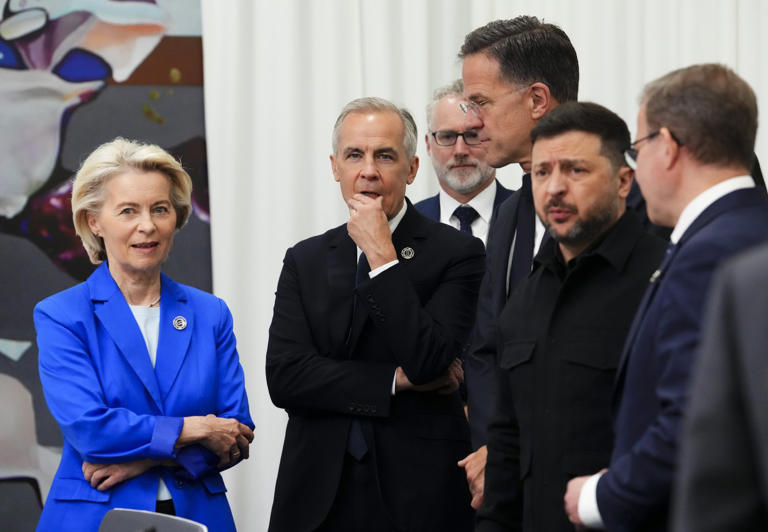
In essence President Trump is emphasizing ‘Nationalism’ over ‘Globalism’, where the influences of the old, mostly British or colonial systems are removed. In order to combat this strategic reset the U.K commonwealth countries Australia, New Zealand, the British Caribbean states and Canada are organizing themselves into a cluster with the European nations as “middle powers.”
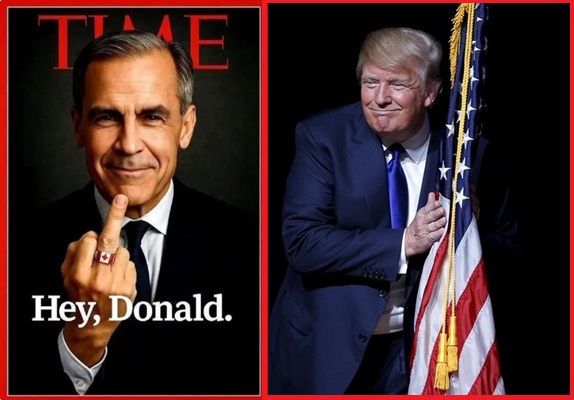
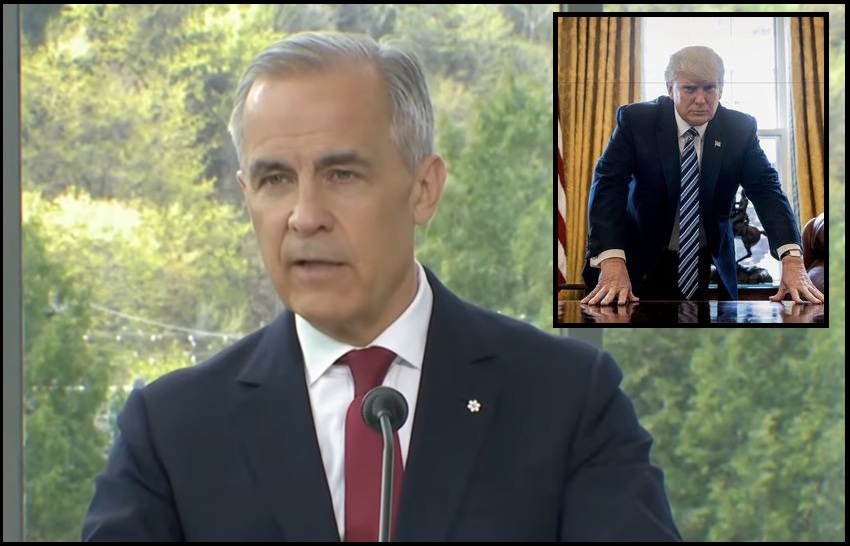
According to the expressed defensive plan outlined by Prime Minister Mark Carney, the totality of the “middle powers” assembly would then be large enough to block the influences of the USA, China, Russia, India or Saudi Arabia.
This new alignment will be interesting against the geopolitical backdrop of the economically aligned G7 or G20 construct. However, there is a big upside. Given the nature of the expressed intent for collective defense and security, there is an immediate opportunity created by the assembly for the United States to exit NATO.
If Canada, Europe and the British Commonwealth nations organize as outlined, they should be entirely capable of defending themselves if needed from China, Russia, India or even the USA. But, then again, this is Europe and Canada we are talking about – both regional populations filled with prose and grand progressive pontifications, yet historically short on actual substance or fortitude. These are, after all, the surrender nations.
A reasonable person would agree that Southeast Asia could kick Europe’s ass in a war, and I seriously doubt the U.K is going to be able to stop the Falkland Islands from going back to Argentina without American help. [Not happening] The Vikings are a serious bunch, but together the Nord’s and the Eastern Europeans are not exactly thrilled with the imported rape-gangs.
Methinks as opposed to trying to take on the Russian and U.S submarine fleets, the Commonwealth and Euros are more likely to break out in a rather colorful civil war first. I admit fully that perspective runs against the grand prose of the Brusselians and British.
BLOOMBERG (non paywall) – The European Union and Canada are working toward a new, all-encompassing relationship that will range from trade to security, as the transatlantic partners seek to build a new alliance to offset the global power politics dominated by the US and China.
European Commission President Ursula von der Leyen, the top executive of the EU, is expected to announce the plans at her state of the union address in Strasbourg, France, September 16, according to people familiar with the preparations. Canadian Prime Minister Mark Carney will attend the speech then address European lawmakers the following day.
Carney’s government has made a deeper EU partnership a top priority and is actively looking at everything short of actual membership, said a Canadian official who spoke on the condition of anonymity. The discussions are particularly focused on “strategic capabilities,” such as cooperation on defense, space exploration and scientific research.
It’s not clear whether new legal tools would be needed to formalise this partnership, but those discussions are ongoing and Carney’s government will be consulting with Canadian provinces and industries, the official said.
In a remarkable speech at the World Economic Forum earlier this year, Carney warned that the “rules-based international order” was effectively dead and called on so-called middle powers to create a new global architecture to oppose pressure tactics and intimidation by the world’s great powers.
He didn’t mention US President Donald Trump by name but called on new alliances to be the last line of defense against countries that impose their economic and military might at will.
A spokesperson from Carney’s office declined to comment for this story. A spokesperson from the commission didn’t immediately respond to a request for comment. The contents of von der Leyen’s speech next week are still being drafted and could change before then. (more)
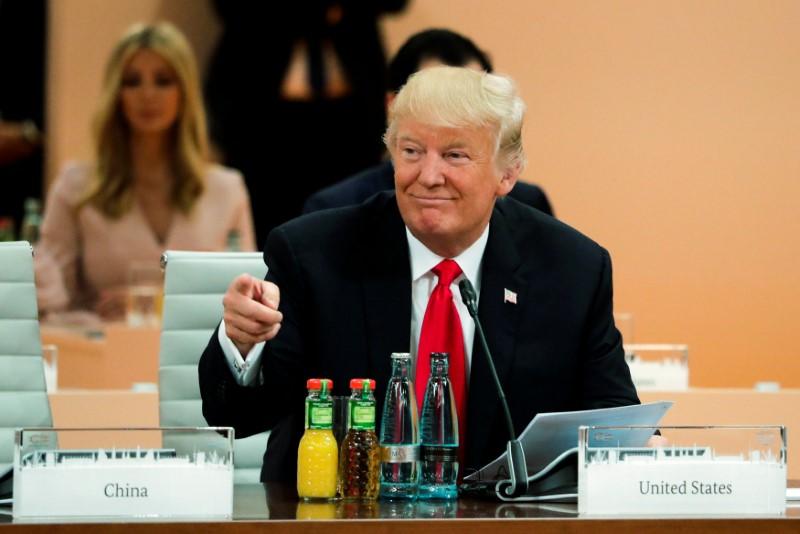
The G20 in Miami, December 14-15 should be very interesting.
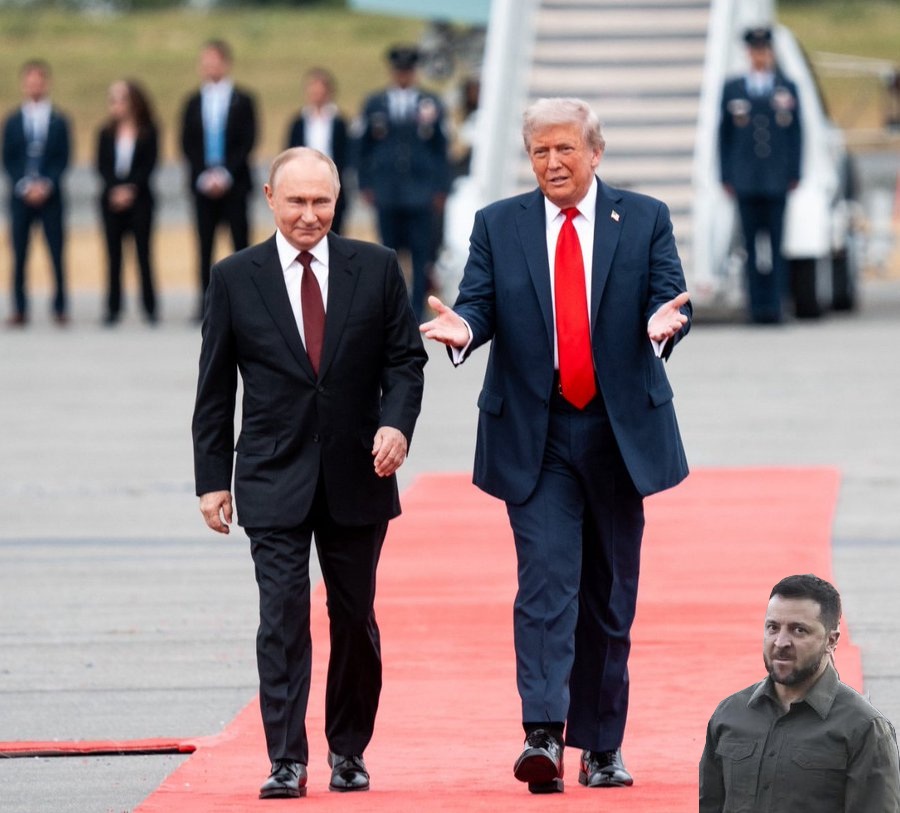
President Trump is likely to invite Russian Federation President Vladimir Putin, and I suspect the European delegation will want to bring Zelenskyy.
Stay tuned.
Ushakov: […] “Donald Trump directly communicated the desirability of bringing the conflict to an end as soon as possible, as it would immediately open up prospects – impressive and far-reaching ones at that – for the full restoration of relations between the U.S. and Russia. In his view, this would have a particular impact on trade and economic ties, promising huge benefits for both nations. Donald Trump is keen to see a breakthrough achieved during his presidency.
Posted originally on the CTH on September 8, 2026 | Sundance |
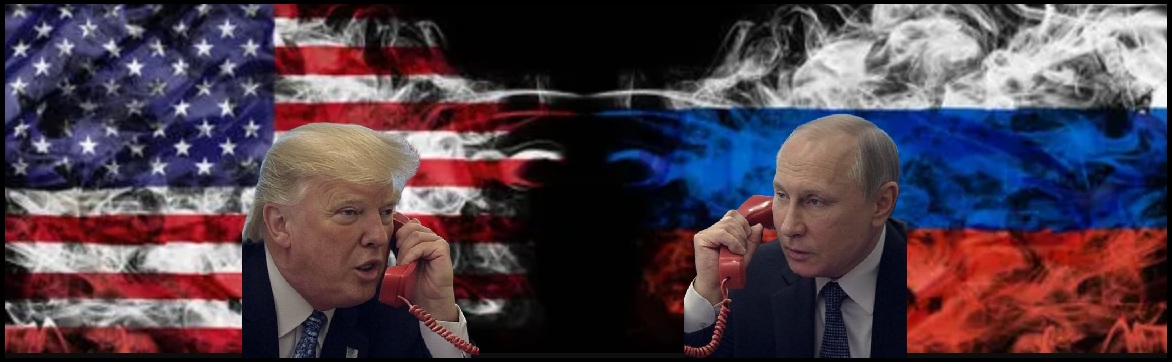
President Donald Trump and Russian Federation President Vladimir Putin held a one-hour phone call today, discussing the latest round of negotiations between U.S. Emissaries Steve Witkoff, Jared Kusher and their Russian counterparts.
Obviously, for us at CTH it makes no sense to read manipulative U.S. media reports of the Russian perspective on the phone call, when we can just read the Russian readout for ourselves. You deserve better. So, here it is:
[PRESS RELEASE] – Aide to the President Yury Ushakov: President Vladimir Putin had another telephone conversation with US President Donald Trump. In their customary respectful and business-like manner, the leaders exchanged opinions on the trips made by US special envoys Steve Witkoff and Jared Kushner to Moscow and Kiev on September 5–6.
The telephone conversation lasted exactly one hour. It was constructive and quite frank. As you understand, the conversation itself is confidential, so I am not at liberty to share with you many important details and nuances.
The outcome of the visit by said US representatives was assessed as positive. The work through this channel and some others will continue.
Clearly, the conversation centered on Ukrainian settlement. Donald Trump directly communicated the desirability of bringing the conflict to an end as soon as possible, as it would immediately open up prospects – impressive and far-reaching ones at that – for the full restoration of relations between the U.S. and Russia. In his view, this would have a particular impact on trade and economic ties, promising huge benefits for both nations. Donald Trump is keen to see a breakthrough achieved during his presidency.
President Putin supported this approach in the context of potentially building a constructive partnership between the two great powers and praised the mediation efforts by the US and Donald Trump personally with respect to finding solutions to the Ukrainian conflict. An objective and extensive analysis of the current developments in the special military operation was provided, along with our vision of the overall progress on the battlefield and achieving the goals and objectives of the special military operation. Speaking of which, actual tangible actions that the Americans could take to expedite the cessation of the hostilities were outlined.
In view of the speculations regarding Russia’s alleged hostile intentions against European states, it was stressed that no aggressive plans against Europe have ever entered our minds. The circulated myths about the Russian threat serve as a pretext for Europeans to ramp up their support for Ukraine and their own military expenses.
Notably, during the telephone conversation, the leaders agreed to continue the work on resolving humanitarian issues, including detainee and prisoner exchanges. Our President noted the efforts made by US First Lady Melania regarding the return of both Russian and Ukrainian children to their families.
Overall, colleagues, I will reiterate that the conversation proceeded in an upbeat tone. The presidents agreed to stay in touch and speak to each other by phone if the need arose.
I very much stand by my prior outlines on the best interests of the U.S. as it pertains to the strategic intention of President Trump. CTH is confident we have this analysis nailed {GO DEEP}.
I have created this site to help people have fun in the kitchen. I write about enjoying life both in and out of my kitchen. Life is short! Make the most of it and enjoy!
This is a library of News Events not reported by the Main Stream Media documenting & connecting the dots on How the Obama Marxist Liberal agenda is destroying America