Posted Originally on Sep 6, 2026 by Martin Armstrong |
In Part 2 of this interview, economic cycle expert Martin Armstrong breaks down the immediate impact of the Fed’s latest operations on precious metals, the underlying drivers of the market, and why he projects gold’s long-term macro peak won’t arrive until 2032. Plus, Armstrong shares insights on the shift toward autonomous warfare, including the military’s development of 100,000 robotic soldiers, and why traditional AI still falls short of human curiosity.
Posted originally on the CTH on September 5, 2026 | Sundance |
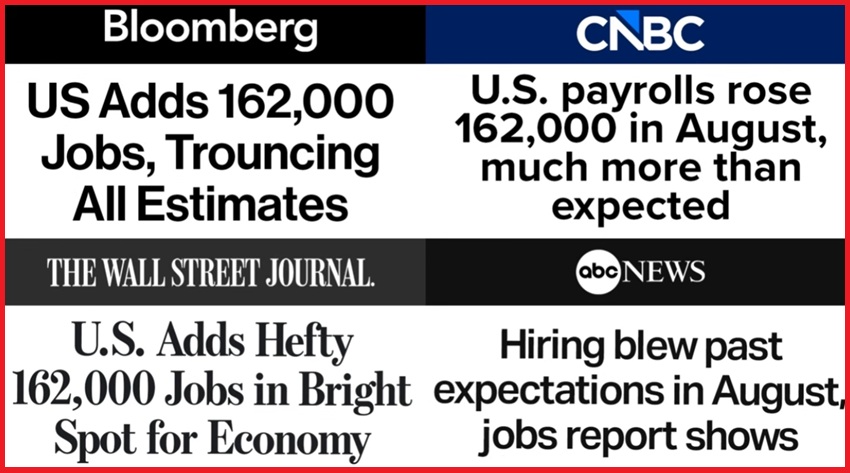
In this episode from Promethean Action’s Barbara Boyd she takes a look at the U.S. economy and the Main Street policies of President Trump versus the banking/Wall Street Canadian economy. In the August jobs report the U.S. economy added 162,000 jobs, while the Canadian August jobs report reflected 42,000 job losses.
Boyd – “A blockbuster U.S. jobs report showing 162,000 jobs created is contrasted with Canada’s 40,000 job loss under Mark Carney, as Treasury Secretary Scott Bessent tells Steve Bannon that Wall Street and major outlets like the Financial Times and The Wall Street Journal stoke economic panic and spread “fake news,” citing a misframed story about Norway’s sovereign wealth fund shifting from Treasuries into higher-yield Fannie and Freddie securities.
This episode frames today’s challenge as a “Red Queen economy,” arguing America must grow productivity fast enough to outrun debt, China’s advances, and infrastructure and skills obsolescence, while blaming Biden-era inflation and spending. It spotlights Trump administration workforce initiatives, including expanded training and Pell Grant use and the new Foundry School—an advanced manufacturing program with a Stanford curriculum and international PAX Silica partners. Finally, it covers Trump executive orders aiding ranchers’ beef processing and DOJ antitrust scrutiny of major meatpackers and retailers.”
Posted originally on the CTH on September 5, 2026 | Sundance |
The longer we review the stuff coming out of the legacy U.S. Intelligence Community, the more I realize how much of a fool I was for ever trusting their nonsense.
Today, former CIA Director General David Petraeus claims that Russia has suffered over 1.4 million killed or wounded in action (KIA/WIA). {SOURCE}
For those just recently entering the era of ‘great awakening’, let this type of nonsense propaganda serve as a starting point to realize what CTH has described from the outset of the Ukraine-Russia ‘conflict’ as, essentially, World War Reddit.
There are approximately 140 million Russian people living in Russia. Of that population there are approximately 60 million males. Of the 60 million males there are approximately 20 million men aged 18-35. Additionally, 75% of the Russian population lives in urban centers, ie. cities.
If 1.4 million men (out of 20 million) were killed or wounded in the Ukraine conflict, the hospitals and convalescent facilities in around the cities of Kazan, Moscow and St Petersburg would be full; at least significantly beyond ordinary medical capacity. They are not. Not even close.
I have no idea where these western ‘intelligence’ analysts and experts come up with these statistics, but they are so far beyond nonsense the light from where silly stuff originates could not reach them for years. They could have just used the word “eleventy’. There is nowhere near that number of KIA/WIA in Russia; not even close.
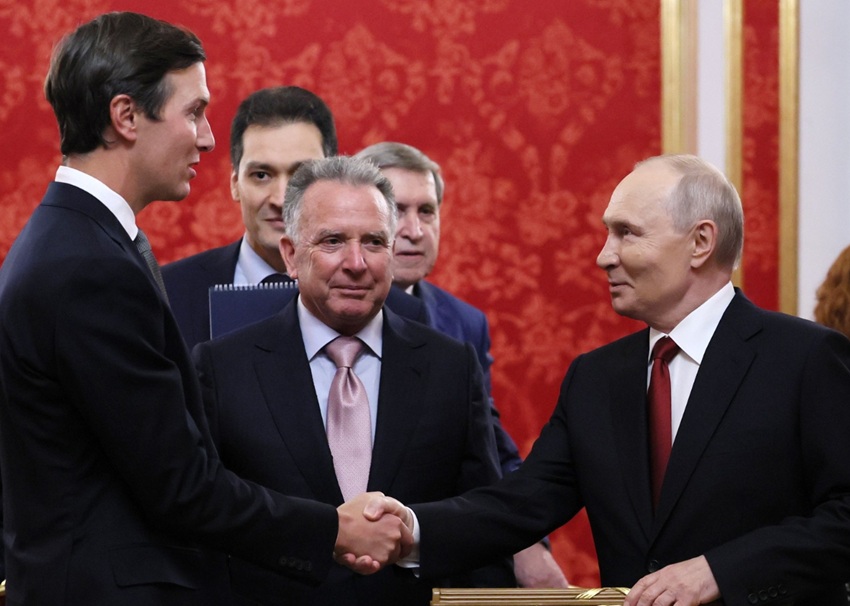
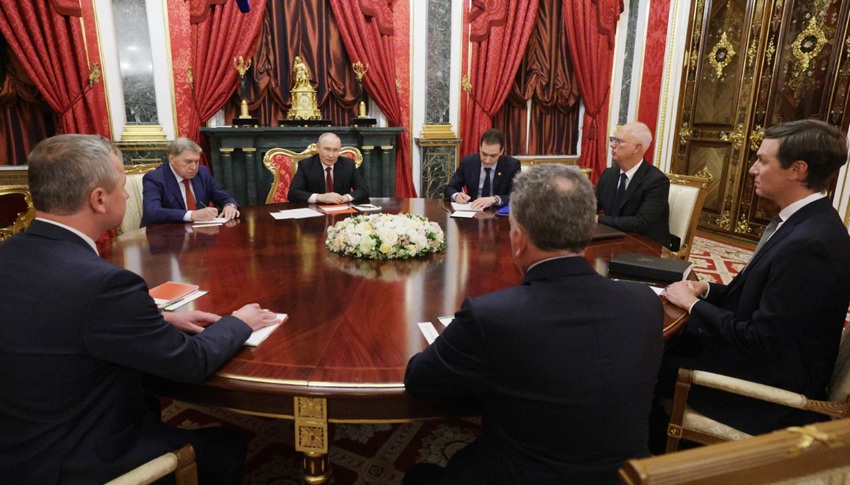
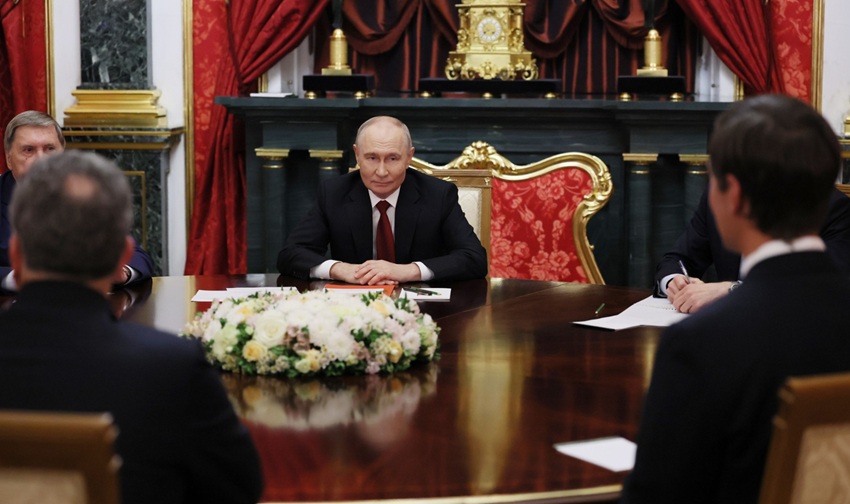
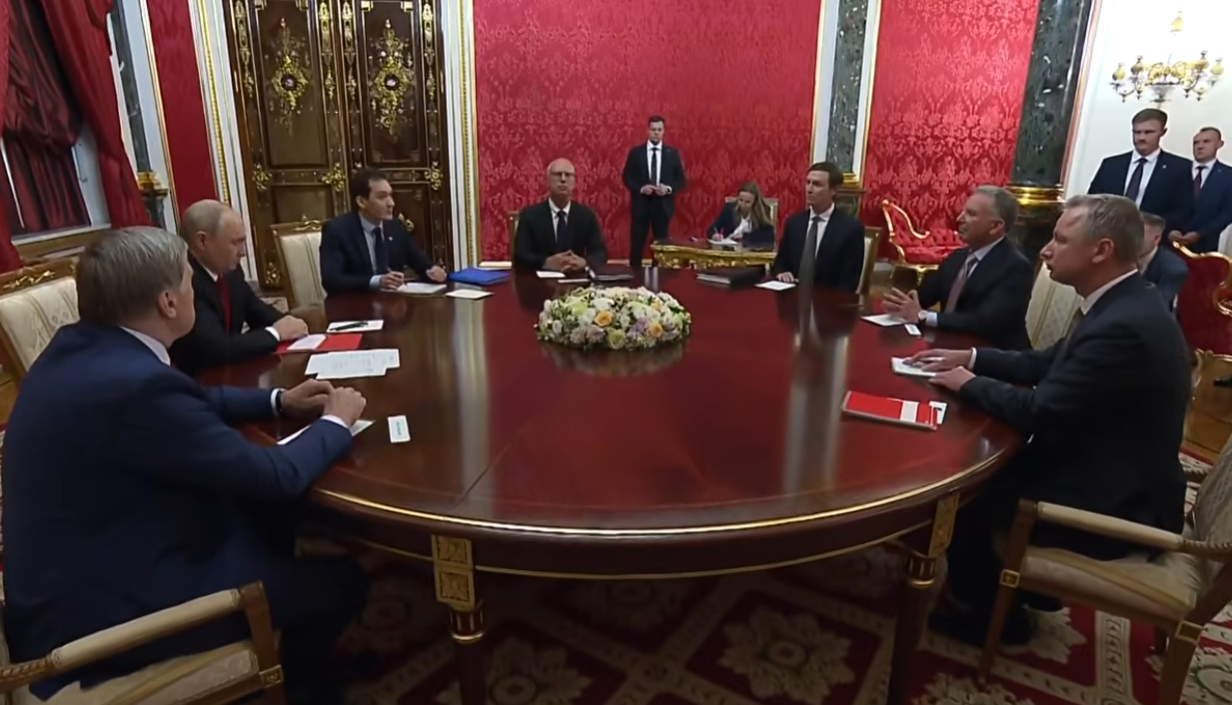
U.S. Special Envoys Steve Witkoff and Jared Kushner have departed Moscow after roughly three hours of talks with Russian President Vladimir Putin focused on ending the war in Ukraine. The two are expected in Kyiv on Sunday to meet with Ukrainian President Volodymyr Zelenskyy as part of the Trump administration’s latest push to revive stalled peace negotiations. Putin has ordered a 72 hour pause in strikes on Kyiv during their visit. Witkoff and Kushner are now aboard U.S. Air Force C-32A SAM934. They will likely travel to Poland before continuing by ground transportation to Kyiv. {Source}
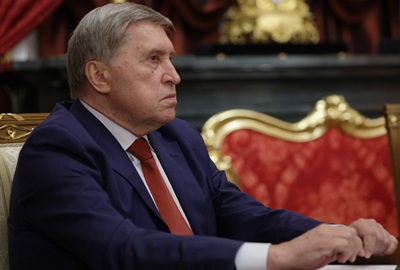
Putin aide Yuri Ushakov says the Kremlin talks with US envoys Steve Witkoff and Jared Kushner were “substantive, extremely frank and conducted in an atmosphere of trust.” He outlined that Moscow offered what he called a “clear and comprehensive” assessment of the situation in the Ukraine conflict, while Witkoff and Kushner presented several ideas on possible routes towards a settlement.
The two sides also discussed economic cooperation and the prospect of major joint US-Russian projects. Ushakov added that Putin and Trump remain in direct personal contact. {source}
(VIA DAILY MAIL) – Donald Trump’s son-in-law Jared Kushner and special envoy Steve Witkoff spent over three hours in top-secret talks with Vladimir Putin amid the White House’s renewed bid to end the war in Ukraine.
The US envoys landed in Moscow on Saturday morning and were escorted by the Russian President’s investment envoy, Kirill Dmitriev, to the Kremlin.
Putin met with Witkoff and Kushner for closed-door talks where he described the conflict as a ‘complicated situation,’ but praised his American counterpart for wanting to end the war.
[…] ‘Understanding that he is entering a difficult situation, he nevertheless does not stop his efforts to help bring about a settlement and to make his contribution to resolving the Russian-Ukrainian conflict,’ Putin said of Trump.
Putin and Ukrainian President Volodymyr Zelenskyy both agreed to pause strikes on each other’s capitals while the talks took place. (more)
KREMLIN – Vladimir Putin received in the Kremlin Special Envoy of the President of the United States of America Steve Witkoff and entrepreneur, founder of Affinity Partners Jared Kushner.
On the Russian side, the meeting was attended by Presidential Aide Yury Ushakov and Special Presidential Representative for Investment and Economic Cooperation with Foreign Countries, CEO of the Russian Direct Investment Fund (RDIF) Kirill Dmitriev.
{TRANSCRIPT BELOW}
President of Russia Vladimir Putin: Colleagues, I heartily welcome you to Moscow.
The situation we are to sort out today is, of course, a difficult one.
But before we begin, I would like to ask you to convey my best wishes and words of gratitude to the President of the United States, Mr Trump.
While he realizes that he is facing a difficult situation, he nevertheless does not stop his efforts to resolve it and to contribute to the settlement of the Russian‑Ukrainian conflict. Today, we will discuss all its components and all its aspects, and for our part, we are also ready to inform you about our view of the situation.
As you informed us, I know that you are planning to go to Kiev after visiting Moscow. In any case, of course, no matter what happens next, contacts of this kind are certainly always beneficial. And here, of course, the quality of mediation and trust in those who are engaged in it are very important. I’d like to tell you that we find it comfortable to work with you, and, of course, we have a very high level of trust during this work.
We are glad to see you. Welcome.
Steve Witkoff: So, first of all, President Putin, thank you so much for having us.
We were sitting outside just now, me, Jared and Kirill, and then Yury joined us, and we were all talking about when we retire, we’ll have all these incredible stories and incredible memories, and yours will be right at the top of it all.
Vladimir Putin: Thank you very much.
Steve Witkoff: President Trump sends you his best wishes. The Gilman family is incredibly indebted to you and thanks you very, very much for Bob Gilman being allowed to come home.
Vladimir Putin: They should be thanking President Trump; it was he who made the appeal.
Steve Witkoff: They have thanked President Trump, but they’ve thanked you also, sir.
I want to thank you for endorsing the no shoot policy in Kiev and in Moscow for these three days that allowed us to be able to come here in a safe manner.
Vladimir Putin: We received this request through official channels – both through the intelligence services and through the Ministry of Foreign Affairs – to stop the strikes on Kiev. I issued the respective order, and since midnight on September 5, these strikes on Kiev have not been carried out.
I would like to note that the Ukrainian side has also significantly reduced – by an order of magnitude – the strikes on the territory of the Russian Federation, including Moscow.
The Ukrainian authorities have published their call for a broader three‑day truce, but we have never agreed on this with them. Yet we will do everything in our power to ensure the safety of the negotiation process and the mediators, represented by you and, perhaps, by those accompanying you.
Posted originally on the CTH on September 5, 2026 | Sundance |
Earlier today Russia announced they would pause all military strikes against Kiev, Ukraine for three days, as Trump administration emissaries for peace Steve Witkoff and Jared Kushner conduct sensitive negotiations. The duo is meeting with Vladimir Putin in Moscow today.
Shortly thereafter, Ukraine President Volodymyr Zelenskyy also announced he would pause any drone strikes into Russia as the diplomatic effort gets underway. Both Kushner and Witkoff are expected to arrive in Kiev for that side of the discussions tomorrow.
Kushner and Witkoff were met at the Moscow airport by Russian emissary Kiril Dmitriev.
Today happens to be Moscow City Day, a celebration of the 879th anniversary of the founding of Moscow.
Witkoff and Kushner then traveled to the Kremlin for talks with Russian Federation President Vladimir Putin. The U.S. delegation is said to be carrying a new peace proposal from the White House. The meeting comes amid continued international attention on diplomatic efforts involving Russia and the United States, including discussions surrounding the war in Ukraine and broader relations between Washington and Moscow.
[The Kremlin is back on YouTube ]
Something about these specific negotiations and the timing therein is different. Today Witkoff and Kushner meet with Vladimir Putin following a visit by CIA Director John Ratcliffe to the Kremlin where he met with his Russian counterpart Sergey Naryshkin, the head of Russia’s Foreign Intelligence Service (SVR).
Approximately three days after the Ratcliffe visit to Moscow, Russia began targeting specific missile and ammunition warehouses in Kiev with exceptional accuracy. Some of the targeted buildings were in residential areas, much to the surprise of Ukraine President Zelenskyy, who claimed he was unaware of their location. The ammunition storage strikes created massive explosions in Kiev resulting in numerous casualties.
Russia maintained an intensive 24/7 barrage using drones and missiles for four consecutive days. Meanwhile, without sharing any evidence, Germany claimed Russia was conducting “hybrid attacks” throughout Europe. Again, there is no evidence to support this claim, which was promoted by European NATO allies yet refuted by local authorities in each of the examples cited.
President Trump has remained in open communication with Russian President Putin and Trump has emphasized that Russia has no intention of striking any NATO country. Finland President Alexander Stubb also said he sees no evidence of Russia seeking to expand their targeting, but also said Europe should be fully prepared just in case.
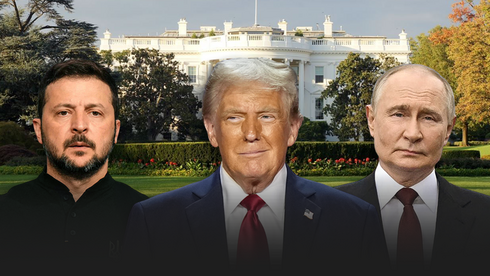
“We have an idea for peace,” President Trump told reporters on Friday. “I sent Steve Witkoff and Jared Kushner, two great negotiators. They’ve done a great job, and we sent them over to see whether or not we can get something done. And there may be a good chance that we’ll do it.”
Ukraine began striking Russian retail warehouses belonging to a company called Wildberries, similar to Amazon, in a misguided effort to further hurt the Russian economy. It was futile, Russian commerce is decentralized. Russia, however, began retaliatory strikes against retail warehouses in the Kiev region and immediately eliminated 90% of the retail food distribution (Ukraine is heavily centralized) causing immediate shortages in the population center. Tens-of-thousands of Kiev residents have now fled the metropolitan area.
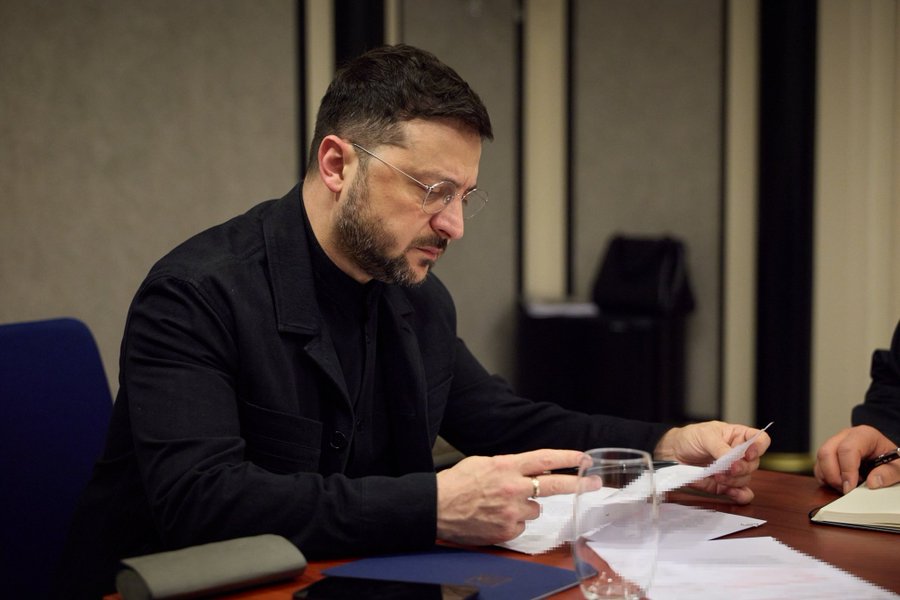
Volodymyr Zelenskyy – “I have just spoken with the U.S. President’s envoys. They have already begun working with the Russian side today. From the moment of this conversation, we are ready to observe a ceasefire in airstrikes against the cities involved in the negotiation process. From now through the end of Saturday, as well as on Sunday and Monday, Ukraine is ready to refrain from strikes on Moscow, and we expect the Russians to do the same regarding Kyiv.
Today, I also received reports from Defense Minister Yevhenii Khmara and Commander-in-Chief of the Armed Forces of Ukraine Mykhailo Drapatyi on the situation at the front, the dynamics of threats in Ukraine’s airspace, our steps, and active defensive operations. I am grateful to every one of our warriors for effectively defending Ukraine’s positions.
On the diplomatic track, our actions must be, and will be, just as strong and effective – one hundred percent. The plan for tomorrow’s diplomatic engagements in Kyiv, involving the U.S. team, has been approved. We are waiting for Steve Witkoff and Jared Kushner and are ready for a substantive conversation. Thank you to everyone who stands with Ukraine!” (source)
Posted originally on the CTH on September 5, 2026 | Sundance |
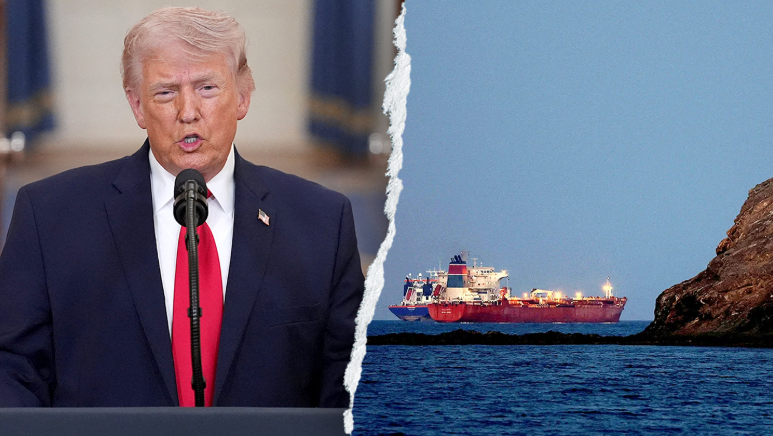
The U.S. Central Command has released video showing their elimination of three Iranian oil tankers following an attack on two U.S. navy vessels in the Strait of Hormuz.
TAMPA, Fla. — U.S. Central Command (CENTCOM) forces struck three Iranian crude oil carriers, Sept. 5, after the Islamic Revolutionary Guard Corps (IRGC) launched ballistic missiles toward two U.S. Navy warships patrolling regional waters.
A U.S. aircraft carrier and guided-missile destroyer successfully evaded multiple unprovoked Iranian attacks. No American personnel were harmed.
Following Iran’s failed attacks, CENTCOM permanently disabled the IRGC crude oil carriers M/T Downy off the coast of Kharg Island and M/T Stark 1 near Jask. American forces also completely destroyed the unladen crude oil carrier M/T Kylo (also known as the “Noxen”) in the Gulf of Oman, striking the vessel in multiple critical locations to render it inoperable after the crew was directed to abandon ship.
The three Iranian crude oil tankers are part of a multibillion-dollar shadow network that funds the IRGC and its regional proxies. Iran has no means by which to defend them.
“Let the message to the IRGC be clear: If you shoot at two of our ships, we will impose an even higher economic cost —taking out three of yours,” said Adm. Brad Cooper, CENTCOM commander. “We will not hesitate to defend American forces, and if necessary, destroy Iran’s limited and exposed oil fleet.” (read more)
I have created this site to help people have fun in the kitchen. I write about enjoying life both in and out of my kitchen. Life is short! Make the most of it and enjoy!
This is a library of News Events not reported by the Main Stream Media documenting & connecting the dots on How the Obama Marxist Liberal agenda is destroying America



 Centinel2012