I have said from the beginning that this war could never be won on the battlefield. Politicians sold the public the fantasy that Russia would collapse under sanctions, that Putin would be overthrown, or that Ukraine would somehow achieve total military victory if only another weapons package were approved. Four years later, none of those predictions materialized. Instead, Europe has spent hundreds of billions financing a war that has devastated Ukraine while simultaneously damaging its own economy.
What Bulgaria understands is something Brussels still refuses to admit. Every euro sent to Ukraine is borrowed money. Europe is already drowning in sovereign debt while governments are increasing military spending to levels not seen since the Cold War. They continue talking about rebuilding armies, expanding missile production, and preparing for conflict with Russia while their own economies stagnate. At some point voters begin asking why there is always money for war but never enough to lower taxes, repair infrastructure, or reduce the soaring cost of living.
This is exactly what our computer has been warning would happen. Wars are never lost simply because one army wins a battle. They collapse because the coalition financing the war begins to disintegrate. Every alliance eventually reaches a breaking point when the economic burden becomes greater than the political benefit. Bulgaria is unlikely to be the last country to reconsider its position.
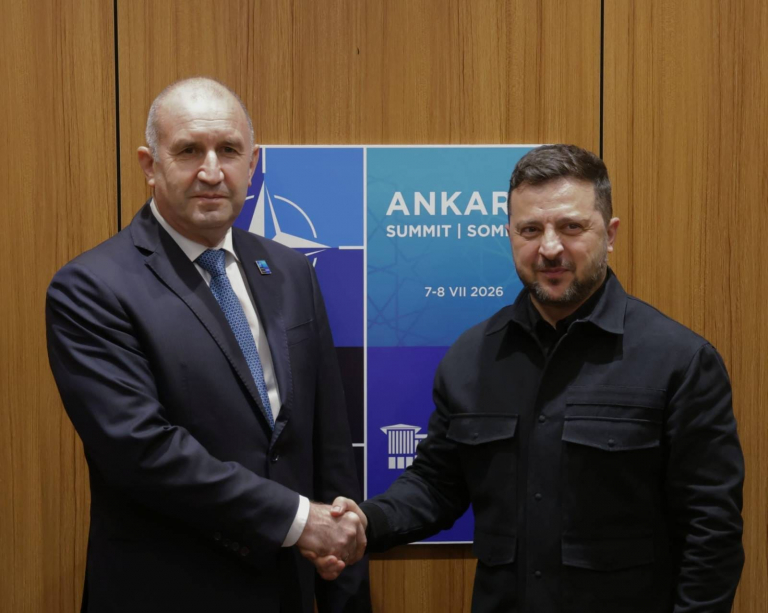
The establishment immediately labels anyone seeking negotiations as “pro-Russian.” That has become the standard response whenever someone questions the wisdom of endless war. Radev rejected that characterization by arguing that diplomacy, not continued military escalation, offers the only realistic path to ending the conflict. His position reflects a growing reality across Europe that endless military aid has failed to produce the decisive victory repeatedly promised to taxpayers.
Meanwhile, Europe continues demanding more sacrifices from everyone except the politicians making these decisions. Defense budgets are expanding. Governments are discussing conscription once again. Ukraine has resorted to forced mobilization, with countless videos showing military recruitment officers dragging men off the streets in broad daylight, pulling them from shopping centers, buses, restaurants, and workplaces. I have written repeatedly that once a government begins kidnapping its own citizens to sustain a war effort, it is admitting that voluntary support has collapsed. Europe is now moving even further by discussing refugee policies that would make it harder for military-aged Ukrainian men to remain abroad instead of being sent back into the conflict.
Only days ago, members of the Coalition of the Willing met in Paris to discuss expanding military cooperation, increasing financial commitments, and even developing a shared European ballistic missile defense system. The political class continues speaking as though escalation is the only acceptable path while one of its own members has now publicly walked away from the project. That is not unity. That is the first visible crack in the foundation.
Our computer has never viewed this conflict as merely a war between Russia and Ukraine. It has always been a broader geopolitical struggle that would ultimately reshape Europe itself. The sovereign debt crisis, the energy crisis, the migration crisis, and now the military crisis are all converging. Governments believe they can hold this coalition together indefinitely, but history suggests otherwise. Every alliance eventually fractures under the weight of prolonged war.
Posted originally on Jul 17, 2026 by Martin Armstrong |
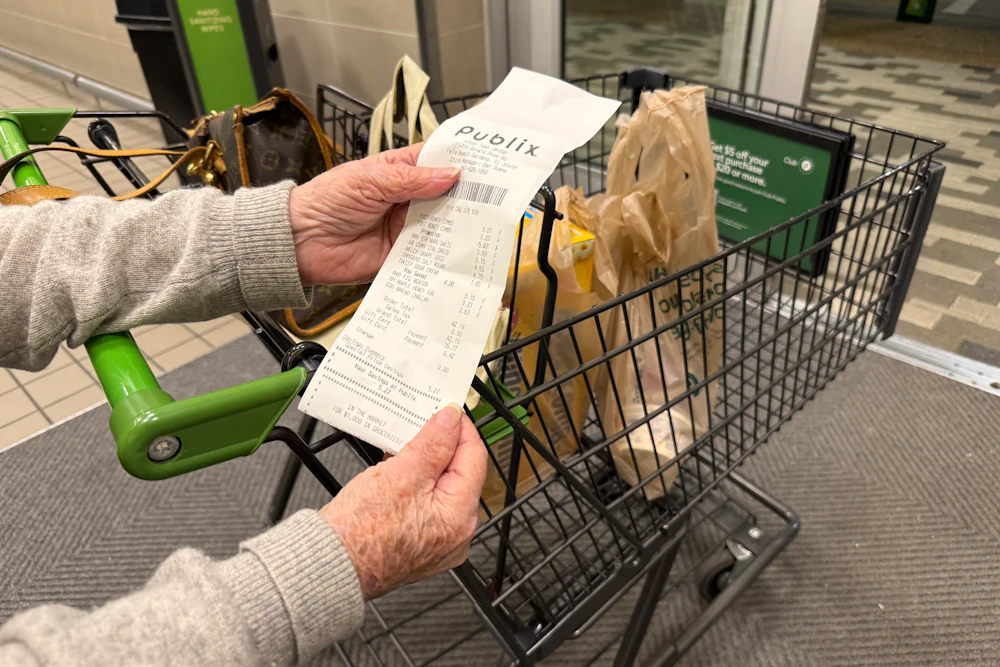
Politicians can point to a lower inflation report, but they cannot explain why Americans are standing in grocery aisles putting food back on the shelf. CNBC reports that consumers are spending less on groceries, forcing companies like PepsiCo, General Mills, Kraft Heinz, Campbell’s, and Conagra to slash prices and rely on promotions simply to move inventory. Millions have reached the point where every trip to the store has become an exercise in deciding what they can live without.
The numbers tell a much darker story than the headlines. Americans now owe roughly $1.25 trillion in credit card debt, the highest level ever recorded. The average credit card balance has climbed above $6,500, while interest rates on many cards remain above 21%. Families who cannot pay their balances in full are watching interest charges consume more of every paycheck. According to recent surveys, roughly one-third of working-age Americans have used credit cards to purchase groceries, and millions are carrying that grocery debt month after month because they simply do not have another option.
This is no longer simply inflation. It has become a cost-of-living crisis. A family may technically still have a job, but that job no longer buys the same standard of living it did only a few years ago. Housing costs remain near record highs, auto insurance premiums continue climbing, utility bills have increased substantially, healthcare consumes a larger share of household income, and groceries cost far more than they did before inflation exploded. Slower inflation does not undo years of rising prices. It simply means the rate of increase has moderated while families continue living with the cumulative damage.
The Department of Agriculture is hardly forecasting relief. Food prices are expected to continue rising through 2026. Beef prices alone are projected to increase another 7.5% as the U.S. cattle herd has fallen to its smallest size in roughly seventy-five years. Fresh vegetables are forecast to rise 7.7%, sugar and sweets nearly 7%, nonalcoholic beverages about 5.7%, while restaurant prices are expected to continue climbing as labor and operating costs remain elevated.
People continue pointing to overall retail sales as proof that consumers remain healthy. June retail sales rose only 0.2%, exactly as expected. Strip away gasoline prices, which temporarily declined because of the brief ceasefire in the Middle East, and some categories appear stronger. Yet those numbers hide an important shift. Consumers are becoming far more disciplined with necessities while selectively spending on promotions and discount events such as Amazon Prime Day. That is not confidence. That is adaptation.
Food prices themselves have hardly disappeared as a problem. The USDA continues forecasting overall food prices to rise another 3.2% this year. Grocery prices are expected to increase roughly 2.8%, while restaurant prices are projected to climb an even faster 3.6%. Several categories remain under significant pressure. Beef prices are expected to rise 7.5% during 2026 as the U.S. cattle herd has fallen to its lowest level in roughly seventy-five years. Fresh vegetables are forecast to increase 7.7%, sugar and sweets nearly 7%, and nonalcoholic beverages about 5.7%. Consumers may find bargains on certain processed foods, but the underlying trend remains one of rising food costs.
Consumers are adapting because they have little choice. Delinquencies on credit cards have risen sharply over the past two years, and Americans are increasingly financing everyday necessities instead of discretionary purchases. The Federal Reserve Bank of New York recently reported that serious credit card delinquencies continue trending higher, particularly among younger borrowers, while total household debt has climbed above $18 trillion. Those are not the characteristics of a healthy consumer.
Households are sending a message that economists often miss because it never appears in a government report. When people begin treating groceries as a luxury rather than a routine purchase, they are telling you confidence has already deteriorated. The statistics may take months to reflect that change. Consumers make those adjustments immediately.
The grocery cart has always been one of the best economic indicators because families cannot manipulate it. They either have the purchasing power to buy what they want, or they don’t. Increasingly, Americans are answering that question every time they walk into a supermarket.
Posted originally on Jul 17, 2026 by Martin Armstrong |
Finland has built an underground network beneath Helsinki capable of sheltering nearly one million people. Let that sink in. Nearly one million people. This is not a handful of bomb shelters scattered throughout the city, but rather an underground city stretching beneath the capital, consisting of more than 5,500 reinforced shelters connected by tunnels carved directly into solid granite. They can be converted from civilian use into military-grade protection in as little as 72 hours.
Engineered to withstand explosions, chemical attacks, biological threats, radiation, and the collapse of the world above. The shelters contain independent power systems, water supplies, communications networks, hospitals, sanitation, filtration systems, and enough infrastructure to sustain life if the surface becomes uninhabitable. During peacetime, they function as swimming pools, hockey arenas, churches, sports centers, parking garages, and shopping facilities.
Ask yourself a very simple question. Who spends decades and billions of dollars constructing an underground city unless they genuinely believe it may one day be needed?
Finland is not building these shelters because of some passing political disagreement with Moscow. The country shares an 830-mile border with Russia and has never forgotten the Winter War. Unlike much of Europe, Finland never embraced the fantasy that major wars had become impossible. While politicians across Europe dismantled civil defense, reduced their militaries, and diverted spending toward every fashionable political cause imaginable, Finland kept digging.
Today, nearly 4.8 million shelter spaces exist for a nation of just 5.6 million people. Very few countries on Earth have anything remotely comparable. That means Finland has spent generations preparing to keep the overwhelming majority of its population alive during the unthinkable. Governments do not invest on that scale because they expect peace.
Finland is probably not the exception. It is simply one of the few countries honest enough to admit what it has been doing. Across Europe, governments are quietly rebuilding civil defense systems, expanding military production, discussing conscription, increasing defense budgets, and warning citizens to prepare emergency food, water, medicine, batteries, and cash. Every policy points in the same direction. They are preparing society for prolonged conflict.
Our computer has warned that the years ahead would not resemble the decades people have grown comfortable living through. The sovereign debt crisis was always destined to evolve into geopolitical conflict because governments eventually turn outward when they can no longer solve problems at home. History has followed that pattern for thousands of years. Debt leads to instability. Instability leads to political desperation. Political desperation ultimately leads to war.
The frightening reality is that governments never announce the danger while they are preparing for it. They reassure the public until the very last moment because panic becomes another enemy to manage. By the time officials openly admit the risks, it is usually far too late to begin preparing.
Finland’s underground city is more than an engineering achievement. It is a message written in concrete and granite. It says that one government believes there is a realistic possibility that nearly one million people may someday have to disappear beneath the earth simply to survive. That should concern every person in Europe far more than another reassuring speech from politicians claiming everything is under control.
I have created this site to help people have fun in the kitchen. I write about enjoying life both in and out of my kitchen. Life is short! Make the most of it and enjoy!
This is a library of News Events not reported by the Main Stream Media documenting & connecting the dots on How the Obama Marxist Liberal agenda is destroying America



 Centinel2012