Mike Davis: The longer these judges are on the bench, the more delusional they get. They actually believe it’s their job to protect the American people from our duly elected president.


Posted originally on rumble on Bannons War Room on: June 22, 2026

LIVE: President Trump Delivers Remarks in PA…Posted originally on Rumble on Bright Bart News Network on: June 23, 2026LIVE: President Trump Delivers Remarks in PA…


Posted originally on Rumble on Bright Bart News Network on: June 23, 2026

MOMENTS AGO: DOJ Announces Charges in $6.5 Billion Health Care Fraud Scheme…


Posted originally on Rumble on Bright Bart News Network on: June 23, 2026

LIVE: Hearing to Examine the Affordability Agenda…


Posted originally on Rumble on Bright Bart News Network on: June 23, 2026

The Death of Homeownership for the Next Generation


Posted originally on Jun 24, 2026 by Martin Armstrong |  

Contract given to 'adult child' living at home sparks massive debate:  'Needs to grow up'

A new report from Realtor.com found that nearly one-third of employed young adults in the United States are now living with their parents. These are people with jobs. They are working, earning income, and still cannot afford to establish independent households. The politicians and economists who constantly celebrate employment statistics fail to understand that a job is meaningless if it no longer provides a path to basic economic independence.

For decades, homeownership was the foundation of the middle class. A young person could graduate, find employment, purchase a starter home, build equity, raise a family, and gradually accumulate wealth. That cycle created economic stability and social cohesion. Today that entire model is breaking down. Home prices have vastly outpaced wages. Insurance costs are rising. Property taxes continue climbing. Mortgage rates remain elevated compared to the era of artificially suppressed interest rates. The result is that millions of young adults are trapped in economic limbo despite doing everything society told them to do.

This trend is not isolated to the United States. We see the same pattern throughout Canada, Britain, Australia, and much of Europe. In some countries, the average home now costs seven, eight, or even ten times average household income. Historically, such ratios were considered unsustainable. Today, they are treated as normal. Young people are delaying marriage, delaying children, and delaying household formation because the economic foundation required to support those milestones has become increasingly unattainable.

What many fail to understand is that housing has become one of the most important confidence indicators in society. When people believe they can improve their lives through work and effort, social stability follows. When an entire generation concludes that homeownership is permanently out of reach, confidence begins to erode. That erosion eventually manifests itself politically, economically, and socially. Rising populism, declining trust in institutions, and growing generational resentment are all symptoms of the same underlying problem.

This is one reason why our recent Real Estate Report was so important. Real estate is not simply about housing prices. It is a reflection of confidence, capital flows, demographics, taxation, government policy, and economic opportunity. Many governments have treated housing as a financial asset to be inflated rather than a foundation for society. The consequences are now becoming impossible to ignore. Young adults are remaining with their parents longer than previous generations not because they want to, but because the economics increasingly leave them no choice.

Our long-term models continue to suggest that real estate will experience increasing regional divergence into the years ahead. An entire generation is losing confidence in the traditional path to economic security. That may prove to be one of the most significant social and economic developments of this decade. Yet another reason why it is paramount to hold this one-day conference next month on Understanding the World Economy to explain the new realities no one else is willing to discuss.

Japan: The First Domino in the Sovereign Debt Crisis?


Posted originally on Jun 24, 2026 by Martin Armstrong |  

Japan_Debt_Crisis_2025 6 5 25

The Japanese government is now openly admitting what I have been warning about for years. Rising interest rates are beginning to dramatically increase the government’s debt-servicing costs. For decades, Japan survived by suppressing interest rates to nearly zero while endlessly rolling over debt. That strategy only works so long as rates remain artificially low. Once rates begin to rise, the mathematics become impossible to hide.

Japan’s government debt exceeds 230% of GDP, the highest ratio in the developed world. Politicians, academics, and central bankers have spent years arguing that Japan was different because most of the debt was held domestically. I repeatedly rejected that argument. Debt is debt and whether the creditor lives in Tokyo, London, or New York does not change the obligation. The real issue has always been confidence. Once investors demand higher yields to compensate for risk, interest expense explodes and governments enter the classic sovereign debt spiral.

The Bank of Japan has now raised rates to 1%, the highest level since 1995. That may sound insignificant compared to rates elsewhere, but Japan built its entire fiscal structure around the assumption that rates would remain near zero forever. The government became addicted to cheap money. Every welfare program, subsidy, and stimulus package rested on the ability to borrow endlessly at virtually no cost. That era is ending.

What many fail to understand is that sovereign debt crises never begin because governments run out of money overnight. They begin when interest costs consume an ever-larger share of tax revenue. Governments then borrow more simply to pay interest on previous borrowing. Japan crossed that line years ago. The entire system has been held together by the Bank of Japan purchasing enormous quantities of government debt. Once the central bank attempts to normalize policy, the market immediately begins questioning the sustainability of the entire structure.

This is why I have long argued that Japan would likely be the first major developed nation to face the sovereign debt crisis head on. The population is aging, the tax base is shrinking, and social obligations continue to rise. There is no realistic path to paying down the debt. Governments always believe they can borrow forever until suddenly they cannot. History has demonstrated this repeatedly, from ancient Rome to modern Europe.

The significance extends far beyond Japan. Every major government has followed the same path. The United States, Europe, Britain, and Canada all expanded debt under the assumption that central banks could permanently suppress rates. Japan simply arrived at the end of the road first because it accumulated debt faster than everyone else.

Our models continue to show that the period into 2032 remains the critical phase for sovereign debt. The crisis was never about private debt. Governments became the largest borrowers in history. The next monetary restructuring will emerge not because of banks or corporations, but because governments have accumulated obligations that can never realistically be honored in full. Japan is merely the first warning shot. The sovereign debt crisis has begun, and once confidence starts to crack, governments everywhere will discover that there is no such thing as endless borrowing.

US Strikes Deal for Kenya’s Rare Earth Minerals


Posted originally on Jun 24, 2026 by Martin Armstrong |  

Rare Earths

The United States has struck a preliminary agreement with Kenya involving the massive Mrima Hill rare earth and niobium deposit, estimated to be worth roughly $62.4 billion. The press is portraying this as a victory for Washington over Beijing, but that interpretation misses the larger picture. What we are witnessing is the next phase of the global resource war. As sovereign debt crises continue to unfold and governments become increasingly desperate to secure strategic assets, critical minerals are rapidly becoming the new oil.

Kenya has reportedly insisted that these minerals be processed domestically rather than exported as raw materials. President William Ruto openly stated that Kenya and the United States agreed that the minerals would be processed inside Kenya. This is a major shift. African nations are increasingly demanding that value creation remain within their borders instead of allowing foreign powers to capture all the profits.

What is particularly interesting is that this agreement comes as China remains deeply entrenched throughout Kenya and East Africa. Earlier this year, Kenya finalized a major trade agreement with China, granting duty-free access for most Kenyan exports. China continues to finance infrastructure projects, railways, highways, and industrial investments throughout the region. The media wants to frame this as America defeating China, but Kenya appears to be doing what every sovereign nation should do, playing both sides in pursuit of its own interests.

The reality is that neither Washington nor Beijing is acting out of charity. Rare earths, niobium, lithium, graphite, copper, and nickel are essential for military systems, semiconductors, batteries, electric vehicles, telecommunications, artificial intelligence, and advanced manufacturing. The entire green energy agenda depends upon these materials. Every major power understands that whoever controls the supply chains controls the future. That is why competition for Africa’s mineral wealth is intensifying.

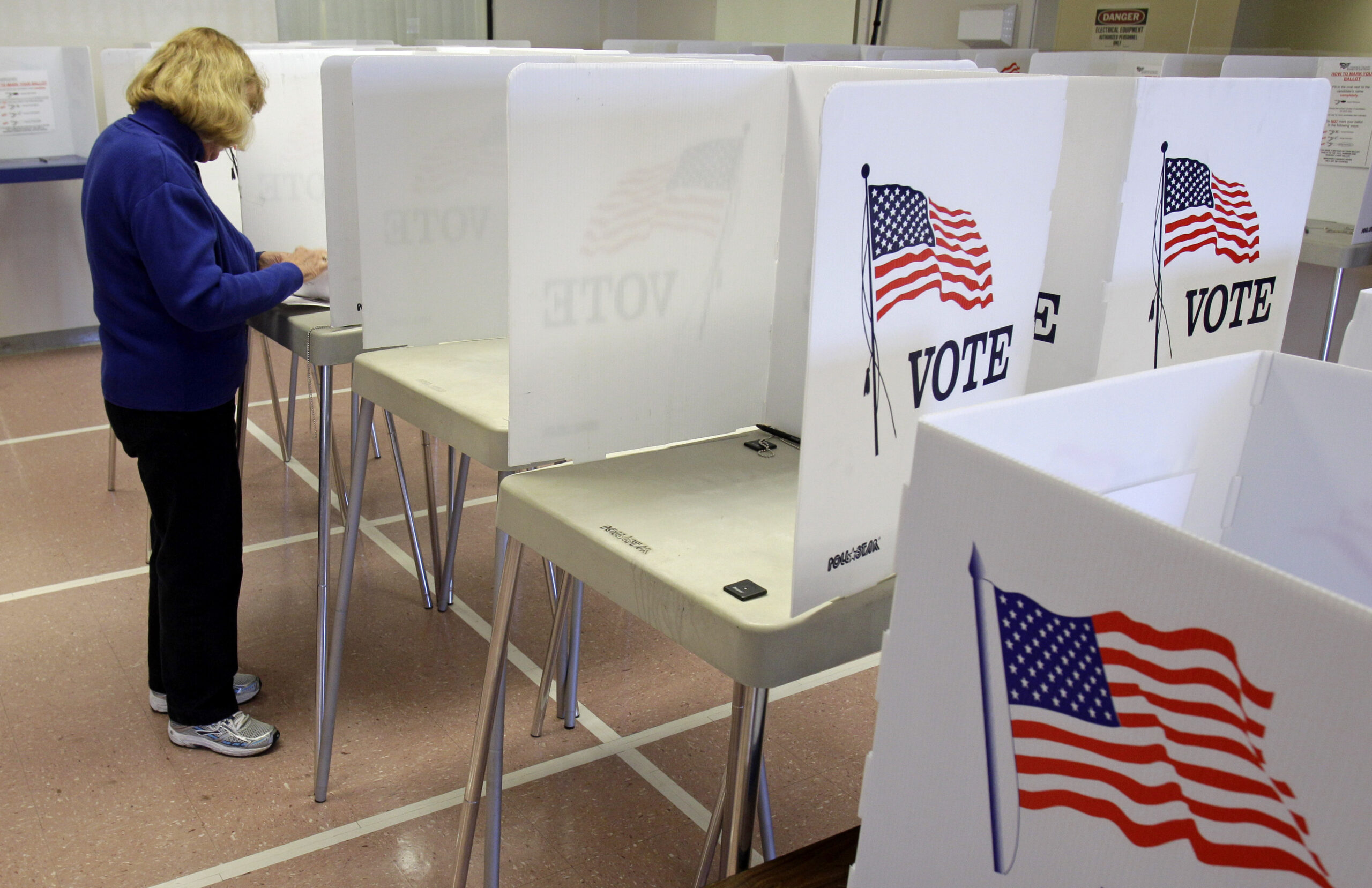
Primary Elections in New York, Utah, Maryland and South Carolina – Results and Open Discussion


Posted originally on CTH on June 23, 2026 | Sundance

Primary elections and runoffs are being held today in New York, Utah, Maryland and South Carolina.  Consider this an open discussion thread for races of interest.

Polls Close at: 7pm in S.C, 8pm in Md, 9pm in NY and 10pm in Utah.

New York Times – Results Here

Associated Press – Results Here

Acting DNI Pulte Removes 51 from Agency – Six Fired and 45 “sent back to their home agencies”


Posted originally on CTH on June 23, 2026 | Sundance

CBS is reporting on events within the Office of the Director of National Intelligence.  As CTH previously outlined, Acting Director of National Intelligence Bill Pulte is following a very predictable path. {GO DEEP}

The part of the CBS report that tells the story is: “Six career and political intelligence staff were terminated and 45 were sent back to their home agencies, according to three sources familiar with the personnel moves.” … “One source characterized the cuts as thoughtful and methodical. No staffers have been removed from the counterterrorism group.”

So, who was removed?  Well, I’m certainly not the Nostradamus of USIC, but if I were to hazard an educated guess it looks like the National Intelligence Council – Directorate of Analysis, just lost six political staff, and 45 people from the various liaison desks were ‘sent back to their home agencies.’

As we noted last year, Tulsi Gabbard took the National Intelligence Council (NIC) out of the CIA – fired the heads, then putting the assembly back under the control of the ODNI.  However, highly political operatives within the former CIA-controlled Directorate of Analysis (the former home of Eric Ciarmella) were still problematic.  It looks like Director Pulte just eliminated the remaining DoA rats.

The 45 returned to their ‘home agencies‘ were certainly from the liaison desks inside the DNI.

I’m not sure if that represents 45 from across all the desks, or the complete elimination of some overstaffed liaison desks.  That said, given the nature of the leaking was recently to CNN (State Dept leaks to CNN), I am somewhat confident the State Dept liaison office inside the DNI is now empty office space.  [Just a hunch 😂]

Please remember, our predictive public discussions at CTH are in the strictest confidence.

(VIA CBS) – Just over 50 career and political intelligence staff at the Office of the Director of National Intelligence have been removed from their roles since Bill Pulte became the agency’s acting director, Friday.

Six career and political intelligence staff were terminated and 45 were sent back to their home agencies, according to three sources familiar with the personnel moves.

Pulte has been asking deputies and other directors for suggestions about cuts. Some of the ODNI deputies pushed for more cuts, but Pulte said that the 51 was enough for now, one of the sources said.

One source characterized the cuts as thoughtful and methodical. No staffers have been removed from the counterterrorism group.

No further firings are planned for now, two of the sources said.

The cuts follow hundreds of staff reductions last year by former Director of National Intelligence Tulsi Gabbard, who stepped down last week. Last year’s planned downsizing sought to bring the office’s headcount from 2,000 to around 1,300.

President Trump has pushed for further cuts, directing Pulte to “execute the immediate and needed downsizing of the office” in a Truth Social post earlier this month.

[…] Sen. Mark Warner and Rep. Jim Himes, the top Democrats on the Senate and House intelligence panels, warned Pulte against making large-scale staff cuts, calling it an inappropriate course of action for an acting official without national security experience. (more)

Senator Warner haz sad.

Meanwhile in related news: “This sets up a stalemate as several Democrats have said they will not support reauthorizing Section 702 while Pulte remains Trump’s acting DNI pick.” {source}

.

No FISA (702)?

As Winnie the Pooh would say, “Oh, bother!

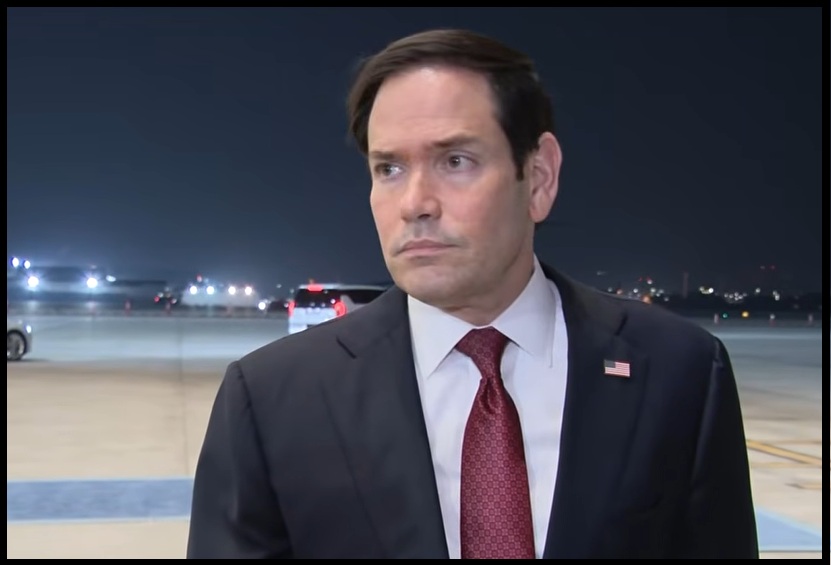
Secretary Rubio Holds Impromptu Presser Upon Arrival in Abu Dhabi, UAE


Posted originally on CTH on June 23, 2026 | Sundance 

Secretary of State Marco Rubio gives an impromptu press availability and answers questions from members of media in Abu Dhabi, United Arab Emirates.

The Rubio visit comes as the U.S. is working with Gulf Arab partners (GCC) to construct the second phase of an agreement with Iran.  The current terms cover a ‘ceasefire’ and the Gulf Cooperation Council play a major role in the regional decisions as partners to the United States.

“We know what [Iran] agreed to do. Now they’ll either do it or they won’t and if they do the process moves forward and if they don’t the president will have some decisions to make.”…

.