Posted originally on CTH on June 17, 2026 | Sundance
I’m not sure exactly what happened in the protocol of timing, but eventually President Donald Trump arrived for a dinner hosted by France’s President Emmanuel Macron at the Palace of Versailles near Paris.
President and Mrs. Macron waited on the steps of the palace for over eight minutes before the motorcade finally arrived. Every second of those eight minutes there was a massive camera pool in front of them. Here’s the full video. If you are awaiting Trump, take a Snickers. lol President Trump arrives at 7:45 of video WATCH:
Posted originally on CTH on June 17, 2026 | Sundance
President Trump is navigating a narrow path through a minefield of foreign and domestic opposition to his preferred trade position on the USMCA. Ironically, or not, on the issue of ending the USMCA we likely have more allies in the labor unions and Bernie Bros than we do amid the congressional republicans.
President Trump was asked again today about his position on the USMCA against the backdrop of a hot-mic moment when Canadian Prime Minister Mark Carney was telling him about caps on Chinese EVs coming into Canada. [Prompted]
“I would rather not have the USMCA. The primary reason I wanted it was because there was no way out of NAFTA, which was the worst trade agreement ever made — like, ever — and they had no termination… I would prefer not having an agreement, but I’m open to doing it.”
Several desperate Canadian trade watchers have framed President Trump’s “that’s good” response to Carney as if Trump was approving of the Chinese EV deal. Again, folks are just not looking at Trump’s position through the correct lens.
Trump doesn’t care about the issue. Trump is ambivalent to the issue. It’s the same mindset Trump has carried throughout all questions and comments since the questions were first raised.
The reason for Trump’s ambivalence about the granular, sectoral questions is simply because in the big picture of Trump’s outlook, he doesn’t plan on staying in a trilateral trade deal. Any bilateral trade deal Canada makes with a trade partner is perfectly okay, because Canada is not going to be connected to the USA in a trilateral obligation.
President Trump tells you his intention, then reminds himself of the opposition to his intention, then softens the original statement against the context of domestic political challenge he understands he has to overcome. This outlook is often expressed similarly in the comments of U.S. Trade Representative (USTR) Jamieson Greer.
Think of the scenario like a divorce. The ex-wife says to Trump, “I’m buying an EV.” Trump responds. “that’s good,” from a position they are no longer in a relationship, and he simply just doesn’t care.
Fully invested in the USMCA, Mark Carney says, “we put a limit of 49,000 EVs on the trade agreement with China.” Completely ambivalent Trump responds, “that’s good.” It’s a generic throwaway response because Trump no longer considers the USA and Canada to be in alignment or meshed in a trilateral agreement.
That’s why, when questioned, President Trump didn’t even recall the moment, yet he is being asked about it because it’s the most important thing on the mind of the Canadian side. It’s a little bit funny – but totally Trump.
Soon, when the USMCA moment circles around to the 12 o’clock position of immediate action, Trump will just turn to Jamison Greer and say, “ok, tell them we’re done now.” That’s it. Figure out the way to exit legally, let’s get out of this thing and start working on the optimal solution of a bilateral trade agreement with Canada.
The remarks today are the umpteenth time President Trump has repeated that the USMCA was the optimal way to get out of the quicksand NAFTA trade agreement. Once that NAFTA break was finished, the inherent value of the USMCA ended. Now Trump wants to end the USMCA and get to the core approach he has mentioned for over a decade; two bilateral trade agreements – one with Mexico and one with Canada.
Posted originally on CTH on June 17, 2026 | Sundance
ssence, the British Commonwealth is the IC commonality. [Yes, there is some validity to the Lyndon LaRouche perspective (Promethean Action PAC)] Additionally, I would also posit a reminder of the international assembly who structured the originating financial sanctions against Russia; again, a commonality.
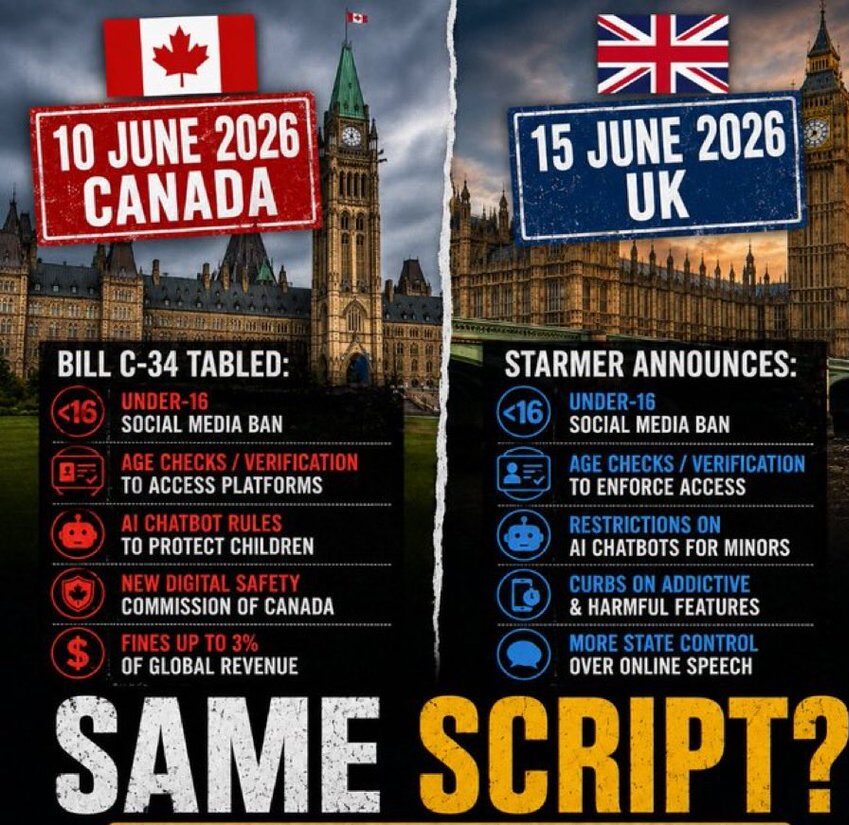
Focusing on the most recent political creation in Canada, there are three bills currently being rushed through the Canadian House of Parliament, C-34: keep kids safe on social media; C-36: stronger privacy rules, and C-22: modern tools for police.
Not surprisingly, it is difficult to find non-govt-approved information about this legislative construct online.
Canadian media must remain compliant with approved government narratives in order to maintain their business model. However, putting together some various information found on non-controlled information sources, it is possible to begin discussion of the situation.
The two issues that merge with the greatest impact are Bill C-22: The Surveillance Bill, and Bill C-34: The Children’s Safety Bill.
Bill C-22 requires that all information transmission providers, every telecom and internet company, retain metadata on all Canadian users for up to one year. This is electronic metadata which we all know encompasses a lot more than just content.
Signal app, NordVPN, Windscribe, DuckDuckGo, Apple, and Meta have all formally opposed it. Signal app has threatened to leave Canada entirely rather than comply. This is a government mandated metadata storage library on all electronic communication and activity by Canadian users.
Then there’s Bill C-34: The Children’s Safety Bill, as noted by Lucy Hargreaves, a bill that ‘Applies to Everyone’, not just kids. “The government’s social media ban for under-16s is genuinely popular, with 75% of Canadians supporting it in polling. The problem is what it requires in practice. To stop anyone under 16 from creating an account, platforms need to know how old everyone is. There is no way to identify who is under 16 without identifying everyone who isn’t. This means every Canadian adult would need to submit government ID or a face scan to a third-party verification company before posting a photo, using cloud storage, or playing an online game. The bill also creates a new Digital Safety Commission with sweeping powers to set the rules, decide which platforms must comply, and approve or deny exemptions — with almost no criteria written into the law itself.”
Then there’s Bill C-34: The Children’s Safety Bill, as noted by Lucy Hargreaves, a bill that ‘Applies to Everyone’, not just kids. “The government’s social media ban for under-16s is genuinely popular, with 75% of Canadians supporting it in polling. The problem is what it requires in practice. To stop anyone under 16 from creating an account, platforms need to know how old everyone is. There is no way to identify who is under 16 without identifying everyone who isn’t. This means every Canadian adult would need to submit government ID or a face scan to a third-party verification company before posting a photo, using cloud storage, or playing an online game. The bill also creates a new Digital Safety Commission with sweeping powers to set the rules, decide which platforms must comply, and approve or deny exemptions — with almost no criteria written into the law itself.”
“Australia introduced the same social media ban in December 2025. Six months later, the eSafety Commissioner told Parliament she was “not really keen” on it from the start and called it a “blunt force approach” drafted too quickly. 70% of young Australians reported the ban had little effect on their social media use. It didn’t reduce cyberbullying. What it did produce was a surge in VPN use… pushing young people to darker, less-monitored platforms.
The UK implemented age verification under its Online Safety Act in mid-2025. Within one month, VPN downloads hit over two million — the highest ever recorded — and monthly downloads stayed above one million for a year as users raced to bypass the requirement.
The EU considered its own version of mandatory message scanning (dubbed “Chat Control”) and its own Parliament voted it down in March 2026, with the EU’s legal service concluding that indiscriminate scanning of private communications is incompatible with fundamental rights.
The government’s core justification for C-22 is that Canada is the “only Five Eyes country” without a lawful access framework. But the United States has no federal mandatory metadata retention law. The EU’s highest court has struck down blanket retention twice as incompatible with human rights. When the Public Safety Minister claimed Canada’s provisions would be “in line with U.S. counterparts,” he was forced to walk back the statement within hours.” (read more)
Think about what all the critics (correctly) point out as the bigger issue behind the “age id” social media stuff.
What is the unspoken goal of Australia, New Zealand, the U.K and Canada?
Ultimately control. Govt online surveillance, correct? Some form of legal, legislated, govt authorized data surveillance that permits law enforcement to have actionable mechanisms, right?
If that is indeed the goal, then in the USA we overlay FISA (702).
NZ, AU, UK and CA get digital IDs. The USA gets 702. It’s the same basic premise; the same govt motive; the same underpinning
reasoning. Just different and nuanced approaches.
Bill C-22 forces tech companies to give the RCMP and CSIS access to your data WITHOUT A WARRANT.
Meta has warned that C-22 would turn their company into "an arm of the government's SURVEILLANCE APPARATUS."
PREVIOUSLY: Now, you know the dynamics. Now, you know the reasoning. Now, you know the motives and intents. Now, you know how the SSCI sits at the epicenter of the enabling mechanism we call the “Deep State”….
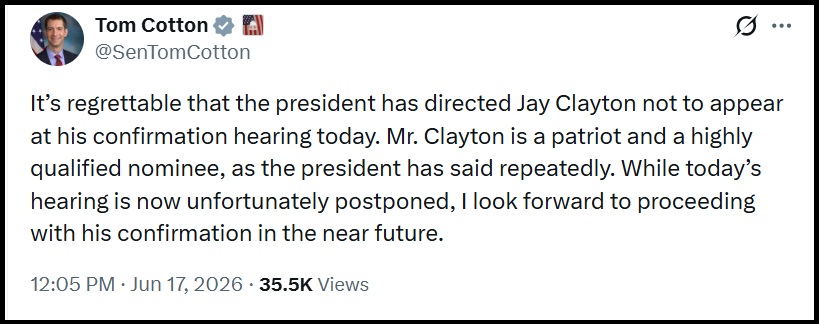
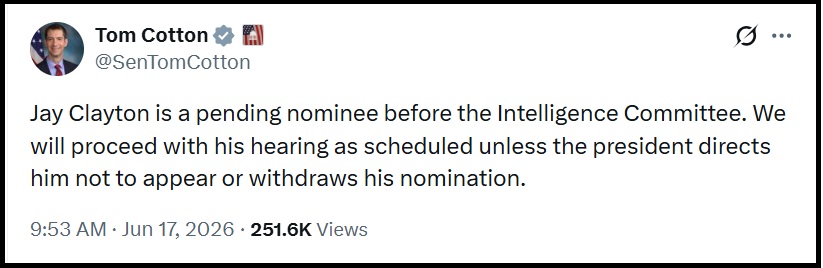
…. and now you know why SSCI Chairman Tom Cotton would send this message:
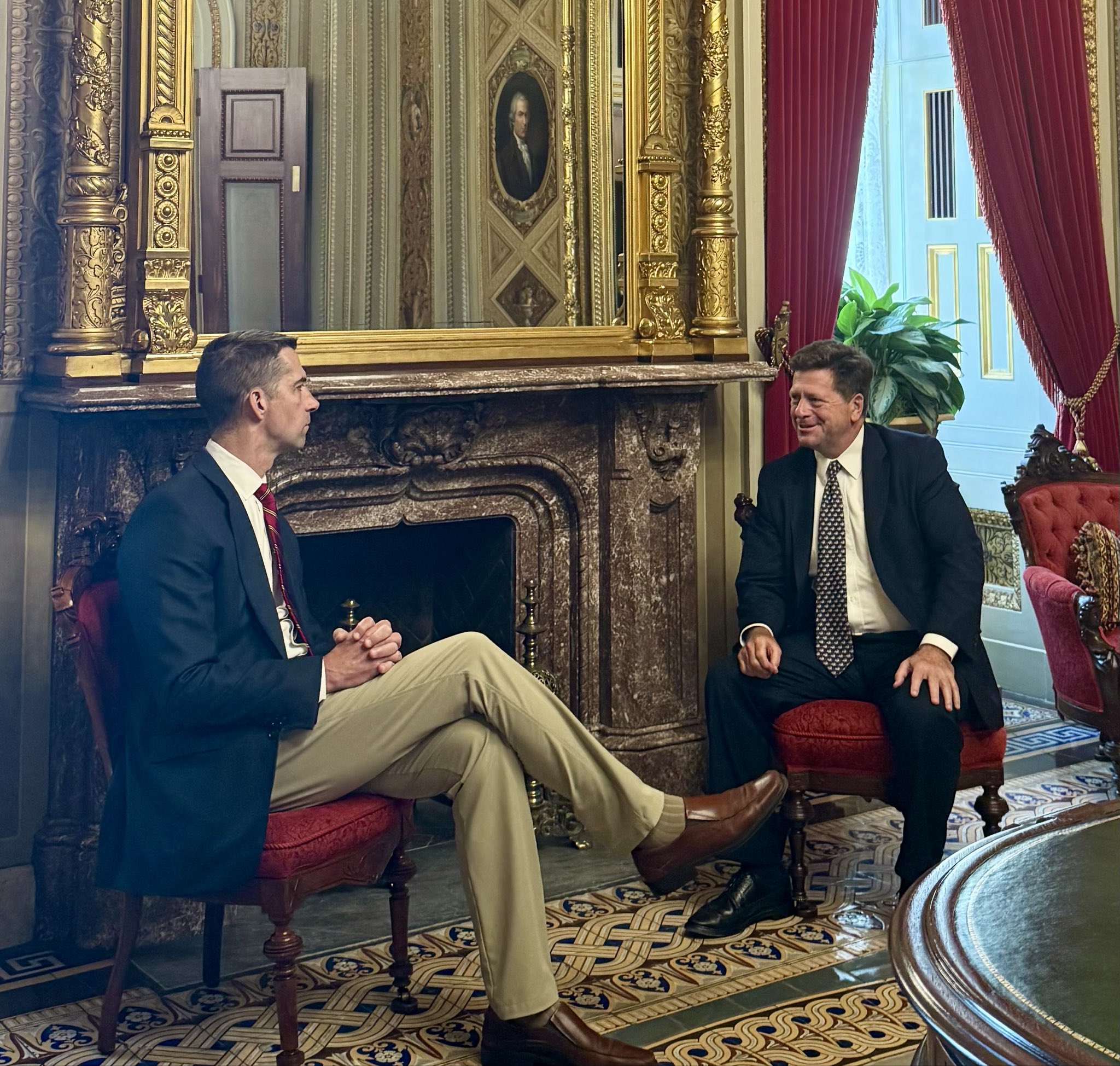
They are so fancy, no?
Welcome to the world of the uppity, self-appointed omnipotent controllers.
Posted originally on CTH on June 17, 2026 | Sundance |
At the conclusion of the G7 assembly in France, President Trump is scheduled to hold a very consequential press conference. The anticipated start time is 11:00am ET; however, the timing is estimated with ongoing events. Livestream Links below:
Posted originally on CTH on June 17, 2026 | Sundance
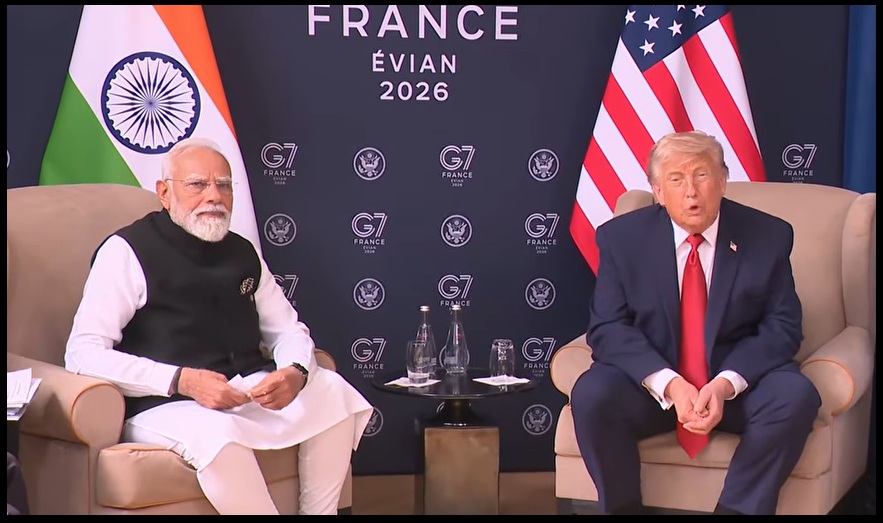
President Trump holds a bilateral discussion with Prime Minister Narendra Modi of India. The media questions about Iran and geopolitical events take up approximately 10 minutes of the video below. President Trump took a variety of questions on a variety of subjects.
At 10:37 President Trump is asked about Bill Pulte and FISA (702). WATCH:
Posted originally on CTH on June 17, 2026 | Sundance
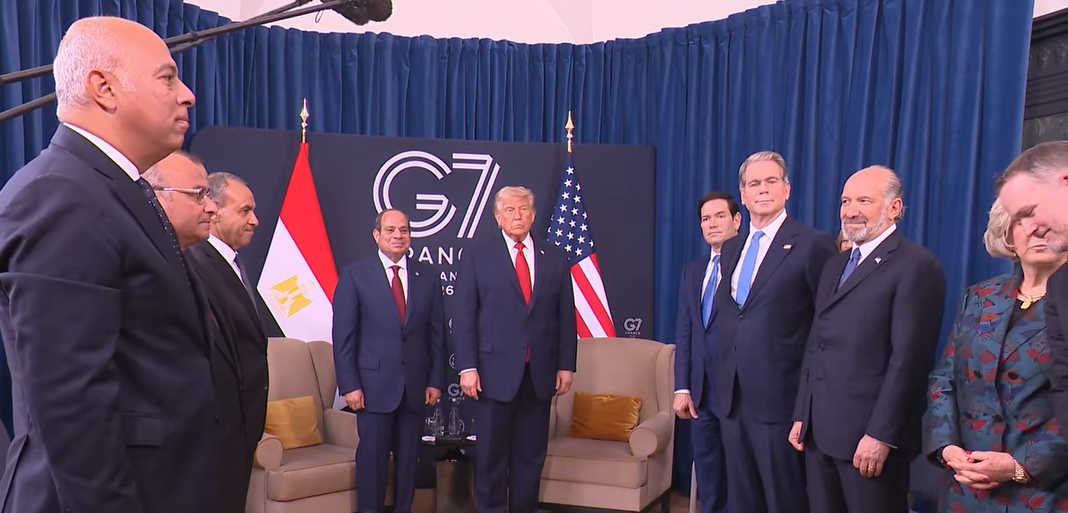
Perhaps one of the most consequential voices in all of the Middle-East is Egyptian President Abdel Fattah al-Sisi. Egypt is the intellectual hub of modern Islam, and a very pragmatic President Sisi has been the major opposition to radical Islam for the past decade.
President Sisi walks a careful position balancing his opposition to the Muslim Brotherhood with pragmatic perspective toward Israel and the friction therein. Egypt has been stable under the leadership of Sisi, but extremist elements have continued to use the Siani region to create instability. President Trump and President Sisi are in alignment on the cause for peace and stability. WATCH:
I have created this site to help people have fun in the kitchen. I write about enjoying life both in and out of my kitchen. Life is short! Make the most of it and enjoy!
This is a library of News Events not reported by the Main Stream Media documenting & connecting the dots on How the Obama Marxist Liberal agenda is destroying America






 Centinel2012