Posted originally on Jun 16, 2026 by Martin Armstrong
There is something that does not add up. If the objective is peace, then why was one of the most contentious parts of the negotiations the demand that hostilities in Lebanon also come to an end? Reports indicate that the U.S.-Iran framework includes de-escalation in Lebanon. Yet almost immediately Israeli officials declared they would not withdraw from southern Lebanon and would continue to reserve the right to act independently. Defense Minister Israel Katz stated plainly Israel would remain in Lebanon, Syria, and Gazaregardless of the agreement.
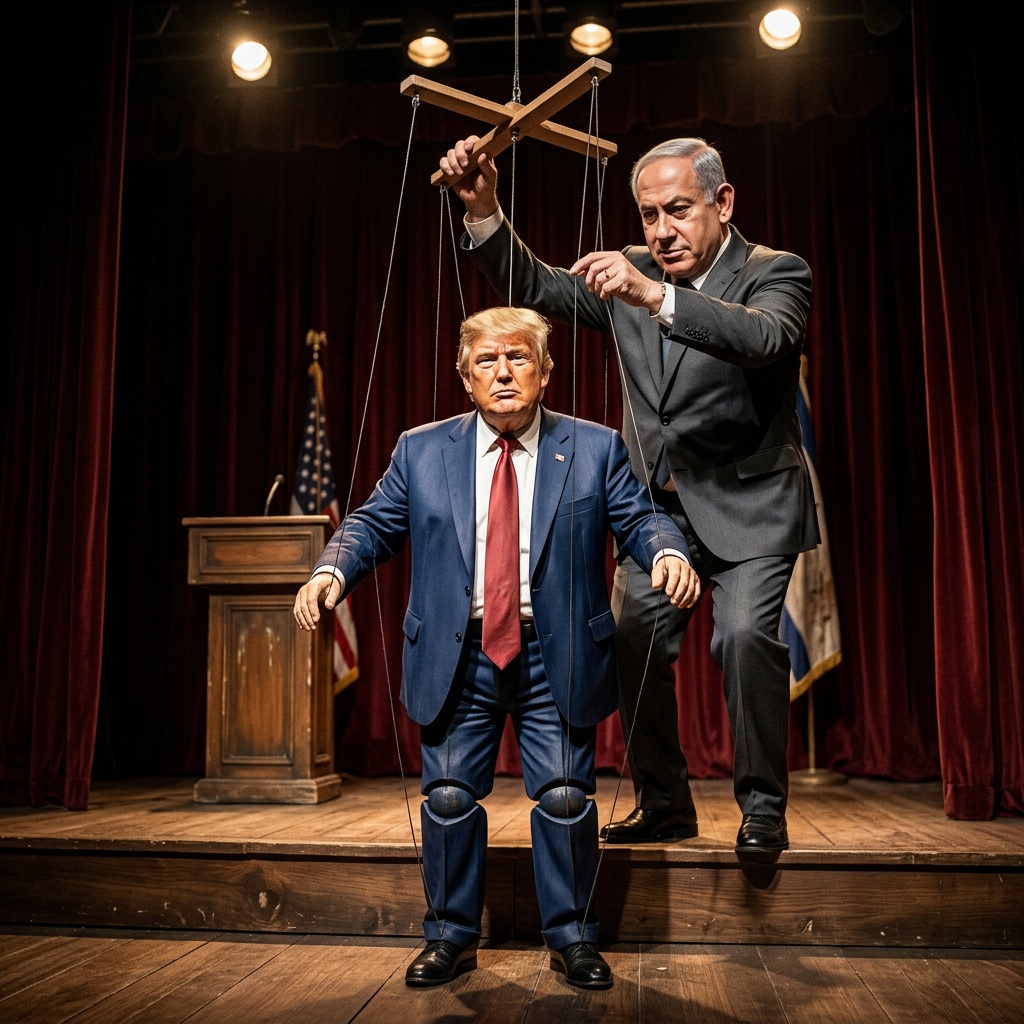
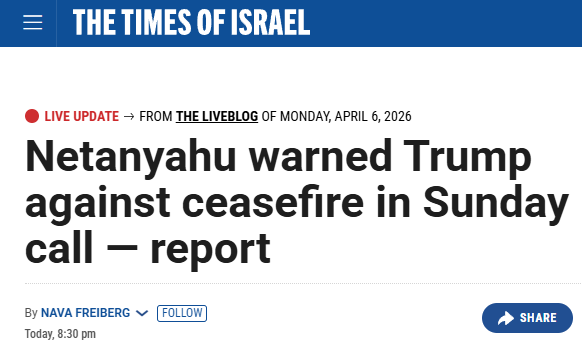
This is where the entire story begins to unravel. Trump has been publicly insisting that Netanyahu will have to accept whatever agreement Washington negotiates, reportedly saying: “I call all the shots. He doesn’t call the shots.” At the very same time, reports emerged that Trump was furious over Israeli actions in Beirut that nearly derailed the negotiations altogether. According to multiple reports, strikes in Lebanon came dangerously close to collapsing the entire framework before it was finalized.
The issue is not Iran. The issue is that Netanyahu appears to have viewed this conflict very differently from Washington. Reports suggest that Netanyahu hoped military pressure would fundamentally weaken Iran’s position throughout the region and perhaps even contribute to regime change. A negotiated settlement that leaves Iran standing, releases frozen assets, reopens the Strait of Hormuz, and begins another round of diplomacy was never the outcome many hardliners were seeking. That is why Israeli officials immediately began attacking the agreement while insisting they would maintain military freedom of action in Lebanon.
The uncomfortable reality in Washington is that every politician knows exactly how powerful the pro-Israel lobbying network has become. AIPAC has spent decades directing enormous sums into congressional races. Politicians on both sides of the aisle understand the consequences of crossing that machine. Whether one supports Israel or not, pretending this influence does not exist is absurd. Entire careers have been built and destroyed based upon foreign policy positions relating to Israel. The result is that American politicians often place the interests of foreign conflicts ahead of the interests of American taxpayers who will ultimately pay the bill. The growing divide between Trump and Netanyahu demonstrates that even within traditionally pro-Israel circles, there are limits to how much foreign policy can be subordinated to another nation’s strategic objectives.
The Economic Confidence Model and the war cycle never suggested that 2026 would bring peace. Quite the opposite. This is a Panic Cycle year. The international war cycle turns up into 2027, with 2028 bringing economic stress and civil unrest before the major geopolitical turning point into 2029. People keep searching for a treaty that ends the crisis. That is not how these cycles work. The danger comes when political leaders become prisoners of their own narratives. Netanyahu has spent years presenting Iran as the defining threat of our time. Leaders who build their careers on war rarely become the architects of peace. That is why I remain skeptical. The greatest threat to this agreement may not come from Tehran. It may come from those who never wanted a negotiated settlement in the first place.
Posted originally on Jun 16, 2026 by Martin Armstrong |
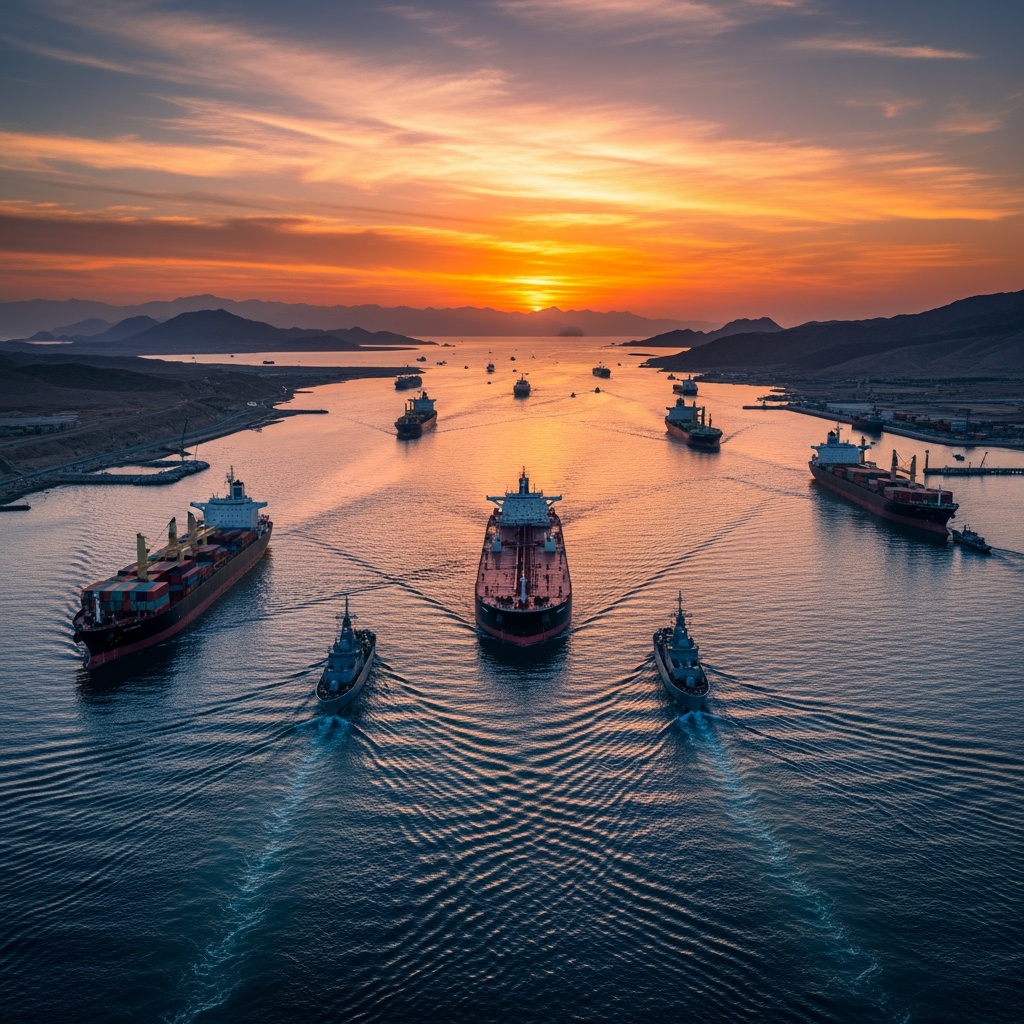
The financial press is celebrating reports that traders are betting shipping traffic through the Strait of Hormuz could begin returning to normal by August. Oil prices have fallen sharply on hopes of a U.S.-Iran agreement, and prediction markets are assigning better-than-even odds that vessel traffic will recover during the second half of this year. Yet when you look beneath the headlines, even the traders themselves remain skeptical.
The proposed agreement between Washington and Tehran contains several conditions that sound impressive on paper. Iran has reportedly agreed not to pursue a nuclear weapon, the Strait of Hormuz would reopen to commercial traffic, some $25 billion in frozen Iranian assets could be released, and a 60-day negotiation period would begin to address sanctions, uranium enrichment, and broader regional security issues. Oil markets immediately celebrated the news because roughly 20% of global oil flows through the Strait of Hormuz. The mere prospect of reopening the waterway sent crude prices lower as traders rushed to price in a return to normality. Yet the actual details remain incomplete, portions of the agreement have not been published, and multiple versions of the terms are already circulating.
Kalshi markets still show considerable doubt that traffic will fully normalize anytime soon, and major shipping firms are refusing to return to normal operations until mines are cleared, insurance costs fall, and security can be guaranteed. Reuters reports that many shipping companies believe a complete recovery may take many months, and some estimates extend into 2027 before flows return to pre-war conditions.
The first problem is that reopening the Strait is not as simple as issuing a press release. Reports indicate that mines must still be cleared, security guarantees must be established, and shipping companies remain cautious after months of disruption. Tanker operators, insurers, and cargo firms have all learned that one missile, one drone strike, or one political disagreement can instantly shut down the route again. Commerce may resume, but confidence takes far longer to rebuild than headlines would suggest.
The second issue is that the core dispute has not actually been resolved. The agreement merely opens a negotiation period regarding Iran’s nuclear program, sanctions relief, and uranium enrichment. These are the very issues that helped create the crisis in the first place. Israel is already criticizing the arrangement, arguing that it fails to address missiles, regional proxy groups, and broader security concerns. Iranian hardliners are attacking the deal from the opposite direction, claiming Tehran is giving away leverage for uncertain promises. When both sides are unhappy before the ink is dry, that is usually a warning sign rather than a guarantee of peace.
The mistake people continue to make is assuming that reopening a waterway ends a geopolitical crisis. It does not. The Strait of Hormuz is merely a symptom of a much larger conflict that remains unresolved. Roughly 20% of global oil and LNG trade passes through this corridor. The war exposed just how fragile the global supply chain has become. Alternative routes have already been developed, exporters have adjusted logistics, and shipping companies have learned the hard way that one political decision can disrupt trillions in commerce. Even if the Strait reopens tomorrow, the distrust remains. Insurance premiums do not instantly collapse. Tanker operators do not suddenly forget that vessels were attacked. Capital does not immediately return to a region once it has been burned.
From the perspective of the Economic Confidence Model and the broader war cycle, this was never about one shipping lane. The arrays have been warning that 2026 is a Panic Cycle year. We have entered a period where geopolitical tensions are expanding, not contracting. The public always wants to believe that one treaty, one summit, or one ceasefire will restore stability. History shows otherwise. The First World War was supposed to be over by Christmas. The Middle East has seen countless ceasefires that merely served as intermissions before the next round of conflict. The forces driving this confrontation remain in place, including regional rivalries, religious tensions, sanctions, energy competition, and the growing split between East and West. Those factors do not disappear because diplomats shake hands.
I do believe shipping traffic will eventually return. Commerce always finds a way because governments can wage war but businesses still need to move goods. Yet do not mistake this as the finale of the conflict. The war cycle points toward increasing geopolitical volatility into 2027. Markets are celebrating the reopening of Hormuz because they are focused on next week’s oil prices. The cycle is looking much further ahead. As long as the underlying disputes remain unresolved, this agreement risks becoming another ceasefire that lasts only until the next catalyst appears.
Posted originally on Jun 16, 2026 by Martin Armstrong |
For years, South Africa’s rolling blackouts became a symbol of national decline. Businesses bought generators. Families planned their lives around power schedules. Factories lost production. Politicians blamed everyone but themselves. Now, after years of crisis, South Africa has achieved something many thought impossible. The country recently passed 300 consecutive days without load-shedding, and Eskom’s energy availability factor has climbed to nearly 66%. Diesel spending has fallen dramatically, and for the first time in years the power grid is no longer the country’s biggest economic problem.
The IMF projects South African GDP growth of just 1.0% in 2026. Even more troubling, real GDP per person has fallen from roughly $5,954 in 2010 to about $5,715 in 2024. After fourteen years, South Africans are approximately 4% poorer on a per-capita basis despite commodity booms, government plans, infrastructure spending, and now an improving electricity system.
This is where governments consistently misunderstand economics. They identify a visible problem and assume solving it will automatically create prosperity. It rarely works that way. South Africa’s blackouts were certainly damaging, but they were never the sole cause of economic stagnation. Weak investment, deteriorating infrastructure, high unemployment, declining productivity, capital flight, and government inefficiency were already undermining growth long before the power crisis reached its peak. The blackouts simply made the deeper problems impossible to ignore.
The labor market tells the real story. Official unemployment has climbed to 32.7%, while youth unemployment has reached an astonishing 45.8%. In the first quarter of 2026 alone, employment reportedly fell by 345,000 jobs. An economy growing at 1% simply cannot absorb a rapidly expanding labor force. Young people entering the workforce find themselves competing for opportunities that often do not exist.
The investment numbers are equally concerning. Gross fixed capital formation stands at just 14.5% of GDP, well below the levels typically seen in emerging economies that experience sustained growth. No country becomes prosperous without investment. Factories, railways, ports, power plants, technology infrastructure, and housing all require capital. When investment remains weak, growth inevitably follows.
Even South Africa’s freight network reveals the problem. Rail volumes have recovered from recent lows, but remain nearly 30% below the levels recorded less than a decade ago. The country may have restored electricity, but moving goods efficiently across the economy remains a challenge. Growth is not merely about producing power. It is about transmitting economic activity throughout an entire system.
What makes South Africa particularly important is that it serves as a warning for many countries facing similar pressures. Around the world, governments are confronting aging infrastructure, rising debt, slowing productivity, demographic challenges, and declining living standards. Politicians continue searching for single solutions to what are fundamentally systemic problems. There is no magic switch that restores prosperity once confidence has been damaged.
The lesson is simple. Electricity matters. Infrastructure matters. But confidence matters more. Capital flows where it feels secure. Investment follows confidence. Jobs follow investment. Living standards follow productivity. South Africa solved the crisis everyone could see. The challenge now is solving the problems that remain hidden beneath the surface.
The lights came back on. The harder task is reigniting economic confidence.
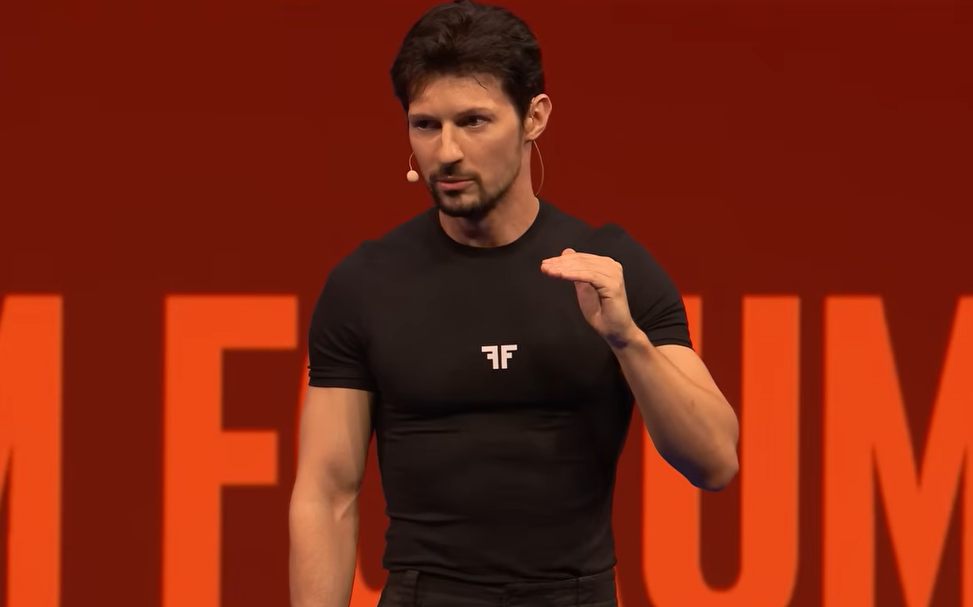
Telegram founder Pavel Durov is one voice who has been consistent in his message about how western countries have become increasingly authoritarian in their efforts to retain power and control. Durov is the real deal; the John Galt within the mechanisms of digital communication.
The principle under attack is freedom, and the recent examples of internet and social media control via age verification are steps within this process. Durov notes these moments are like the early stages of the Titanic after hitting the iceberg, where people aboard the ship did not quite realize the scope of the danger around them.Posted originally on CTH on June 16, 2026 | Sundance
Take the time to listen to what Durov shares with specific examples and citations to back up his warning. Well worth the time. Pavel Durov shares how Telegram emerged from a commitment to free expression and why defending digital freedom is central to protecting human rights today.
To show a distinction between an approved IC candidate and an unapproved IC candidate, all you need to do is look at the contrast in the senate confirmation process, and the distinction between Bill Pulte and Jay Clayton.
The Senate Select Committee on Intelligence (SSCI), the entity that protects the interests of the DC Deep State, is going to hold a confirmation hearing for current USAO Jay Clayton on Wednesday afternoon. An SSCI vote is then likely within 12 hours, and a full Senate vote within 24 hours (Thursday). That’s the speed at which the Senate will move when they are in full control of the aperture.
Senate Majority Leader John Thune has already dispatched the request of President Trump to attach the Save America Act to the FISA (702) reauthorization vote that will likely happen as soon as Jay Clayton is confirmed. Again, this example outlines how the DC system moves when they -not the executive- control the functions of the Intelligence Community.
If you watch the Thune statement above, please note the professional obfuscation. It is very important to understand and recognize the issues as they face our nation.
The government (DOJ/FBI) does not need any authorization from congress to conduct surveillance on foreign nationals. There is nothing needed to spy on, intercept, surveil, or track the activity of a foreign national. The foreign person does not have any constitutional protection at all.
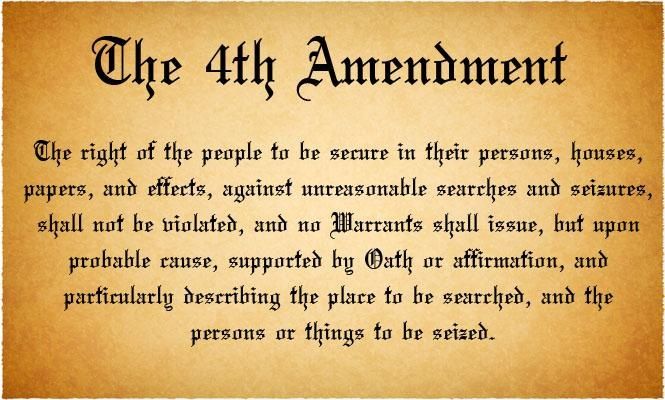
However, if an American is the target of secret surveillance, tracking, spying, etc., the DOJ/FBI need some method of authorization to violate the fourth amendment protection within the constitution. That’s where FISA (702) come into the picture.
FISA (702) only pertains to an American in the surveillance process.
FISA (702) is the presumed legal method, never tested in court, that permits the DOJ and FBI to violate the 4th amendment protection of the American person. FISA (702) only pertains to a legislative construct that permits this secret surveillance of the American person.
The Title-1 surveillance warrant that often comes with the 702-authorized review or investigation; is all encompassing and authorizes the government to secretly look at the private records of the targeted American.
If FISA (702) did not exist, all of the electronic record keeping, the stored metadata of Americans, would be worthless. FISA (702) is the key that allows the government to unlock the data (private records) and review it. Without the key, you cannot open the door – as a consequence, the U.S. government doesn’t need the vault.
FISA (702) has never been tested in court by any targeted person, in part because the evidence against the accused person only exists for prosecutorial use if the person is factually guilty of the suspected allegation. This is the catch-22 that has permitted the 702 violations to continue without challenge.
It doesn’t matter how many times our politicians try to position the argument, there is nothing that stops the DOJ/FBI from looking at the activity of foreign actors. However, there are constitutional protections that stop the DOJ/FBI from looking at the activity of Americans. FISA (702) is designed specifically to work around those constitutional protections.
It looks like Jay Clayton is on the fast-track to be confirmed on Thursday, and FISA (702) to be reauthorized immediately thereafter.
We are in an abusive relationship with our government.
I have created this site to help people have fun in the kitchen. I write about enjoying life both in and out of my kitchen. Life is short! Make the most of it and enjoy!
This is a library of News Events not reported by the Main Stream Media documenting & connecting the dots on How the Obama Marxist Liberal agenda is destroying America




 Centinel2012