JOHN SOLOMON: This Career Prosecutor TRIED TO STEAL Jack Smith’s Sealed Mar-a-Lago Report By DISGUISING IT AS A CAKE RECIPE To Slip Past The DOJ’s Email Filters. The Filters Caught Her, And Now She’s Facing 20 Years


Posted originally on Rumble on Bannon War Room on: May 21, 2026

SEN. TOMMY TUBERVILLE (R): Several Republican Senators Won’t Vote To End The Filibuster And Then Might Back Democratic Amendments. Tell Them, “If You Do That, You Lose Your Chairmanship Immediately.”


Posted originally on Rumble on Bannon War Room on: May 21, 2026

CAROLINE WREN: John Thune Has Lost Control Of His Own Caucus, And His Relationship With President Trump Is Greatly Strained. It’s Time To Make A Change! We Need To Make JD Vance The Senate Majority Leader!


Posted originally on Rumble on Bannon War Room on: May 21, 2026

Socialism in Action- Zohran Mamdani Reveals He Steals YouTube TV


Posted originally on Rumble on Bright Bart News Network on: May 21, 2026

LIVE: President Trump & EPA Admin. Lee Zeldin Make Announcement…


Posted originally on Rumble on Bright Bart News Network on: May 21, 2026

“America Was Not Founded by the Weak”: Trump Rallies Graduates


Posted originally on Rumble on Bright Bart News Network on: May 21, 2026

“What’s the Question?” Vance Slams Reporter’s Long-Winded Attack


Posted originally on Rumble on Bright Bart News Network on: May 21, 2026

Japan’s Citizenship Loophole Exploited


Posted originally on May 22, 2026 by Martin Armstrong |  

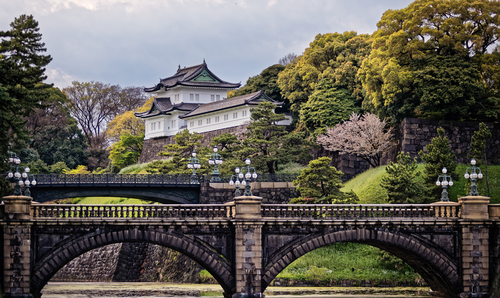
Tokyo Japan Palace

Japan spent decades trying to avoid the exact immigration collapse now consuming Europe, and yet even they created a loophole so obvious that people are openly discussing it online step by step. Marry a Japanese citizen, obtain a spouse visa, have a child, divorce, remain in Japan under parental or long-term residency provisions, then eventually remarry someone from your original country and effectively establish an entirely new immigration chain through the back door. The entire structure rests on the fact that Japan places enormous weight on the welfare of a child with Japanese nationality. Once a child exists, the government becomes far more reluctant to remove the foreign parent from the country.

Immigration lawyers openly advertise the pathways. They explain in detail how foreigners who divorce Japanese spouses can often remain in Japan if they are raising or supporting a Japanese child. Japan’s own immigration framework allows divorced foreign spouses to apply for “Long-Term Resident” status based on childcare, financial support, and living stability.

Japan’s immigration authorities even specify that holders of spouse visas must report divorce within 14 days, yet remaining in the country afterward is still frequently possible through status changes rather than removal. What began as a humanitarian protection for genuine families has quietly evolved into a residency mechanism that many now believe can be strategically exploited.

Japan has already been tightening immigration standards because officials clearly understand the system is under pressure. In 2026, the government moved toward stricter residency requirements, tougher permanent residency screening, and expanded scrutiny over foreign residents. They are requiring longer visa periods, tougher tax compliance, and deeper reviews of residency stability precisely because the number of foreign residents has exploded over the past decade.

The foreign population in Japan has already surpassed 3.7 million people according to recent government estimates, reaching record highs as labor shortages intensify. At the same time, births among Japanese nationals continue collapsing to historic lows. The government is trapped between demographic panic and preserving national identity. That is always when immigration loopholes become politically dangerous.

Now Japan has also introduced joint custody reforms beginning in 2026, ending more than a century of sole custody structures after divorce. That may sound administrative, but it further strengthens the ability for divorced foreign parents to maintain legal and practical ties inside Japan indefinitely. Once the legal system institutionalizes long-term parental residency rights, the line between temporary marriage migration and permanent settlement becomes increasingly blurred.

The West followed this exact trajectory. First came “temporary” migration. Then family reunification. Then asylum expansion. Then child-based residency protections. Eventually entire immigration systems became impossible to enforce because every loophole generated another legal argument to remain permanently. Governments always believe they can control the process in the beginning. They never can.

Japan’s strength was always its cohesion. Tokyo remained Tokyo. Osaka remained Osaka. Communities still shared language, customs, expectations, and social trust. That social cohesion became one of the safest and most stable environments in the industrialized world.

The Economic Confidence Model has always shown that governments facing demographic collapse and sovereign debt crises eventually prioritize economic survival over cultural continuity. Japan’s debt exceeds 250% of GDP. Their workforce is shrinking. Their pension obligations are exploding. Under those conditions, every foreign worker becomes economically valuable to the state regardless of the long-term consequences.

Cuban Crisis Escalating


Posted originally on May 22, 2026 by Martin Armstrong |  

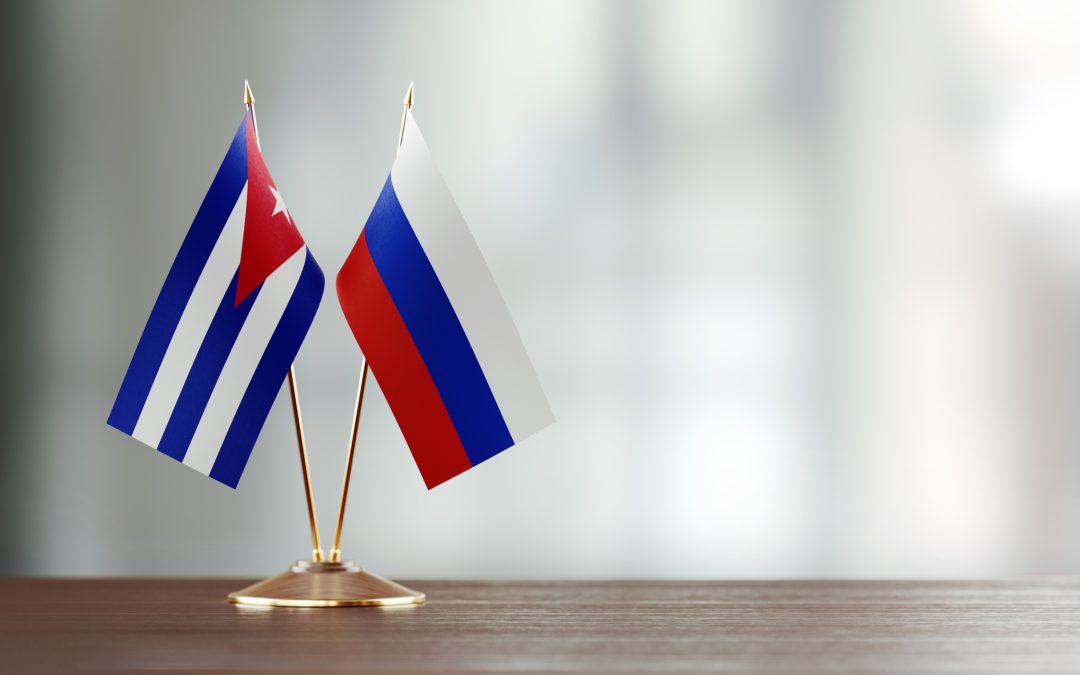
The New Russian Presence in Cuba - FPIF

The Cuban crisis is becoming far more dangerous than most people understand because this is no longer simply about Cuba. This is about the global war cycle accelerating exactly as the models projected years ago. Once great powers begin directly confronting each other in each other’s spheres of influence, history shows that events start moving very quickly and often spiral beyond anyone’s original intentions.

Now Russia is openly signaling support for Cuba while Washington escalates pressure on Havana yet again. Russian officials condemned what they called American “interference” and pledged support for Cuba as the United States tightened sanctions and moved toward possible legal action against Raúl Castro. At the same time, reports are surfacing about Russian oil shipments to Cuba, drone concerns near Guantanamo Bay, and fears inside Washington that Cuba could once again become a strategic outpost for Russia and potentially China right off the coast of the United States.

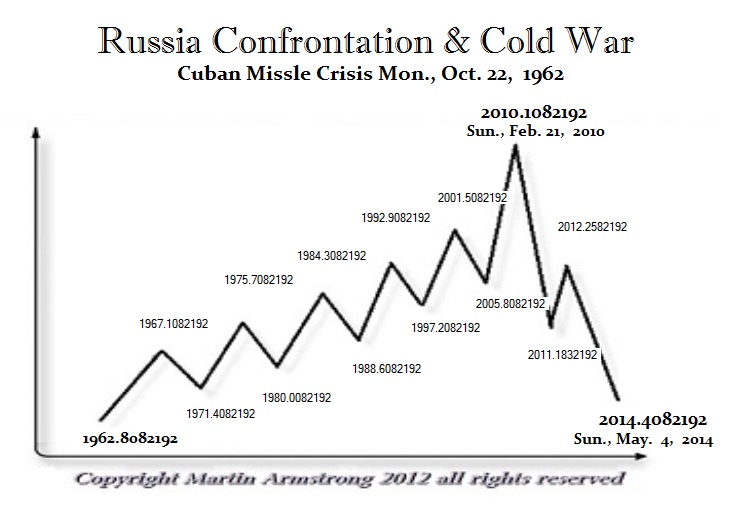
The Cuban Missile Crisis in 1962 nearly pushed the world into nuclear war because Moscow and Washington were testing each other’s limits. Today we are entering another period where major powers are increasingly operating aggressively near each other’s strategic boundaries. NATO expanded toward Russia’s borders for decades while Washington pretended Moscow would simply tolerate it forever. Now Russia is beginning to answer in kind closer to America’s sphere of influence.

The War Cycle has been warning that 2026 to 2027 would become increasingly unstable geopolitically. Europe is already moving toward economic depression conditions. NATO is fragmenting internally. Sovereign debt levels are becoming unsustainable globally. Civil unrest is rising across the West. Historically, governments facing economic decline often externalize internal tensions through geopolitical confrontation because it temporarily unifies populations against an outside enemy.

1962 Cuban Missle Crisis

Look at the pattern forming simultaneously. The Middle East is unstable. China and Taiwan tensions continue building. NATO is openly discussing deeper military integration with Ukraine. Europe is rearming at the fastest pace in generations. North Korea is directly involved in the Ukraine conflict. Iran and Russia are growing closer militarily. Now Cuba is again becoming a flashpoint between Moscow and Washington. These are converging war-cycle events.

Cuba itself is already suffering severe blackouts, fuel shortages, and economic collapse conditions after disruptions to Venezuelan oil shipments and increasing pressure from Washington. Yet instead of stabilizing the region diplomatically, both sides are escalating rhetoric. Russian officials are openly accusing the United States of reviving the Monroe Doctrine while Washington increasingly portrays Cuba as a direct security threat once again.

What is astonishing is how few world leaders appear interested in de-escalation anymore. Europe’s leadership behaves almost fanatically committed to confrontation with Russia regardless of the economic consequences. Washington increasingly views every geopolitical challenge through military lenses. Moscow is now openly expanding strategic relationships in America’s own hemisphere. China watches all of this carefully while preparing for its own long-term confrontation with the West.

The danger into 2027 is not necessarily one single giant war erupting overnight. The danger is multiple regional crises merging together into one broader geopolitical confrontation where eventually every alliance structure becomes activated simultaneously. That is how world wars historically emerge. Not from one event, but from chains of escalation connecting previously separate conflicts together.