Posted originally on CTH on May 16, 2026 | Sundance
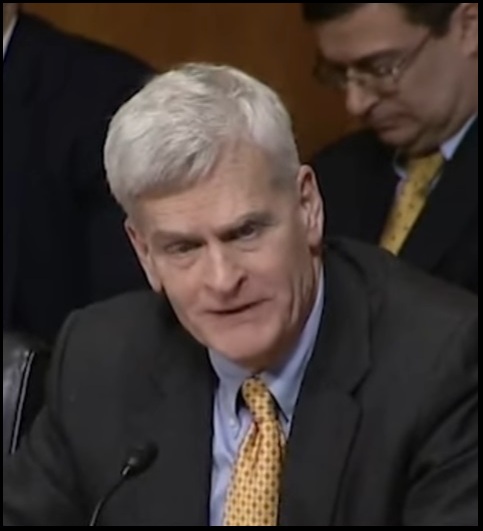
President Trump reminds Louisiana voters today that Bill Cassidy must be defeated in the primary.
“Senator Bill Cassidy of Louisiana is a disloyal disaster. His entire past campaign for the Senate was about “TRUMP,” how he’s with me all the way, and then, after winning, he turned around and voted to IMPEACH me for something that has now proven to be total “bullshit!” He knew that at the time, but didn’t care.
Bill Cassidy is a sleazebag, a terrible guy, who is BAD FOR LOUISIANA. Now he’s going to get CLOBBERED, hopefully, in today’s BIG election, by two great people!!! VOTE TODAY FOR JULIA L. She Is a winner who will NEVER let you down. I LOVE LOUISIANA, won it all three times, and got the most votes in its history, by far (A record!!!), despite its big time and “storied,” political past. THE ELECTION IS TODAY – please get out and VOTE!!! MAKE AMERICA GREAT AGAIN!” ~ President DONALD J. TRUMP
Cassidy is facing a primary challenge from Trump-backed Rep. Julia Letlow (R-La.) and GOP State Treasurer John Fleming. If no candidate clears 50 percent in today’s vote, the top two candidates will advance to a June 27 runoff.
Polls show a tight three-way campaign. However, most polling puts Cassidy in third place, behind Letlow and Fleming.
Posted originally on CTH on May 16, 2026 | Sundance
U.S. Trade Representative Jamieson Greer gives a broad overview of the current status of U.S. trade relations with China on the heels of the Beijing Summit. Greer notes that China has agreed to fulfill all previous purchase agreements and the future of trade between the U.S. and China looks very stable.
Additionally, China has made major purchases for 200 Boeing aircraft and up to 500 jet engines that are worth multi-billions in benefit within the manufacturing sector for the United States. Following the conflict points between the U.S. and Europe, specifically as it relates to outcomes from the military engagement in Iran and the weakening of selfishly motivated NATO alliance members, China does appear to be more open in their trade relations with the USA. Perhaps this is driven by the new paradigm of energy dependency that Beijing is not familiar with.
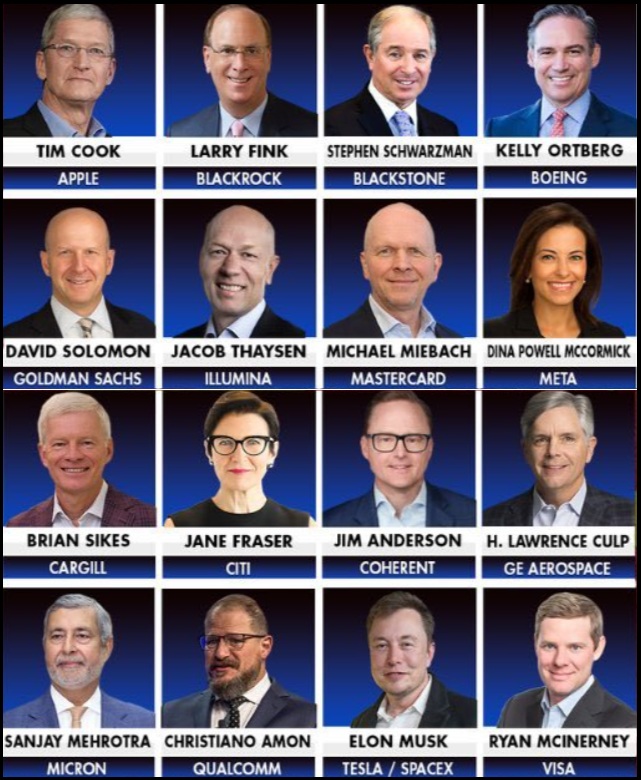
The most interesting aspect to the Beijing trip was not and is not the trade success stories that surfaced during the trip {USTR Greer}. While President Trump brought titans of industry, tech and finance with him to Beijing, the emphasis was on relationships.
Perhaps President Trump was teaching those influential peers something akin to needing a perspective change. Perhaps the nature of trade relations is so structurally under change, all those business interests within it need to look at things differently.
Stay elevated. Note the emphasis by Secretary Rubio was on geopolitical relations against the background of current events.
Beyond the customary chatter and headlines, note how much energy is spent on the ‘relationship’ aspect to President Trump and Chairman Xi, from both leaders and also on direct questions to all pertinent current events.
When questioned about issues, Trump, Rubio and Xi spoke of relations – not details of policy or current events.
The venues within China were specific to something more akin to understanding motives behind policy, personal motives, historic motives from a personal perspective. It wasn’t a trip of transactions; the vibe, the frequency of it all, was seemingly dominated by something more important to the moment than dollars and yuan.
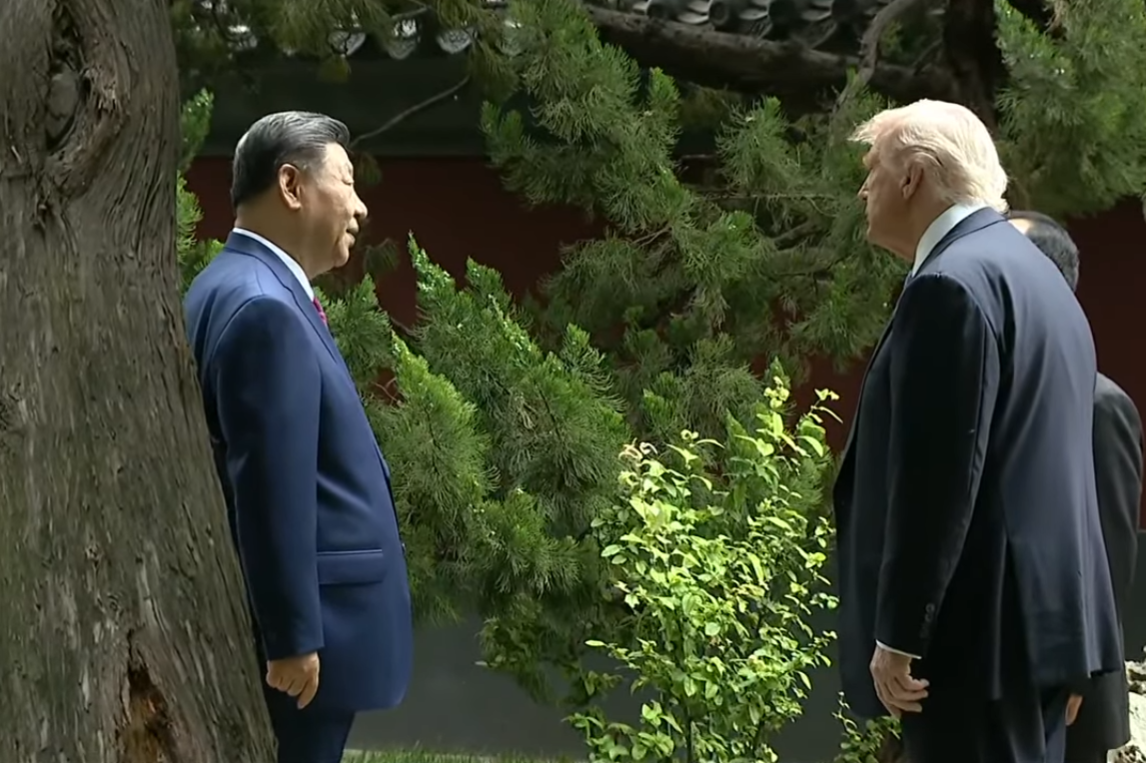
The video of President Xi taking President Trump to his personal residence is exceptionally interesting. [HERE] There are facets to watch that tell a story.
First, the body language. Chairman Xi is very relaxed, shows interest in PDJT’s personal safety (not hitting his head on the door frame), and then the remarkable exchange of when President Trump asks via interpreters if Xi invites other presidents to his residence. Watch Xi’s body, reflexive response first (head, smile shaking “no”) heartfelt, to which he verbally says no also. Truly an amazing exchange. Shows true friendship, no pretenses despite the formality.
Second, watch how XI touches Trump’s arm sometimes. This show openness, trust, friendship on a deep level between them. There is a respect beyond the politics, we got to see a glimpse of it.
Later, in the room, Chairman Xi references President Trump previously inviting him to his personal home Mar-A-Lago. Yes, a foundation based on politics; however, the Chinese culture/perspective is long term, not short.
President Trump is a long-term planner too. Willing to accept criticism for the momentary events because he views the longer process more substantive. These men have more in common than most realize.
The relationship between Xi & Trump is personal in addition to the business of our countries. President Trump brought his closest “business friends” not only to make deals, but to respect a changed relationship with Xi’s country. Something that needs personal engagement beyond just business.
It seemed critical for both leaders to convey mutual alignment, ensuring and emphasizing the importance of no conflict between two superpowers, even if policy differences are present. During media hits, both Rubio and Trump emphasized this overall tone in their comments on policy.
What exactly is this? To me, this approach makes sense given what I view as the big picture behind President Trump’s term.
President Trump is framing out an entirely new geopolitical alignment and both Russia and China are cornerstones in this construct.
President Trump has changed things. The economic world that Beijing planned into their strategy of growth no longer exists the same way. This can be unnerving, especially for China and Chairman Xi. Assurances are needed.
The biggest losers right now, actual economic losers being hammered by the energy sector, are Europe the U.K, and all the British commonwealth countries therein (including Canada). As this unfolds, China is essentially in a period of economic statis, lacking power and influence within this dynamic.
China’s rise to power was through their industrial production plan, which has one fatal flaw, a dependency on customers.
If China’s targeted customers are destabilized their behavior changes.
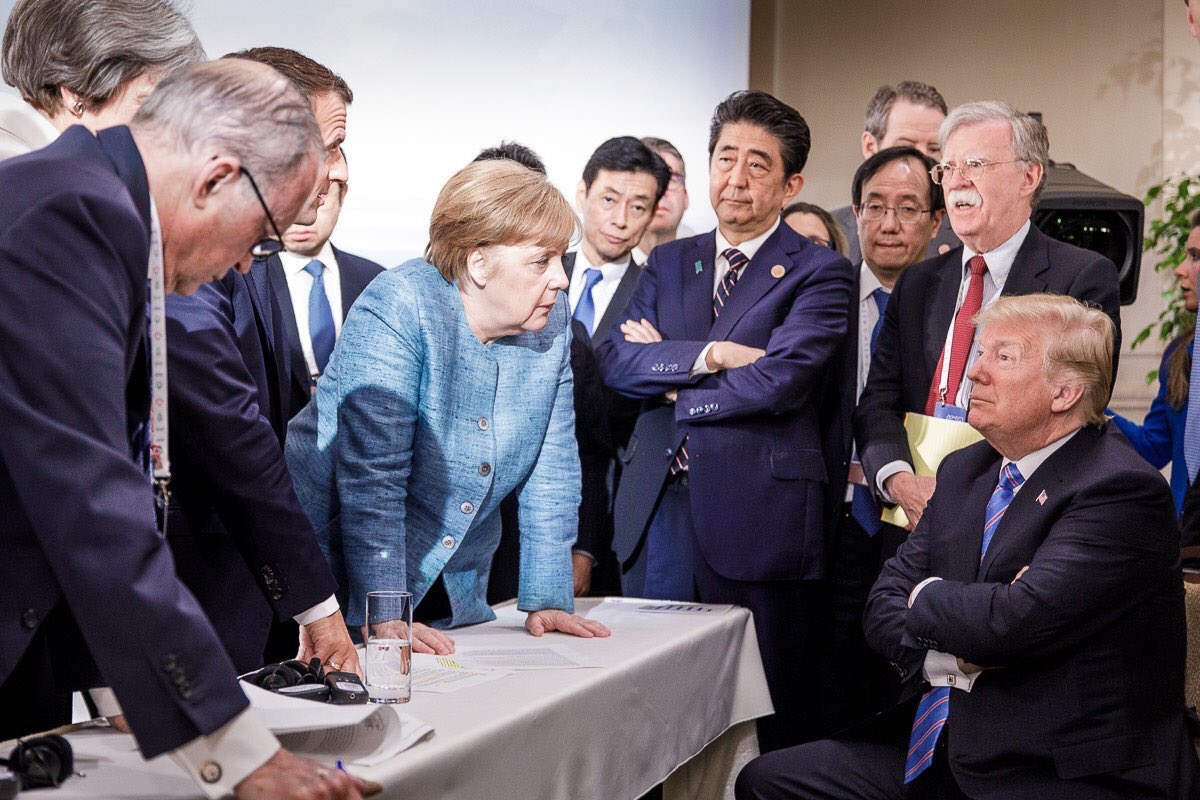
We saw this play out in 2018 when the G7 in Canada erupted on Trump because their economies were shrinking. Their economies were shrinking because President Trump was confronting China (vis-a-vis tariffs and ASEAN replacement partnerships) and Beijing was responding by lowering prices and, unfortunately for the EU, Chinese companies stopped purchases of industrial equipment while they evaluated Trump’s moves.
In 2018 and 2019 China stopped major purchases of industrial goods from the EU, that hurt the economy badly. That was the background for that infamous picture in Canada at the G7 meeting.
Japanese Prime Minister Shinzo Abe and the Association of Southeast Asian Nations (ASEAN) were fine. Japan, Vietnam, South Korea, Indonesia, Philippines and Thailand all picked up business as President Trump told manufacturers to move production out of China and into ASEAN nations. That process was underway.
However, China started pulling back spending and devalued their currency as a strategy to lower prices and retain those manufacturers despite the tariffs. It is important to understand how this impacted Europe, especially Germany.
Remember, big picture: Europe was angry, Japan and Southeast Asia were not.
Fast forward to 2026 and the current energy issue. Once again President Trump has put the EU into a place of severe compromise, and without Russia filling the void of oil and gas missing from Venezuela and Iran, China would be in trouble.
President Trump and Secretary Bessent lifted the sanctions on Russian oil and gas. Russia is filling that gap into China and Southeast Asia; however, China is now in a position of uncomfortable and unfamiliar dependency.
Thus, with Big Panda experiencing dependency for the first time it becomes critical for Trump to emphasize that all is ok, don’t worry, we’re all friends. Still, when Europe contracts it hits China hard, and when China contracts it hits hard on Europe.
China’s long-term plan always included being able to infiltrate and leverage Europe’s market for their own economic benefit. They have been very successful. However, Trump is changing things and former ‘western’ power centers in Europe, and the UK are losing power rather rapidly now.
The big picture takeaway from this summit is President Trump and Chairman Xi, the two biggest apex predators in the world of economics, talking to each other about the importance of staying deconflicted as this geopolitical realignment takes place. The nature of the relationship then becomes important, and that’s exactly the vibe that comes out of this trip.
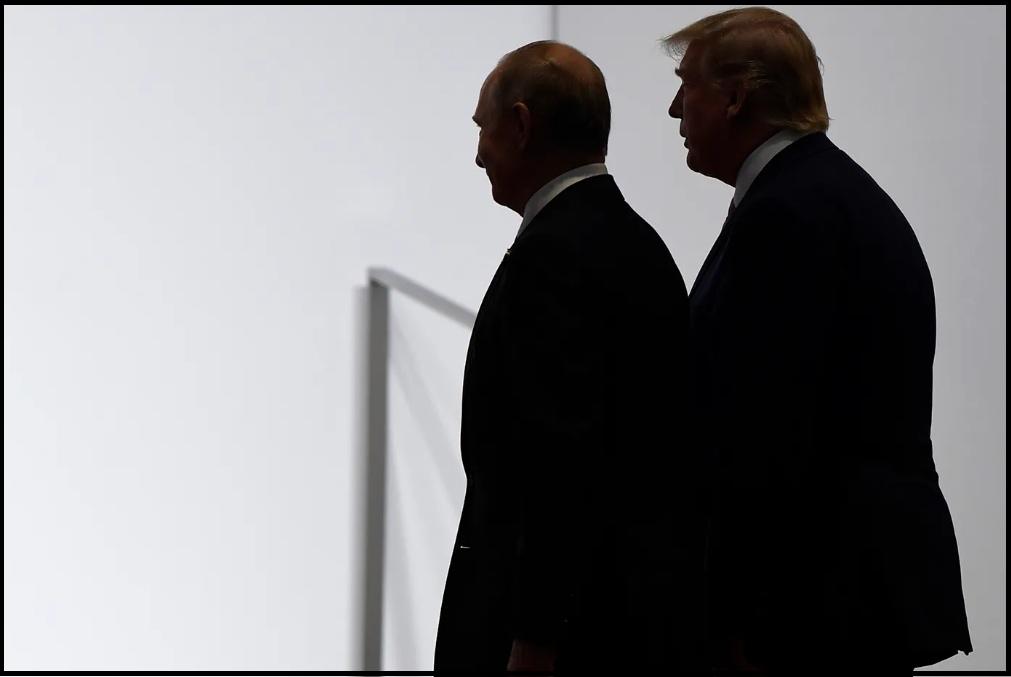
In four days, Russian President Vladimir Putin will next visit Beijing.
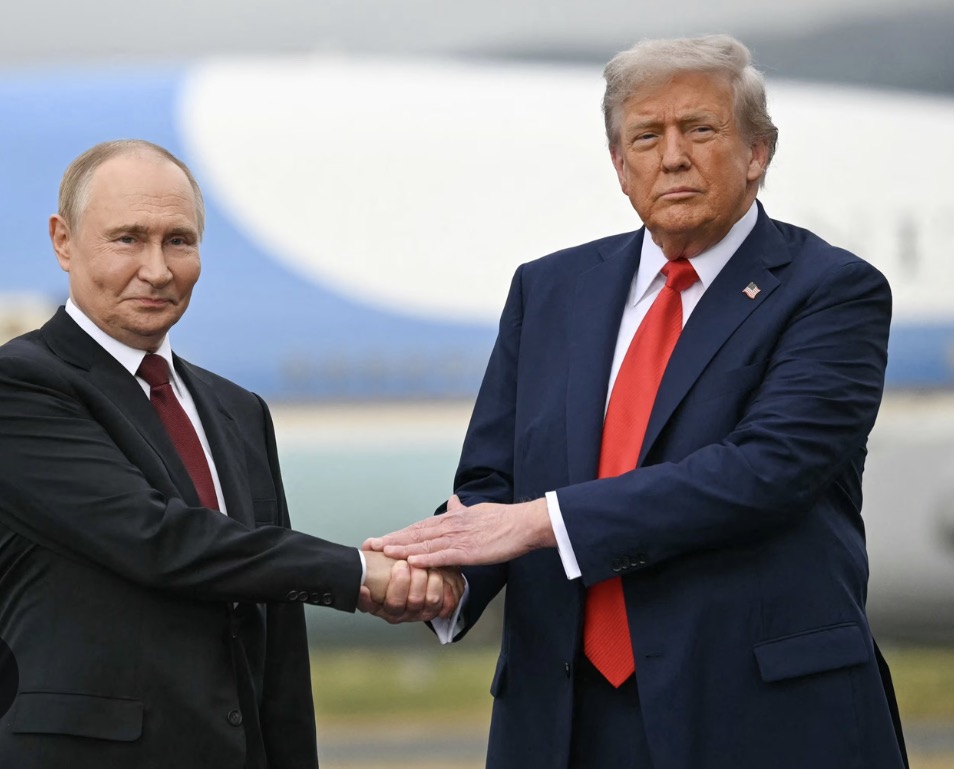
President Trump and Vladimir Putin met in Alaska August 15, 2025. Three days later, August 18, 2025, Russia unexpectedly announced they were restarting their Arctic-2 LNG production facility. Russia would be more than doubling their capacity to generate and store liquified natural gas (LNG).
It absolutely did not make sense that Russia would start producing even more LNG considering the previously imposed western sanctions against them, and the fact that Russia was already overproducing LNG. As noted by analysts at the time.
In August of 2025, Russia was essentially producing more LNG than they could sell into the available market. Russia was storing the overproduction from Arctic-1 on floating storage units “on the water” and slowly selling inventory to countries that did not align with sanctions, specifically China and some Asian buyers. Then suddenly, after the Trump summit, Russia decides to bring Arctic-2 online and produce even more LNG. You can see how this did not make sense.
If they could not even sell all the Arctic-1 LNG output, then why would Russia bring Arctic-2 LNG production online?
Six months pass.
Then, with the military operation in Iran triggered and with Qatar immediately announcing they were shutting down LNG production, there were dozens of new markets for Russian liquified natural gas. And that LNG was now worth 50% more than when Russia inextricably decided to start producing and storing it “on the water”.
Now, there are those who might look at this timing and outcome and be angry at the possibility. However, I would point to something else.
If those anti-Trump criticisms are correct, well, that also means in August of 2025 President Donald J Trump was planning for the moment we are standing in right now.
I have created this site to help people have fun in the kitchen. I write about enjoying life both in and out of my kitchen. Life is short! Make the most of it and enjoy!
This is a library of News Events not reported by the Main Stream Media documenting & connecting the dots on How the Obama Marxist Liberal agenda is destroying America