LIVE: Sec. of Education Linda McMahon Testifies Before Congress…


Posted originally on Rumble on Bright Bart News Network on: May 14, 2026

EARLIER: President Trump Attends State Dinner Hosted by President Xi…


Posted originally on Rumble on Bright Bart News Network on: May 14, 2026

Skilled Trade Rises in Value


Posted originally on May 15, 2026 by Martin Armstrong |  

What Is a Blue-Collar Worker? (With Careers and Skills) | Indeed.com

For decades, society pushed the idea that success only came through a four-year university degree while skilled trades were treated as second-class careers. That entire model is now beginning to reverse in real-time. The economy simply cannot function without electricians, welders, plumbers, HVAC technicians, mechanics, linemen, machinists, and construction workers, yet governments and universities spent years encouraging younger generations away from those professions. What we are witnessing now is the economic consequence of that social engineering experiment.

The average age of skilled trades workers across many industries is now approaching the late-40s to early-50s. Retirements are accelerating while too few younger workers are entering the pipeline to replace them. According to estimates cited by JLL, as many as 2.1 million skilled trade positions in the United States could remain unfilled by 2030, creating potential economic losses approaching $1 trillion annually.

At the same time, demand is exploding because multiple infrastructure cycles are colliding all at once. AI data centers require enormous electrical capacity. Semiconductor factories need industrial construction workers and technicians. Power grids are being rebuilt. Manufacturing facilities are returning to North America. Renewable energy projects, pipelines, battery systems, transportation infrastructure, and industrial automation all require physical labor that cannot simply be replaced by artificial intelligence.

The result is that wages are now rising aggressively across the skilled trades. Electrician wages alone have climbed substantially over the past several years as labor shortages intensify. Recent labor data shows the median annual wage for electricians reached approximately $62,350 nationally, while the top 10% now earn over $106,000 annually.

In high-demand regions tied to AI infrastructure and energy expansion, compensation has surged even further. Some electricians and specialized technicians working on major AI data center projects are reportedly earning between $240,000 and $280,000 annually once overtime and premium project rates are included.

Construction workers tied to data center projects are now earning roughly 32% more than workers on traditional construction projects, averaging nearly $82,000 annually according to recent hiring platform data.

This is where the mainstream economic narrative completely failed. Governments assumed everything would become a digital service economy where everyone sat behind screens while production moved overseas. But once globalization fractured under sanctions, trade wars, and geopolitical instability, countries realized they could no longer rely entirely on foreign supply chains. Capital is now flowing back into domestic manufacturing, energy infrastructure, and industrial rebuilding.

The irony is that many skilled trades now pay better than white-collar office jobs requiring massive student debt. Experienced welders, industrial mechanics, elevator technicians, and plumbers are increasingly earning six-figure incomes while many university graduates struggle under student loans and face growing AI displacement risks in administrative office work.

Even major technology leaders are openly acknowledging this shift. NVIDIA CEO Jensen Huang recently stated that the AI boom will create enormous demand for electricians, plumbers, steel workers, network technicians, and construction workers because AI infrastructure requires “the largest infrastructure buildout in human history.”

Meanwhile, many white-collar entry-level jobs are becoming increasingly vulnerable to automation. Artificial intelligence may replace administrative work, but it cannot physically labor. Civilization itself still depends on physical infrastructure functioning properly. Past generations flocked to the classroom, wound up with debt, and now youth unemployment is through the roof. The economy needs blue-collar workers immediately. The labor shortage has become so severe that companies are now directly recruiting high school graduates into apprenticeship programs. Apprenticeship enrollment has risen sharply across many states after years of decline as younger workers begin realizing the trades may offer greater financial security than traditional university paths. Trump even came out and said that his administration would begin funding such programs to fill the gap.

The younger generation is starting to recognize this opportunity. A degree no longer equates to a solid financial future. Economic security may no longer come from chasing unstable corporate office jobs, but from acquiring practical skills tied directly to infrastructure, manufacturing, transportation, and energy. Those sectors cannot disappear because modern civilization depends entirely on them operating properly. I’ve noted the value of apprenticeships. Real-world experience is far more valuable than what one could learn in academia. Traders on the ground level know far more about the markets than someone who’s never had money on the line. It is something that absolutely cannot be taught in a classroom.

What we are witnessing may ultimately become one of the defining labor shifts of this decade. Capital is moving back toward tangible production. People capable of physically building and maintaining society are indispensable.

Categories:USA Current Events

Europe No Longer Trusts America With Its Data


Posted May 15, 2026 by Martin Armstrong |  

AI.DataCenter

Europe is now openly discussing restricting Microsoft, Amazon, and Google from handling some of its most sensitive government data, including financial records, judicial files, and healthcare information, and this marks a major turning point in the relationship between Europe and the American technology sector.

According to reports surrounding the European Commission’s upcoming “Tech Sovereignty Package,” Brussels is preparing measures that could limit how foreign cloud providers manage sensitive public-sector workloads, specifically targeting the dominant American firms that currently control most of Europe’s digital infrastructure.

This is Europe effectively admitting that it no longer trusts the United States to control the infrastructure storing its most critical national data. There are other private corporations handling public data in Europe; privacy is NOT the concern.

For years, European governments handed enormous portions of their digital systems to American corporations because the infrastructure was cheaper, faster, and more advanced than anything Europe could build itself. Health systems, court records, tax systems, financial databases, government communications, and institutional records all migrated onto cloud systems controlled primarily by Amazon Web Services, Microsoft Azure, and Google Cloud.

The core issue revolves around the U.S. CLOUD Act, passed in 2018, which allows American authorities to compel U.S.-based companies to provide access to data regardless of whether that information is physically stored overseas. In practical terms, this means European government data sitting in a Frankfurt or Paris data center operated by an American corporation may still fall under U.S. legal jurisdiction.

That completely destroys the illusion of sovereignty. Europe spent years lecturing the world about privacy protections through GDPR while simultaneously outsourcing enormous portions of its digital infrastructure to foreign corporations operating under foreign legal systems. The contradiction was always unsustainable. Now the geopolitical environment is deteriorating and suddenly “digital sovereignty” has become an emergency priority.

American firms dominate roughly 70% of Europe’s cloud infrastructure market because Europe has failed to build competitive alternatives, focusing on regulation rather than innovation.  Now they are attempting to reverse that dependency through policy. People still think globalization is expanding when, in reality, we are watching the beginning of technological nationalism.

Whoever controls the data controls intelligence, financial systems, communications, and eventually political leverage itself. That is why governments are suddenly panicking about cloud dependence. Data is POWER, perhaps more so than gold or oil. Government knows this fact and is keen to work with Big Tech to upsurp as much data as they can.

American firms are already scrambling to adapt by creating “European sovereign cloud” structures physically and legally separated from U.S. operations. Amazon alone announced more than €7.8 billion in investment into a European sovereign cloud system based in Germany. But many European officials no longer believe structural separation is enough because the parent corporations remain American entities subject to American law.

The world economy is fragmenting into competing blocs where trust disappears and every nation attempts to secure control over capital, resources, manufacturing, and now digital infrastructure.

Britain’s Consumers Are Pulling Back as War and Inflation Collide


Posted originally on May 15, 2026 by Martin Armstrong |  

Consumer Spending

The British consumer is beginning to crack under the pressure of rising costs, war fears, and collapsing confidence. New data from Barclays, which processes nearly 40% of all UK credit and debit card transactions, shows household spending fell 0.1% in April compared with a year earlier. That may sound small on the surface, but this was the first annual decline since November 2024 and the sharpest pullback in roughly 16–18 months.

What matters is where the declines are appearing. Travel spending collapsed 5.7%, airline spending plunged 8.3%, and retail sales dropped 3% year over year. Consumers are not cutting essentials first. They are cutting discretionary spending because they are preparing for harder times ahead.

The Iran war is playing a major role here because energy prices are once again feeding directly into household costs. Fuel spending in the UK surged 10.4% annually as oil prices climbed sharply amid fears surrounding the Strait of Hormuz and broader Middle East instability. The Bank of England has already warned that energy bills could rise another 16% by year-end while food prices may climb 7%.

This is exactly what I have warned about regarding war cycles and inflation. Wars are inherently inflationary because they disrupt energy flows, transportation, supply chains, and confidence simultaneously. Europe is especially vulnerable because it deliberately weakened its own energy security through Net Zero policies and dependence on external supply.

Barclays found that 72% of consumers believe the Iran conflict will worsen their cost of living, while nearly half say they feel pessimistic about non-essential spending. Once consumers begin building “savings buffers” instead of spending freely, economic momentum slows quickly. Meanwhile, the financial side of Britain’s economy is also deteriorating. UK government borrowing costs have surged to their highest levels since 1998, with 30-year gilt yields briefly approaching 5.8%. The pound has weakened while markets increasingly fear both inflation and political instability surrounding Keir Starmer’s government.

Consumers are cutting spending. Government borrowing costs are exploding higher. Energy prices are rising due to war. Businesses are facing higher labor and financing costs. Britain is particularly vulnerable because the economy has become heavily dependent on consumption and financial services, while productive industry has steadily declined. When consumers retreat, the broader economy weakens very quickly because there is no strong manufacturing base underneath to offset the slowdown.

Government continues pretending this is temporary volatility while simultaneously pursuing policies that increase structural costs. Wrong. Energy remains the foundation of the economy, yet Europe continues pushing policies that restrict cheap and reliable supply. Then when war erupts and oil prices surge, politicians act shocked that inflation returns immediately.

Consumers understand the situation far better than policymakers do. People know instinctively when conditions are deteriorating, which is why spending patterns change long before official recession declarations appear.

China & War


Posted originally on May 14, 2026 by Martin Armstrong |  

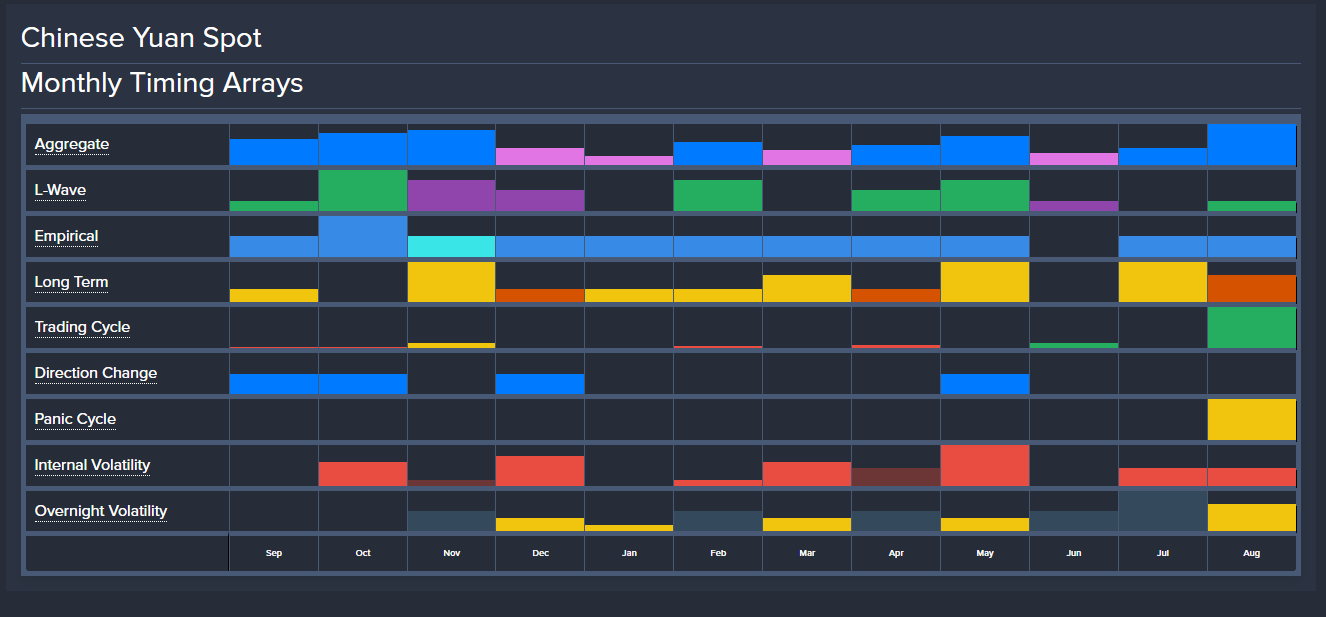
China Yuan M Array 9 14 25

Array September 2025

QUESTION: Marty, I confess, I have no idea how your computer projects these events so far ahead. At the WEC you were warning about May 2026. There was a Directional Change in China for May and a Panic Cycle in August. Even the stock market you said a high in Jan/Feb, a March correction, but no crash. I can see that correlating the entire world is the only way to look ahead.

What is baffling, is that Trump meets in Beijing but brings his tech boys and this seems to be ignoring the elephant in the room, Taiwan and Iran. According to what I read, Xi warned trump we are heared into war, which is exactly what you said. The neocons keep you at a distance and believe that they will always win. They do not want your forecasts because they project that they are losers.

My question is why do you think the computer can project such things like may events a year in advance? Is this going to heat up after this trip?

Doug

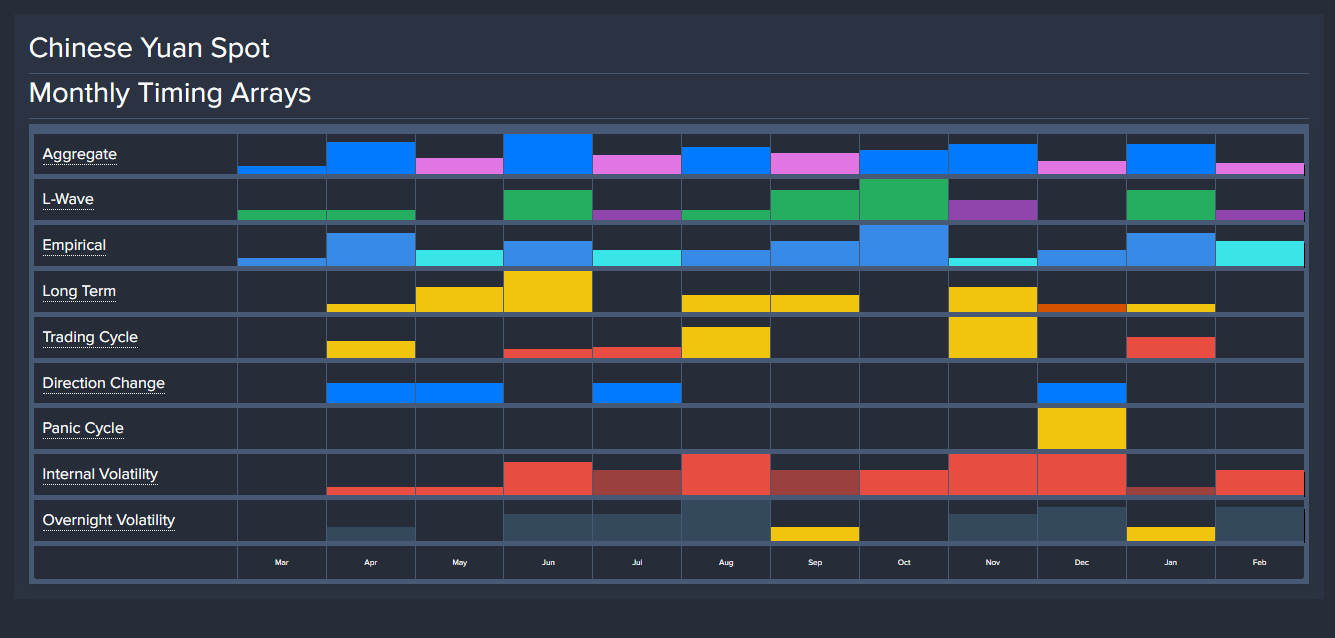
China Yuan M Array 4 11 25

ANSWER: I have come to the conclusion that there are simply economic pressures within the system. Politicians do not act randomly for no reason out of thin air. The economic pressures cause them to respond and looking at history, that response is always similar when confronted with the similar events. The war cycle kicked in for 2026 and we had a Panic Cycle so this is not over just yet.

Pelosi Taiwan Trip 2022

I was told directly from sources in DC that I was correct, we would not be at war with Russia, it will be China. At this meeting, Xi has made it very clear that Taiwan is a key issue that can lead to direct war between China and the USA. That was set in motion by the Biden Administration and Nancy Pelosi flying to Taiwan to tell they to resist. As long as we had the One China policy, there was no need for an invasion. The Biden Administration and Nancy Pelosi slapped Xi in the face. Then you need to step in because it is a loss of face. Pelosi said in a statement.

 “Our congressional delegation’s visit should be seen as an unequivocal statement that America stands with Taiwan, our democratic partner, as it defends itself and its freedom.”

I do not know if any of my warnings have been taken seriously. Rubio has said he does not seek and change in the current status. But Xi is concerned about selling arm to Taiwan.

When dealing in such negotiations, you MUST put on the glasses of your opponent and see the issue from their side of things, not just yours if you hope to achieve and sort of a deal.

The closest point between the island of Taiwan and mainland China is approximately 80 miles (130 kilometers) across the Taiwan Strait, from the coast of Fujian Province to Taiwan’s northwestern shore. The closest point between Cuba and the United States is about 90 miles (145 kilometers) from Key West, Florida, to the northern coast of Cuba. There was no way the US would allow Russia to set up nukes in Cuba.

This is what Xi is concerned about. Taiwan intends to station HIMARS launchers on Penghu and Dongyin, shifting from a defensive to an offensive deterrence posture. The deployment puts Chinese coastal bases, ports, and airfields within rapid strike range, potentially delaying or deterring invasion plans. The move follows major U.S. arms sales, rising PLA activity, and Taiwan’s calls for stable U.S. support ahead of the Trump–Xi summit.

Here is a lit of weapons the United States has sold or approved a very broad range of weapons and military equipment to Taiwan over the years, especially since 2019. Major categories include:

F-16 Fighting Falcon fighter jets (including 66 new F-16V variants approved in 2019)
Air Defense Systems

NASAMS medium-range air defense systems
Stinger missile MANPADS
Patriot missile system support and upgrades
Hawk and Chaparral SAM systems historically

Anti-Ship & Coastal Defense

Harpoon missile coastal defense missiles
Harpoon repair and sustainment packages

Long-Range Strike Weapons

ATACMS ballistic missiles
Guided MLRS rockets (GMLRS) for HIMARS launchers

Anti-Tank Weapons

FGM-148 Javelin missiles
BGM-71 TOW missile systems

Artillery & Ground Systems

M109A7 Paladin self-propelled artillery
Ammunition carriers and recovery vehicles
Precision-guided artillery kits

Drones & ISR

MQ-9 Reaper drones
ALTIUS-600 and ALTIUS-700 loitering munitions/drone systems

Tactical mission networking and ISR software

Helicopters & Naval Systems
AH-1W Cobra helicopter parts/support

Earlier sales included frigates, torpedoes, and naval radar systems

Missile & Aircraft Munitions
AGM-88 HARM missiles
AIM air-to-air missiles for F-16s
Maverick air-to-ground missiles historically

The overall trend has shifted toward what the Pentagon calls “asymmetric warfare” — mobile missiles, drones, air defense, and dispersed strike systems intended to make a Chinese amphibious invasion far more costly. This is what Xi has made a pointed address.  The Question turns on if the economy is turning down into 2028, who has the incentive for confrontation as a political distraction? That tends to be Taiwan, which is taking the form of moving to an offense posture rather than defensive.

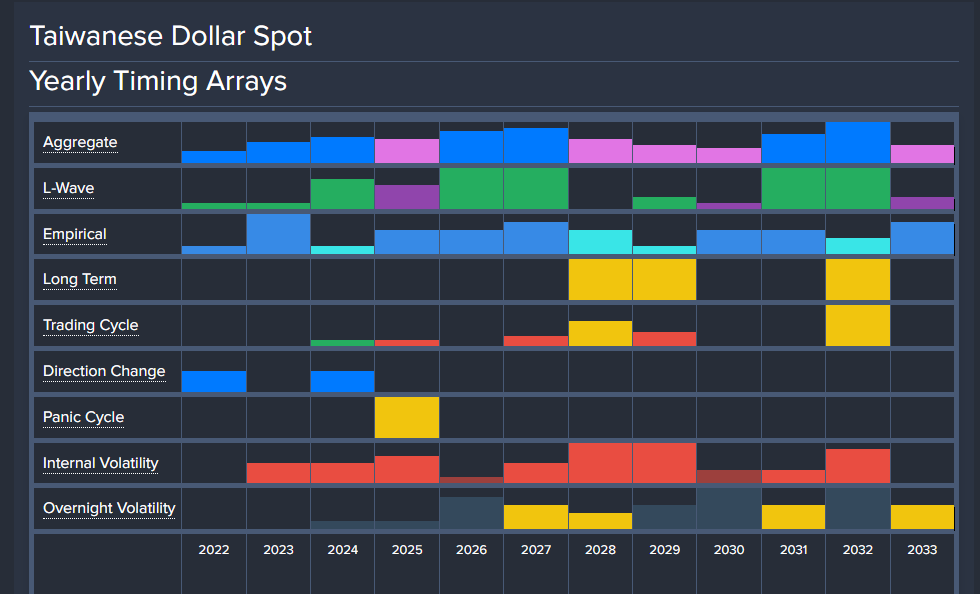
Taiwanese_Dollar Y Array 1 29 23

When we looked at this back in 2023, it appears that this would heat up between 2026 and 2027. The Panic Cycle the computer forecast for 2025 indeed picked a major shift politically. The major change in 2025 was the move away from a traditional, centralized command structure. The new “decentralized warfare” strategy empowers individual military units to act autonomously in a crisis as we have see in Iran. I believe that Taiwan adopted Iran’s strategy.

If communication links to central command are severed during a sudden attack, units are expected to execute combat missions without waiting for orders, ensuring operational continuity. The Ministry of National Defense (MND) framed this as building an “agile and resilient” military focused on “multi-domain denial” to deter enemy forces.

This is when Taiwan adopted a deliberate effort to bolster defenses on its east coast, which was a response to increased amphibious exercises from China. Thus, the navy is established a new coastal operations command on the east coast, which was intended to deploy mobile anti-ship missile launchers and radar units.

Taiwan also enacted domestic legal changes in 2025 aimed at protecting against external interference. The Executive Yuan approved amendments to national security laws that impose severe penalties (including long prison sentences) for organizing or financing activities on behalf of hostile forces. These legal changes are a defensive measure to counter perceived “foreign hostile infiltration.”

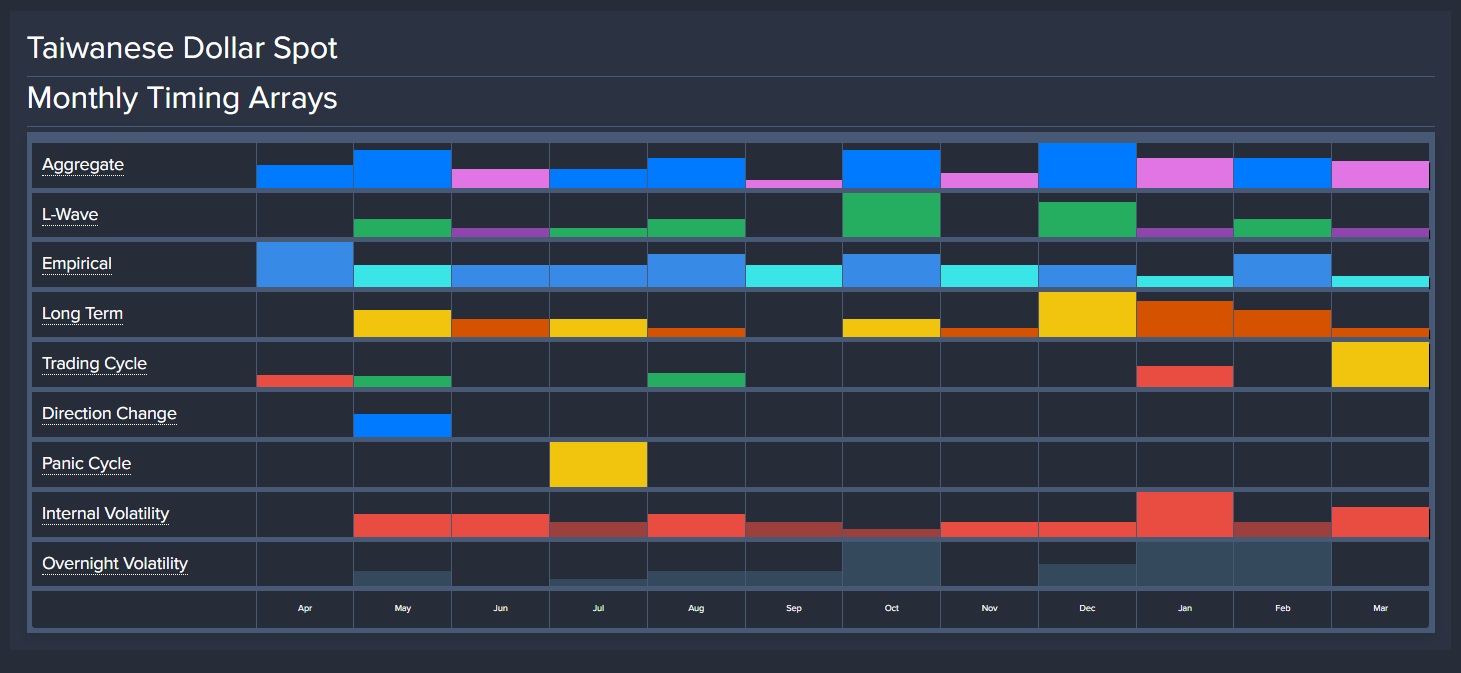
Taiwanese_Dollar_Spot M 5 14 26

I do not believe that Taiwan developed or deployed offensive weapons systems like ballistic missiles for striking mainland China. Therefore, I believe Taiwan looked at Iran and adopted a military restructured layered system. Thus, the Panic Cycle of 2025 saw a tactical evolution in how Taiwan defends itself—moving to decentralized control like Iran and strengthening coastal defenses. They did not adopt an offensive posture to invade China or something stupid like that.

Taiwanese STk Market y 5 14 26

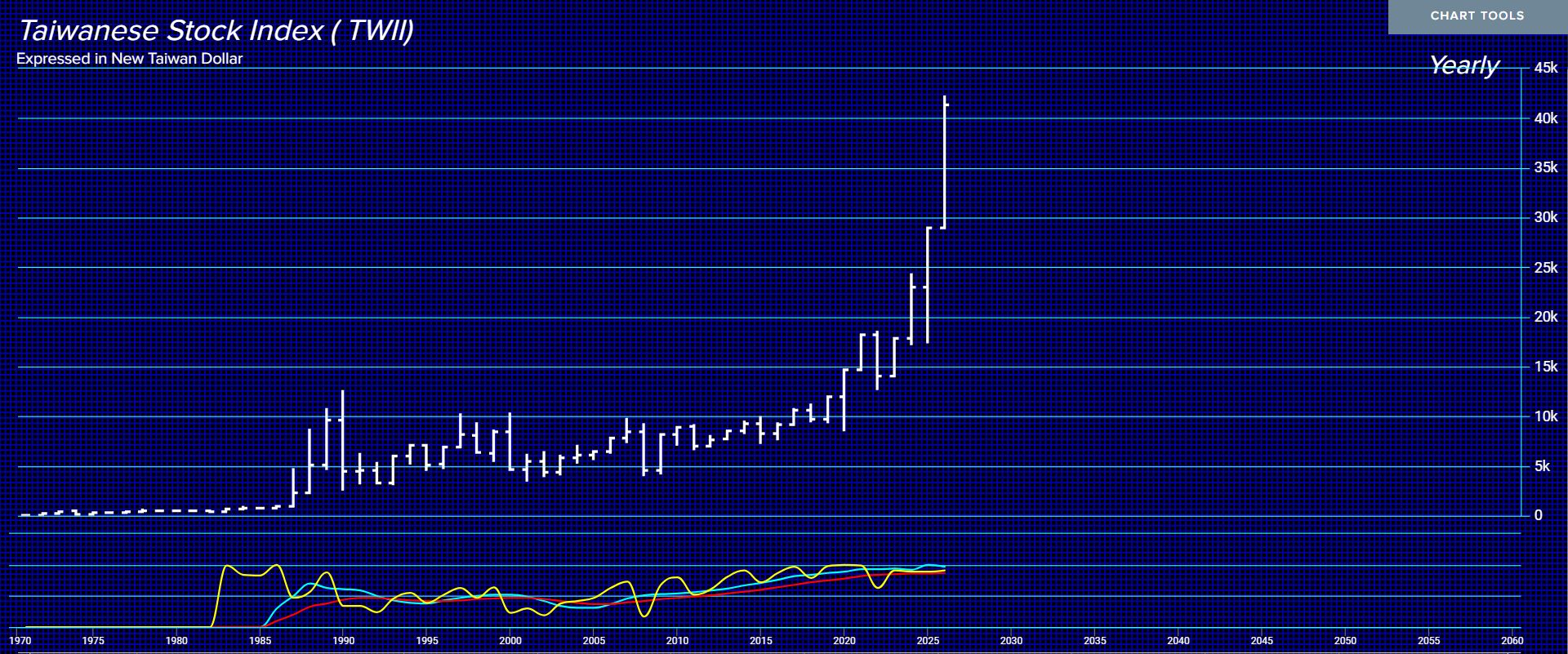
Taiwan is also buying more advanced weapons, extending military service, developing systems like the “T-Dome” missile shield, and training for asymmetric warfare against a possible invasion.  From Beijing’s perspective, Taiwan under President Lai Ching-te has taken a more confrontational.  Taiwan is becoming less accommodating politically toward Beijing. Our computer warns that Taiwan may be reaching a major high in the share market and economy. Hold on. It looks like Next week is a critical target.


President Trump Discusses China Visit and Discussion with Chairman Xi


Posted originally on CTH on May 14, 2026 | Sundance

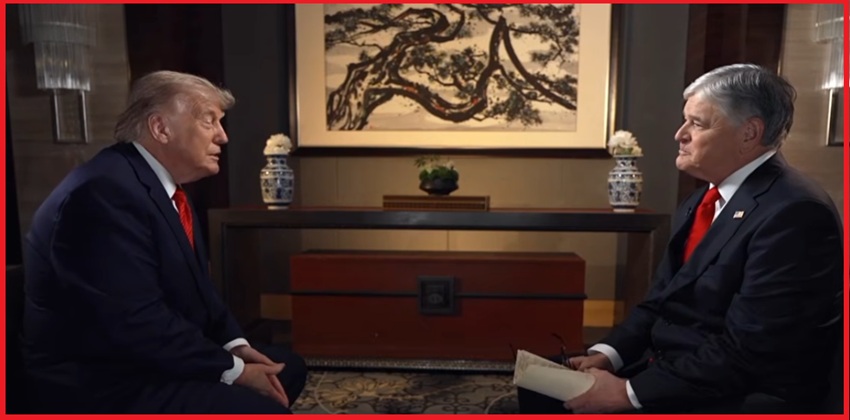
President Trump sits down with Fox News Sean Hannity for an interview immediately following the fast-paced visit in Beijing, China.

Hannity asks President Trump for his sense of the greeting and pageantry put on by Chairman Xi at the formal greeting, as well as some general discussion on the topics of a very lengthy talk between Trump administration officials and their Chinese counterparts.

President Trump and Chairman Xi discussed Iran and the current conflict which has impacted the global supply of oil. ¹{BACKSTORY HERE} It should be noted that closure of the Strait of Hormuz in combination with the U.S. control over Venezuela oil production has reversed the dependency dynamic between Russia and China.

Prior to oil/gas shortages (skyrocketing prices), and due to Western U.S/EU sanctions, Russia was very dependent on China for supplies and component goods.  After oil/gas shortages were triggered by the Iran conflict, China became dependent on Russia for their energy demands. A rather unusual dynamic sitting like an 800lb Gorilla in the corner of the meeting between President Trump and Chairman Xi.

¹(1) Upon reelection President Trump told all U.S. energy providers to “drill baby drill” and maximize energy production. Trump then deregulated the industry for maximum efficiency: Secretaries Burgum (Interior), Wright (Energy) and Zeldin (EPA).

(2) Trump then meets with Putin in Alaska Aug 15, 2025.  Three days later, Aug 18, 2025, Putin restarts Russia’s flagship Arctic project, the LNG export facility via the Northern Route to Asia.

(3) President Trump then signs contracts with Finland for the urgent start of Arctic icebreaking ship manufacturing in the USA and emphasizes the prior conversation about taking over Greenland which infuriates the Danes and EU.

(4) President Trump then triggers the Venezuela operation, captures Nicholas Maduro and -in addition to other benefits- forms a new strategic oil development relationship with the interim Venezuela government.  Russia stays silent.

(5) President Trump then triggers Operation Epic Fury against Iran; completely changing the geopolitical landscape that surrounds energy partnerships.  Energy flows through the Gulf of Oman are impacted.

(6) President Trump then removes specific sanctions against Russia permitting Russian oil and LNG to be sold (in petrodollars) into the Asian market.  Meanwhile, the European Union is forced to increase LNG purchases from the United States.

Sure, it could all be just coincidence… or not.  {GO DEEP} One thing is certain, the FIVE-EYES opposition (Canada, EU, U.K and Australia) do not think all of this downstream benefit that flows to Russia and the USA is coincidental.  The FIVE-EYES opposition clearly see all of this as a strategic realignment between the USA and Russia, and they are going to do everything in their power to stop it.

Last point.  The next world leader to visit China will be…. wait for it… Vladimir Putin.

Supreme Court Rules Federal Law Does Not Shield Freight Brokers from Trucker Accident Liability


Posted originally on CTH on May 14, 2026 | Sundance

The Supreme Court ruled unanimously today that freight brokers can be sued under state negligence laws if they hire unsafe trucking companies (ones with bad safety records) that later cause accidents, crashes or bodily harm. {Ruling pdf Here}

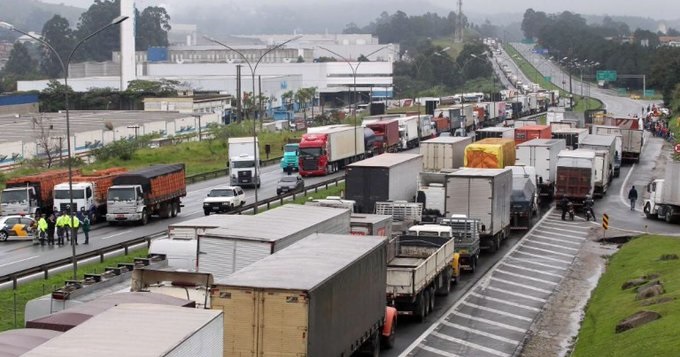
Freight brokers are the middlemen in the transport system matching available loads with available truckers. Freight brokers have notoriously chosen the cheapest truckers and carrier companies to move freight. However, as of this ruling, federal law no longer shields the broker from liability and insurance claims anymore. Victims can now go after the broker’s insurance in addition to the Truck driver’s and/or carrier.

All of those illegal alien truckers who were hired by sketchy carrier companies will now carry a liability risk for the freight broker who might contract the haul.  Ultimately, it is the insurance companies who will drive the change by raising insurance rates on those who would contract with sketchy drivers.

VIA AP – WASHINGTON (AP) — The Supreme Court on Thursday allowed a man to sue a major logistics company after he lost part of his leg in a semi tractor-trailer crash, a decision that could have big ripple effects across the trucking industry.

The justices ruled unanimously in favor of Shawn Montgomery, whose parked vehicle was hit by a speeding truck driver on an Illinois highway in 2017. He wants to sue C.H. Robinson, the country’s largest freight broker by size, over its role in putting the driver on the road despite what he called “serious red flags.”

The decision does not mean Montgomery will necessarily win the lawsuit, which the company is contesting. But the ruling opens the door to increased liability for freight brokers, a key part of the industry.

The Trump administration and companies such as Amazon had argued that letting the suit go forward would expose logistics companies to liability under a “patchwork” of state laws.

[…] The company argued the suit, filed under state law, must be tossed out because brokers rely on the federal government to regulate carriers and federal law trumps state law.

But in an opinion by Justice Amy Coney Barrett, the Supreme Court disagreed. The justices found Montgomery’s claims can move forward because they fall under an exception for safety regulations. The high court overturned a lower-court ruling in the company’s favor.

The decision could increase insurance costs for freight brokers that eventually “cascade through the economy” and result in higher prices for consumers, Justice Brett Kavanaugh wrote in a concurrence joined by Justice Samuel Alito.

Still, “truck safety is a matter of life and death,” Kavanaugh wrote. (read more)

The bottom line is that safe truck driving practices, operated by safe and well-trained truckers, are in everyone’s best interest.  Unfortunately, in the past several years this has become a problem as sketchy truck drivers have been recruited by sketchy carriers.  The ruling today returns the issue of liability to each of the participants in the trucking sector.

Everyone on the road should have a reasonable expectation of safe driving practices.

CIA Director John Ratcliffe Travels to Cuba Amid Hemispheric Security Push


Posted originally on CTH on May 14, 2026 | Sundance |

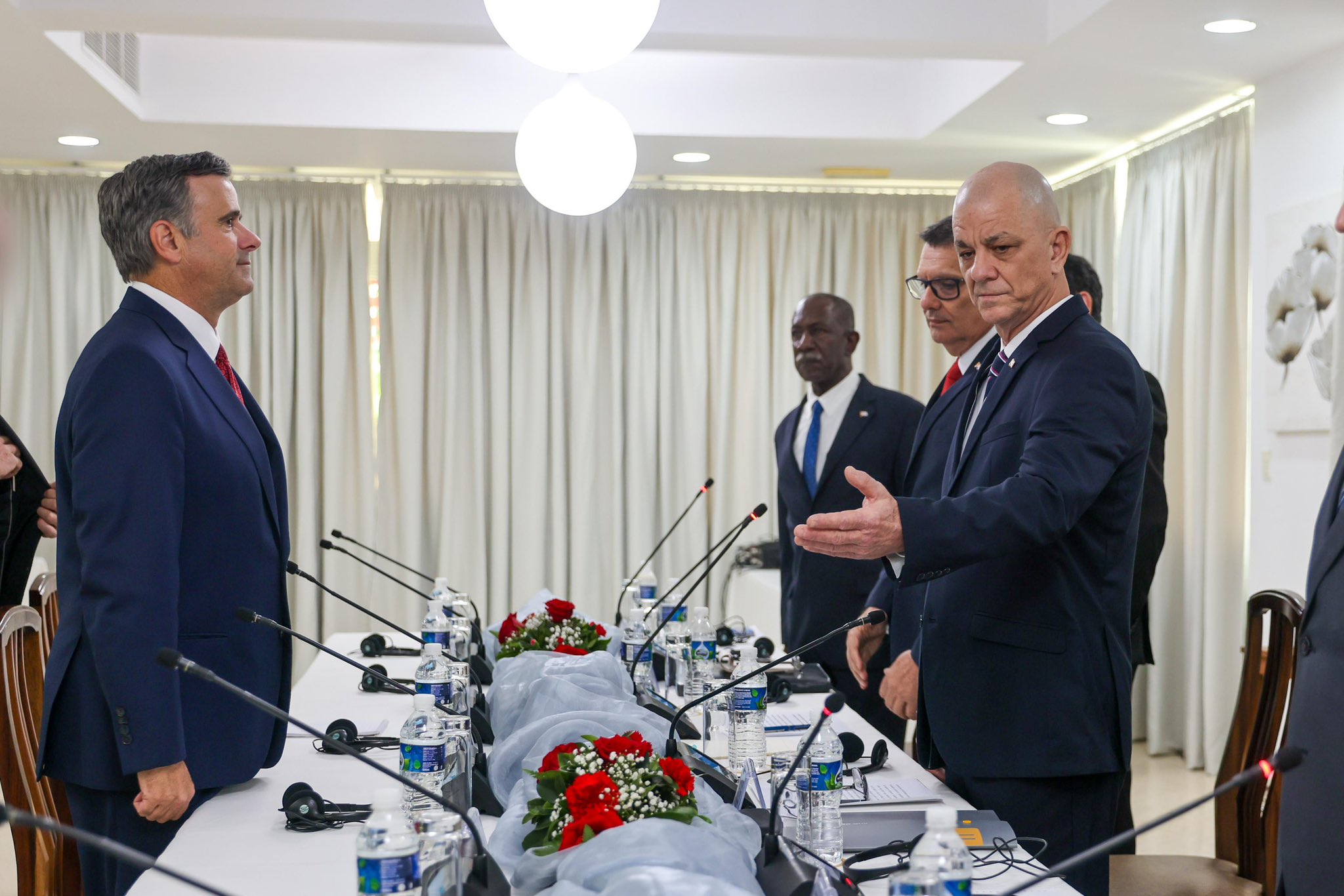
In a remarkable development, CIA Director John Ratcliffe travelled to Cuba on Thursday to meet with Raúl Guillermo Rodríguez Castro the grandson of former Cuban President Raúl Castro.  Also present at the meeting was Cuban Interior Minister Lazaro Alvarez Casas and the head of Cuba’s intelligence services.

In late April of this year, a few State Department officials visited Havana and held talks with Raúl Guillermo Rodríguez Castro about a potential diplomatic deal. Secretary of State Marco Rubio has also previously spoken directly to Mr. Rodríguez Castro who appears to be acting as somewhat of a bridge between the Cuban government and various Trump administration officials.

VIA CUBAN GOVT Press Release – “Based on the request presented by the U.S. government that a delegation headed by the director of the CIA, John Ratcliffe, be received in Havana, the Directorate of the Revolution approved the realization of this visit and the meeting with its counterpart from the Ministry of the Interior.

The meeting took place on Thursday, May 14, in a context characterized by the complexity of bilateral relations, in order to contribute to the political dialogue between the two nations, as part of the efforts to face the current scenario.

The evidence provided by the Cuban side and the exchanges held with the United States delegation made it possible to demonstrate categorically that Cuba does not constitute a threat to the national security of the United States, nor are there any legitimate reasons for including it in the list of countries that allegedly sponsor terrorism.

During the meeting, it was possible to verify the consistency and congruence in the historical position of our country with the actions of the Cuban government and its competent authorities, in the confrontation and unequivocal condemnation of terrorism in all its forms and manifestations.”

“Once again it was evident that the island does not harbor, support, finance or allow terrorist or extremist organizations; nor are there any military or foreign intelligence bases on its territory, and it has never supported any hostile activity against the United States nor will it allow Cuba to act against another nation.

The interest of both sides in developing bilateral cooperation between law enforcement and enforcement agencies was also evident, based on the security of both nations, regional and international.” (link)

According to CBS News – “CIA Director John Ratcliffe traveled to Havana, Cuba, on Thursday for a rare meeting with senior Cuban officials, an agency official told CBS News, using the visit to deliver a message that the U.S. was prepared to expand economic and security engagement with Cuba if Havana “makes fundamental changes.”

The meeting came as Cuba is contending with a massive power failure to its national energy grid amid U.S. sanctions that have caused an oil and gas shortage crisis to the island nation.

Ratcliffe told Cuban leaders the administration was offering “a genuine opportunity for collaboration” and a chance to stabilize Cuba’s struggling economy, while cautioning that the opportunity would not remain open indefinitely and the administration would enforce “red lines” if necessary, the official said.

The meeting in Havana follows a series of public comments from President Trump that talks with Cuba were imminent. Earlier this week, Mr. Trump said “Cuba is asking for help,” and indicated talks would begin “at the right time.”

Cuban officials publicly confirmed Thursday’s meeting, characterizing it as part of efforts to maintain political dialogue despite what Havana called “complex bilateral relations.” {source}

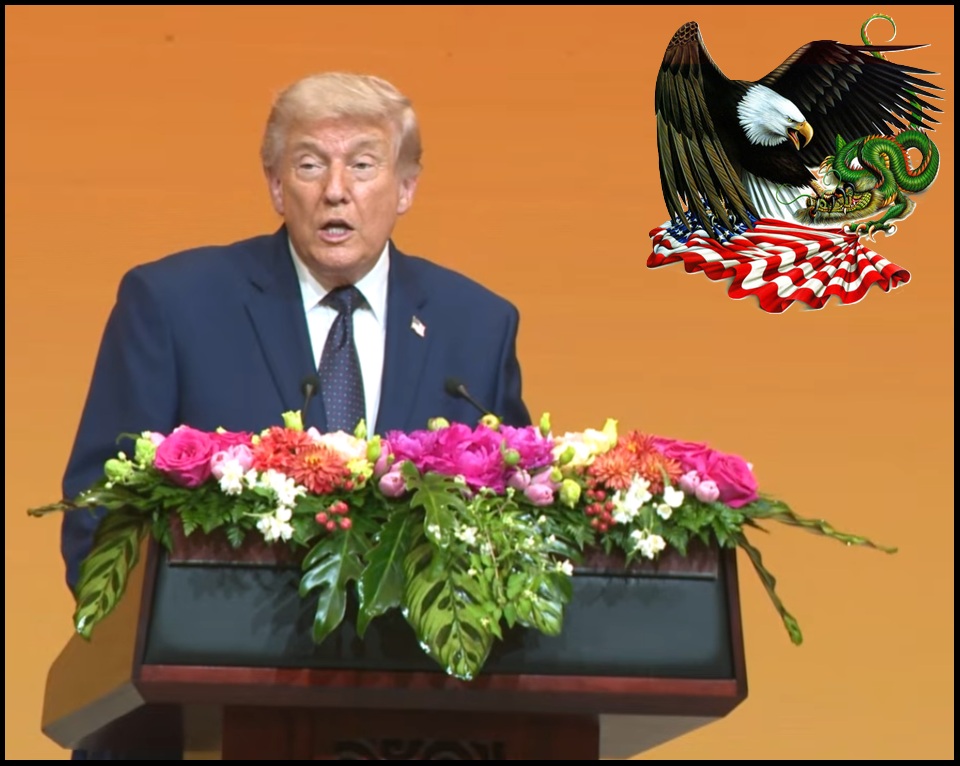
President Donald Trump Delivers Remarks During State Dinner in Beijing, China


Posted originally on CTH on May 14, 2026 | Sundance 

Chinese Chairman Xi Jinping hosted President Donald J Trump and the delegation of administration officials and leaders of U.S. businesses during a state dinner in Beijing, China.

The full video of the event is below, prompted to 12:37 where President Trump delivered remarks to the Chinese and American attendees.

.

Alternative angle video also included below.