Posted originally on Jul 2, 2026 by Martin Armstrong |
War has now entered the video game stage. Ukraine has placed a literal price tag on Russian lives, paying soldiers roughly $2,200 for capturing an enemy combatant and around $330 for killing one in close combat when confirmed by video. This is the monetization of death.
What better way to entice the youth than to turn war into a video game? Call of Duty-aligned missions are provided, as the Ukrainian government is providing incentives for death and destruction. The new bonuses are part of Ukraine’s broader transformation of its military into a contract-based force with higher pay, clearer service terms, and direct rewards for battlefield results. Frontline monthly pay reportedly averages about $6,700 and can exceed $10,000 depending on mission risk and performance. A captured Russian soldier brings 100,000 hryvnias, roughly $2,200, while killing an enemy soldier can bring 15,000 hryvnias, roughly $330. If multiple soldiers participate in a capture, the reward is divided among them.
The mathematics of war explains why a living Russian soldier is worth more than a dead one. A prisoner can be exchanged for Ukrainian POWs, providing Kyiv with leverage in future negotiations while allowing families to see loved ones return home. Captured soldiers also become intelligence assets, revealing information about troop movements, logistics, morale, and battlefield tactics. From a purely military perspective, one prisoner can produce far greater strategic value than one casualty. That is precisely why Ukraine’s incentive system pays substantially more for captures than kills. Modern warfare has become an exercise in cost-benefit analysis where even human lives are assigned a financial value based on their perceived utility to the state.
Ukraine has built a unique military incentive system: E-Points. Units receive points for verified destruction of enemy equipment, personnel, and other combat actions. Those points can then be exchanged for drones, EW systems, and robotic ground platforms. Every successful strike… pic.twitter.com/mY5f1Am8UI
This is what happens when war becomes permanent. Governments begin reducing human life to accounting entries. A prisoner has value because he can be exchanged. A dead man has value because he removes one more body from the battlefield. The military bureaucracy then assigns a number to each outcome, and suddenly killing becomes an incentive structure. The same people who lecture the world about morality are now openly creating pay scales for death.
Ukraine has already gamified drone warfare through its e-Points system, where units earn points for confirmed destruction of enemy personnel or equipment and use those points to buy more drones, ground robots, and electronic warfare gear through the Brave1 marketplace. Business Insider reported that more than 181,000 pieces of equipment have already been delivered through that system this year. The battlefield has become a marketplace. Kill, confirm, collect, upgrade, repeat.
“E-Points have already changed the approach to warfare. This is about clear incentives, fair rewards, and the rapid scaling of effective solutions. Military units receive resources based on results: the more targets they destroy, the more points they earn. This is a direct incentive that enables units to strengthen their capabilities with new technologies,” said Ukraine’s Minister of Defence, Mykhailo Fedorov.
This is the future of war. The drone operator earns points. The infantryman earns cash. The commander receives measurable performance data. The government gets propaganda footage. The dead become statistics on a dashboard. This is why drone warfare is so dangerous. It removes the final psychological barrier between the man pulling the trigger and the human being dying on the screen. Once killing becomes remote, verified, rewarded, and gamified, war no longer resembles anything the old generals understood.
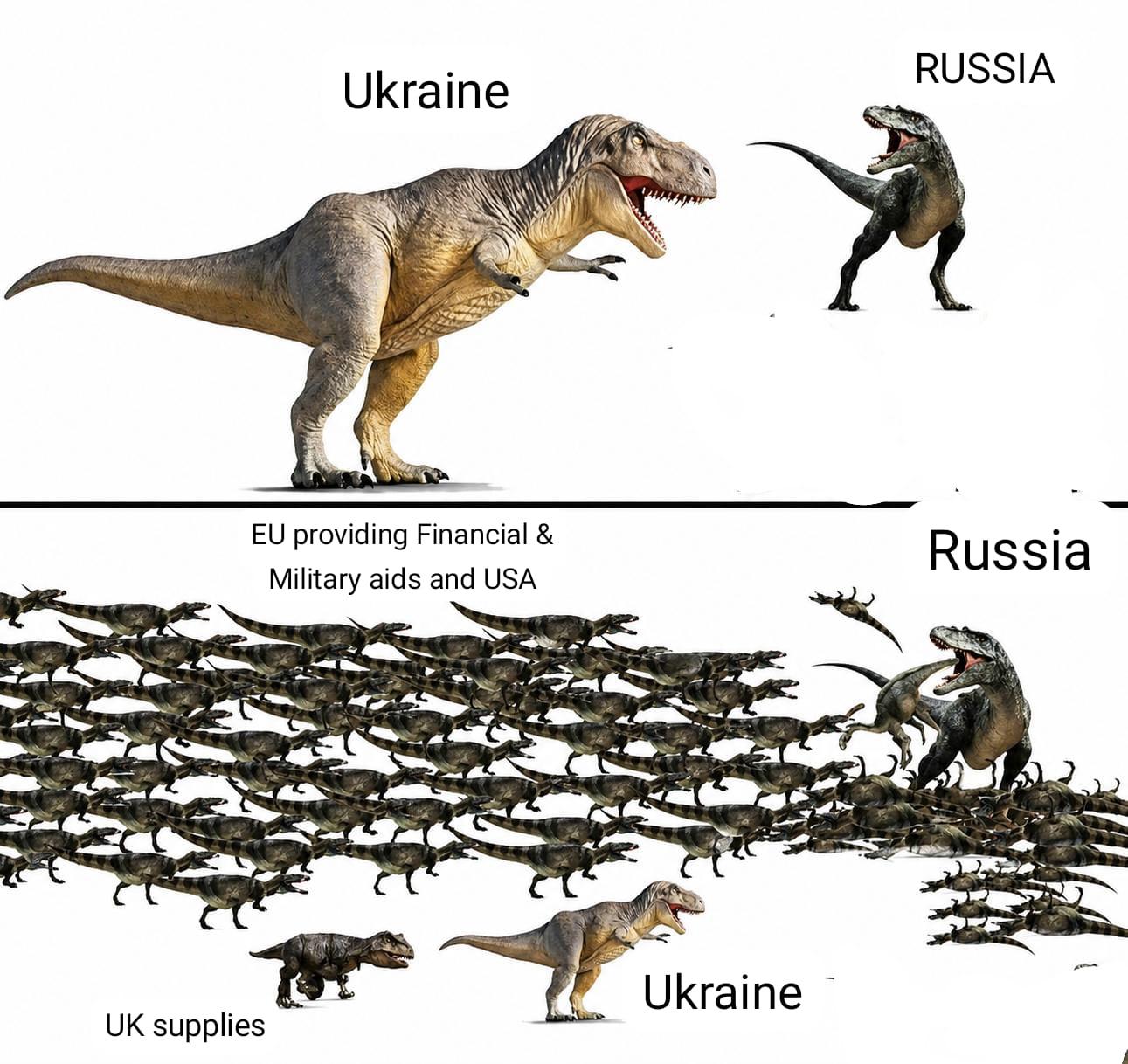
The West created this nightmare by refusing to negotiate. They have thrown hundreds of billions into Ukraine while pretending this is about defending democracy. Now the war has produced bounty systems, drone leaderboards, prisoner incentives, and video-confirmed kills. This is not civilization. This is barbarism with software.
Posted originally on Jul 2, 2026 by Martin Armstrong |
People keep asking when World War III will begin. They are asking the wrong question. Europe is already behaving as though it is at war. I have warned for years that the politicians in Brussels would never allow peace because the sovereign debt crisis requires an external enemy. Every week, another European government announces more military spending, another mobilization plan, another emergency measure, another speech warning the public to prepare for conflict. This is no longer speculation. It is policy.
Now Poland’s foreign intelligence chief, Col. Paweł Szota, has made one of the clearest admissions yet. He warned, “The level of Russian aggression is very high, and the risk of military confrontation is real.” He added that Poland “must operate as if war with Russia is inevitable“ because waiting until conflict begins would be too late. Those are extraordinary statements from the head of a NATO intelligence service. Governments do not talk this way unless they are already planning for the next stage.
Szota explained that Russia “is systematically pushing red lines, testing NATO’s responses,” and argued that the Kremlin views Poland and NATO’s eastern flank as “an obstacle to achieving its imperial ambitions.” He also warned that Moscow could continue the war in Ukraine for years, sacrifice its own economy, and expand hybrid operations against NATO members, including provocations in the Baltic region. Europe is no longer speaking about diplomacy. It is openly discussing escalation scenarios and military contingencies.
This is precisely what our computer has been forecasting. The 2026 Panic Cycle was never simply about financial markets. It marked the acceleration of geopolitical instability. Governments always require a crisis when they cannot solve the debt problem. Europe is entering an economic depression while military budgets are exploding. Germany is debating conscription once again. Poland is rapidly expanding one of the largest armies in Europe. NATO members are increasing defense spending toward 5% of GDP. Civil defense campaigns are appearing across the continent. These are not the actions of governments expecting peace. They are the actions of governments preparing their populations psychologically and financially for war.
Once governments convince themselves war is inevitable, they begin making decisions that ensure it becomes inevitable. Every mobilization by one side is interpreted as aggression by the other. Every sanctions package invites retaliation. Every troop deployment produces another deployment in response. History shows that wars often become unavoidable long before the first shots are fired because political leaders eliminate every possible path back to diplomacy.
I have repeatedly stated that the sovereign debt crisis and the War Cycle are converging. Europe cannot finance its welfare state, its Green agenda, and endless military expansion simultaneously. Something has to give. Throughout history, governments buried under debt have repeatedly turned toward external conflict because war postpones domestic political reckoning. It creates an excuse for deficits, emergency powers, censorship, and capital controls while redirecting public anger toward a foreign adversary.
Ukraine has become the catalyst, not the destination. The computer has consistently warned that 2026 marks the beginning of the Panic Cycle, 2027 carries the highest risk of broader international war, and the economic consequences will intensify into 2028 as recession and civil unrest spread. Europe is no longer preparing to avoid war. Its own intelligence chiefs are now publicly telling their citizens to prepare because they increasingly believe war is coming. That should concern every investor far more than the daily fluctuations in the stock market.
Posted originally on Jul 2, 2026 by Martin Armstrong |
The employment picture continues to soften despite every attempt to paint the economy as resilient. ADP reported that private employers added only 98,000 jobs in June, below expectations of roughly 118,000 and down from May’s 122,000. Nearly all of the hiring came from the service sector, particularly education and health services, while leisure and hospitality barely managed to add jobs despite the FIFA World Cup taking place across North America. Manufacturing remained weak, and natural resources and mining continued to shed workers.
The report exposes an economy that is slowing rather than collapsing. That distinction is important. ADP Chief Economist Nela Richardson admitted that it is taking people longer to find work while some industries are simultaneously struggling with labor shortages. That is precisely the type of distortion that emerges late in an economic cycle. Businesses are becoming increasingly cautious about expanding payrolls, yet structural shortages remain because the labor force no longer matches where demand exists. This is not the healthy labor market politicians continue to advertise.
Looking beneath the headline, the gains were concentrated in a handful of industries. Education and health services accounted for nearly half of all new jobs, while financial activities added modestly and information technology posted only small gains. Small businesses generated most of the hiring, adding roughly 53,000 positions, while medium-sized companies added 29,000 and large firms only 25,000. Wage growth continues to cool. Workers who remained with the same employer saw annual pay gains of 4.4%, while job changers received 6.6%, suggesting the intense wage competition that followed the pandemic has eased considerably.
The financial markets immediately interpreted the weaker report as increasing the odds of lower interest rates. That is the standard Keynesian response, but it completely ignores the sovereign debt crisis that is unfolding globally. Markets have become conditioned to believe every sign of economic weakness guarantees monetary easing. The problem is that inflation has not disappeared, geopolitical tensions continue to threaten commodity prices, and governments everywhere remain buried under unprecedented debt. The next Federal Reserve chairman cannot simply slash rates because Wall Street demands it. As I have explained before, if inflation begins to accelerate again, policy makers will be forced into a position they would rather avoid.
Our computer has been warning that 2026 would be a Panic Cycle year marked by increasing volatility rather than outright economic collapse. This report fits that model perfectly. Employment is no longer accelerating, consumers are becoming more cautious, and confidence is beginning to erode. The labor market is usually one of the last pillars to weaken before broader economic conditions deteriorate. Once businesses stop hiring, consumer spending inevitably slows, corporate earnings come under pressure, and governments experience declining tax revenues at precisely the moment debt servicing costs continue to rise.
The official government employment report will be released shortly, and it may differ from ADP because the methodologies are not the same. Nevertheless, the broader trend is becoming increasingly difficult to ignore. Hiring has slowed, job seekers report that it is taking longer to find work, and businesses remain reluctant to expand despite years of government spending and monetary stimulus. This is exactly the type of environment our computer has projected as we move toward the more volatile period ahead.
Posted originally on Jul 1, 2026 by Martin Armstrong |
Just to clarify, this conference is open to all. I was asked to present a session on “how the world works” as a way to pass knowledge on to the next generation, and I’m happy to say I’ve committed to doing it. So here it is.
Please note: the book will be given only to those who attend the conference in person. For anyone unable to attend, a recorded video will be made available after the event. Since we’re keeping costs low, we won’t be live-streaming—so the video will be offered separately, and you won’t need a conference ticket to purchase it.
The book itself will also go on sale to the general public after the conference concludes.
I have created this site to help people have fun in the kitchen. I write about enjoying life both in and out of my kitchen. Life is short! Make the most of it and enjoy!
This is a library of News Events not reported by the Main Stream Media documenting & connecting the dots on How the Obama Marxist Liberal agenda is destroying America