Posted originally on Jun 17, 2026 by Martin Armstrong |
Kevin Warsh is now stepping into one of the most difficult jobs at a time when inflation is rising again, energy prices are climbing because of the Middle East conflict, and confidence in central banks remains fragile. What immediately stands out is that Warsh is not another Jerome Powell. He has spent years criticizing the Federal Reserve itself, arguing that many of today’s economic problems were created by central bank policy rather than solved by it.
One of Warsh’s most important positions is his rejection of the idea that inflation was merely the result of supply chain disruptions or temporary events. He has repeatedly argued that excessive government spending and Federal Reserve policy fueled inflation. Reuterssummarized his position by noting that Warsh views inflation as a consequence of policy decisions and has been highly critical of the expansion of the Fed’s balance sheet. That is a significant departure from the excuses that dominated the discussion over the past several years.
What I find interesting is that Warsh appears determined to dismantle many of the communication tools that have defined modern central banking. He has criticized “forward guidance,” questioned the value of constant forecasts, and appears to favor a much less predictable Federal Reserve. Markets have become addicted to every word spoken by central bankers. Investors now spend more time trying to decipher press conferences than studying the underlying economy. Warsh seems to believe that central banks should stop pretending they can micromanage expectations years into the future.
When he was sworn in, Warsh pledged to “lead a reform-oriented Federal Reserve” while “learning from past successes and mistakes” and “escaping static frameworks and models.” The Federal Reserve has increasingly become an institution trapped by its own theories. The economy changes while the response remains the same.
The irony is that Trump may have selected someone who agrees with him about the failures of Powell and the Federal Reserve, yet disagrees with him on the solution. Warsh believes the Fed lost credibility because it waited too long to fight inflation. Trump wants growth and lower borrowing costs. Those objectives can coexist for a while, but if inflation remains elevated because of war, energy prices, or government spending, Warsh may find himself making decisions Trump does not like.
The larger issue is that no Fed chairman controls the business cycle. This is where politicians always get it wrong. Trump wanted lower rates. Biden wanted lower rates. Every administration eventually wants lower rates. Yet interest rates ultimately move with confidence and capital flows. The mainstream Keynesian view has always assumed rates are simply a policy tool. History shows something very different. Rates generally rise with strong markets and confidence and decline during bear markets and economic contractions. The Federal Reserve follows the trend far more often than it creates it.
Warsh enters office during what our models have projected as a Panic Cycle year. The international war cycle is turning up, government debt continues expanding, and geopolitical uncertainty is increasing. Investors expecting a magic solution from a new Fed chairman will likely be disappointed. Warsh may reform how the Fed communicates. He may challenge some of the assumptions that dominated the Powell era. But the real issue remains confidence. If confidence in government continues declining while geopolitical tensions continue rising into 2027, then no central banker will be able to prevent the consequences. The Fed does not control the cycle. The cycle controls the Fed.
Posted originally on Jun 17, 2026 by Martin Armstrong |
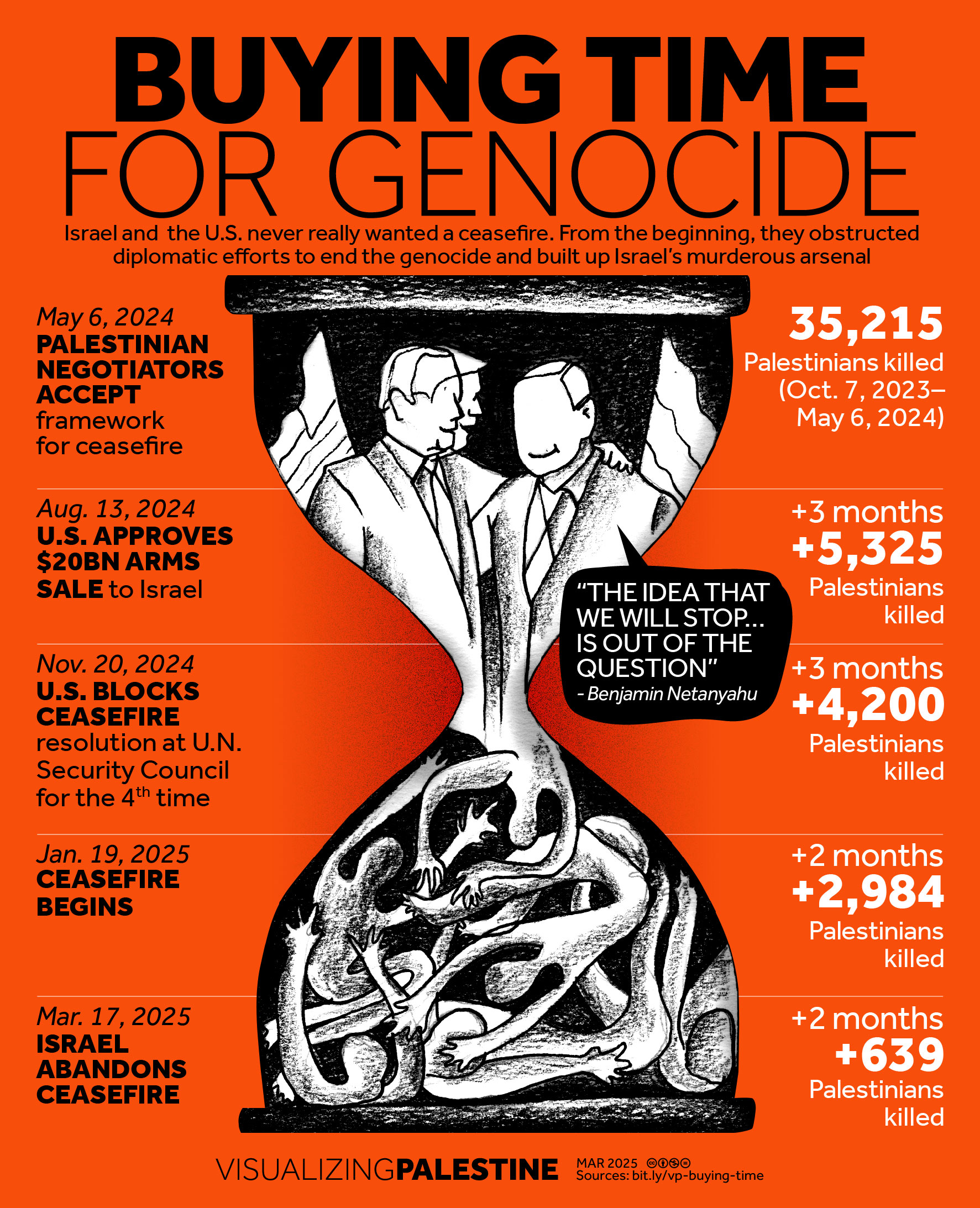
Belarusian President Alexander Lukashenko said what many leaders will not say publicly. Speaking to Al-Arabiya English, he accused Israel of carrying out a “Holocaust” in Gaza and said: “They already have a bad reputation in the world because of the bombing of Gaza.” He added that Gaza had been “wiped off the face of the earth” and warned that “there is no military solution.” Coming from Lukashenko, the West will dismiss it immediately because they hate the messenger. But that does not erase the condition of Gaza.
The reported Palestinian death toll surpassed 73,000, with more than 173,000 wounded. Save the Children reported in 2025 that more than 20,000 children had been killed. UNICEF said more than 50,000 children had been reportedly killed or injured. Hospitals, schools, homes, roads, water systems, and basic infrastructure were destroyed. This was not a precision operation. Gaza has been completely removed from the map. The Israeli people do NOT support their government and are largely appalled at what Netanyahu has done.
Nearly the entire population of Gaza, roughly 2.1 million people, has been displaced at least once, making it one of the largest displacement crises in modern history. Entire cities were reduced to rubble. Some estimates indicate that well over half of all structures in Gaza were damaged or destroyed.
Netanyahu claimed the goal was to destroy Hamas. That did not happen. Hamas still exists. Analysts have continued to warn that Hamas retained operational capability and would resist disarmament. So what was accomplished? Gaza was destroyed, children were buried, civilians were displaced, and yet the organization Israel claimed it would eliminate remains part of the discussion. That is not victory. You cannot bomb an ideology out of existence.
There has long been speculation surrounding the Ben Gurion Canalproject, a proposed alternative to the Suez Canal connecting the Red Sea to the Mediterranean. Released documents prove that this plan has been in the works for decades. When Gaza is reduced to ruins and then people begin discussing strategic corridors, reconstruction plans, resorts, ports, and new trade routes, the public naturally asks who benefits. Lukashenko himself criticized what he described as plans to build a resort on land where people were killed. But the main objective is providing the West with a new artery to trade in the Middle East.
Revealing the horrors of Gaza is punishable by death. Gaza became the deadliest conflict for reporters ever recorded. The Committee to Protect Journalists, the International Federation of Journalists, Reporters Without Borders, and numerous press freedom organizations have all documented unprecedented losses among media workers. Depending on the methodology used, estimates range from roughly 190 to more than 260 journalists and media workers killed since the war began, the overwhelming majority of them Palestinian. The Costs of War Project described Gaza as the deadliest conflict for journalists in modern history. Many were killed while reporting from hospitals, refugee camps, media tents, and civilian areas. Others died alongside their families in airstrikes.
There are plenty of on-the-ground journalists in every corner of conflict. The percentage of journalists who died reporting on Gaza does not coincide with other conflicts. Rumors have swirled that many of these journalists were deliberately targeted, and let’s be honest, such a concept should not be considered a conspiracy or a far-fetched proposition for a government intent on a scorched-earth policy.
Gaza is no longer the daily story because the cycle has shifted to Iran, Lebanon, and the next war. The public is emotionally exhausted, the cameras move, and the destroyed land remains behind. But history does not forget. The war cycle is not finished. It is expanding. Gaza was not the end of the story. It was a warning of what comes next when leaders believe war is policy and civilians are merely collateral damage. Is Lebanon next?
What concerns me going forward is Lebanon. The negotiations with Iran were reportedly supposed to include broader regional de-escalation, yet Israeli officials have repeatedly stated that Israel intends to maintain freedom of military action in Lebanon and reserves the right to continue operations regardless of any agreement reached elsewhere. If a peace deal leaves Iran standing but the fighting simply shifts north into Lebanon, then peace has not been achieved at all.
Few people seem to remember that the United States spent more than $1 billion constructing what is expected to become the second-largest U.S. embassy complex in the world in Lebanon, a 43-acre fortress that dwarfs most government facilities in the country. The timing and scale of that project have raised questions for years about Washington’s long-term strategic expectations for the region. The cycle continues to suggest that the Middle East is moving through a broader period of instability rather than approaching a lasting settlement. Gaza has been devastated, Iran remains unresolved, and Lebanon increasingly appears positioned as the next potential flashpoint. The danger is that politicians will declare peace while the war simply moves to the next battlefield.
I have created this site to help people have fun in the kitchen. I write about enjoying life both in and out of my kitchen. Life is short! Make the most of it and enjoy!
This is a library of News Events not reported by the Main Stream Media documenting & connecting the dots on How the Obama Marxist Liberal agenda is destroying America