LIVE: Massive Crowd To See King and Queen in Front Royal, VA…


Posted originally on Rumble on Bright Bart News Network on: May 1, 2026

HEALTHY Life Expectancy in the UK Declined by 2 Years in Past Decade


Posted  originally on May 1, 2026 by Martin Armstrong |  

doctor offering medication variety 9kor6c1pdyh4i5no

A study from the UK has revealed that people may be living longer on paper, but they’re more likely to spend their final years in poor health. Healthy life expectancy plummeted to roughly 60–61 years despite overall life expectancy hovering around 81. In practical terms, this means that a large portion of the population is now living a decade or more in declining health before even reaching retirement.

This decline in quality of life is being driven by a combination of factors that governments continue to treat as separate problems rather than part of a single systemic breakdown. Obesity alone has reached levels where roughly two-thirds of adults in the UK are now overweight or obese, with about 30% classified as obese, a figure that has steadily risen over decades. This is not just about weight, because obesity directly increases the risk of diabetes, cardiovascular disease, cancer, and even mental health disorders, creating a compounding effect where individuals become progressively sicker over time rather than recovering.

“The UK has the highest levels of obesity in western Europe and there has been a surge in mental ill health, especially among young people,” a data analyst told the BBC, creating “a significant economic cost, with poor health driving people out of the workforce and locking young people out of education, employment and training.”

Mental health is following the same trajectory, particularly among younger generations where roughly one in five adults suffer from common mental health conditions. Rates among those aged 16–24 have climbed sharply over the past decade. The data shows this is not stabilizing but accelerating, with younger people entering adulthood already burdened with anxiety, depression, and other conditions that historically emerged later in life. When you combine this with rising physical health problems, you are looking at a population that is both physically and psychologically weaker than previous generations.

The economic consequences are already becoming evident, as poor health is increasingly removing people from the workforce while preventing younger individuals from entering it in the first place. Reports show growing economic inactivity tied directly to long-term illness, alongside rising numbers of young people not in education, employment, or training. This creates a feedback loop in which a shrinking productive base must support an expanding population that is dealing with chronic health issues, placing further strain on public finances and economic growth.

COVID 19 Risks

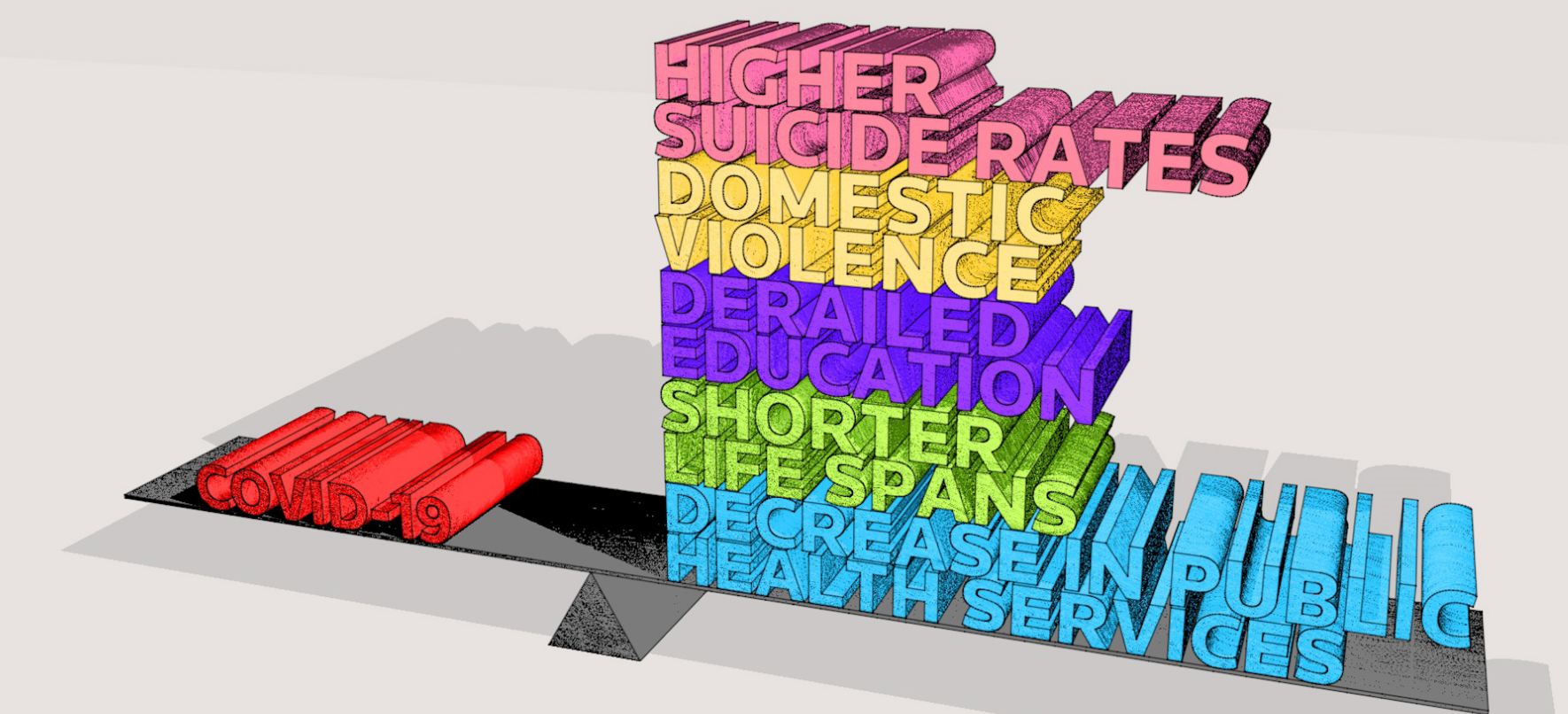
COVID accelerated this entire process in a way that policymakers are reluctant to fully acknowledge. Health data now shows a persistent decline in reported good health since the pandemic, alongside rising dissatisfaction and long-term illness. You cannot suspend normal life for extended periods without long-term consequences, yet governments continue to frame COVID as a temporary disruption rather than a turning point that altered the trajectory of public health.

At the same time, the cost of living crisis has compounded these issues by reducing access to healthier food, increasing stress, and limiting people’s ability to invest in their own well-being. Surveys show that households remain under pressure from high food and energy costs, with many cutting back on discretionary spending even as inflation moderates. When people are forced to prioritize survival over health, diet quality declines, preventative care is delayed, and stress levels rise, all of which feed directly into both physical and mental deterioration.

There is also the uncomfortable reality that modern food itself has become a contributing factor, with the widespread availability of ultra-processed foods, high sugar consumption, and limited regulatory intervention creating conditions in which unhealthy choices are often the cheapest and most accessible. Policymakers discuss obesity as if it were purely behavioral, yet the data shows long-term structural changes in diet and lifestyle that align closely with rising chronic disease. But it is cheaper to mass produce barely edible junk with a longer shelf life, possibly grown from seeds that were genetically modified to withstand poor weather conditions and pests.

What emerges from all of this is a clear pattern where people are not necessarily dying younger, but they are living longer in a state of declining health, which represents a fundamental deterioration in quality of life. This is the hallmark of a system under stress, where economic pressures, policy decisions, and societal changes converge to produce outcomes that cannot be reversed through simple healthcare spending alone.

UK Retail Sector Collapse


Posted  originally on May 1, 2026 by Martin Armstrong |  

shopping cart fallen street by grassy field_1048944 25982677

Britain’s retail sector has just posted the worst collapse in sales in more than 40 years, and this is precisely the type of economic deterioration our models have been warning would emerge across Europe into 2028. The Confederation of British Industry reported that its retail sales volume balance plunged to -68 in April from -52 in March, marking the lowest reading since the series began in 1983. An astonishing 77% of retailers reported declining sales while only 9% reported increases.

This is the type of collapse normally associated with a major recession or sovereign crisis environment. The mainstream press continues trying to isolate every economic problem into separate headlines, but the reality is that Europe is entering a broad systemic downturn. Consumer confidence is collapsing because households are being crushed simultaneously by inflation, energy costs, taxes, war fears, and declining real economic growth. Britain may no longer be formally inside the European Union, but its economy remains deeply tied to the broader European financial structure.

The CBI survey showed expectations for May falling further to -60, the weakest outlook since the COVID lockdown period in March 2021. That is an extraordinary statistic because it demonstrates businesses themselves see no near-term recovery.

The important detail here is that this collapse is occurring before the full economic consequences of the Middle East conflict have even filtered through the system. Reuters specifically noted that the Iran war and the closure of the Strait of Hormuz sharply increased inflation fears among households. Europe remains highly vulnerable to energy disruptions because politicians deliberately destroyed domestic energy independence under the Net Zero agenda.

Germany shut nuclear plants. Britain reduced North Sea production. Europe sanctioned Russian energy while simultaneously deindustrializing itself with climate regulations. They constructed an economic model dependent on cheap imported energy and permanent globalization, then shattered both pillars at the same time.

Now the consumer is breaking. The CBI itself admitted that “weak consumer confidence was weighing on spending in April.” That phrase understates the seriousness of the situation. Consumers are not merely cautious. They are running out of purchasing power.

Food inflation remains elevated. Energy costs remain structurally high. Mortgage rates across Europe have exploded compared to the zero-rate era. Governments continue raising taxes while simultaneously expanding spending on migration programs, military expenditures, green subsidies, and Ukraine funding.

What people fail to understand is that consumer spending is the final domino in an economic cycle. Manufacturing weakens first, business investment slows second, layoffs begin third, and finally the consumer collapses. Europe is now entering that final phase.

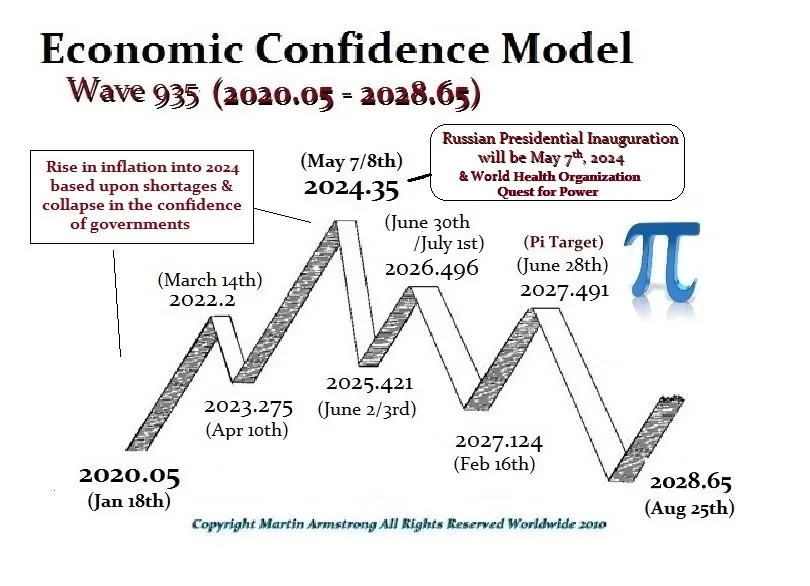
The ECM has been projecting that Europe would enter a depressionary phase into 2028 because confidence in government was collapsing alongside sovereign debt sustainability. This is not merely about economics. It is political. European governments continue behaving as though they can tax, regulate, borrow, and spend infinitely without consequence.

What we are witnessing now is the early-stage consumer retrenchment that typically precedes a much larger sovereign debt crisis. Governments across Europe are already discussing wealth taxes, exit taxes, digital asset registries, CBDCs, and enhanced financial surveillance precisely because they know capital is leaving and growth is evaporating.

Britain’s retailers are now begging the government to lower electricity bills, reduce property taxes, and avoid new employment regulations that increase business costs. Yet the political class across Europe remains completely disconnected from economic reality. Their answer to every crisis is more regulation, more taxation, and more centralized control.

This is exactly why capital has continued flowing toward the United States despite all its own political chaos. International capital always seeks the least-worst alternative during periods of sovereign stress. Europe has become openly hostile toward productivity, investment, industry, and private wealth itself.

The collapse in UK retail activity is not an isolated British story. It is another confirmation that the European depression into 2028 is unfolding exactly on schedule according to the ECM.

Categories:BRITAIN

Europe Explores Wealth Taxes, Capital Taxes, and Exit Taxes


Posted  originally on May 1, 2026 by Martin Armstrong |  

ECM Wave 2020 2028 Pi

The European Commission has now openly published a two-volume study examining “net wealth taxes,” “capital taxes,” and perhaps most alarming of all, “exit taxes.” They are no longer hiding the agenda behind slogans about “fairness” or “solidarity.” The report openly discusses how to tax wealth, how to monitor ownership, how to close compliance gaps, and how to prevent capital from escaping. This is precisely what I have warned was coming as governments across Europe enter the terminal phase of a sovereign debt crisis.

The study was commissioned by the European Commission’s Directorate-General for Taxation and Customs Union and examines wealth taxation systems across Europe and beyond, including France, Germany, Spain, Norway, Switzerland, and Colombia. The report specifically focuses on recurring wealth taxes, inheritance taxes, capital gains taxes, and exit taxes designed to capture wealth before individuals relocate outside the jurisdiction.

The timing is everything. Europe’s economy is collapsing into what our Economic Confidence Model has projected would become a prolonged depressionary period into 2028. Manufacturing across Germany has been imploding, energy prices remain structurally elevated because of the self-inflicted sanctions war and Net Zero agenda, and capital has been fleeing Europe into the United States for years. The EU knows this. They see the money leaving. They understand that confidence in European governments is collapsing, and instead of reforming policy, they are moving toward containment.

Tattered EU flag

The report openly admits that wealth taxes historically have not generated substantial revenue because the wealthy either legally restructure assets, move wealth offshore, or physically leave the jurisdiction altogether. In essence, they’re admitting capital flight is the central problem.

This is why exit taxes are becoming so important to Brussels. An exit tax is effectively a confiscation mechanism imposed when someone attempts to leave a country or transfer assets abroad. Governments tax unrealized gains before assets are sold. In other words, they tax theoretical paper wealth simply because someone wants to escape the jurisdiction. The report discusses the importance of tracking beneficial ownership, real estate registries, digitalized tax systems, and international information sharing.

That is the real objective here. This is not about “tax fairness.” This is about trapping capital inside Europe before the sovereign debt crisis accelerates. I have warned repeatedly that governments always begin with taxation but eventually transition toward outright restrictions on capital movement. Once governments become desperate enough, taxes alone no longer suffice. They require surveillance, digital tracking, asset registries, CBDCs, and eventually capital controls. Europe is moving down that road faster than anywhere else in the world.

The ECM has consistently shown that Europe faces the greatest structural risk heading into this cycle because Brussels destroyed competitiveness through regulation, climate extremism, and endless war spending. Germany, once the industrial engine of Europe, has seen factories shutting down while energy-intensive industries relocate abroad. France is drowning in debt and social unrest. The UK is outside the EU politically but remains economically tied to the same collapsing European model. Youth unemployment across parts of southern Europe remains catastrophic even before the next recession fully arrives.

Meanwhile, the EU continues funding Ukraine endlessly while demanding military expansion under NATO pressure, despite already carrying unsustainable sovereign debt burdens. They cannot finance pensions, healthcare, migration costs, green subsidies, military spending, and debt servicing simultaneously. The mathematics simply do not work anymore.

This is where the wealth tax discussion enters the picture. The report repeatedly references growing wealth concentration and the desire for “greater roles” for wealth-related taxes in generating revenue. The political class sees private savings as the solution to public insolvency. They do not intend to cut government. They intend to harvest private capital.

We have seen this pattern throughout history. Governments facing debt crises always move against private wealth. Roosevelt confiscated gold in 1933. Capital controls spread across Europe repeatedly throughout the 20th century. Cyprus seized bank deposits in 2013. During every major sovereign crisis, governments eventually redefine ownership rights.

wealth taxes in europe

The danger today is that technology now allows governments to track nearly every transaction digitally. The EU report specifically highlights “effective exchange of information on beneficial owners,” asset registration systems, and the “digitalisation of tax administrations.” In plain English, they want total visibility over wealth.

One section states the importance of “effective exchange of information on beneficial owners.” That is bureaucratic language for cross-border financial surveillance. They want governments sharing ownership information internationally so assets cannot disappear outside the system. There is discussion of “real estate and asset registration.” This is why governments worldwide are pushing centralized digital registries. They want a complete inventory of who owns what before the sovereign debt crisis fully erupts. “Effectiveness depends on administrative capacity, data availability, enforcement and international cooperation, including exchange of information.” Again, this is why we are seeing extreme data harvesting measures globally.

capital gains tax rates in europe 1 1201x1536

People still do not understand where this is heading. They assume wealth taxes only target billionaires. That is how every confiscatory system begins. Then thresholds decline over time because governments discover there are not enough billionaires to finance the welfare state. France’s wealth tax experience already demonstrated this problem. Wealth taxes often drive entrepreneurs, investors, and productive capital out of the country while generating far less revenue than projected. Even the EU study acknowledges design flaws, exemptions, compliance problems, and mobility responses.

This is exactly why our models projected Europe entering a depressionary cycle into 2028 while capital continues concentrating in the United States despite all the political chaos in Washington. Capital always seeks the least-worst alternative during sovereign debt crises. Europe has become hostile toward capital formation itself. They tax productivity, regulate energy, suppress agriculture, destroy industry, and now openly discuss how to prevent wealth from leaving.

The combination of wealth taxes, exit taxes, digital IDs, CBDCs, beneficial ownership registries, and expanding surveillance powers should terrify anyone with assets inside Europe. Once capital controls formally arrive, it will already be too late. Governments never announce confiscation in advance. They implement it during emergencies.

The EU depression into 2028 is not merely an economic downturn. It is a political transformation phase where governments become increasingly authoritarian as confidence collapses. Civil unrest rises, taxation intensifies, and restrictions on movement and capital expand simultaneously. That is precisely what our ECM has been warning about for years.

If you are sitting in Europe waiting for politicians to reverse course, you are gambling with your future. Get your money out of Europe while you still can.

The Comey Memos Open the Door to See the Appointment of Robert Mueller as FBI Target Continuation


Posted originally on CTH on April 30, 2026 | Sundance

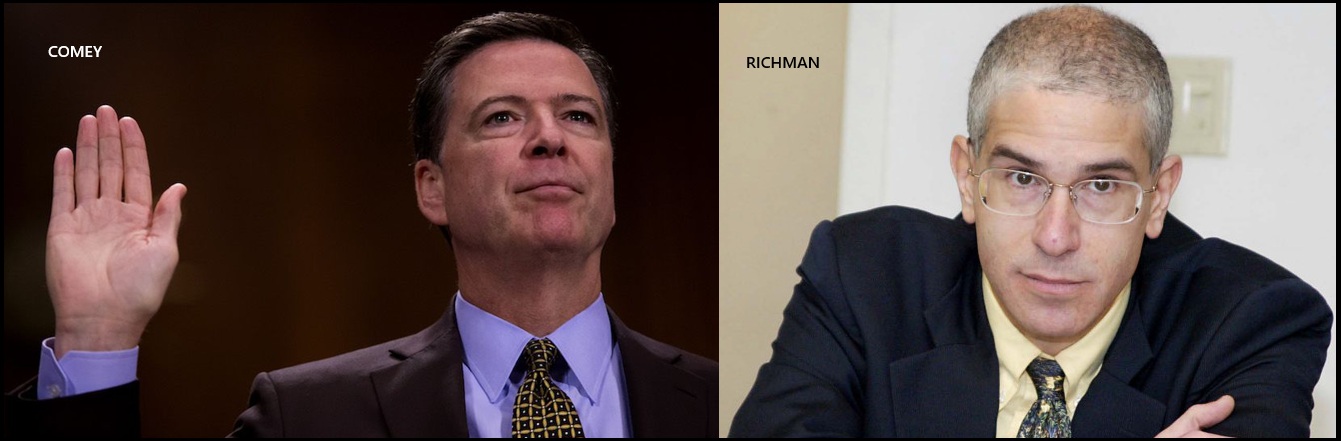
I apologize for the deep weed details, but this stuff will soon become critical.  If James Comey is indicted for leaking the “Comey memos” suddenly the door opens wide to see how the Robert Mueller appointment was a coordinated ongoing ‘conspiracy’ effort to target Donald Trump.

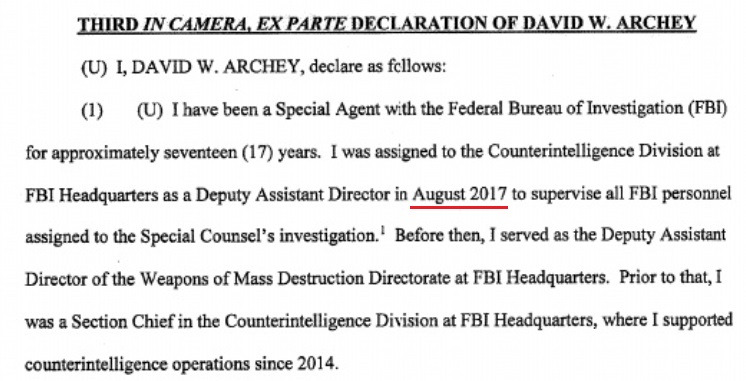
Back in June 2017 CNN (and other media) filed a FOIA suit to gain the Comey memos.  As the lawsuit progressed through a lengthy battle -where the Mueller team did not want to turn over those memos- Mueller’s lead FBI agent, David Archey, made sworn declarations to the court. Those statements became known as the “Archey Declarations”.  Inside those declarations agent Archey provided a specific outline of the FBI and the memos.

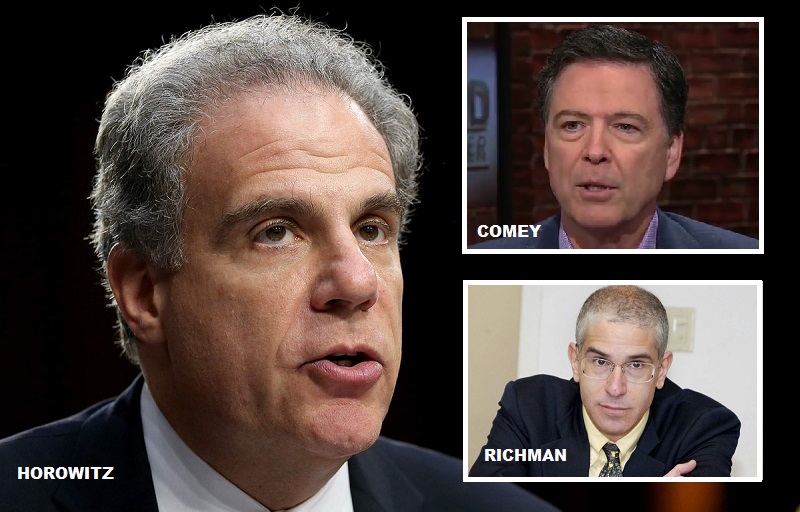
There are two sets of documents that outline a very specific picture.  Robert Mueller’s lead FBI Agent David Archey made sworn declarations to the court. However, at the time of his sworn statement, Archey did not have knowledge of an inside FBI “whistleblower” who provided information to DOJ Inspector General, Michael Horowitz.

There is a distinct conflict within the IG Horowitz report on James Comey (and memos) [Available Here] and the David Archey declarations [Available Here].  However, beyond the conflict there’s an even more alarming picture of how Robert Mueller was deployed, when all the information is overlaid in a timeline.   A very clear picture emerges; very clear.

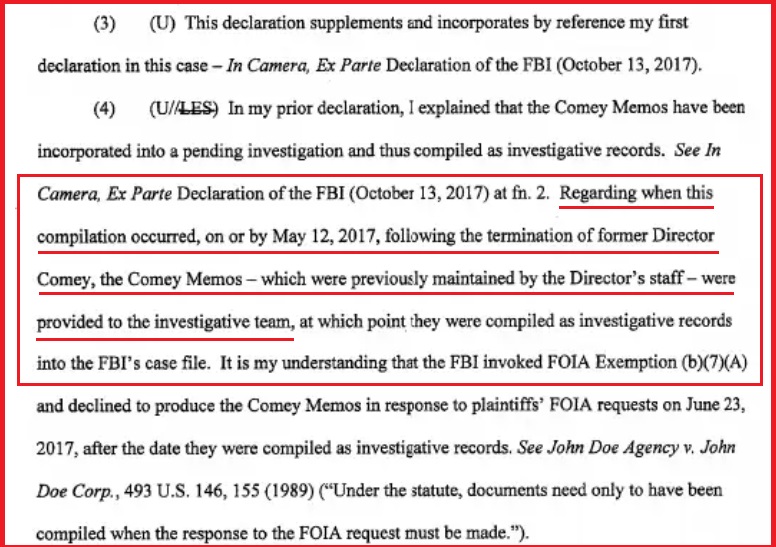
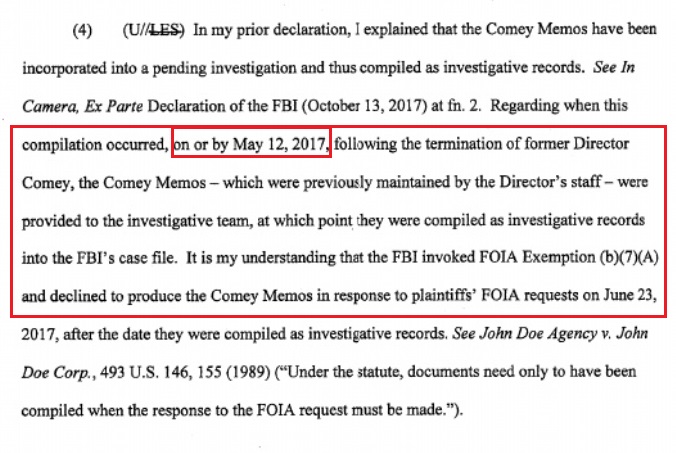
Note the date: Agent Archey states the “investigative team” came into full possession of the Comey memos: “on or by May 12th, 2017,”…

[Page #3 of Exhibit A – Archey Declarations]

The “investigative team” would be Andrew McCabe, Bill Priestap, Peter Strzok, Lisa Page, and then James Baker as lead counsel for the group.  The “Director’s staff” would be James Rybicki, who is identified by Archey as having “maintained” possession of the memos.

This “small group”, particularly Comey’s Chief of Staff, James Rybicki, is the center of the team.  This team is also confirmed by the IG Horowitz report. This team had the memos on May 12th, 2017.

Now we move into the aspect where the motives and ideology become clear as we look at the IG custodial record of the memos, as outlined by the Supervisory Special Agent in charge of Comey’s documents within the IG report, compared to the Archey declarations.

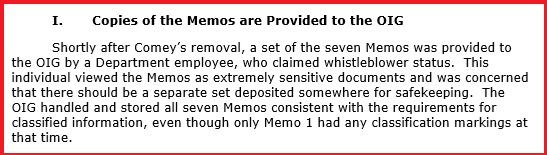
The FBI Supervisory Special Agent (SSA) in charge of Comey’s document retrieval is the “whistleblower” who eventually went to the IG.  I’ll explain why and how below; and to make understanding easier we shall use “SSA Whistleblower” to describe him.

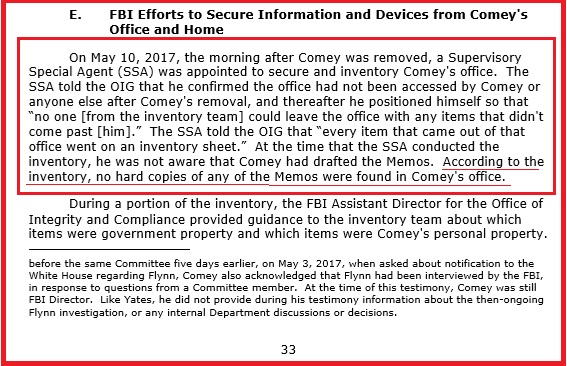
♦ On May 10th, the Comey memos were not in Comey’s office [per IG report].  At the time of the search and review of Comey’s office there were no hard copies found by SSA Whistleblower.


Now, keep in mind “by May 12th” James Rybicki had all the Comey memos in his possession, per Mueller team FBI Agent David Archey.

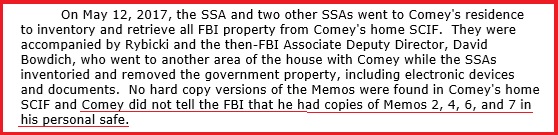
♦On May 12th, SSA Whistleblower went to James Comey’s house along with James Rybicki and Deputy FBI Director David Bowditch.


During this May 12th visit James Comey never told SSA Whistleblower he had the memos in his personal safe.  James Rybicki was also present for this retrieval visit and also never told SSA Whistleblower that he was holding the memos in his FBI HQ office.

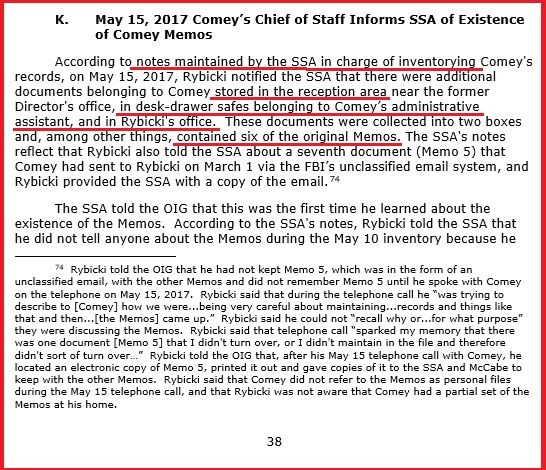
♦On May 15th, three days later, James Rybicki then tells SSA Whistleblower he knows the location of the Comey memos; and Rybicki informs SSA Whistleblower he has additional relevant material.

From the IG Report: “Rybicki told the SSA that he did not tell anyone about the Memos during the May 10 inventory because he understood that process to only include Comey’s office.”   Very sketchy.

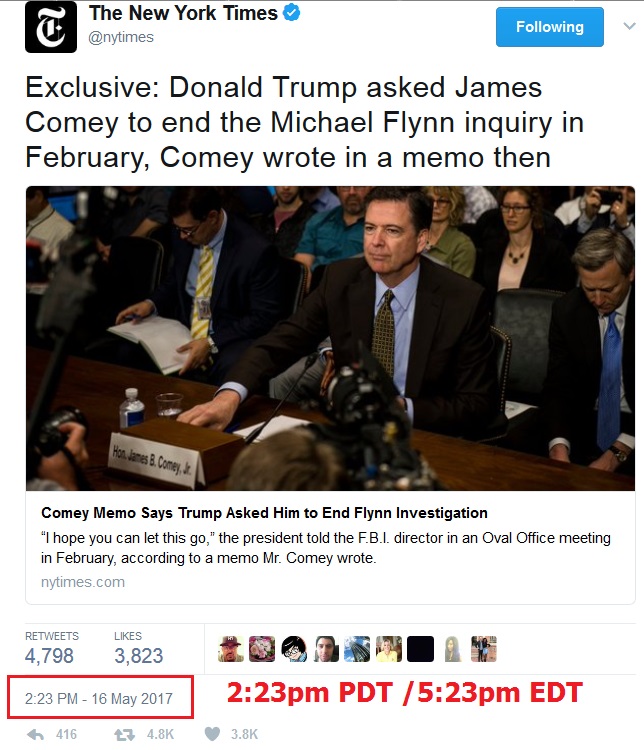
At this point SSA Whistleblower had to suspect something sketchy was happening.  Keep in mind the following day May 16th, 2017, Comey sent memo content to his friend Daniel Richman with instructions to leak to the New York Times. [Article published 5:00pm 5/16/17]

If Rybicki didn’t inform SSA Whistleblower on May 15 about the Comey memos, then SSA Whistleblower would have found out from leaked media reports the next day May 16.

If Rybicki didn’t tell SSA Whistleblower about the memos on May 15, then it would have looked like the ‘small group’ was hiding and leaking the memos.

An intellectually honest review of the timing, and considering Rybicki had indeed been hiding the memos, leads to the conclusion Rybicki knew the NYT leak was coming; Rybicki was coordinating with James Comey; and Rybicki/Comey were trying to avoid team scrutiny. [Further evidence of this surfaces in the Mueller contact timeline.]

By May 16th, 2017, SSA Whistleblower, had to see the sketchy nature of how this was unfolding.   As a result this scenario from the IG report now makes sense:

♦ If we overlay the FBI “small group” contact with Robert Mueller an even more clear picture emerges.

“Crossfire Hurricane” – During 2016, after the November election and throughout the transition period and into 2017, the FBI had a counterintelligence investigation ongoing against Donald Trump. FBI Director James Comey’s memos were part of this time-period as the FBI small group was gathering evidence.  Then Comey was fired….

♦Tuesday May 9th – James Comey was fired at approximately 5:00pm EST.  Later we discover Rod Rosenstein first contacted Robert Mueller about the special counsel appointment less than 15 hours after James Comey was fired.

♦Wednesday May 10th – From congressional testimony we know DAG Rod Rosenstein called Robert Mueller to discuss the special counsel appointment on Wednesday May 10th, 2017, at 7:45am. [See Biggs questions to Mueller at 2:26 of video]

According to his own admissions (NBC and CBS), Deputy FBI Director Andrew McCabe immediately began a criminal ‘obstruction’ investigation. Wednesday May 10th; and he immediately enlisted Deputy Attorney General Rod Rosenstein.

A few hours after the Rosenstein-Mueller phone call James Comey’s office was being searched by the SSA Whistleblower per the IG report on Comey’s memos.

♦Thursday May 11th – Andrew McCabe testified to congress. With the Comey firing fresh in the headlines.  McCabe testified there had been no effort to impede the FBI investigation.

Also on Thursday May 11th, 2017, The New York Times printed an article, based on information seemingly leaked by James Comey, about a dinner conversation between the President and the FBI Director.   The “Loyalty” article [link].  The IG report shows: “[Daniel] Richman confirmed to the OIG that he was one of the sources for the May 11 article, although he said he was not the source of the information in the article about the Trump Tower briefing“.

♦Friday May 12th –  Andrew McCabe met with DAG Rod Rosenstein to discuss the the ongoing issues with the investigation and firing.  Referencing the criminal ‘obstruction’ case McCabe had opened just two days before.  According to McCabe:

… “[Rosenstein] asked for my thoughts about whether we needed a special counsel to oversee the Russia case. I said I thought it would help the investigation’s credibility. Later that day, I went to see Rosenstein again. This is the gist of what I said: I feel strongly that the investigation would be best served by having a special counsel.” (link)

According to Andy Biggs questioning of Mueller, on this same day, May 12th, evidence shows Robert Mueller met “in person” with Rod Rosenstein.  This is the same day when SSA Whistleblower went to James Comey’s house to retrieve FBI material and both Rybicki and Comey never informed the agent about the memos:

May 12th is the date noted by David Archey when FBI investigators had assembled all of the Comey memos as evidence.  However, no-one in the FBI outside the “small group” knows about them.

♦On Saturday May 13th, 2017, another meeting between Rod Rosenstein and Robert Mueller, this time with AG Jeff Sessions also involved. [Per Andy Biggs]

♦Sunday May 14th –  Comey transmitted copies of Memos 2, 4, and 6, and a partially redacted copy of Memo 7 to Patrick Fitzgerald, who was one of Comey’s personal attorneys.  Fitzgerald received the email and PDF attachment from Comey at 2:27 p.m. on May 14, 2017, per the IG report.

♦Monday May 15th, McCabe states he and Rosenstein conferred again about the Special Counsel approach. McCabe: “I brought the matter up with him again after the weekend.”

On this same day was when James Rybicki called SSA Whistleblower to notify him of Comey’s memos. The memos were “stored” in a “reception area“, and in locked drawers in James Rybicki’s office.

♦Tuesday May 16th – Per the IG report: “On the morning of May 16, Comey took digital photographs of both pages of Memo 4 with his personal cell phone. Comey then sent both photographs, via text message, to Richman”

On this same day Rod Rosenstein takes Robert Mueller to the White House for a meeting in the oval office between President Trump, VP Pence, Robert Mueller and Rod Rosenstein.    While they were meeting in the oval office, the following story was published by the New York Times (based on Comey memo leaks to Richman):

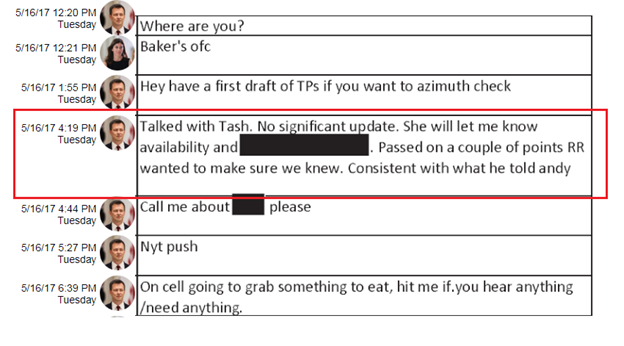
Also, during the approximate time of this Oval Office meeting, Peter Strzok texts with Lisa Page about information relayed to him by Tashina Guahar (main justice) on behalf of Rod Rosenstein (who is at the White House).

Later that night, after the Oval Office meeting – According to the Mueller report, additional events on Tuesday May 16th, 2017:

Interesting that Tashina Gauhar was taking notes presumably involved in the 5/16/17 meeting between, Lisa Page, Rod Rosenstein, and Andrew McCabe. 

This meeting at Main Justice appears to be happening in the evening (“later that night”) after the visit to the White House with Robert Mueller.  This meeting appears to be Lisa Page, Rod Rosenstein and Andrew McCabe; along with Tashina Gauhar taking notes.

Why is the Tuesday May 16th, 2017, date of additional importance?

♦ Wednesday May 17th, 2017:  Rod Rosenstein and Andrew McCabe go to brief the congressional “Gang-of-Eight”: Paul Ryan, Nancy Pelosi, Devin Nunes, Adam Schiff, Mitch McConnell, Chuck Schumer, Richard Burr and Mark Warner.

… […] “On the afternoon of May 17, Rosenstein and I sat at the end of a long conference table in a secure room in the basement of the Capitol. We were there to brief the so-called Gang of Eight—the majority and minority leaders of the House and Senate and the chairs and ranking members of the House and Senate Intelligence Committees. Rosenstein had, I knew, made a decision to appoint a special counsel in the Russia case.”

[…] “After reminding the committee of how the investigation began, I told them of additional steps we had taken. Then Rod took over and announced that he had appointed a special counsel to pursue the Russia investigation, and that the special counsel was Robert Mueller.” (link)

Immediately following this May 17, 2017, Go8 briefing, Deputy AG Rod Rosenstein notified the public of the special counsel appointment.

What is clear from a review of all the related and released information is the FBI small group (McCabe, Page, Strzok, Rybicki, Baker) were hiding the ongoing FBI investigation from other FBI officials (including the SSA Whistleblower), inside the department after Comey was fired.

McCabe launched a “criminal investigation” (obstruction) May 10th, and Rosenstein was in immediate contact with Robert Mueller about being a special counsel after conversations with the FBI small group. The small group were then releasing information to their media allies, and hiding the releases from FBI agents outside the small group; until they no longer needed to do so (May 15).

On May 15th, it appears the SSA whistleblower was finally notified of the Comey memos because the small group already knew Robert Mueller was going to be appointed.

Comey, his lawyers and Lawfare allies, together with the small group, coordinated to leak and publish the NYT article (May 16th) the day Mueller was interviewing President Trump in the oval office. They knew Mueller was going to be appointed the following day, May 17th.  The NYT leak was cover and ammunition for Rod Rosenstein to fulfill his role.

This is the Special Counsel as the insurance policy deployed.

Everything was a set up by the small group; exclusively executed by the small group; kept hidden from other FBI agents and officials; and Mueller’s visit with President Trump was part of that investigative effort.

This overall conspiracy/plan is why the FBI SSA turned to Inspector General Michael Horowitz and requested Whistleblower protection.  This is also why IG Horowitz was motivated to carve out the Comey memos in his report.

KEY POINT – OIG Michael Horowitz outlined the Special Counsel appointment as fraudulently predicated.

Because FBI Agent David Archey was not part of the original team (he did not join until August 2017); and because Archey had no idea a whistleblower had gone to the FBI when he wrote his declarations; David Archey wrote about the FBI investigative team having all of the copies of the memos on May 12th, 2017.

FBI Agent David Archey was unaware the ‘small group‘ had kept the Comey memos hidden from the FBI SSA Whistleblower until May 15th, 2017; so he inadvertently exposed their assembled disposition prior to the ‘small group’ admissions to the SSA.

Lastly….

♦ June 1st, 2017 – After the “small group” had successfully organized the operation to get Robert Mueller appointed, then this same team sat down to classify the material that might expose their efforts to set up the special counsel appointment.

They knew about the leak from Comey to Richman and then to the New York Times on the 16th of May, but this group then told Inspector General Horowitz they didn’t know Comey shared his memos during their discussions on June 1st.

Prosecute James Comey for releasing classified information, and the background of all the FBI ‘small group’ effort comes into play.  Michael Horowitz would even be a good witness for the prosecution.  Their effort led to the appointment of Robert Mueller and the team of Lawfare operatives who targeted the office of the president for two years.

This was a conspiracy against rights, including the right of the American voter to have a functioning administration.


Report: Another DOJ Investigative Case Against James Comey Happening in Virgina – That’s Three States Now, and This One Has Big Irony


Posted originally on CTH on April 30, 2026 | Sundance 

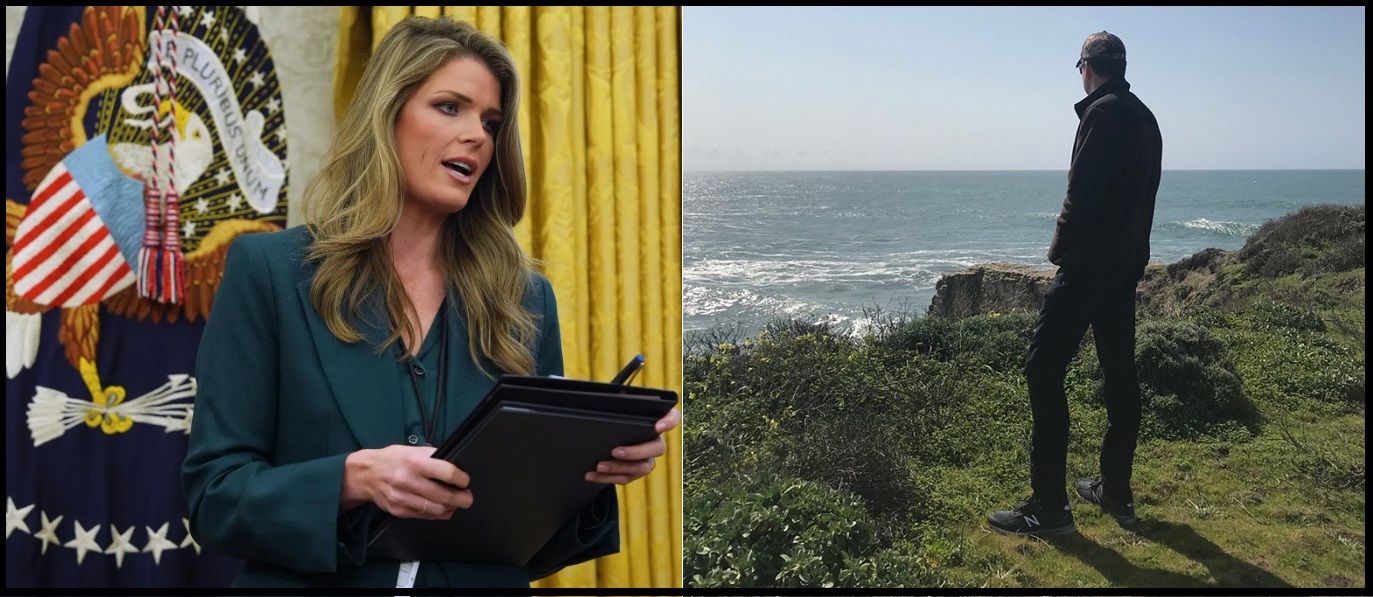
In the first case against James Comey for allegedly lying to Congress, there was no dismissal; instead, the judge rejected US Attorney Lindsey Halligan’s involvement. After that, the statute of limitations ran out.  However, if the report below is accurate, this would represent the third currently active investigation against former FBI Director James Comey, and Lindsey Halligan might get the last laugh.

The first investigative notice to Comey was in mid-March from the Sunshine State.  Essentially the ‘conspiracy case’ being reviewed by Jason A. Reding Quiñones, the U.S. attorney for the Southern District of Florida {SOURCE}.  The second investigative case was in North Carolina, where a grand jury released an indictment for threats against President Trump {SOURCE}.  Now, Bloomberg is reporting on a third investigation against Comey for leaking classified documents to his friend and special government employee, Daniel Richman.

BLOOMBERG – […] The investigation is tied to his dissemination of documents to Columbia University Law Professor Daniel Richman, the individuals added. If successful, it would be the Trump DOJ’s third time indicting Comey since last fall.

[…] It hasn’t been decided if the department will present an indictment to a grand jury in Eastern Virginia, where Comey resides, or if the case could be pursued in a different location—such as in Richman’s home of New York. (read more)

It doesn’t really matter whether New York or the Eastern District of Virginia (EDVA), either location would be the third state where the disgraced former FBI Director Comey would have to defend himself. Again, I remind everyone of ‘pressure points’ in Lawfare.

If the EDVA/NY case proceeds it is based around James Comey leaking his memos to his friend Daniel Richman.

In addition to being a close personal friend to James Comey, Daniel Richman is part of the Lawfare network and close friends with Benjamin Wittes, another member of Comey’s tribe.  The evidence of this leaking operation is solid, very solid.  The only defense James Comey holds in this matter is to claim his memos were not ‘classified’ material.

In fact, several months ago I was told the reason Comey was not yet indicted was due to an internal debate within the DOJ as to the classification status of the Comey memos.  To wit I replied, “there is a profound irony in this question the DOJ is asking itself.”

You see, in the Mar-a-Lago documents case Jack Smith appealed the ‘classification’ ruling by Judge Aileen Cannon when she appointed a “Special Master” to review the documents and determine the classification status.

The DOJ/FBI Special Counsel, previously said to the Florida court they would not reveal the content of the Mar-a-Lago document information because it was “classified” under “national security” grounds.  You might remember President Trump’s legal position was to make the content public because Trump said there was no classified material.

To reconcile the issue, during discovery phase Florida Judge Cannon appointed a Special Master to review the “classified” documents.  The FBI and Jack Smith balked at the demand and filed an appeal with the 11th Circuit to keep the Trump defense from reviewing what Jack Smith said were “documents marked classified.”

Smith didn’t want the documents made public or revealed to President Trump, so the DOJ/FBI position was that the documents were too sensitive (TSCI) with “national security” implications.

The Eleventh Circuit Court of Appeals ruled the “classification status” of the Mar-a-Lago documents was whatever the national security apparatus of the federal government (DOJ, FBI and Intelligence Community) said it was.  The judicial branch could not interfere in the classification status applied by the executive branch.

The 11th Circuit Court of Appeals agreed with the government position that any documents defined as “classified” by the executive branch (then Biden) that claimed, “national security,” should not be disclosed to the defendant, Donald Trump.  The court of appeals essentially determined that all definitions by the executive branch, are not questionable by the judicial branch.

This precedent now applies to James Comey’s memos.  If the DOJ/FBI/IC define the Comey memos as classified documents because they specifically pertain to private discussions with President Donald Trump about ongoing security matters and Russia, then the Comey memos are legally classified information – regardless of what James Comey says about them.

The DOJ can prosecute James Comey for leaking classified documents by using the same legal approach the DOJ used against Donald Trump.  Classified documents are whatever the federal government says they are.

When I reminded the DC people about this specific precedent, you could have heard a pin drop.

♦ Back to Richman….  Though USAO Lindsey Halligan could not get beyond the technicality ruling of her appointment, she smartly dropped all the evidence against Comey for leaking classified documents inside a legal response about Comey lying to congress. {GO DEEP}

This was either super smart or just legally serendipitous, because that approach made visible the evidence now being considered to indict Comey on a matter that does not have a statute of limitations.

♦ Lindsey Halligan provided the evidence of James Comey’s extensive use of Daniel Richman to act as a cut out for leaks and communications with the media [Attachments HERE].

Beginning on January 2, 2015, James Comey hired Daniel Richman to be his conduit to the media for all things around the Clinton investigation.  Exhibit #3 highlights Richman emails to Office of Legal Counsel, Patrick Findlay, to begin the process of officially working for Comey as a special government employee. [Attachment #3 HERE].

There are multiple exhibits highlighting emails between James Comey (aka Reinhold Niebuhr7) and Daniel Richman [HERE-4 and HERE-5 and HERE-6 and HERE-7] proving the former FBI director did intentionally direct Daniel Richman to contact media persons on his behalf and leak investigative background information, or instruct them on information, James Comey provided. The evidence on this issue is overwhelming.

Daniel Richman, working directly on the instructions of James Comey, worked closely with New York Times journalist Mike Schmidt, husband of MSNBC’s Nicole Wallace, to publish material [ex. Exhibit #8].  Richman then coordinated the FBI director’s message with dozens of national journalists, writing the scripts for them to publish on behalf of James Comey [ex Exhibit #9].   Again, the evidence on this collaborative endeavor is overwhelming.

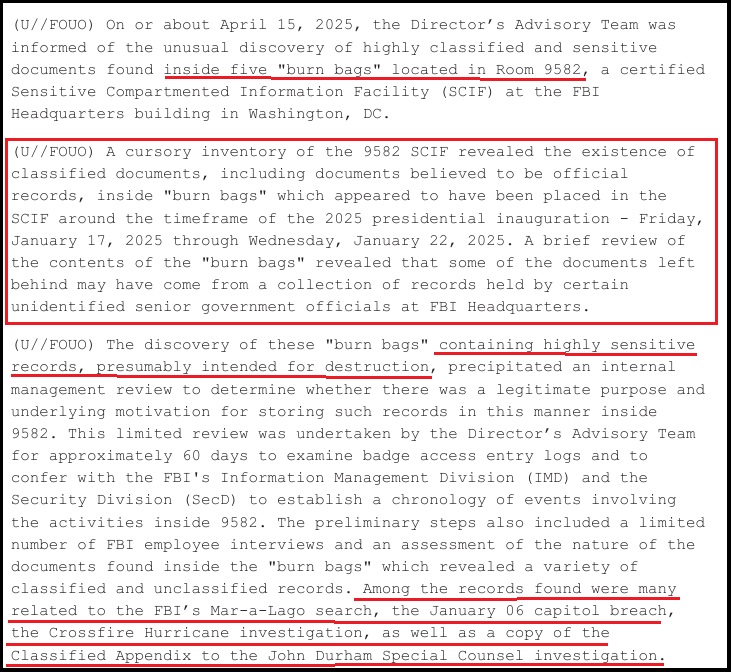
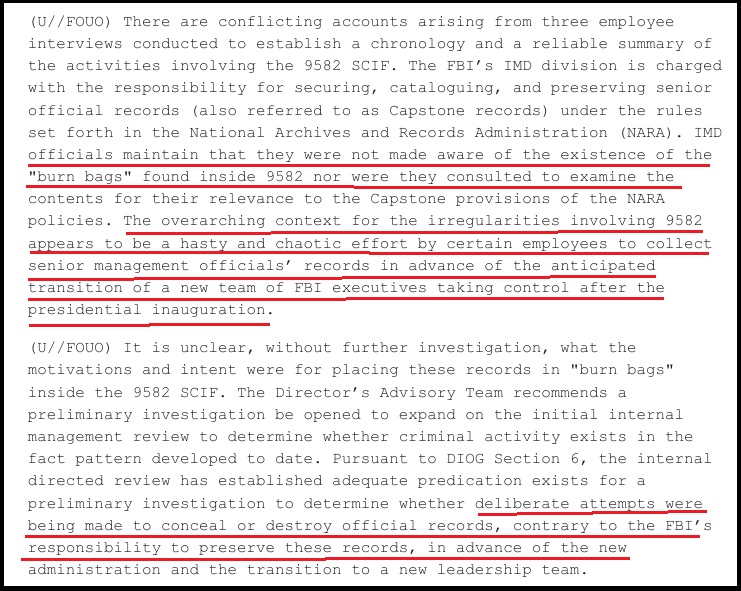
Interestingly, [Govt Exhibit #12] is the criminal complaint stemming from the FBI investigation which began on July 21, 2025.   The investigative summary notes the purposeful use of Room #9582 at FBI headquarters, intended to destroy classified evidence concealed in five burn bags.

[SOURCE Exhibit #12, page 2]

.

Florida – Conspiracy case.

North Carolina – Comey threats against Trump.

NY or EDVA – Comey leaking classified documents.

Warmest best,

President Trump Takes Questions from Media Following Executive Order Signing in Oval Office


Posted originally on CTH on April 30, 2026 | Sundance 

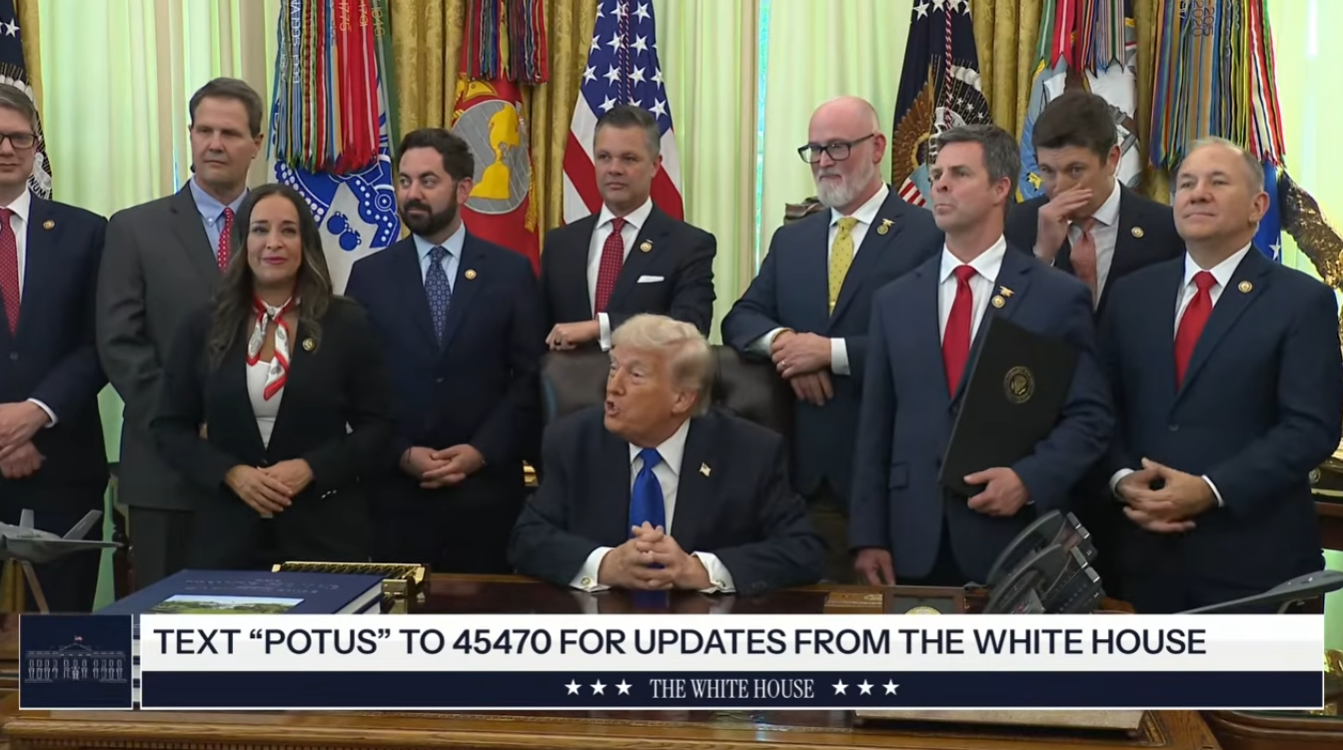
President Trump held an Oval Office signing event today for: (1) PROMOTING RETIREMENT-SAVINGS ACCESS FOR AMERICAN WORKERS BY ESTABLISHING TRUMPIRA.GOV, and (2) PROMOTING EFFICIENCY, ACCOUNTABILITY, AND PERFORMANCE IN FEDERAL CONTRACTING.

Following the executive order signing, President Trump took questions from the assembled press pool. WATCH:

.

First Quarter Economic Data Shows Stable U.S. Economy and Strong Job Market


Posted originally on CTH on April 30, 2026 | Sundance

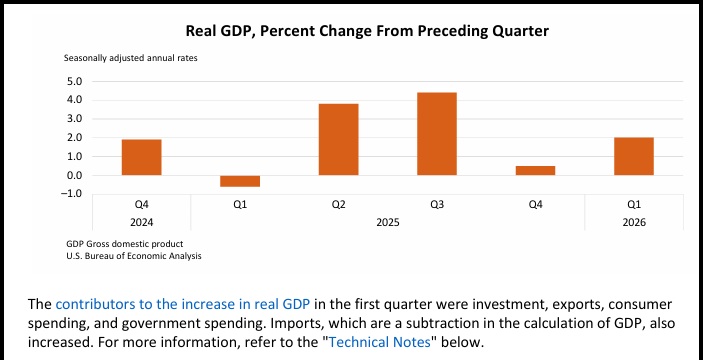
Several key economic reports were released today highlighting a broad and strong U.S. economy with a very strong labor market.

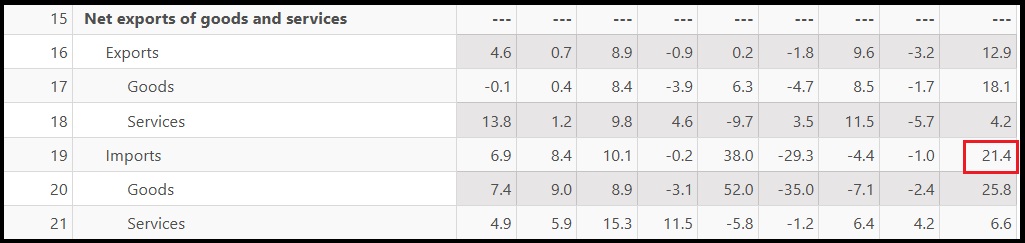
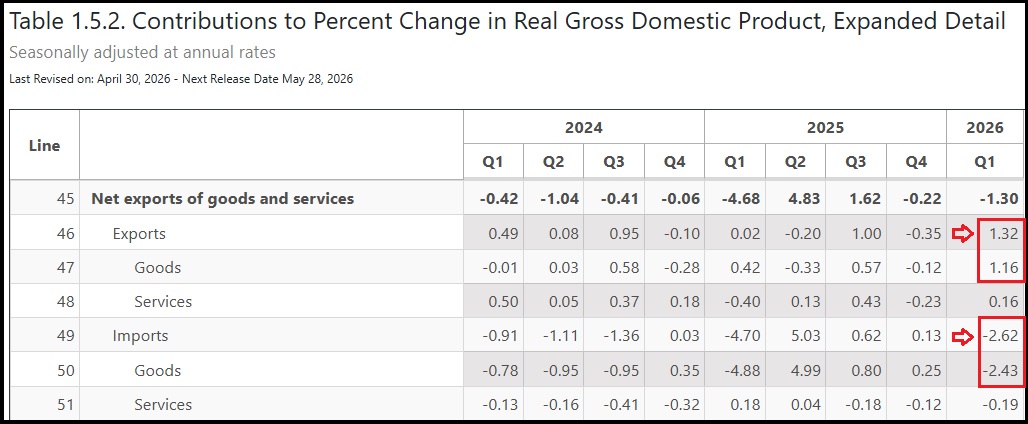
♦ The first quarter Gross Domestic Product (GDP) was released by the Bureau of Economic Analysis (BEA) [DATA HERE] The first estimate is for growth at 2.0 percent.  At first glance that is lower than we expected; however, a deeper look shows a large increase in imported goods that are deductions to the equation.  The imported goods increased 25.8% more than the fourth quarter of 2025 [Table 1.1], that led to a net -1.30 percent deduction [Table 1.5].

The jump in imports is a result of massive capital expenditures on tools and equipment for the ongoing manufacturing boom.  All the manufacturing machines and industrial tools that are not made in the USA become imported goods deducted from our economic valuation.

Exports were very strong rising 12.9 percent over the prior quarter.  However, the 25.8% increase in imports created a net deduction from GDP (-1.30%).  The last time we imported this much was just before the tariffs went into place and companies were rushing advanced orders, in the first quarter of 2025; this created a rebound effect in the second quarter.

I estimate the second quarter rebound will be even greater this year because we are exporting massive amounts of oil and LNG right now.  Simultaneously, the capital expenditure imports will likely soften.

GDP Table 1.1 highlights the jump in imports.  (Percent change vs prior quarter):

.

GDP Table 1.5 highlights the impact on overall GDP Calculations: -2.62 imports +1.32 exports = -1.30 net deduction.

.

♦ Meanwhile the Dept of Labor (DoL) weekly report on unemployment claims showed U.S. jobless claims have dropped to their lowest level in more than 50 years.  According to the U.S. Department of Labor, initial applications for unemployment benefits fell by 26,000 to 189,000 for the week ending Friday (April 25), far below the 214,000 new claims analysts had expected. [DATA HERE] This marks the lowest number of new filings since September 1969.

We continue to see the trend where halted illegal migration and ongoing deportation operations are driving up wages and bringing people off the sidelines for work.  The jobless claims reflect a stable and growing economy and strength in employment.

♦ The Mid-East gulf oil crisis is keeping oil prices high which has led to an increase in overall energy and gasoline prices.  This is boosting the inflationary numbers; however, the optimistic perspective is that these price increases will subside in the longer term as the Iran issue is resolved.

WarRoom Live


Posted originally on Rumble on Bannon War Room on: April 29, 2026

Lost copy of oldest poem in the English language — an AD 600s hymn to God — found in a Rome library


Posted originally on Rumble on Bannon War Room on: April 29, 2026