Noel Fritsch: If somehow Lindsey Graham manages to get above 50% and another term in the US Senate then this is another example of the clear fact that we don’t have legitimate elections.


Posted originally on Rumble on Bannon War Room on: June 10, 2026

Neil W. McCabe Takes Aim at Thune and Senior Senate Republicans – “They are completely and absolutely pathetic!”


Posted originally on Rumble on Bannon War Room on: June 10, 2026

BREAKING-U.S. LAUNCHES SELF-DEFENSE STRIKES AGAINST IRAN – Jack Posobiec breaks it all down


Posted originally on Rumble on Bannon War Room on: June 10, 2026

Tyler O’Neil: Rep. Garcia’s claim that Republicans are a political front for the white supremacist movement summarizes exactly what the SPLC is trying to do.


Posted originally on Rumble on Bannon War Room on: June 10, 2026

HOW MANY TIMES?! Watch ActBlue CEO Plead the 5th to Every Question


Posted originally on Rumble on Bright Bart News Network on: June 10, 2026

WAY Out of Line! Congressman Gill BLASTS Illegal Alien Defender


Posted originally on Rumble on Bright Bart News Network on: June 10, 2026

LIVE: President Trump Signs the Secure America Act…Posted originally on Rumble on Bright Bart News Network on: June 10, 2026LIVE: President Trump Signs the Secure America Act…


Posted originally on Rumble on Bright Bart News Network on: June 10, 2026

Black Former Pilot Turned Congressman Triggers Top Democrat with Anti-DEI Speech


Posted originally on Rumble on Bright Bart News Network on: June 10, 2026

China’s Greatest Crime Is Competing Too Well


Posted originally on Jun 11, 2026 by Martin Armstrong |  

The Pentagon has added over a dozen Chinese companies including Alibaba,  BYD, Baidu, Unitree and Nio to a list of entities it says have ties to the  Chinese military. https://t.co/YeNjQxjVK0

The Pentagon has now added BYD, Alibaba, Baidu, and dozens of other Chinese firms to its list of companies allegedly linked to China’s military establishment. Washington wants the public to believe this is about national security. China’s greatest crime is not that it has a military. Every major power has a military. China’s greatest crime is that it competed too well.

China is building electric vehicles that are taking market share from Western automakers. Suddenly it becomes a national security concern. China develops world-class battery technology. National security concern. China advances artificial intelligence. National security concern. China dominates solar manufacturing. National security concern. China expands semiconductor capabilities. National security concern. At some point people need to ask whether the issue is military activity or economic competition.

The United States spent decades shipping factories, manufacturing, technology, and investment capital to China. Wall Street and consumers rejoiced after receiving cheaper products. The assumption was always that China would remain a low-cost manufacturing platform while the West retained financial and technological dominance. That has never been what our computer indicated, and although it may not have made sense decades ago, every indicator shows China on the rise.

China took the capital, the technology, the expertise, and the industrial capacity and built an economic machine that now challenges the West across nearly every major strategic industry. BYD now sells more electric vehicles than many Western competitors. China produces the overwhelming majority of the world’s battery components. Chinese companies have become major players in artificial intelligence, robotics, telecommunications, and advanced manufacturing. The problem is not that China failed. The problem is that China succeeded.

What would happen if BYD were headquartered in California? Politicians would celebrate it as proof of American innovation. If Baidu were based in Silicon Valley, every financial network would praise its technological achievements. If China’s battery industry belonged to the United States, politicians would be holding press conferences celebrating industrial leadership.

Instead, these companies are Chinese. Yes, there have been instances of technology theft as both nations play dirty to compete. Every success achieved by the rival nation is portrayed as a threat. Governments begin redefining ordinary commerce as strategic warfare.

Washington is finally admitting what China understood from the beginning. Beijing never separated economics from national strategy. China viewed industrial development as national power. The West viewed industry as something to offshore in pursuit of quarterly profits. Now policymakers are discovering that surrendering industrial capacity has consequences.

We are rapidly approaching a world where every Chinese company is viewed as a military company and every American company operating abroad is viewed as an instrument of Washington. Once governments start treating commercial competition as military competition, the distinction between economic warfare and actual warfare begins disappearing.

The public should understand what is taking place. This is not merely about BYD, Alibaba, or Baidu. This is another step in the escalation between the world’s two largest economies. The war cycle is advancing precisely as expected. The rhetoric becomes more hostile as restrictions become more aggressive. The economic walls will grow higher.

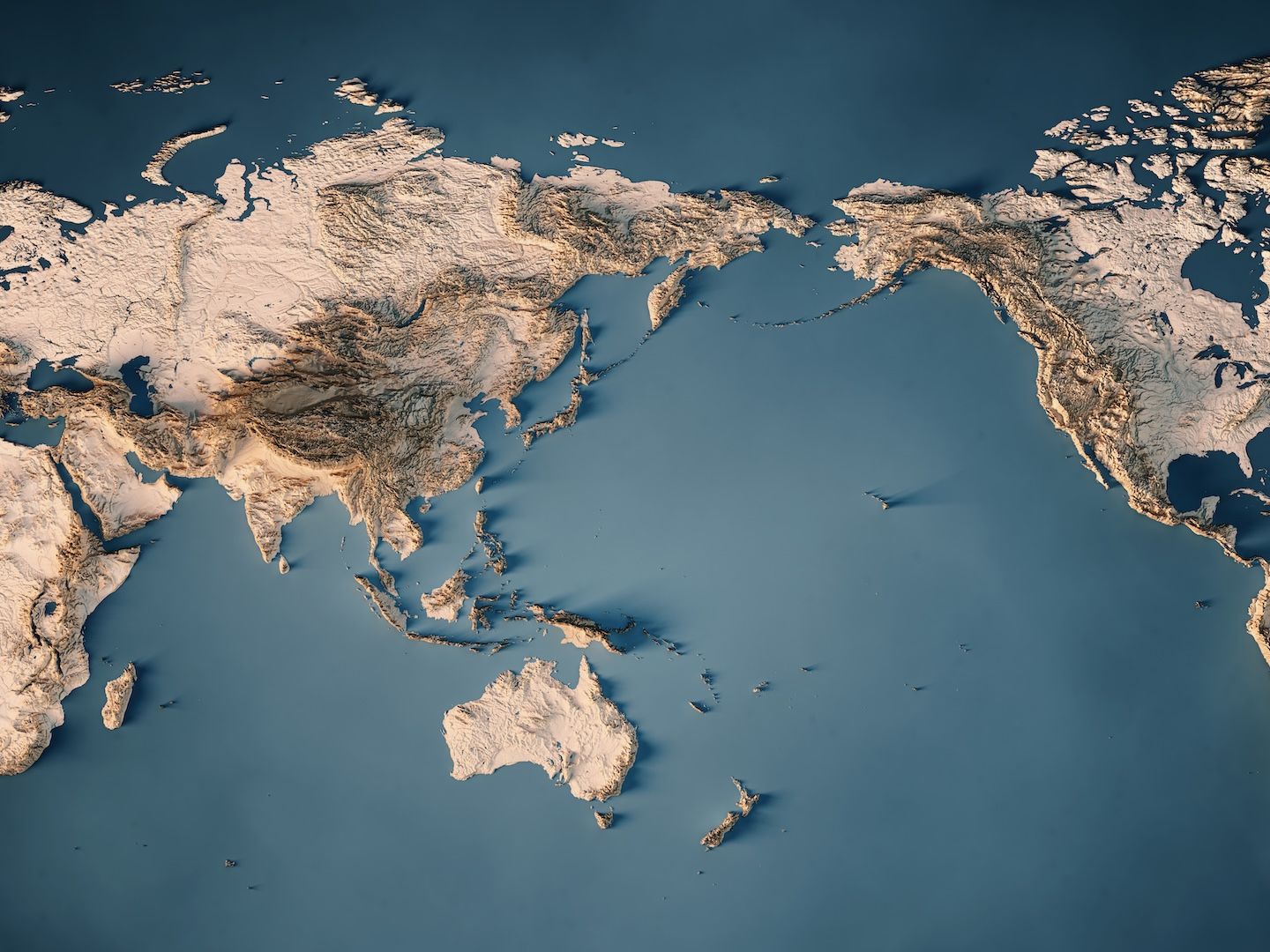
The Pacific Prize


Posted originally on Jun 11, 2026 by Martin Armstrong |  

Why is the Pacific Ocean so big? | Live Science

The Taiwan issue is not simply about reunification. That has always been far too simplistic. If Taiwan were merely a political dispute, China would not be spending trillions of yuan to build one of the largest navies on Earth. It would not be launching aircraft carriers into the Pacific. It would not be conducting large-scale naval exercises beyond the first island chain. What we are witnessing is something much larger.

Japan is reporting that China’s aircraft carrier Liaoning and its accompanying strike group recently conducted extensive operations east of the Philippines. Carrier aircraft reportedly carried out roughly 170 takeoffs and landings as the fleet operated throughout the western Pacific. These were not coastal defense exercises. These were blue-water naval operations designed to demonstrate that China intends to project military power far beyond its own shores.

Taiwan sits at the center of what military planners call the First Island Chain, a series of islands stretching from Japan through Taiwan and the Philippines. Since the end of World War II, this chain has effectively limited China’s direct access to the broader Pacific. Control of Taiwan would fundamentally alter that equation. Military analysts have openly acknowledged that China’s navy is steadily expanding beyond the First Island Chain and increasingly operating in waters once dominated almost exclusively by the United States and its allies.

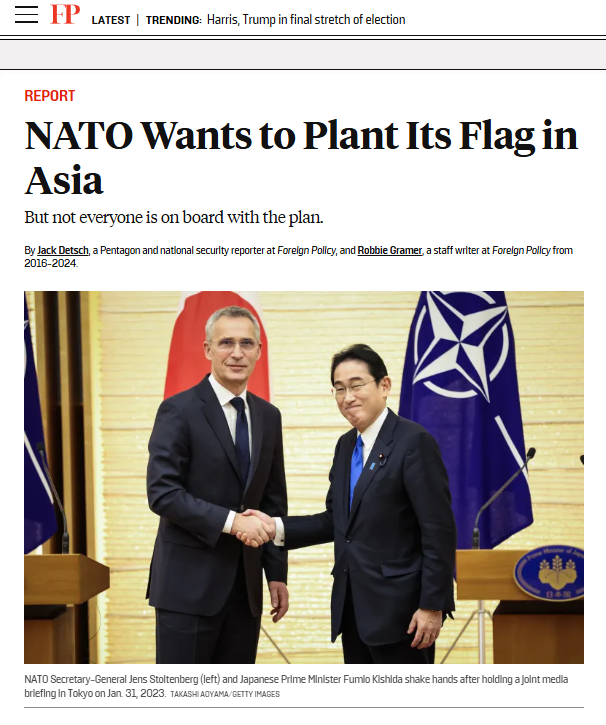
2024_10_30_16_56_43_NATO_Considers_Opening_a_Tokyo_Office_to_Have_a_Permanent_Indo_Pacific_Footprint

This is why military planners throughout Asia are becoming increasingly concerned. China is not simply building ships. It is building the capability to operate far from home for extended periods of time. In 2025, Chinese carriers reportedly spent a record amount of time operating beyond the First Island Chain, launching thousands of aircraft sorties as operational experience rapidly increased. These are the actions of a nation preparing for regional power projection, not merely coastal defense.

Japan is expanding defense spending. The Philippines is increasing military cooperation with the United States. Taiwan is rapidly expanding missile production. China continues building carriers, destroyers, submarines, and long-range missile capabilities. Every nation claims it is acting defensively. History shows that when everyone is preparing for war defensively, the risk of conflict rises dramatically.

Our models have warned that 2026 would be a panic-cycle year characterized by rising volatility and escalating geopolitical tensions. We are now watching multiple theaters move simultaneously. Ukraine continues to expand. The Middle East remains unstable. Europe is openly discussing military vulnerability windows extending into 2028 and 2029. Meanwhile, China is steadily pushing farther into the Pacific. None of these events exist in isolation.