President Trump Takes Questions From The Media, Live From The Cabinet Room


Posted originally on Rumble on Bannon War Room on: March 26, 2026

President Donald Trump’s First Cabinet Meeting Since Operation Epic Fury Began


Posted originally on Rumble on Bannon War Room on: March 26, 2026

BESSENT: “Many people, especially the Democrats, underestimate the will of American people for short-term volatility for 50 years of safety that we are going to have on the other side of this.”


Posted originally on Rumble on Bannon War Room on: March 26, 2026

HEGSETH: “We pray for a deal, and we welcome a deal, and we have the ultimate deal maker to make it happen. But in the meantime, as I said yesterday, the Department of War will continue negotiating with bombs.”


Posted originally on Rumble on Bannon War Room on: March 26, 2026

Steve Witkoff’s Full Report to President Trump: Iran Negotiations, Military Leverage, and the 15-Point Path to Peace


Posted originally on Rumble on Bannon War Room on: March 26, 2026

JOHN SOLOMON: It’s Incumbent t’s Incumbent On Donald Trump’s Representatives,, The People He Put In All Of These Agencies, To Get The Job Done That You Hired Them To Do. You Can Take The Deep State Out!


Posted originally on Rumble on Bannon War Room on: March 26, 2026

Watch Martin Armstrong LIVE – Virtual Tickets Still Available


Posted originally on Mar 27, 2026 by Martin Armstrong |  

1 Martin Armstrong

On March 31, Martin Armstrong will be speaking live in Vancouver with Michael Campbell, addressing what lies ahead in 2026, 2027, and beyond. This is based on the Economic Confidence Model, the same model that has tracked major turning points in markets, geopolitics, and global trends decades in advance. We are entering one of the most critical periods in modern history, and the window to prepare is narrowing.

In-person tickets are sold out, but you still have the opportunity to watch the event via the available virtual ticket, which gives you access to the full event without needing to be in the room.

We are looking at a convergence of events, rising geopolitical tensions into 2027, sovereign debt stress, and a restructuring of the global economy. Capital flows are already shifting. Governments are tightening control. The risks ahead are not isolated. They are connected, and they are unfolding precisely on target with the cycles.

The room in Vancouver may be full, but the opportunity to hear this live is not gone. You can still attend virtually and gain the same insights into what is coming next.

Secure your virtual ticket here:
https://mikesmoneytalks.ca/moneytalks-store/

Select: “An Evening with Martin Armstrong”

The event is March 31st. What we are heading into will not wait.

US Military Raises Age of Enlistment


Posted originally on Mar 27, 2026 by Martin Armstrong |  

uncle sam we want you

The U.S. Army has raised the maximum enlistment age to 42 and relaxed drug restrictions. They present this as modernization, adapting to changing times, expanding opportunity. That is how it is always sold. But this is a warning sign. Every time governments prepare for prolonged conflict, they begin expanding the pool of who they are willing to accept into the military.

The Army has now increased the enlistment age from 35 to 42 and eliminated the need for waivers for certain drug offenses, particularly marijuana. This is being justified as aligning with other branches and recognizing changing laws. But let’s be clear. This is about numbers and manpower. You do not suddenly expand eligibility like this unless you are preparing for something larger than peacetime operations.

We have seen this before. The last time the Army raised the enlistment age to 42 was during the Iraq and Afghanistan wars in 2006, when recruitment was falling short and the demand for troops was rising. They needed bodies. They lowered standards, increased waivers, and expanded eligibility because the war required it. And here we are again, repeating the same pattern almost verbatim.

The recruitment crisis has been building for years. In 2022, the Army missed its recruitment targets by roughly 25%, and even when goals were later met, it was achieved by lowering standards and expanding eligibility programs. The reality is that only about 1 in 4 young Americans even qualify for military service due to physical, mental, or legal issues. So they start removing barriers that once existed.

They are now even easing restrictions on drug-related offenses. Previously, even a single marijuana conviction required a waiver, waiting period, and review. That has now been scrapped. Again, this is not about social policy. This is about expanding the recruitment pool. When the military begins issuing more waivers, including criminal waivers, it is a direct response to strain. During the Iraq War, the number of recruits with criminal records surged, raising serious concerns about readiness and discipline. That was not because standards improved. It was because standards were relaxed.

Now connect the dots. We have rising geopolitical tensions, talk of boots on the ground in the Middle East, and at the exact same time the military expands eligibility, raises age limits, and lowers barriers to entry. This is preparation. Governments never come out and say they are gearing up for a prolonged conflict. They adjust policy quietly and only later does the full picture become clear.

Whenever the United States entered major conflicts, recruitment standards and age ranges shifted. During World Wars I and II, the government expanded eligibility, adjusted age brackets, and even moved to compulsory systems when voluntary enlistment could not meet demand. The pattern is always the same. First comes policy change. Then comes escalation.

Iran Waives Fees for Spanish Ships Passing Through Strait


Posted originally on Mar 27, 2026 by Martin Armstrong |  

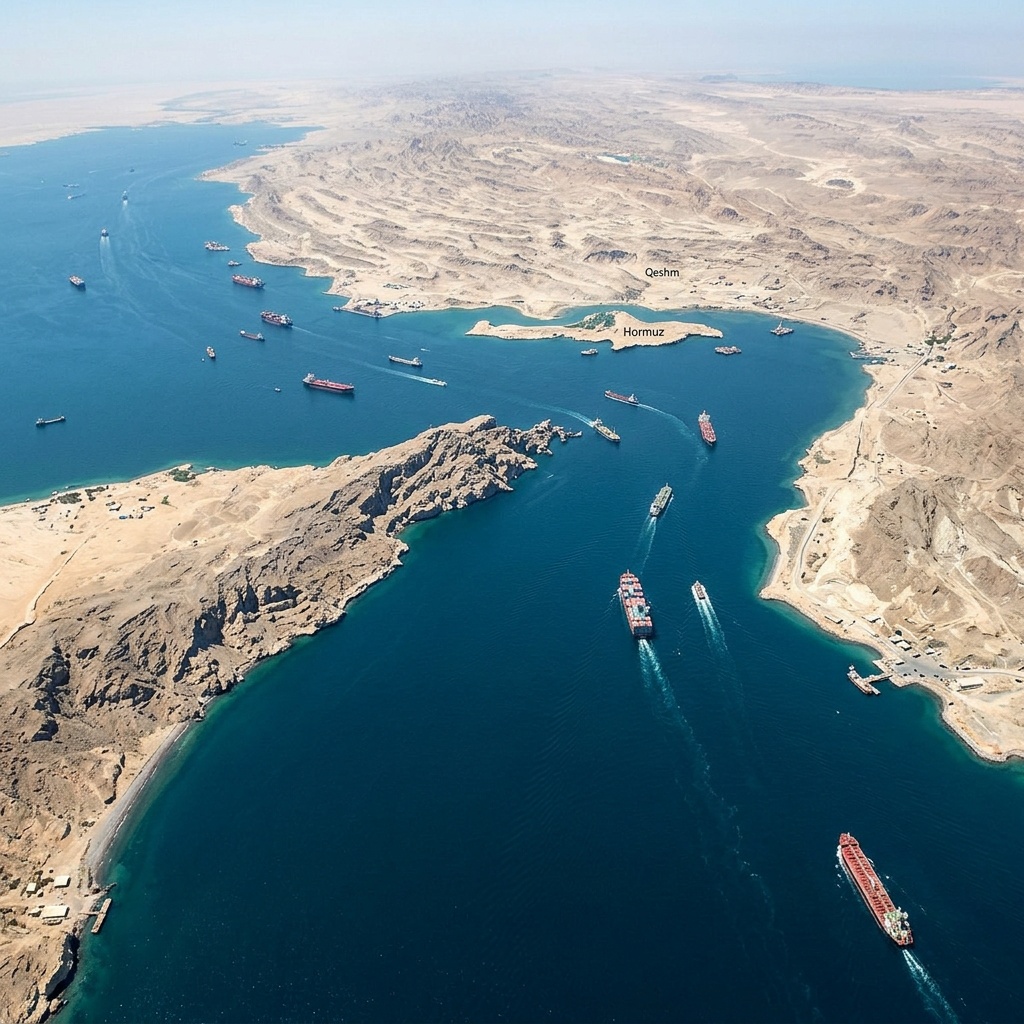
Strait Hormuz

Spain has now emerged in an unexpected position in the Strait of Hormuz crisis. Reports indicate that Iranian authorities are allowing Spanish-linked vessels to pass without the heavy tolls or restrictions imposed on others. Spain is not the largest maritime power moving through Hormuz. However, it is deeply integrated into European shipping networks, ports, and energy supply chains. That means any preferential treatment can ripple across Europe and influence how trade is routed.

What is unfolding is not just control of a chokepoint. It is selective control. Iran has made clear that only “non-hostile” vessels may pass freely. Others face restrictions or high fees. This transforms the strait from a neutral international waterway into a politically managed corridor. Once access depends on alignment rather than law, globalization begins to fracture.

The scale of the disruption is significant. Under normal conditions, about 130 to 140 ships pass through the strait daily. These vessels carry roughly 20 million barrels of oil, close to one-fifth of global supply. Recent reports suggest traffic has dropped sharply. Some estimates show only a handful of ships moving per day, with total monthly crossings far below normal levels. This is no longer a stable trade route. It is operating under wartime conditions.

If Spanish-linked ships move more freely, they gain a cost advantage. Markets will respond quickly to that distortion. Other European actors may try to route cargo through Spain. They may use Spanish partnerships, flags, or intermediaries to bypass higher costs. This is how arbitrage works. It does not wait for political approval.

Iran’s decision centers around Spain’s refusal to support the US and Israel in this war. Not only has Spain refused to offer support, it has openly condemned actions taken against Iran. Now those who supported sanctions and military aid tied to Ukraine and will see this as a betrayal. They accepted economic costs for a unified policy. Now they face higher shipping costs while another member gains relief. That undermines the idea of a coordinated European response. This is how alliances begin to weaken. You cannot maintain unity when access to critical trade routes is uneven. Some countries gain advantages, others absorb losses. Over time, that creates internal competition rather than cooperation.

From a capital flow perspective, the outcome is predictable. Capital moves toward efficiency. If Spain offers a cheaper path through a restricted chokepoint, flows will shift in that direction. That concentrates activity and amplifies divisions across Europe. The deeper issue is structural. The Strait of Hormuz is no longer functioning as an open route but as a controlled gateway.

Trade is now being filtered through alliances rather than markets. That shift has already begun.

Even the Post Office Is Now Charging for War


Posted originally on Mar 27, 2026 by Martin Armstrong |  

usps logo

The U.S. Postal Service is now introducing its first-ever fuel surcharge, and that should stop everyone in their tracks. This is not just about postage going up. This is a reflection of something much bigger unfolding beneath the surface of the economy. When even a government institution like the Postal Service, which has avoided these charges for decades, suddenly imposes an 8% surcharge, you are looking at systemic stress, not a temporary inconvenience.

The surcharge will apply to package services like Priority Mail and Ground Advantage, beginning in late April and expected to last into early 2027. This is being justified as a response to rising transportation costs, particularly fuel. But let’s not pretend this is isolated. Fuel prices have surged dramatically, driven in large part by geopolitical instability and the disruption of global energy flows. The war cycle is feeding directly into the cost structure of the entire economy, and now it is hitting something as basic as delivering a package.

What is remarkable is that the Postal Service itself admitted it has resisted fuel surcharges until now, even as competitors like FedEx and UPS have imposed far higher fees. That tells you this is not a policy shift driven by competition. This is a necessity. When costs rise to the point where even a federally backed entity cannot absorb them, the pressure has reached a critical level.

Behind this is a deeper financial problem that has been building for years. The Postal Service has lost roughly $118 billion since 2007 and is now warning it could run out of cash within a year without reform. This is not simply about declining mail volume. It is about a system that has been structurally broken for a long time, now being pushed over the edge by rising energy costs. You cannot run a nationwide logistics network, delivering to more than 170 million addresses, and not be exposed to fuel prices. The fact that the Postal Service is now forced to pass those costs on is a sign that inflation is not under control, regardless of what any central bank claims.

What we are witnessing is the direct connection between geopolitics and the economy. War disrupts energy. Energy drives transportation. Transportation drives costs. And costs ultimately reach the consumer. This is the chain reaction that has played out throughout history. The difference now is that it is happening globally and simultaneously, precisely in line with the rising volatility the Economic Confidence Model has been projecting into 2026 and beyond.

When even the Post Office starts charging a fuel surcharge for the first time in its history, that is a signal to note.