Episode 5546: America’s Revolution Lands In Oxford; Israel’s 1 Billion Dollar Influencer Campaign


Posted originally on rumble on Bannons War Room on: on July 28, 2026

LIVE: President Trump Attends Funeral for Senator Lindsey Graham…


Posted originally on: rumble on Bright Bart News Network on July 28, 2026

LIVE: President Trump Delivers Remarks in Milfor


Posted originally on: rumble on Bright Bart News Network on July 28, 2026

Canada’s Unique Energy Crisis


Posted originally on Jul 28, 2026 by Martin Armstrong |  

Refinery

QUESTION: Mr. Armstrong, thank you very much for that global overview of the energy market on your private blog. You’ve connected the dots in a way no one else seems to, just as you mentioned at your Tampa conference. I also appreciated your distinction between Eastern and Western Canada, could you elaborate on that a bit further?

And thank you again. My children’s eyes were truly opened by your insights.

FG

ANSWER: A refinery isn’t a one-size-fits-all machine. It is a complex industrial facility designed to process a specific type of crude oil efficiently. Hence, many refineries in Eastern Canada are configured to run on the lighter, sweeter crude oil typically imported from places like Saudi Arabia and Nigeria, rather than the heavier oil from Alberta’s oil sands or Texas. Therefore, refineries are designed for different grades of crude oil.

This introduces another dimension to the energy crisis. Also become of regulations in some provinces, pipelines have been blocked. Pipelines primarily move oil from Alberta to the U.S. and to British Columbia. There is no direct pipeline connection from Alberta to the Atlantic coast. Without this pipeline access, Eastern refineries rely on tankers for their crude supply. It has been simply more economical for them to import light crude from the Middle East that construct pipelines. Thus, Irving Oil’s large refinery in Saint John, New Brunswick, imports virtually all of its crude by tanker.

This energy crisis has another dimension whereas you simply cannot substitute crude oil that is heavy when the refinery can only handle light crude.

Categories:EnergyCanada

The H-1B Visa Scam: Importing Cheap Labor While Americans Are Laid Off


Posted originally on Jul 28, 2026 by Martin Armstrong |  

H-1B Visas: What's new? What's next? Updates for 2021 - Goldstein &  Associates

The H-1B visa program was sold to the American people as a narrow pathway for importing rare talent that supposedly could not be found in the United States. We were told these were the “best and brightest,” possessing exceptional skills needed to keep America competitive. That sales pitch has collapsed under the weight of fraud, corporate abuse, and government negligence.

Indian investigators seized nearly 100,000 counterfeit degree certificates and forged academic records linked to at least 28 universities. One institution allegedly issued more than 36,000 fraudulent degrees. Authorities are investigating whether some credentials were used to obtain jobs in medicine, nursing, engineering, and technology, including employment supported by H-1B visa applications.

The fraudulent packages allegedly included counterfeit university seals, fabricated transcripts, and forged certificates. Some degrees reportedly sold for as little as $1,400. The United States created a visa system that places enormous weight on educational credentials while often relying on foreign institutions and overwhelmed bureaucrats to authenticate those documents. Criminal organizations naturally recognized the weakness and industrialized the fraud.

Former U.S. Foreign Service officer Mahvash Siddiqui, an Indian-American who worked at the American consulate in Chennai between 2005 and 2007, described an extensive network of fraudulent documents and visa consultants. She estimated that 80% to 90% of the applicants she encountered across certain nonimmigrant visa categories were using the pipeline to enter the United States, obtain employment, and remain.

It is Siddiqui’s assessment based on the cases she personally encountered roughly two decades ago. It is not a current USCIS finding that 90% of all H-1B petitions are fraudulent. There is more than enough documented abuse to condemn the program without converting an eyewitness estimate into an official nationwide fraud rate.

The government’s own older compliance work was already disturbing. A 2008 USCIS assessment found fraud or technical violations in approximately 21% of the H-1B cases it examined. Among petitions involving workers with bachelor’s degrees, the violation rate was 31%. Computer-related occupations, which represented 42% of the sample, had a violation rate of 27%. That was not 90%, but one questionable case in five should have triggered an immediate overhaul.

The Department of Labor reportedly processed 6.9 million H-1B-related labor filings between 2015 and 2025. Around 70% involved workers from India and approximately 12% involved workers from China. A labor condition application is not the same as an approved visa, since one filing can cover multiple positions and not every certified position results in employment. Nevertheless, the volume reveals the scale of the pipeline corporations have constructed.

Indian nationals have accounted for more than 70% of approved H-1B beneficiaries consistently since 2019, up from around half during the early 2000s. There is nothing inherently wrong with hiring a qualified Indian engineer, physician, or scientist. The issue is whether employers are recruiting genuinely scarce specialists or using a government-created visa category to obtain workers who possess less bargaining power than Americans.

The statutory H-1B cap is 65,000 new visas annually, with another 20,000 positions reserved for applicants holding advanced American degrees. Universities and certain nonprofit research organizations are exempt from the cap. Renewals, extensions, and changes of employer also cause total annual approvals to greatly exceed the 85,000 headline limit. More than 400,000 petitions were reportedly approved in 2025 when continuing employment and other non-cap cases were included.

USCIS reported that 58% of approved H-1B beneficiaries in fiscal 2025 possessed a master’s degree as their highest qualification. The median compensation for approved beneficiaries was $120,000 in fiscal 2024. Defenders present these figures as proof that the system primarily admits elite workers.

Those aggregate numbers conceal how the program operates. An employee does not need to be a world-class innovator to qualify. The position generally needs to be classified as a “specialty occupation” requiring at least a bachelor’s degree or its equivalent. That definition includes thousands of ordinary corporate positions that Americans already perform.

The relevant question is not whether $120,000 sounds like a respectable salary. The question is whether an American with the same education, experience, and location would command more, and whether the foreign worker’s immigration status gives the employer leverage to suppress wages.

The Department of Labor admitted in March 2026 that existing prevailing-wage levels had “for too long” been set dramatically below the market rates received by many American workers, particularly recent graduates seeking entry-level STEM employment. The department proposed revising its wage methodology because the system had been distorted by employers using foreign labor to replace American workers at lower cost.

That is an extraordinary admission. The federal agency responsible for protecting wages acknowledged that the government’s own benchmarks enabled corporations to undercut Americans.

Employers are legally required to pay an H-1B worker the higher of the applicable prevailing wage or the actual wage paid to similarly qualified employees. Yet employers may select among several wage sources, rely on occupational classifications that do not accurately reflect the job, and assign positions to lower experience levels. A rule written to prevent wage suppression became a compliance exercise managed by lawyers and human-resources departments.

The program also ties the employee’s legal status to the sponsoring employer. This creates an imbalance that does not exist with an American worker. The visa holder may technically change employers, but the process carries legal, financial, and immigration risks. That worker is less likely to demand a raise, organize coworkers, report abusive conditions, or walk away from an unreasonable manager. Corporations are not merely importing labor. They are importing dependence.

The young American graduate cannot compete with that arrangement. He emerges from college carrying debt and is told that entry-level experience is required for an entry-level job. The company simultaneously claims it cannot locate qualified Americans and petitions the government for a worker whose ability to remain in the country depends upon keeping the sponsoring employer satisfied.

Representative Riley Moore cited an analysis of 2022 Census data finding that more than 11 million working-age Americans with STEM degrees were not employed in STEM occupations. Not all of those individuals are available, appropriately trained, or willing to relocate, but 11 million is incompatible with the blanket claim that America has exhausted its domestic supply of technical talent.

Corporations do not want to acknowledge a labor shortage of their own making. They want experienced workers at entry-level prices. They refuse to train American graduates, eliminate jobs during mass layoffs, and then insist that foreign recruitment is necessary because no suitable applicants exist.

This is especially offensive when a company dismisses thousands of American employees while simultaneously pursuing additional H-1B workers. If an employer is conducting mass layoffs in the same occupational categories, it should not be permitted to claim an immediate shortage of domestic labor without undergoing a serious investigation.

H-1B defenders always point to the genuine scientist, surgeon, or engineer performing advanced work. Those people exist, and America should welcome exceptional talent. But exceptional talent does not require a lottery dominated by outsourcing firms, ordinary corporate positions, questionable wage classifications, and document mills selling counterfeit degrees.

A legitimate high-skill program would prioritize compensation, experience, patents, advanced research, independently verified qualifications, and demonstrable scarcity. It would not select applicants randomly after allowing employers to define their own need. A wage-ranked system would immediately expose whether companies truly require rare talent or merely want cheaper labor.

Appeals court rejects Trump bid to halt $100,000 H-1B visa fee ruling |  Reuters

Every academic credential submitted from abroad should be verified directly with the issuing institution and cross-checked against accredited databases. Employers using fraudulent applications should lose access to the program, face substantial financial penalties, and be required to compensate displaced workers. Visa brokers and staffing companies caught submitting forged records should face criminal prosecution rather than another administrative settlement.

Congress should prohibit companies conducting large domestic layoffs from obtaining new H-1B workers for comparable positions during a defined cooling-off period. Employers should also be required to disclose the number of Americans displaced, the wage offered to the foreign worker, the prevailing-wage source used, and the precise reason no American could perform the job.

The visa should be portable enough that the worker is not effectively bound to one corporation. That would prevent employers from using immigration dependency as a weapon while forcing them to compete honestly on wages and conditions.

This is not an attack on Indians or any other nationality. Foreign workers did not write the legislation, establish the wage levels, or order American corporations to eliminate domestic jobs. The responsibility belongs to politicians who created the loopholes, agencies that failed to verify applications, universities that produced questionable credentials, brokers who monetized fraud, and corporations that learned how to manipulate the system.

Legal immigration becomes indefensible when legality is treated as nothing more than a stamped form. If the supporting degree is fraudulent, the labor shortage is fabricated, or the prevailing wage is deliberately understated, the process is not legitimate simply because a bureaucracy approved it.

America does not need to close itself to exceptional talent. It needs to stop confusing exceptional talent with cheap, controllable labor. The H-1B program was supposed to fill genuine gaps in the American workforce. It has instead become a mechanism that too often allows corporations to avoid investing in Americans while the government provides the replacement worker and calls it innovation.

New Jersey Bans Grocers From Building a Surveillance Economy


Posted originally on Jul 28, 2026 by Martin Armstrong |  

How do Digital price tag Work?

New Jersey has become one of the first states to draw a line against what may be one of the most disturbing developments in modern retail. Governor Mikie Sherrill signed the Fair Price Protection Act, banning grocery stores from using a shopper’s personal information to determine how much that individual should pay for the exact same product. The law also places a one-year freeze on installing new electronic shelf labels while the state studies whether the technology can facilitate individualized pricing. Retailers that violate the law can face lawsuits, refunds, permit suspensions, and fines reaching $20,000 for repeat violations.

Government is acknowledging that the technology exists to charge two people standing side by side different prices for the same loaf of bread simply because an algorithm has determined one of them is willing or forced to pay more. That is data exploitation masquerading as innovation.

The legislation targets what has become known as “surveillance pricing.” Companies collect information from loyalty programs, online searches, purchase histories, location data, and in some cases even biometric or genetic information, allowing artificial intelligence to estimate the highest price each consumer is likely to tolerate. The objective is no longer to determine what a product is worth. It is to determine what you are worth.

E-Paper Digital Price Tags & ESL Benefits | Pervasive Displays

This is precisely why I have warned that data has become the most valuable commodity in the world. Everyone is obsessed with artificial intelligence replacing workers. That was never the real issue. The real prize has always been the collection of information. Once corporations and governments know where you go, what you buy, what you search for, who you associate with, and how much money you make, pricing becomes individualized. Insurance becomes individualized. Credit becomes individualized. Taxes eventually become individualized. We are constructing an economy where every citizen receives a different reality based on an algorithm.

Notice how quickly digital shelf labels entered this discussion. Retailers insist they merely make price updates more efficient. That may be true today. But efficiency is not why legislators paused their expansion. They recognize that once every price tag becomes a networked computer, nothing prevents prices from changing every minute or second based upon demand, inventory, weather, neighborhood demographics, or even the profile of the person standing in front of the shelf. The infrastructure comes first. The software always follows.

What New Jersey has effectively admitted is something many dismissed as a conspiracy only a few years ago: technology has advanced to the point where companies can quietly charge different customers different prices without anyone realizing it. If lawmakers believed this capability did not exist, there would have been no reason to prohibit it.

This debate extends far beyond grocery stores. We already see artificial intelligence determining insurance premiums, mortgage approvals, hiring decisions, credit scores, and even apartment rents. Every new data point collected about your life becomes another variable that can be monetized. The distinction between marketing and surveillance has largely disappeared.

The larger concern is that once consumers become accustomed to individualized pricing, the same philosophy inevitably migrates elsewhere. Governments are racing toward digital identities, central bank digital currencies, biometric verification, and AI-driven public services.

People keep asking where all of this ends. It ends when prices are no longer determined by supply and demand but by who you are. The computer already knows where you shop, what you earn, what medications you take, how often you travel, and increasingly what you believe. Add digital currencies, biometric identification, and artificial intelligence together, and you no longer have a free market. You have a surveillance economy where every citizen lives under a different set of rules determined by an algorithm. That is a future no free society should ever accept.

Categories:USA Current Events

Senator Lindsey Graham


Posted originally on CTH on July 28, 2026 | Sundance 

President Donald J Trump attends the funeral service for Senator Lindsey Graham and delivers remarks.  It is a remarkable memorial to the legacy of Senator Graham.

President Trump remarks begin at 15:00 of the video below.

.

Perspective


July 28, 2026 | Sundance

Posted originally on CTH on July 28, 2026 | Sundance | 93 Comments

Be thankful that God has allowed you to see what is unfolding. Others that remain asleep are not as lucky as you.

Ask yourself in prayer, why you. Why now? Then, think about this daily in your quiet time. Affirm your spirit and allow this sense of fortunate knowledge to elevate your faith and confidence in a loving and purposeful God. You have the unique gift of discernment. Ultimately, you have been chosen.

Be thankful. Remember, Romans 13:12

Live a positive, affirming, purposeful and incredible life.

Within every battle, challenge and contest we encounter, always remember to be thankful and continue living your best life.

Follow the Money Toward WWIII


Posted originally on CTH on July 28, 2026 | Sundance | 130 

It has been said that all wars are “bankers wars,” however, against the modern era of inverted fascism where corporations tell the govt what policies take priority, the more accurate truism ‘is all wars being controlled by money’, not necessarily banks.

The European Commission has constructed a very special kind of proactive financing for Ukraine that doesn’t require them to give their own €uros to the historically corrupt country.  Partly because the EU doesn’t have their own money, and partly because everything the EU does in the sphere of finance is always a false construct, what the EU put together was a financial system based on sanctioned, confiscated (ie stolen) Russian sovereign wealth funds {citation}.

As part of the sanction regime, the EU and western NATO alliance seized roughly €250 billion, $300 billion USD, in Russian sovereign wealth assets.  As long as the USA was financing the Ukraine government and war effort, those funds sat on the sidelines undiscussed.  However, once the USA stopped writing checks to Ukraine an alternate finance system was needed.

What the EU (Ursula von der Leyen) put together was a finance package using the confiscated $300 billion in the Russian sovereign wealth fund as collateral for loans to Ukraine.  The EU would send the money to Ukraine as a loan that did not have a payback mechanism. Instead, the thinking goes that when the negotiations for a ceasefire take place, Russia would be forced to give up the confiscated $300 billion as part of a reparations package to Ukraine.

Ukraine doesn’t have to pay back the loans because Russia will be forced to give up their sovereign wealth fund, and those funds will repay the loans.  That’s the way the EU financing of Ukraine is set up. {SOURCE}  The EU isn’t giving Ukraine EU money; the EU is giving Ukraine the Russian wealth fund money.

Now, immediately you can see a few problems.

♦ PROBLEM 1 – What happens if Russia demands the return of their $300 billion as one of their baseline terms for a peace deal?  If the confiscated money is given back to Russia, the EU and Ukraine are on the hook for the $300 billion they would have spent.

♦ PROBLEM 2 – With #1 in mind, there is now an incentive to never reach a peace agreement or ceasefire; at least never reach a solution that would consider the return of the $300 billion.  Russian Federation President Vladimir Putin has previously said the stolen money belongs to the Russian people and must be returned; he will never accept the theft.

Zero Sum Loggerheads – If Vladimir Putin refuses to accept the theft, and the EU won’t return the stolen assets, it seems the only option left is to escalate the Ukraine conflict, with the EU aiming to defeat Russia. It doesn’t seem like a coincidence that this appears to be their current approach.

Yesterday in a stunning interview with Sky News, President Zelenskyy said a few remarkable things.  One, he has plenty of money and two, Zelenskyy wants to build big, big factories in Great Britain in order to build missiles and drones away from the threat of Russian countermeasures.

The sick irony is that Zelenskyy would be building missiles and drones in the U.K to attack Russia using money confiscated by the EU/U.K and given to Ukraine.  However, in this bizarre world that’s the reality of the thing.

When you overlay the pragmatic, transactional nature of President Trump into this dynamic, we can see how things look even more muddied over this confiscated Russian sovereign wealth.  President Trump has often advocated for “taking the oil” or assets of a country to pay for the military expenditures incurred by the USA.  Both in Afghanistan (theoretical) and in Venezuela (reality) this Trumpian approach is visible.  To the victors go the spoils.

Russia is militarily holding approximately 20% of the land mass of Ukraine, the Donbas region, with no intention of ever returning it.  Putin wants his sovereign wealth fund restored, and, if his doctrine is to be consistent, President Trump has no room to say Putin shouldn’t get it back.

The Europeans likely understand that President Trump is ideologically on the side of President Putin on this national economic aspect.  The EU is against the return of sovereign Russian wealth. This part is a very interesting dynamic to watch.

Meanwhile, there are ancillary interests that exist within the economics of the conflict with direct stakes into the billions of euros.  One of those interests is held by Ukraine’s richest person, a very corrupt billionaire Rinat Akhmetov, the owner of mining and steel firm Metinvest and the Ukraine power company DTEK.

Pay close attention.  Billionaire Rinat Akhmetov (DTEK) has a lot on the line in the Russia -vs- Ukraine conflict.

[…] Akhmetov lost more than half of his assets as a result of the full-scale invasion, with many of his industrial holdings, such as the Azovstal steel plant in Mariupol, destroyed or damaged during the fighting.  According to the Bloomberg Billionaires Index, as of Oct. 31, Akhmetov’s net worth fell by 52% to $5.39 billion compared to the pre-war numbers.

Billionaire oligarch Rinat Akhmetov operated in that very lucrative space between Ukraine and Russia.  Akhmetov’s assets are directly tied to both nations now in conflict.  Akhmetov even has operational loans from Russian banks that have not been repaid due to the sanction’s regime, and if there ever was a resolution to the fighting, he would also be on the hook for repayment as well as the loss of his industrial assets in the Donbas.

[NOTE: Keep in mind, one of the primary issues that brought Putin to power was his opposition to the Russian oligarchs who surfaced as wealthy control agents following the collapse of the Soviet Union.  The billionaire oligarchs controlled Russian politics until strong man Putin diminished them, smacked them in the nose and took back control.]

There is a lot of motivation for Rinat Akhmetov (DTEK Energy Co.) to support funding pro-Ukraine influence operations against Russia considering the billions at stake from direct energy company asset losses and reconstruction funds that he could also benefit from…

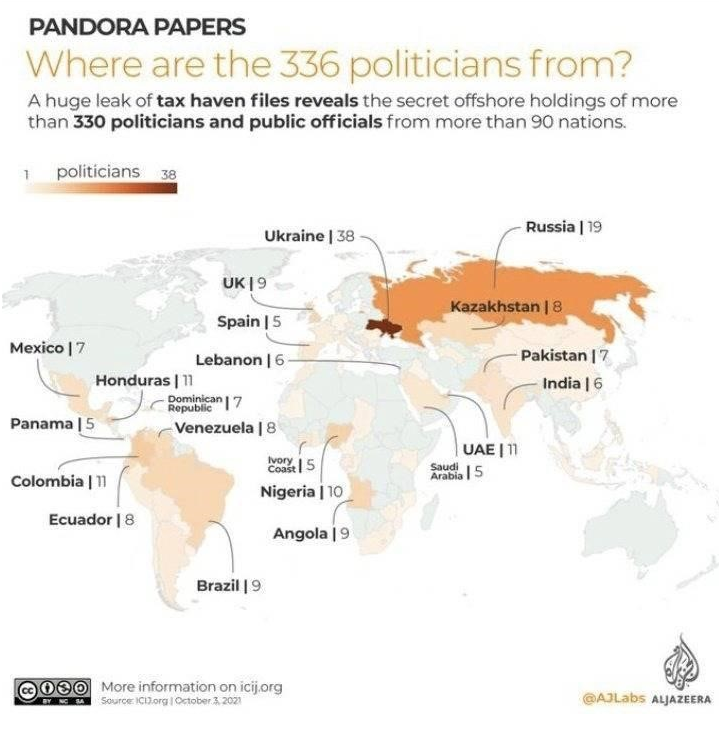
YAHOO NEWS – Ukraine’s richest man Rinat Akhmetov allegedly borrowed $400 million from Russia’s largest bank, Sberbank, the International Consortium of Investigate Journalists (ICIJ) said on Nov. 14, citing information obtained from leaked documents dubbed “Cyprus Confidential.”

The documents are part of a massive leak of millions of files obtained from Cypriot financial service providers.

The files also shed light on Akhmetov’s involvement in Russia’s coal industry after the annexation of Crimea in 2014. In 2016, Akhmetov’s energy company DTEK transferred ownership of a number of coal mines to a subsidiary of Fabcell Ltd., based in Cyprus. She bought these mines four years earlier in the southwest of Russia in the Rostov region. DTEK also transferred to the subsidiary a significant loan obligation in the amount of about USD 400 million from Sberbank (Russia’s largest state-owned bank).

In January 2017, Fabcell reclassified its shares into 7,999 common shares and one gold share. The gold share was assigned to Sberbank, which would allow the bank to gain control over Akhmetov’s company in case of non-fulfillment of its obligations.

[…] In response to the investigation, Akhmetov issued a statement to ICIJ saying that the loans provided by Sberbank and others before Russia’s illegal annexation of Crimea in 2014 were “standard practice for Ukrainian borrowers.”

Transferring the ownership of the Russian coal mines to the Cypriot subsidiary was a way of “limiting [DTEK’s] exposure to the claims of Sberbank as creditor and paved the way to exiting DTEK’s investment in the Rostov Coal Mines.”

In June 2022, Akhmetov filed a lawsuit at the European Court of Human Rights against Russia for gross violations of his property rights. Akhmetov asked for “billions of dollars” to compensate for the blockade, looting, destruction, and theft of his grain and metal from Ukraine to Russia. (read more)

With all of that said, we now have a solid baseline for how some financial interests in Ukraine are positioned.

All of the above information should help us to understand the dynamics and stakeholders.

President Trump Telephone Interview with Fox News


Posted originally on CTH on July 28, 2026 | Sundance

President Trump called into Fox morning television show to outline current events and answer questions about them.

President Donald Trump joins ‘Fox & Friends’ by phone to discuss late Sen. Lindsey Graham’s life, potential military operations in Iran and Dr. Anthony Fauci’s upcoming Senate testimony.

.