Joe Allen: War Bots Unleashed — AI Fantasies are Becoming Reality


Posted originally on Rumble on Bannon War Room on: March 2, 2026

CURT MILLS: Frankly, Behind The Scenes It Was Unclear Whether Or Not Ali Khamenei Was A Net Plus For The Functioning Of The Regime


Posted originally on Rumble on Bannon War Room on: March 2, 2026

JACK POSOBIEC: The Administration’s Goal Is Taking Out The Current Leadership And Then Working With Who Remains After. What Does That Look Like? That Looks Like Maduro. That Looks Exactly Like The Venezuela Model That We Saw Just Last Month


Posted originally on Rumble on Bannon War Room on: March 2, 2026

REITZ: We See A Guy Who Came Into Austin, Texas, Wearing A Shirt That Says “Property of Allah.” He’s Wearing Under That Sweatshirt A Flag Of Iran. They Found A Quran In His Vehicle. He’s From Senegal, A Muslim-Majority Country


Posted originally on Rumble on Bannon War Room on: March 2, 2026

JACK POSOBIEC: Marco Rubio Briefed Over The Weekend That It Was In Fact Israel That Has Been Taking The Lead On These Leadership Decapitation Strikes. What Is The Level Of Intelligence Sharing Between Israeli Special Forces And The United States?


Posted originally on Rumble on Bannon War Room on: March 2, 2026

ERIK PRINCE: The United States Has Given A Great Gift To The Iranian People By Removing The Regime’s Leadership And Degrading Some Of Their Capabilities, But Ultimately This Has To Be Decided By The Iranian People On The Ground


Posted originally on Rumble on Bannon War Room on: March 2, 2026

OPERATION EPIC FURY PRESS CONFERENCE


Posted originally on Rumble on Bannon War Room on: March 2, 2026

China and Russia Condemn US Military Action in Iran


Posted originally on Mar 3, 2026 by Martin Armstrong |  

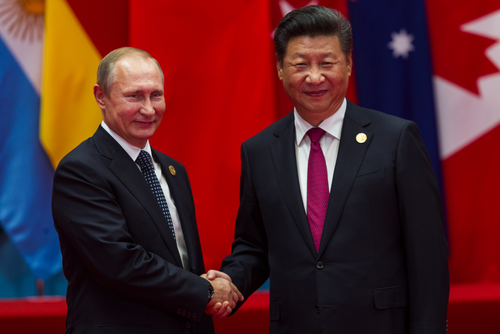
China.Russia.Putin_.Xi_

Both Moscow and Beijing immediately condemned the strike on Iran, not in emotional rhetoric, but in the language of sovereignty, international law, and regime change.

Russia did not mince words. Moscow labeled the attack a “pre-planned and unprovoked act of armed aggression” and warned it could plunge the Middle East into a humanitarian and economic catastrophe. Putin described the operation as unprovoked aggression and even a violation of international law. Russia is signaling that regime change operations are viewed as a direct threat to the global balance of power, not just a regional military action.

China’s response was equally sharp. Beijing declared the strike a “grave violation of Iran’s sovereignty and security” and stated it “firmly opposes and strongly condemns” the attack while calling the killing of a sovereign leader “unacceptable.” China understands that if regime change becomes normalized, no major power is insulated from that doctrine.

Putin Xi

Even more significant was the joint coordination between China and Russia. Their foreign ministers condemned the operation together, calling it aggression that violates the UN Charter and explicitly rejecting policies aimed at overthrowing sovereign governments. Foreign Minister Lavrov labeled the operation a “deliberate, premeditated, and unprovoked act of armed aggression.” When you see diplomatic alignment before military alignment, it signals a shift in geopolitical blocs rather than an isolated event.

Russia offering to mediate while condemning the attack is strategic. China’s call for a ceasefire and negotiation is strategic. Neither is rushing into direct confrontation because their objective is not immediate war — it is long-term geopolitical repositioning. A prolonged Middle East conflict diverts US military resources and disrupts global energy markets.

What is critical here is that both nations framed the strike in terms of sovereignty and regime change rather than terrorism or religion. That aligns directly with the thesis outlined in my latest report, which argues that the real objective behind such conflicts is regime restructuring rather than religious confrontation. The rhetoric from Moscow and Beijing confirms they are interpreting this through the lens of strategic destabilization, not ideological warfare.

The real danger is not an immediate world war. The greater risk is a prolonged proxy escalation. Russia and China will not directly confront the United States militarily in the Middle East. But both will exploit the instability. This is no longer just a Middle East conflict. It is rapidly evolving into a geopolitical pivot, and the reactions from China and Russia confirm that they are already positioning for a long-term strategic confrontation, not a short-term regional war.

Iranians Divided Over Regime Change


Posted originally on

Posted originally on Mar 3, 2026 by Martin Armstrong |  

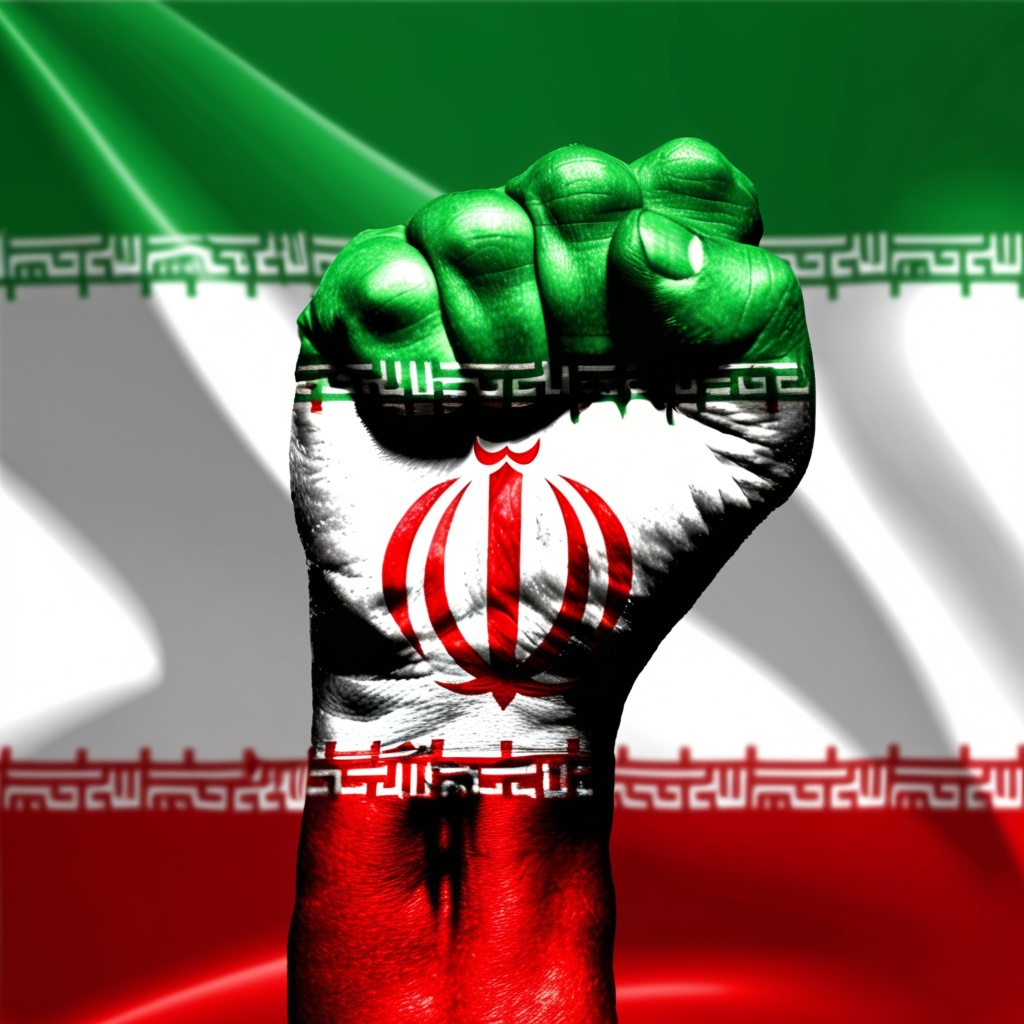
Irans Iron Fist

The Western press is desperately trying to frame the Iranian people as either celebrating liberation or rallying behind their government. As always, the truth is far more complex. The Iranian population is deeply divided, and that division is precisely what unfolds when an external military strike hits a nation already suffering from internal political and economic stress.

Reports from inside Iran confirm that reactions are polarized. Some citizens were seen cheering, dancing, and even celebrating quietly after leadership figures were targeted, while others remained in shock and fear amid ongoing bombardments and heavy security presence. The same population that despises the regime is simultaneously terrified of war.

Life inside Tehran has been described as surreal, with residents watching the bombings from rooftops while taking shelter during blasts, illustrating a population balancing moments of relief with deep anxiety. At the same time, panic buying, evacuations, and clogged highways show that fear, not celebration, dominates daily civilian behavior.

The regime’s information control has led to mass confusion. Internet blackouts and communication shutdowns have been used repeatedly to isolate the population, suppress dissent, and prevent organized reactions. The people are unable to easily access information in real time, and the fear of the unknown has led to mass panic. No one wants war. The people have been told that the US is attacking the people of Iran rather than the government.

There are also documented cases of civilians celebrating the strikes and even toppling regime symbols. Yet, simultaneously, pro-government demonstrations and rallies have also been reported, showing that ideological loyalty, nationalism, and fear of foreign intervention still exist. People can hate their government and still reject foreign intervention at the same time. Analysts already note that while some Iranians are cautiously hopeful for change, many fear harsher repression or prolonged instability if the conflict escalates.

The real takeaway is not that the Iranian people are celebrating or mourning in unison. They are fragmented. Some see a potential end to decades of authoritarian rule. Others see the beginning of war, economic collapse, and national destabilization. Most ordinary civilians are not thinking in ideological terms at all. The majority are simply scared and thinking about safety, food, family, and survival.

A divided population under attack does not produce immediate revolution. It produces uncertainty, fear, and a temporary consolidation of internal power structures. And that is exactly the pattern now emerging inside Iran.

Canada’s Economy Shrinks by 0.6% in Q4 2025


Posted originally on Mar 3, 2026 by Martin Armstrong |  

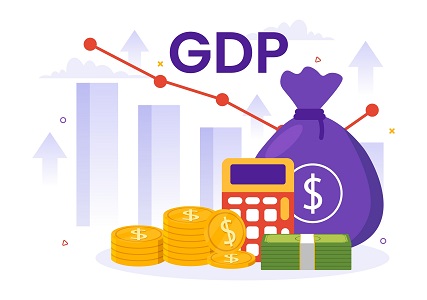
GDP 3

Canada’s economy contracting by 0.6% in the fourth quarter should not be dismissed as a minor statistical fluctuation. Statistics Canada confirmed that GDP shrank at an annualized pace of 0.6% in Q4 2025, coming in well below expectations and marking the slowest annual growth since the COVID era, with full-year growth at just 1.7%.

What is particularly telling is not just the contraction itself, but the composition of that decline. Businesses drew down inventories by over C$23 billion instead of producing new goods, while residential investment also fell sharply, including a notable drop in housing and construction activity. Canada has been moving into stall speed for months. Monthly GDP was already flat into the end of the year, with manufacturing weakness and goods-producing sectors dragging on growth, confirming that the slowdown was not sudden but structural.

This fits perfectly with what I have warned about regarding highly leveraged Western economies that depend heavily on housing, commodities, and government spending to sustain growth. When inventory drawdowns replace production, it signals that businesses lack confidence in future demand. They are not expanding. They are liquidating stock to survive uncertain conditions.

Even more concerning is the decline in residential investment. Canada’s economy has been disproportionately tied to real estate and debt expansion for years. Once housing begins to soften, the ripple effect spreads across construction, banking, consumer spending, and provincial revenues. The data already shows spending on homes and condos declining in the same quarter GDP contracted.

The mainstream will attempt to spin this as a temporary inventory adjustment. That is surface-level analysis. Inventory depletion during weak growth phases reflects declining. Companies do not reduce inventories during a boom, rather, they reduce inventories when they fear demand ahead.

What we are witnessing is not a dramatic crash, but a slow erosion of economic momentum. Canada already saw volatility throughout 2025, including prior quarterly contractions and weak manufacturing output, indicating that growth has been unstable and heavily dependent on external trade and government support.