Posted originally on CTH on March 16, 2026 | Sundance
I dislike Mark Levin immensely. Long-time CTH readers know I have a very valid reason to dislike Mark Levin immensely. My approach was to essentially ignore “old yeller” as he shouts and rants about all the things he always shouts and rants about. I dislike Mark Levin very much; beyond what most here would define as immense.
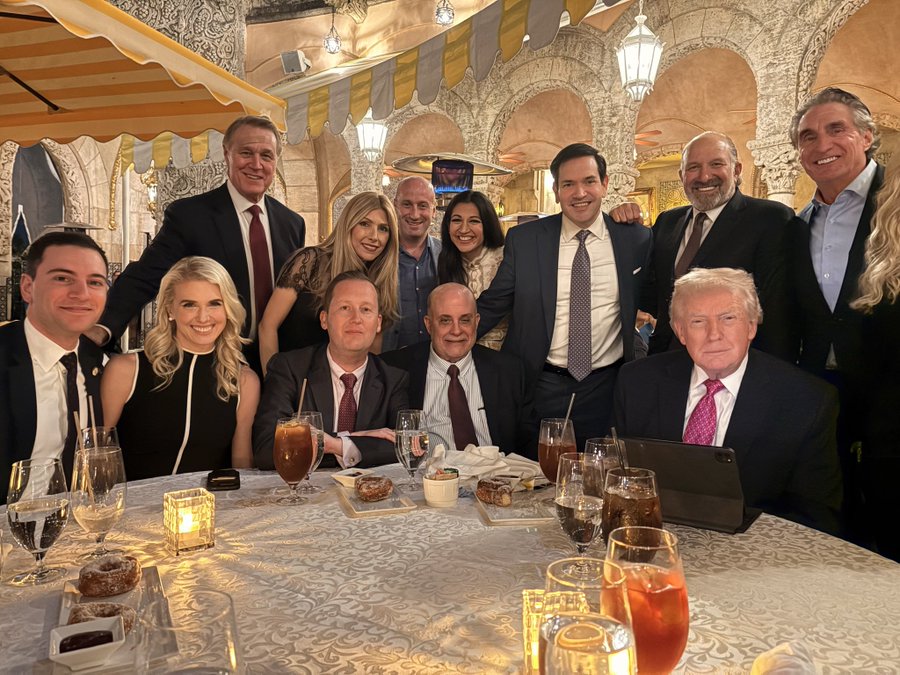
That said, I also accept that -for whatever reason he has- President Donald J Trump does not hold the same opinion of Mark Levin. In fact, Donald Trump seems to like Mark Levin. As a consequence, I retain my peace and ignore everything that circles around their time together. However, this is also an ¹opportunity.
Mr Levin’s audience has been shrinking quite fast. The downward spiral has been happening with greater speed and increasing slope for around 15 years. The diminutive Mr Levin is now a visual representation of the Black Knight Monty Pyton skit. If the name was raised, I quietly just stared in southern.
♦ Within the great podcaster war of 2026, apparently Mrs. Megyn Kelly and Mr Mark Levin have been having a very public feud. I don’t know the details but given the reality of the past 12 months it probably surrounds Mr Levin’s Israel-First approach toward everything political. In the latest drama du jour, Mrs Kelly is said to have mentioned that Mr Levin has a small penis, a “micropenis.”
Mr Levin apparently picked up the phone and called his loyal friend, President Donald Trump. Likely looking for an ally of considerable consequence to boost his member-ship status. After all, Levin’s circle of influence is rather, well, small and shrinking.
PRESIDENT TRUMP – “Mark Levin, a truly Great American Patriot, is somewhat under siege by other people with far less Intellect, Capability, and Love for our Country. Mark is Tough, Strong, and Brilliant, hence the nickname, “THE GREAT ONE,” conceived by our MAGA friend, the wonderful Sean Hannity, after years of dealing with Mark in Legal, Media, and other capacities. Mark would often do Sean’s show, speaking as a lawyer, and Sean realized then, as did others, that he was special.
Mark Levin was not looking to do Television, Radio, or anything else, but he was drafted by very smart people who understood that there are few like him. He is a true Conservative, and Intellect, far smarter than those who criticize him but, above all, he is a man of Great Wisdom and Common Sense who truly loves our Country.
When you hear others unfairly attack Mark, remember that they are jealous and angry Human Beings, whose “sway” is much less than the Public understands, and will, now that they know where I stand, rapidly diminish. Other than for his wonderful wife and family, Mark Levin only cares and wants one thing, GREATNESS AND SUCCESS FOR AMERICA!
Those that speak ill of Mark will quickly fall by the wayside, as do the people whose ideas, policies, and footings are not sound. THEY ARE NOT MAGA, I AM, and MAGA includes not allowing Iran, a Sick, Demented, and Violent Terrorist Regime, to have a Nuclear Weapon to blow up the United States of America, the Middle East and, ultimately, the rest of the World.
MAGA is about stopping them cold, and that is exactly what we are doing. GOD BLESS OUR GREAT MILITARY, WHICH I HAVE REBUILT SINCE THE BEGINNING OF MY FIRST TERM, TO ACHIEVE EVERLASTING PEACE THROUGH STRENGTH. MAKE AMERICA GREAT AGAIN! Thank you for your attention to this matter.”
~ President DONALD J. TRUMP
…””micro” is such an unfair characterization”
President Trump is well known to be loyal. I will just leave it at that, because I choose to leave it at that.
¹Pulling back to the Bigger Picture:
From decades well outside the wire, researching – boots on the ground, alone, deep in the weeds, carrying a rusty machete, looking at the unpopular truth while being snarked at from all sides… I can share a fundamental thing experience has taught me:
When “it” seems chaotic and mad, really confusing, conflicting and topsy-turvy chaotic, you can reasonably be sure there’s a focused intelligence operation swirling around “it”.
“It’s” not random, or organic…. EVER!
There is an absolutely true algorithmic boosting, an intentional shaping, underway in the background of all social media platforms.
The algorithms are manipulated to give increased influence, views and impressions to particular viewpoints.
The financial rewards within social media are specifically tailored to viewpoints that increase impressions and content creators end up following the narrative that rewards them. Simultaneously content creators stay away from viewpoints that are algorithmically disliked. This manipulation is obvious at this point.
Rewarding specific content is how the control levers are being manipulated.
It’s not organic or natural at all. The reality of what you see online, particularly in social media, is being controlled and influenced.
The “why” is a debatable aspect. Who and for what purpose is for each person to decide. I have my own opinions on who and why this is being done. However, whether it is happening is inarguable and the data affirms it.
From my perspective the division is all connected. Remember, Nick Fuentes is banned from the same platforms that now algorithmically boost accounts that mention him. Ideological hypocrisy within the algorithm outcome is one of the ways you can spot the manipulation.
Nick Fuentes is banned from TikTok, Instagram, Face Book, Google, YouTube, Meta etc., and as a consequence any prior account mentioning his content would not organically get a lift…. yet now it does.
This all started in June 2025, shortly after the Qatar vs Israel friction became visible as a wedge. Social media accounts who promoted Nick Fuentes on the same platforms that banned him, started getting increased impressions; something was turned off. This highlights the inorganic nature of the boost.
For others, like Candace Owens, Megyn Kelly or Tucker Carlson, it is entirely possible they only see the lift in impressions (and financial reward therein) and could ultimately believe their content is creating natural increases in support without realizing they are being boosted algorithmically as part of an intentional operation.
That is what I see as the most likely scenario.
Megyn Kelly, Candace Owens, et al, are simply doing more of what creates revenue, possibly without realizing those who are delivering the revenue might have ulterior motives for boosting them. Ego, pride and/or willful blindness can also play a role.
A strategic political manipulation campaign could spend $5 billion trying to push up a candidate (traditional route), or they could spend $5 billion fracturing the opposition (modern splitter approach using social media).
Last point. The people around President Trump know absolutely nothing about how this operation is being conducted. Instead, as represented in the Truth Social post above, they are inadvertently providing fuel for it.








 Centinel2012