Posted Originally on Sep 7, 2026 by Martin Armstrong |
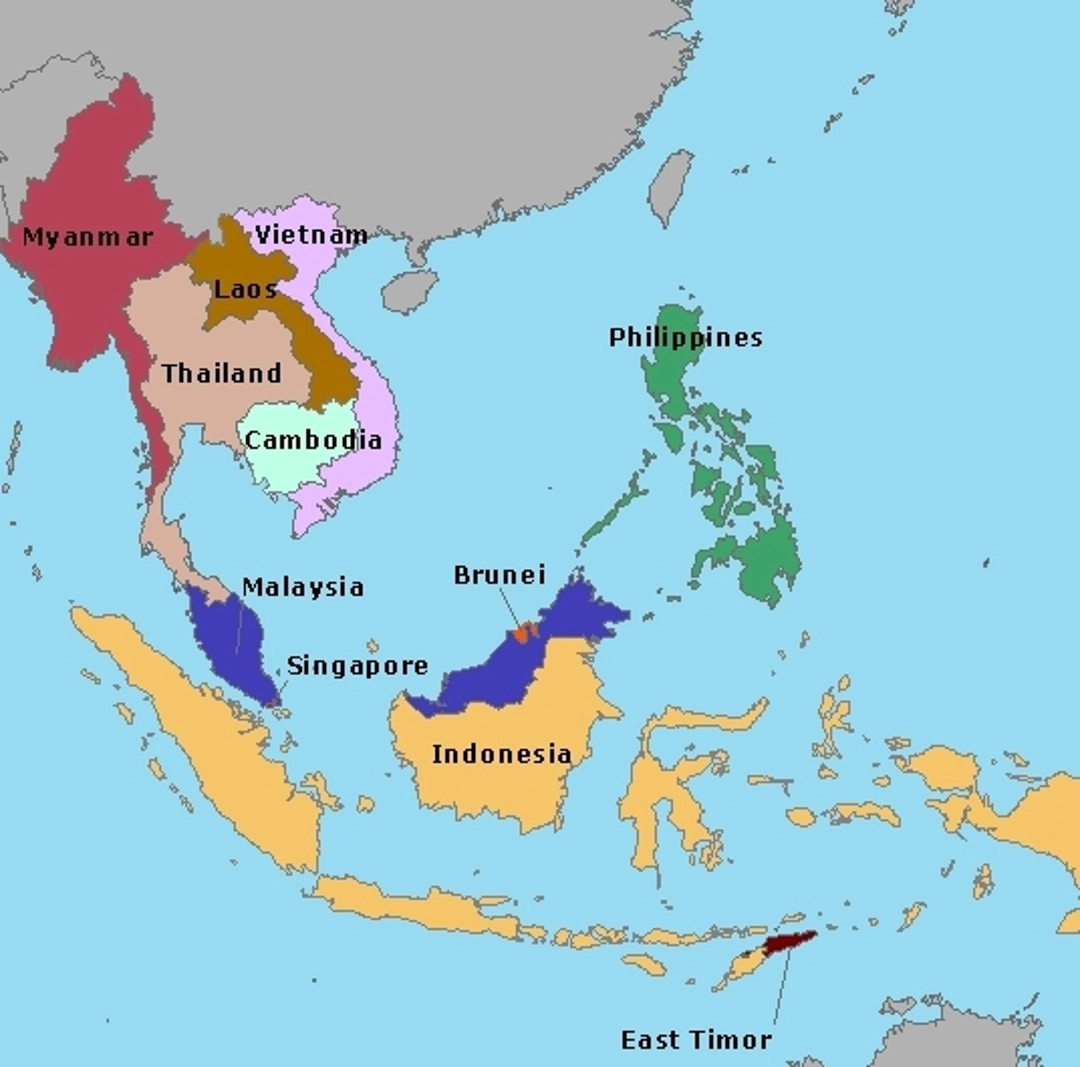
Indonesia is another economy that deserves far more attention than it receives in the West. The world’s fourth-most-populous nation expanded 5.29% year-over-year during the second quarter of 2026, beating economists’ expectations of 5.10%. That followed an even stronger 5.61% expansion during the first quarter. For the entire first half of 2026, Indonesia grew 5.45%. While governments throughout the developed world struggle to produce 1% or 2% growth without enormous deficit spending, another major Asian economy is steadily expanding above 5%.
Indonesia is particularly interesting because this is not simply another export story. Household consumption, which represents more than half of the economy, increased 5.06% during the second quarter. Construction expanded 6.68%, accommodation and food services grew more than 10%, and manufacturing increased 4.52%. Indonesia has nearly 290 million people, and that enormous internal market provides something smaller export economies simply cannot replicate. As incomes rise, Indonesia increasingly has the ability to generate growth from within.
This is the same transformation I have discussed when looking at India and Vietnam. People can see an economy change in real time when growth begins producing physical results. Roads appear. Airports expand. Industrial parks are constructed. Factories open. Apartment buildings rise. People who never owned automobiles become consumers. Families that previously lived at subsistence levels begin spending money on travel, restaurants, electronics, education, housing, and financial services. That transformation becomes self-reinforcing because an emerging middle class creates entirely new industries around itself.
Indonesia also possesses something Europe desperately lacks: resources. It is the world’s largest producer of nickel, a major producer of coal, palm oil, copper, tin and other commodities, and the government has increasingly refused to remain merely an exporter of raw materials. Indonesia banned exports of unprocessed nickel ore and forced companies seeking access to its resources to invest in domestic processing. That decision helped produce an enormous nickel refining and smelting industry.
This is economic nationalism in its practical form. Why dig something out of the ground, ship it overseas, allow someone else to manufacture the valuable product, and then import that product back at a massive markup? Indonesia wants the factories, processing plants, employment, technology, and capital investment to remain inside Indonesia. The West may complain about these policies when they interfere with its own corporations, but Indonesia is acting in its own national interest.
Investment has remained a major component of this expansion. Gross fixed capital formation increased 6.87% during the second quarter as spending on buildings, machinery, vehicles, and productive equipment continued rising. During the first quarter, investment had already expanded 5.96%. This matters because consumption can produce temporary GDP growth, but productive investment creates the capacity for future growth.
Trade is expanding as well. Indonesian exports reached $140.81 billion during the first six months of 2026, an increase of 4.13% from the previous year. Non-oil and gas exports climbed to $134.58 billion. Imports increased much faster, reaching $137.24 billion, but Indonesia still maintained a $3.58 billion trade surplus during the first half. The surge in imports is not necessarily evidence of weakness when an expanding economy is importing machinery, industrial inputs, and capital goods required for production.
Indonesia’s demographics provide another enormous advantage. The median age is around 30, while Japan is approaching 50 and Europe continues aging rapidly. Indonesia therefore has millions of younger workers entering their most productive and consumption-intensive years. They will need homes, transportation, appliances, financial services, telecommunications, food, entertainment, and infrastructure. This is precisely the demographic foundation that supported the rise of countless economies before it.
There are certainly risks. Indonesia remains heavily exposed to commodity cycles. Rapid industrialization creates environmental problems, and government intervention can easily become excessive. President Prabowo Subianto wants economic growth to eventually reach 8%, and whenever governments become obsessed with hitting predetermined GDP targets, they inevitably risk wasting capital on politically motivated projects. Jakarta must be careful not to destroy the very private investment it is attempting to attract.
The government is already pushing aggressively to accelerate the economy. It has placed 200 trillion rupiah, roughly $11.2 billion, into state-owned banks to increase liquidity and lending, with the program now extended into 2027. Officials want growth to reach 6% this year as part of the effort to eventually achieve Prabowo’s 8% target. That type of intervention must be watched carefully because credit creation can produce artificial booms if capital is directed politically rather than economically.
Nevertheless, Indonesia’s underlying advantages cannot be dismissed. Nearly 290 million people, a young population, enormous natural resources, a growing manufacturing sector, expanding infrastructure, rising household consumption, and a strategic position between the Indian and Pacific Oceans create the foundation for a major economic power.
This is why looking exclusively at Europe, Japan, Britain, and Canada gives people a distorted view of the world economy. Wealth is not disappearing. Production is not disappearing. Opportunity is not disappearing. It is moving.
India is expanding rapidly. Vietnam is becoming a manufacturing powerhouse. Singapore is attracting international capital. Mexico is benefiting from the reorganization of North American production. Indonesia is using its resources, demographics, and domestic market to move further up the economic ladder.
The global economy is undergoing a geographic transformation. The old centers of economic power are burdened by sovereign debt, aging populations, taxation, regulation, and governments desperately attempting to preserve systems created during another era. Much of emerging Asia is still building.
Indonesia has spent decades sitting in the shadow of China, Japan, and India when Western analysts discuss Asia. With an economy growing above 5% and nearly 290 million people moving through this development cycle, that will not remain the case forever.
Posted Originally on Sep 7, 2026 by Martin Armstrong |
he United States added 162,000 jobs in August, nearly three times the 53,000 expected, while unemployment remained at 4.1%. The report appears impressive until you look beneath the surface and see where these jobs were created, who has left the labor force, and whether wages can still keep pace with the cost of living. Washington measures economic health by counting paychecks, but the average person measures it by what remains after paying for food, fuel, housing, insurance, and debt. A nation can add jobs on paper while its people continue losing purchasing power, and that is precisely the divide now emerging across America.
The composition of the report matters. Food services and drinking places added around 59,000 jobs, while local government education added approximately 42,000. Government employment increased by 35,000 overall, and the information sector lost 23,000 positions. Manufacturing added 16,000 jobs and construction gained 22,000, which is encouraging because those are productive sectors that build actual goods and infrastructure. Nevertheless, restaurants and government education accounted for a substantial portion of the headline increase. That is not the broad private sector employment boom the political class will attempt to portray.
Wages rose 0.3% for the month and 3.1% over the year, but inflation has been running above that pace. This means the average worker can receive a raise and still become poorer in purchasing power terms. The government counts the job and the wage increase, then ignores what remains after the worker pays for food, gasoline, housing, insurance, and interest. People understand instinctively that a larger paycheck means nothing if every essential expense consumes it before the next payday.
The participation rate edged up to 61.6%, but it remains half a percentage point below January. More than 1.3 million people have reportedly left the labor force over the past year. They are not all counted as unemployed because the unemployment rate does not measure everyone without a job. It measures those who meet the government’s definition of actively seeking work. A person who has given up searching can disappear from the statistic without finding employment. This is how the government can maintain a low unemployment rate while millions feel that the job market has become nearly impossible to navigate.
There were 7 million officially unemployed people in August, including 1.9 million who had been without work for at least 27 weeks. The long-term unemployed now account for 27% of everyone officially classified as jobless. These are not people casually moving between positions. They are workers becoming detached from the economy. Employers are reluctant to add people, workers are afraid to quit, and anyone who loses a job may remain outside the system for months.
The white collar labor force is also beginning to feel the change that blue collar workers endured when manufacturing was shipped overseas. Information employment fell by 23,000, including losses in data processing, web hosting, computing infrastructure, and publishing. Artificial intelligence is not eliminating every office job overnight, but it is allowing businesses to expand output without expanding payrolls at the same rate. Young people were sold the fantasy that any college degree guaranteed security while skilled trades were treated as occupations for those who supposedly failed academically. Now many graduates have debt, no practical experience, and must compete with machines capable of performing an expanding share of entry-level work.
June was revised from 20,000 jobs to 31,000, while July was changed from a loss of 23,000 to a gain of 21,000. Those revisions added 55,000 jobs to the previous estimate. The numbers are surveys that are revised as additional information becomes available. The media nevertheless presents the first release as unquestionable fact because it needs an instant narrative for the markets and politics.
The Federal Reserve will now be pressured to raise rates because stronger employment gives it less reason to tolerate inflation. Treasury yields rose after the report because investors understood that the prospect of easier money had weakened. This is where the Sovereign Debt Crisis collides with monetary policy. Washington has surpassed $40 trillion in debt and is spending over $1 trillion annually on interest. Higher rates may be required to restrain inflation, but they also make refinancing government debt increasingly expensive. The Fed cannot protect the purchasing power of the currency and permanently subsidize reckless government borrowing at the same time.
The August report was better than expected, and the manufacturing and construction gains deserve recognition. Yet one month does not erase the underlying divide. Those who already have stable employment may see an economy holding together, while those seeking work face frozen hiring, automated entry-level positions, and wages failing to keep pace with their living costs. The headline says America added 162,000 jobs. The public knows the more important question is what kind of jobs were created and whether those wages can still support a life.
Posted Originally on Sep 7, 2026 by Martin Armstrong |
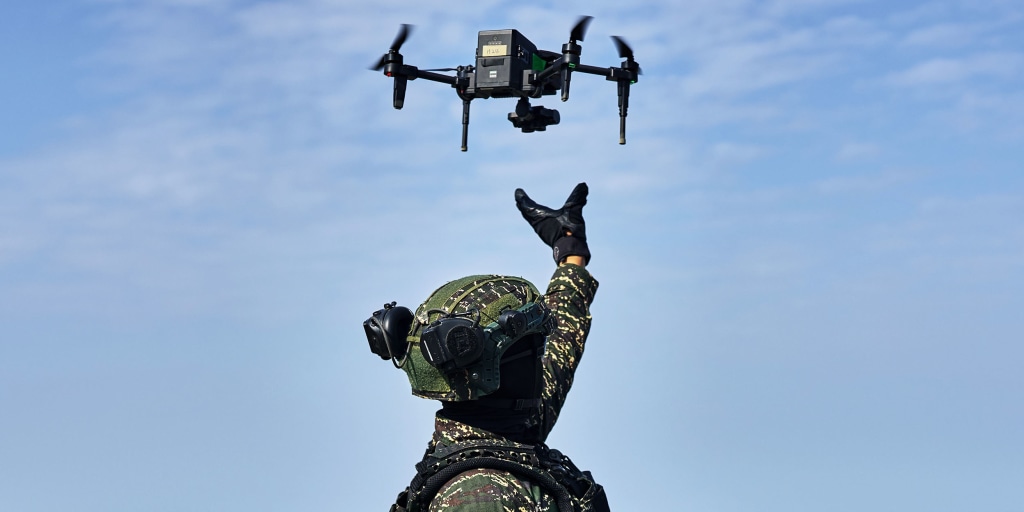
Taiwan has proposed another $4.6 billion in defense spending, and what is particularly interesting is where a substantial portion of that money is going. Taipei wants more than 600 coastal surveillance and reconnaissance drones, over 40,000 coastal attack drones, and an initial fleet of more than 100 unmanned suicide boats. This comes only days after Taiwan’s parliament approved a six-year drone program capped at NT$240 billion, roughly $7.6 billion. Taiwan is not buying drones as some technological experiment. It is preparing for what it believes a future war with China would actually look like.
Ukraine changed warfare because it demonstrated that a relatively inexpensive drone can destroy equipment costing millions of dollars. The Middle East has reinforced the same lesson. Taiwan has obviously been watching. President Lai Ching-te’s government originally sought roughly NT$210 billion to purchase about 210,000 military drones over six years, arguing that modern warfare has made unmanned systems essential to Taiwan’s asymmetric defense. Parliament ultimately approved its own larger NT$240 billion framework, and Taiwan is now moving aggressively to build the industry domestically rather than remain dependent on foreign suppliers.
This is precisely the type of weapon Taiwan would need if there were ever a conflict with mainland China. Taiwan cannot match China ship for ship, aircraft for aircraft, or soldier for soldier. China’s advantage in conventional military power is simply too great. Taiwan’s strategy therefore has to make the cost of crossing the Taiwan Strait and attempting an amphibious invasion so high that Beijing concludes the operation is not worth undertaking.
That is where drones become extremely important. Thousands of inexpensive unmanned weapons can be dispersed around the island, hidden far more easily than conventional aircraft, and launched against ships approaching the coastline. Surveillance drones can identify targets while attack drones strike landing craft, vehicles, supply lines, and troops. Unmanned boats add another dimension by threatening vessels offshore without placing Taiwanese sailors directly in harm’s way. This is asymmetric warfare, and Taiwan clearly believes quantity matters.
Taiwan is also fortifying the Penghu Islands in the Taiwan Strait, which would become strategically important in any invasion scenario. The military established its first drone force there in July and deployed UAVs during the annual Han Kuang exercises. Penghu sits roughly 50 kilometers from Taiwan’s main island and could provide Taiwan with positions from which missiles and drones could threaten Chinese forces attempting to cross the Strait. Beijing understands the importance of these islands just as well as Taipei does.
The government is not hiding its intentions. Taiwanese officials have openly discussed creating what American strategists have called a “hellscape” in the Strait, where enormous numbers of drones, missiles, mines, and unmanned vessels could overwhelm an invading force. Whether such a strategy would actually stop China is another question entirely, but this is clearly the direction military planning has taken.
What concerns me is the timing because Taiwan is not acting as if war is some impossible event decades into the future. Defense spending for 2027 is proposed to exceed NT$1 trillion for the first time, with the broader defense budget projected at roughly $35 billion. President Lai has said Taiwan intends to raise defense spending toward 5% of GDP by 2030. Governments do not make investments of this magnitude unless they believe the geopolitical environment has fundamentally changed.
This does not mean China invades Taiwan tomorrow, nor should every military procurement announcement be portrayed as proof that war is inevitable. Nevertheless, the entire region is preparing for a confrontation that politicians continue telling the public they supposedly want to prevent. China is expanding its military capabilities, Taiwan is rapidly increasing defense expenditures, Japan is rearming, and the United States continues restructuring its forces throughout the Pacific. Every participant says these preparations are intended to preserve peace while simultaneously preparing for war.
China itself dominates the global commercial drone industry and much of the supply chain required to manufacture them. Taiwan obviously cannot prepare for a conflict with China using critical components that would disappear the moment hostilities began. Taipei is therefore attempting to establish what it calls a “non-red” supply chain that excludes Chinese components while building domestic production capacity. This is as much an industrial policy as a military one.
This is where the world is moving as globalization continues to fracture. Defense is no longer simply about possessing weapons. Governments are realizing that they must control the factories, semiconductors, communications equipment, raw materials, energy, and supply chains necessary to replace those weapons during an extended conflict. Taiwan happens to possess one of the world’s most important semiconductor industries, but even that becomes a vulnerability when the island depends upon imported energy and materials.
Modern warfare is rapidly moving away from the assumption that victory belongs exclusively to whoever owns the most expensive weapons platform. A $100 million aircraft or multimillion-dollar armored vehicle can now be threatened by technology costing a fraction of that amount. The battlefield is becoming increasingly automated, decentralized, and dependent upon enormous quantities of relatively inexpensive systems.
Taiwan has clearly absorbed that lesson. The proposed supplementary budget alone includes more than 40,000 coastal attack drones, and the broader six-year program could ultimately produce a drone force numbering in the hundreds of thousands. Taiwan is preparing to saturate the battlefield rather than merely purchase a handful of extraordinarily expensive weapons and hope they survive the opening days of a conflict.
The political danger is that every military buildup creates another buildup on the opposite side. Taiwan says it needs drones because China threatens invasion. Beijing points to Taiwan’s expanding military cooperation with Washington as evidence that separatist forces are preparing for confrontation. Washington then cites China’s military expansion to justify additional weapons for Taiwan. This is how an arms race develops even when every government insists it is acting defensively.
Taiwan is therefore becoming one of the places to watch closely as we move toward the end of this decade. The investment in drones is not simply another defense contract. It reflects a fundamental change in how Taipei believes a war with China would be fought and demonstrates that Taiwan is preparing seriously for the possibility that deterrence could eventually fail.
Posted Originally on Sep 7, 2026 by Martin Armstrong |
|
Some people have complained that I said that Iran was winning and all they have to do to declare victory is survive. I am not here to read the propaganda. I have to call the shots according to what my computer is forecasting. I have also warned that the Neocons advising President Trump should be taken out of their positions in chains. They are putting not just the USA at risk, but the entire world with their warmongering stupidity.
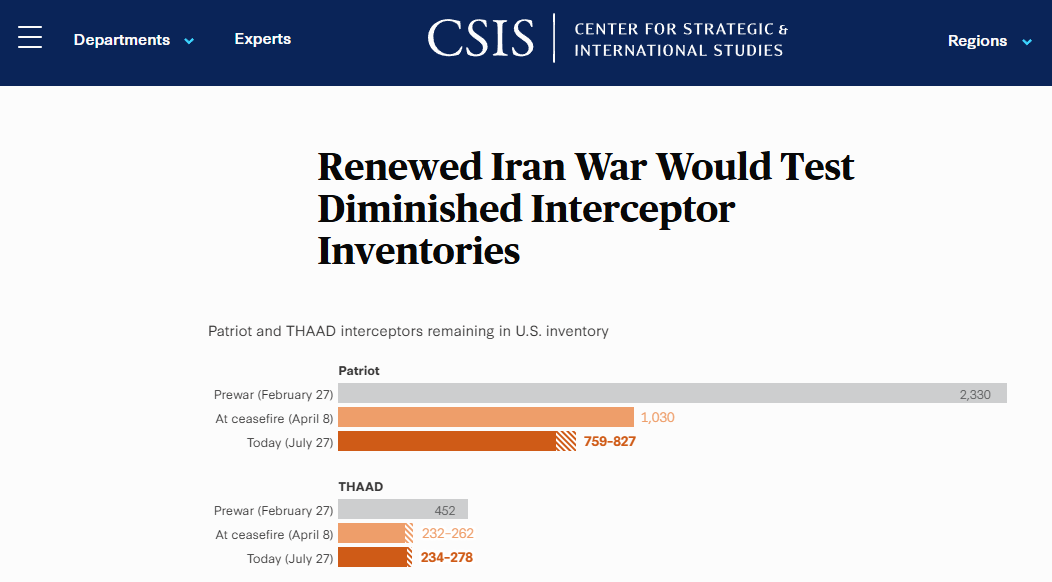
I have also written about how they have launched so many missiles at Iran, assuming they would bomb it into submission to the point that the stockpile is depleted by about 2/3rds and these things are far too sophisticated so the military-industrial complex can make their fortune as the new merchants of death, that it will take until 2029 to restore the stockpile. That means the USA will be defenseless conventionally.
This past Thursday, Kuwait’s air defenses lit up over the Gulf again with the patriot batteries and radar networks tracking another wave of Iranian ballistic missiles and drones headed for US military installations across the country. The intercepts worked this time. However, Iran is waging a war of attrition, and it knows how to play the game. Every patriot missile fired in defense comes at a huge price tag that defense analysts at the Center for Strategic and International Studies say the United States is running out of time for it has already burned through roughly 2/3rds of its pre-war Patriot missile interceptor inventory since February. Production lines cannot restock these missiles until 2029 and no matter was Treasury Secretary Scott Bessent think his financial siege will collapse Iran, the numbers to not add up.
Bessent may ne an old market-manipulator with Soros, but his podium does not bestow him with a greater power to manipulate the world economy with hollow words. Iran understands that:
they can deplete the patriot stock and then rain down missiles to utterly destroy US basis in the Middle East pushing the Great Satan out once andfor all, which has been a goal since 1979.
They also know that dragging this out means they have a shot at overthrowing Trump in the Midterm Elections and just flipping the House willyield 2 years of impeachments, disruptions, and feed the hatred of Trump from the Democrats ensuring this war effort may even come to an end to make Trump go down in history as a loser.
The October elections in Israel have a shot at removing their arch enemy Netanyahu once and for all.
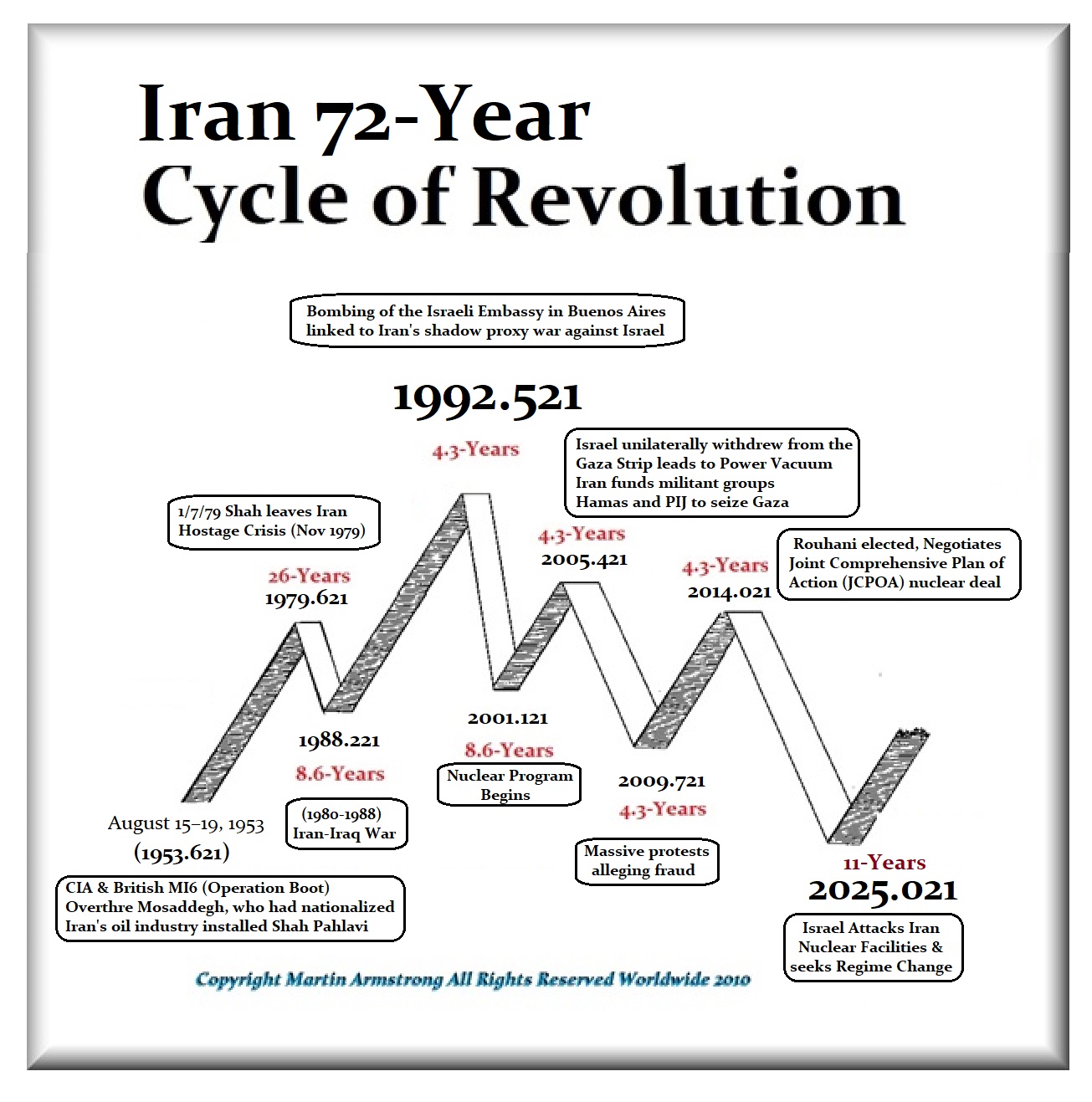
Cyclically, Netanyahu has made a huge mistake. He got Trump to attack Iran in 2025 and assassinated several of their military leaders. This was the end of the 72-year Revolutionary Cycle on Iran so he just began a whole new cycle and that demonstrated that this would NOT end in one day killing the Ayatolla as he told Trump.
While Jared Kushner, the Jewish son-in-law of President Trump and real estate developer, along with Benjamin Netanyahu have known each other for years, I believe that is how Trump was persuaded to let Netanyahu into the Situation Room to sell his war. Trump trusts Kushner way too much.
The connection between Benjamin Netanyahu and the Kushner family is a long-standing, multi-generational relationship that blends deep personal friendship, significant political alignment, and substantial financial ties. The foundation of their connection is a personal friendship that predates Netanyahu’s political career and Jared Kushner’s role as a White House advisor.
The relationship goes back to the 1980s, when Netanyahu was an Israeli diplomat in New York. He was a frequent overnight guest in the home of Charles
Kushner, Jared’s father, in Livingston, New Jersey. On these visits, he would often sleep in Jared’s bedroom, with Jared moving to the basement. Charles Kushner, was a wealthy real estate developer and major donor to Jewish and pro-Israel causes, has been a significant financial backer of Netanyahu’s political career. This support reportedly included donations to the Israeli Likud party and was a factor in legal disputes within the Kushner family.
The personal friendship has translated directly into a strong political alliance, particularly during Jared Kushner’s tenure as a senior advisor to President Donald Trump. That is what I believe the Democrats will have a field-day with after the Mid-Terms.
Kushner’s connection to Netanyahu is indeed inherited through his father, Charles Kushner, who was a longtime donor to Israeli causes. President Trump pardoned Charles Kushner after he was sentenced to prison for fraud-related crimes. In 2005, he was convicted and sentenced to two years in federal prison for 18 federal charges connected to his real estate business and political activities and included:
Tax evasion
Illegal campaign contributions
Witness tampering, which specifically involved a scheme to intimidate a cooperating witness by hiring a sex worker to seduce his brother-in-law and sending the recording to his sister
Destroying your own sister’s marriage revealed the character of Charles Kushner. He was sentenced to two years in federal prison and served his time. Years later, on December 23, 2020, President Donald Trump granted him a full pardon. Despite all of this, he was confirmed as the U.S. Ambassador to France in May 2025.
Jared Kushner and Netanyahu have had a working relationship (2016-2021). The most significant period of their interaction occurred when Kushner served as a senior advisor to President Donald Trump. During this time, he was the lead architect of the Abraham Accords, which normalized relations between Israel and several Arab nations.
After leaving the White House, Kushner has remained involved in the region, establishing an investment fund that has received backing from Gulf nations. That raises serious questions of a conflict of interest with anything involving Israel.
Discussions of redeveloping Gaza began long before the war. Kushner discussed plans for redeveloping portions of Palestine in his 2020 peace plan. This has cause some to question if the war on Gaza was in fact to grab beach front. That may also become a hot topic of investigations by Democrats post-Midterms.
Real estate developers have been eyeing Gaza and have proposed numerous construction projects for Gaza. Harey Zahav, an Israeli real estate firm, created blueprints for luxury settlements along the West Bank. The company envisions beachfront homes build upon demolished land.
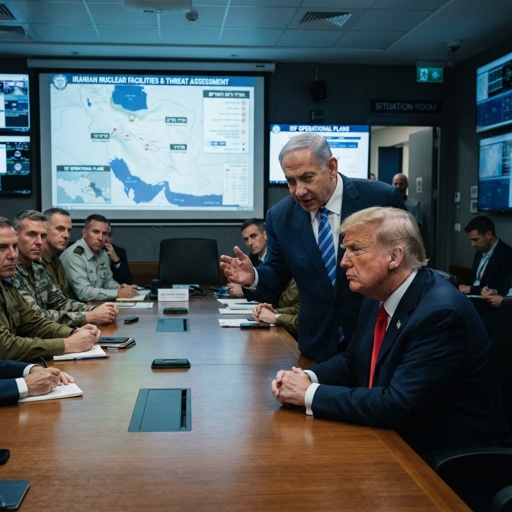
President Donald Trump allowed Israeli Prime Minister Benjamin Netanyahu to be in the White House Situation Room. The February 2026 meeting was reportedly a high-stakes, almost secret pitch by Netanyahu to convince Trump to go to war with Iran. The meeting took place on February 11th, 2026, a highly unusual event where a foreign leader was invited into the White House Situation Room to brief the U.S. president and his senior advisors to see his life-long dream of destroying Iran and achieving regime change by sheer force.
During the presentation, Netanyahu laid out his vision for the war, making several key predictions:
Iran’s ballistic missile program could be destroyed in weeks.
Tehran would be too weak to block the crucial Strait of Hormuz.
The regime was ripe for collapse and that an uprising could be sparked from within.
Netanyahu’s scenario was the sales-job of the century to convince Trump’s decision to go to war. Netanyahu claimed that Iran would be able to deliver a nuke to the USA as always in a matter of weeks. Trump reportedly responded to the presentation by saying “sounds good to me” or something to that effect, which was seen as a clear signal of his intent. Little did he know that Netanyahu was destroying Trump’s legacy.
The initial optimism in the Situation Room was not shared by key members of Trump’s own administration. An overnight assessment by U.S. intelligence officials deeply undercut Netanyahu’s predictions. Sources say that CIA Director John Ratcliffe reportedly described the regime-change scenarios proposed by Netanyahu as “farcical.” Sources also say that Secretary of State Marco Rubio went even further, calling the idea “bullshit.”
Despite these warnings, and opposition from other advisors like Vice President J.D. Vance, Trump ultimately decided to proceed with the war, pursuing the more limited goals of striking Iran’s military leadership and nuclear program rather than the full regime change Netanyahu had sold.
I believe Trump listened to Kushner over everyone else. The Kushner and Netanyahu family ties and Netanyahu trying to get the United States to fight his war has been a sales-pitch since 1996. As stated, Netanyahu;s career was also funded by his long-time friend of Charles Kushner.
Jared Kushner is amazingly Trump’s son-in-law and senior advisor. He was present at key meetings and played a central role in Middle East policy, being the architect of the “Deal of the Century” and involved in pre-war negotiations with Iran. While the specific person who “arranged” the meeting is not named and will no doubt be shrouded in secrecy that the Democrats will no doubt di into, this deep web of personal and political relationships between the Kushners and Netanyahu likely served as the background context that made such an extraordinary invitation even possible.
It is time President Trump admit he made a mistake listening to Netanyahu. The world knows this is Netanyahu’s War. Why do down with the sinking ship for Netanyahu? He admitted to a mistake before. We all make mistakes. Own it! He said in regard to that Hollywood tape: “I’ve said and done things I regret, and the words released today on this more than a decade-old video are one of them. I said it, I was wrong, and I apologize.”
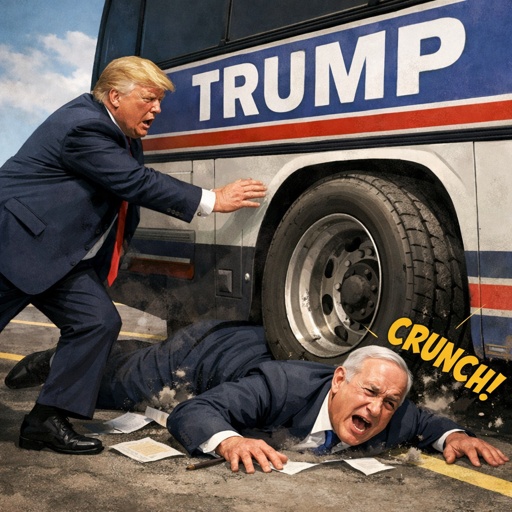
It’s time Trump throws Netanyahu under the bus. He is a sick individual and an obstacle to any peace deal EVER in the Middle East. What Netanyahu has done and any American who conspired with him to manipulate Trump could even rise to the level of treason.
The U.S.-Israeli military strikes on Iran, including the killing of its leader, unquestionably violated international law that Netanyahu always disregards. The foundational rule is found in Article 2(4) of the United Nations Charter, which prohibits the threat or use of force against the territorial integrity or political independence of any state has only TWO exceptions.
Authorization from the UN Security Council .
Self-defense under Article 51, which permits force only in response to an actual armed attack
The UN Security Council did NOT approve the U.S.-Israeli military strikes against Iran, including, and MOST CERTAINLY, the killing of its Supreme Leader. In fact, multiple official statements and reports explicitly describe these actions as being taken without Security Council authorization. Netanyahu’s perpetual claim since 1996 has been his justification being “preventive” or “anticipatory” self-defense is NOT accepted in international law, as Iran did not pose an “imminent” threat at the time of the attack and US intelligence agreed with the assassment.
The strikes also raised serious concerns regarding the specific targets. International law grants heads of state special immunity, meaning they are not to be made targets of military attack. The deliberate killing of a nation’s supreme leader has been specifically condemned as a severe violation of this principle and an act of political assassination. This is constantly Netanyahu’s agenda and he never cares about international law.
Furthermore, attacks that target civilians or civilian infrastructure, such as a school, taking out the water supply, are considered potential violations of international humanitarian law and may constitute war crimes. The Iranian representative to the UN has formally characterized the attacks on civilian sites as constituting “war crimes” and “crimes against humanity.” It seems that getting Trump involved was Netanyahu’s security blanket that would absolve him of all war crimes.
While the CIA has NOT been the primary agency issuing formal “threat” warnings, the U.S. intelligence community and the Pentagon have expressed serious concerns about Israeli actions that could be seen as threatening U.S. national security. The core of the concern appears to be about espionage, not military aggression. They have been funding opposition to candidates for Congress they see as anti-Israel.
Vice President JD Vance stated in a 2026 interview that Epstein “seemed to be connected to the elements of the Israeli deep state that were left of center.” There are now allegations in newly released FBI documents mention that Jeffrey Epstein had links to Israeli intelligence and that Jared Kushner was a central power broker within the Trump presidency, who also had ties to Israeli intelligence-adjacent networks.
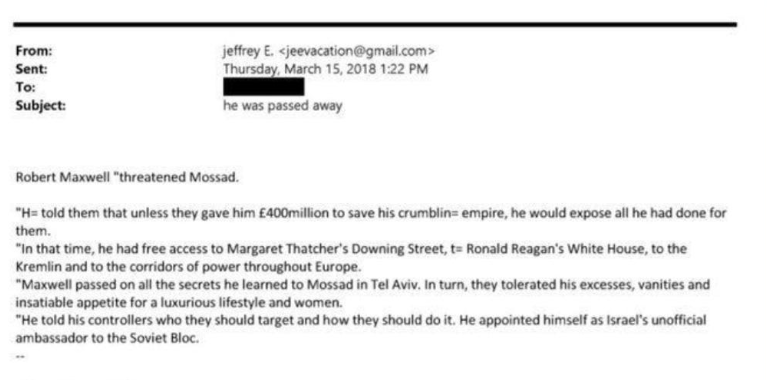
I have stated before that Robert Maxwell was part of the “club” and he funded the coup against Gorbachev with the deal that having Israel then recognize the coup as a legitimate government that was seeking to take Russia back to the USSR hinged on the agreement that they would allow all Jews to migrate to Israel. Once again, nobody cared what they would do to the Russian people or to resurrect the Cold War. The coup failed and Epstein in an email wrote that Israel killed Maxwell after he wanted them to cover his trading losses.
The primary organization that makes political donations as part of its lobbying efforts is the American Israel Public Affairs Committee (AIPAC) . It is considered the most powerful pro-Israel lobby in the United States . Its influence is felt through its direct lobbying of Congress and, significantly, through the massive sums it spends on elections via a connected “super PAC” that appears to be a grey area of lobbying for a foreign government.
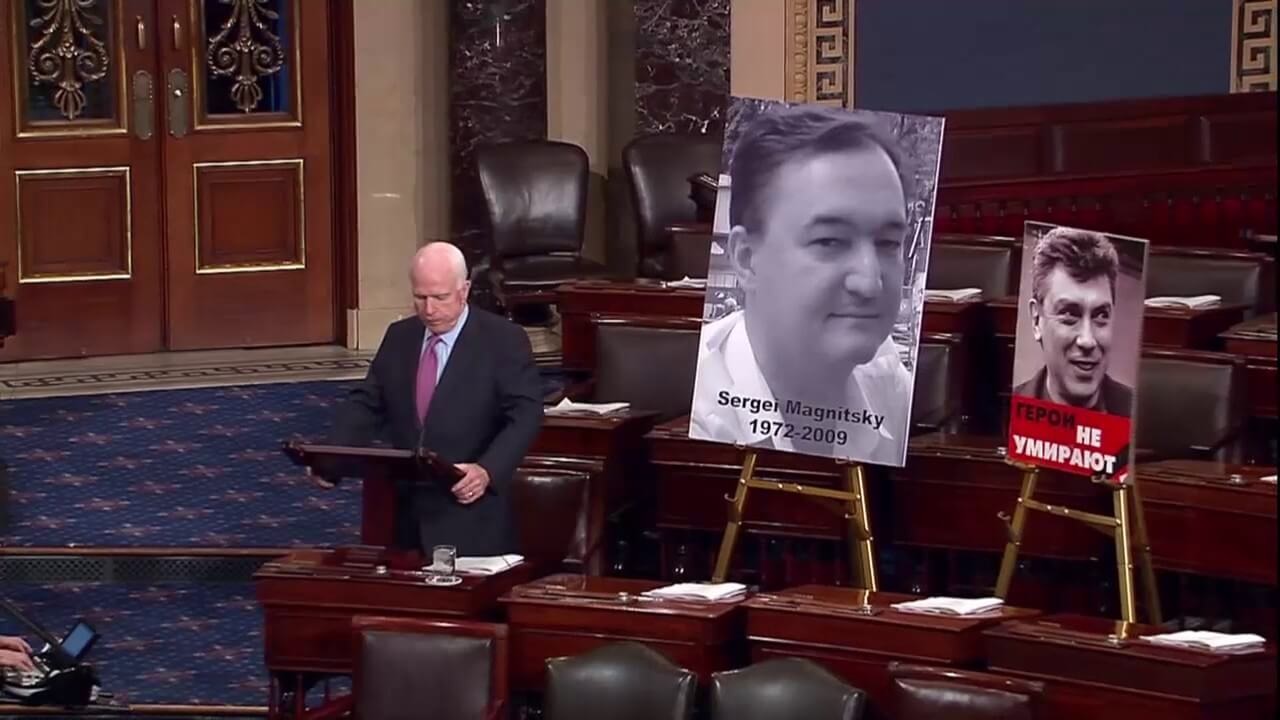
In June 2016, Jared Kushner, Donald Trump Jr., and Paul Manafort met with Russian lawyer Natalia Veselnitskaya. That was a meeting about the lies that were used to create the Magnitsky Act, which imposed sanctions on Russia promoted by Bill Browder and pushed by John McCain. That was a total fabrication.
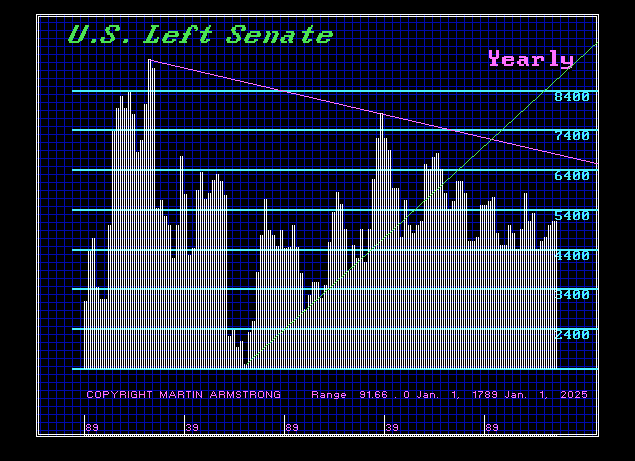
Democrats are feeling confident about their chances of retaking the House even as the GOP successfully redrew more seats to their advantage in the past year’s controversial mid-decade redistricting fight. However, the Senate, once seen as a longshot for Democrats, now appears in striking distance. And both parties are investing major resources in states and districts where Trump won by double digits in 2024.
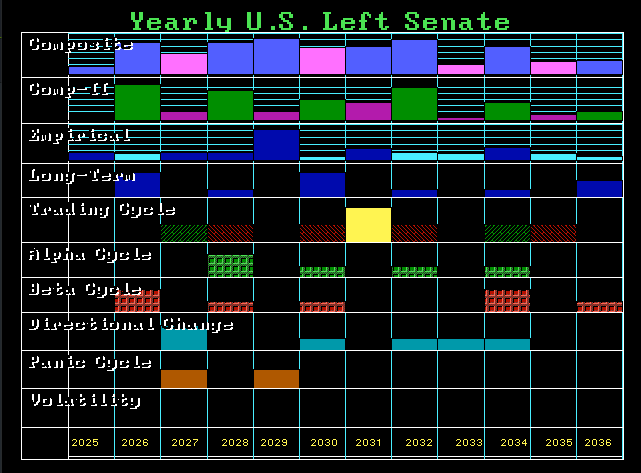
Nonetheless, the Democratic position in the Senate after electing a Yearly Bullish Reversal previously leaves this door open plus we have a Panic Cycle in 2027 in the Senate. If this proves to be a Democratic VICTORY, they are going to make not just Trump’s life a living hell who will curse the day he ever listened to Netanyahu, they will target Jared Kushner and try to send him off to tax-free living like his father did.
I have created this site to help people have fun in the kitchen. I write about enjoying life both in and out of my kitchen. Life is short! Make the most of it and enjoy!
This is a library of News Events not reported by the Main Stream Media documenting & connecting the dots on How the Obama Marxist Liberal agenda is destroying America





 Centinel2012