Posted originally on Mar 10, 2026 by Martin Armstrong |
There was a time when warnings about governments embedding identification technology directly into the human body would have sounded like something from George Orwell rather than a public policy debate. Yet here we are. Washington State is now considering legislation to prohibit employers from forcing workers to accept subcutaneous microchip implants. The fact that lawmakers even need to debate such a law should alarm anyone paying attention to where society is heading.
These implants are not some futuristic fantasy. They already exist and have been used in workplaces. The devices are small RFID or NFC chips roughly the size of a grain of rice that are injected under the skin, typically between the thumb and forefinger. They contain no battery and do not actively transmit signals across long distances. Instead, they act as a passive digital key. When scanned by a nearby reader, the chip sends a unique identification number to a computer system connected to a database. That database determines whether you can open a door, access a computer network, enter a building, or authorize a payment.
At the same time that corporations are experimenting with embedding identification devices in the body, governments across the world are aggressively pushing digital identification systems. Digital ID programs consolidate identity verification into centralized databases containing everything from passports and healthcare records to employment credentials and tax information. Once identity becomes digitized and centralized, access to everyday life increasingly depends on that system functioning and recognizing you as compliant.
Layer onto that the growing push for central bank digital currencies. Unlike physical cash, CBDCs operate entirely within controlled digital networks run by central banks and governments. Every transaction becomes visible within the system. The currency itself can be programmed. Purchases can be monitored, restricted, or denied. Access to funds can be frozen instantly.
Combine digital identity with programmable money and biometric identification and you begin to see the outlines of a system that previous generations would have described as dystopian. Implantable chips simply remove the remaining friction. Your identification, access permissions, and financial credentials become physically embedded within your body, ready to be scanned whenever a system demands verification.
Politicians insist these technologies are about efficiency, security, and modernization. Those are the same justifications governments have used throughout history whenever they expand surveillance and control. Programs always begin as optional conveniences. Participation is voluntary at first. Over time, the infrastructure becomes so embedded in daily life that opting out becomes practically impossible.
The troubling part is how casually these ideas are now discussed. Only a generation ago the thought of employers implanting tracking devices into workers would have sparked widespread outrage. Today it is framed as a workplace innovation that lawmakers must merely regulate.
Washington State attempting to prevent mandatory implants shows that at least some policymakers recognize how far this could go if left unchecked. Once the concept of embedding identification systems into human beings becomes normalized, it will not remain confined to opening office doors or buying lunch in the cafeteria. When identity, access, and money are all digitized and centrally controlled, the boundary between technological convenience and societal control begins to disappear.
The uncomfortable truth is that the architecture for an entirely new form of digital governance is being constructed piece by piece. Identity systems, financial systems, and surveillance technologies are being merged into a single framework that determines how individuals participate in the economy and society. Implantable chips may appear to be a small step in that process, but they symbolize something much larger: the quiet transformation of the relationship between the individual and the state in the digital age.
Posted originally on Mar 10, 2026 by Martin Armstrong |
Governments never seem to learn from history. Every time energy prices surge, politicians rush to impose price controls as if markets can be commanded to obey political decrees. South Korea has now joined that long list, announcing it will impose a fuel price cap for the first time in nearly 30 years as global oil prices surge due to the escalating Middle East conflict.
Crude oil has already pushed above $100 per barrel, with Brent briefly approaching $119 during the latest escalation surrounding Iran. For an economy like South Korea, which imports roughly 70% of its oil from the Middle East, the impact is immediate and severe. When the region supplying the majority of your energy enters a war cycle, the consequences ripple instantly through fuel markets, currencies, and financial assets.
President Lee Jae Myung said the government would swiftly introduce a price cap on petroleum products to protect consumers and shield the economy from the energy shock. At the same time, authorities are considering expanding a market stabilization program of roughly 100 trillion won, or about $67 billion, to contain the financial fallout from rising energy prices.
South Korea’s benchmark KOSPI index fell about 6% as investors reacted to the oil shock. The Korean won weakened toward 1,500 per dollar and bond yields pushed to two-year highs as energy costs surged across the region. Gasoline prices in Seoul have already climbed above 1,900 won per liter and have continued rising toward roughly 1,945 won in only a matter of days.
Price controls never solve the underlying problem. They simply move the cost somewhere else. Either governments subsidize the difference, which expands fiscal deficits, or shortages begin to appear because suppliers have no incentive to sell at artificially suppressed prices. The United States tried the same approach during the 1970s energy crisis, and the result was not cheap fuel but long lines at gas stations.
The deeper issue is that this energy shock is not simply a temporary spike. Roughly 20% of the world’s oil supply moves through the Strait of Hormuz, and any conflict threatening that route immediately raises global supply risk. Markets price that risk long before governments acknowledge it.
South Korea’s move highlights the vulnerability of modern economies to energy disruptions. Nations dependent on imported fuel cannot control global oil markets with administrative policies. Price caps cannot create supply that does not exist. They simply hide the inflation temporarily while the real pressures build beneath the surface. When governments begin discussing price controls and emergency stabilization funds, history suggests the crisis is only beginning rather than ending.
Posted originally on Mar 10, 2026 by Martin Armstrong |
One of the most dangerous illusions in Washington is the belief that war and energy shocks are temporary. Politicians always assume that prices will spike briefly and then return to normal as if the world economy operates like a thermostat that can simply be turned down once the crisis passes. History shows the opposite. Wars, especially those centered around energy chokepoints, rarely produce transitory economic consequences.
Treasury Secretary Scott Bessent recently tried to calm markets by claiming that crude markets remain stable, insisting that “the crude markets are very well supplied” and pointing to “hundreds of millions of barrels on the water away from the Gulf.” He has also suggested that Washington could simply release additional Russian oil from sanctions if needed to increase supply. This thinking reflects the typical Washington view that governments can manage the global energy market with policy tweaks.
At the same time, the administration issued a temporary waiver allowing India to purchase Russian crude in order to ease global supply pressure created by the Iran conflict. Bessent described the measure as a stop-gap that would “alleviate pressure” on oil markets while the crisis unfolds. The logic from Washington is straightforward: increase supply temporarily, calm the markets, and assume prices will fall once the conflict subsides.
President Trump has taken a similar position. Responding to rising gasoline prices, he argued that “short term oil prices… will drop rapidly when the destruction of the Iran nuclear threat is over,” adding that higher prices were “a very small price to pay” for global security. The assumption here is that the war will be brief and the energy shock temporary.
Energy markets are not reacting merely to current supply but to geopolitical risk. Roughly 20% of the world’s oil moves through the Strait of Hormuz, meaning even the threat of disruption can send prices sharply higher. Once markets begin pricing geopolitical risk into commodities, those price movements can persist long after the initial military event.
Indeed, the market response already demonstrates that the shock is not trivial. Oil prices surged above $100 per barrel and analysts warn that gasoline in the United States could soon approach $4 per gallon as the conflict spreads through the region. Diesel prices are rising even faster, which will ripple through transportation, agriculture, and manufacturing. When diesel rises, everything from food to shipping costs follows.
The deeper problem is that wars rarely remain contained. Washington may believe this operation will last weeks, but history suggests otherwise. Iraq was supposed to be over in months. Afghanistan was expected to be quick. Both became decades-long conflicts because policymakers underestimated the geopolitical and cultural realities on the ground.
Energy markets understand this better than politicians. Traders are not simply reacting to headlines; they are assessing the possibility that the conflict spreads across the Middle East, disrupts shipping lanes, or triggers retaliatory strikes on energy infrastructure. Once that risk enters the equation, prices do not simply snap back.
There is also the structural issue that Washington prefers to ignore. For years, Western governments discouraged investment in energy production while simultaneously increasing global demand. That created a fragile supply structure where any geopolitical disruption can trigger a major price surge.
The idea that the energy shock will be temporary is therefore a political narrative, not an economic reality. Governments want the public to believe that higher gasoline prices are merely a short-term inconvenience. Markets, however, are signaling something very different.
Posted originally on Mar 10, 2026 by Martin Armstrong |
COMMENT: What the Pentagon did to Anthtopic is what they did to you back in 1998. Why do people think these people will ever be responsable?
Jay
REPLY: It was the CIA in my case, not the Pentagon. Nevertheless, when Snowden came forward, you had people coming out calling him a traitor. He is living in Russia for they want to imprison him for like or give him the death penalty.
I support Anthtopic. The retaliation against their firm is outrageous. The Constitution means nothing in a court of law even when they let the press in. It means even less behind closed doors. Prosecutors threaten people’s families just to win and will knowing even execute innocent people and hide the evidence that shows what they have done.
Anthropic announced that it couldn’t agree to the Pentagon’s demand to use its tool, when it can be used to spy on Americans, which Snowden already showed they were doing, and allowing AI to be used for autonomous nuclear war is Terminator. The potential for accidental nuclear war. They may not be seeking deliberate nuclear war, but the reality is that AI is not foolproof and we have a herd of fools in place of power right now.
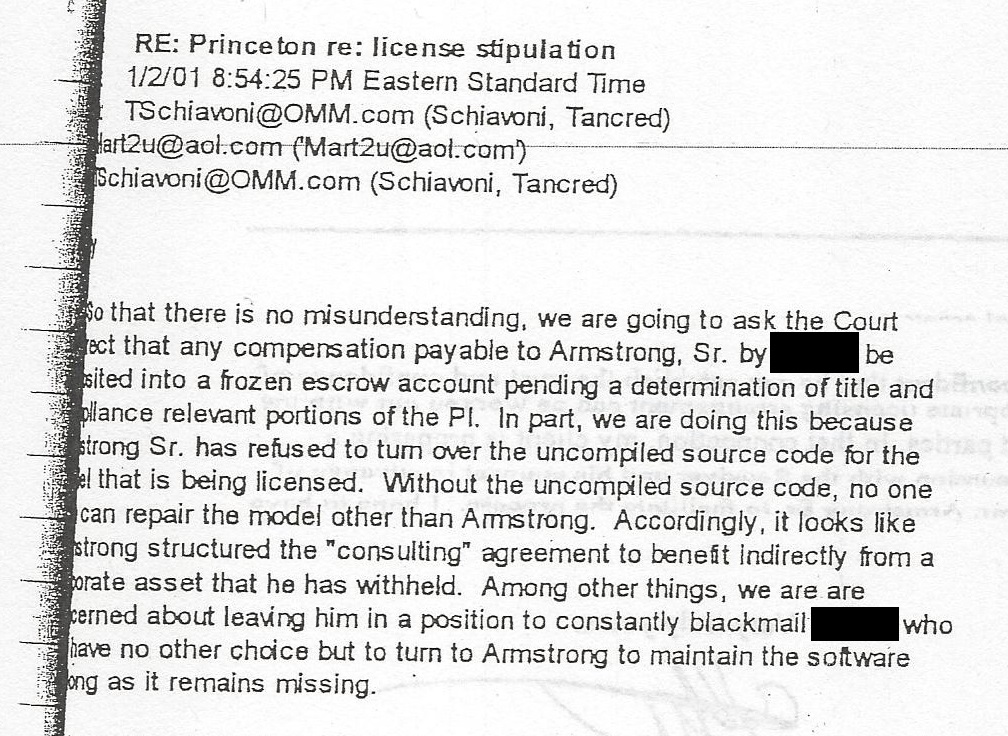
When I offered to run any war study they wanted, they flatly said that they had to “own it.” They would have kept me in contempt for the rest of my life if it had not been for the Supreme Court ordering them to respond what they hell were they doing. Then they demanded the source code. When you dance with the devil, be prepared for the fact they will kill you and then go have a nice dinner. They will NEVER change!
Posted originally on Mar 9, 2026 by Martin Armstrong
COMMENT: Marty, a number of us are sending letters to Trump that he should be consulting with you and Socrates for your track record is unprecedented. Other countries respect you. Your own tries desperately to marginalize you. The neocons are destroying the world. We have to at least try. I hope you got everyone out of Dubai.
ED
REPLY: I respect that. It would take much more than a single letter. The Neocons are intimidating people in Congress and the Senate not to listen to our forecasts. They are no different from the bankers who always blamed me for their own stupidity. As you see in Europe, the presumption is always silence your opposition to retain power. The Ayatollah did that in 1979 and any opposition was called an agent of the Great Satan or Little Satan. The EU uses this on anyone who is anti-war calling them a Putin Supporter. The Neocons are using that tactic against me. They think they can rule the world usurping our Foreign Policy circumventing Congress and the people.
Thank you for all the inquiry about our staff in Dubai. Everyone is now safely out. The local scuttlebutt is that there is only 10 days of food left in Dubai. It is not just a crisis in shipping oil, it is also a crisis in food supply. As always, the Neocons assume instant victory, never anticipate what comes next. As I have warned, this is different aside from Iran being 3 times the size of Iraq. This is religious. This is NOT a simple territorial war. The Neocons judge the world only by what they think. They are making the very same mistake they made with Afghanistan. Clearly, religion was the indispensable ingredient that made the Afghanistan conflict unwinnable for conventional superpowers. The Neocons advising Trump do not care about the country and they certainly do not care about Trump and how he will be remembered.
Three days after that summit meeting, on August 18, 2025, Russia announced they were restarting Russia’s Arctic-2 LNG production facility. Russia would be more than doubling their capacity to generate and store liquified natural gas (LNG). Why? They understand the risks of war with Iran far better than those advising Trump, who was told this will be short and sweet. Obviously, it makes no sense to increase production in the fact of sanctions. However, if you expect Iran to target refineries and bring the entire West to its knees, then its time to restart producing even more LNG doubling the supply when Russia was already overproducing LNG. The computer has been waring rising volatility starts in April into July. The writing is on the wall. The Neocons refuse to read.
I have created this site to help people have fun in the kitchen. I write about enjoying life both in and out of my kitchen. Life is short! Make the most of it and enjoy!
This is a library of News Events not reported by the Main Stream Media documenting & connecting the dots on How the Obama Marxist Liberal agenda is destroying America






 Centinel2012