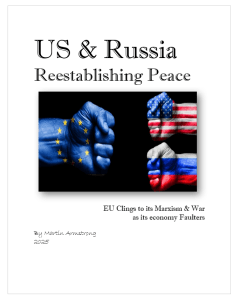
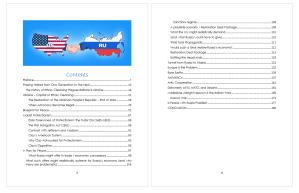
I urge everyone to read my Peace Proposal that details the intricacies of restoring global order. The importance of restoring peace is paramount. Without peace, we will be forced to endure World War III—the destruction and loss of life is unfathomable. Share this document with whoever is willing to listen.
The core of the peace plan is as follows. Yet, it is essential to read the full proposal to understand why these solutions could restore peace and change the course of history.
A plausible scenario / Restoration Deal Package
Putting the above together, a possible realistic “Restoration Deal” (from Russia’s perspective) might look like this:
Russia agrees to end the Ukrainian War in return for the honoring of the Minsk Agreement, a freeze of conflict lines, and allow the Donbas to vote on their basic human right to decide their own fate
In return, the U.S. (and EU) lift key sanctions on energy, rare earth exports, and financial transactions in stages
Russia commits to independent oversight (by international monitors) of resource exports, pricing, and revenue accounting
What the U.S. might realistically demand
(and what Russia would have to give)
From the U.S. (and allies) side, the demands would likely include:
Full transparency, auditing, and verification (to ensure that Russia does not exploit the relief to fund further military aggression)
Oversight on technology transfers and security constraints
Guarantees that lifted sanctions are reversible if Russia reneges
Some quid pro quo on Ukraine: withdrawal, territorial concessions, ceasefire, no reparations payments for Ukraine
Human rights, protection of minority groups, recognition of international law norms, and any Ukrainians located in the Donbas should be compensated to vacate the region
Russia would effectively have to offer more than just trade goods—it would have to offer political concessions, oversight, and legal guarantees that would enable it to join the world economy as an equal partner
Would such a deal restore Russia’s economy?
These proposals will help stabilize and revive parts of the Russian economy, but it will take time to establish a full “restoration” since that is not possible in the short-term. Some likely outcomes:
Increased export revenues from resource and rare-earth deals
Inflow of foreign investment (if investor confidence returns)
Technology and capacity rebuild via joint ventures
Partial reintegration into global financial systems (banking, capital markets)
Pressure/drive for domestic reforms (if tied to the deal)
If Trump stops listening to these losers who have never won a single war to date yet have created the largest perpetual rolling debt for their personal hatreds. Perhaps we stand a chance for peace. In these meetings with Zelensky, Trump must abandon Europe and the Neocons and be the real peacemaker. Zelensky must be stripped of his arrogant, greedy power.
My ultimatum would be simple
(1)You will honor the Minsk Agreement and allow the people of the Donbas to vote on their human right to remain as part of Ukraine, which hates their very existence and has engaged in ethnic cleansing.
(2) If Zelensky refuses, I will impose sanctions on Ukraine, and NO American company will be allowed to invest in Ukraine to cut off his trillion-dollar rebuild dream to become the richest billionaire of Ukraine.
(3) If NATO or the EU refuses to honor the very agreement that they signed, the US will withdraw from NATO.
(4) We cut a deal with Russia, allowing American companies to enter joint ventures in Russia to exploit the rare earths and resources with a joint guarantee that their investments will be safe.
(5) All sanctions of Russia are to be lifted, including the Magnitsky Act, with the sole exception of sanctions that were against individual spies.
(6) Agree to do a joint venture in the Arctic and Antarctica for natural resources and accept Putin’s proposal for a tunnel to Alaska.
Bottom line
(1) Drop all Sanctions
(2) Allow Joint Venture in Russia Jointly Guaranteed
(3) Agree to establish free trade zones
(4) Allow the Tunnel from Russia to Alaska
(5) EU must honor the Minsk Agreement or the USA exits NATO
(6) Ukraine must allow elections and must honor the Minsk Agreement or executive order prohibits all investment in Ukraine by any American company directly or indirectly
(7) If the Donbas votes to separate as in Czechoslovakia and in the Balkans, then they are to recognized by the United Nations or US withdraws all support for the United Nations.
Economic decline produces tensions, and this is what we are witnessing on a global scale, primarily due in part to the crisis in sovereign debts that nations are increasingly finding more difficult to service. The risk of a sanction producing war is far greater during an economic contraction, especially when Russia looks at this as a confrontation with NATO rather than Ukraine.
Posted originally on Oct 27, 2025 by Martin Armstrong |
Companies are downsizing as the future looks bleak. Third-nation outsourcing is prevalent, and the domestic workforce is tightening. Several corporations shrank their workforce significantly this year in a trend that will continue as the economy turns down.
GEICO insurance company, a subsidiary of Berkshire Hathaway, reduced its workforce by 30,000 positions. Insurance may have seemed like a stable industry, but insurers are facing high competition and lower margins. The company believes it can save $20 billion annually by scaling its workforce and moving some of its operations to Florida. Many of these positions related to network management, data, security operations, and customer service are now automated.
Intel Corporation shed 24,000 positions this year but plans to continue layoffs through the rest of Q4. Intel believes it only needs to retain 75,000 “core employees” from the initial 99,500 it had at the beginning of the year. Semiconductor manufacturing is of the utmost importance, and resources must be redirected toward manufacturing. A downsizing of this size signals a complete structural change in the company.
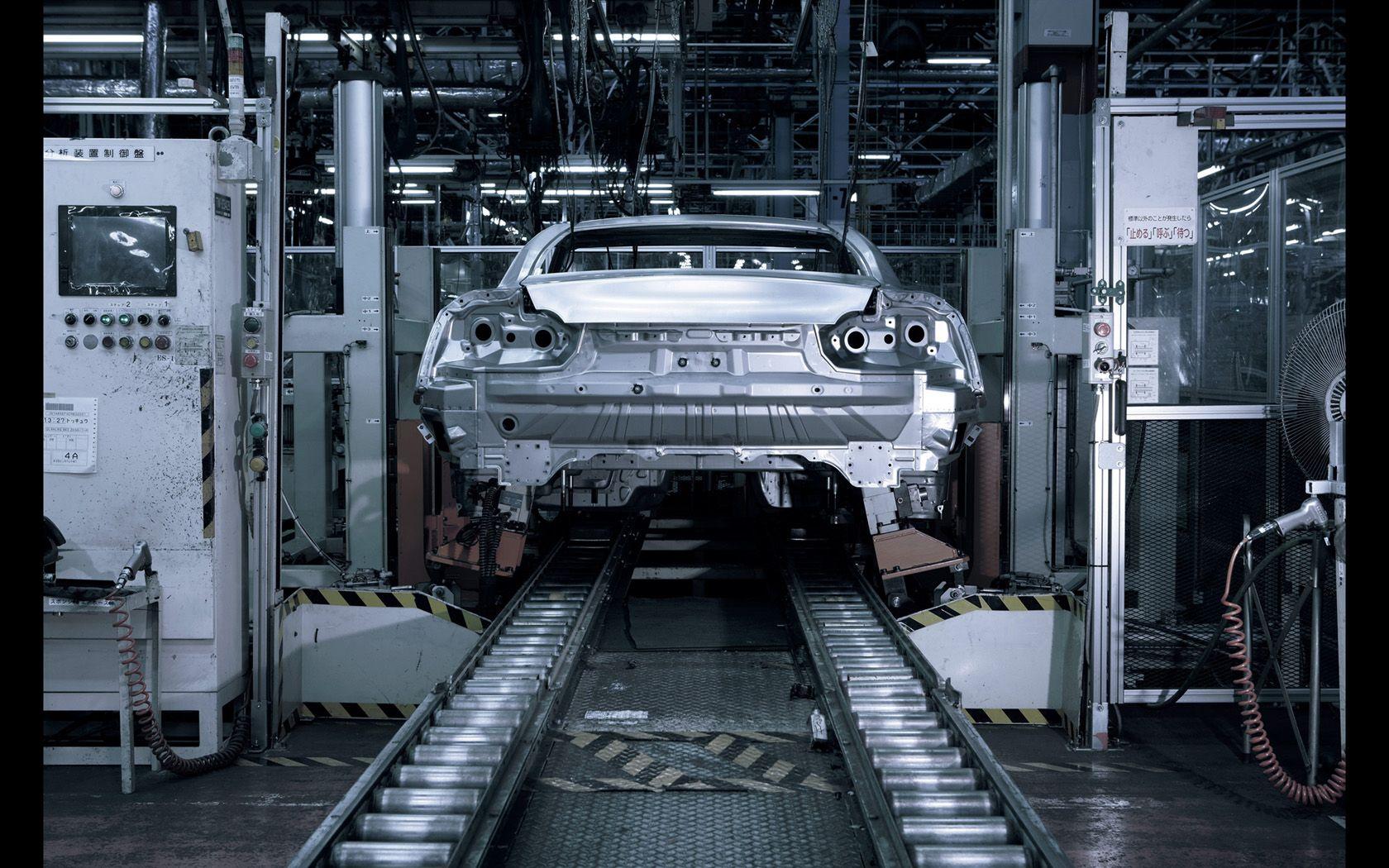
At the beginning of the tariff debacle, UPS announced it was cutting 20,000 jobs. The market is extremely competitive, and margins have slimmed due to tariffs and supply chain issues. UPS believes it is “future-proofing” its company by relying more on automation than human workers. Warehouses and distribution centers have been the first line of attack for AI replacement.
Nissan was forced to close seven manufacturing plants due to weak sales. The company initially planned to slim its workforce by 11,000 but cuts nearly doubled to 20,000. The auto industry has been weakened on a global basis. Chevron also plans to cut its workforce by up to 20% by the end of 2026. Ford eliminated bonuses for 3,300 managers and eliminated 1,000 manufacturing jobs. Stellantis eliminated 900 workers and Tesla laid off 10% of its global workforce amid weakened EV demand and stiff competition from China.
Companies are seeking to increase their slim margins by streamlining operations and are quick to automate positions when possible. As noted last week, Amazon, the second-largest employer in the USA, believes it can cut its workforce by 600,000 within the next few years. Lowering the cost of borrowing will not entice companies to take on more debt. Conditions have changed and companies plan to cut costs rather than profits. It is clear which industries are facing challenging times ahead as the world economy turns down.
Posted originally on Oct 27, 2025 by Martin Armstrong |
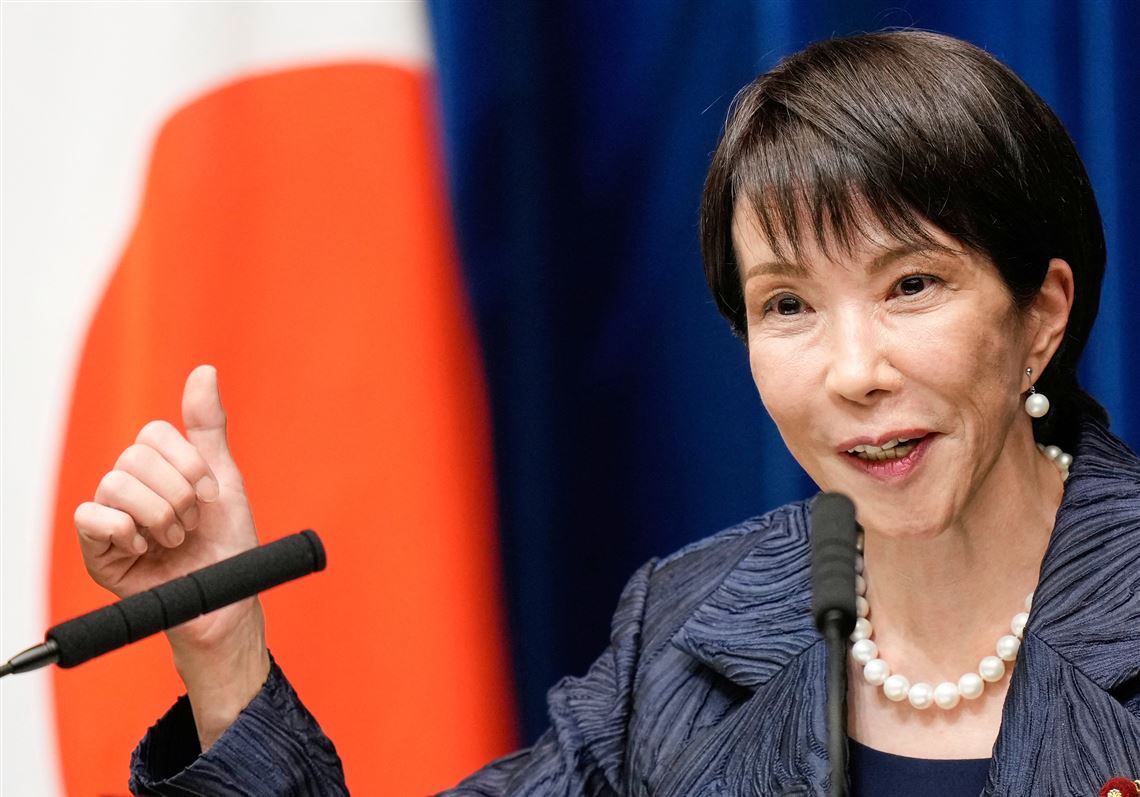
Japan’s Prime Minister-in-waiting Sanae Takaichi has been dubbed Japan’s Donald Trump for her nationalist views. Japan does not have a massive refugee problem. The small nation has always sought to preserve its cultural identity throughout history, and as such, has maintained a high-trust society. Takaichi warned that Japan will not bend to globalist forces, pointing the finger at Europe and vowing to maintain Japan’s individuality.
“Unchecked immigration has led to serious social problems in parts of Europe. Japan must not repeat those mistakes,” Japan’s first female prime minister warned.
Takaichi pointed to Europe’s “open border” failure that led to unrest and a decaying society. Japan will continue to remain “socially stable and culturally intact.” The media is portraying her as anti-immigration, but there is a vast difference between immigration and illegal migration. “We will support foreign workers in sectors that truly need them, but only those who have the skills, discipline, and respect for our way of life,” she said in a separate interview.
Societies have historically crumbled through invading forces. Europe is the unfortunate case study for what happens when leaders abandon all national policies from migration to monetary concerns.
“Japan is a country with a beautiful culture and social harmony that must be protected. We welcome foreigners who respect our laws and customs, but will respond firmly to those who do not,” she added. Japan does not need to implement mass deportation programs because it never adopted open border policies. Globalist nations have been urging Japan to drop security and permit more unchecked “refugees” into its lands. Japan is standing tall amid Takaichi’s rule and prioritizing citizens over globalist causes.
Posted originally on CTH on October 26, 2025 | Sundance
Malaysia hosted the ASEAN conference attended by President Trump and positioned themselves very favorably for warm ongoing relations with the United States.
As President Trump thanked the various dignitaries for their warm hospitality, he invited them to the USA and delivered personal messages of great appreciation. The departure ceremony is below. WATCH:
Posted originally on CTH on October 26, 2025 | Sundance
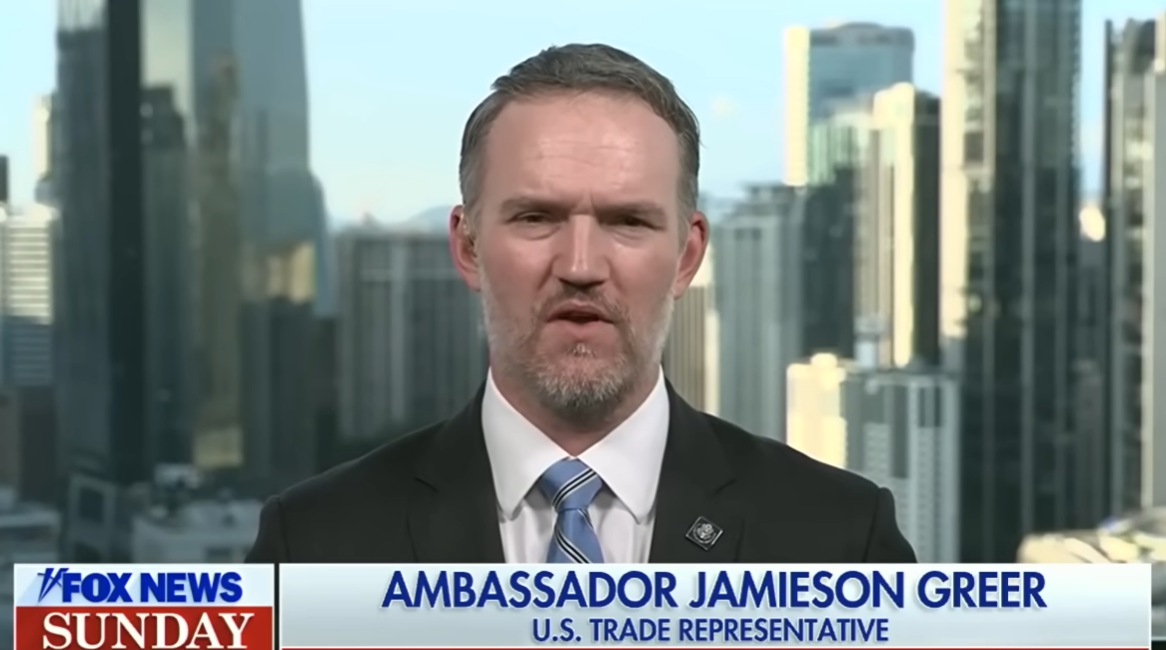
United States Trade Rep. Jamieson Greer is a very solid member of the Trump trade team. Having learned at the knee of former USTR Robert Lighthizer, you can see the stability of thought in the consistency of approach.
USTR Greer outlines the ongoing discussions between the U.S. and China on the framework of a stable trade relationship. Against a myriad of geopolitical chess moves on the economic and trade front, Greer and Treasury Secretary Bessent play key roles in executing the Trump Doctrine.
.
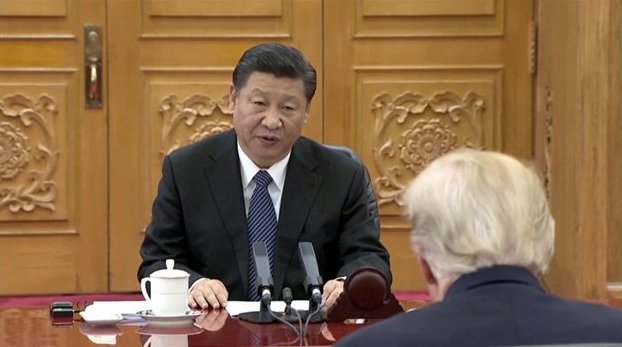
In the background of the President Trump and Chairman Xi meeting, we can see the broad contours of President Trump’s strategy toward both the Russia-Ukraine conflict and the China-Canada trade relationship.
If President Trump can formulate a strong, actionable and enforceable free trade agreement with Chairman Xi, it will undercut the ability of Canada to assemble cheap component goods not available in the U.S. manufacturing equation for total cost of goods. This puts Trump in an even stronger position heading into the 2026 USMCA (CUSMA) dissolution phase.
Additionally, despite the mainstream thoughts to the contrary, putting distance between Russia and China is not averse to the interests of Russian Federation Vladimir Putin, who would strategically prefer to do business with the ‘West’ over Beijing. However, China does not want to see their Biden-created tentacle weakened in Russia.
China retains a vision of a global financial market option beyond the dollar, and Xi plays that long-term strategy game with Putin quite effectively. It is only President Trump who holds the key to weakening that strategy, and Chairman Xi likely reminds everyone -through his emissaries- that they can wait out the Trump administration.
During the ASEAN conference, again we see President Trump drawing heavily on the personal factor as a part of his strategic influence operation to push distance between Southeast Asia and Beijing. Cunning Panda can undoubtedly see that play, however, culturally they may underestimate the strength of the dynamic. President Trump leverages the world’s biggest market with a smile. The world’s biggest sellers want and need to keep that smile on the face of their #1 customer.
Jamieson Greer, like Scott Bessent, both outwardly show their respect for this intrapersonal dynamic that President Trump uses in these negotiations, and it is very interesting to watch the recipients of President Trump’s praise remain positioned to receive it.
President Donald Trump is a friendly dealmaker, until he is not. Southeast Asia understands this dynamic very well.
It is a pleasure to watch the U.S. economic team circle the concentric interests into alignment and then stand back and let the closer finish the deals.
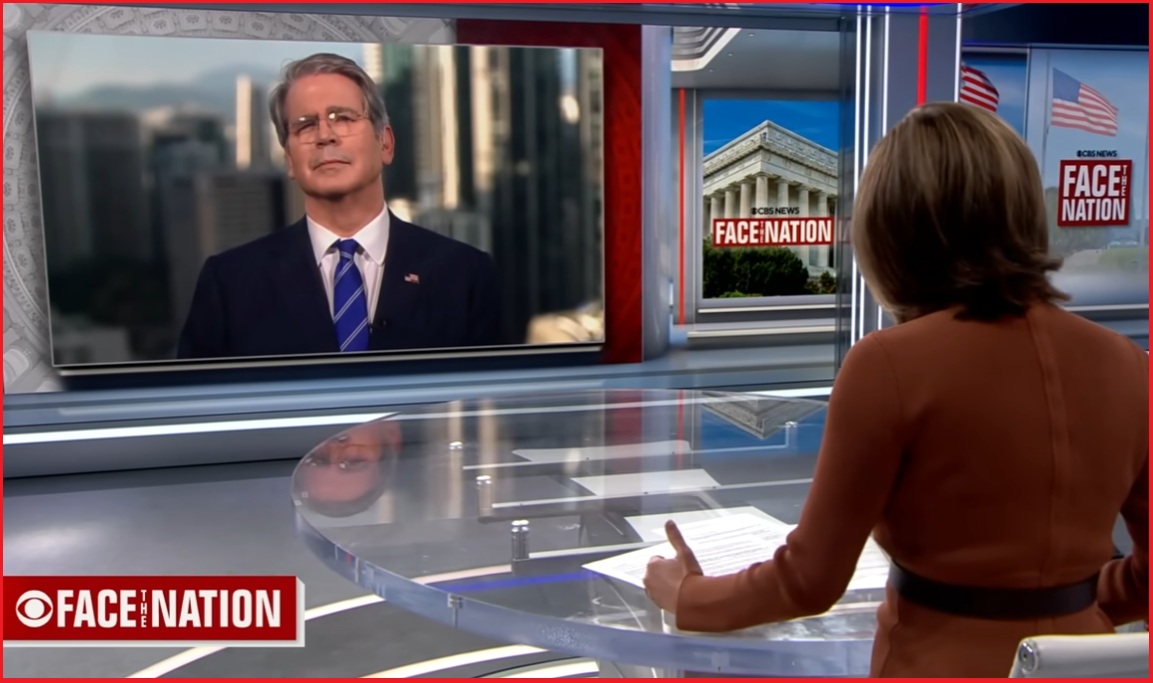
CBS stenographer Margaret Brennan attempts to play the role of geopolitical trade expert in this interview with Treasury Secretary Scott Bessent. She fails miserably.
Secretary Bessent gives a few more details on the upcoming trade agreement that will be signed by President Trump and Chairman Xi at the upcoming meeting in South Korea. Brennan asks if the export controls on Chinese rare earth minerals “will be lifted.” Bessent reminds Brennan the export controls have never been imposed. lol WATCH (or read):
[Transcript] – MARGARET BRENNAN: We begin this morning with Treasury Secretary Scott Bessent, who is traveling with President Trump. He joins us from Kuala Lumpur, Malaysia. Good evening to you.
TREASURY SECRETARY SCOTT BESSENT: Margaret, good to speak to you.
MARGARET BRENNAN: You have been negotiating directly with the Chinese. You said today a truce may have been reached. The threat on the table was a 155% tariff on China. The President said that would be effective November 1. Is that off the table? What are the terms?
SEC. BESSENT: Margaret, I think we had a very good two day meeting. I would believe that the- so it would be an extra 100% from where we are now, and I believe that that is effectively off the table. I’m not going to get ahead of the two leaders who will be meeting in Korea on Thursday, but I can tell you we had a very good two days. So I would expect that the threat of the 100% has gone away, as has the threat of the immediate imposition of the Chinese initiating a worldwide export control regime.
MARGARET BRENNAN: That export control on rare earths, which is used in all sorts of electronics and automobiles. That will be lifted?
SEC. BESSENT: Well, it was never imposed, so they threatened to impose it in December, and President Trump, to give me and the trade team leverage, decided that it would be a good idea for him to threaten a 100% additional tariff, and it did give us a great deal of leverage. President Trump’s very good at creating leverage for us. This is the fourth meeting- excuse me, the fifth meeting that we’ve had with the Chinese. My Chinese counterpart is the Vice Premier, He Lifeng, so we had a very good two days. We discussed a wide variety of issues, from the rare earth- from the rare earth magnets to trade, to substantial purchases of American agricultural products, to the Chinese helping us in this fentanyl crisis that we have in the US.
MARGARET BRENNAN: On the purchases of American goods. American farmers have been hit hard by China’s boycott of American soybeans that went into place after the tariff war began here. The administration is pumping at least $3 billion in financial aid to farmers to help make them whole, or at least offset the pain. Can farmers expect to sell their soybeans to China again and when?
SEC. BESSENT: Margaret, I’m not going to give you the details here, but I can tell you that the soybean farmers are going to be extremely happy with this deal for this year and for the coming years.
MARGARET BRENNAN: A few weeks ago, there was a photographer who snapped a photo of you texting with the agricultural Secretary about this. She indicated concern about the unintended damage to American farmers from the U.S. financial lifeline being given to Argentina because that country was able to sell more to China, that gave Beijing leverage over the United States. Is that leverage still a problem today?
SEC. BESSENT: Well, first- first of all, the text from Secretary Rollins was talking- talking about a purchase of soybeans that the Chinese did and Margaret, those soybeans were always going to get purchased. They just did it at a time when the Argentines had lifted their export taxes. So those- those soybeans, were always going to be on the market. It’s a global market. The three leading suppliers are Brazil, Argentina and the U.S. And I believe that we have brought the market back into equilibrium, and I believe that the Chinese will be making substantial purchases again.
MARGARET BRENNAN: So you dispute the idea that America hurt itself by giving this $20 billion lifeline to Argentina? Can you guarantee Americans, they’ll be made whole on that?
SEC. BESSENT: Margaret, I can tell you that the Exchange Stabilization Fund has never lost money. It will not lose money this time. And we are not giving money to Argentina. It is a swap line, which the U.S. has done many times in the past, and we’ve never lost money
MARGARET BRENNAN: On the Chinese, I saw that you mentioned TikTok was discussed. Are the details of the President’s Executive Order, released in September, are those finalized? Has China agreed to give up control of the algorithm that determines what users see?
SEC. BESSENT: Margaret, we reached a final deal on TikTok. We reached one in Madrid, and I believe that as of today, all the details are ironed out, and that will be for the two leaders to consummate that transaction on Thursday in Korea.
MARGARET BRENNAN: Can you tell us any details of that transaction?
SEC. BESSENT: Margaret, I’m not part of the commercial side of the transaction. The- my, my remit was to get the Chinese to agree to approve the transaction, and I believe we successfully accomplished that over the past two days.
MARGARET BRENNAN: Over the past two days, did the U.S. make any concessions here beyond what we discussed with the tariffs? Are you dropping restrictions on exports of, for example, semiconductor chips, or restrictions on Chinese investment in the United States?
SEC. BESSENT: There have been no, no changes via- in our export controls.
MARGARET BRENNAN: When presidents Xi and Trump are able to speak on Thursday. Do you believe that the president’s position here, his ability to negotiate a deal with China, is going to be hurt by the fact that he’s been unable to get a deal here at home, to reopen the US government?
SEC. BESSENT: Well, look, I don’t think it’s going to, I don’t think it’s going to hurt. It’s a global embarrassment what these Democratic senators are doing, keep- keeping the government shut down. I mean, look at the numbers. It’s 52-3, 52 Republican senators, three Democratic senators have come across the line. So I just think it’s an embarrassment, doesn’t affect his ability on the international stage. Now what it does affect, it’s starting to affect the economy. It’s starting to slow down air traffic. And I would urge moderate Democrats to be heroes, come across the aisle, like they did in the spring, and pass a clean CR.
MARGARET BRENNAN: A continuing resolution just to fund the government without any add-ons. Does that mean when the President comes back to the United States, he’s going to summon congressional leaders to the White House to end what you call the global embarrassment?
SEC. BESSENT: I don’t know what good it does to summon them to the White House. This is a Democratic-led boycott, and I’m just not sure what they’re doing. What’s changed between now and March other than Chuck Schumer’s poll numbers? And I think Hakeem Jeffries is now going to be primaried from the left, and I didn’t think there was a lot of room over there. So both of them are worried about their primaries, and not the American people, not the government employees, not our military employees, because we were able to pay the military employees from excess funds at the Pentagon, middle of this month. I think we’ll be able to pay them beginning in November. But by November 15 our troops and service members who are willing to risk their lives aren’t going to be able to get paid. What an embarrassment.
MARGARET BRENNAN: Understood. We’ll talk to Hakeem Jeffries later in the program. I want to ask you about what the President just announced in regard to Canada. Today, the President said he wants to raise tariffs on Mexico. Yesterday, he said he’s going to raise tariffs on Canada by 10%. He blames what he called a fraudulent ad that featured Ronald Reagan advocate- advocating for free trade. It was put up by the province of Ontario. Is this ad really the issue here, or is it just a tactic in this negotiation? Does the President want the USMCA free trade deal renegotiated, or is he looking to do two separate deals, one with Canada, one with Mexico?
SEC. BESSENT: A lot of questions there, Margaret, but let’s go to the first one. I’ve read that the province of Ontario is spending up to $75 million on these advertisements, and it’s propaganda coming across our border to decry the tariffs. So the Premier of Ontario seems to have come off the rails a little. He has taken the ads down. But what’s the purpose of that other than to try to sway U.S. public opinion? We’ve seen the- I’m sure the- you at your network have decried election interference. Well, this is interference in U.S. sovereign matters.
MARGARET BRENNAN: But is it really the premise for damaging negotiations with a top trading partner?
SEC. BESSENT: Well, it’s clearly damaged our relationship the- with the most populous province in Canada.
MARGARET BRENNAN: When it comes to inflation here at home, the president said it’s been defeated. But as you know, that core inflation edged up to 3% in September, less than forecast, hotter than August. But for people at home, they are seeing prices still high on furniture, energy, gardening, lawn care, apparel. Do you expect these things to cool off and when?
SEC. BESSENT: Well, it is cooling off because the core inflation number that you referenced was 0.2% which is down the- from the previous sequence over the previous months. And you listed the things that are up, but we’re seeing plenty of things that are down, whether it’s energy and rents. Inflation is a composite number, and I think we are on a glide path to lower inflation over the coming months.
MARGARET BRENNAN: Lower inflation, but not necessarily that Americans will look around and things have gotten cheaper.
SEC. BESSENT: Margaret, again, there’s affordability and then there is inflation. So some of the things that can get cheaper, rent has gotten cheaper, mortgages have gotten cheaper. We are at, I believe, an 11 or 12 month low on mortgage rates.
MARGARET BRENNAN: Mr. Secretary, before I let you go, I want to ask you, the U.S. sanctioned Russia’s top oil and gas companies this past week, but Vladimir Putin’s envoy, who is here in the United States, Kirill Dmitriev, I know you know him, said the sanctions will have, quote, “absolutely no effect on Russia’s economy. They will simply lead to higher prices at gas stations in the United States.” Is Dmitriev wrong? And when will Russia actually feel the pain?
SEC. BESSENT: Well, I think Russia is going to feel the pain immediately. I can tell you that we’ve already seen India has done a complete halt of Russian oil purchases. Many of the Chinese refineries have stopped. And Margaret, are you really going to- the- publish what a Russian propagandist says? I mean, what else is he going to say? That oh, it’s going to be terrible, and it’s going to bring Putin to the table. Of course- the Russian economy is a wartime economy. Growth is virtually zero. Inflation, I believe, is over 20% and everything we do is going to bring Putin to the- to the table. It’s oil that funds the Russian war machine, and I think we can make a substantial dent in his profits.
MARGARET BRENNAN: I understood, you had some competing noise there, but just to be clear, Dmitriev is in the United States because sanctions were- were lifted on him to conduct meetings here, including with President Trump’s envoy, Steve Witkoff. When you say he’s a propagandist, do you mean that we shouldn’t listen to anything he says?
SEC. BESSENT: I- what do you- what do you think is going to happen to him if he goes back home and says the- the- good lord. What if he had said on TV, this is terrible, President Trump just did the right thing. This is a maximum pressure campaign that’s going to work. Margaret, what’s he going to say? Of course, he’s going to say this. If you go through and look at every Russian talking point, they seem to use the word, we have immunized the economy against this. Well, they haven’t immunized the economy. Their oil earnings are down 20% year over year. I would suspect that this could take them down another 20 or 30%. So again, President Trump was criticized for not doing enough. He takes his bold maneuver, and then you’re quoting a Russian propagandist.
MARGARET BRENNAN: All right, we’ll leave it there with you, Mr. Secretary. I know you’ve had a long day. Thank you for your time.
Posted originally on CTH on October 26, 2025 | Sundance
Treasury Secretary Scott Bessent made the legacy media rounds Sunday saying that he and his Chinese negotiating counterpart had reached an agreement on export controls for rare earth minerals, that would lead to the United States not imposing 100 percent tariffs on China.
Secretary Bessent said that trade negotiations with China had been very productive. The plan was to create a deal for President Donald Trump’s meeting with Chinese Chairman Xi Jinping this week in South Korea. However, NBC’s Kirsten Welker was not prepared for Bessent to make a positive announcement about U.S-China trade negotiations.
Because the script in front of her did not factor in the announcement by Bessent, what you see is Secretary Bessent breaking news about a U.S-China trade agreement, but Welker’s pre-scripted follow up questions didn’t align with that news. Welker ends up asking about tariffs and rare earth minerals, after Bessent says a deal to avoid tariffs and retain rare earth mineral access was developed.
Welker then continues asking about U.S-China trade conflicts until Bessent makes the point of saying something akin to ‘can you not hear me, the trade friction is resolved.’ Welker is then forced to abandon her script and ask about Canada. WATCH:
I have created this site to help people have fun in the kitchen. I write about enjoying life both in and out of my kitchen. Life is short! Make the most of it and enjoy!
This is a library of News Events not reported by the Main Stream Media documenting & connecting the dots on How the Obama Marxist Liberal agenda is destroying America