Only 46% of Americans have Adequate Emergency Savings


Posted originally on Oct 20, 2025 by Martin Armstrong |  

Roll Cash

Three to six months of emergency expense savings has been the standard caution. Rising inflation, lower purchasing power, and a contracting job market have put a dent in American household savings, and it is safe to say this trend is common among all nations grappling with the cost-of-living crisis. At present, 46% of Americans have enough emergency savings tucked away to cover three months of expenses.

A Bankrate survey found that nearly a quarter of Americans do not have anything saved, while 30% have some savings but not enough to cover three months of expenses. About 19% of respondents said they could cover three to five months of living through emergency savings, and 27% have enough to cover six months. Eighty-five percent of respondents said they need at least three months of emergency savings to feel comfortable, but again, only 46% have that amount saved.

Baby Boomers are relatively fine—41% could comfortably cover six months of expenses. A quarter of Millennials believe they have six months covered, while only 20% of Gen X and 10% of Gen Z could say the same.

Living expenses continue to rise, purchasing power continues to decline, wages are stagnant, and the people are unable to save. The issue here is that the economy is not as robust as data would indicate. In fact, one in three adults tapped into their savings accounts between February 2024 and February 2025. Over 80% of those who took out savings did so to pay for the essentials. Consumers have already tapped into credit, as 33% of Americans have more credit card debt than emergency savings.

Millions of people are unprepared for an economic downturn. This is not the result of poor financial planning but the outcome of abrupt fiscal policy changes. The average person could not have fathomed the current prices of goods. Cheap credit during the pandemic provided the illusion of a government backstop. The Fed lowered rates as the people took on more debt, believing it was “cheap” debt, but everything comes at a cost. This will eventually fall on the banks when the time comes and they are unable to collect. More importantly, civilization becomes utterly unsustainable when the majority are unable to meet expenses. This plays into a larger role of what’s to come as we reach the sixth wave in 2032—the people will have nothing to lose but the current system that has failed them.

Could France’s Nuclear Program Protect Europe?


Posted originally on Oct 20, 2025 by Martin Armstrong |  

World Nuclear War 4

French President Emmanuel Macron believes his nuclear arsenal has the power to protect all of Europe. Macron firmly believes that France does not need the United States, especially under Donald Trump, and continues to reassure Europe and NATO that his nation could supplement the United States’ potential absence from the alliance.

The United States has the second-largest nuclear weapon stockpile in the world. As of January 2025, the US held 3,700 warheads, including 1,770 intercontinental ballistic missiles (ICBMs) and submarine-launched ballistic missiles (SLBMs). There are an additional 1,300 retired warheads waiting to be dismantled, and a further 1,938 warheads in reserve, which brings the total number of nuclear devices (on file) to 5,000.

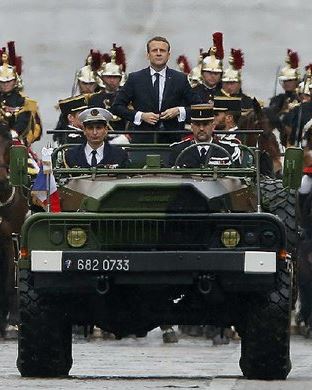
Macron in Military Parade

America continues to upgrade and replace its nuclear weapons at a rapid pace. There is a reason the world points to America as the hub of the military-industrial complex. The Department of Defense budgeted $49.2 billion specifically for nuclear weapons in FY2025 alone and the Department of Energy budgeted another $32.7 billion for warhead maintenance and modernization. The Congressional Budget Office estimates that the US will spend nearly $1 trillion on its nuclear weapons program from 2025 to 2034.

In stark comparison, France has 290 nuclear warheads. The number in its arsenal remained relatively unchanged year-on-year. France plans to spend €5–6 billion per year ($5.4–6.5 billion) on its nuclear weapons program in 2025. Although the figure represents about 15% of the national defense budget, it is a drop in the bucket compared to America’s $81.9 billion annual nuclear budget.

France’s nuclear arsenal is not large enough to act as a global deterrence. The US military has strongholds throughout the world—the Middle East, Europe, Asia, South America, and Antarctica. It gained the title of the world’s global police force for a reason. America’s military presence can be felt and is feared. NATO would be extremely vulnerable without America’s nuclear and financial support.

One in, One Out – Migrant Shuffling across the UK and France


Posted originally on Oct 20, 2025 by Martin Armstrong |  

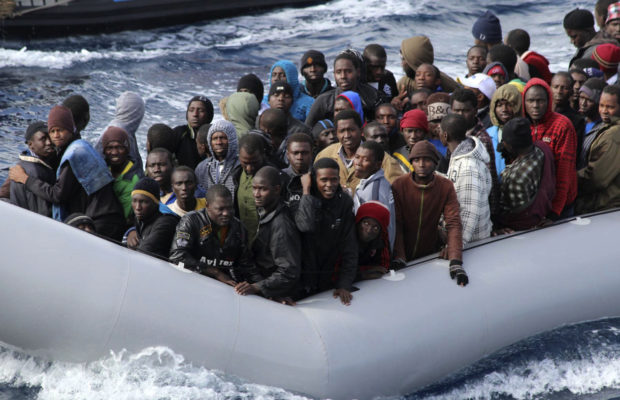
Refugees Just Men

France’s Emmanuel Macron and the United Kingdom’s Keir Starmer implemented the “one in, one out” program that has become the most blatantly ridiculous migration plan in modern history. France will take in migrants who attempt to enter the UK from French waters. In turn, France will send back an equal number of migrants to the UK in an equal swap.

How does this solve the migrant crisis? It doesn’t solve the crisis—these men are adamant on keeping the borders open. France has agreed to process all returned migrants, and those “vetted” will be permitted to return to the UK. The only qualifications are that they must pass a vague security check and have no record of attempting to enter the UK in the past. The program is designed to target single males, who represent the main demographic of “asylum seekers.”

UK Home Secretary Shabana Mahmood deemed the measure a “breakthrough” for migration. After all, the UK claims it needs to implement digital IDs to sort out migrants. The last administration attempted to broker the Rwanda scheme to combat illegal immigration and spent 700 million pounds on the measure. The result? FOUR migrants were deported.

“Those costs include £290million payments to Rwanda, chartering flights that never took off, detaining hundreds of people and then releasing them, and paying for more than a thousand civil servants to work on the scheme,” former Home Secretary Yvette Cooper announced. She dubbed the program a “asylum Hotel California” where people may come but never leave. “They just stay in the asylum system. Even if they’ve come here unlawfully for economic reasons and should be returned to their home country, they won’t be because the law doesn’t work,” she later added.

The Labour Government decided to maintain “asylum Hotel California.” The total number of “asylum seekers” returned to France under the current scheme was last slated at 26, while the total number returned to the UK is 18. The UK invested £100 million in enforcement support and will fund the majority of the program.

The UK processed 49,341 intruders within the first six months of the year, marking a 27% annual increase. An alarming 88% arrived via small boat, bypassing the once-feared British Navy via canoe. Prime Minister Keir Starmer is using France as a “safe third country” to legalize mass migration and is abusing tax dollars to repopulate the nation.

Did Trump Force Zelensky to Back Down?


Posted originally on Oct 20, 2025 by Martin Armstrong |  

Piegon_on_bronze_statue

COMMENT: Marty, we realize you have no respect for the Nobel Peace Prize after they gave it to Obama for absolutely nothing.  However, we should all nominate you because we also know you have been working the back channels in Washington and Moscow. It seems like Trump followed your recommendations for Zelensky to back down from no territory to surrendering the Donbas, as you have poinently argued would end the war. I have a friend who was with an embassy in Moscow. He said what they did to you gave you more credibility than anyone else from the Russian view.

We also know you have been trying to beat your own computer. If anyone can do it, it has to be you.

Tell Scotty to hold off on beaning you up just yet.

Paul

REPLY: I have been getting that a lot lately. They will never nominate me. I am that evil white man Hillary talks about. I assume that having a bronze statue is more practical. Pigeons need a place to perch and shit.

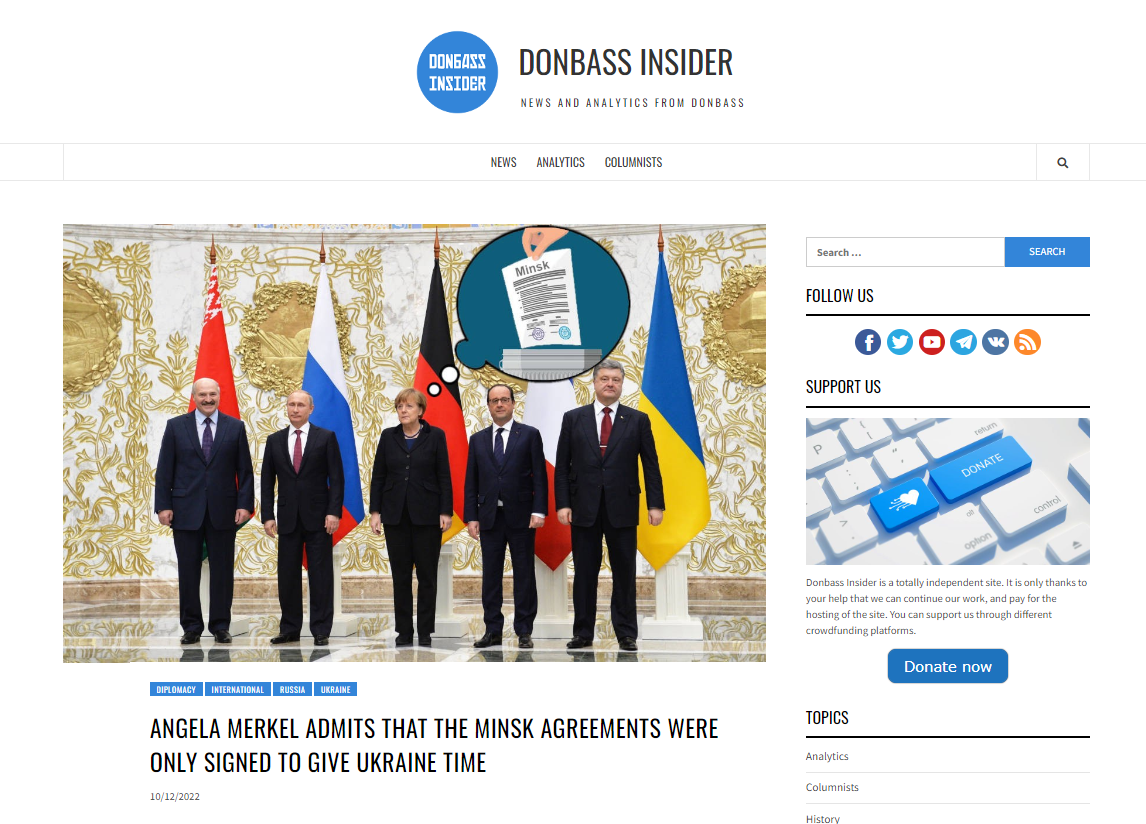
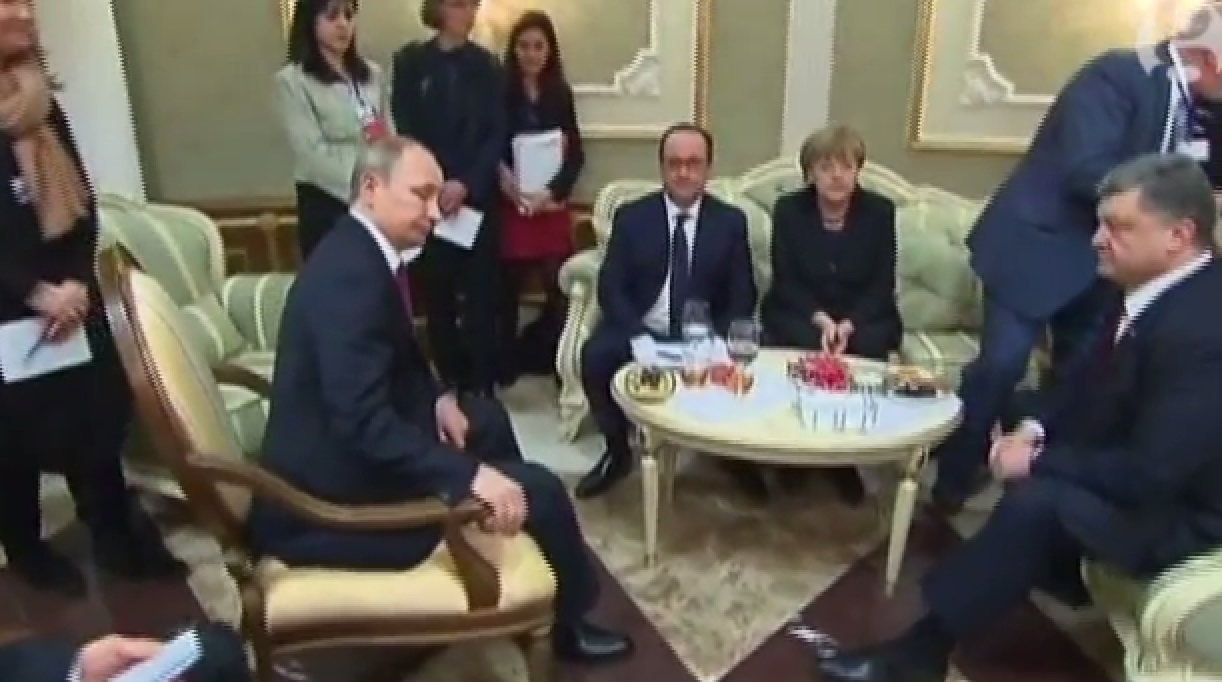
I cannot verify that Trump took my strategy to insist that the Minsk Agreement be honored if he refused to exit NATO to force the EU to heel, and to threaten an executive order prohibiting any American funds from being invested in Ukraine. My recommendations would shift the burden to Ukraine and the EU, where it belongs.

say the EU and Ukraine will reject any deal Trump does with Putin, so her bloodthirsty coniving needs to be circumvented. By demanding that the Minsk Agreement be honored, she cannot say this is Trump, and they had no say. The EU agreed and signed this deal, and then lied and never honored what they signed. Flipping this back onto the lap of Kallas, we would disarm her from claiming the EU was not part of any deal.

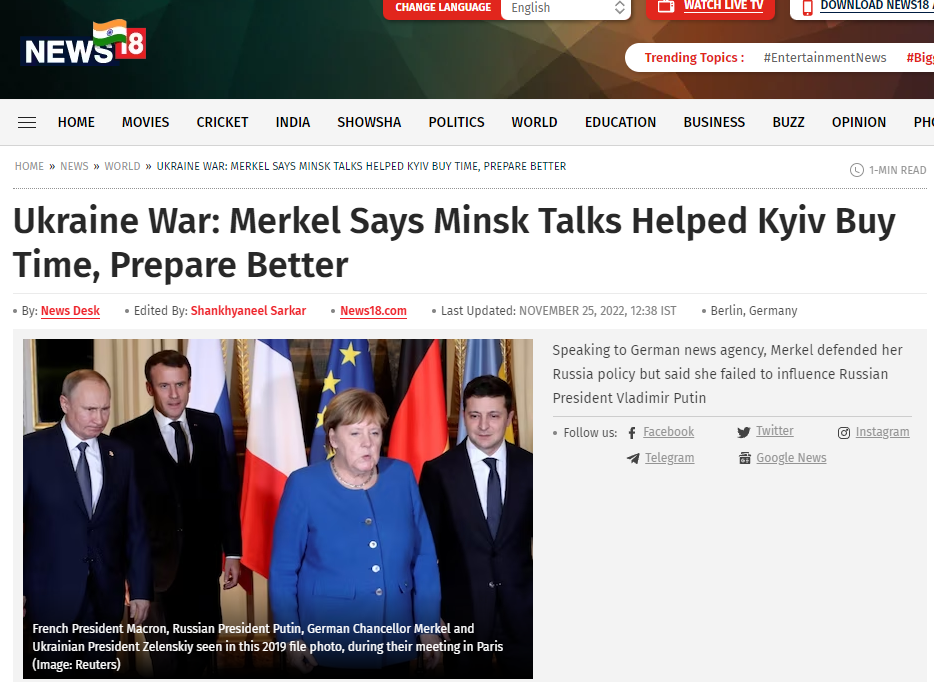
Merkel_Minsk_Buy_Time_to Prepare for wart
Merkel_admits_that_the_Minsk_Was Ploy
Minsk Agreement 2 13 2015

President Trump Holds Impromptu Press Conference Aboard Airforce One Returning to White House


Posted originally on CTH on October 19, 2025 | Sundance

President Donald Trump holds an impromptu press conference aboard AF1 as he returns to the White House from Mar-a-Lago.

President Trump previews a sanction regime he intends to place on the country of Columbia tomorrow. Trump also discusses the Virginia AG race, the government shutdown and the California funding issues. WATCH:

.

Fascinating Background – The CIA Was Misleading Witkoff and Kushner on Key Intelligence About Hamas During Critical Phase of Peace Negotiations


Posted originally on CTH on October 19, 2025 | Sundance

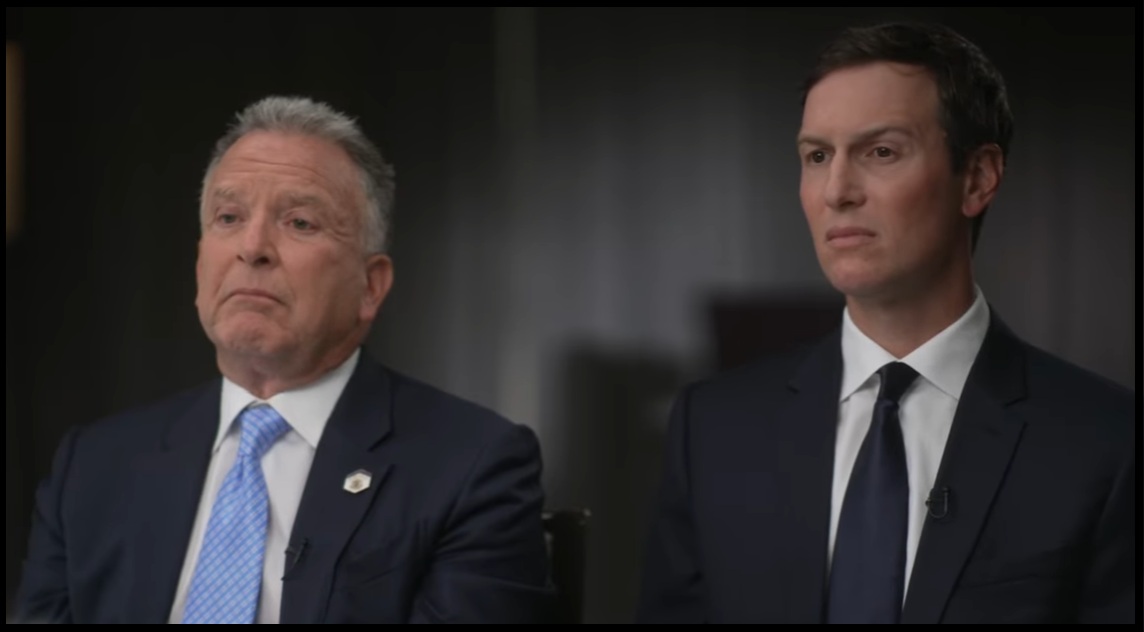
A fascinating hour-long interview with Steve Witkoff and Jared Kushner as they outline the backstory to the Israel-Hamas peace agreement in Gaza.

During a segment (prompted below) Witkoff and Kushner are outlining the step-by-step process as they engaged the leaders of Qatar, Turkey and Egypt.  Witkoff reveals how the CIA was briefing them both, multiple times a day, and the briefing itself was exactly the opposite of what Emir of Qatar and Presidents of Turkey and Egypt were telling them.  The CIA intelligence was the exact opposite of reality.  WATCH:

.

What they are describing is EXACTLY why we outlined how ‘outside govt’ emissaries were/are vitally necessary to work around the control agenda of the U.S. Intelligence Community.  This small example is stunning in magnitude when considered around the importance of the moment.

On a positive note, with Witkoff making this stunning public statement, we can now add a major datapoint to President Trump’s reference of NOT TRUSTING the CIA.  Combined with the previous assertions of Marco Rubio and Tulsi Gabbard on essentially the same level of outlook, this example of the CIA getting it wrong (misleading the administration) has long-range ramifications beyond the Hamas example.

With this backdrop for reference, surely now we can have an optimistic sense that President Trump doesn’t trust the CIA intelligence on the Russia-Ukraine conflict.

EU Central Banker Christine Lagarde Outlines the “Trillions at Stake” Within President Trump’s Geopolitical Reset


Posted originally on CTH on October 19, 2025 | Sundance 

Underpinning the contracting EU economy are two major forces.  First, the instability of their financial markets, thanks in majority to their catastrophic Build Back Better energy agenda.  Secondly, China exploiting the economic vulnerability and dumping massive amounts of cheap goods onto their consumer market.  Both forces are working against the EU economy.

To backstop the collapse, the EU is counting on expanded militaristic spending to get them out of their dead-end path.  Again, in majority, the economics of the thing is why they want expanded war with Russia – regardless of the detrimental outcome.  Without war they have to give up their Build Back Better green energy program.

In this interview, EU Central Bank President Christine Lagarde obfuscates both issues and points a finger at President Trump’s geopolitical economic and trade reset.  The only thing she accurately presents is the scale of the issue, the “trillions at stake” part.  WATCH (Transcript Below):

[Transcript] – MARGARET BRENNAN: We’re joined now by the President of the European Central Bank, Christine Lagarde. The ECB sets interest rates for many countries in the European Union, which is America’s largest trading partner. Good to have you here.

CHRISTINE LAGARDE: Lovely to be back, Margaret.

MARGARET BRENNAN: From where you sit, how would you describe the state of the global economy?

CHRISTINE LAGARDE: In transformation.

MARGARET BRENNAN: Transformation.

CHRISTINE LAGARDE: Transformation, I think caused by a couple of things. One is the tariffs, which have changed the map of trade around the world and reconstituted new alliances and reformed the way in which we trade with each other. I think the second major transformation is the impact of artificial intelligence on everything we do from data management to dating and everything in between.

MARGARET BRENNAN: Absolutely, and it’s changing how we even receive the data itself —

CHRISTINE LAGARDE: — Yep. —

MARGARET BRENNAN: — to indicate what’s happening, but the stock market has been up and down. I want to talk to you on the other side of this commercial break about some of the specifics with these trade wars and what else you’re seeing in Europe, but we’re going to take a quick break here. And we have more questions, but we have to come back in just one moment.

MARGARET BRENNAN: Welcome back to Face The Nation. We return to our conversation with European Central Bank President Christine Lagarde. You said the economy is in transformation. S&P Global forecasts Trump’s tariffs are going to cost global businesses upwards of $1.2 trillion this year, with a lot of those costs passed along to consumers themselves. You’ve said that many economists overestimated the impact of Trump’s tariffs. Does that mean you think we’ve moved past the point of risk or are we yet to feel the pain?

CHRISTINE LAGARDE: I think we’re yet to feel the pain. What we observe, I’ll give you some numbers. From Europe to the United States, our goods to the U.S. consumers had a tariff of 1.5. With the tariff that was decided by the U.S. administration, it’s gone up to 13%. So the question is, where does this additional 11-ish percentage point go? At the moment, it’s one-third on the exporter, so the European company, one-third of the U.S. importer and one-third of the consumer. What will happen, though, is that these two-thirds borne by two corporates, essentially, the exporter and the importer, is based on a squeeze of their margins. How long are they going to put up with a squeeze of the margin, to be seen. And when they don’t, because it’s becoming too tight, then it will be on the consumer. So it’s a question of time.

MARGARET BRENNAN: How much they can stomach the hit —

CHRISTINE LAGARDE: — Yep. —

MARGARET BRENNAN: — to their own profits before passing that along. Well, there are talks happening, we understand, between the world’s two largest economies. The Treasury Secretary Scott Bessent said on social media he’s going to meet with China’s Vice Premier in the coming days. This was after he called the negotiator unhinged recently, and President Trump said that starting November 1st there will be new tariffs as retaliation for Chinese restrictions on rare earth exports. These are the largest economies in the world. Where does this go? How damaging does this get?

CHRISTINE LAGARDE: First of all, I would discount a little bit of the positioning at the moment because this is typical of negotiating tactics on both sides. Typical. You show your muscles and you say that you’re ready to kill. I’m exaggerating, of course. But people will have to come to the table because it’s the interest of both economies, despite the hostility that there is between the two. But China is using an advantage that it has built over the course of time by accumulating rare earth and the ways to refine rare earth and then to sell it to the rest of the world. They have a very, very strong trading position on that front and they’re going to use it, which is why I think that on the other side the consumers, that is the United States, Europe and a few other countries around the world, we should, you know, join forces and be a purchasing force on the other side of the table of a selling force.

MARGARET BRENNAN: Well, exactly to that point, there has been frustration on the American side of it that Europe hasn’t been standing lock step with the United States when it comes to China. That China has leverage over Europe here.

CHRISTINE LAGARDE: Well, China currently has leverage against most countries that consume rare earth. And I think on the front of rare earth, the Europeans and the Americans are in the same boat and they are rowing in the same direction.

MARGARET BRENNAN: But it’s other items that you see —

CHRISTINE LAGARDE: — Well, I think, you know, it’s not for me to say I’m just a central banker, but the European authorities and the U.S. administration see it slightly differently. I think it’s the U.S. would see a blanket force. I think the Europeans are more interested in targeting specific industries or specific sectors where they think that it will make a difference. So it’s a question of tactics that they will be discussing, I’m sure.

MARGARET BRENNAN: So you have also said recently that you think investors have begun to question whether the dollar would still warrant its status as the ultimate safe haven currency. I mean, the American dollar is one of the strongest weapons, frankly, that the administration has to use. Do you think that it is the rise of cryptocurrency that is most threatening to that or why are you worried?

CHRISTINE LAGARDE: I see signs that the attraction of the dollar is slightly eroded, and future will tell whether there is more erosion of that. But when you look at the rise of cryptos, number one, when you look at the price of gold. Gold is typically, in any situation, the ultimate destination for safe haven. Price of gold has increased by more than 50% since the beginning of the year. —

MARGARET BRENNAN: — So people are worried. —

CHRISTINE LAGARDE: — That’s a clear sign that the trust in the reserve currency that the dollar has been, is and will continue to be, is eroding a bit. In addition to that, we’ve seen capital flows outside of the U.S. towards other destinations, including Europe. So, you know, for a currency to be really trusted you need a few things. You need geopolitical credibility. You need the rule of law and strong institutions. And you need, I would call it, a military force that is strong enough. I think on at least one and possibly two accounts, the U.S. is still in a very dominant position, but it needs to be very careful because those positions erode over the course of time. We’ve seen it with the Sterling Pound, you know, way back after, after the war. But it happens gently, gently, you don’t notice it and then it happens suddenly. And we are seeing intriguing signs of it, which is why I think that having a strong institution with the Fed, for instance, is important. Having a credible environment within which to trade is important. So volatility, uncertainty, to the extent it is fueled by the administration, is not helpful to the dollar.

MARGARET BRENNAN: Quickly on Ukraine, President Zelenskyy said he spoke to you recently about using frozen Russian assets. What is fair use in your view?

CHRISTINE LAGARDE: I think fair use would consist of an operational loan that would be using cash balances as collaterals. And I think that the strength of the system should be based on everyone holding Russian assets to do the same thing. So if all those countries holding assets, that have cash balances available as collaterals, go in the same direction of lending the money to Ukraine to be repaid by Russian financing of the reconstruction of Ukraine because Russia is the aggressor, then I think that that would go a long way in convincing Russia that it has to come to the table to negotiate.

MARGARET BRENNAN: Christine Lagarde, always great to hear your insights. We’ll be right back.

[END TRANSCRIPT]

Following Rejection on Tomahawk Request, Zelenskyy Goes to Meet the Press for Therapy Session


Posted originally on CTH on October 19, 2025 | Sundance

You might say the headline seems hyperbolic; however, you probably have not watched the interview.  You only need to watch the first few minutes to see a comprehensively diminished Volodymyr Zelenskyy engaged in a conversation with Kirsten Welker who plays the role of comfort aid.

The way Welker patronizes Zelenskyy with her tone is almost embarrassing.  WATCH:

.

Former Canadian NAFTA Trade Negotiator Starts Noticing Trump Doesn’t Intend to Keep USMCA


Posted originally on CTH on October 19, 2025 | Sundance

In Canada they call the USMCA trade agreement “CUSMA” putting Canada first.  President Trump calls it the USMCA because that’s the order of sequence when the trade negotiations took place, the USA then came Mexico and much later, Canada.  However, Trudeau used his typical Alinsky gaslighting to pretend Canada was always participating; they were not, they came in at the end.

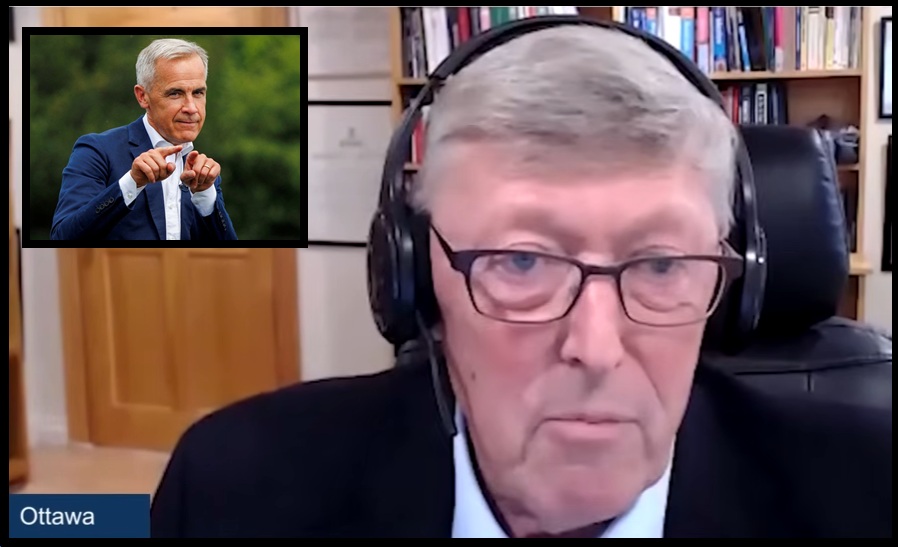
That said, the former NAFTA trade negotiator for Canada, John Weekes, has finally realized President Trump does not intend to renew or renegotiate the USMCA, he intends to dissolve it in favor of two bilateral free trade agreements; one with Mexico and one with Canada.

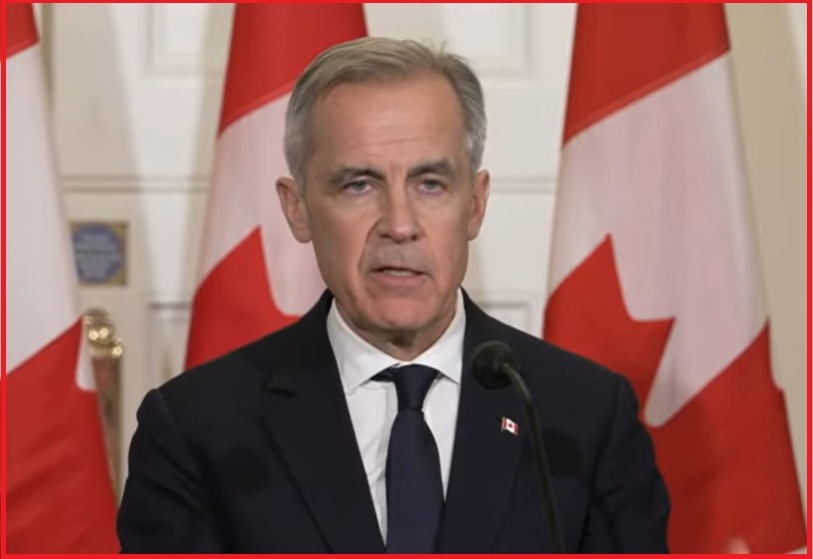
I’m not sure what finally, and I do mean FINALLY, triggered a Canadian to realize this, but perhaps they finally listened to President Trump telling Canadian Prime Minister Mark Carney [IN MAY] he intends to end it. DUH!  WATCH:

The reality of the U.S-Canada economic relationship and the position of President Donald Trump is not that difficult to understand if you take all the disparate datapoints and quotes from Trump and put them into context.

During a White House meeting with Mark Carney, President Trump essentially told the Canadian Prime Minister why he was in no hurry to get to a deal with Canada.  The 35% tariffs on non-USMCA goods triggered August 1st because the main priority of Trump -looking toward Canada- is to dissolve the USMCA.

During the May 6th oval office meeting with Carney, President Trump was discussing the USMCA and said:  “As you know it terminates fairly shortly. It gets renegotiated fairly shortly.” … “This was a transitional deal, and we’ll see what happens, we’re going to start renegotiating that” … “I don’t know if it serves a purpose anymore.”  …. “And the biggest purpose it served was, we got rid of NAFTA.”

To understand why President Trump wants to dissolve the USMCA {SEE HERE}.  To understand the technical value of dissolving the USMCA {SEE HERE}.  It’s not a complicated economic analysis; it’s common sense.

Currently, approximately 60% of the traded goods and services between the U.S. and Canada are covered by the USMCA; the remaining 40% was hit by tariffs on August 1st at a 35% rate.

When the USMCA is renegotiated, predictably dissolved in favor of two bilateral trade agreements – one for Mexico and one for Canada, all of the U.S-Canada trade sectors will be part of the enlarged free trade negotiation.  As a result, there is absolutely no motive to engage in trade discussions now.

♦ President Trump’s position is essentially to talk about the details when the USMCA is dissolved; hence, the ambivalence.

The certainty the Canadians are looking for can be found easily if they stop pretending.

(1) U.S. tariffs against non-USMCA products from Canada went into effect on August 1st.  (2) As soon as the USMCA is reopened, it will be dissolved.  (3) After the USMCA dissolution, a bilateral free trade agreement between the USA and Canada will be negotiated.

Every current effort by Canada to change the nature of the trade system, between now and the reopening of the USMCA (to dissolve it), is futile.

Again, I’m not exactly sure why this reality is so challenging for the Canadian govt to understand this, but at least John Weekes is starting to find a clue.

This is where it becomes important to understand the core reason why Trump, Ross and Lighthizer (2017) did not structurally want to replace the NAFTA agreement with another trilateral trade deal. Mexico and Canada are completely different as it pertains to trade with the USA. President Trump would rather have two separate bilateral agreements; one for Mexico and one for Canada.

♦ Firstly, Canada is a NATO partner, Mexico is not.  As President Trump affirmed to Justin Trudeau during the meeting, it would be unfair of President Trump to discuss NATO funding with the European Union, while Canada is one of the worst offenders.  Trump is leveraging favorable trade terms and tariff relief with the EU member states, as a carrot to get them into compliance with the 2.0 to 2.5% spending requirement for their military.

If the NATO member states contribute more to their own defense, the U.S. can pull back spending and save Americans money.  However, Canada is currently 26th in NATO funding, spending only 1.37% of their GDP on defense (link).

Canada would have to spend at least another $15 billion/yr on their defense programs in order to reach 2.0%.  Justin Trudeau told President Trump that was an impossible goal given the nature of the Canadian political system, and the current size of their economy ($2.25 trillion).

♦ Secondly, over the last 40 years Canada has deindustrialized their economy, Mexico has not.  As the progressive political ideology of their politicians took control of Canada policy, the ‘climate change’ agenda and ‘green’ economy became their focus.  The dirty industrialized systems were not compliant with the goals of the Canadian policy makers.

The dirty mining sector (coal, coking coal, ore) no longer exists at scale to support self-sufficient manufacturing.  The dirty oil refineries do not exist to refine the crude oil they extract.  Large industrial heavy industry no longer exists at a scale needed to be self-sufficient.  Instead, Canada purchases forged and rolled steel component parts from overseas (mostly China).  Making the issue more challenging, Canada doesn’t even have enough people skilled to do the dirty jobs within the heavy manufacturing; they would need a national apprenticeship program.  Again, all points raised by Trudeau to explain why bilateral trade compliance was impossible.

♦ Thirdly, the trade between Canada/U. S and Mexico/U. S is entirely different.  The main imports from Canada are energy, lumber and raw materials. The main imports from Mexico are agriculture, cars and finished industrial goods.  Mexico refines its own oil; Canada ships their oil to the USA for refining.  There are obviously some similar products from Mexico and Canada, but for the most part there is a big difference.

♦ Forth, USA banks are allowed to operate in Mexico, but USA banks are not allowed to operate in Canada.  USA media organizations are allowed to broadcast in Mexico, but USA media organizations are regulated and not permitted to broadcast in Canada.  The Canadian government has strong regulations and restrictions on information and Intellectual Property.

All of these points of difference highlight why a trilateral trade agreement like NAFTA and the USMCA just don’t work out for the USA.

Additionally, if President Trump levies a tariff on Chinese imports, it hits Canada much harder than Mexico because Canada has deindustrialized and now imports from China to assemble into finished goods destined to the USA.  In a very direct way Canada is a passthrough for Chinese products.  Canada is now more of an assembly economy, not a dirty job manufacturing economy.

When Trudeau outlines the inability of Canada to agree to trade terms, simply because his country no longer has the capability of adhering to those trade terms, a frustrated President Trump says, “then become a state.”

There is no option to remain taking advantage of the USA on this level, and things are only getting worse.  Thus, the point of irreconcilable conflict is identified.

Because the Canadian government became so dependent on their role as an assembly economy, they enmeshed with China in a way that made them dependent.  The political issues of Chinese influence within Canada are a direct result of this dynamic. In fact, China was the big winner from the outcome of the recent election because all of their investments into Canada are grounded on retaining Liberal government dependency.

If Trump targets China with punitive tariffs, the Canadian economy will be collaterally damaged.  Canada will end up paying a tariff rate because they use cheap Chinese component parts in their finished goods.  Canada has structurally designed their economy to do this over multiple years.

Understanding the unique nature of the Canadian economic conundrum, the only way to address the issue is to break out the USMCA into two separate bilateral trade agreements.  One set of trade terms for Mexico that leverages border security, and one set of trade terms for Canada that leverages NATO security and border security.  The only substantive similarity between them will be in the auto and agriculture sector.

If you think the multinational corporations, political leftists and UniParty Republicans in the USA are strongly opposing Trump now, just wait until the Trump administration officially proposes the elimination of the trilateral North American trade agreement, USMCA.

According to the World Bank, the USA economy is $27.3 trillion.  Canada is $2.1 trillion.

Do the math!

Put your elbows up if you need to.

Sunday Talks – President Trump Extensive Interview with Maria Bartiromo


Posted originally on CTH on October 19, 2025 | Sundance 

Fox News is presenting the Maria Bartiromo interview with President Trump in two segments, both below.

In the first segment President Trump discusses the Trump peace plan and ongoing issues with Ukraine, Gaza and Venezuela. WATCH:

In the second segment below, President Trump gives his remarks about the No Kings nonsense and the Democrat shutdown.

.