GARY BRECKA: 74% Of Nutritional Research Is Funded By Big Food And Big Pharma. That’s How You End Up With A Food Pyramid Claiming Lucky Charms Are Healthier Than Grass-Fed Steak


Posted originally on Rumble By Bannon’s War Room on: August 20, 2025

Carbon Butter – You Will Eat Synthetic Food


originally on Posted Aug 18, 2025 by Martin Armstrong |

You are the carbon that they wish to eliminate. “You will eat bugs,” as the infamous Klaus Schwab line goes, was merely the beginning of what the globalists intent on ushering in the Great Reset have planned for the masses. Food production is bad for the environment, therefore, the people must resort to lab-created synthetic products.

All of this may sound like it is coming from a dystopian novel but the plans have been enacted. I reported on lab-grown meat facilities that are growing in number and popularity. The latest synthetic product is carbon butter—a butter-like substance made using carbon dioxide, hydrogen, and oxygen to synthesize fat molecules without animals, oils, or plants.

Savor, the startup company in Batavia, Illinois that is creating this product is backed by none other than Bill Gates. “So you’re using this gas right now to cook your food and we’re proposing that we would like to first make your food with— with that gas,” said Kathleen Alexander, co-founder and CEO of Savor.

“This is pretty novel, to be able to make food that looks and tastes and feels exactly like dairy butter, but with no agriculture whatsoever,” said Jordan Beiden-Charles, food scientist for Savor. “It’s really just our fat, some water, a little bit of lecithin as an emulsifier, and some natural flavor and color,” Beiden-Charles said.

bill gates farmland

“Traditional agriculture” leaves too large of a carbon footprint for these globalists who wish to control the food supply. Savor claims that synthetic butter will taste exactly like traditional dairy butter, and no one will know whether they’re eating the real deal or a lab-grown product. The company plans to release chocolates created with carbon butter ahead of the 2025 Christmas season, with retail stores expected to carry the product by 2027.

As Bill Gates noted on a blog post:

“Our plan can’t be to simply hope that people give up foods they crave. After all, humans are wired to want animal fats for a reason—because they’re the most nutrient-rich and calorie-dense macronutrient—in the same way we’re wired to crave sugar for an instant energy kick. What we need are new ways of generating the same fat molecules found in animal products, but without greenhouse gas emissions, animal suffering, or dangerous chemicals. And they have to be affordable for everyone.”

Gates goes on to say that palm oil is destroying the planet. “If animal fat is the superstar of some meals, then palm oil is the team player that can work to make almost all foods—and non-edible goods—even better,” he noted. A separate company funded by Gates called C16 is focused on lab-produced palm oils.

What impact will these synthetic products have on human health? No one knows. No one cares. Agriculture is taboo in their eyes and must come to an end.

Episode 4695: Remembering Nagasaki 80 Years Ago Today


Posted originally on Rumble By Bannon’s War Room on: August 9, 2025

Episode 4696: The Mainstream’s Destruction Of Public Health


4696: The Mainstream’s Destruction Of Public Health

Posted originally on Rumble By Bannon’s War Room on: August 9, 2025

Democrats Accidentally Expose the Culprit for Food Inflation


originally on Posted Jul 29, 2025 by Martin Armstrong   

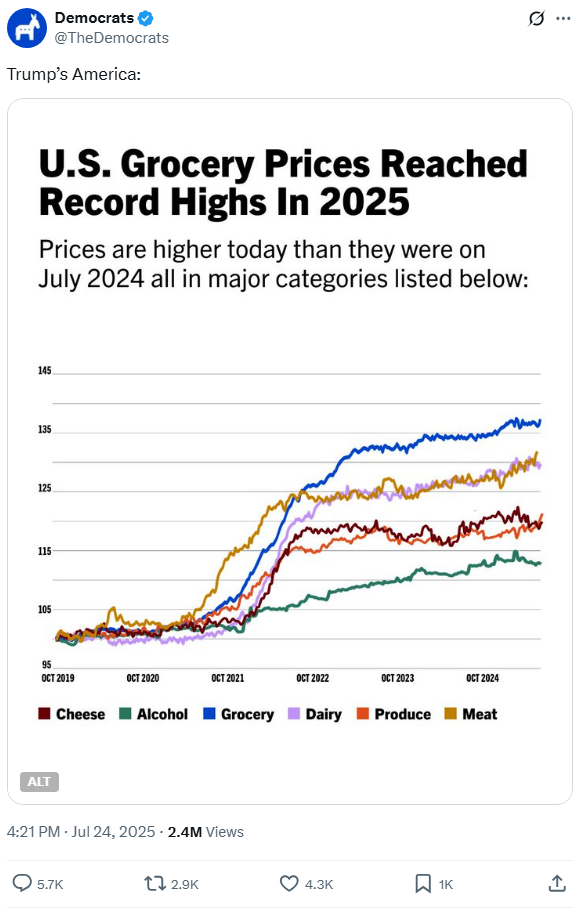
GroceryStoreInflation2025

The Democrats official X account posted a chart featuring US grocery inflation. The intent was to show the public that prices had reached record highs in 2025 under the Trump Administration; however, the graphic actually revealed the culprit for the rise in food prices.

Grocery prices skyrocketed in 2021, a year into the pandemic. Supply chain shortages were abundant, shipping docks were at a standstill, and countless food producers were forced to shutter their businesses to adhere to social distancing guidelines. World trade temporarily halted. We then had the Ukraine war breakout in 2022, disrupting Europe’s bread basket. Poor weather conditions resulted in low harvests, and a series of diseases spread to livestock and poultry. Every nation experienced a rise in food prices following the disastrous policies set forth in 2020, with most feeling the inflationary shocks starting in 2021.

20220104_150713 scaled

Food-at-home groceries rose 24% from January 2020 to January 2023. Grocery prices surged 25.8% by March 2024 and did not experience a downturn until April 2024 when prices dropped a mere -0.2% on the monthly. Grocery prices rose 22% to 25% under Biden’s presidency. “Prices are higher today than they were in July 2024, all in major categories listed below,” read the caption on the since-deleted graphic posted by the Democrat’s X account. If anyone cared to look, they would have seen that prices have fallen relatively flat under Trump, whereas they were skyrocketing under Biden.

I’ve discussed why food prices are rising and have broken it down by product. Now, I do not completely blame the Biden Administration for the drastic uptick in groceries as the entire world shuttered under COVID, which began under Trump. However, Biden implemented a series of failed policies that directly contributed to higher inflation. Inflation overall is certainly much tamer than it was a few years ago. Prices have never fallen back to pre-pandemic levels, and the prices we see are more or less the new norm. The careless X post by the Democrats illustrates why you cannot look at an isolated micro area, be it eggs or ground beef, and blame it for a macro trend.

Ground Beef Prices on the Rise


Posted originally on Jul 23, 2025 by Martin Armstrong 

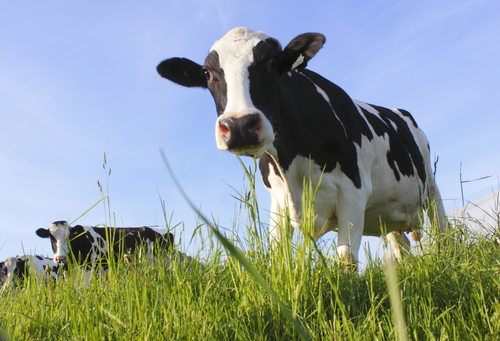
Dairy Cow

Ground beef is the new egg as the media has turned its attention to a new grocery item impacted by inflation. The average price for a pound hit $6.12 in June, up 12% YoY, and the highest price recorded since the government began collecting data in the 1980s.

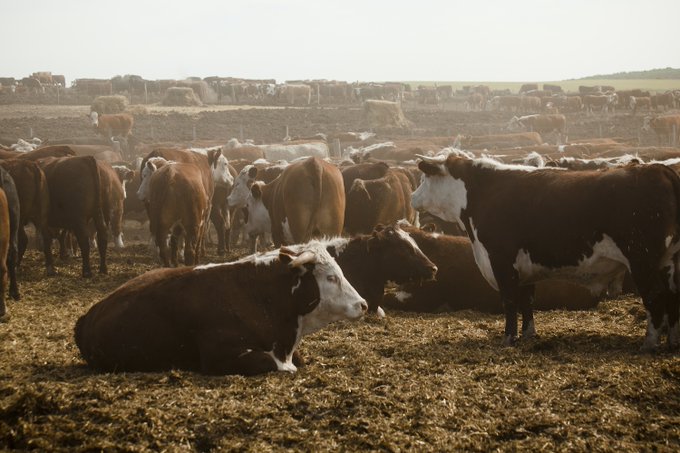
Some news outlets blame tariffs on Brazil that have not yet gone into effect, but Brazil only imports 5-7% of the overall supply. The United States chiefly supplies itself with ground beef, with domestic production accounting for 75-80% of the overall supply. The problem is that the US has had six consecutive years of herd contraction, and the current supply is unable to meet demand. As of January 2025, cattle inventory reached 86.7 million head, 1% down YoY, and the smallest inventory since 1951.

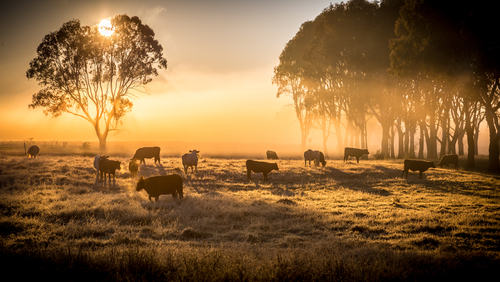
Cattle Herd

One must recall how the previous administration was pushing forth the net-zero emission agenda. Farmers willingly reduced herd size to avoid threats of taxation. From 2021 to 2022, the EPA touted a 2% drop in methane from enteric fermentation, but that was primarily due to shrinking beef cattle populations.

Weather was also a main driver as droughts that began around 2020 in abundant farm areas cut down cattle size. Overall inflation has caused the cost of food to soar for farmers as well, with feeder cattle prices up 9% YoY.

The US increased beef imports by 24% from 2023 to 2024 to offset domestic constraints. Australia supplies around 7% to 10% of all beef, followed by Brazil, with New Zealand accounting for 3% to 4% of the supply, Uruguay for 2% to 3%, and Argentina with 1% to 2% of the total supply. Still, America is largely self-sufficient in supplying ground beef.

Now this is simply the ground beef supply as live cattle is a different trade. Naturally, the US looks to its neighbors, Mexico and Canada, for live imports, with Canada supplying 15% to 20% of live cattle and Mexico supplying up to 15%. Even though the US has the lowest head inventory on record since 1951, the majority of live cattle used to create ground beef is domestic. Now, Mexico has a massive screwworm outbreak from late 2024 to the present day. The US suspended all live cattle imports from Mexico in May to prevent the disease from spreading, which lasted into July and impacted peak seasons.

Ground beef prices are up due to an imbalance in supply and demand. The headlines are blaming Trump tariffs for this inflation without understanding that prices naturally rise when demand outweighs supply.

Grunwald: “The ‘Organic-Only’ Fantasy Sounds Nice Until You Run Out Of Food.”


Posted originally on Rumble By Bannon’s War Room on: July 17, 2025, at 2:00 pm EST

HUGE VICTORY: Sec Rollins Announces Suspension Of Livestock Imports From Mexico


Posted originally on Rumble By Bannon’s War Room on: July 10, 2025, at 1:00 pm EST

Dept of Ag Shuts Down U.S. Southern Border Ports to Livestock Trade Due to Screw Worm Spread Through Mexico


Posted originally on CTH on July 10, 2025 

Announcement from Secretary of Agriculture, Brooke Rollins: “I have ordered an immediate shutdown of live cattle, bison, and horse trade through the southern U.S.–Mexico border. This decisive action comes after Mexico confirmed another case of New World Screwworm in Veracruz.”

(Washington, D.C., July 9, 2025)– Yesterday, Mexico’s National Service of Agro-Alimentary Health, Safety, and Quality (SENASICA) reported a new case of New World Screwworm (NWS) in Ixhuatlan de Madero, Veracruz in Mexico, which is approximately 160 miles northward of the current sterile fly dispersal grid, on the eastern side of the country and 370 miles south of the U.S./Mexico border.

This new northward detection comes approximately two months after northern detections were reported in Oaxaca and Veracruz, less than 700 miles away from the U.S. border, which triggered the closure of our ports to Mexican cattle, bison, and horses on May 11, 2025.

[…] Therefore, in order to protect American livestock and our nation’s food supply, Secretary Rollins has ordered the closure of livestock trade through southern ports of entry effective immediately. (read more)

PJuly 10, 2025 | Sundance 

Food Inflation in Russia and Ukraine


Posted originally on Jun 11, 2025 by Martin Armstrong 

20220104_150713 scaled

The world’s bread basket is facing significant food inflation. Prices on groceries in Ukraine rose 22.1% in May compared to the same time period last year. Overall, CPI rose 15.9% on an annual basis as well. Fruit prices alone have soared by 17.6%, with authorities claiming it is primarily due to poor weather conditions that reduced harvests.

Ukraine and Russia are both relying on imports to offset the uptick in food prices. Ukraine exported around 10.6% of the nation’s food supply last year. The European aggregate came in at an estimated $5 billion in food exports for the year, with Poland, Germany, and France becoming top suppliers. In fact, 51.3% of all food imported to Ukraine came from the EU.

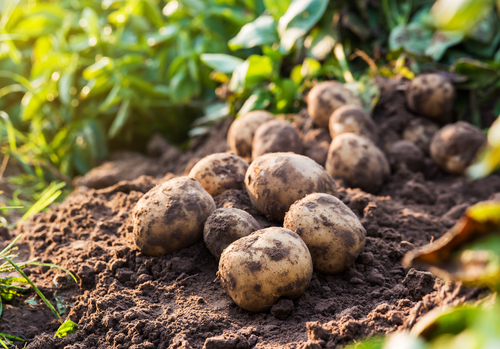
Food inflation for Russia, as of April, hit 12.66%, with general inflation resting at 10.2%. This does not account for the soaring prices of staple food products like potatoes, which have tripled in price over the past year. “On a daily basis, people are not buying smartphones and television sets,” Central bank governor Elvira Nabiullina said. “They are buying food. If prices there are growing faster, it forms high inflationary expectations.” This is precisely why I note that issues like the Japanese rice crisis are causing overall confidence to erode.

The average Russian household spent around 35% of its income on food this past April, a five-year high, as reported by the Romir think-tank. Russia is seeking exports from its remaining trade partners. Egypt exported 274,000 tonnes of potatoes to Russia this May, a 4.5X increase from the same period one year prior. Egypt also provided Russia with 13,000 tons of onions and has become a major supplier of nuts, fruits, and vegetables. Other meal staples such as carrots, beets, and cabbage have seen a surge in prices.

China has also been working to solve the potato shortage by sending Russia 65,000 tons throughout the first six months of the year. Georgia, Pakistan, Kazakhstan, and Armenia have also begun to ramp up food exports to Russia.

Both China and Egypt have profited heavily from this war from an agricultural standpoint, as each is providing both sides with much-needed food imports.

Potato

Russia’s agriculture minister believes prices will begin stabilizing in July. As RCB Governor Elvira Nabiullina explained, the average person will first notice surging prices at the grocery store. It becomes a daily reminder that there are breaks in the system. The Russians and Ukrainians lost confidence long ago, but the situation is not improving for them. We see it everywhere with food prices leading to unrest. The reasons contributing to rising prices do not matter as the people will immediately blame the government. We saw it in the US, for example, with people outraged over the price of eggs. The Japanese are livid that the price of rice has multiplied.

The French Revolution began when bread prices surged beyond what the people could afford. The Arab Spring ignited not because of political ideology, but because food became unaffordable. Socrates picked up a shift in food inflation in 2019 before the COVID lockdowns and I have warned that it would be wise to stockpile food as that inflationary cycle did not end with COVID. While we are not at a point of revolution just yet, food prices have a major impact on overall confidence and high prices correlate with high unrest. The people will not obey when they are hungry.