
Posted originally on Feb 11, 2026 by Martin Armstrong |
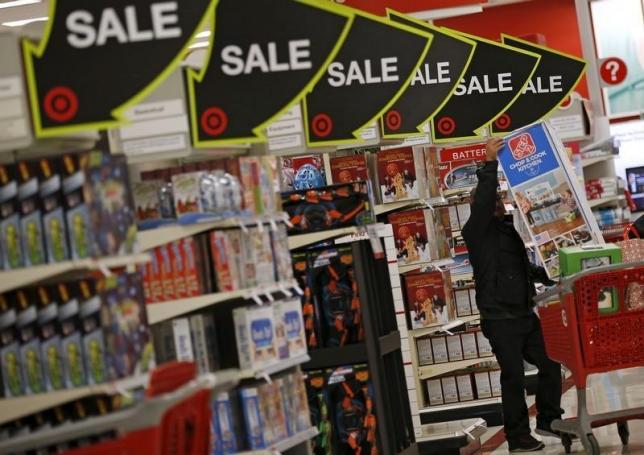
The Commerce Department’s advance retail sales report for December revealed that total US retail receipts were essentially unchanged from November, coming in flat after a 0.6 percent increase in November and well below economists’ expectations for a 0.4 percent rise in December. Core retail sales, or the measure that excludes volatile categories like autos, gasoline, building materials, and food services, and which feeds directly into GDP calculations, actually slipped about 0.1 percent in December following a downward revision to November’s core gain to just 0.2 percent from 0.4 percent previously reported. For the full year of 2025, total retail sales still registered a nominal gain of roughly 3.7 percent compared to 2024.
From the outset, the numbers tell a story that echoes the longer, unavoidable economic cycle rather than the distorted confidence many policymakers still cling to. Retail sales are the largest component of household consumption and by far the biggest driver of GDP. So, when retail sales fail to post any real growth in December, at a time when spending should be concentrated and elevated, it reflects more than seasonal adjustments. Core consumption, which excludes the big ticket and volatile segments, is arguably more telling than the headline, and it turned negative at precisely the point in the calendar when it should have remained positive if households were truly confident about their spending capacity.
Even when you look at the annual figures, a 3.7% advance relative to 2024, those gains are heavily influenced by price effects, tariff-driven cost pass-throughs, and earlier quarters’ momentum rather than rising volumes of goods moved off shelves. Nominal increases can mask real consumption stagnation because they do not strip out inflation or show whether households are actually purchasing more items versus paying more for the same baskets. The flat December reading underscores that the consumer’s grip on spending is loosening at the margins. Retail categories traditionally dependent on discretionary income, such as electronics, furniture, and clothing, struggled, while the modest nominal gains in the annual totals often reflect spending in necessity or inflation-catch-up categories.
This pattern has implications that extend beyond a single monthly release. For much of the past year, robust consumer spending masked underlying weaknesses elsewhere in the economy. Households used savings, leaned on credit, and when forced to spend, focused on the essentials. Real incomes lag behind cost increases in essentials like housing, insurance, food, and healthcare. Wages are rising but they are mismatched with the price of living.
It is now increasingly apparent that the robust GDP prints from mid-year, often cited as evidence of economic resilience, were driven by transient factors and delayed data rather than sustainable consumer strength. The late-year softness puts at risk the projections for fourth-quarter GDP growth and may dampen expectations for early 2026 monetary easing if the Federal Reserve interprets slowing demand as disinflationary pressure.

 Centinel2012