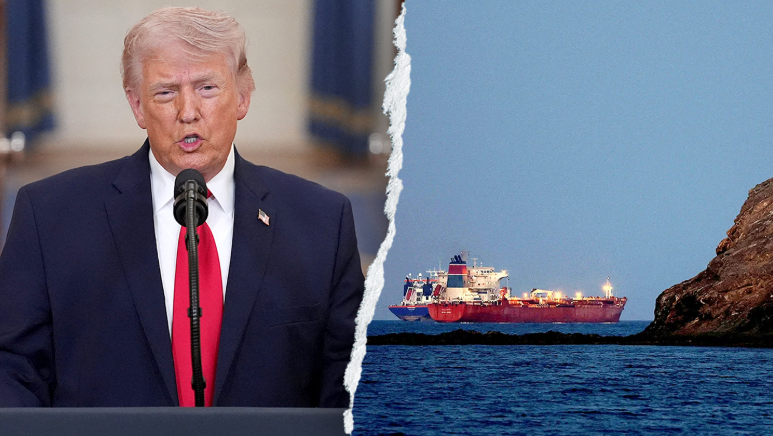
President Trump and Prime Minister Netanyahu at Odds Over Lebanon Strikes Creating Problems for Negotiations with Iran
Posted originally on CTH on June 1, 2026 | Sundance
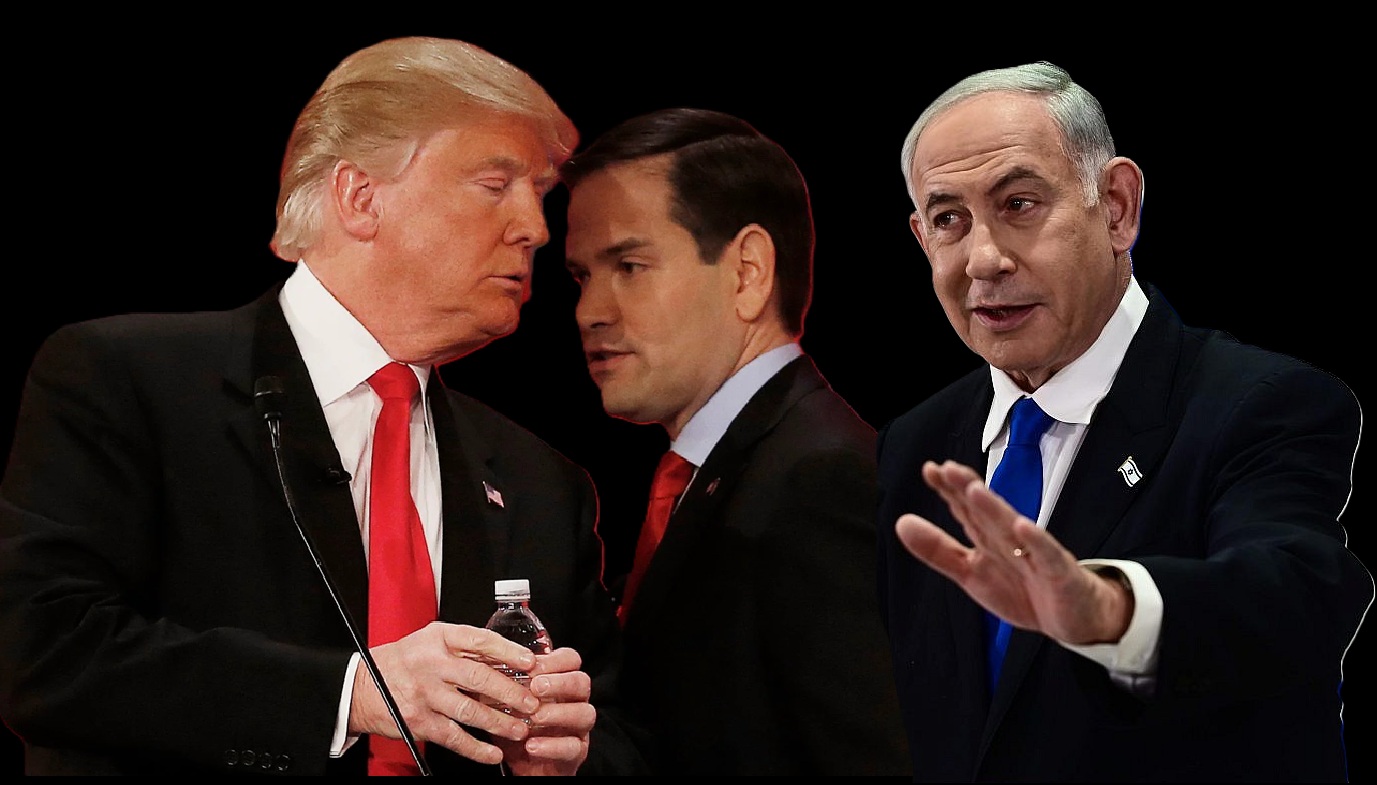
Prime Minister Benjamin Netanyahu representing Israel, and President Donald Trump representing the United States, apparently had a testy telephone call about ongoing Israeli strikes against Hezbollah attacks from Lebanon.
Iran, essentially IRGC control officers who now control the government, had previously said their terms for negotiation required Israel to stop strikes into Lebanon against their allies in Hezbollah. However, under the cover of that term, Hezbollah restarted rocket attacks from Lebanon against Israel. Yesterday, Israel began counter-attack operations against Hezbollah, which led to Iran saying the terms of the negotiation were now violated, and they would stop discussions with the USA.
[NOTE – This overall dynamic is very similar to Saudi Arabia coming under fire about a month ago, and their anger toward the USA for essentially saying Saudi had to accept the attacks so that diplomatic talks could continue. Saudi Crown Prince Mohammed Bin Salmon rejected the expectation and challenged President Trump with Saudi allied base cooperation.]
Apparently, President Trump and Prime Minister Netanyahu had a strong discussion, some have leaked a very angered and open exchange, about Netanyahu launching strikes into Lebanon again.
On social media, it looks like this. Netanyahu put’s the Israel position via X:
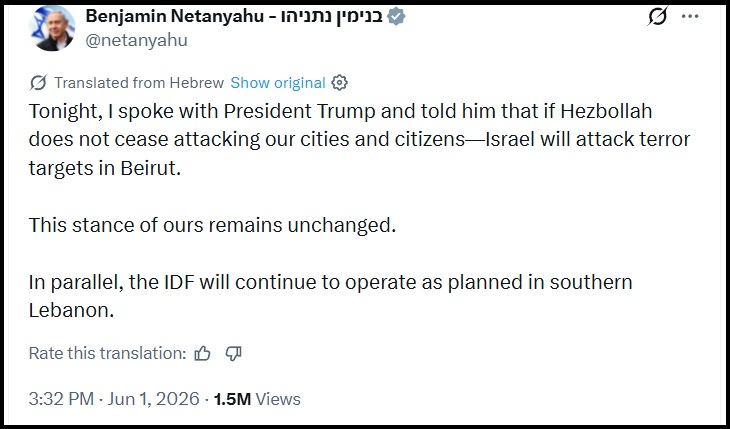
[source]
President Trump responds to Netanyahu’s intentions with a phone call and then a follow-up on his Truth Social Account:
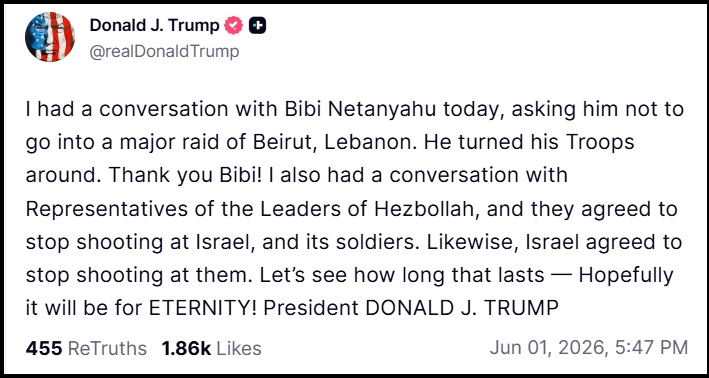
From leaks of the background conversation, a very testy narrative appears:
AXIOS – “President Trump lashed out at Israeli Prime Minister Benjamin Netanyahu over Israel’s escalation in Lebanon in an expletive-laden call on Monday, two U.S. officials and a third source briefed on the call told Axios.” {source}
♦ ♦ ♦
NY Post – President Trump reportedly tore into Israeli Prime Minister Benjamin Netanyahu on Monday, demanding the leader resist strikes on Hezbollah in an expletive-laden phone call.
The tense call came after Iran threatened to withdraw from negotiations with the US after Israel ordered strikes on terrorists in southern Beirut — with Axios reporting the president at one point asking, “What the f–k are you doing?”
“You’re f–king crazy. You’d be in prison if it weren’t for me. I’m saving your ass. Everybody hates you now. Everybody hates Israel because of this,” a US official told Axios, summarizing Trump’s comments.
Another source described Trump as sounding “pissed,” and claimed the president “steamrolled” the Israeli prime minister on the call. “Bibi said, ‘OK, OK, just make sure everything is taken care of,’” the second official said.
The president was reportedly aware Hezbollah had been firing on Israeli troops but concerned that Netanyahu was disproportionately escalating the situation — and potentially hurting US negotiations with Tehran.
Shortly after the call, Trump wrote in a post to Truth Social: “I had a very productive call with Prime Minister Bibi Netanyahu, of Israel, and there will be no Troops going to Beirut, and any Troops that are on their way, have already been turned back. (read more)
It is easy to see both sides in this dynamic.
It is also easy to see how Iran can manipulate the Hezbollah third-party aspect against Israel, as Iran previously did directly with attacks against Saudi Arabia. Iran demanding Israeli attacks against their friends in Hezbollah must stop in order to negotiate. When the attacks stop, Iran then tells their friends to attack Israel.
This is the duplicitous evil within the approach of Iran that Saudi Arabia and the Gulf States have previously said makes negotiations with Iran impossible.
Brent crude surged as much as 7.1% above $97.50 and WTI climbed over $94.50 per barrel on Monday, reversing recent declines. The rally was driven by fears over the Strait of Hormuz and potential closure of Bab el-Mandeb, both critical to global oil flows. Analysts warn that even with a deal, supply relief would be gradual, while disruptions could keep prices elevated despite weak demand in China and Europe.
Analysts outline two scenarios: a credible peace deal could trigger an immediate $20 per barrel drop as Gulf shipping resumes, or prolonged deadlock could push prices toward historic highs if chokepoints remain blocked. Iran’s leverage over Hormuz and demands for larger concessions suggest talks could drag on. With inventories falling and reserves depleting, a mid-year supply crunch looms if diplomacy fails {source}