
Posted originally on CTH on March 3, 2026 | Sundance
Seeing how MSM and Trump opposition outlets are twisting and contorting the words and explanations from Secretary of State Marco Rubio it is worth posting the full transcript of his remarks from yesterday.
…” I’m not going to give away the details of our tactical efforts, but the hardest hits are yet to come from the U.S. military. The next phase will be even more punishing on Iran than it is right now. Someone was screaming, “How long will it take?” I don’t know how long it’ll take. We have objectives. We will do this as long as it takes to achieve those objectives, and we will achieve those objectives.”…
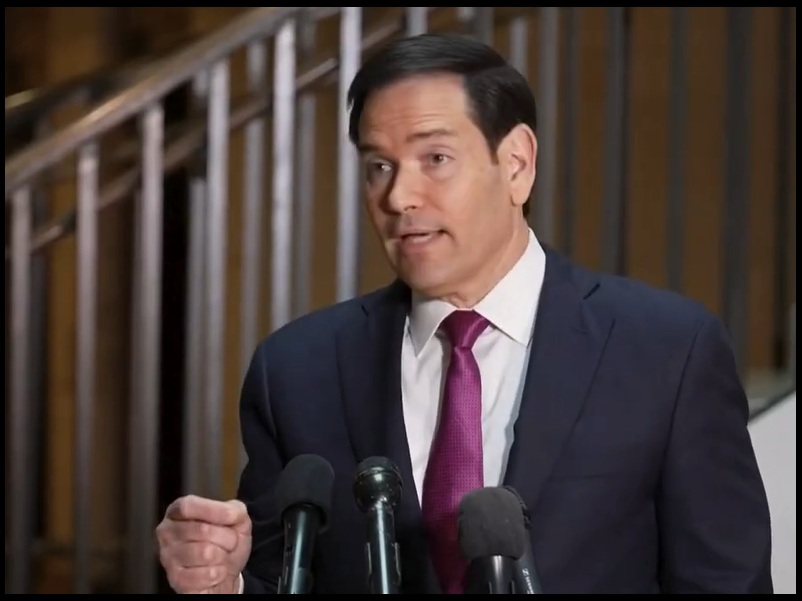
[Full Transcript] – SECRETARY RUBIO: “The United States conducted this operation with a very clear goal in mind. I haven’t gotten a chance to see a lot of reporting. I don’t understand what the confusion is. Let me explain it to you, and I’ll do it once again as clearly as possible. Perhaps you’ll report it that way.
The United States is conducting an operation to eliminate the threat of Iran’s short-range ballistic missiles and the threat posed by their navy, particularly to naval assets. That is what it is focused on doing right now and it’s doing quite successfully. I’ll leave it to the Pentagon and the Department of War to discuss the tactics behind that and the progress that’s being made. That is the clear objective of this mission.
The second question I’ve been asked is: Why now? Well, there’s two reasons why now. The first is it was abundantly clear that if Iran came under attack by anyone, the United States or Israel or anyone, they were going to respond and respond against the United States. The orders had been delegated down to the field commanders. It was automatic, and in fact it beared to be true because, in fact, the – within an hour of the initial attack on the leadership compound, the missile forces in the south and in the north for that matter had already been activated to launch. In fact, those had already been pre-positioned.
The third is the assessment that was made that if we stood and waited for that attack to come first before we hit them, we would suffer much higher casualties. And so the President made the very wise decision. We knew that there was going to be an Israeli action, we knew that that would precipitate an attack against American forces, and we knew that if we didn’t preemptively go after them before they launched those attacks, we would suffer higher casualties and perhaps even higher those killed, and then we would all be here answering questions about why we knew that and didn’t act.
Going back to the purpose, the purpose of this is to destroy that missile capability. Why does Iran want that ballistic missile capability? What they are trying to do and have been trying to do for a very long time is build a conventional weapons capability as a shield where they can hide behind, meaning there would come a point where they have so many conventional missiles, so many drones, and can inflict so much damage, that no one can do anything about their nuclear program. That is what they were trying to do, is put themselves in a place of immunity where the damage they can inflict on the region would be so high that no one can do anything about their nuclear program or their nuclear ambitions.
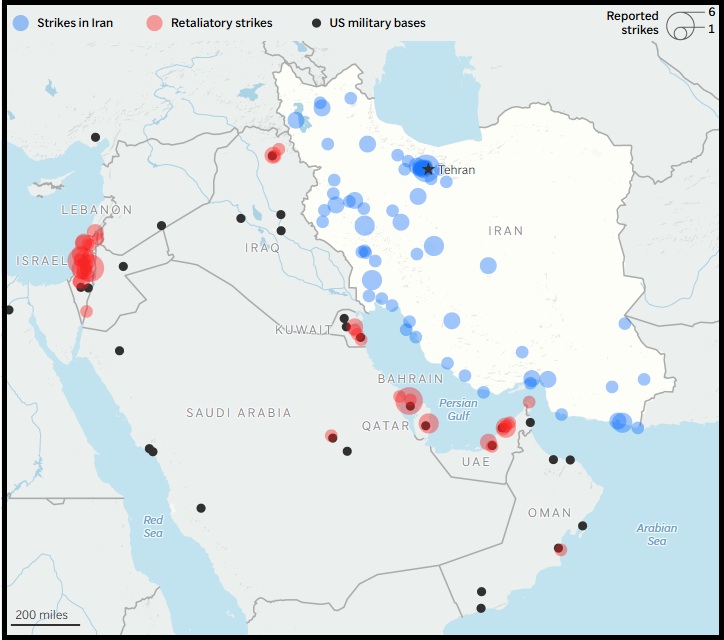
They are producing, by some estimates, over 100 of these missiles a month. Compare that to the six or seven interceptors that can be built a month. They can build a hundred of these a month, not to mention the thousands of one-way attack drones that they also have. They’ve been doing this for a very long time. And by the way, they’ve been doing it under sanction. You see the attacks they’re conducting right now. They’re attacking airports. They’re attacking hotels. They are hitting, not just military bases; they’re attacking our embassies directly. They’re attacking facilities that have nothing to do with war or with military.
And that’s a weakened Iran. That’s an Iran despite years of sanction. Imagine a year from now or a year and a half from now the capabilities they would have to inflict damage on us. It’s an unacceptable risk, especially in the hands of a regime that’s run by radical clerics. The ayatollah is a radical – was a radical cleric. That entire regime is led by radical clerics who don’t make geopolitical decisions; they make decisions on the basis of theology – their view of theology, which is an apocalyptic one. That has to be taken very seriously as well.
So that was the purpose for what this operation is all about. That’s what it’s focused on. As the President said earlier today, it is on or ahead of schedule. I will defer to the Department of War to discuss the progress being made at a tactical level. But it was the right decision and an important decision for the safety and security of the world.
QUESTION: Does Congress have to weigh in? Does Congress have to weigh in? Is the President declaring war, and does Congress have to weigh in?
SECRETARY RUBIO: No. Well, what —
QUESTION: And was there an imminent threat? Did you tell lawmakers that there was an imminent threat?
SECRETARY RUBIO: There absolutely was an imminent threat, and the imminent threat was that we knew that if Iran was attacked – and we believe they would be attacked – that they would immediately come after us, and we were not going to sit there and absorb a blow before we responded because the Department of War assessed that if we did that, if we waited for them to hit us first after they were attacked – and by someone else, Israel attacked them, they hit us first, and we waited for them to hit us – we would suffer more casualties and more deaths. We went proactively in a defensive way to prevent them from inflicting higher damage. Had we not done so, there would have been hearings on Capitol Hill about how we knew that this was going to happen and we didn’t act preemptively to prevent more casualties and more loss of life.
QUESTION: Are you saying the U.S. was forced to strike because of an impending Israeli action?
SECRETARY RUBIO: No, first – well, two things I would say. Number one is: no matter what, ultimately this operation needed to happen. That’s the question of why now. But this operation needed to happen because Iran in about a year or a year and a half would cross the line of immunity, meaning they would have so many short-range missiles, so many drones, that no one could do anything about it because they could hold the whole world hostage.
Look at the damage they’re doing now. And this is a weakened Iran. Imagine a year from now. So that had to happen. Obviously, we were aware of Israeli intentions and understood what that would mean for us, and we had to be prepared to act as a result of it. But this had to happen no matter what.
QUESTION: Mr. Secretary, President Trump said overnight that his top choices to now run Iran were killed in the strikes. Does the United States have a firm plan for how they intend to handle this power vacuum in Iran to ensure that an IRG hardliner does not take power?
SECRETARY RUBIO: Well, so two things, and two things can be true. Number one is our mission and our focus is the destruction of their ballistic missile capabilities and their ability to manufacture them, as well as the threat posed by their navy to global shipping. That’s our objective.
That said, we would not mind, we would not be heartbroken, and we hope that the Iranian people can overthrow this government and establish a new future for that country. We would love for that to be possible. But the objective of this mission is the destruction of their ballistic missile capabilities and of their naval capabilities.
Yeah.
QUESTION: Are you saying – based on that, are you saying that there is no responsibility, no plan for the U.S. to at least play a role in whatever government comes next?
SECRETARY RUBIO: I mean, we might. We’ll see how circumstances play out, but you – I’m telling you what the objectives of this operation are. The objectives of this operation are to destroy their ballistic missile capability and make sure they can’t rebuild it, and make sure that they can’t hide behind that to have a nuclear program. That’s the objective of the mission.
That said – abundantly clear – we would love for there to be an Iran that’s not governed by radical Shia clerics. As I’ve said myself repeatedly for years, the leadership of that country does not reflect the people of Iran, and I think that’s been pretty apparent in the protests that you’ve seen. If there’s something we can do to help them down the road, we’d obviously be open to it, but that’s not the objective. The objective of this mission is the destruction of their ballistic missile capability.
QUESTION: Mr. Secretary, regime change has not gone well for the United States.
SECRETARY RUBIO: The what now?
QUESTION: Regime change has not gone well for the United States for many, many decades. How do you assure the American public that things will not get worse for the next regime that comes in there and replaces the ayatollah?
SECRETARY RUBIO: Well, we would love to see this regime be replaced. And ultimately, as the President has said because —
QUESTION: But how do you know that?
SECRETARY RUBIO: No, no, but let me finish my answer. As the President has said, he would love for the people of Iran to use this as an opportunity to rise up and remove these leaders. They’ve been wanting to remove them for a long time. We’ve successive waves of protests, and we’ve seen them slaughter people. Okay? But the objective of this mission is to make sure they don’t have these weapons that can threaten us and our allies in the region. That’s why we’re doing what we’re doing now.
And while we would love to see a new regime, the bottom line is no matter who governs that country a year from now, they’re not going to have these ballistic missiles and they’re not going to have these drones to threaten us. That’s the objective of this mission, is to deny them the ability to use ballistic missiles to threaten their neighbors, to threaten our bases, to threaten our presence in the region, and ultimately as a shield behind which they can do whatever they want with their nuclear weapons ambition. We were not going to let them hide behind that, and that’s why this was such a critical mission to undertake now, while they were at their weakest point, and not a year from now, where they could inflict even more damage and perhaps already be behind that point of immunity.
Right here behind – you and then you. Yes.
QUESTION: Your critics in Congress have said that they should have a role, they should be able to weigh in here, and that there are going to be war powers resolutions votes in Congress later this week.
SECRETARY RUBIO: Okay.
QUESTION: Why not notify Congress ahead of this? And does Congress still have —
SECRETARY RUBIO: Well, we did. We notified Congress. I mean, we notified the Gang of Eight. We notified the congressional leadership. There’s no law that requires us to do that; the law says we have to notify them 48 hours after beginning hostilities. We’ve done that. I think the notification went today. But we did notify members of Congress in advance. But we can’t notify 535 members of Congress, and —
QUESTION: They vote to authorize the war, though.
SECRETARY RUBIO: Well, the Congress can vote on whatever they want. But there’s no law that requires us to do that. And I want to say something because I see people on TV. Look, that is fine if they want to take a war powers vote. They can do that. They’ve done that. They’ve done that a bunch of times. But there’s no – people keep saying that we have – there’s no law that requires the President to have done anything with regards to this. To begin with, no presidential administration has ever accepted the War Powers Act as constitutional – not Republican presidents, not Democratic presidents.
That said, we have followed the notification at 48 hours, and we’re here today – I’ve done more Gang of Eight briefings than I got in the four years that Biden was president and I was a member of the Gang of Eight. All of that said, we have complied with the law 100 percent, and we’re going to continue to comply with it. We’ve done the notification and we – officially to Congress, but we did notify members of Congress. We just can’t notify 535 people. That’s not possible. But we did the Gang of Eight, twice. I briefed them last week and then I called them the night before the operation.
QUESTION: Can you tell us what you know, Mr. Secretary, what the administration knows about the strike on a building in southern Iran? The Iranians are saying it’s a school. There are reports of large numbers of civilians, including children, killed?
SECRETARY RUBIO: Yeah. I’ve seen those reports. I don’t have – I would refer you – not because I’m not trying to answer your question, but I don’t want to get it wrong. The Department of War would be investigating that, if that was our strike. And I would refer your question to them, and I’ll make sure they’re aware that you have that question. But we’d like to know.
QUESTION: The Iranians say it was an American — an American missile.
SECRETARY RUBIO: Well, clearly, the United States would not deliberately target a school. Our objectives are missiles, both the ability to manufacture them and the ability to launch them, and the one-way attack drones. That would be our focus, and that’s what we would be focused on. We would have no interest, and frankly no incentive, to target civilian infrastructure. The Iranians are, on the other hand, targeting civilian infrastructure. You guys have seen it. I’m sure you’ve seen it. They’re hitting hotels. They’re hitting embassies. They’re hitting airports. They’re hitting oil infrastructure.
QUESTION: But if these are children killed, what would your response be?
SECRETARY RUBIO: Well, it’d be very tragic, but I can’t speak to the details behind it because I’m not – I just don’t have it. It would be a tragic outcome if it’s happened. I don’t have the details as to what led to it. But what is clear, that the United States would not target, deliberately target a school. They are, on the other hand, deliberately targeting civilians, as you’ve seen, because you know why? They are a terroristic regime. They sponsor terrorism and they participate in terrorism.
QUESTION: Mr. Rubio, what’s your message to Americans who are concerned about rising energy prices given the spiking of oil prices today?
SECRETARY RUBIO: Yes. And we – we’ve – we knew that going in would be a factor. And so we have a program in place that will begin to be implemented by Secretary Wright, Secretary Bessent. We talked about it last night, again, about this program. We talked this morning. And starting tomorrow you will see us rolling out those phases to try to mitigate against that. Obviously, markets are going to be reacting to news about what’s happening. And again, a reminder – think about it, okay? This terroristic regime, led by radical clerics, has the ability potentially to shut off 20 percent of global energy. That’s the kind of leverage they have because of their navy. We’re going to destroy their navy.
But there is a plan in place. We anticipated this could be an issue. And Secretary Wright and Bessent will begin to roll out those steps starting tomorrow to mitigate – to mitigate – against the impact that could have.
I’ve got to do this briefing, so I’ve got a couple more. Yeah.
QUESTION: Do you anticipate putting boots on the ground? And how long do you anticipate the conflict to last?
SECRETARY RUBIO: Well, we don’t – let me say two things about it. Number one, I’m – the President always has the options to undertake whatever operations he decides to do as the Commander-in-Chief. That said, the – we believe the objective that we have set for this mission, which is the destruction of their ballistic missile capabilities, both launch capability and manufacturing, can be achieved without ground forces. Right now we’re not postured for ground forces. But obviously, the President has those options. He’s never going to rule out anything. But right now our focus is on the destruction of their ballistic missile launchers, their ballistic missile stockpiles, and their ballistic missile manufacturing capability, as well as their one-way attack drones and their navy because of the threat it poses to global shipping.
All right, I’ve got – I got – can only do one more. Right there, right there in the middle. Yes, sir.
QUESTION: Is there a diplomatic exchange going on right now between the U.S. and Iran? Any exchanges whatsoever outside of —
SECRETARY RUBIO: No, not at this time. I mean, look, we always have people that reach out from inside of governments. You don’t know if they’re authorized to reach out or not. They’re suffering a tremendous amount of damage. Honestly – again, I’m not going to give away the details of our tactical efforts, but the hardest hits are yet to come from the U.S. military. The next phase will be even more punishing on Iran than it is right now. Someone was screaming, “How long will it take?” I don’t know how long it’ll take. We have objectives. We will do this as long as it takes to achieve those objectives, and we will achieve those objectives. The world will be a safer place when we’re done with this operation.
All right? Thank you, guys. Thank you.”

 Centinel2012