Posted originally on CTH on April 21, 2026 | Sundance
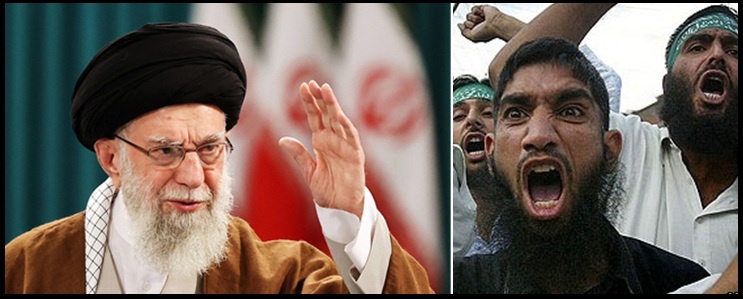
The issue inside Iran is essentially: 50,000 extremist clerics and IRGC members are holding 90 million people as hostages to a fanatical religious regime. Hopefully the economic oil embargo will eventually begin to fray this Gordian Knot.
In the last two weeks, President Trump has forcefully and publicly been pushing back against the aggressive posture of Israel. While the Arab partners in the region are aligned with Trump on the issue of “extremism” and radicalism, thereby supporting the confrontation with Iranian religious extremists – those same regional partners also consider Israeli conduct in Gaza and Lebanon as religious “extremism.”
“Based on the fact that the Government of Iran is seriously fractured, not unexpectedly so and, upon the request of Field Marshal Asim Munir, and Prime Minister Shehbaz Sharif, of Pakistan, we have been asked to hold our Attack on the Country of Iran until such time as their leaders and representatives can come up with a unified proposal. I have therefore directed our Military to continue the Blockade and, in all other respects, remain ready and able, and will therefore extend the Ceasefire until such time as their proposal is submitted, and discussions are concluded, one way or the other.” ~ President DONALD J. TRUMP
The totality of the intelligence chatter must be overwhelming.
Posted originally on CTH on April 20, 2026 | Sundance
Promethean Action – Barbara Boyd previews renewed Iran peace negotiations in Islamabad ahead of a ceasefire deadline, as Iran allegedly challenged a U.S. naval blockade, lost a ship, and again closed the Strait of Hormuz, with Trump warning “No More Mr. Nice guy” if peace fails and arguing Iran is bleeding $500 million a day. She shows a City of London–linked propaganda network is working to prolong the war and damage Trump before the midterms by targeting Vice President JD Vance, citing a Financial Times column by Edward Luce and post–Munich Security Conference smears portraying Vance as pro-Putin.
Boyd outlines three layers of Iran-linked messaging—Press TV in London, NIAC in Washington, and the “Iran Experts Initiative” infiltration of U.S. think tanks—and says justice is coming via prosecutions led by Joseph DiGenova, with Kash Patel promising arrests, while Vance leads talks and a National Fraud Task Force.
PRESIDENT TRUMP – “I’m winning a War, BY A LOT, things are going very well, our Military has been amazing and, if you read the Fake News, like The Failing New York Times, the absolutely horrendous and disgusting Wall Street Journal, or the now almost defunct, fortunately, Washington Post, you would actually think we are losing the War.
The enemy is confused, because they get these same Media “reports,” and yet they realize their Navy has been completely wiped out, their Air Force has gone onto darker runways, they have no Anti Missile or Anti Airplane Equipment, their former leaders are mostly gone (This has been, in addition to everything else, Regime Change!), and perhaps, most important of all, THE BLOCKADE, which we will not take off until there is a “DEAL,” is absolutely destroying Iran. They are losing $500 Million Dollars a day, an unsustainable number, even in the short run. The Anti-America Fake News Media is rooting for Iran to win, but it’s not going to happen, because I’m in charge! Just like these unpatriotic people used every ounce of their limited strength to fight me in the Election, they continue to do so with Iran. The result will be the same — It already is!” ~ President DONALD J. TRUMP
Posted originally on CTH on April 19, 2026 | Sundance |
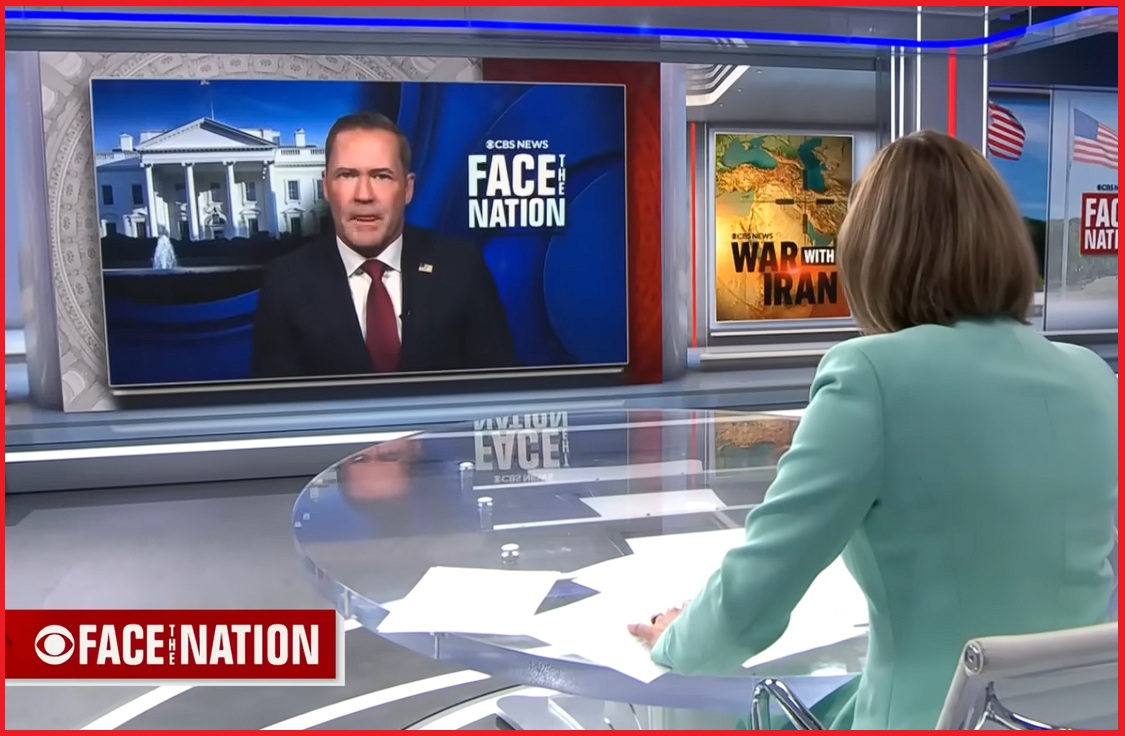
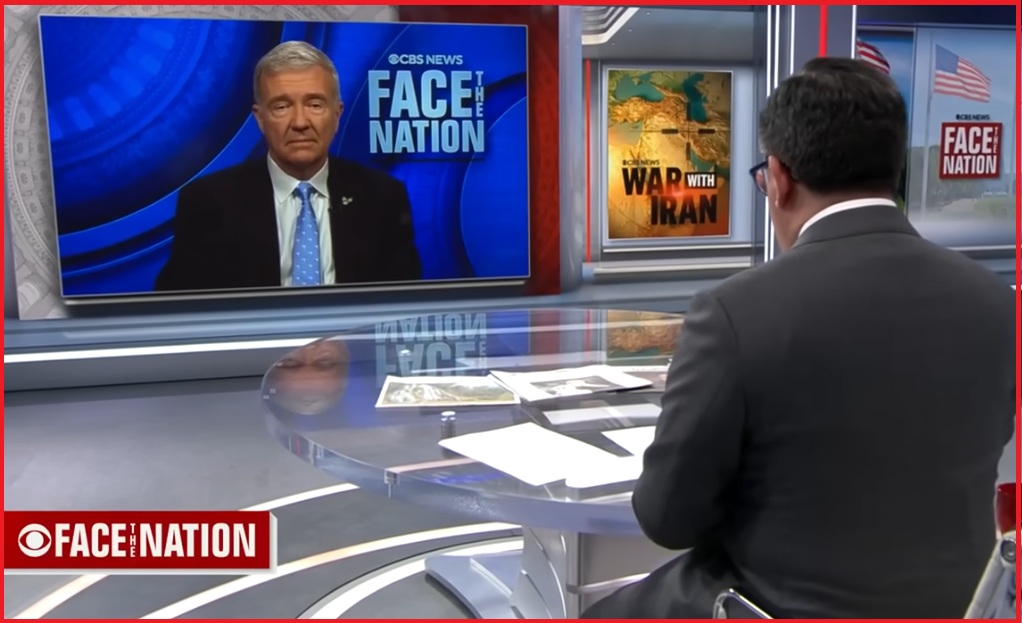
U.S. Ambassador to the U.N. Mike Waltz appears on CBS Face the Nation to discuss the difficulty of negotiating with Iran, a regime based on fanatical religious zealotry and control. The video and transcript are below:
[Transcript] – MARGARET BRENNAN: Imtiaz Tyab reporting from Dubai. We turn now to the U.S. Ambassador to the United Nations, Mike Waltz, who joins us this morning from New York. Welcome back to Face The Nation, ambassador.
AMBASSADOR MIKE WALTZ: Thank you, good to be with you.
MARGARET BRENNAN: So the President said Iran broke the ceasefire, but he is still offering them a deal. Is this a presentation of terms, or should we expect an actual, prolonged negotiation?
MIKE WALTZ: Well, I think this will be a continuation of the terms that the vice president offered a week ago. And look, we have to take a step back here in that – President Trump, the US Navy is controlling what is coming out of the straits. We’ve had the highest level engagement in the history of the Iranian regime, with the vice president leading. We have historic ceasefire talks going on between the Israelis and the Lebanese. The markets are up. Oil prices are relatively stable. The Iranian economy is devastated, and they’ve never been, I can tell you here at the United Nations, they’ve never been more diplomatically isolated. So Iran does not have the cards, and we are confident they will come to the table and finally give up their obsession with having a nuclear weapon.
MARGARET BRENNAN: Well, Iran has not yet announced that it’s sending a delegation to Islamabad. I know there’s this back and forth all morning long about whether the vice president would be leading it or not. CBS, as you just heard, is reporting he will be but why is it important that he be there in person? Is it because Iran has refused to send anyone with decision making authority, unless he is there?
MIKE WALTZ: Well, you’ve seen the chaos, I mean that you just pointed to on the Iranian side. The last 48 hours, you have their foreign minister announcing that they’re going to stop attacking shipping. Then you have the IRGC saying that they will and then doing so, as President Trump pointed out, an absolute violation. So the Iranian side is in a bit of chaos. This is absolutely due to the devastating strikes on their leadership. But I think the vice president leading shows the level of engagement from the US side that we are absolutely serious. And I for one, thank God for future generations that we are arresting a problem before it’s too late. We’re not waiting until the US has no options —
MARGARET BRENNAN: Well —
MIKE WALTZ: and Iran has some kind of breakout, which would lead to a nuclear breakout all over the Middle East.
MARGARET BRENNAN: Let me follow up on what you just said, though, because that’s important, the Iranian side is in chaos. So how do you know you’re negotiating with the right person? It’s been reported, The Institute for the Study of War says that the IRGC Commander General the Vahidi has secured control over the negotiations and the military within the past 48 hours. Does that mean Foreign Minister Araghchi is not the person to be sitting across the table from? Who’s in charge?
MIKE WALTZ: Well, look – again the Iranian regime, we’ve put them in chaos, but at the same time, we are never going to take an approach of trust. Any deal that comes out of this will have to absolutely be verifiable and be enforceable. I can tell you, from sitting in my seat at the UN we’ve been in extensive discussions with the International Atomic Energy Agency, the IAEA, which would have ostensibly a key role in ensuring Iran lives up to any deal that it signs to, this – signs up to, there is no trust on this side. There is verified and enforceable provisions that are that are on the table from the US to ensure they never have a nuke.
MARGARET BRENNAN: Okay, that’s important in terms of enforcement. Does that mean if you actually get to a negotiated deal, and the UN’s nuclear watchdog would be very much in those details of going in and perhaps securing that enriched uranium. Does this mean you’re going to put a deal for approval before the United Nations? Is it going to be codified like that?
MIKE WALTZ: Well, I’ll tell you, there are dozens and dozens of resolutions over the years, not just the United States, the entire world, saying Iran cannot have a nuclear weapon.
MARGARET BRENNAN: Right.
MIKE WALTZ: We had snap back provisions that are in place now for global sanctions and that Iran cannot enrich so anything that would would change those resolutions would then need to come back before but let’s not get ahead of ourselves. Let’s see if the Iranians actually sign up to a very reasonable offer that is sitting on the table from the United States —
MARGARET BRENNAN: Yeah —
MIKE WALTZ: which is an off ramp from them, and also will ensure the region, the United States, Europe and the world, is never threatened by a regime with its hand on a nuclear button.
MARGARET BRENNAN: Okay, so, but back to the point of who’s in charge. President Trump says he hopes they take the deal, that was the post this morning. But on Friday afternoon, he spoke to my colleague, Weijia Jiang, and he gave us an incredibly optimistic read. He said Iran had quote, agreed to everything, including to stop enriching uranium forever and to stop backs – backing all proxy groups like Hezbollah. He made it sound like it’s all been sorted out. So which is it? Was there an agreement with certain parts of the Iranian government, but now there are others in charge, or was he just, you know, I don’t know, speculating about something he hopes comes true?
MIKE WALTZ: Margaret, anybody who has dealt with the Iranians will tell you it is often two steps forward, three steps back. They’re incredibly slippery. They can’t be trusted. They cheated over the years, which is one of the reasons that President Trump withdrew us from the JCPOA. They were hiding sites. They were hiding capabilities, and this is why he made the bold decision —
MARGARET BRENNAN: Yep —
MIKE WALTZ: last year in operation midnight hammer, to just end it once and for all. And again, we have to take the perspective that we’re not waiting. We’re not trusting. We are reducing their capabilities. Their military is in shambles. Their missile program is in shambles, and now, hopefully diplomatically, they will do it the easy way, rather than the hard way, of finally giving up on this illegal ambition.
MARGARET BRENNAN: The Defense Intelligence Agency told Congress this past week, Iran has thousands of missiles and one way attack drones that can still threaten the United States. So there’s still a threat in certain ways. General Caine said on Thursday, the US is going to pursue Iranian flagged vessels or any vessel providing support, including those carrying Iranian oil. Beijing is the top customer. Are you going to start boarding vessels headed to to China? When do these operations begin?
MIKE WALTZ: Well, I’m not going to give – get into operational timelines, but I’ll tell you all options are on the table. The President is prepared to escalate, to de-escalate, he means it. When he said nothing that benefits Iran is coming out of the strait. And then on top of that, Secretary Bessent announced operation economic fury, where we are prepared to put secondary sanctions on banks who are transacting in illegal Iranian oil dollars. So we are truly putting maximum pressure on every aspect of the Iranian economy, and at some point they are going to see some level of common sense and pragmatism and say enough is enough with this nuclear obsession.
MARGARET BRENNAN: Is that the first step before you go back to combat? Because President Trump was talking about bombing power plants. Are the sanctions and the seizing of vessels —
MIKE WALTZ: Well, we’ve taken —
MARGARET BRENNAN: step one?
Mike Waltz: Well we’ve taken, you know, again, I’m not going to publicly sequence the steps, but the blockade was, was a tremendous step and has been tremendously effective, with dozens of ships turned around. Others that are already out on the water, our Pacific Command is prepared to interdict. We’re going after the banks. We’re going after this shadow fleet, one of which was run by a relative of Khamenei. So we are taking a number of steps. We’re even looking – our acting attorney general has made it very clear, he is going to start aggressively prosecuting, our threat finance unit is going —
MARGARET BRENNAN: Yeah —
MIKE WALTZ: after their illegal dollars. So this is a whole of government, full on press. I hope we don’t have to go back to a military option but President Trump’s made it very clear. And by the way, bridges, power plants that are run by the IRGC, which runs the entire military, are absolute legitimate military targets, not only now, but have been historically. That is a false, fake and ridiculous notion that this is some type of war crime.
MARGARET BRENNAN: Well, we’ll talk about that, and we’ll see if that happens. But Germany and other allies have said they will help the United States with that navigation through the Strait of Hormuz, eventually, once combat ends, but they said they need cover. They need an international mandate at the United Nations. Will Russia and China get on board? Are you trying to do that at the UN?
MIKE WALTZ: Well, as our Gulf Arab allies made it very clear at the UN, I guess that would be nice to have after the conflict, but they need help and are ready to take action now, particularly Bahrain, UAE, Qatar, Kuwait, Saudi Arabia, we had a historic resolution to the UN with 135 —
MARGARET BRENNAN: Yeah —
MIKE WALTZ: nations condemning Iran for its attacks on civilian infrastructure, on resorts, civilian airports, ports, shipping. That was truly tremendous. It’s disappointing the Russians and Chinese chose to side with Iran rather than our Gulf Arab allies —
(CROSSTALK BEGINS)
MARGARET BRENNAN: And you still lifted sanctions on Russia.
(CROSSTALK ENDS)
MIKE WALTZ: and freedom of navigation, but you’re going to see – yeah, you’re going to see continued action this coming week. The entire world is united that you – that a country cannot hold an international waterway and cannot hold the world’s economies hostage because it has a conflict with another country. You don’t see that in the Straits of Gibraltar, the Bering Strait, the Straits of Malacca, or any other international waterway. Iran is absolutely in the wrong here from a legal, diplomatic and economic standpoint.
MARGARET BRENNAN: Let me ask you about Lebanon. President Trump posted Friday that quote, Israel will not be bombing Lebanon any longer. They are prohibited from doing so by the USA. Enough is enough. How is the US prohibiting ally Israel from bombing in Lebanon? And what is the United States doing to confiscate weapons from Hezbollah like, how are you helping the Lebanese military do that?
MIKE WALTZ: Well to answer your last question, first, the US contributed over $250 million to the Lebanese Armed Forces. This is a tremendous historic opportunity for Lebanon, the Lebanese government led by President Aoun, a former general, the head of the Lebanese Armed Forces, to take their country back. Finally, with Iran on its back foot and militarily devastated, with Syria —
MARGARET BRENNAN: Yep.
MIKE WALTZ: in a much better place, with the fall of the Assad regime and the effective diplomacy that we’ve had there, and from the pager and beeper operation to now, Hezbollah has never been in a worse place. This is a true moment, and it was a real honor for me to be at the opening of the —
MARGARET BRENNAN: Yeah.
MIKE WALTZ: first Israel – Israel Lebanon talks, first ever —
MARGARET BRENNAN: How are you going to prohibit Israel from bombing?
MIKE WALTZ: in modern history. So, we have – look, but Maragaret, we have diplomacy on the march in a number of places —
MARGARET BRENNAN: Uh-huh.
MIKE WALTZ: Backed, of course, by military strength —
MARGARET BRENNAN: Okay.
MIKE WALTZ: but we have to take a moment to understand the magnitude of what’s going on.
MARGARET BRENNAN: Ambassador Waltz, we will be watching to see what happens in the coming days. Thank you for your time. This morning, Face the Nation will be back in a minute. Stay with us.
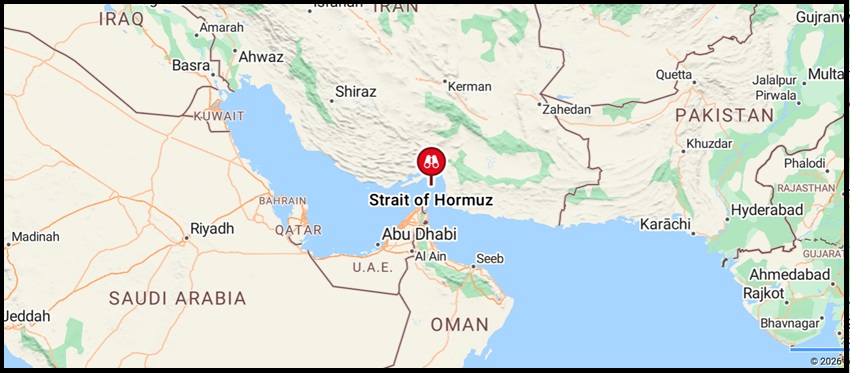
In a series of messages from his Truth Social account, President Trump notes IRGC officials continue to fire weapons into the Strait of Hormuz in an effort to disrupt commercial shipping lanes.
The leadership of the Iranian Revolutionary Guard Corps are in a zero-sum status. Any change to the power structure of the country will likely mean the end to their power, life and status. The IRGC will not accept any terms and consistently portray themselves as martyrs for the regime.
The U.S. blockade of Iranian ports and shipping is creating a serious economic problem for the regime in Tehran, and the IRGC is trying to stop the situation of commercial vessel transit for anyone except Iran. (VIA Politico) – “Iran’s Supreme National Security Council issued a statement calling the blockade a violation of the ceasefire and said Iran would prevent “any conditional and limited reopening” of the strait.”
PRESIDENT TRUMP – “Iran decided to fire bullets yesterday in the Strait of Hormuz — A Total Violation of our Ceasefire Agreement! Many of them were aimed at a French Ship, and a Freighter from the United Kingdom. That wasn’t nice, was it? My Representatives are going to Islamabad, Pakistan — They will be there tomorrow evening, for Negotiations. Iran recently announced that they were closing the Strait, which is strange, because our BLOCKADE has already closed it. They’re helping us without knowing, and they are the ones that lose with the closed passage, $500 Million Dollars a day! The United States loses nothing. In fact, many Ships are headed, right now, to the U.S., Texas, Louisiana, and Alaska, to load up, compliments of the IRGC, always wanting to be “the tough guy!” We’re offering a very fair and reasonable DEAL, and I hope they take it because, if they don’t, the United States is going to knock out every single Power Plant, and every single Bridge, in Iran. NO MORE MR. NICE GUY! They’ll come down fast, they’ll come down easy and, if they don’t take the DEAL, it will be my Honor to do what has to be done, which should have been done to Iran, by other Presidents, for the last 47 years. IT’S TIME FOR THE IRAN KILLING MACHINE TO END!” ~ President DONALD J. TRUMP
PRESIDENT TRUMP – “Today, an Iranian-flagged cargo ship named TOUSKA, nearly 900 feet long and weighing almost as much as an aircraft carrier, tried to get past our Naval Blockade, and it did not go well for them. The U.S. Navy Guided Missile Destroyer USS SPRUANCE intercepted the TOUSKA in the Gulf of Oman, and gave them fair warning to stop. The Iranian crew refused to listen, so our Navy ship stopped them right in their tracks by blowing a hole in the engineroom. Right now, U.S. Marines have custody of the vessel. The TOUSKA is under U.S. Treasury Sanctions because of their prior history of illegal activity. We have full custody of the ship, and are seeing what’s on board!” ~ President DONALD J. TRUMP
Posted originally on CTH on April 12, 2026 | Sundance
Many people have requested that I outline some context on the Iran conflict; so, here it is.
What follows is my own researched perspective on the challenge that President Trump is facing. I anticipate the non-interventionists will not be happy with it, and also the Israel First crowd will not like the brutal pragmatism of it. Alas, having spent a great deal of time watching things unfold, here’s my take.
Start with this question: Considering all the years the debate over Iran’s nuclear ambitions has persisted, why haven’t its strongest allies, China and Russia, ever provided Iran with a nuclear weapon?
Now, before anyone jumps into the nuclear non-proliferation perspective, let me remind you we are not going to pretend things here. You can pretend that Beijing didn’t give the DPRK nuclear weapons by pretending that North Korea isn’t a proxy province of China. Or you can stop pretending. The choice is yours!
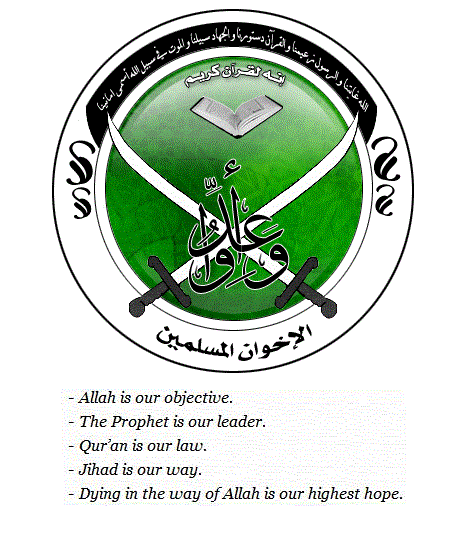
So, what’s different? Well, in the DPRK example, Beijing holds the control mechanism. For Iran, giving religious fanatics a nuclear weapon would be tantamount to giving the Muslim Brotherhood the ability to start World War III.
As recently noted, Saudi Arabia’s Crown Prince Mohammed Bin Salman urged President Trump not to back down from this moment of consequence and to eliminate the Iranian threat once and for all. MbS is about as close to a Middle East pragmatist as you can find. In response, a desperate British Prime Minister Keir Starmer rushed to Saudi Arabia hoping to change the position of MbS. Great Britain is almost out of fuel.
That’s a good place to start looking at the regional perspectives.
Islamic extremists, religious zealots, fanatics, cannot be trusted with nuclear weapons. Even those who are sympathetic to the Iranian regime, particularly Turkey and Qatar, are pragmatic about this issue.
Nuclear weapons must never fall into the hands of Hezbollah, Hamas, al-Qaeda, the Islamic State (ISIS), al-Nusra, and all of the extreme -perhaps most authentic- factions of Islam are included in that outlook.
While it is true that Israel has carried out a brutal, over-the-top, offensive against Hamas in Gaza, it is also true that Egypt – via President al-Sisi, spent two years destroying Hamas terror tunnels on the Egyptian-Gaza border and installed a five-layer security perimeter to keep the Islamist “Palestinians” out of the Sinai.
President Sisi (Egypt) and King Abdullah (Jordan) do not want to import Palestinian Hamas promoters, despite their very public opposition to the offensive methods of Israeli Prime Minister Benjamin Netanyahu.
♦ The Muslim Brotherhood represents the political face of extremist (authentic) Islam. Turkish President Recep Erdogan is one of the zookeepers keeping the big cat cages under control, while simultaneously using the big cats to draw an audience.
Qatar is the banking side of The Muslim Brotherhood, feeding the big cats and providing them indulgences to keep them satiated. The intelligence services of Israel (Mossad) and the USA (CIA) are involved in this process.
When it comes to authentic Islam, you might say that essentially Mossad and the CIA are the physical cages, while Turkey (Recep Erdogan) and Qatar (Amir Sheikh Hamad bin Khalifa Al Thani) are the zookeepers.
Turkey the gateway to Europe, is a NATO member not a NATO ally. Qatar has a foot in both the lawfully constrained western world and a foot in the religious fanaticism world. While the tightrope walking might seem difficult both Turkish President Recep Erdogan and Qatari Amir Sheikh Hamad bin Khalifa Al Thani have navigated this dynamic as part of their own influence and affluence operation.
That said, none of the names involved thus far want the rabid faction of the big cats to get a nuclear weapon. President Donald Trump does not want the rabid cats to get a nuclear weapon. None of the voices in the Middle East, sans the fanatical Iranian religious faction, want Iran to have a nuclear weapon.
All of these various regional players have their own individual nuance to retain influence and power. However, on the issue of nuclear weapons they all agree – Iran must never have them, because Iran would represent the biggest threat in the entire world to using them. [Name a weapon that Iran has never used.]
None of Iran’s allies – not Pakistan, not Russia and not China – would ever fathom giving Iran a nuclear weapon, because the leadership of Iran is sketchy, unstable and, well, potentially batsh!t crazy enough to use it. The Iranian Revolutionary Guard Corps (IRGC) are just as zero-sum minded as the Islamic clerics they protect.
This accurate and factual baseline of common interest is why you do not see any of the regional voices opposing President Trump’s effort to ensure that Iran NEVER HAS a nuclear weapon?
How strong is that sense of common interest?… Strong enough to accept Israel bombing Iran in support of that common interest. Turkey, aligned in sympathetic voice with the Muslim Brotherhood, hates Israel; but they hate Israel slightly less than they hate the thought of Iran having a nuclear weapon.
So, against the backdrop of Iran rejecting any deal that precludes them from having a nuclear weapon, where does that leave things?
It leaves the entire Middle East in a position to continue supporting President Trump’s effort to stop Iran from ever having a nuclear weapon. It really is that simple.
Turkey, Saudi Arabia, Egypt, Syria, The UAE, Bahrain, Kuwait, Jordan and yes, even Qatar, are willing to endure a considerable amount of economic pain and internal friction in order to get to the place where Iran stops their nuclear objective.
It’s the Iranian nuclear threat that’s the problem. It’s the Iranian nuclear threat that has always been the problem.
This time, President Donald J Trump is trying to deal with that threat once and for all.
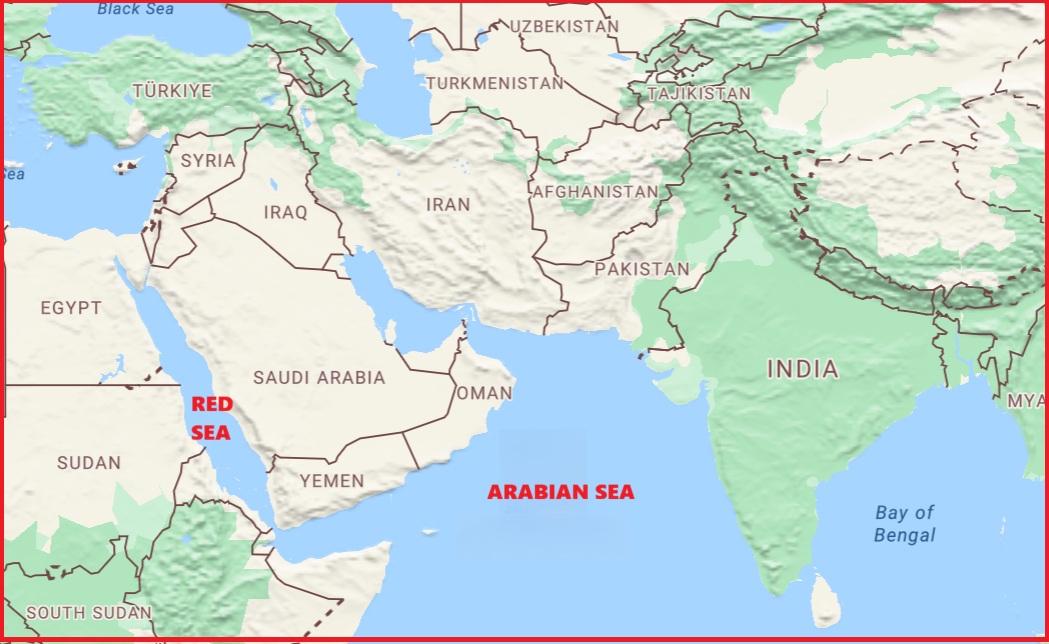
Europe is going bananas because they need oil/gas. The U.K is going bananas because they need oil/gas. Asia is really in a bad place because they too need oil/gas. The energy problem goes all the way to Australia because they too need oil/gas.
The more a nation chased the net-zero carbon, climate change, global warming nonsense, the more they are exposed to the dire Straits of Hormuz. Japan can hold out a little longer with reserves and China can ultimately make do with Russian provision.
Which brings us to the point where President Trump is saying the U.S. will end up having to control the Strait of Hormuz, and we should look for an extension to the Russian sanction relief as a direct consequence of Iran rejecting the terms of JD Vance and the USA delegation.
Now, there are some who claim that Iran doesn’t want a nuclear weapon, and/or Iran has a fatwa against nuclear weapons. These voices are ridiculous. Think about the irrational logic of the claim: Iran is refusing to stop pursuing something they do not want.
♦ It can be argued that Israel is being opportunistic and leveraging the regional support for Trump toward their own interests and objectives. It is a fair criticism to say the Israeli government of Benjamin Netanyahu is too militaristic and aggressive. Israel’s continually aggressive posture makes it difficult to navigate the nuances of strong diplomacy.
In fact, both President Trump and Secretary of State Marco Rubio have stated the goals and objectives of the USA and Israel may not be aligned on all matters, and Turkish President Erdogan has been exceptionally critical of Israel’s continued military operation into Lebanon, presumably targeting Hezbollah.
However, there is no indication that Israel is directing President Trump on the issue of a denuclearized Iran.
On the issue of Iran never having nuclear weapons, it has been the stated policy of every U.S. administration for 40+ years, and on that issue the entire Middle East is in agreement.
Posted originally on CTH on April 12, 2026 | Sundance
I am going to outline a contextual background for the Iranian conflict and my opinion of the current situation in detail. In short, I stand with President Trump’s position, but many of the influential aspects are being missed.
The anti-interventionist podcasters and the Israel-first advocates are both wrong. An honest and pragmatic review of the entire regional dynamic is needed. Which includes the big picture question that no one is asking.
In the interim, here is the statement from President Trump describing the current status, against the backdrop of Vice President JD Vance’s earnest efforts to negotiate a resolution:
[VIA TRUTH SOCIAL] – “Iran promised to open the Strait of Hormuz, and they knowingly failed to do so. This caused anxiety, dislocation, and pain to many people and Countries throughout the World.
They say they put mines in the water, even though all of their Navy, and most of their “mine droppers,” have been completely blown up. They may have done so, but what ship owner would want to take the chance?
There is great dishonor and permanent harm to the reputation of Iran, and what’s left of their “Leaders,” but we are beyond all of that. As they promised, they better begin the process of getting this INTERNATIONAL WATERWAY OPEN AND FAST! Every Law in the book is being violated by them.
I have been fully debriefed by Vice President JD Vance, Special Envoy Steve Witkoff, and Jared Kushner, on the meeting that took place in Islamabad through the kind and very competent leadership of Field Marshal Asim Munir, and Prime Minister Shehbaz Sharif, of Pakistan. They are very extraordinary men, and continuously thank me for saving 30 to 50 million lives in what would have been a horrendous War with India. I always appreciate hearing that — The amount of Humanity spoken of is incomprehensible.
The meeting with Iran began early in the morning and lasted throughout the night — Close to 20 hours. I could go into great detail, and talk about much that has been gotten but, there is only one thing that matters — IRAN IS UNWILLING TO GIVE UP ITS NUCLEAR AMBITIONS!
In many ways, the points that were agreed to are better than us continuing our Military Operations to conclusion, but all of those points don’t matter compared to allowing Nuclear Power to be in the hands of such volatile, difficult, unpredictable people.
My three Representatives, as all of this time went by, became, not surprisingly, very friendly and respectful of Iran’s Representatives, Mohammad-Bagher Ghalibaf, Abbas Araghchi, and Ali Bagheri, but that doesn’t matter because they were very unyielding as to the single most important issue and, as I have always said, right from the beginning, and many years ago, IRAN WILL NEVER HAVE A NUCLEAR WEAPON!
[PART II] – “So, there you have it, the meeting went well, most points were agreed to, but the only point that really mattered, NUCLEAR, was not.
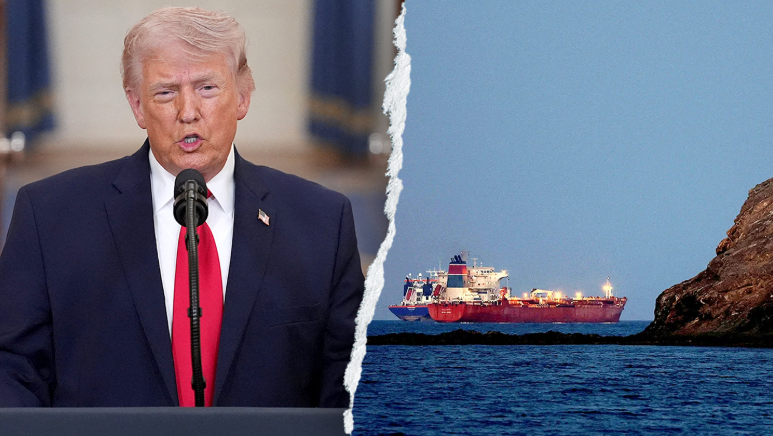
Effective immediately, the United States Navy, the Finest in the World, will begin the process of BLOCKADING any and all Ships trying to enter, or leave, the Strait of Hormuz. At some point, we will reach an “ALL BEING ALLOWED TO GO IN, ALL BEING ALLOWED TO GO OUT” basis, but Iran has not allowed that to happen by merely saying, “There may be a mine out there somewhere,” that nobody knows about but them.
THIS IS WORLD EXTORTION, and Leaders of Countries, especially the United States of America, will never be extorted. I have also instructed our Navy to seek and interdict every vessel in International Waters that has paid a toll to Iran. No one who pays an illegal toll will have safe passage on the high seas.
We will also begin destroying the mines the Iranians laid in the Straits. Any Iranian who fires at us, or at peaceful vessels, will be BLOWN TO HELL! Iran knows, better than anyone, how to END this situation which has already devastated their Country. Their Navy is gone, their Air Force is gone, their Anti Aircraft and Radar are useless, Khomeini, and most of their “Leaders,” are dead, all because of their Nuclear ambition.
The Blockade will begin shortly. Other Countries will be involved with this Blockade. Iran will not be allowed to profit off this Illegal Act of EXTORTION. They want money and, more importantly, they want Nuclear. Additionally, and, at an appropriate moment, we are fully “LOCKED AND LOADED,” and our Military will finish up the little that is left of Iran!” ~
Posted originally on CTH on April 5, 2026 | Sundance |
Former Commander of CENTCOM, General Frank McKenzie, appears on CBS to give his analysis of ongoing Operation Epic Fury, along with the successful rescue of the F-15 crew. WATCH:
[Transcript] – ED O’KEEFE: We’re joined now by the former head of U.S. Central Command, retired General Frank McKenzie. General, Happy Easter.
GEN. FRANK MCKENZIE: And the same to you, Ed.
ED O’KEEFE: So it took just under 48 hours to find the missing weapons systems officer. After the jet they were in went down in a remote and mountainous area of southwestern Iran, the weapons officer was hiding in a mountainous crevice. We’re told by a senior administration official, what’s your assessment of how the search and rescue operation went?
GEN. MCKENZIE: So I think I’d draw two lessons from it, Ed. First of all, the excellence of the joint force, our ability to rapidly pivot, to look for a downed air crewman. We train for this endlessly. It’s a part of every time we send air crew over enemy territory, we have detailed, elaborate plans to go get them. It’s a very basic part of who we are as American fighting men and women. So that plan swung into action. I think it was executed pretty effectively. As always, you’ve got somebody on the ground, may be injured. They got to get to a position where they can hide until you can get to them. All that seemed to work out very well. And you know, we did, in fact, lose a couple of aircraft in that in that mission. But I would just tell you, it takes a year to build an aircraft. It takes 200 years to build a military tradition where you don’t leave anybody behind. You take the aircraft trade any day in a situation like this. The other lesson, I think, is a hard lesson for Iran. First of all, they were not able to find the missing air crewman. Second, you know, they put out a broad appeal to their people to turn him in reward, asking for all kinds of leads, that does not appear to have been successful. And that would- I think that’s maybe a sign of disaffection, don’t know, but you can’t, you can’t be happy with that if you’re a senior leader in Tehran this morning.
ED O’KEEFE: Yeah, you know Iran’s Revolutionary Guards now claiming responsibility for attacks on petrochemical plants in the UAE, Kuwait and Bahrain. They warn its attacks against U.S. economic interests will intensify if attacks on civilian targets in Iran are repeated, does Iran and its proxies retain the capacity to inflict serious damage at this point?
GEN. MCKENZIE: They have the ability to inflict damage. They do not have the ability to gain mass effects. And by mass effects, I mean firing many, many dozens of rockets, missiles or drones. I think that capability has been eroded steadily since this campaign began. And frankly, at about plus 30 days into this campaign, I think if you’re at Central Command, you’ve got to be reasonably satisfied with where you are right now. In fact, Ed, when I was the CENTCOM Commander, if you had given me this situation at plus 30 days, I would have rejected it as being too optimistic by far. So we’ve had good effect. Our effects are going to continue. It’s going to be increasingly harder for them to launch missiles and rockets. We may not get to zero for a while, and I think there’s still some time ahead, but everyone realizes that. But I think we’re on track here. This campaign is moving very effectively, and I believe the pace will pick up every day.
ED O’KEEFE: To your earlier point, the president said something interesting to Fox News this morning, revealing for the first time that the U.S., earlier this year had sent a quote, lot of guns to the Kurds, who live in northern Iraq, northern Iran for use by protesters. So he wanted them to use these weapons. And said, you know, inferring now that he was sending weapons to have the Iranian people rise up on Wednesday night, though, in his big speech, clarifying what the war is all about, he said, This campaign is not about regime change, but if they are now, in fact, arming protesters. What might that signal?
GEN. MCKENZIE: Well, I think you want to put pressure on this regime in every way that you can. Arming Kurds certainly increases pressure on the Iranian regime. We know from history that leadership in Iran responds when existential pressure is applied to the regime. Arming the Kurds moves you a step closer toward that even if your ultimate aim is not regime change, getting the regime and Tehran to a place where they’ll make a deal that’s to our liking, is going to be the inevitable by product of intolerable pressure that’s placed over- on them. And I think all of these add together to do that.
ED O’KEEFE: You said last week, a success for the White House is that the Strait of Hormuz reopens, but that vital passageway, of course, remains effectively choked off. The president this Easter morning, used some, shall we say, colorful language, to threaten Iran again to reopen the strait, if the U.S. launches its own military operation in the coming days to open the strait, what’s it going to take militarily to do that?
GEN. MCKENZIE: Well, let me, let me say, first of all, we do have the ability to open the strait. Should we choose to do it in what you’re seeing now are the- what I would call the precursor of the initial steps in such a campaign you want to reduce Iran’s ability to fire short range rockets and missiles into the strait against warships. You want to take out their fast attack craft. Think of them as cigarette boats, large, powerful outboard engined boats that can race out and get among ships and cause direct damage that way. What we’re doing is we’re going after all those vessels. And that’s where a 10s attack aircraft, attack helicopters and other slow moving, low altitude platforms are so very effective. So we’re in the process of removing those right now. At the same time, we’re working to get rid of Iran’s mine stockpile. The mines are very dangerous. They had thousands when the war began. I have no doubt we significantly (UNINTELLIGIBLE) them, now. Of course, it doesn’t take many mines to cause a significant blockage to world shipping. So all of that is underway right now, and you want to reduce those to a low level before you put your warships up there to actually sort of test the waters in that strait. I have no idea what Admiral Cooper’s decision making process is going to be for that, but I think we’re well on the way to achieving those goals.
ED O’KEEFE: Can the strait be reopened with an air and naval campaign or are you going to need ground troops?
GEN. MCKENZIE: I think it could be opened with an air and naval campaign, and the use of ground troops would probably be along the line of raids. And remember, a raid is an attack with a planned withdrawal, where you don’t plan to stay. The one exception might be Kharg Island. I know the president has talked about it. I think it has a unique place in Iranian culture, because of one thing, if you seize it, you’re holding Iranian soil. Secondly, it is the critical mode through which all their oil supplies pass. By seizing it, you have the opportunity to cut that off, inflicting grievous damage on the Iranian economy, and yet with the opportunity, perhaps, to return it as part of a negotiation process. Further, you don’t permanently damage the global economy by destroying the infrastructure. So I think Kharg Island is a very lucrative target. I’m sure we’re looking at it hard right now. I have no idea if we’re going to choose to go up there.
ED O’KEEFE: In our last 30 seconds or so, here, General, bottom line this. The president says two to three weeks is all that it’s going to take? Would you agree with that? Or is it going to take longer?
GEN. MCKENZIE: You know, I always hesitate to put time on a- to put a timeline on a military operation like this, but I would say the Iranians would be very well served to listen to President Trump when he says he’s going to hit him because he’s pro- he’s proven that he’s willing to do that. So that’s the lesson I would learn from from his most recent pronouncement, and from actually what we’ve done in the war to this day, if the president says we’re going to do something, we’re probably going to do it. And it probably is good time for the Iranian leadership to take note of that fact.
ED O’KEEFE: All right, we’ll leave it there. General McKenzie, happy Easter again. Thank you for spending some time with us this morning. We appreciate it.
Posted originally on CTH on April 4, 2026 | Sundance
Secretary of State Marco Rubio ordered the termination of lawful permanent resident status for Hamideh Soleimani Afshar, identified as Qasem Soleimani’s niece, and her daughter. Both were subsequently detained and are now in the custody of US Immigration and Customs Enforcement (ICE).
Marco Rubio – “Last night, the niece and grand niece of deceased Iranian Revolutionary Guard Corps Major General Qasem Soleimani were arrested by federal agents following Secretary of State Marco Rubio’s termination of their lawful permanent resident (LPR) status.
Hamideh Soleimani Afshar and her daughter are now in the custody of U.S. Immigration and Customs Enforcement. As identified by both press reporting and her own social media commentary, Soleimani Afshar is an outspoken supporter of the totalitarian, terrorist regime in Iran.
While living in the United States, she promoted Iranian regime propaganda, celebrated attacks against American soldiers and military facilities in the Middle East, praised the new Iranian Supreme Leader, denounced America as the “Great Satan,” and voiced her unflinching support for the Iranian Revolutionary Guard Corps, a designated terror organization.
Afshar Soleimani pushed this propaganda for Iran’s terrorist regime while enjoying a lavish lifestyle in Los Angeles, as attested to by her frequent posting on her recently deleted Instagram account.
In addition to the termination of Hamideh Soleimani Afshar and her daughter’s LPR status, Afshar’s husband has also been barred from entering the United States.
Earlier this month, Secretary Rubio also terminated the legal status of Fatemeh Ardeshir-Larijani, daughter of former Secretary of the Supreme National Security Council of Iran Ali Larijani, and her husband Seyed Kalantar Motamedi. Both Ardeshir-Larijani and Motamedi are no longer in the United States and are barred from future entry.
The U.S. Department of State extends its appreciation to the U.S. Department of Homeland Security and U.S. Immigration and Customs Enforcement for their continued partnership and collaboration in keeping Americans safe.
The Trump Administration will not allow our country to become a home for foreign nationals who support anti-American terrorist regimes. (SOURCE)
Posted originally on CTH on March 30, 2026 | Sundance
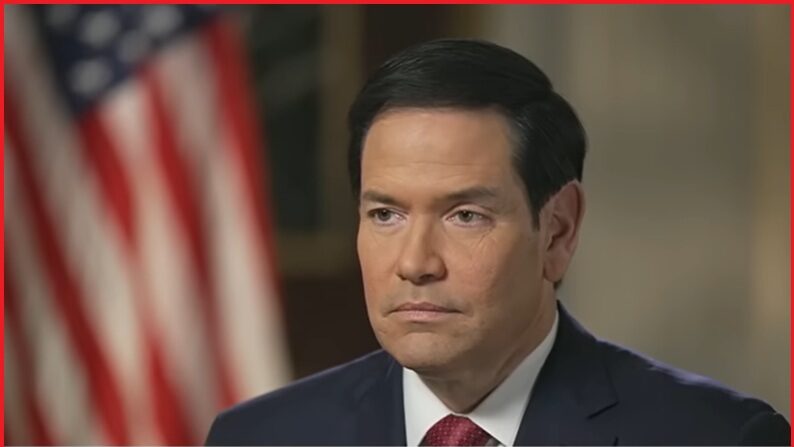
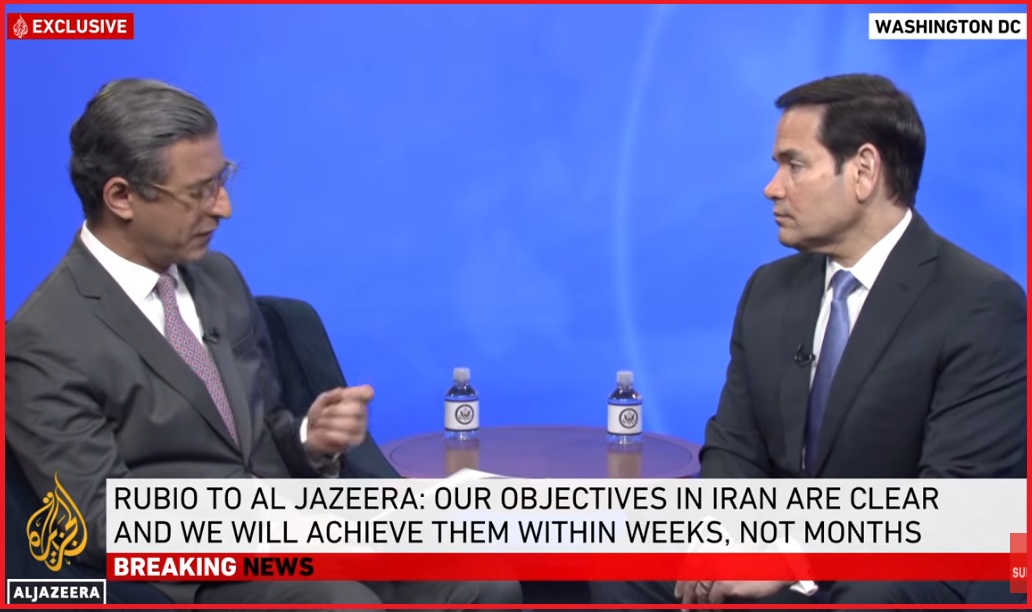
Al Jazeera is essentially the state run media outlet of Qatar. Secretary of State Rubio sat down for a lengthy interview with Al Jazeera that will be shared throughout the Arab world.
“In an exclusive Al Jazeera interview, US Secretary of State Marco Rubio stated that President Trump always prefers diplomacy, with messages and indirect talks ongoing between the US and figures inside Iran. Rubio demanded that Iran abandon all nuclear weapons ambitions, end its missile and drone programmes, and stop sponsoring terrorism across the region. He rejected Iran’s conditions for ending the war — including sovereignty over the Strait of Hormuz and financial compensation — calling the strait demand illegal and a dangerous global precedent. Rubio declared that the strait “will be open one way or another” after US military objectives are achieved, whether through Iranian compliance or an international coalition.”
“He outlined those objectives as the destruction of Iran’s air force (achieved), navy (largely achieved), missile launchers, and weapons factories — all to be completed in weeks, not months. Rubio expressed disappointment with NATO allies like Spain for denying basing rights and airspace, warning that the US would re-examine its NATO commitment. He confirmed the US would welcome regime change in Iran but insisted it was not the official objective of the current military operation. The interview also covered post-Maduro stabilisation in Venezuela and called for serious economic and political reforms in Cuba.”
Posted originally on CTH onMarch 30, 2026 | Sundance
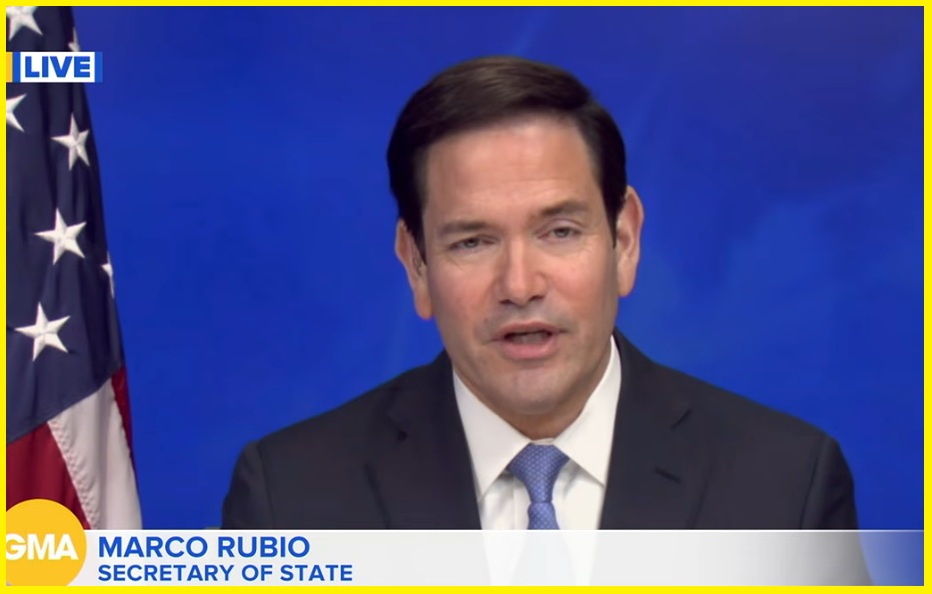
As Secretary of State Marco Rubio appears for an interview on Good Morning America, President Trump released the following statement:
“The United States of America is in serious discussions with A NEW, AND MORE REASONABLE, REGIME to end our Military Operations in Iran. Great progress has been made but, if for any reason a deal is not shortly reached, which it probably will be, and if the Hormuz Strait is not immediately “Open for Business,” we will conclude our lovely “stay” in Iran by blowing up and completely obliterating all of their Electric Generating Plants, Oil Wells and Kharg Island (and possibly all desalinization plants!), which we have purposefully not yet “touched.” This will be in retribution for our many soldiers, and others, that Iran has butchered and killed over the old Regime’s 47 year “Reign of Terror.” Thank you for your attention to this matter.” ~ President DONALD J. TRUMP
Secretary Rubio responded in real time to questions about the objectives. Rubio impressively underlined the objectives in Iran, reemphasizing the core intent of the military operation to remove the capacity of Iran to pose a threat to the stable alliances that have formed in the region. WATCH:
I have created this site to help people have fun in the kitchen. I write about enjoying life both in and out of my kitchen. Life is short! Make the most of it and enjoy!
This is a library of News Events not reported by the Main Stream Media documenting & connecting the dots on How the Obama Marxist Liberal agenda is destroying America