Potential Homebuyers Walking Away at Record Pace


Posted originally on Jan 29, 2026 by Martin Armstrong |  

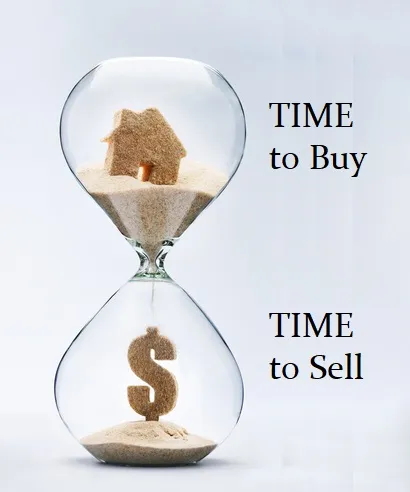
TIME to Buy Time to Sell

We are witnessing an unmistakable shift in the US housing market, not a bubble pop like 2008, but a market regime change characterized by buyers retreating as inventory rises and affordability remains strained. Recent data from Redfin shows that roughly 40,000 US home-purchase agreements were canceled in December, representing about 16.3% of homes that went under contract–the highest level for that month since at least 2017.

Excess demand and historically low mortgage rates drove the housing market until around 2023. Trends that cannot continue forever eventually break down when the cyclical structure turns. The peak in housing demand, much like in equities or commodities, eventually lost momentum as mortgage rates climbed and affordability deteriorated.

We also saw a mass exodus out of states like New York and California due to policy, first surrounding COVID restrictions followed by excessive taxation. The political landscape has remained relatively stable on a state-wide basis and both people and corporations have settled in their respective states.

Even as longer-term bond yields and mortgage rates have slightly pulled back, with average 30-year mortgage rates near their lowest point in over three years, they remain elevated compared with the ultra-low era of the early 2020s. Higher rates are pushing monthly payments beyond what buyers are able to afford. Sellers now outnumber buyers by record margins, a dynamic unseen in the recent boom years when over-ask bidding wars were commonplace.

In a boom market, buyers panic, compete, and push prices higher. In a cooling market with more listings, they withdraw when the deal doesn’t meet their financial reality. This is the behavior captured in the cancellation data provided by Redfin. Inspections and contingencies come with a high price tag and can cause buyers to walk away as every aspect of maintaining a home comes with a high price tag.

The problems in 2008 stemmed from systemic financial excess, predatory lending, adjustable-rate resets, and a lack of vetting. It was not an organic situation, but rather, conditions manufactured by credit expansion by financial institutions and rating agencies. We are not witnessing defaults because buyers are choosing to walk away before the purchase. Buyers and lenders are both evaluating risks and stopping deals in their tracks.

Wage growth, while improving, hasn’t kept pace with housing cost inflation over the last decade, especially after the dramatic increases in home prices since 2020. Combined with mortgage rates above long-term averages and elevated property taxes and insurance, the effective cost of homeownership has climbed faster than incomes for many.

Affordability is of particular concern with younger demographics who have been priced out of the market. Starter homes are not what they once were.

The market is recalibrating and corrections are occurring before systemic debt defaults. All participants are making choices based on affordability and the heightened risk of not being able to make payments. It is almost difficult to call this a buyer’s market as no one feels they are walking away with a great deal.

The US Real Estate Investor Ban


Posted originally on Jan 23, 2026 by Martin Armstrong |  

House US Real Estate

Donald Trump declared at Davos that America would not become a nation of renters, much to the dismay of the “you will own nothing and be happy” audience. Trump is now talking about banning large institutional investors from buying more single-family homes, claiming this is about restoring the American Dream and ending the insanity where “people live in homes, not corporations.”

Axios reported that investors bought roughly 1 in 3 single-family homes in Q2 2025 (using BatchData), and the entire debate now comes down to how they define “institutional investor” and whether Congress will actually codify it into law.

I understand the motivation, and I agree with the public anger. The question is whether this actually fixes the problem or just creates the next one. The real estate market did not become unaffordable because a few Wall Street firms bought houses. It became unaffordable because government destroyed purchasing power, drove up the cost of living, and then pretended the cure was more regulation.

Institutional investors did not wake up one day and decide to “ruin homeownership.” They responded to incentives. The system pushed capital into assets because people no longer trust paper promises. The moment confidence in government declines, capital moves.

Now, do I like the idea of hedge funds and giant landlords buying entire neighborhoods? No. But the real problem is supply and cost. If you don’t address zoning, property taxes, regulation, insurance, building costs, and the fact that mortgage rates have trapped millions of people in place, you’re not addressing the root issue. If they define “institutional” too broadly, you will end up crushing the small investor and the private builder who actually supplies rentals in markets where people cannot buy. Demand vanished because the monthly payment exploded.

Hence why there are over 37% more sellers than buyers in America’s real estate market. Institutional investors are merely on facet of a multi-layered problem.

US Real Estate – 37.2% More Sellers than Buyers


Posted originally on Jan 22, 2026 by Martin Armstrong |  

House US Real Estate

Redfin estimates there were 37.2% more home sellers than buyers in November, which is the largest gap since 2013 outside of last summer. The computer warned that the US would experience a buyer’s market until 2028. The imbalance does not translate into some 2008 era real estate crisis, but it highlights the confidence cycle we are in.

When you get a large seller/buyer gap, the press assumes demand is gone, and prices must plunge. What they are missing is that we have created a market that is trapped by interest rates.

The real story is that the seller is anchored mentally to 2021 pricing while the buyer is trapped in 2026 financing. Millions of homeowners refinanced into ultra-low mortgage rates. People with a 2.5% or 3% mortgage are not rushing to sell and then borrow at 6%+ again. They will sit tight unless forced by job relocation, divorce, death, pregnancy, taxes, or financial stress. Buyers are scarce because affordability is terrible, and sellers increase anyway because life events still happen.

Redfin points out that markets like Austin were showing the strongest buyer’s-market conditions, while places like Nassau County, NY were still strong seller’s markets. There is no “one housing market.” There are 50 different markets, each with different taxes, job conditions, migration patterns, and political climate. Furthermore, there are markets within those state markets as people flock to the most desirable cities and school districts.

The buyer base has been destroyed by the combination of high prices, high rates, and rising cost of living. People do not buy houses when they feel trapped and insecure. That is why housing turns down with a decline in confidence.

November 2025 US Real Estate


Posted originally on Dec 30, 2025 by Martin Armstrong |  

Housing

November home sales in the US paint a picture of stagnation and a frozen market. Home prices and mortgages have risen and demand has waned. This is a buyer’s market but conditions are not particularly favorable due to the cost of ownership.

Sales rose 0.5% from November to October and were 1% lower on an annual basis, according to data from the National Association of Realtors. A total of 4.13 million homes were sold for the month based on closings.

Supply remains constrained on a monthly basis, declining 5.9% from October, but have risen 7.5% on the yearly. A six-month supply is considered a balanced buyer-seller market, but current conditions show a 4.2-month supply.

The median home price in the US has reached $409,200, up 1.2% annually, and the highest reading on record for November. Lower-priced homes are not selling as those with less cannot afford to enter the market. Homes priced from $100,000 to $250,000 are down 8% from last year, but homes above $1 million rose 1.4%.

Gone are the days of overbidding cash offers. Homes are sitting on the market for an average of 36 days. Investors are slowly re-entering the market and accounted for 18% of sales compared to 13% one year prior. New homeowners accounted for 30% of sales, but historically, first-time home owners account for 40% of closings.

Weak regions are seeing declining values while stronger capital-inflow areas remain firm. This is classic late-cycle behavior. Real estate does not move as a monolith. It turns region by region, driven by employment, taxation, migration, and regulatory burden. The myth of a single “national housing market” is one of the great analytical failures of modern economics.

Transactions are falling and inventory is uneven. The real pressure will come not from housing itself, but from government debt, taxation, and declining economic confidence as we move toward the 2026 turning point. The model indicates that the current buyers market will persist into 2028. There will NOT be a housing bubble collapse as we saw in 2008. Commercial real estate is far more vulnerable than residential and operates on a different cycle. People have fled and are continuing to flee states that are unfavorable to capital, as we have seen with mega corporations fleeing places like New York and California. We will see fragmentation on a regional basis in real estate.

Interest rates will not collapse to save housing as capital demands higher yields and the central bank cannot toy with the markets as they have in recent years. Capital is migrating to states that offer financial stability, lower taxation and regulation. Transaction volume is declining and sellers are refusing lower prices. Buyers are waiting. Liquidity is vanishing. This is all par for the course during a collapse of confidence that will intensify in 2026.

When Will Mortgage Rates Go Down?


Posted originally on Nov 20, 2025 by Martin Armstrong |  

Real Estate WEC 2025

For months now, I’ve been hounded with the question: “When will mortgage rates fall back to 3%?” People still cling to the fantasy that the last decade was somehow “normal.” It wasn’t. It was a once-in-history phenomenon driven by central bank manipulation following the 2008–2010 mortgage-backed securities crisis, mixed with the COVID crisis. We lived in an artificial world of zero rates, negative real yields, and government intervention that distorted every market from bonds to real estate.

That period is over, and it is not coming back.

The mainstream press continues to peddle this narrative that the Federal Reserve controls long-term mortgage rates. Mortgage rates are pricing in global sovereign risk, not domestic political propaganda. The same interest-rate shock hitting homebuyers in Miami is hitting borrowers in Munich, Montreal, and Melbourne. This is a global cycle driven by capital flows rather than the Fed.

As I explained in the Real Estate Outlook 2026, residential property is no longer priced on your local bank’s posted rate. Those days died long ago. Capital flows determine rates, and capital is voting with its feet against government debt worldwide.

All conference attendees and virtual ticket holders will receive the Real Estate Outlook 2026 report that details what to expect in the years ahead as confidence shifts from public to private assets.