The US Economy Slows as War Risks Rise


Posted originally on Mar 16, 2026 by Martin Armstrong |  
GDP 3

The latest GDP numbers show that the U.S. economy slowed far more than expected as we closed out 2025. According to the revised data, Q4 GDP expanded at just a 0.7% annualized pace, sharply lower than the original 1.4% estimate and dramatically below the 4.4% growth seen in the third quarter.

This sudden deceleration is not a small revision. Data signals that economic momentum was already fading before we entered 2026. Consumer spending was revised down significantly, government spending collapsed due to the 43-day shutdown, and exports also declined. The key measure of domestic demand, final sales to private domestic purchasers, slowed to just 1.9%, down from 2.9% in the prior quarter.

For the full year, the U.S. economy grew about 2.1% in 2025, down from 2.8% in 2024, confirming that the economy has already been losing momentum. When you look at the quarterly pattern, the shift becomes clear. Growth surged at 3.8% in Q2 and 4.4% in Q3, only to suddenly collapse to less than 1% as we moved into the final months of the year.

At the same time, inflation has not disappeared. The Federal Reserve’s preferred inflation gauge shows core inflation running around 3.1% year-over-year, well above the Fed’s 2% target. That means the economy is now slowing while inflation remains stubbornly elevated.

The labor market is also beginning to reflect the shift. Job growth has slowed significantly, and some reports indicate monthly job losses are beginning to appear as businesses become more cautious heading into 2026. When GDP weakens and employment softens simultaneously, it typically signals that the business cycle is turning.

But the bigger issue moving forward is war. The United States and its allies are now entering a major geopolitical conflict environment with the ongoing confrontation involving Iran. Rising oil prices tied to that conflict are already beginning to ripple through the global economy. Energy shocks historically feed directly into inflation while simultaneously slowing economic growth.

That is why the coming quarters could become increasingly volatile. Economic growth is already weakening while inflation remains above target. If energy prices surge due to war or supply disruptions, inflation will rise again as the economy slows further. That is the textbook setup for stagflation.

From a cyclical perspective, this aligns with what the Economic Confidence Model has been warning about. The period into 2026 was always expected to be a turning point as capital flows shift globally amid rising geopolitical tension. War has historically been one of the biggest disruptors of economic growth, and once energy prices rise sharply, the ripple effects quickly spread through transportation, manufacturing, and food prices. In other words, the slowdown we are seeing now may only be the opening stage.
Deflation v Inflation v Stagflation – Misconceptions Clarified


Posted originally on Dec 30, 2025 by Martin Armstrong |  

Deflation Inflation

Some people have a tough time understanding that we are in a massive deflationary spiral; they think that rising prices mean it is inflation and not deflation. Then they mistake stagflation for deflation and wonder why people are spending more on less. They only see prices, not disposable income, and, indeed, not economic growth or unemployment.

Prices rose sharply following the OPEC oil price hikes of the 1970s. Still, the sharp rise in energy prices crowded out other forms of spending, resulting in rising prices that had nothing to do with a speculative economic expansion, and a deflationary contraction they called STAGFLATION occurred, with rising prices and declining economic growth.

If you want to raise NET DISPOSABLE INCOME, lower taxes! Raising wages, as the Democratas believe corporations should do, will cause people to move to higher tax brackets, and soon, all benefits will come into play with these socialistic programs. As always, nobody in government talks about reducing government waste and corruption. The very people who are using these social programs are still paying taxes to the state and federal government.

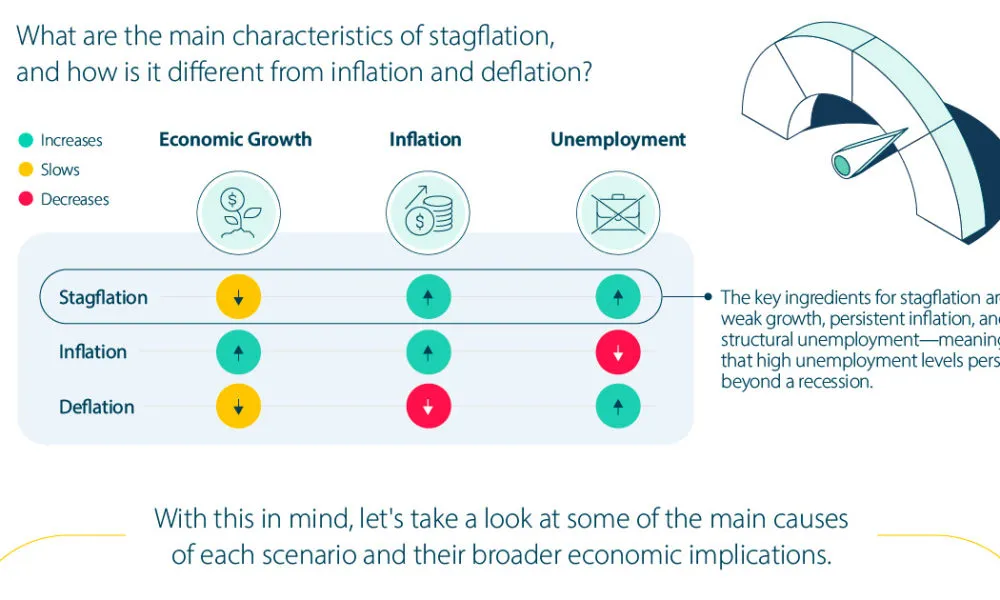
StagflationInflationUnemployment

Household income will soon be defined as everyone living in the same house – kids and all. Perhaps you will have to pitch a tent and make the kids sleep outside with the dog to avoid “household” income tax increases. Deflation is not the lowering of prices; it is the lowering of economic activity that can also include STAGFLATION, which occurs when prices rise but there is no economic growth.

Now, stagflation is not exactly the same as deflation, where the price of goods and services declines. For example, before World War II, the US experienced a massive deflationary environment in which GDP fell by 30% between the crash of 1929 and 1933. A quarter of Americans were unemployed. Imagine 1 in 4 eligible workers on the sidelines. Prices plummeted, and consumers were not spending because they had very little, if anything, to spend. Panics erupted, and people hoarded; the Second World War brought America out of that economic downfall. The public confidence wave began after World War II, because people believed their change in fortune was due to government policies (i.e., FDR’s New Deal) and war victory.

During periods of stagflation, the prices of goods and services increase while buying power decreases. Consumers end up spending more on less. As we are seeing now, for example, retail sales of items such as clothing have declined, but people are spending more on gas, shelter, and groceries. People feel as if they are earning less despite wage increases because their buying power has been drastically reduced. Companies will suffer as consumers spend less, and this has led to workforce reductions. Unemployment during the OPEC crisis of the 1970s was not nearly as severe, but it rose to 7.2% by 1980. Inflation went from around 1% in 1964 to 14% in 1980, and GDP growth went from 5.8% to -0.3% during that same period.

So be very careful. If you only look at prices rising and ignore the fact that your disposable income is declining, you will be in for a very rude awakening. Unemployment will continue to rise in 2026, with the computer anticipating figures surpassing 6%. The trend was set in motion long before automation and AI. Companies simply will not hire when they expect a continued contraction. The ability to borrow at a lower rate is not enticing because those same companies do not want to take on more debt than they already owe. We will not see another Great Depression by any means, but the “soft landing” is merely rhetoric intended to lift confidence.